GREEN BUILDINGS:
An Approach towards
Pollution Prevention
Concepts of GREEN BUILDING
Green Building encompasses the following:
 In harmony with the natural features surrounding
the site.
 Minimizes use of toxic and hazardous substances in
design, construction, and use of building premises.
Controls air, water and sound pollution through
efficient technology.
 Takes recourse to recycling of waste including
wastewater, waste paper, biodegradable and
nonbiodegradable
 Green architecture implies waste minimization designs and
waste recycling solutions within the building waste and
electronic waste.
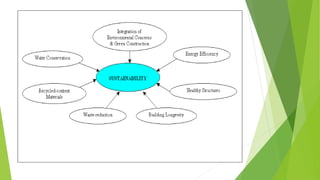
What is a “Green Building”
“Green” Buildings are high performance
structures that also meet certain standards
for reducing natural resource consumption
“Green or sustainable building is the
practice of creating healthier and more
resource-efficient models of construction,
renovation, operation, maintenance, and
demolition
What is a “Green Building”?
 “Green” or “Sustainable” buildings are characterized by:
 efficient management of energy and water resources
 management of material resources and waste
 restoration and protection of environmental quality
 enhancement and protection of health and indoor environmental
quality
 reinforcement of natural systems
 analysis of the life cycle costs and benefits of materials and
methods
 integration of the design decision-making process
 Green Building standards include:
 Leadership in Energy and Environmental Design
(LEED)
 Green Globes
 Model Green Homebuilding Guidelines
 Built Green
 Energy Star
 Living Building
Why go “Green”?
 Going “Green” is the “right thing”
 Green makes business sense
 Increased flexibility to allow for longer building and TI useful life
and reuse of materials
 Improved building performance
 Increased revenue (higher rents/sales price, improved
productivity, fewer/shorter vacancies)
 Lower cost (utilities, costs of conversion)
 reduce carbon consumption,
 energy independence,
 encourage community,
 preserve natural systems
CONSTRUCTION
Goal: Reduce / Reuse / Recycle
Building design based on standard
sizes of materials
Buy higher quality to reduce rejects
Recycle (use scraps)
Train crew
Renovate an existing building
Sustainable building materials have
the following features:
• Durable and easily maintained
• Less processing required
• Low odor
• Low emitting
• Cost-effective
• Aesthetic
Building Design
Goal: To design the building so that it requires less
energy/water and is healthier for inhabitants when it
is complete and in use
 Air ducts for an efficient and healthy air flow
 Insulation
 Windows designed for maximum daylight
 Passive Solar Control
 Solar Cells
 Heat Exchanger for climate control system
 Location
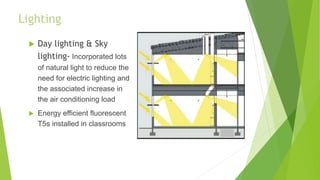
Lighting
 Day lighting & Sky
lighting- Incorporated lots
of natural light to reduce the
need for electric lighting and
the associated increase in
the air conditioning load
 Energy efficient fluorescent
T5s installed in classrooms
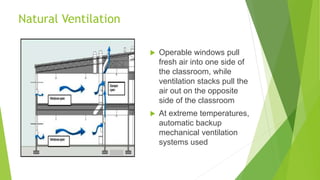
Natural Ventilation
 Operable windows pull
fresh air into one side of
the classroom, while
ventilation stacks pull the
air out on the opposite
side of the classroom
 At extreme temperatures,
automatic backup
mechanical ventilation
systems used
Best Building Form
Solar & Energy Efficient Design
Improved Indoor Air Quality
Usage of Green Materials
Proper Mechanical Systems
Efficient Lighting
Proper Testing & Maintenance
Advanced Features of a Sustainable
Building
Economics of Green Buildings
 Reduction in lighting energy requirements by at least 50 percent
 Cut heating and cooling energy consumption by 60 percent
 Reduced water consumption by up to 30 percent or more
 Lower building operating expenses through reduced utility and
waste disposal costs
 Lower on-going building maintenance costs, ranging from
salaries to supplies
 Increase worker productivity by six to 16 percent
 Higher property values and potentially lower lenders’ credit risk
 Higher building net income
 New economic development opportunities
Benefits of Sustainable Construction
Sustainable construction makes wise use of all the
natural resources and a 50% reduction in energy use
Improves occupant health, comfort, productivity, reduces
pollution and landfill waste that are not easily quantified
A sustainable building may cost more up front, but saves
through lower operating costs over the life of the building
Building is designed as one system rather than a
collection of stand-alone systems with the help of the
integrated system approach
Application of Concepts of Sustainability
 Use of paints and sealers with low or no-volatile
organic compounds (VOCs)
 Reclaimed ground water to irrigate the ball fields.
 Exterior lighting directed downward to reduce night
light pollution
 Mechanically zoned science classrooms to avoid
exposure to hazardous chemicals
 Stained the concrete walls to blend with the colors of
the natural landscape
 Use of ceiling tiles produced from 75 percent post-
consumer recycled waste
Conclusions
 Green Building Certifications present a moving target
 Critical to work with clients early and continuously to
determine goals and objectives
 Focus on objective performance measures and clear
allocation of risks and responsibilities
 Green building issues are presented in nearly every phase
of development – look for opportunities to improve old
practices and “boiler plate”
 Don’t get bogged down, but don’t be afraid to innovate

Green building

  • 2.
    GREEN BUILDINGS: An Approachtowards Pollution Prevention
  • 3.
    Concepts of GREENBUILDING Green Building encompasses the following:  In harmony with the natural features surrounding the site.  Minimizes use of toxic and hazardous substances in design, construction, and use of building premises. Controls air, water and sound pollution through efficient technology.  Takes recourse to recycling of waste including wastewater, waste paper, biodegradable and nonbiodegradable  Green architecture implies waste minimization designs and waste recycling solutions within the building waste and electronic waste.
  • 4.
    What is a“Green Building” “Green” Buildings are high performance structures that also meet certain standards for reducing natural resource consumption “Green or sustainable building is the practice of creating healthier and more resource-efficient models of construction, renovation, operation, maintenance, and demolition
  • 5.
    What is a“Green Building”?  “Green” or “Sustainable” buildings are characterized by:  efficient management of energy and water resources  management of material resources and waste  restoration and protection of environmental quality  enhancement and protection of health and indoor environmental quality  reinforcement of natural systems  analysis of the life cycle costs and benefits of materials and methods  integration of the design decision-making process
  • 6.
     Green Buildingstandards include:  Leadership in Energy and Environmental Design (LEED)  Green Globes  Model Green Homebuilding Guidelines  Built Green  Energy Star  Living Building
  • 7.
    Why go “Green”? Going “Green” is the “right thing”  Green makes business sense  Increased flexibility to allow for longer building and TI useful life and reuse of materials  Improved building performance  Increased revenue (higher rents/sales price, improved productivity, fewer/shorter vacancies)  Lower cost (utilities, costs of conversion)  reduce carbon consumption,  energy independence,  encourage community,  preserve natural systems
  • 9.
    CONSTRUCTION Goal: Reduce /Reuse / Recycle Building design based on standard sizes of materials Buy higher quality to reduce rejects Recycle (use scraps) Train crew Renovate an existing building
  • 10.
    Sustainable building materialshave the following features: • Durable and easily maintained • Less processing required • Low odor • Low emitting • Cost-effective • Aesthetic
  • 11.
    Building Design Goal: Todesign the building so that it requires less energy/water and is healthier for inhabitants when it is complete and in use  Air ducts for an efficient and healthy air flow  Insulation  Windows designed for maximum daylight  Passive Solar Control  Solar Cells  Heat Exchanger for climate control system  Location
  • 12.
    Lighting  Day lighting& Sky lighting- Incorporated lots of natural light to reduce the need for electric lighting and the associated increase in the air conditioning load  Energy efficient fluorescent T5s installed in classrooms
  • 13.
    Natural Ventilation  Operablewindows pull fresh air into one side of the classroom, while ventilation stacks pull the air out on the opposite side of the classroom  At extreme temperatures, automatic backup mechanical ventilation systems used
  • 15.
    Best Building Form Solar& Energy Efficient Design Improved Indoor Air Quality Usage of Green Materials Proper Mechanical Systems Efficient Lighting Proper Testing & Maintenance Advanced Features of a Sustainable Building
  • 16.
    Economics of GreenBuildings  Reduction in lighting energy requirements by at least 50 percent  Cut heating and cooling energy consumption by 60 percent  Reduced water consumption by up to 30 percent or more  Lower building operating expenses through reduced utility and waste disposal costs  Lower on-going building maintenance costs, ranging from salaries to supplies  Increase worker productivity by six to 16 percent  Higher property values and potentially lower lenders’ credit risk  Higher building net income  New economic development opportunities
  • 17.
    Benefits of SustainableConstruction Sustainable construction makes wise use of all the natural resources and a 50% reduction in energy use Improves occupant health, comfort, productivity, reduces pollution and landfill waste that are not easily quantified A sustainable building may cost more up front, but saves through lower operating costs over the life of the building Building is designed as one system rather than a collection of stand-alone systems with the help of the integrated system approach
  • 18.
    Application of Conceptsof Sustainability  Use of paints and sealers with low or no-volatile organic compounds (VOCs)  Reclaimed ground water to irrigate the ball fields.  Exterior lighting directed downward to reduce night light pollution  Mechanically zoned science classrooms to avoid exposure to hazardous chemicals  Stained the concrete walls to blend with the colors of the natural landscape  Use of ceiling tiles produced from 75 percent post- consumer recycled waste
  • 19.
    Conclusions  Green BuildingCertifications present a moving target  Critical to work with clients early and continuously to determine goals and objectives  Focus on objective performance measures and clear allocation of risks and responsibilities  Green building issues are presented in nearly every phase of development – look for opportunities to improve old practices and “boiler plate”  Don’t get bogged down, but don’t be afraid to innovate