By: Jamila miller3rdGrammar Book 2nd Semester
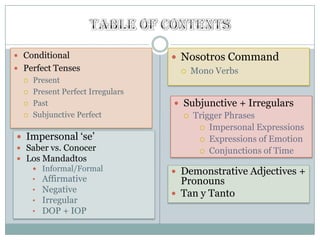
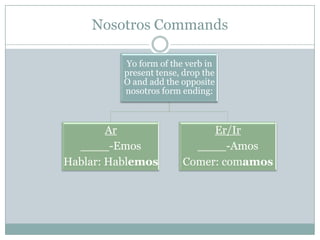
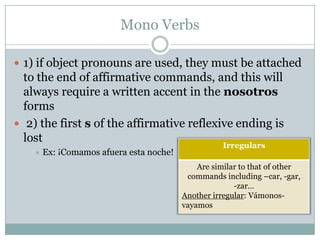
TABLE OF CONTENTSConditionalPerfect TensesPresentPresent Perfect IrregularsPastSubjunctive PerfectNosotros CommandMono VerbsSubjunctive + Irregulars
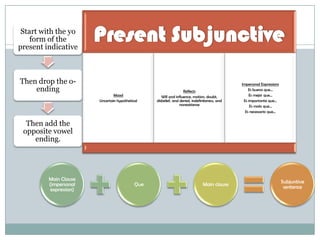
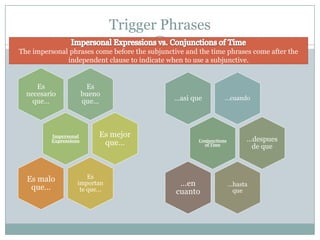
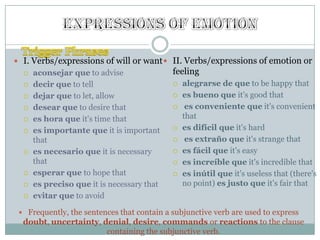
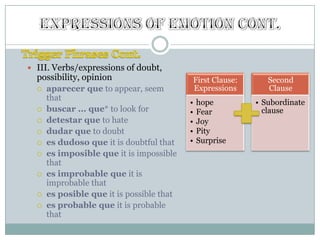
Trigger Phrases
Impersonal Expressions
Expressions of Emotion
Conjunctions of Time
Impersonal ‘se’
Saber vs. Conocer
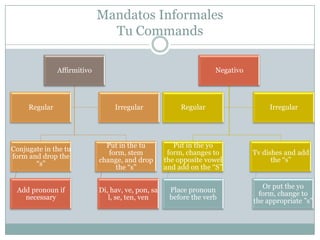
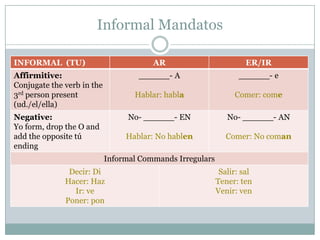
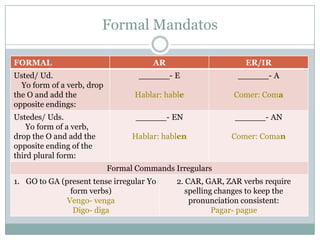
Los Mandadtos
Informal/Formal
Affirmative
Negative
Irregular
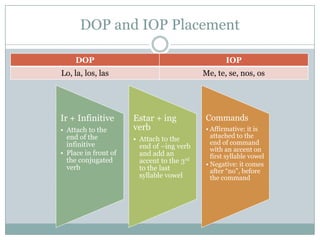
DOP + IOP
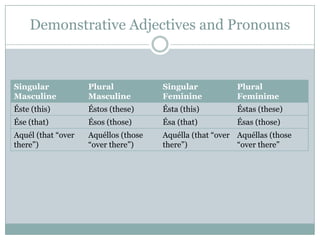
Demonstrative Adjectives + Pronouns
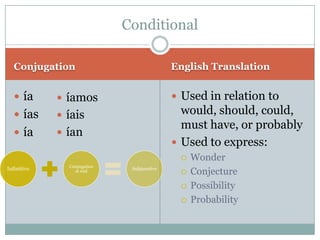
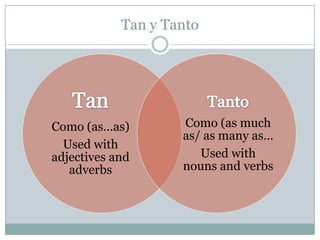
Tan y TantoConjugationEnglish Translation	íaíasíaUsed in relation to would, should, could, must have, or probablyUsed to express:WonderConjecturePossibilityProbability Conditionalíamosíaisían
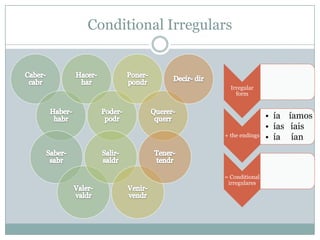
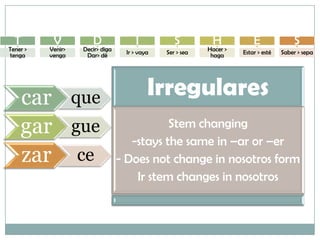
Conditional Irregulars
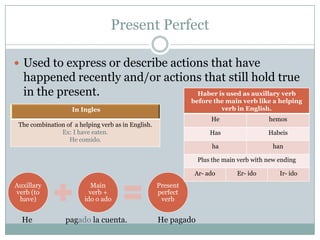
Present PerfectUsed to express or describe actions that have happened recently and/or actions that still hold true in the present.	He	      pagado la cuenta.	    He pagado
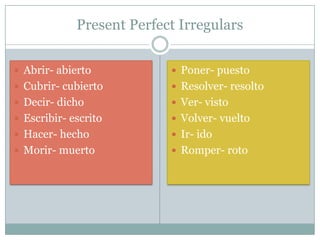
Present Perfect IrregularsAbrir- abiertoCubrir- cubiertoDecir- dichoEscribir- escritoHacer- hechoMorir- muertoPoner- puestoResolver- resoltoVer- vistoVolver- vueltoIr- idoRomper- roto
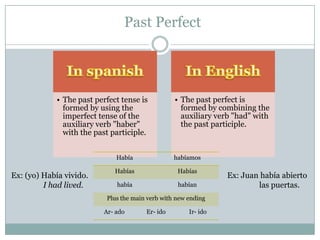
Past PerfectEx: Juan habíaabiertolaspuertas.Ex: (yo) Habíavivido.	I had lived.
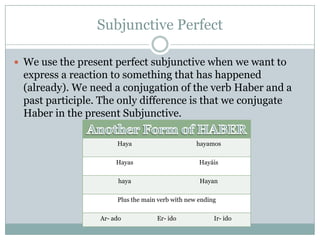
Subjunctive PerfectWe use the present perfect subjunctive when we want to express a reaction to something that has happened (already). We need a conjugation of the verb Haber and a past participle. The only difference is that we conjugate Haber in the present Subjunctive.
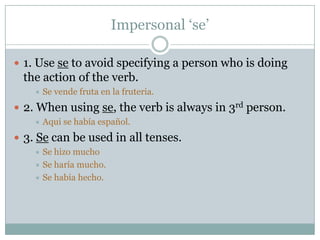
Impersonal ‘se’1. Use se to avoid specifying a person who is doing the action of the verb.Se vendefruta en la fruteria.2. When using se, the verb is always in 3rd person.Aqui se habíaespañol.3. Se can be used in all tenses.Se hizo muchoSe haría mucho.Se habíahecho.
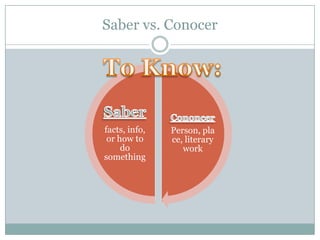
Saber vs. ConocerTo Know:

Grammar book 2