Download to read offline


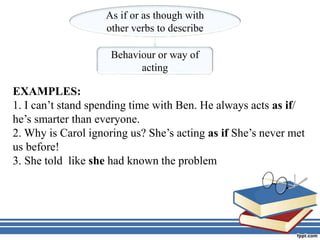
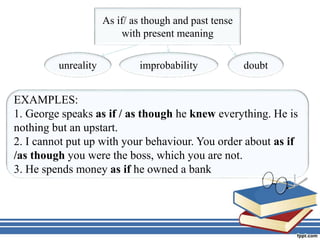


The document discusses the conjunctions "as if", "as though", and "like" and how they are used to describe how something looks, sounds, feels, or behaves in a way that seems untrue or uncertain. It provides examples of their use in different tenses and structures, including using "were" instead of "was" to emphasize something is not true. It also notes that "like" can be used informally in American English as an alternative to "as if/as though" followed by a clause.


