1

Past Time
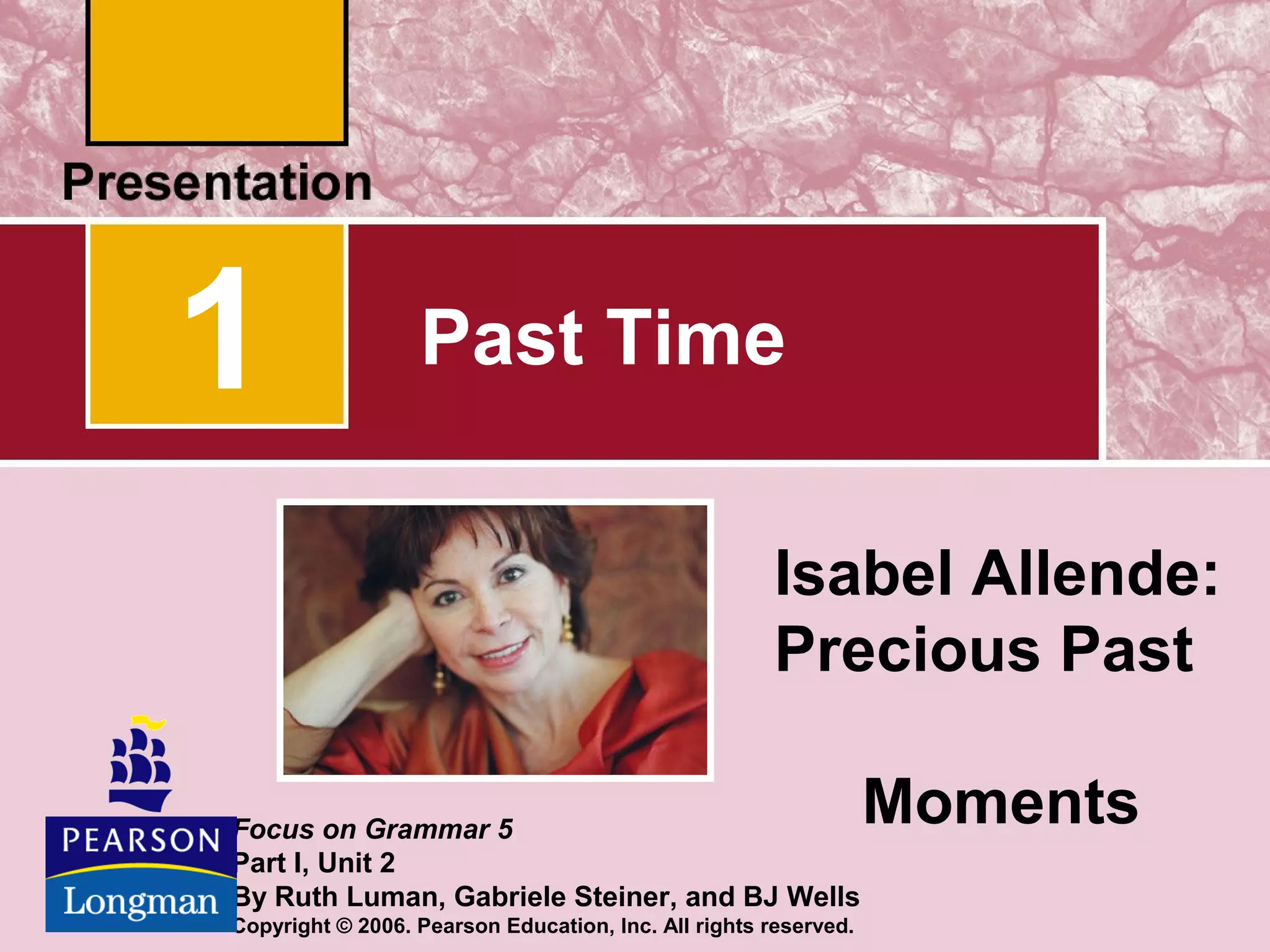
Isabel Allende:
Precious Past

Focus on Grammar 5
Part I, Unit 2
By Ruth Luman, Gabriele Steiner, and BJ Wells
Copyright © 2006. Pearson Education, Inc. All rights reserved.

Moments
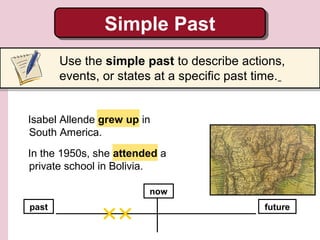
Simple Past
Use the simple past to describe actions,
events, or states at a specific past time.
Isabel Allende grew up in
South America.
In the 1950s, she attended a
private school in Bolivia.
now
past

future
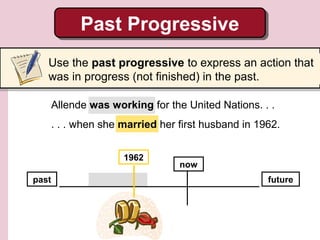
Past Progressive
Use the past progressive to express an action that
was in progress (not finished) in the past.
Allende was working for the United Nations. . .
. . . when she married her first husband in 1962.
1962
past

now
future
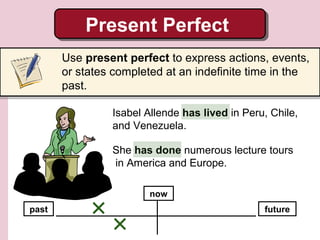
Present Perfect
Use present perfect to express actions, events,
or states completed at an indefinite time in the
past.
Isabel Allende has lived in Peru, Chile,
and Venezuela.
She has done numerous lecture tours
in America and Europe.
now
past

future
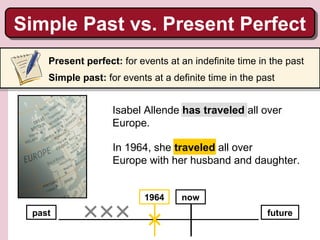
Simple Past vs. Present Perfect
Present perfect: for events at an indefinite time in the past
Simple past: for events at a definite time in the past

Isabel Allende has traveled all over
Europe.
In 1964, she traveled all over
Europe with her husband and daughter.
1964
past

now
future
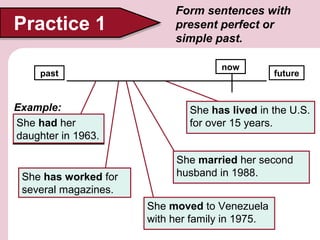
Practice 1
past

Example:
She had her
(have) her
1963.
daughter in 1963

She has for several
1. (work) worked for
several magazines.
magazines

Form sentences with
present perfect or
simple past.
now

future

She has lived in the U.S.
4. (live) in the U.S. for
forover 15 years
over 15 years.
She married her second
3. (marry) her second
husband in 1988.
husband in 1988
She moved to Venezuela
2. (move) to Venezuela
with her family in 1975.
with her family in 1975
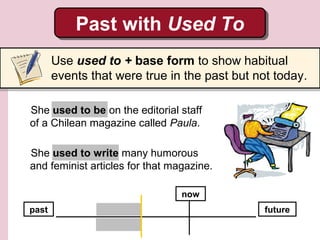
Past with Used To
Use used to + base form to show habitual
events that were true in the past but not today.
She used to be on the editorial staff
of a Chilean magazine called Paula.
She used to write many humorous
and feminist articles for that magazine.
now
past

future
Past Perfect 1
Use the past perfect to express events that
happened before a past event.
Allende had published many magazine articles . . .
. . . before she wrote her famous novel House of Spirits.

now
past

future

before
past event

past
event
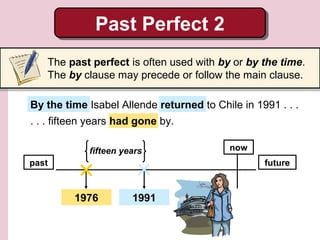
Past Perfect 2
The past perfect is often used with by or by the time.
The by clause may precede or follow the main clause.
By the time Isabel Allende returned to Chile in 1991 . . .
. . . fifteen years had gone by.
fifteen years
past

now
future

1976

1991
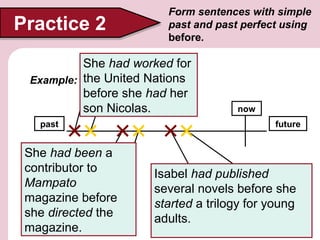
Practice 2

Form sentences with simple
past and past perfect using
before.

She hadthe
(work) for worked for
United Nations
Example: the United Nations
before she had her
(have) her
son Nicolas
son Nicolas.
past

She had been a
1. (be) a contributor
to Mampato
contributor to
Magazine
Mampato
magazine before
(direct) the
magazine
she directed the
magazine.

now
future

Isabel had published
2. Isabel (publish)
several novels
several novels before she
started a trilogy for young
(start) a
trilogy for
adults.

young adults
Past with Was / Were Going To
Use was / were going to + base form to describe
events that were supposed to happen but did not.
Isabel Allende was going to stay in Chile, but after the
military coup in 1973, she had to leave the country.
In 1978, they were going to separate, but Allende
soon returned to her husband.
now
past

did not
happen

future
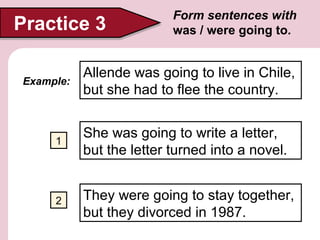
Practice 3
Example:

Form sentences with
was / were going to.

Allende planned
to live in Chile,
Allende was going She had to flee
to she Chile.
butlive in had to flee the country.
the country.

1

She planned to to writeletter turned
She was going
The a letter,
write a letter
into a a novel.
but theletter. turned into novel.

2

They were going They together,
They planned to to staydivorced in
stay together.
1987.
but they divorced in 1987.
References
Copyright © 2006 Pearson Education
and its licensors. All rights reserved.
Photo Credits:
Isabel Allende © Loria Barra

Presentation 1 past tenses

  • 1.
    1 Past Time Isabel Allende: PreciousPast Focus on Grammar 5 Part I, Unit 2 By Ruth Luman, Gabriele Steiner, and BJ Wells Copyright © 2006. Pearson Education, Inc. All rights reserved. Moments
  • 2.
    Simple Past Use thesimple past to describe actions, events, or states at a specific past time. Isabel Allende grew up in South America. In the 1950s, she attended a private school in Bolivia. now past future
  • 3.
    Past Progressive Use thepast progressive to express an action that was in progress (not finished) in the past. Allende was working for the United Nations. . . . . . when she married her first husband in 1962. 1962 past now future
  • 4.
    Present Perfect Use presentperfect to express actions, events, or states completed at an indefinite time in the past. Isabel Allende has lived in Peru, Chile, and Venezuela. She has done numerous lecture tours in America and Europe. now past future
  • 5.
    Simple Past vs.Present Perfect Present perfect: for events at an indefinite time in the past Simple past: for events at a definite time in the past Isabel Allende has traveled all over Europe. In 1964, she traveled all over Europe with her husband and daughter. 1964 past now future
  • 6.
    Practice 1 past Example: She hadher (have) her 1963. daughter in 1963 She has for several 1. (work) worked for several magazines. magazines Form sentences with present perfect or simple past. now future She has lived in the U.S. 4. (live) in the U.S. for forover 15 years over 15 years. She married her second 3. (marry) her second husband in 1988. husband in 1988 She moved to Venezuela 2. (move) to Venezuela with her family in 1975. with her family in 1975
  • 7.
    Past with UsedTo Use used to + base form to show habitual events that were true in the past but not today. She used to be on the editorial staff of a Chilean magazine called Paula. She used to write many humorous and feminist articles for that magazine. now past future
  • 8.
    Past Perfect 1 Usethe past perfect to express events that happened before a past event. Allende had published many magazine articles . . . . . . before she wrote her famous novel House of Spirits. now past future before past event past event
  • 9.
    Past Perfect 2 Thepast perfect is often used with by or by the time. The by clause may precede or follow the main clause. By the time Isabel Allende returned to Chile in 1991 . . . . . . fifteen years had gone by. fifteen years past now future 1976 1991
  • 10.
    Practice 2 Form sentenceswith simple past and past perfect using before. She hadthe (work) for worked for United Nations Example: the United Nations before she had her (have) her son Nicolas son Nicolas. past She had been a 1. (be) a contributor to Mampato contributor to Magazine Mampato magazine before (direct) the magazine she directed the magazine. now future Isabel had published 2. Isabel (publish) several novels several novels before she started a trilogy for young (start) a trilogy for adults. young adults
  • 11.
    Past with Was/ Were Going To Use was / were going to + base form to describe events that were supposed to happen but did not. Isabel Allende was going to stay in Chile, but after the military coup in 1973, she had to leave the country. In 1978, they were going to separate, but Allende soon returned to her husband. now past did not happen future
  • 12.
    Practice 3 Example: Form sentenceswith was / were going to. Allende planned to live in Chile, Allende was going She had to flee to she Chile. butlive in had to flee the country. the country. 1 She planned to to writeletter turned She was going The a letter, write a letter into a a novel. but theletter. turned into novel. 2 They were going They together, They planned to to staydivorced in stay together. 1987. but they divorced in 1987.
  • 13.
    References Copyright © 2006Pearson Education and its licensors. All rights reserved. Photo Credits: Isabel Allende © Loria Barra

Editor's Notes