1. Veilonella
Morphology
 Small cocci
 Gram negative cocci
 Non motile
 Non sporing
 0.3-0.5 mm in diameter
 Occuring in pair, short chins or in clumps
 Anaerobic cocci
 Appearing by light microcopy as diplococci,
masses and short chain
 Colonies may fluoresce red under UV light
 Optimum temperature is 30-350c
 Optimum pH is 6.5-8
 Present in normal flora of the mouth, GI tract
 This bacterium is well known for its lactate
fermenting abilities
 Catalase negative
 Some species produce catalase lacking
porphyrin
 Pyruvate, malate, fumarate and oxaloacetate
are fermented
 Acetate, propionate, CO2 and H2 are produced
 Veillonella cocci reduce nitrate
 Fermentation of lactate to propionate and
acetate by methyl malonyl-coA pathway
 ATP is produced
 High substrate affinity
 3 lactate acetate+2propionate+CO2+H2O
 These organism also inhibited bile, kanamycin,
colistin.
 Isolated in polymicrobial anaerobic infection
 Produced serologically specific endotoxin that
induce pyrogenicity and Schwaltzman
phenomenon in rabbits
 Veillonella resistant to vancomycin, tetracyclin,
aminoglycosides and ciprofloxacin.
 it is non pathogenic cocci
 These organism are parasitic in mouth,
intestinal and respiratory tract of humans and
other animal
 Rarely, veillonella species have been the only
etiologic agent identified in seroius infection
such as;
 Meningitis
 Osteomyelitis
 Prostheitc joint pain
 endocarditis
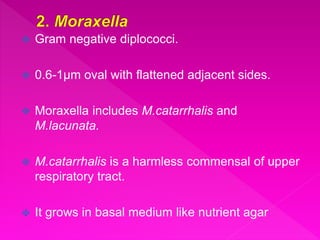
 Gram negative diplococci.
 0.6-1µm oval with flattened adjacent sides.
 Moraxella includes M.catarrhalis and
M.lacunata.
 M.catarrhalis is a harmless commensal of upper
respiratory tract.
 It grows in basal medium like nutrient agar
 Oxidase and catalase positive.
 It differ from pathogenic Neisseria as.
 It does not ferment any carbohydrate.
 Give a positive tributyrin hydrolysis test.
 Shows Dnase test positive
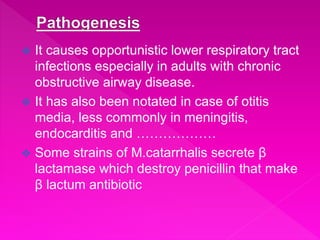
 It causes opportunistic lower respiratory tract
infections especially in adults with chronic
obstructive airway disease.
 It has also been notated in case of otitis
media, less commonly in meningitis,
endocarditis and ………………
 Some strains of M.catarrhalis secrete β
lactamase which destroy penicillin that make
β lactum antibiotic
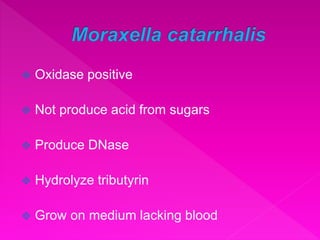
 Oxidase positive
 Not produce acid from sugars
 Produce DNase
 Hydrolyze tributyrin
 Grow on medium lacking blood
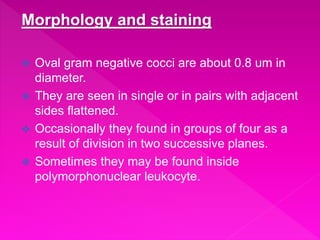
Morphology and staining
 Oval gram negative cocci are about 0.8 um in
diameter.
 They are seen in single or in pairs with adjacent
sides flattened.
 Occasionally they found in groups of four as a
result of division in two successive planes.
 Sometimes they may be found inside
polymorphonuclear leukocyte.
Cultural characteristics
 Optimum temperature of aerobe is 360c but
many strains grows in 220c.
 Grow on nutrient agar
 Colonies on blood or heated blood agar are;
1-2mm in diameter
non hemolytic
friable
white or greyish
convex
 After 48hrs the colonies are;
Large
More elevated with raised opaque center
Biochemical reactions
 Oxidase positive
 Not produce acid from glucose, maltose,
sucrose lactose or fructose.
 Reduce nitrite to nitrite
 Hydrolyses tributyrin
 More resistant than the meningococcus or
gonococcus.
 Culture may remain viable for several months
for 200c.
 May survive in sputum for 3-4 weeks
 Susceptible for a wide range of antibiotics
 Resistant to penicillin and ampicillin
 Sensitivity test can be done by disc or dilution
methods
Gram positive non sporing anaerobic bacilli
 species are commensals in mouth and
intestine.
 They are rarely pathogenic.
 Eubactecterium,Bifidobacterium and Arachnia.
 Non motile gram negative bacilli
 Show bipolar and barred staining
 They are distributed as saprophytes
 They can ferment milk and cheese
 They produce lactic acid from carbohydrate and
grow in the pH of <5
 Part of normal flora of mouth, gut and vagina
 Lactobacilli in the stomach synthesize
vitamins such as biotin, vit B12, vit K.
 In the oral cartrige these have role in the
pathogenesis of dental caries
 It forms acid by the fermenttion of sucrose
and other dietary carbohydrate which
dissolve the mineral components of enamel
ant dentine
 In vagina, it produce lactic acid that maintain
the acidic Ph of the adult vagina protecting
from various infections
 Peptoocus: one species; P.niger which occur
 as gram positive cocci
 Distributed singly or in pair or in cluster
 It produce black colour on blood agar and
also produce H2S
 Peptostreptococcus: gram positive cocci
occur in pair or in chains
 Has many species
 Both peptococcus and peptostreptococcus
are normal flora of skin, mouth,intestine and
vagina
THANK YOU

Gram negative cocci

  • 2.
    1. Veilonella Morphology  Smallcocci  Gram negative cocci  Non motile  Non sporing  0.3-0.5 mm in diameter  Occuring in pair, short chins or in clumps
  • 3.
     Anaerobic cocci Appearing by light microcopy as diplococci, masses and short chain  Colonies may fluoresce red under UV light  Optimum temperature is 30-350c  Optimum pH is 6.5-8  Present in normal flora of the mouth, GI tract  This bacterium is well known for its lactate fermenting abilities
  • 4.
     Catalase negative Some species produce catalase lacking porphyrin  Pyruvate, malate, fumarate and oxaloacetate are fermented  Acetate, propionate, CO2 and H2 are produced  Veillonella cocci reduce nitrate
  • 5.
     Fermentation oflactate to propionate and acetate by methyl malonyl-coA pathway  ATP is produced  High substrate affinity  3 lactate acetate+2propionate+CO2+H2O
  • 6.
     These organismalso inhibited bile, kanamycin, colistin.  Isolated in polymicrobial anaerobic infection  Produced serologically specific endotoxin that induce pyrogenicity and Schwaltzman phenomenon in rabbits  Veillonella resistant to vancomycin, tetracyclin, aminoglycosides and ciprofloxacin.
  • 7.
     it isnon pathogenic cocci  These organism are parasitic in mouth, intestinal and respiratory tract of humans and other animal  Rarely, veillonella species have been the only etiologic agent identified in seroius infection such as;  Meningitis  Osteomyelitis  Prostheitc joint pain  endocarditis
  • 8.
     Gram negativediplococci.  0.6-1µm oval with flattened adjacent sides.  Moraxella includes M.catarrhalis and M.lacunata.  M.catarrhalis is a harmless commensal of upper respiratory tract.  It grows in basal medium like nutrient agar
  • 9.
     Oxidase andcatalase positive.  It differ from pathogenic Neisseria as.  It does not ferment any carbohydrate.  Give a positive tributyrin hydrolysis test.  Shows Dnase test positive
  • 10.
     It causesopportunistic lower respiratory tract infections especially in adults with chronic obstructive airway disease.  It has also been notated in case of otitis media, less commonly in meningitis, endocarditis and ………………  Some strains of M.catarrhalis secrete β lactamase which destroy penicillin that make β lactum antibiotic
  • 11.
     Oxidase positive Not produce acid from sugars  Produce DNase  Hydrolyze tributyrin  Grow on medium lacking blood
  • 12.
    Morphology and staining Oval gram negative cocci are about 0.8 um in diameter.  They are seen in single or in pairs with adjacent sides flattened.  Occasionally they found in groups of four as a result of division in two successive planes.  Sometimes they may be found inside polymorphonuclear leukocyte.
  • 13.
    Cultural characteristics  Optimumtemperature of aerobe is 360c but many strains grows in 220c.  Grow on nutrient agar  Colonies on blood or heated blood agar are; 1-2mm in diameter non hemolytic friable white or greyish convex
  • 14.
     After 48hrsthe colonies are; Large More elevated with raised opaque center Biochemical reactions  Oxidase positive  Not produce acid from glucose, maltose, sucrose lactose or fructose.  Reduce nitrite to nitrite  Hydrolyses tributyrin
  • 15.
     More resistantthan the meningococcus or gonococcus.  Culture may remain viable for several months for 200c.  May survive in sputum for 3-4 weeks  Susceptible for a wide range of antibiotics  Resistant to penicillin and ampicillin  Sensitivity test can be done by disc or dilution methods
  • 16.
    Gram positive nonsporing anaerobic bacilli  species are commensals in mouth and intestine.  They are rarely pathogenic.  Eubactecterium,Bifidobacterium and Arachnia.
  • 17.
     Non motilegram negative bacilli  Show bipolar and barred staining  They are distributed as saprophytes  They can ferment milk and cheese  They produce lactic acid from carbohydrate and grow in the pH of <5  Part of normal flora of mouth, gut and vagina
  • 18.
     Lactobacilli inthe stomach synthesize vitamins such as biotin, vit B12, vit K.  In the oral cartrige these have role in the pathogenesis of dental caries  It forms acid by the fermenttion of sucrose and other dietary carbohydrate which dissolve the mineral components of enamel ant dentine  In vagina, it produce lactic acid that maintain the acidic Ph of the adult vagina protecting from various infections
  • 19.
     Peptoocus: onespecies; P.niger which occur  as gram positive cocci  Distributed singly or in pair or in cluster  It produce black colour on blood agar and also produce H2S
  • 20.
     Peptostreptococcus: grampositive cocci occur in pair or in chains  Has many species  Both peptococcus and peptostreptococcus are normal flora of skin, mouth,intestine and vagina
  • 21.