Nies and McEwen: Chapter 13
ATI: 12 pages 106- 108
LESSON 2
COMMUNITY HEALTH
PROBLEMS
Objectives
• Enumerate the different
community health
problems
• Recognize the value
produce by health
environment
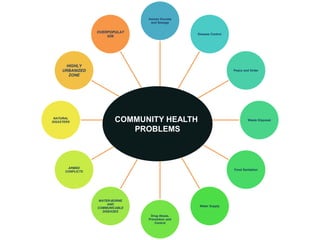
COMMUNITY
HEALTH
PROBLEMS
Human Excreta
and Sewage
Disease Control
Peace and Order
Waste Disposal
Food Sanitation
Water Supply
Drug Abuse,
Prevention and
Control
WATER-BORNE
AND
COMMUNICABLE
DISEASES
ARMED
CONFLICTS
NATURAL
DISASTERS
HIGHLY
URBANIZED
ZONE
OVERPOPULAT
ION
COMMUNITY HEALTH
PROBLEMS
4
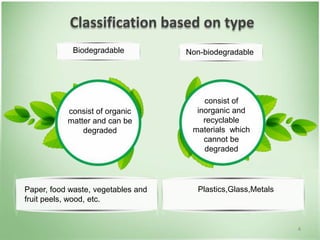
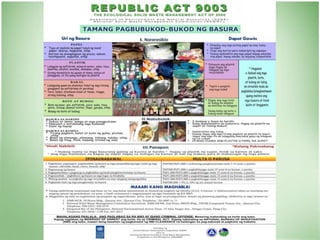
Classification based on type
Biodegradable Non-biodegradable
consist of organic
matter and can be
degraded
consist of
inorganic and
recyclable
materials which
cannot be
degraded
Paper, food waste, vegetables and
fruit peels, wood, etc.
Plastics,Glass,Metals
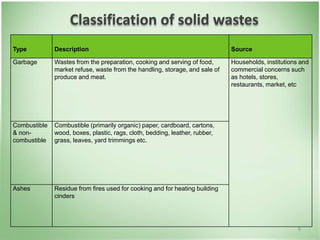
Type Description Source
Garbage Wastes from the preparation, cooking and serving of food,
market refuse, waste from the handling, storage, and sale of
produce and meat.
Households, institutions and
commercial concerns such
as hotels, stores,
restaurants, market, etc
Combustible
& non-
combustible
Combustible (primarily organic) paper, cardboard, cartons,
wood, boxes, plastic, rags, cloth, bedding, leather, rubber,
grass, leaves, yard trimmings etc.
Ashes Residue from fires used for cooking and for heating building
cinders
5
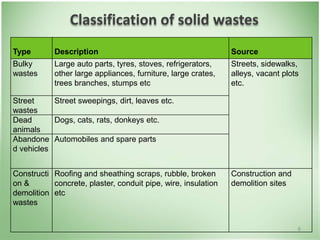
Classification of solid wastes
Type Description Source
Bulky
wastes
Large auto parts, tyres, stoves, refrigerators,
other large appliances, furniture, large crates,
trees branches, stumps etc
Streets, sidewalks,
alleys, vacant plots
etc.
Street
wastes
Street sweepings, dirt, leaves etc.
Dead
animals
Dogs, cats, rats, donkeys etc.
Abandone
d vehicles
Automobiles and spare parts
Constructi
on &
demolition
wastes
Roofing and sheathing scraps, rubble, broken
concrete, plaster, conduit pipe, wire, insulation
etc
Construction and
demolition sites
6
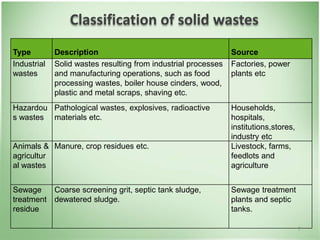
Classification of solid wastes
Type Description Source
Industrial
wastes
Solid wastes resulting from industrial processes
and manufacturing operations, such as food
processing wastes, boiler house cinders, wood,
plastic and metal scraps, shaving etc.
Factories, power
plants etc
Hazardou
s wastes
Pathological wastes, explosives, radioactive
materials etc.
Households,
hospitals,
institutions,stores,
industry etc
Animals &
agricultur
al wastes
Manure, crop residues etc. Livestock, farms,
feedlots and
agriculture
Sewage
treatment
residue
Coarse screening grit, septic tank sludge,
dewatered sludge.
Sewage treatment
plants and septic
tanks.
7
Classification of solid wastes
8
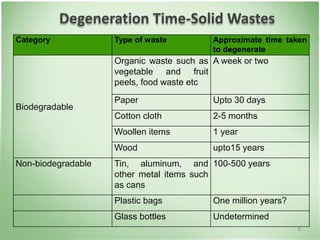
Category Type of waste Approximate time taken
to degenerate
Biodegradable
Organic waste such as
vegetable and fruit
peels, food waste etc
A week or two
Paper Upto 30 days
Cotton cloth 2-5 months
Woollen items 1 year
Wood upto15 years
Non-biodegradable Tin, aluminum, and
other metal items such
as cans
100-500 years
Plastic bags One million years?
Glass bottles Undetermined
Degeneration Time-Solid Wastes
9
10
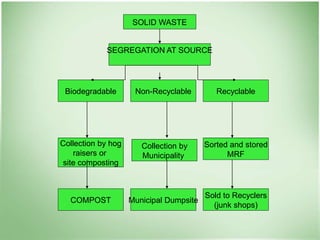
SOLID WASTE
SEGREGATION AT SOURCE
Biodegradable Non-Recyclable Recyclable
Municipal Dumpsite
Sorted and stored
MRF
Sold to Recyclers
(junk shops)
Collection by hog
raisers or
site composting
COMPOST
Collection by
Municipality
13
Grade 9 Lesson 2: Community Health Problems

Grade 9 Lesson 2: Community Health Problems

  • 1.
    Nies and McEwen:Chapter 13 ATI: 12 pages 106- 108 LESSON 2 COMMUNITY HEALTH PROBLEMS
  • 2.
    Objectives • Enumerate thedifferent community health problems • Recognize the value produce by health environment
  • 3.
    COMMUNITY HEALTH PROBLEMS Human Excreta and Sewage DiseaseControl Peace and Order Waste Disposal Food Sanitation Water Supply Drug Abuse, Prevention and Control WATER-BORNE AND COMMUNICABLE DISEASES ARMED CONFLICTS NATURAL DISASTERS HIGHLY URBANIZED ZONE OVERPOPULAT ION COMMUNITY HEALTH PROBLEMS
  • 4.
    4 Classification based ontype Biodegradable Non-biodegradable consist of organic matter and can be degraded consist of inorganic and recyclable materials which cannot be degraded Paper, food waste, vegetables and fruit peels, wood, etc. Plastics,Glass,Metals
  • 5.
    Type Description Source GarbageWastes from the preparation, cooking and serving of food, market refuse, waste from the handling, storage, and sale of produce and meat. Households, institutions and commercial concerns such as hotels, stores, restaurants, market, etc Combustible & non- combustible Combustible (primarily organic) paper, cardboard, cartons, wood, boxes, plastic, rags, cloth, bedding, leather, rubber, grass, leaves, yard trimmings etc. Ashes Residue from fires used for cooking and for heating building cinders 5 Classification of solid wastes
  • 6.
    Type Description Source Bulky wastes Largeauto parts, tyres, stoves, refrigerators, other large appliances, furniture, large crates, trees branches, stumps etc Streets, sidewalks, alleys, vacant plots etc. Street wastes Street sweepings, dirt, leaves etc. Dead animals Dogs, cats, rats, donkeys etc. Abandone d vehicles Automobiles and spare parts Constructi on & demolition wastes Roofing and sheathing scraps, rubble, broken concrete, plaster, conduit pipe, wire, insulation etc Construction and demolition sites 6 Classification of solid wastes
  • 7.
    Type Description Source Industrial wastes Solidwastes resulting from industrial processes and manufacturing operations, such as food processing wastes, boiler house cinders, wood, plastic and metal scraps, shaving etc. Factories, power plants etc Hazardou s wastes Pathological wastes, explosives, radioactive materials etc. Households, hospitals, institutions,stores, industry etc Animals & agricultur al wastes Manure, crop residues etc. Livestock, farms, feedlots and agriculture Sewage treatment residue Coarse screening grit, septic tank sludge, dewatered sludge. Sewage treatment plants and septic tanks. 7 Classification of solid wastes
  • 8.
    8 Category Type ofwaste Approximate time taken to degenerate Biodegradable Organic waste such as vegetable and fruit peels, food waste etc A week or two Paper Upto 30 days Cotton cloth 2-5 months Woollen items 1 year Wood upto15 years Non-biodegradable Tin, aluminum, and other metal items such as cans 100-500 years Plastic bags One million years? Glass bottles Undetermined Degeneration Time-Solid Wastes
  • 9.
  • 10.
  • 12.
    SOLID WASTE SEGREGATION ATSOURCE Biodegradable Non-Recyclable Recyclable Municipal Dumpsite Sorted and stored MRF Sold to Recyclers (junk shops) Collection by hog raisers or site composting COMPOST Collection by Municipality
  • 13.