SHRI VAISHNAV INSTITUTE
OF TECHNOLOGY AND
SCIENCE
DEPARTMENT OF ELECTRONICS AND
COMMUNICATION
GUIDED BY-
Miss RASHMI GOME
SUBMITTED BY -
AVINASH
KHARCHE(0802EC111022)
GOOGLE GLASS
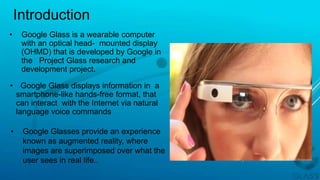
• Google Glass is a wearable computer
with an optical head- mounted display
(OHMD) that is developed by Google in
the Project Glass research and
development project.
• Google Glass displays information in a
smartphone-like hands-free format, that
can interact with the Internet via natural
language voice commands
• Google Glasses provide an experience
known as augmented reality, where
images are superimposed over what the
user sees in real life..
Introduction
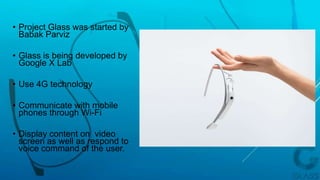
• Project Glass was started by
Babak Parviz
• Glass is being developed by
Google X Lab
• Use 4G technology
• Communicate with mobile
phones through Wi-Fi
• Display content on video
screen as well as respond to
voice command of the user.
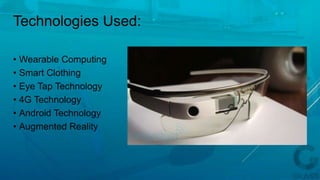
Technologies Used:
• Wearable Computing
• Smart Clothing
• Eye Tap Technology
• 4G Technology
• Android Technology
• Augmented Reality
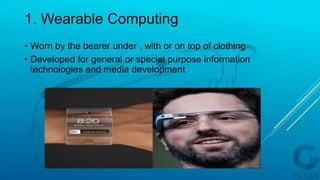
1. Wearable Computing
• Worn by the bearer under , with or on top of clothing
• Developed for general or special purpose information
technologies and media development
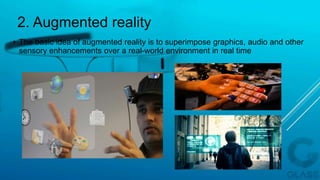
2. Augmented reality
• The basic idea of augmented reality is to superimpose graphics, audio and other
sensory enhancements over a real-world environment in real time
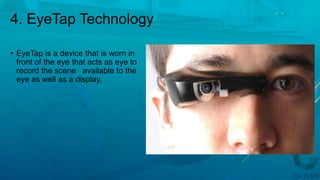
4. EyeTap Technology
• EyeTap is a device that is worn in
front of the eye that acts as eye to
record the scene available to the
eye as well as a display.
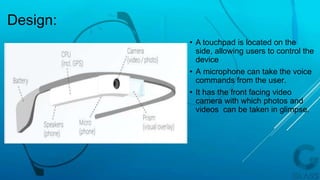
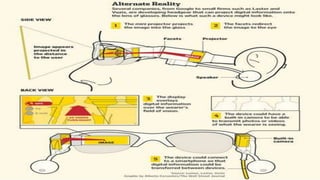
Design:
• A touchpad is located on the
side, allowing users to control the
device
• A microphone can take the voice
commands from the user.
• It has the front facing video
camera with which photos and
videos can be taken in glimpse.
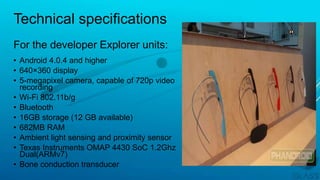
Technical specifications
• Android 4.0.4 and higher
• 640×360 display
• 5-megapixel camera, capable of 720p video
recording
• Wi-Fi 802.11b/g
• Bluetooth
• 16GB storage (12 GB available)
• 682MB RAM
• Ambient light sensing and proximity sensor
• Texas Instruments OMAP 4430 SoC 1.2Ghz
Dual(ARMv7)
• Bone conduction transducer
For the developer Explorer units:
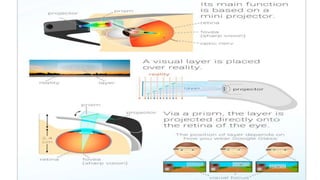
How it works!!
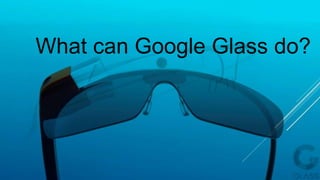
What can Google Glass do?
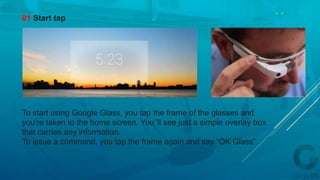
01 Start tap
To start using Google Glass, you tap the frame of the glasses and
you’re taken to the home screen. You’’ll see just a simple overlay box
that carries any information.
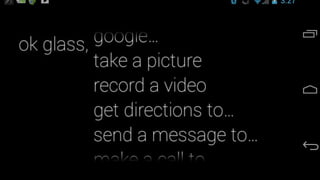
To issue a command, you tap the frame again and say “OK Glass”.
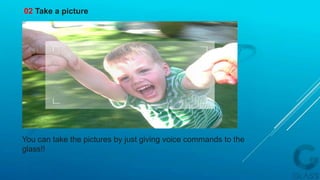
You can take the pictures by just giving voice commands to the
glass!!
02 Take a picture
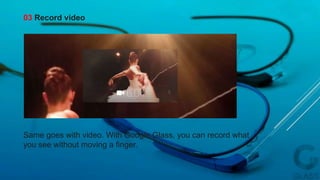
Same goes with video. With Google Glass, you can record what
you see without moving a finger.
03 Record video
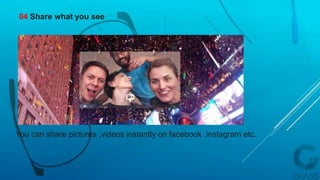
You can share pictures ,videos instantly on facebook ,instagram etc.
04 Share what you see
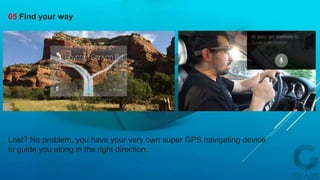
Lost? No problem, you have your very own super GPS navigating device
to guide you along in the right direction.
05 Find your way
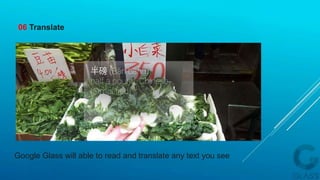
Google Glass will able to read and translate any text you see
06 Translate
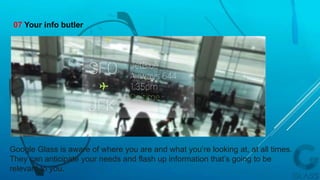
Google Glass is aware of where you are and what you’re looking at, at all times.
They can anticipate your needs and flash up information that’s going to be
relevant to you.
07 Your info butler
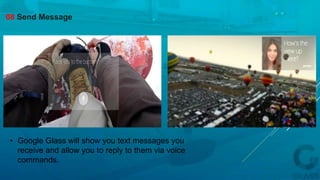
08 Send Message
• Google Glass will show you text messages you
receive and allow you to reply to them via voice
commands.
• Easy to wear and use.
• Sensitive and responsive to the presence of people.
• Fast access of maps, documents, videos, chats and much more.
• A new trend for fashion lovers together being an innovative
technology.
• A spectacle based computer to reside directly on your eyes rather
than in your pouch or pocket.
Advantages of Google Glass
1. Can be easily broken or damaged. Users will have a tough time
taking care of it.
2. It may lead to accidents while driving, eyestrain or visual confusion.
3. Privacy of people may breach with new glasses.
Disadvantages:
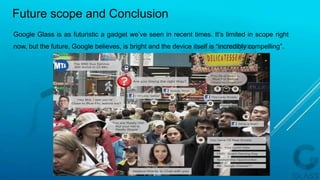
Google Glass is as futuristic a gadget we’ve seen in recent times. It’s limited in scope right
now, but the future, Google believes, is bright and the device itself is “incredibly compelling”.
Future scope and Conclusion
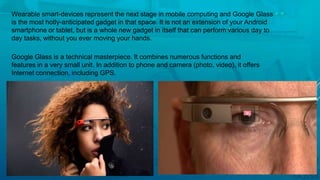
Wearable smart-devices represent the next stage in mobile computing and Google Glass
is the most hotly-anticipated gadget in that space. It is not an extension of your Android
smartphone or tablet, but is a whole new gadget in itself that can perform various day to
day tasks, without you ever moving your hands.
Google Glass is a technical masterpiece. It combines numerous functions and
features in a very small unit. In addition to phone and camera (photo, video), it offers
Internet connection, including GPS.
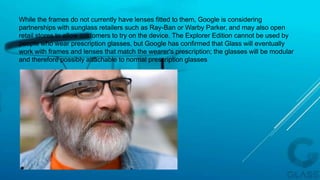
While the frames do not currently have lenses fitted to them, Google is considering
partnerships with sunglass retailers such as Ray-Ban or Warby Parker, and may also open
retail stores to allow customers to try on the device. The Explorer Edition cannot be used by
people who wear prescription glasses, but Google has confirmed that Glass will eventually
work with frames and lenses that match the wearer's prescription; the glasses will be modular
and therefore possibly attachable to normal prescription glasses
Thank you

Google glass

  • 1.
    SHRI VAISHNAV INSTITUTE OFTECHNOLOGY AND SCIENCE DEPARTMENT OF ELECTRONICS AND COMMUNICATION GUIDED BY- Miss RASHMI GOME SUBMITTED BY - AVINASH KHARCHE(0802EC111022) GOOGLE GLASS
  • 2.
    • Google Glassis a wearable computer with an optical head- mounted display (OHMD) that is developed by Google in the Project Glass research and development project. • Google Glass displays information in a smartphone-like hands-free format, that can interact with the Internet via natural language voice commands • Google Glasses provide an experience known as augmented reality, where images are superimposed over what the user sees in real life.. Introduction
  • 3.
    • Project Glasswas started by Babak Parviz • Glass is being developed by Google X Lab • Use 4G technology • Communicate with mobile phones through Wi-Fi • Display content on video screen as well as respond to voice command of the user.
  • 4.
    Technologies Used: • WearableComputing • Smart Clothing • Eye Tap Technology • 4G Technology • Android Technology • Augmented Reality
  • 5.
    1. Wearable Computing •Worn by the bearer under , with or on top of clothing • Developed for general or special purpose information technologies and media development
  • 6.
    2. Augmented reality •The basic idea of augmented reality is to superimpose graphics, audio and other sensory enhancements over a real-world environment in real time
  • 7.
    4. EyeTap Technology •EyeTap is a device that is worn in front of the eye that acts as eye to record the scene available to the eye as well as a display.
  • 8.
    Design: • A touchpadis located on the side, allowing users to control the device • A microphone can take the voice commands from the user. • It has the front facing video camera with which photos and videos can be taken in glimpse.
  • 9.
    Technical specifications • Android4.0.4 and higher • 640×360 display • 5-megapixel camera, capable of 720p video recording • Wi-Fi 802.11b/g • Bluetooth • 16GB storage (12 GB available) • 682MB RAM • Ambient light sensing and proximity sensor • Texas Instruments OMAP 4430 SoC 1.2Ghz Dual(ARMv7) • Bone conduction transducer For the developer Explorer units:
  • 10.
  • 13.
    What can GoogleGlass do?
  • 14.
    01 Start tap Tostart using Google Glass, you tap the frame of the glasses and you’re taken to the home screen. You’’ll see just a simple overlay box that carries any information. To issue a command, you tap the frame again and say “OK Glass”.
  • 15.
    You can takethe pictures by just giving voice commands to the glass!! 02 Take a picture
  • 16.
    Same goes withvideo. With Google Glass, you can record what you see without moving a finger. 03 Record video
  • 17.
    You can sharepictures ,videos instantly on facebook ,instagram etc. 04 Share what you see
  • 18.
    Lost? No problem,you have your very own super GPS navigating device to guide you along in the right direction. 05 Find your way
  • 19.
    Google Glass willable to read and translate any text you see 06 Translate
  • 20.
    Google Glass isaware of where you are and what you’re looking at, at all times. They can anticipate your needs and flash up information that’s going to be relevant to you. 07 Your info butler
  • 21.
    08 Send Message •Google Glass will show you text messages you receive and allow you to reply to them via voice commands.
  • 23.
    • Easy towear and use. • Sensitive and responsive to the presence of people. • Fast access of maps, documents, videos, chats and much more. • A new trend for fashion lovers together being an innovative technology. • A spectacle based computer to reside directly on your eyes rather than in your pouch or pocket. Advantages of Google Glass
  • 24.
    1. Can beeasily broken or damaged. Users will have a tough time taking care of it. 2. It may lead to accidents while driving, eyestrain or visual confusion. 3. Privacy of people may breach with new glasses. Disadvantages:
  • 25.
    Google Glass isas futuristic a gadget we’ve seen in recent times. It’s limited in scope right now, but the future, Google believes, is bright and the device itself is “incredibly compelling”. Future scope and Conclusion
  • 26.
    Wearable smart-devices representthe next stage in mobile computing and Google Glass is the most hotly-anticipated gadget in that space. It is not an extension of your Android smartphone or tablet, but is a whole new gadget in itself that can perform various day to day tasks, without you ever moving your hands. Google Glass is a technical masterpiece. It combines numerous functions and features in a very small unit. In addition to phone and camera (photo, video), it offers Internet connection, including GPS.
  • 27.
    While the framesdo not currently have lenses fitted to them, Google is considering partnerships with sunglass retailers such as Ray-Ban or Warby Parker, and may also open retail stores to allow customers to try on the device. The Explorer Edition cannot be used by people who wear prescription glasses, but Google has confirmed that Glass will eventually work with frames and lenses that match the wearer's prescription; the glasses will be modular and therefore possibly attachable to normal prescription glasses
  • 28.