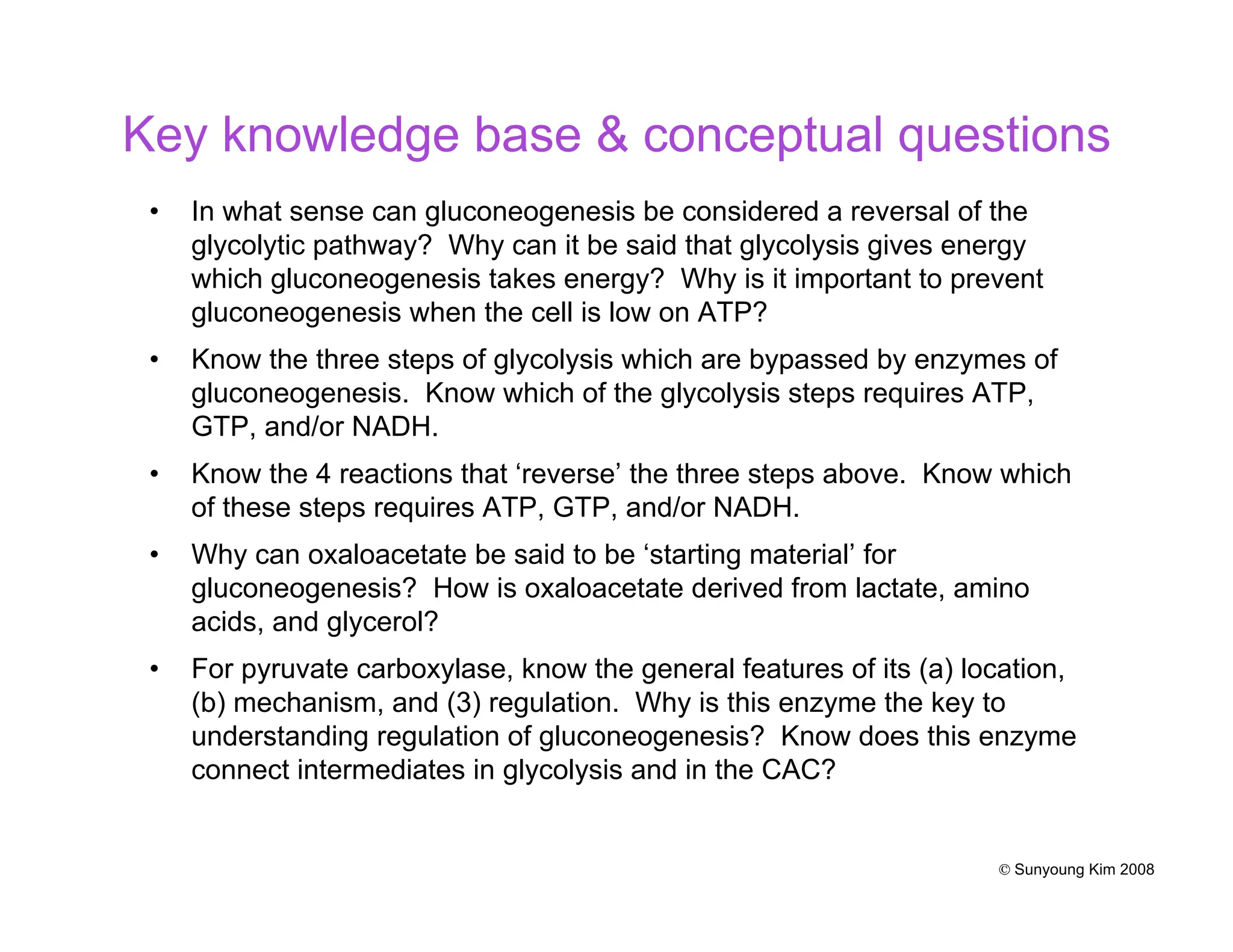
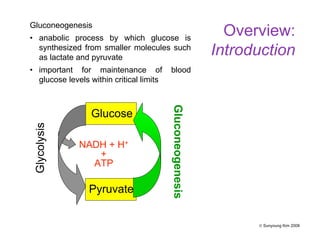
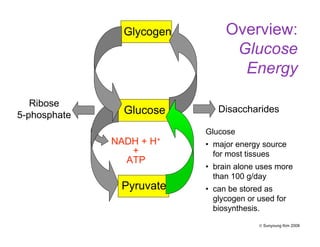
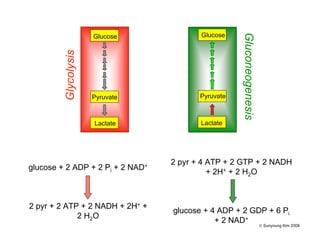
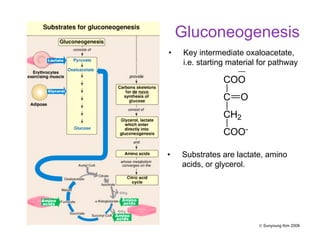
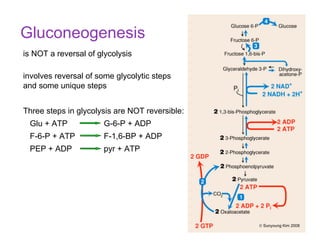
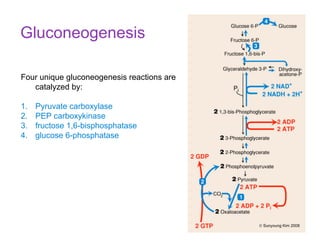
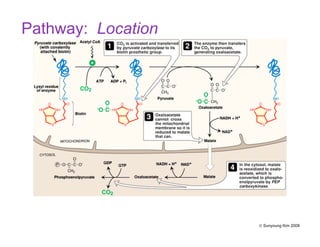
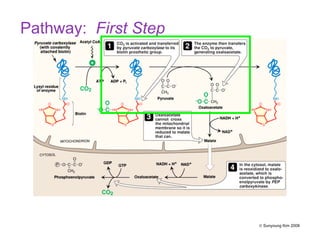
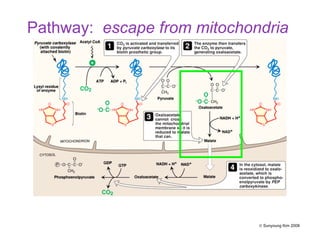
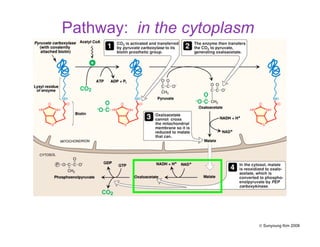
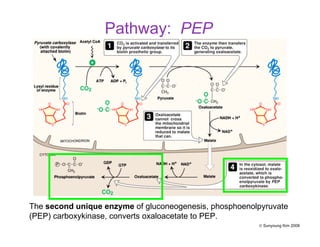
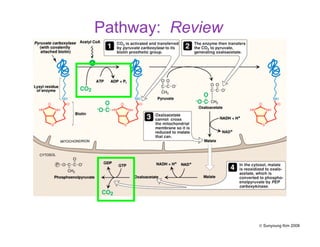
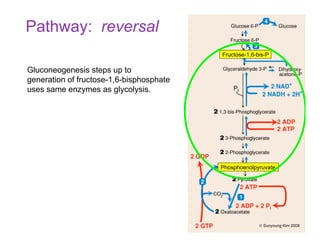
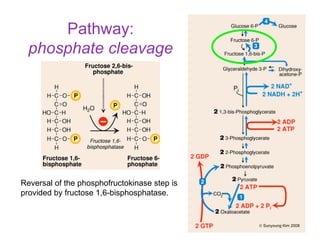
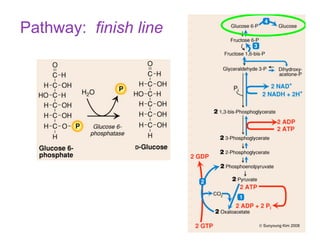
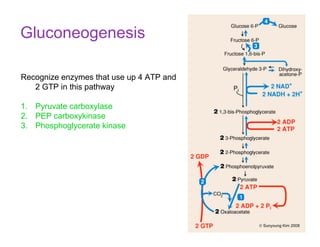
Gluconeogenesis is the process by which glucose is synthesized from non-carbohydrate precursors like lactate, amino acids, and glycerol. It is important for maintaining blood glucose levels. While some steps are reversible versions of glycolysis, gluconeogenesis must bypass three irreversible steps in glycolysis using unique enzymes. The key enzyme is pyruvate carboxylase, which fixes carbon in the mitochondria as the first step. Oxaloacetate is the starting material for gluconeogenesis, derived from substrates that enter the pathway in the cytoplasm or mitochondria. Gluconeogenesis requires energy input from ATP or GTP hydrolysis to complete some steps not possible through glycolysis alone.



![health promotion lecture notes 2023[Autosaved].pptx](https://cdn.slidesharecdn.com/ss_thumbnails/healthpromotionlecturenotes2023autosaved-240524204053-9ab2f7a0-thumbnail.jpg?width=640&height=640&fit=bounds)


![ONFH[AVN HIP] -TRIPLE REGIME -A NOVAL SURGICAL CONCEPT .pptx](https://cdn.slidesharecdn.com/ss_thumbnails/onfhavnhip2026koaconcalicutdrgokuldevdrmashraf-260210064517-213ec005-thumbnail.jpg?width=640&height=640&fit=bounds)


![CTEV [ clubfoot] DR ARUN LAL ,DR MOHAMED ASHRAF travancore medical college k...](https://cdn.slidesharecdn.com/ss_thumbnails/ctevclubfootdrarunlaldrmohamedashraftravancoremedicalcollegekollamkeralaindia-260208063247-18fc466c-thumbnail.jpg?width=640&height=640&fit=bounds)


