Beatriz - David
 Acquisition vs Learning
 Approach
 Critical Period
 Digital Literacy vs Literacy
 E.F.L.
 E.S.L.
 L.A.D.
 MotherTongue andTarget Language
 Multiple Intelligences
 Phonics
 Silent Period
 T.P.R.
 Z.P.D.
LEARNING
Artificial
Technical
Priority on the written language
Theory (language analysis)
Deductive teaching
Preset syllabus
Activities about the language
Focus on form
Produces knowledge
ACQUISITION
Natural
Personal
Priority on the spoken language
Practice (language in use)
Inductive coaching
Improvised activities
Activities in the language
Focus on communication
Produces an ability
"Acquisition requires meaningful interaction in the target language - natural
communication - in which speakers are concerned not with the form of their utterances
but with the messages they are conveying and understanding." Stephen Krashen
APPROACH
Approach is a set of principles about teaching including views on method,
syllabus, and a philosophy of language and learning. Approaches have
theoretical backing with practical applications.
Critical Period is the hypothesis that if somebody does not acquire a first
language before a certain time (around puberty), they will lose the ability to
acquire language. There are two versions of this hypothesis: The strong version
states that language acquisition will be impossible after this point has been
reached. The weak version states that acquisition will be difficult after this
period has been reached.
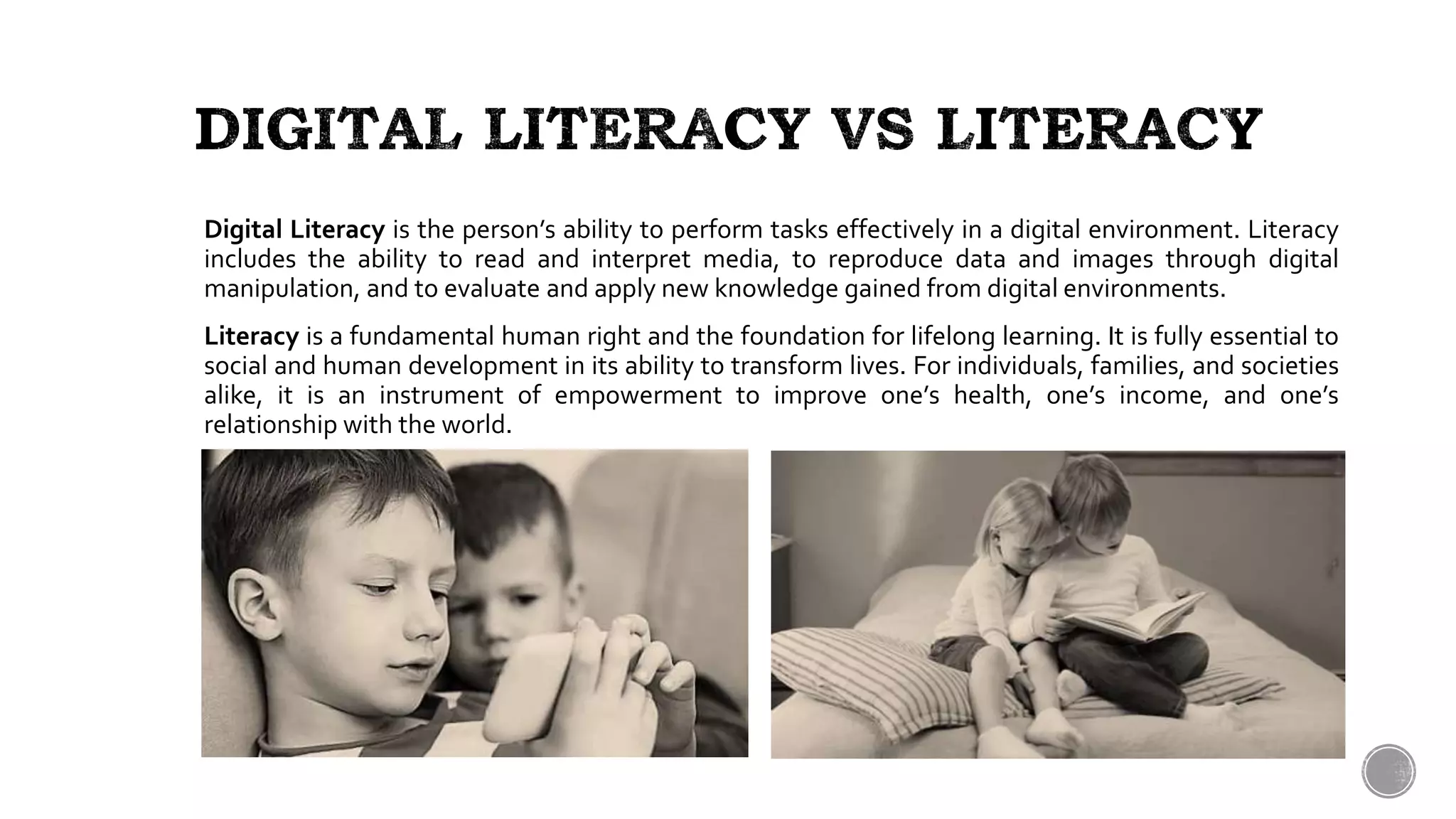
Digital Literacy is the person’s ability to perform tasks effectively in a digital environment. Literacy
includes the ability to read and interpret media, to reproduce data and images through digital
manipulation, and to evaluate and apply new knowledge gained from digital environments.
Literacy is a fundamental human right and the foundation for lifelong learning. It is fully essential to
social and human development in its ability to transform lives. For individuals, families, and societies
alike, it is an instrument of empowerment to improve one’s health, one’s income, and one’s
relationship with the world.
English as a Foreign Language is usually learned in environments where the language of the
community and the school is not English.
English as a Second Language also refers to specialized approaches to language teaching,
designed for those whose primary language is not English.
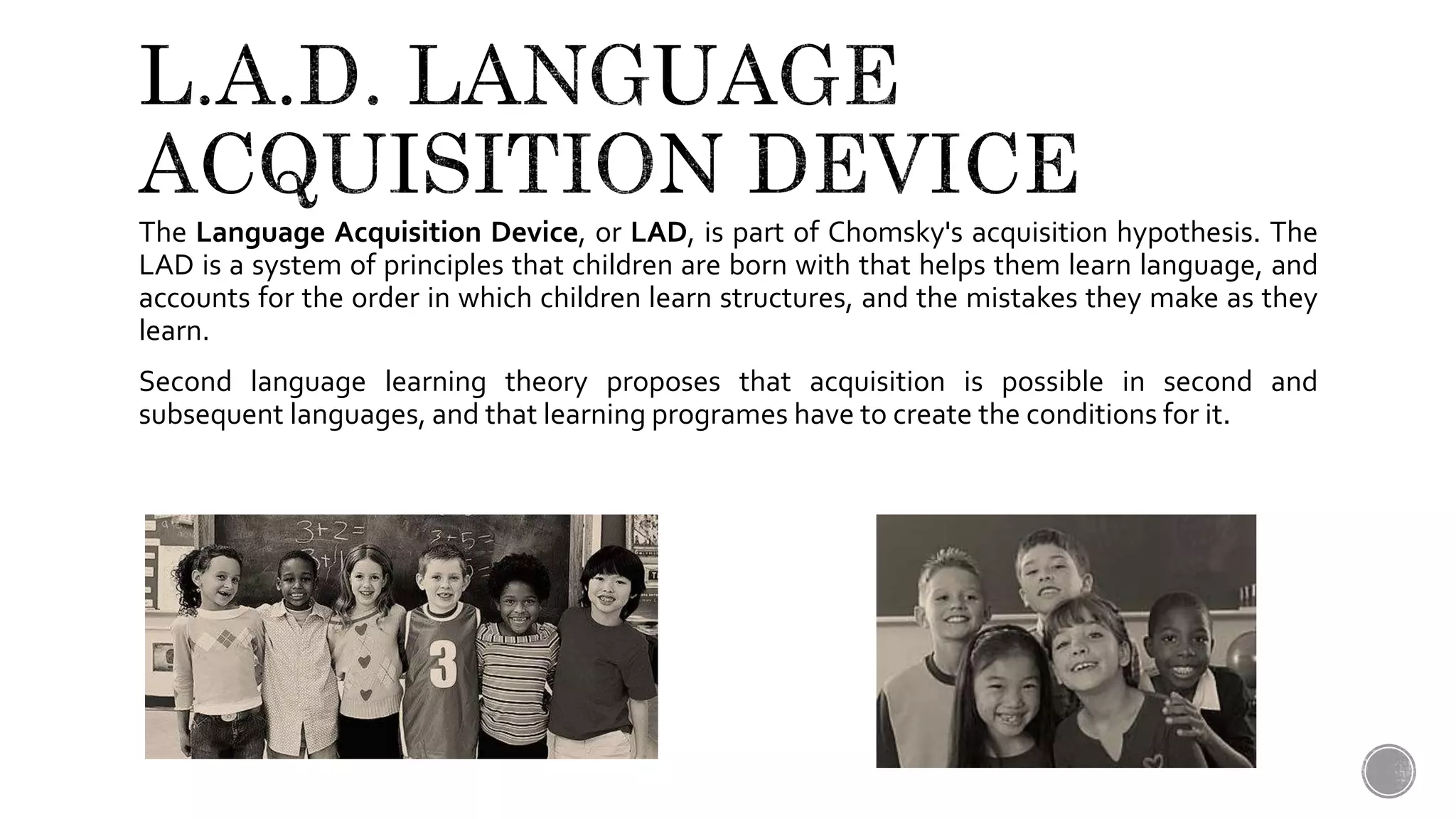
The Language Acquisition Device, or LAD, is part of Chomsky's acquisition hypothesis. The
LAD is a system of principles that children are born with that helps them learn language, and
accounts for the order in which children learn structures, and the mistakes they make as they
learn.
Second language learning theory proposes that acquisition is possible in second and
subsequent languages, and that learning programes have to create the conditions for it.
Mother Tongue is the first language that a person speaks the best and she acquires in life , or
identifies with a member of an ethnic group, so is often the basis for sociolinguistic identity.
Target Language is the language that learners are studying, and also the individual items of
the language that they want to learn, or the teacher wants them to learn.
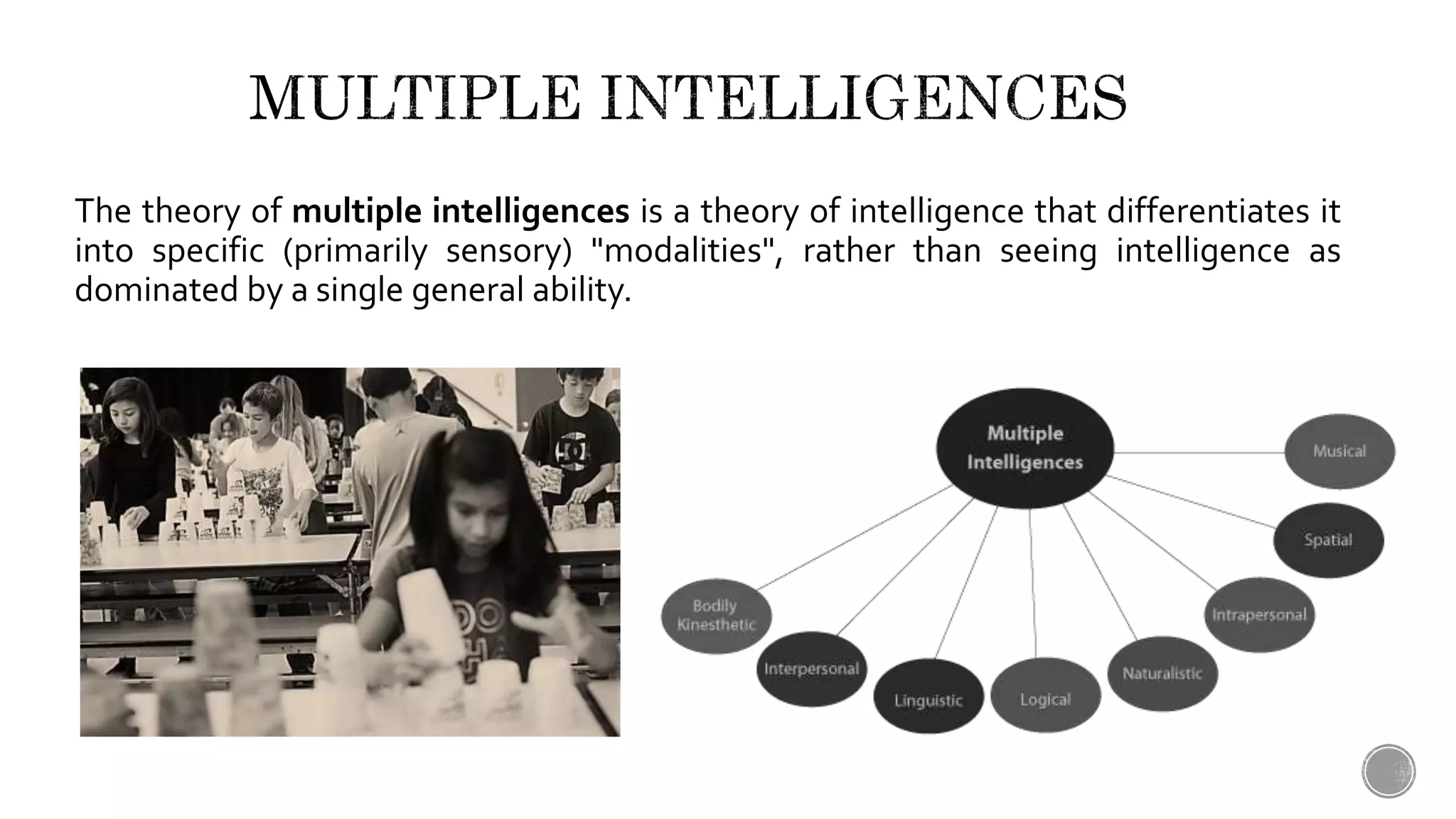
The theory of Multiple Intelligences is a theory of intelligence that differentiates it
into specific (primarily sensory) "modalities", rather than seeing intelligence as
dominated by a single general ability.
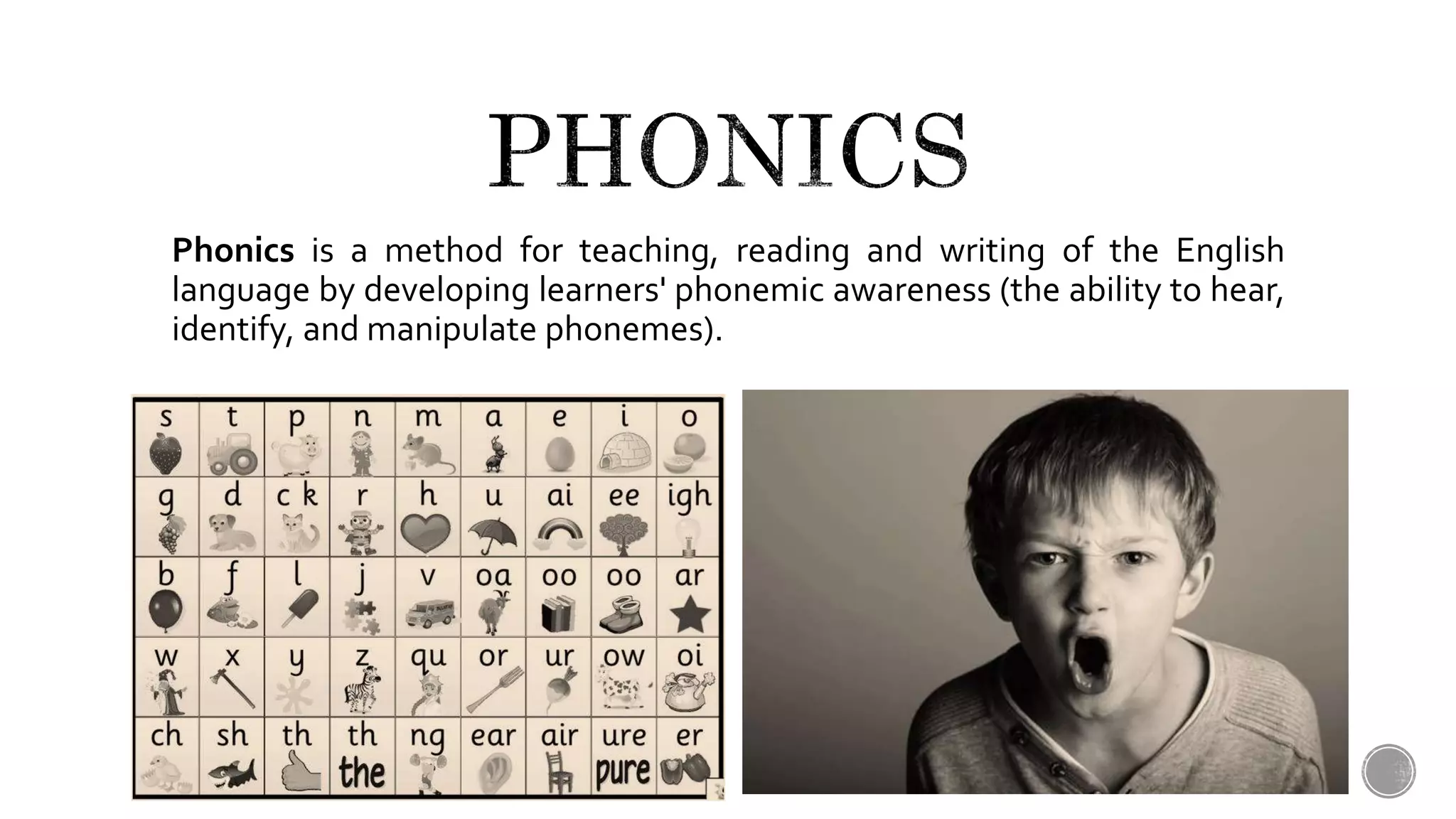
Phonics is a method for teaching, reading and writing of the English
language by developing learners' phonemic awareness (the ability to hear,
identify, and manipulate phonemes).
Silent Period is a period of time during which students feel unable to
communicate orally in the foreign language.
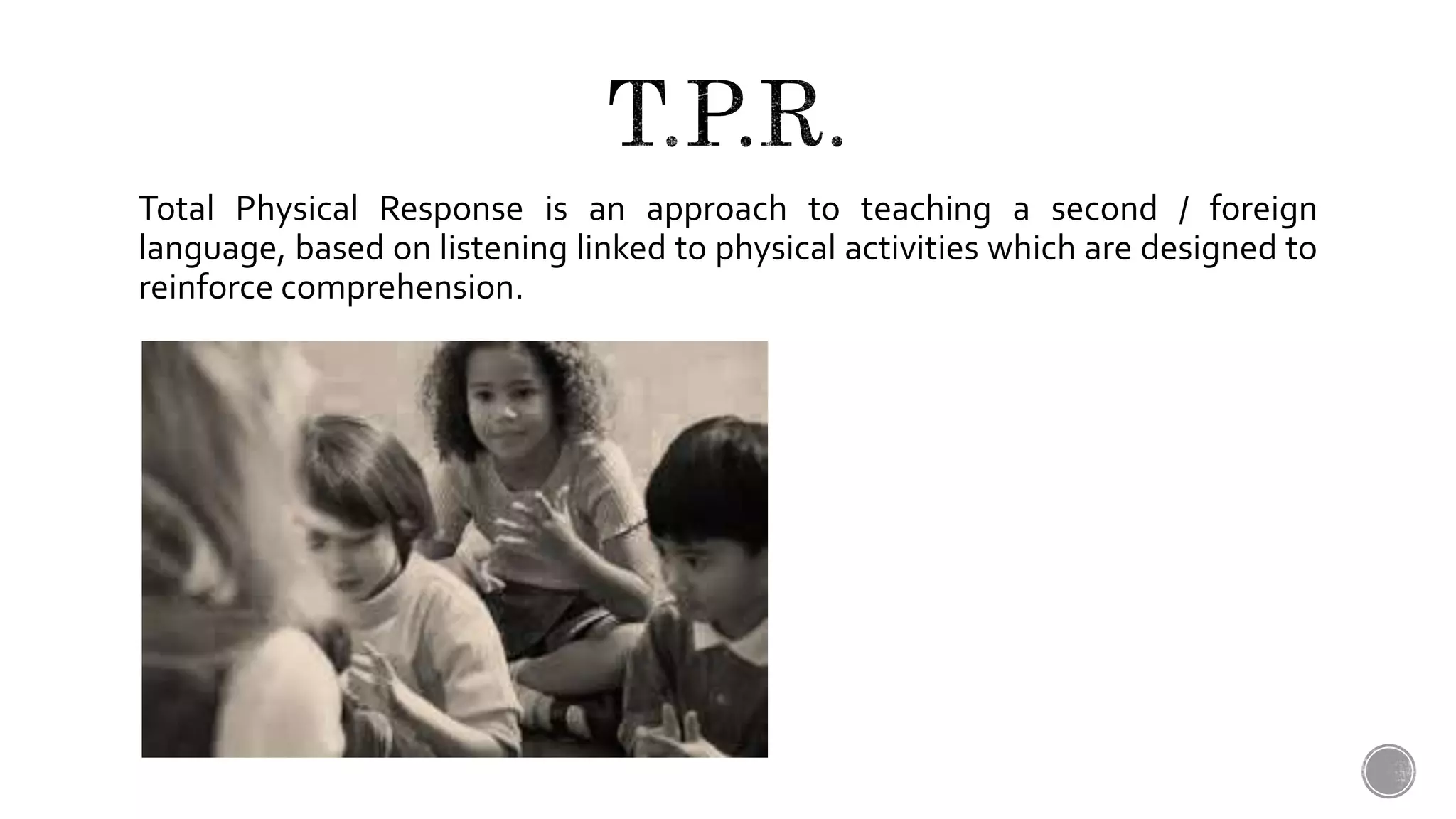
Total Physical Response is an approach to teaching a second / foreign
language, based on listening linked to physical activities which are designed to
reinforce comprehension.
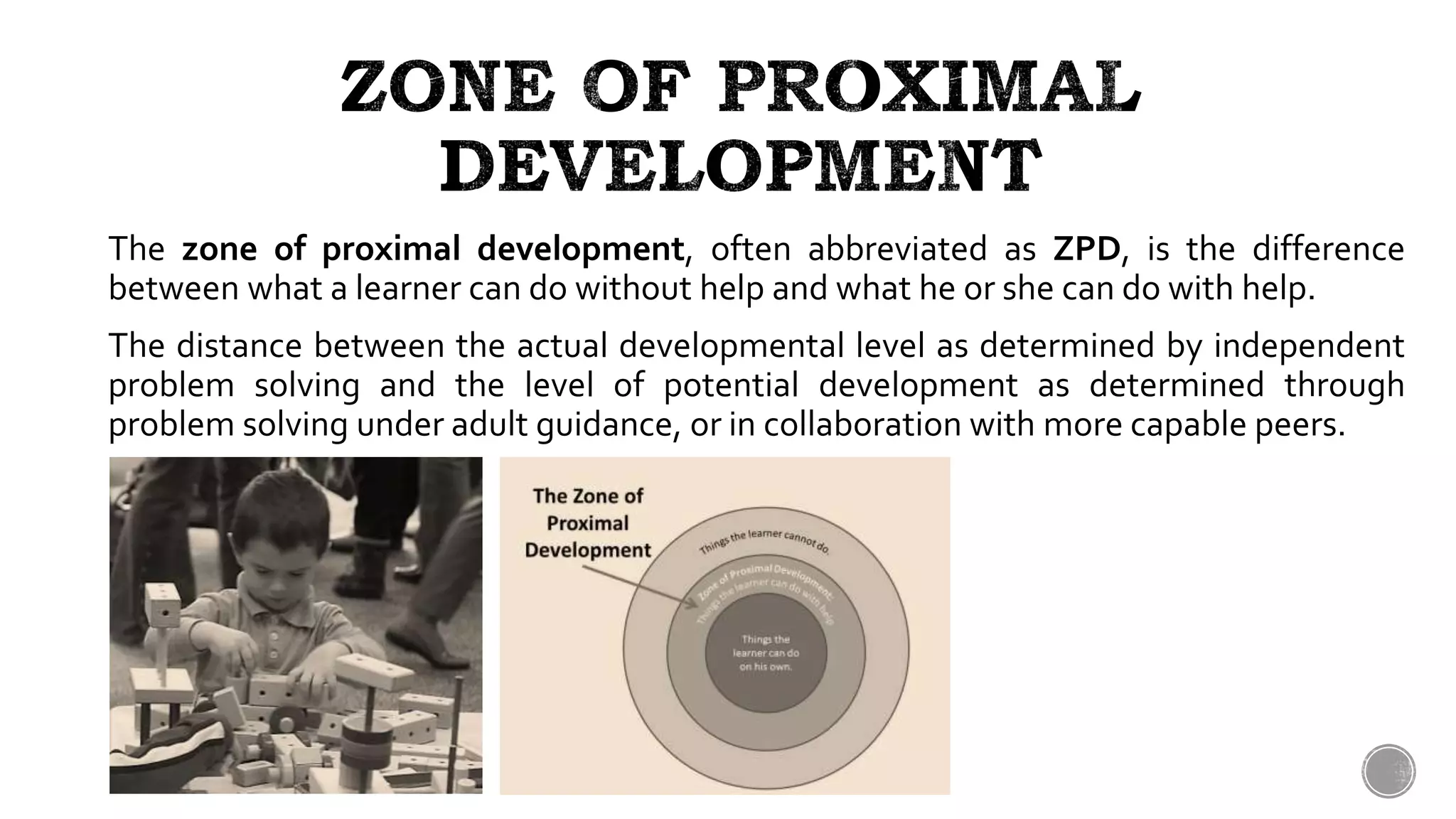
The Zone of Proximal Development, often abbreviated as ZPD, is the difference
between what a learner can do without help and what he or she can do with help.
The distance between the actual developmental level as determined by independent
problem solving and the level of potential development as determined through
problem solving under adult guidance, or in collaboration with more capable peers.
Glossary

Glossary

  • 1.
  • 2.
     Acquisition vsLearning  Approach  Critical Period  Digital Literacy vs Literacy  E.F.L.  E.S.L.  L.A.D.  MotherTongue andTarget Language  Multiple Intelligences  Phonics  Silent Period  T.P.R.  Z.P.D.
  • 3.
    LEARNING Artificial Technical Priority on thewritten language Theory (language analysis) Deductive teaching Preset syllabus Activities about the language Focus on form Produces knowledge ACQUISITION Natural Personal Priority on the spoken language Practice (language in use) Inductive coaching Improvised activities Activities in the language Focus on communication Produces an ability "Acquisition requires meaningful interaction in the target language - natural communication - in which speakers are concerned not with the form of their utterances but with the messages they are conveying and understanding." Stephen Krashen
  • 4.
    APPROACH Approach is aset of principles about teaching including views on method, syllabus, and a philosophy of language and learning. Approaches have theoretical backing with practical applications.
  • 5.
    Critical Period isthe hypothesis that if somebody does not acquire a first language before a certain time (around puberty), they will lose the ability to acquire language. There are two versions of this hypothesis: The strong version states that language acquisition will be impossible after this point has been reached. The weak version states that acquisition will be difficult after this period has been reached.
  • 6.
    Digital Literacy isthe person’s ability to perform tasks effectively in a digital environment. Literacy includes the ability to read and interpret media, to reproduce data and images through digital manipulation, and to evaluate and apply new knowledge gained from digital environments. Literacy is a fundamental human right and the foundation for lifelong learning. It is fully essential to social and human development in its ability to transform lives. For individuals, families, and societies alike, it is an instrument of empowerment to improve one’s health, one’s income, and one’s relationship with the world.
  • 7.
    English as aForeign Language is usually learned in environments where the language of the community and the school is not English. English as a Second Language also refers to specialized approaches to language teaching, designed for those whose primary language is not English.
  • 8.
    The Language AcquisitionDevice, or LAD, is part of Chomsky's acquisition hypothesis. The LAD is a system of principles that children are born with that helps them learn language, and accounts for the order in which children learn structures, and the mistakes they make as they learn. Second language learning theory proposes that acquisition is possible in second and subsequent languages, and that learning programes have to create the conditions for it.
  • 9.
    Mother Tongue isthe first language that a person speaks the best and she acquires in life , or identifies with a member of an ethnic group, so is often the basis for sociolinguistic identity. Target Language is the language that learners are studying, and also the individual items of the language that they want to learn, or the teacher wants them to learn.
  • 10.
    The theory ofMultiple Intelligences is a theory of intelligence that differentiates it into specific (primarily sensory) "modalities", rather than seeing intelligence as dominated by a single general ability.
  • 11.
    Phonics is amethod for teaching, reading and writing of the English language by developing learners' phonemic awareness (the ability to hear, identify, and manipulate phonemes).
  • 12.
    Silent Period isa period of time during which students feel unable to communicate orally in the foreign language.
  • 13.
    Total Physical Responseis an approach to teaching a second / foreign language, based on listening linked to physical activities which are designed to reinforce comprehension.
  • 14.
    The Zone ofProximal Development, often abbreviated as ZPD, is the difference between what a learner can do without help and what he or she can do with help. The distance between the actual developmental level as determined by independent problem solving and the level of potential development as determined through problem solving under adult guidance, or in collaboration with more capable peers.