GLOSSARYGLOSSARY
LAURA BLANCALAURA BLANCA
SARA GALINDOSARA GALINDO
INDEX:
• Introduction
• Definition of Word:
• Adquisiton vs learning Mother language
• Approach Target language
• Digitaly vs literacy Multiple inteligences theory
• Silent period Phonics
• EFL TPR
• ESL ZDP
• LAD
INTRODUCTION
With this presentation we want to
explain some words and concepts that
can be useful our studies.
DEFINITION OF WORD
• ACQUISITION VS LEARNING.
• ACQUISITION: It is a subconscious process, it is produced when is a
meaningful interaction. Is a communicative act. Natural and personal, it
has priority on the spoken language.
• LEARNING: It is a conscious process, it is produced when for example
learning grammar.
Artificial and technical, are performed activities about the language and
produces knowledge.
• APPROACH: A set of principles about teaching including
views on method, syllabus, and a philosophy of language and
learning. Approaches have theoretical backing with practical
applications.
The communicative approach has affected language teaching
greatly, changing the focus away from structure to meaning
and accuracy to fluency. In this approach, a functional
syllabus replaces a structural syllabus.
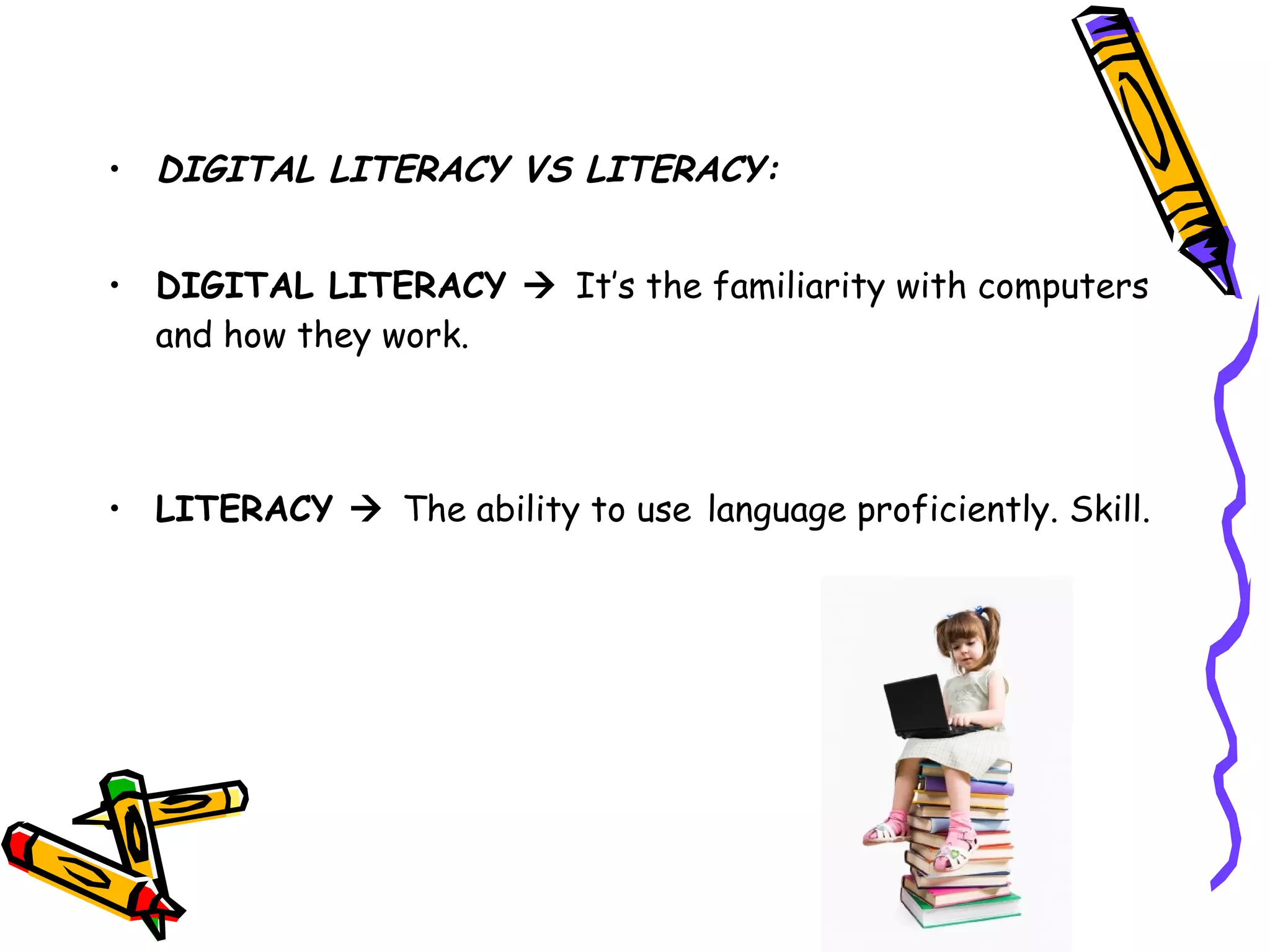
• DIGITAL LITERACY VS LITERACY:
• DIGITAL LITERACY  It’s the familiarity with computers
and how they work.
• LITERACY  The ability to use language proficiently. Skill.
• English a foreign language (EFL): It is the use or study of English
by speakers with different native languages.
• English as second language (ESL):It is the use or study of English
by speakers with different native languages.
• SILENT PERIOD: It is a stage in second language acquisition where
learners do not attempt to speak. Silent periods are more common in
children than in adult learners.
• LAD: It is a function of the brain that is specifically for learning
language. It is an innate biological function of human beings just like
learning to walk.
• MOTHER TONGUE: It is considered to be the first language one learns
as a child whereas a person.
• TARGET LANGUAGE:A language that a non native speaker is in the
process of learning.
• MULTIPLE INTELIGENCES THEORY : Howard Gardner’s theory who
identified seven distinct intelligences:
• PHONICS: Teaching reading method by training beginners to associate
letters with their sound values.
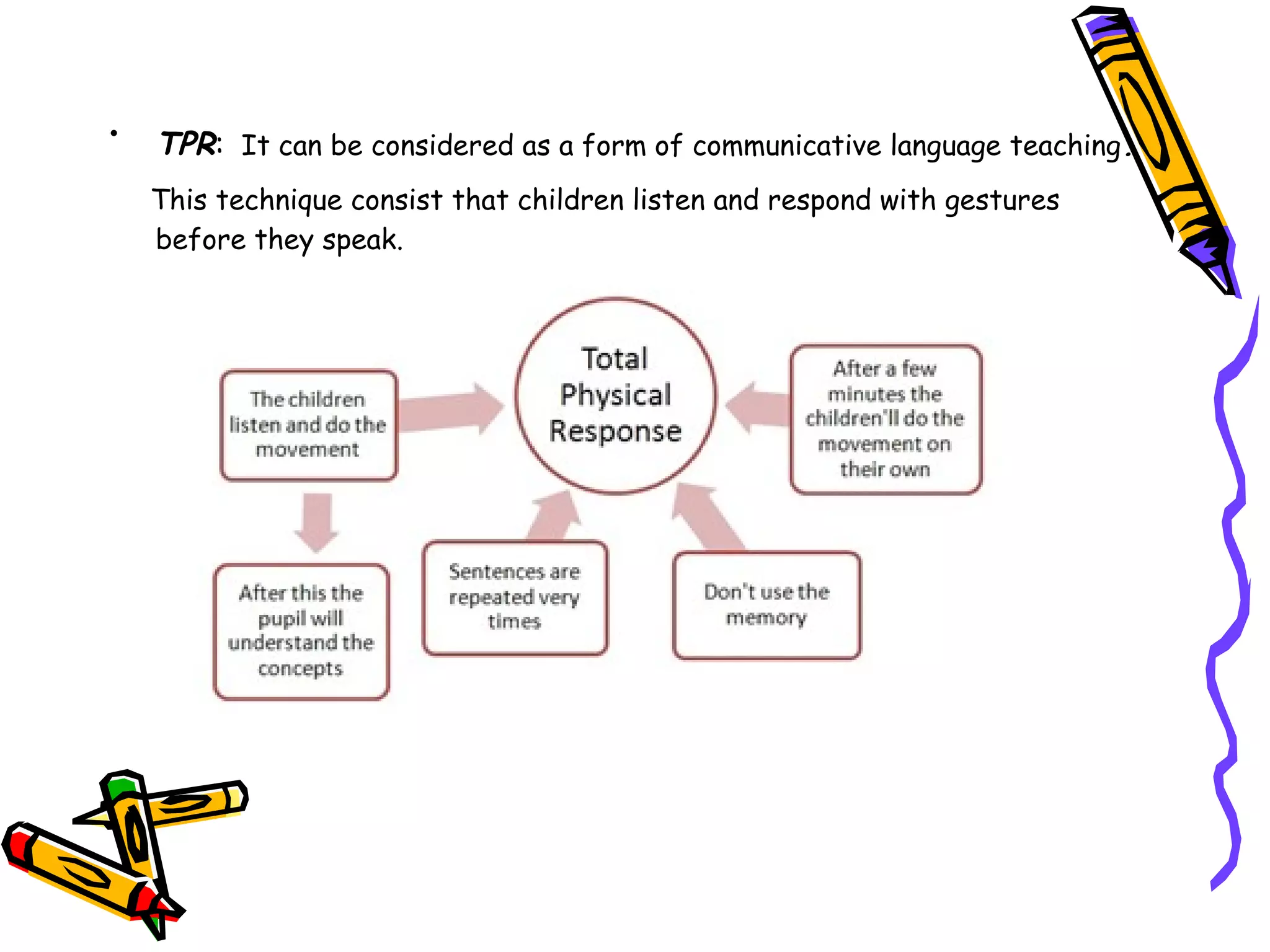
• TPR: It can be considered as a form of communicative language teaching.
This technique consist that children listen and respond with gestures
before they speak.
ZPD (The zone of proximal development): This theory essentially
stated that a difference exists between what a person can do and learn on
his or her own, and what can be learned or done with the assistance of
another person who is more experienced.

Glossary

  • 1.
  • 2.
    INDEX: • Introduction • Definitionof Word: • Adquisiton vs learning Mother language • Approach Target language • Digitaly vs literacy Multiple inteligences theory • Silent period Phonics • EFL TPR • ESL ZDP • LAD
  • 3.
    INTRODUCTION With this presentationwe want to explain some words and concepts that can be useful our studies.
  • 4.
    DEFINITION OF WORD •ACQUISITION VS LEARNING. • ACQUISITION: It is a subconscious process, it is produced when is a meaningful interaction. Is a communicative act. Natural and personal, it has priority on the spoken language. • LEARNING: It is a conscious process, it is produced when for example learning grammar. Artificial and technical, are performed activities about the language and produces knowledge.
  • 5.
    • APPROACH: Aset of principles about teaching including views on method, syllabus, and a philosophy of language and learning. Approaches have theoretical backing with practical applications. The communicative approach has affected language teaching greatly, changing the focus away from structure to meaning and accuracy to fluency. In this approach, a functional syllabus replaces a structural syllabus.
  • 6.
    • DIGITAL LITERACYVS LITERACY: • DIGITAL LITERACY  It’s the familiarity with computers and how they work. • LITERACY  The ability to use language proficiently. Skill.
  • 7.
    • English aforeign language (EFL): It is the use or study of English by speakers with different native languages. • English as second language (ESL):It is the use or study of English by speakers with different native languages. • SILENT PERIOD: It is a stage in second language acquisition where learners do not attempt to speak. Silent periods are more common in children than in adult learners.
  • 8.
    • LAD: Itis a function of the brain that is specifically for learning language. It is an innate biological function of human beings just like learning to walk.
  • 9.
    • MOTHER TONGUE:It is considered to be the first language one learns as a child whereas a person. • TARGET LANGUAGE:A language that a non native speaker is in the process of learning.
  • 10.
    • MULTIPLE INTELIGENCESTHEORY : Howard Gardner’s theory who identified seven distinct intelligences:
  • 11.
    • PHONICS: Teachingreading method by training beginners to associate letters with their sound values.
  • 12.
    • TPR: Itcan be considered as a form of communicative language teaching. This technique consist that children listen and respond with gestures before they speak.
  • 13.
    ZPD (The zoneof proximal development): This theory essentially stated that a difference exists between what a person can do and learn on his or her own, and what can be learned or done with the assistance of another person who is more experienced.