The
Glorious
Revolutio
n
England
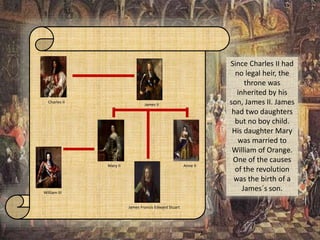
Charles II
James II
William III
Mary II Anne II
James Francis Edward Stuart
Since Charles II had
no legal heir, the
throne was
inherited by his
son, James II. James
had two daughters
but no boy child.
His daughter Mary
was married to
William of Orange.
One of the causes
of the revolution
was the birth of a
James´s son.
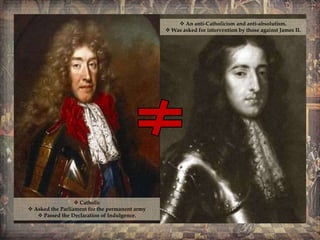
 Catholic
 Asked the Parliament for the permanent army
 Passed the Declaration of Indulgence.
 An anti-Catholicism and anti-absolutism.
 Was asked for intervention by those against James II.
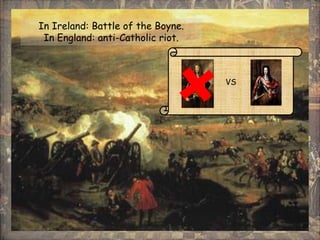
In Ireland: Battle of the Boyne.
In England: anti-Catholic riot.
VS
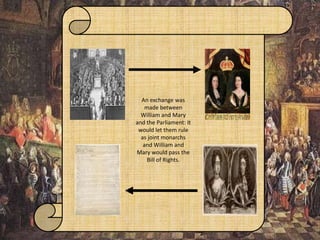
An exchange was
made between
William and Mary
and the Parliament: It
would let them rule
as joint monarchs
and William and
Mary would pass the
Bill of Rights.
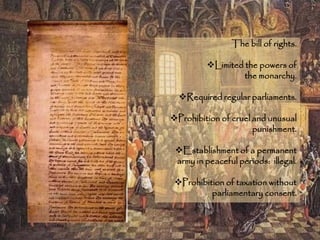
The bill of rights.
Limited the powers of
the monarchy.
Required regular parliaments.
Prohibition of cruel and unusual
punishment.
Establishment of a permanent
army in peaceful periods: illegal.
Prohibition of taxation without
parliamentary consent.
The consequences of the
Glorious Revolution were:
Parliament gained powers
over…
taxation
the royal succession
appointments
the right of the crown to
wage war independently
Scrutiny of crown
expenditure.
In Ireland and Scotland…
 militarly contested.
 politically and religiously divisive.
No limiting the power of parliaments allowed
a Whig oligarchy.
Ending the Royal African Company’s
monopoly on the trade: more slavery.

Glorious Revolution

  • 1.
  • 2.
    Charles II James II WilliamIII Mary II Anne II James Francis Edward Stuart Since Charles II had no legal heir, the throne was inherited by his son, James II. James had two daughters but no boy child. His daughter Mary was married to William of Orange. One of the causes of the revolution was the birth of a James´s son.
  • 3.
     Catholic  Askedthe Parliament for the permanent army  Passed the Declaration of Indulgence.  An anti-Catholicism and anti-absolutism.  Was asked for intervention by those against James II.
  • 4.
    In Ireland: Battleof the Boyne. In England: anti-Catholic riot. VS
  • 5.
    An exchange was madebetween William and Mary and the Parliament: It would let them rule as joint monarchs and William and Mary would pass the Bill of Rights.
  • 6.
    The bill ofrights. Limited the powers of the monarchy. Required regular parliaments. Prohibition of cruel and unusual punishment. Establishment of a permanent army in peaceful periods: illegal. Prohibition of taxation without parliamentary consent.
  • 7.
    The consequences ofthe Glorious Revolution were: Parliament gained powers over… taxation the royal succession appointments the right of the crown to wage war independently Scrutiny of crown expenditure. In Ireland and Scotland…  militarly contested.  politically and religiously divisive. No limiting the power of parliaments allowed a Whig oligarchy. Ending the Royal African Company’s monopoly on the trade: more slavery.