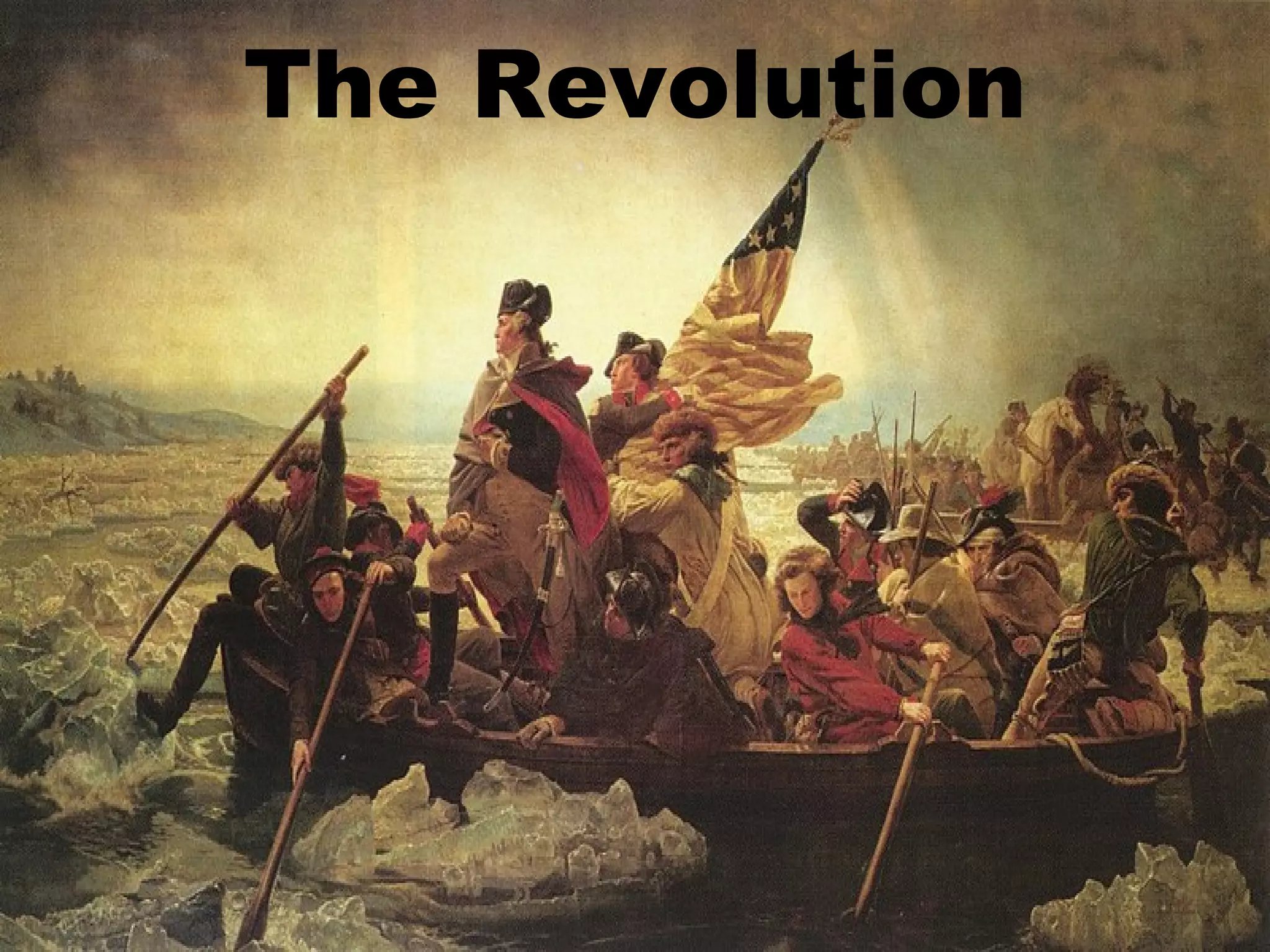
The Revolution
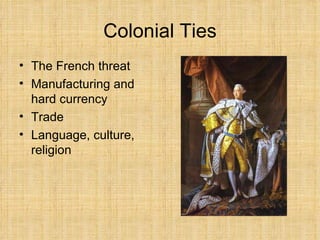
Colonial Ties The French threat Manufacturing and hard currency Trade Language, culture, religion
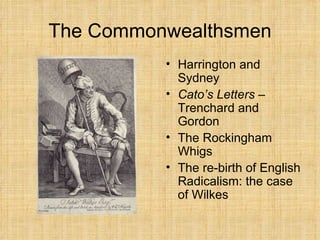
The Commonwealthsmen Harrington and Sydney Cato’s Letters –  Trenchard and Gordon The Rockingham Whigs The re-birth of English Radicalism: the case of Wilkes
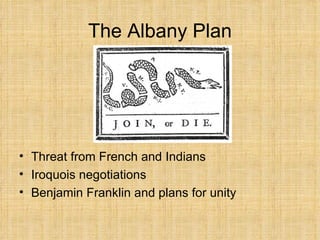
The Albany Plan Threat from French and Indians Iroquois negotiations Benjamin Franklin and plans for unity
P-DIDDY
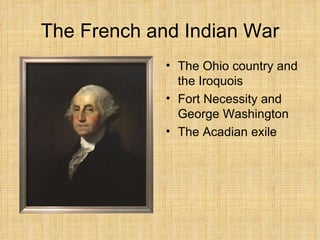
The French and Indian War The Ohio country and the Iroquois Fort Necessity and George Washington The Acadian exile
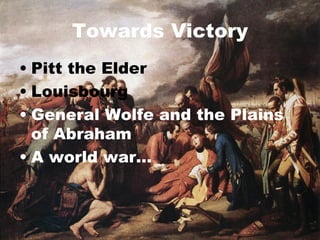
Towards Victory Pitt the Elder Louisbourg General Wolfe and the Plains of Abraham A world war…
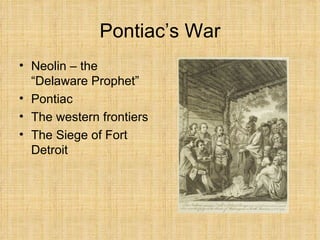
Pontiac’s War Neolin – the “Delaware Prophet” Pontiac The western frontiers The Siege of Fort Detroit
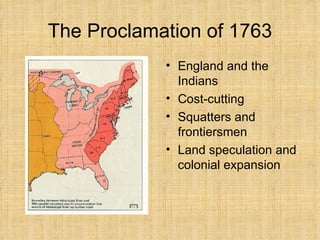
The Proclamation of 1763 England and the Indians Cost-cutting Squatters and frontiersmen Land speculation and colonial expansion
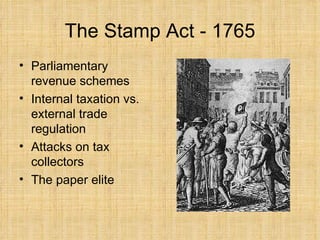
The Stamp Act - 1765 Parliamentary revenue schemes Internal taxation vs. external trade regulation Attacks on tax collectors The paper elite
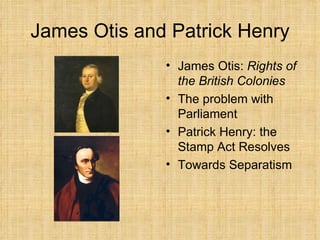
James Otis and Patrick Henry James Otis:  Rights of the British Colonies The problem with Parliament Patrick Henry: the Stamp Act Resolves Towards Separatism
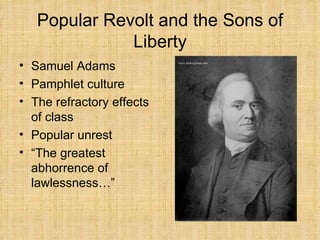
Popular Revolt and the Sons of Liberty Samuel Adams Pamphlet culture The refractory effects of class Popular unrest “ The greatest abhorrence of lawlessness…”
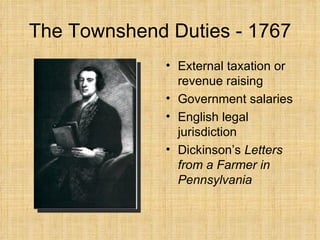
The Townshend Duties - 1767 External taxation or revenue raising Government salaries English legal jurisdiction Dickinson’s  Letters from a Farmer in Pennsylvania
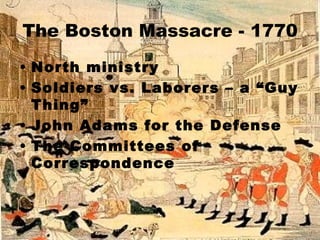
The Boston Massacre - 1770 North ministry Soldiers vs. Laborers – a “Guy Thing” John Adams for the Defense The Committees of Correspondence
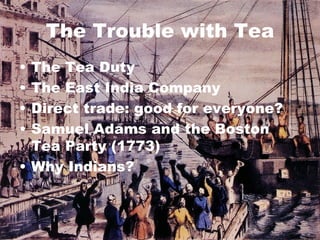
The Trouble with Tea The Tea Duty The East India Company Direct trade: good for everyone? Samuel Adams and the Boston Tea Party (1773) Why Indians?
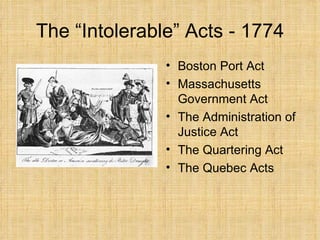
The “Intolerable” Acts - 1774 Boston Port Act Massachusetts Government Act The Administration of Justice Act The Quartering Act The Quebec Acts
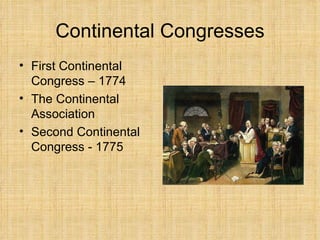
Continental Congresses First Continental Congress – 1774 The Continental Association Second Continental Congress - 1775
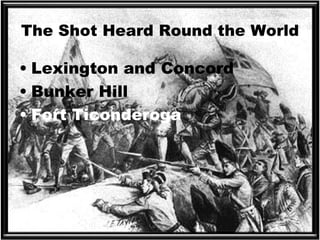
The Shot Heard Round the World Lexington and Concord Bunker Hill Fort Ticonderoga
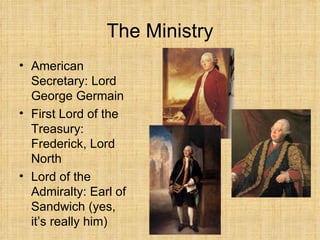
The Ministry American Secretary: Lord George Germain First Lord of the Treasury: Frederick, Lord North Lord of the Admiralty: Earl of Sandwich (yes, it’s really him)
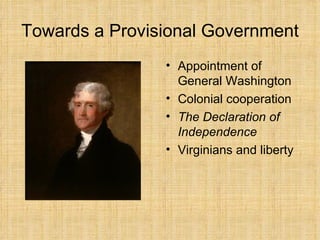
Towards a Provisional Government Appointment of General Washington Colonial cooperation The Declaration of Independence Virginians and liberty
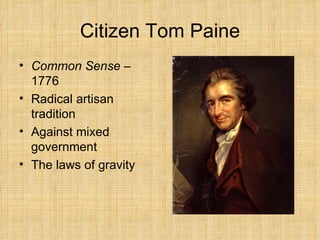
Citizen Tom Paine Common Sense  – 1776 Radical artisan tradition Against mixed government The laws of gravity
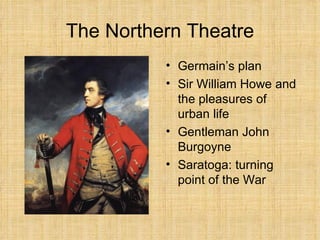
The Northern Theatre Germain’s plan Sir William Howe and the pleasures of urban life Gentleman John Burgoyne Saratoga: turning point of the War
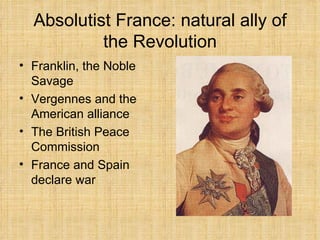
Absolutist France: natural ally of the Revolution Franklin, the Noble Savage Vergennes and the American alliance The British Peace Commission France and Spain declare war
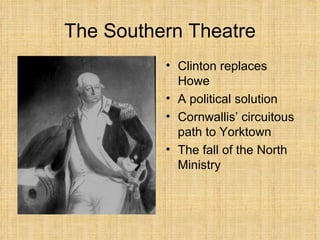
The Southern Theatre Clinton replaces Howe A political solution Cornwallis’ circuitous path to Yorktown The fall of the North Ministry
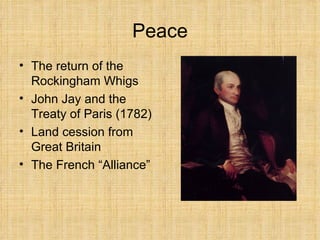
Peace The return of the Rockingham Whigs John Jay and the Treaty of Paris (1782) Land cession from Great Britain The French “Alliance”
Summary The revolution was fomented by an educated, dissatisfied elite, who brilliantly tapped and directed popular unrest towards an external enemy. Not all colonists supported the Revolution; John Adams said it was about 1/3 for, 1/3 against, 1/3 neutral. A combination of ideological and economic grievances made, for an influential subset of American colonists, a previously happy political relationship seem distressing. The years leading up to the Revolution witnessed growing alienation between the theory of colonial subordination and the practice of colonial autonomy. The Americans already were free before the fighting ever began.

The Revolution

  • 1.
  • 2.
    Colonial Ties TheFrench threat Manufacturing and hard currency Trade Language, culture, religion
  • 3.
    The Commonwealthsmen Harringtonand Sydney Cato’s Letters – Trenchard and Gordon The Rockingham Whigs The re-birth of English Radicalism: the case of Wilkes
  • 4.
    The Albany PlanThreat from French and Indians Iroquois negotiations Benjamin Franklin and plans for unity
  • 5.
  • 6.
    The French andIndian War The Ohio country and the Iroquois Fort Necessity and George Washington The Acadian exile
  • 7.
    Towards Victory Pittthe Elder Louisbourg General Wolfe and the Plains of Abraham A world war…
  • 8.
    Pontiac’s War Neolin– the “Delaware Prophet” Pontiac The western frontiers The Siege of Fort Detroit
  • 9.
    The Proclamation of1763 England and the Indians Cost-cutting Squatters and frontiersmen Land speculation and colonial expansion
  • 10.
    The Stamp Act- 1765 Parliamentary revenue schemes Internal taxation vs. external trade regulation Attacks on tax collectors The paper elite
  • 11.
    James Otis andPatrick Henry James Otis: Rights of the British Colonies The problem with Parliament Patrick Henry: the Stamp Act Resolves Towards Separatism
  • 12.
    Popular Revolt andthe Sons of Liberty Samuel Adams Pamphlet culture The refractory effects of class Popular unrest “ The greatest abhorrence of lawlessness…”
  • 13.
    The Townshend Duties- 1767 External taxation or revenue raising Government salaries English legal jurisdiction Dickinson’s Letters from a Farmer in Pennsylvania
  • 14.
    The Boston Massacre- 1770 North ministry Soldiers vs. Laborers – a “Guy Thing” John Adams for the Defense The Committees of Correspondence
  • 15.
    The Trouble withTea The Tea Duty The East India Company Direct trade: good for everyone? Samuel Adams and the Boston Tea Party (1773) Why Indians?
  • 16.
    The “Intolerable” Acts- 1774 Boston Port Act Massachusetts Government Act The Administration of Justice Act The Quartering Act The Quebec Acts
  • 17.
    Continental Congresses FirstContinental Congress – 1774 The Continental Association Second Continental Congress - 1775
  • 18.
    The Shot HeardRound the World Lexington and Concord Bunker Hill Fort Ticonderoga
  • 19.
    The Ministry AmericanSecretary: Lord George Germain First Lord of the Treasury: Frederick, Lord North Lord of the Admiralty: Earl of Sandwich (yes, it’s really him)
  • 20.
    Towards a ProvisionalGovernment Appointment of General Washington Colonial cooperation The Declaration of Independence Virginians and liberty
  • 21.
    Citizen Tom PaineCommon Sense – 1776 Radical artisan tradition Against mixed government The laws of gravity
  • 22.
    The Northern TheatreGermain’s plan Sir William Howe and the pleasures of urban life Gentleman John Burgoyne Saratoga: turning point of the War
  • 23.
    Absolutist France: naturalally of the Revolution Franklin, the Noble Savage Vergennes and the American alliance The British Peace Commission France and Spain declare war
  • 24.
    The Southern TheatreClinton replaces Howe A political solution Cornwallis’ circuitous path to Yorktown The fall of the North Ministry
  • 25.
    Peace The returnof the Rockingham Whigs John Jay and the Treaty of Paris (1782) Land cession from Great Britain The French “Alliance”
  • 26.
    Summary The revolutionwas fomented by an educated, dissatisfied elite, who brilliantly tapped and directed popular unrest towards an external enemy. Not all colonists supported the Revolution; John Adams said it was about 1/3 for, 1/3 against, 1/3 neutral. A combination of ideological and economic grievances made, for an influential subset of American colonists, a previously happy political relationship seem distressing. The years leading up to the Revolution witnessed growing alienation between the theory of colonial subordination and the practice of colonial autonomy. The Americans already were free before the fighting ever began.