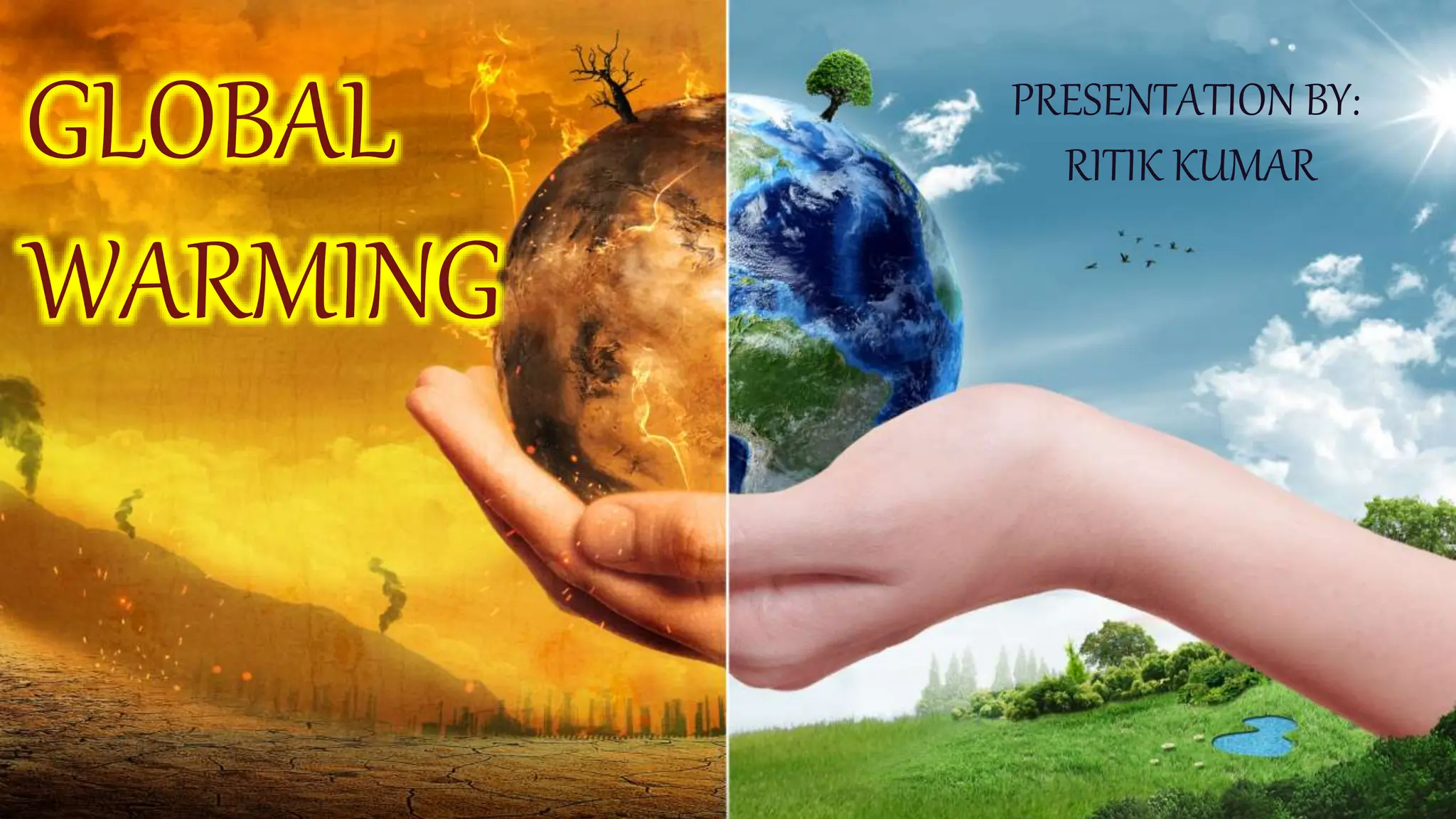
GLOBAL
WARMING
PRESENTATION BY:
RITIK KUMAR
Global warming is the increase of average world
temperatures as a result of what is known as the
greenhouse effect. Certain gases in the atmosphere
act like glass in a greenhouse, allowing sunlight
through to heat the earth's surface but trapping the
heat as it radiates back into space. As the
greenhouse gases build up in the atmosphere the
Earth gets hotter. This process is leading to a rapid
change in climate, also known as climate change.
WHAT IS GLOBAL
WARMING?
 Global warming, the gradual heating of Earth's surface,
oceans and atmosphere, is caused by human activity,
primarily the burning of fossil fuels that pump carbon
dioxide (CO2), methane and other greenhouse gases into
the atmosphere.
 The scientific community believes that climate like Global
Warming have occurred throughout Earth's history and will
continue to occur in the future. Scientists have spent
decades figuring out what is causing Global Warming.
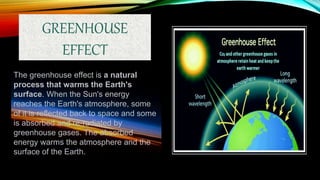
The greenhouse effect is a natural
process that warms the Earth's
surface. When the Sun's energy
reaches the Earth's atmosphere, some
of it is reflected back to space and some
is absorbed and re-radiated by
greenhouse gases. The absorbed
energy warms the atmosphere and the
surface of the Earth.
GREENHOUSE
EFFECT
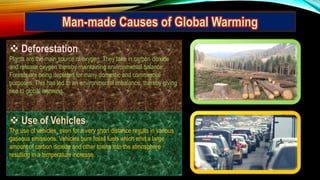
 Deforestation
Plants are the main source of oxygen. They take in carbon dioxide
and release oxygen thereby maintaining environmental balance.
Forests are being depleted for many domestic and commercial
purposes. This has led to an environmental imbalance, thereby giving
rise to global warming.
 Use of Vehicles
The use of vehicles, even for a very short distance results in various
gaseous emissions. Vehicles burn fossil fuels which emit a large
amount of carbon dioxide and other toxins into the atmosphere
resulting in a temperature increase.
Man-made Causes of Global Warming
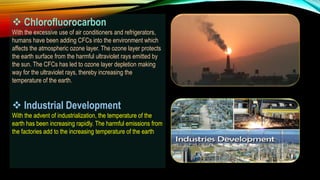
 Chlorofluorocarbon
With the excessive use of air conditioners and refrigerators,
humans have been adding CFCs into the environment which
affects the atmospheric ozone layer. The ozone layer protects
the earth surface from the harmful ultraviolet rays emitted by
the sun. The CFCs has led to ozone layer depletion making
way for the ultraviolet rays, thereby increasing the
temperature of the earth.
 Industrial Development
With the advent of industrialization, the temperature of the
earth has been increasing rapidly. The harmful emissions from
the factories add to the increasing temperature of the earth.
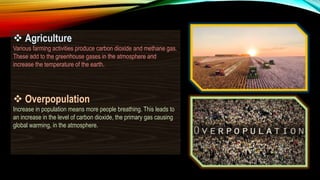
 Agriculture
Various farming activities produce carbon dioxide and methane gas.
These add to the greenhouse gases in the atmosphere and
increase the temperature of the earth.
 Overpopulation
Increase in population means more people breathing. This leads to
an increase in the level of carbon dioxide, the primary gas causing
global warming, in the atmosphere.
Natural Causes of Global Warming
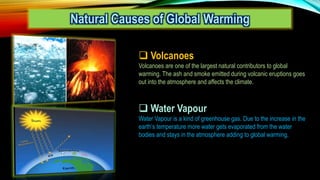
 Volcanoes
Volcanoes are one of the largest natural contributors to global
warming. The ash and smoke emitted during volcanic eruptions goes
out into the atmosphere and affects the climate.
 Water Vapour
Water Vapour is a kind of greenhouse gas. Due to the increase in the
earth’s temperature more water gets evaporated from the water
bodies and stays in the atmosphere adding to global warming.
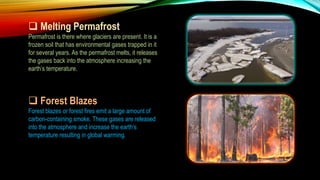
 Melting Permafrost
Permafrost is there where glaciers are present. It is a
frozen soil that has environmental gases trapped in it
for several years. As the permafrost melts, it releases
the gases back into the atmosphere increasing the
earth’s temperature.
 Forest Blazes
Forest blazes or forest fires emit a large amount of
carbon-containing smoke. These gases are released
into the atmosphere and increase the earth’s
temperature resulting in global warming.
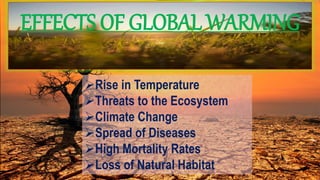
EFFECTS OF GLOBAL WARMING
Rise in Temperature
Threats to the Ecosystem
Climate Change
Spread of Diseases
High Mortality Rates
Loss of Natural Habitat
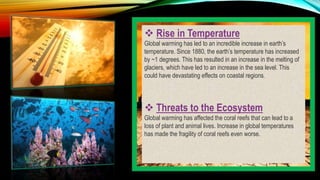
 Rise in Temperature
Global warming has led to an incredible increase in earth’s
temperature. Since 1880, the earth’s temperature has increased
by ~1 degrees. This has resulted in an increase in the melting of
glaciers, which have led to an increase in the sea level. This
could have devastating effects on coastal regions.
 Threats to the Ecosystem
Global warming has affected the coral reefs that can lead to a
loss of plant and animal lives. Increase in global temperatures
has made the fragility of coral reefs even worse.
 Climate Change
Global warming has led to a change in climatic conditions. There
are droughts at some places and floods at some. This climatic
imbalance is the result of global warming.
 Spread of Diseases
Global warming leads to a change in the patterns of heat and
humidity. This has led to the movement of mosquitoes that carry
and spread diseases.
 High Mortality Rates
Due to an increase in floods, tsunamis and other natural
calamities, the average death toll usually increases. Also, such
events can bring about the spread of diseases that can
hamper human life.
 Loss of Natural Habitat
A global shift in the climate leads to the loss of habitats of
several plants and animals. In this case, the animals need to
migrate from their natural habitat and many of them even
become extinct. This is yet another major impact of global
warming on biodiversity.
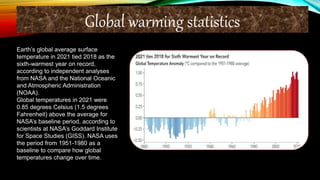
Earth’s global average surface
temperature in 2021 tied 2018 as the
sixth-warmest year on record,
according to independent analyses
from NASA and the National Oceanic
and Atmospheric Administration
(NOAA).
Global temperatures in 2021 were
0.85 degrees Celsius (1.5 degrees
Fahrenheit) above the average for
NASA’s baseline period, according to
scientists at NASA’s Goddard Institute
for Space Studies (GISS). NASA uses
the period from 1951-1980 as a
baseline to compare how global
temperatures change over time.
Global warming statistics
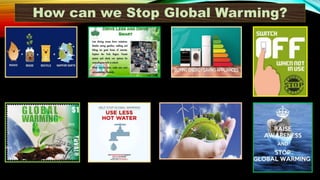
How can we Stop Global Warming?
Climate Change Quotes From Inspirational Leaders
“The world must come together to confront climate change. There is little
scientific dispute that if we do nothing, we will face more drought, famine and
mass displacement that will fuel more conflict for decades.” - Barack Obama
“When the well is dry, we know the worth of water.” - Benjamin Franklin
“Preservation of our environment is not a liberal or conservative challenge, it's
common sense.” - Ronald Reagan
“Earth provides enough to satisfy every man's need, but not every man's
greed.”- Mahatma Gandhi
“Climate change is a terrible problem, and it absolutely needs to be solved. It
deserves to be a huge priority.” - Bill Gates
“We are running the most dangerous experiment in history right now, which is to
see how much carbon dioxide the atmosphere can handle before there is an
environmental catastrophe.” - Elon Musk
THANK
YOU
Made by: Mr. Scientist

Global Warming.pptx

  • 1.
  • 2.
    Global warming isthe increase of average world temperatures as a result of what is known as the greenhouse effect. Certain gases in the atmosphere act like glass in a greenhouse, allowing sunlight through to heat the earth's surface but trapping the heat as it radiates back into space. As the greenhouse gases build up in the atmosphere the Earth gets hotter. This process is leading to a rapid change in climate, also known as climate change.
  • 3.
    WHAT IS GLOBAL WARMING? Global warming, the gradual heating of Earth's surface, oceans and atmosphere, is caused by human activity, primarily the burning of fossil fuels that pump carbon dioxide (CO2), methane and other greenhouse gases into the atmosphere.  The scientific community believes that climate like Global Warming have occurred throughout Earth's history and will continue to occur in the future. Scientists have spent decades figuring out what is causing Global Warming.
  • 4.
    The greenhouse effectis a natural process that warms the Earth's surface. When the Sun's energy reaches the Earth's atmosphere, some of it is reflected back to space and some is absorbed and re-radiated by greenhouse gases. The absorbed energy warms the atmosphere and the surface of the Earth. GREENHOUSE EFFECT
  • 6.
     Deforestation Plants arethe main source of oxygen. They take in carbon dioxide and release oxygen thereby maintaining environmental balance. Forests are being depleted for many domestic and commercial purposes. This has led to an environmental imbalance, thereby giving rise to global warming.  Use of Vehicles The use of vehicles, even for a very short distance results in various gaseous emissions. Vehicles burn fossil fuels which emit a large amount of carbon dioxide and other toxins into the atmosphere resulting in a temperature increase. Man-made Causes of Global Warming
  • 7.
     Chlorofluorocarbon With theexcessive use of air conditioners and refrigerators, humans have been adding CFCs into the environment which affects the atmospheric ozone layer. The ozone layer protects the earth surface from the harmful ultraviolet rays emitted by the sun. The CFCs has led to ozone layer depletion making way for the ultraviolet rays, thereby increasing the temperature of the earth.  Industrial Development With the advent of industrialization, the temperature of the earth has been increasing rapidly. The harmful emissions from the factories add to the increasing temperature of the earth.
  • 8.
     Agriculture Various farmingactivities produce carbon dioxide and methane gas. These add to the greenhouse gases in the atmosphere and increase the temperature of the earth.  Overpopulation Increase in population means more people breathing. This leads to an increase in the level of carbon dioxide, the primary gas causing global warming, in the atmosphere.
  • 9.
    Natural Causes ofGlobal Warming  Volcanoes Volcanoes are one of the largest natural contributors to global warming. The ash and smoke emitted during volcanic eruptions goes out into the atmosphere and affects the climate.  Water Vapour Water Vapour is a kind of greenhouse gas. Due to the increase in the earth’s temperature more water gets evaporated from the water bodies and stays in the atmosphere adding to global warming.
  • 10.
     Melting Permafrost Permafrostis there where glaciers are present. It is a frozen soil that has environmental gases trapped in it for several years. As the permafrost melts, it releases the gases back into the atmosphere increasing the earth’s temperature.  Forest Blazes Forest blazes or forest fires emit a large amount of carbon-containing smoke. These gases are released into the atmosphere and increase the earth’s temperature resulting in global warming.
  • 11.
    EFFECTS OF GLOBALWARMING Rise in Temperature Threats to the Ecosystem Climate Change Spread of Diseases High Mortality Rates Loss of Natural Habitat
  • 12.
     Rise inTemperature Global warming has led to an incredible increase in earth’s temperature. Since 1880, the earth’s temperature has increased by ~1 degrees. This has resulted in an increase in the melting of glaciers, which have led to an increase in the sea level. This could have devastating effects on coastal regions.  Threats to the Ecosystem Global warming has affected the coral reefs that can lead to a loss of plant and animal lives. Increase in global temperatures has made the fragility of coral reefs even worse.
  • 13.
     Climate Change Globalwarming has led to a change in climatic conditions. There are droughts at some places and floods at some. This climatic imbalance is the result of global warming.  Spread of Diseases Global warming leads to a change in the patterns of heat and humidity. This has led to the movement of mosquitoes that carry and spread diseases.
  • 14.
     High MortalityRates Due to an increase in floods, tsunamis and other natural calamities, the average death toll usually increases. Also, such events can bring about the spread of diseases that can hamper human life.  Loss of Natural Habitat A global shift in the climate leads to the loss of habitats of several plants and animals. In this case, the animals need to migrate from their natural habitat and many of them even become extinct. This is yet another major impact of global warming on biodiversity.
  • 15.
    Earth’s global averagesurface temperature in 2021 tied 2018 as the sixth-warmest year on record, according to independent analyses from NASA and the National Oceanic and Atmospheric Administration (NOAA). Global temperatures in 2021 were 0.85 degrees Celsius (1.5 degrees Fahrenheit) above the average for NASA’s baseline period, according to scientists at NASA’s Goddard Institute for Space Studies (GISS). NASA uses the period from 1951-1980 as a baseline to compare how global temperatures change over time. Global warming statistics
  • 16.
    How can weStop Global Warming?
  • 17.
    Climate Change QuotesFrom Inspirational Leaders “The world must come together to confront climate change. There is little scientific dispute that if we do nothing, we will face more drought, famine and mass displacement that will fuel more conflict for decades.” - Barack Obama “When the well is dry, we know the worth of water.” - Benjamin Franklin “Preservation of our environment is not a liberal or conservative challenge, it's common sense.” - Ronald Reagan “Earth provides enough to satisfy every man's need, but not every man's greed.”- Mahatma Gandhi “Climate change is a terrible problem, and it absolutely needs to be solved. It deserves to be a huge priority.” - Bill Gates “We are running the most dangerous experiment in history right now, which is to see how much carbon dioxide the atmosphere can handle before there is an environmental catastrophe.” - Elon Musk
  • 18.