Beyond the usual suspects?

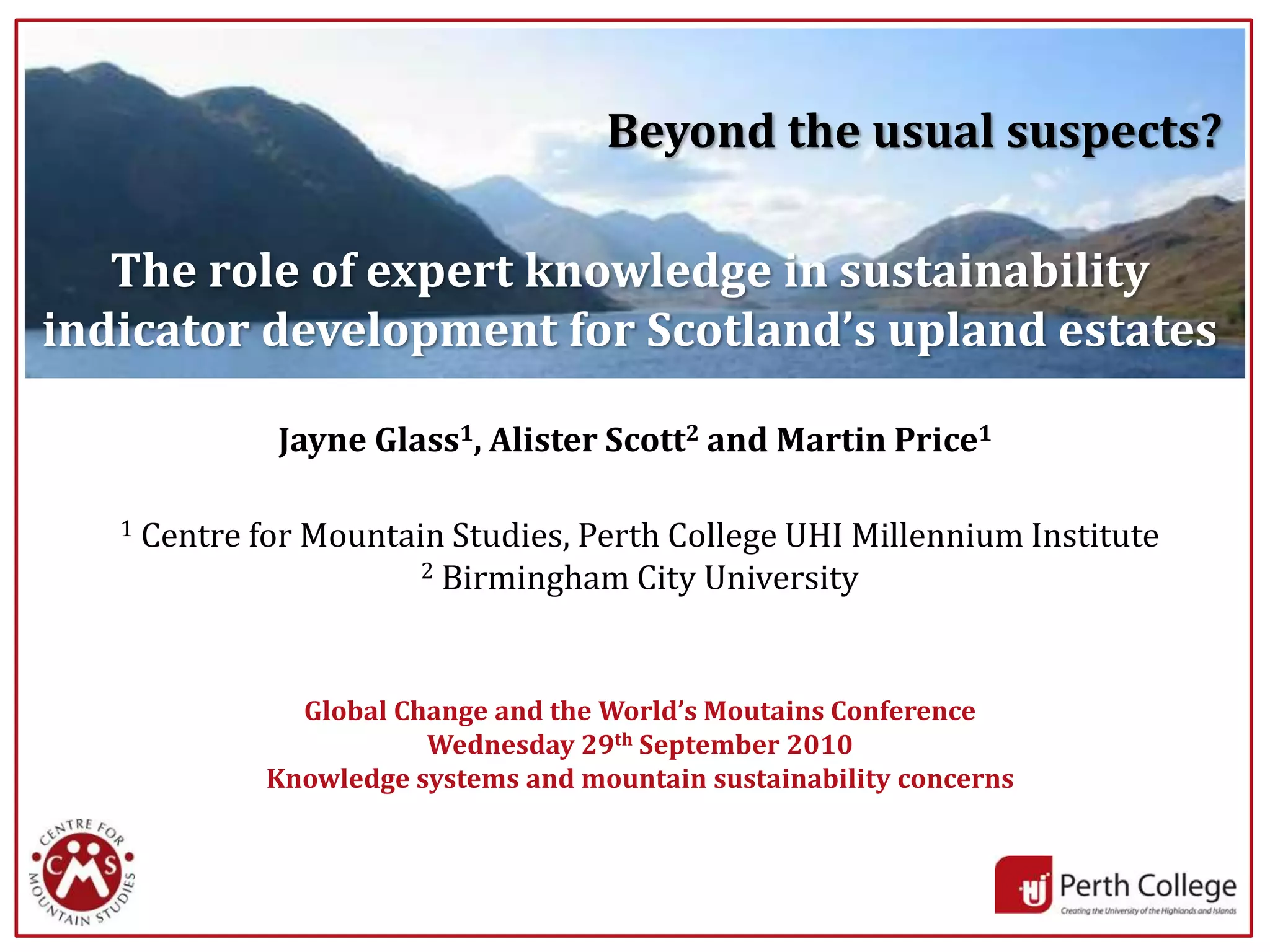
   The role of expert knowledge in sustainability
indicator development for Scotland’s upland estates

                Jayne Glass1, Alister Scott2 and Martin Price1

   1   Centre for Mountain Studies, Perth College UHI Millennium Institute
                         2 Birmingham City University


                 Global Change and the World’s Moutains Conference
                          Wednesday 29th September 2010
               Knowledge systems and mountain sustainability concerns


                                                                             1
Outline

• Research context
• Methodology
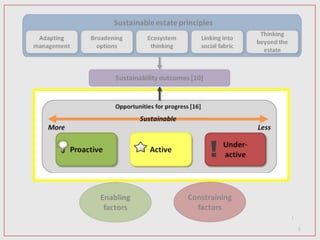
• A toolkit for sustainable
upland estate management
• Using the toolkit
• Reflections


                              2
Research context I

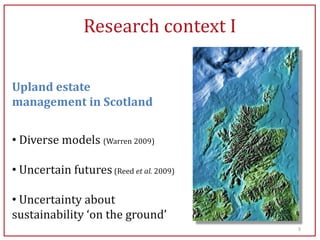
Upland estate
management in Scotland


• Diverse models (Warren 2009)

• Uncertain futures (Reed et al. 2009)

• Uncertainty about
sustainability ‘on the ground’
                                         3
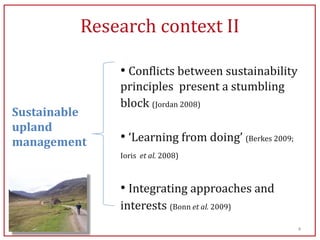
Research context II

              • Conflicts between sustainability
              principles present a stumbling
              block (Jordan 2008)
Sustainable
upland
management    • ‘Learning from doing’ (Berkes 2009;
              Ioris et al. 2008)


              • Integrating approaches and
              interests (Bonn et al. 2009)
                                                      4
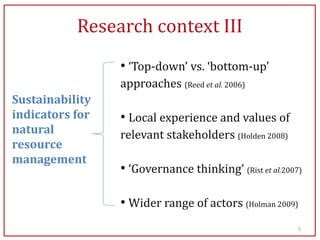
Research context III
                 • ‘Top-down’ vs. ‘bottom-up’
                 approaches (Reed et al. 2006)
Sustainability
indicators for   • Local experience and values of
natural          relevant stakeholders (Holden 2008)
resource
management
                 • ‘Governance thinking’ (Rist et al.2007)

                 • Wider range of actors (Holman 2009)
                                                         5
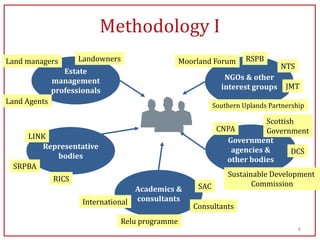
Methodology I
Land managers        Landowners                 Moorland Forum      RSPB
                                                                              NTS
                 Estate
              management                                     NGOs & other
                                                            interest groups     JMT
              professionals
Land Agents                                               Southern Uplands Partnership

                                                                       Scottish
                                                           CNPA        Government
    LINK                                 Panel               Government
       Representative                                         agencies &      DCS
          bodies                                             other bodies
 SRPBA
                                                              Sustainable Development
              RICS
                                                    SAC              Commission
                                    Academics &
                      International consultants
                                                   Consultants
                               Relu programme
                                                                                    6
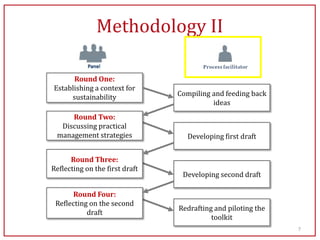
Methodology II

      Round One:
Establishing a context for
     sustainability             Compiling and feeding back
                                          ideas
     Round Two:
  Discussing practical
 management strategies            Developing first draft


      Round Three:
Reflecting on the first draft
                                 Developing second draft

      Round Four:
 Reflecting on the second
                                Redrafting and piloting the
           draft
                                          toolkit
                                                              7
8
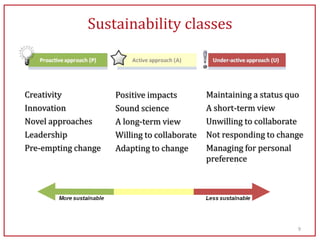
Sustainability classes


Creativity           Positive impacts         Maintaining a status quo
Innovation           Sound science            A short-term view
Novel approaches     A long-term view         Unwilling to collaborate
Leadership           Willing to collaborate   Not responding to change
Pre-empting change   Adapting to change       Managing for personal
                                              preference


                                                                    9
Outcomes and opportunities


                             10
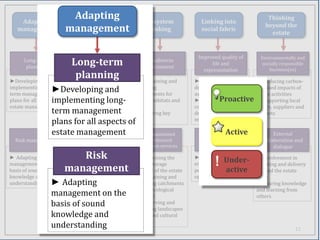
Adapting
                            Adapting
                             Broadening                 Ecosystem               Linking into
                                                                                                          Thinking
                                                                                                         beyond the
   management              management
                               options                   thinking               social fabric
                                                                                                           estate


                                  Economic                                     Improved quality of     Environmentally and
      Long-term
       planning
                            Long-term
                                resilience and
                                                         A biodiverse
                                                         environment
                                                                                    life and           socially responsible
                              financial viability                                representation           business(es)

►Developing and
                             planning
                            ► Developing long-      ► Maintaining and         ► Playing a role in     ► Reducing carbon-
implementing long-
term management
                   ►Developing and
                        term income streams
                        to cope with shocks
                                                    enhancing
                                                    environments for
                                                                              delivering community
                                                                              aspirations
                                                                                                      focussed impacts of
                                                                                                      estate activities
                   implementing long-
plans for all aspects of                            priority habitats and     ► InvolvingProactive    ► Supporting local
estate management                                   species                   communities in estate   trades, suppliers and
                   term management                  ► Restoring key           decision-making and     markets
                   plans for all aspects of         habitats                  management

                   estate management
                            Customer-led              Well-maintained              ImprovedActive            External
  Risk management                                      and enhanced                livelihood           collaboration and
                                 approach
                                                     ecosystem services          opportunities               dialogue

► Adapting                    Risk
                           ► Adding value to        ► Maximising the          ► Facilitating
                                                                                           Under-     ► Involvement in
management on the
basis of sound
                           estate products and
                           management
                           services
                                                    carbon storage
                                                    potential of the estate
                                                                                     !
                                                                              employment and
                                                                                            active
                                                                              people development
                                                                                                      planning and delivery
                                                                                                      beyond the estate
knowledge and                                       ► Maintaining and         opportunities           scale
understanding      ► Adapting                       enhancing catchments                              ► Sharing knowledge
                                                    to good ecological                                and learning from
                   management on the                condition                                         others
                   basis of sound                   ► Conserving and
                                                    protecting landscapes
                   knowledge and                    and upland cultural
                                                    heritage
                   understanding                                                                                       11
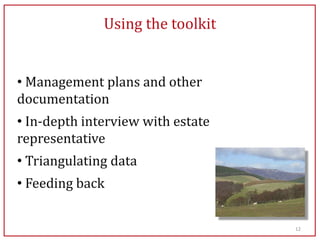
Using the toolkit


• Management plans and other
documentation
• In-depth interview with estate
representative
• Triangulating data
• Feeding back


                                   12
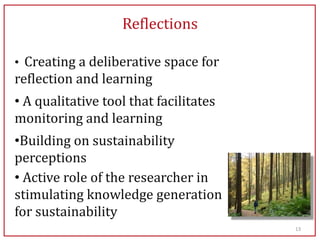
Reflections

• Creating a deliberative space for
reflection and learning
• A qualitative tool that facilitates
monitoring and learning
•Building on sustainability
perceptions
• Active role of the researcher in
stimulating knowledge generation
for sustainability
                                        13
Thank you
References
Berkes, F., 2009. Evolution of co-management: Role of knowledge generation, bridging
organizations and social learning. Journal of Environmental Management, 90, 1692-1702.
Holman, N., 2009. Incorporating local sustainability indicators into structures of local governance:
a review of the literature. Local Environment, 14 (4), 365-375.
Ioris, A.A.R., Hunter, C. and Walker, S., 2008. The development and application of water
management sustainability indicators in Brazil and Scotland. Journal of Environmental
Management, 88 (4), 1190-1201.
Jordan, A., 2008. The governance of sustainable development: taking stock and looking forwards.
Environment and Planning C: Government and Policy, 26, 17-33.
Reed, M.S. et al., 2006. An adaptive learning process for developing and applying sustainability
indicators with local communities. Ecological Economics, 59(4), 406-418.
Reed, M.S., et al., 2009. The future of the uplands. Land Use Policy, 26S, S204-S216.
Warren, C., 2009. Managing Scotland’s Environment. Second edition. Edinburgh University Press,
Edinburgh.

             For more information about the research,
             please contact: jayne.glass@perth.uhi.ac.uk
                                                                                                   14

Beyond the usual suspects? The role of expert knowledge in sustainability indicator development for Scotland's upland estates [Jayne Glass]

  • 1.
    Beyond the usualsuspects? The role of expert knowledge in sustainability indicator development for Scotland’s upland estates Jayne Glass1, Alister Scott2 and Martin Price1 1 Centre for Mountain Studies, Perth College UHI Millennium Institute 2 Birmingham City University Global Change and the World’s Moutains Conference Wednesday 29th September 2010 Knowledge systems and mountain sustainability concerns 1
  • 2.
    Outline • Research context •Methodology • A toolkit for sustainable upland estate management • Using the toolkit • Reflections 2
  • 3.
    Research context I Uplandestate management in Scotland • Diverse models (Warren 2009) • Uncertain futures (Reed et al. 2009) • Uncertainty about sustainability ‘on the ground’ 3
  • 4.
    Research context II • Conflicts between sustainability principles present a stumbling block (Jordan 2008) Sustainable upland management • ‘Learning from doing’ (Berkes 2009; Ioris et al. 2008) • Integrating approaches and interests (Bonn et al. 2009) 4
  • 5.
    Research context III • ‘Top-down’ vs. ‘bottom-up’ approaches (Reed et al. 2006) Sustainability indicators for • Local experience and values of natural relevant stakeholders (Holden 2008) resource management • ‘Governance thinking’ (Rist et al.2007) • Wider range of actors (Holman 2009) 5
  • 6.
    Methodology I Land managers Landowners Moorland Forum RSPB NTS Estate management NGOs & other interest groups JMT professionals Land Agents Southern Uplands Partnership Scottish CNPA Government LINK Panel Government Representative agencies & DCS bodies other bodies SRPBA Sustainable Development RICS SAC Commission Academics & International consultants Consultants Relu programme 6
  • 7.
    Methodology II Round One: Establishing a context for sustainability Compiling and feeding back ideas Round Two: Discussing practical management strategies Developing first draft Round Three: Reflecting on the first draft Developing second draft Round Four: Reflecting on the second Redrafting and piloting the draft toolkit 7
  • 8.
  • 9.
    Sustainability classes Creativity Positive impacts Maintaining a status quo Innovation Sound science A short-term view Novel approaches A long-term view Unwilling to collaborate Leadership Willing to collaborate Not responding to change Pre-empting change Adapting to change Managing for personal preference 9
  • 10.
  • 11.
    Adapting Adapting Broadening Ecosystem Linking into Thinking beyond the management management options thinking social fabric estate Economic Improved quality of Environmentally and Long-term planning Long-term resilience and A biodiverse environment life and socially responsible financial viability representation business(es) ►Developing and planning ► Developing long- ► Maintaining and ► Playing a role in ► Reducing carbon- implementing long- term management ►Developing and term income streams to cope with shocks enhancing environments for delivering community aspirations focussed impacts of estate activities implementing long- plans for all aspects of priority habitats and ► InvolvingProactive ► Supporting local estate management species communities in estate trades, suppliers and term management ► Restoring key decision-making and markets plans for all aspects of habitats management estate management Customer-led Well-maintained ImprovedActive External Risk management and enhanced livelihood collaboration and approach ecosystem services opportunities dialogue ► Adapting Risk ► Adding value to ► Maximising the ► Facilitating Under- ► Involvement in management on the basis of sound estate products and management services carbon storage potential of the estate ! employment and active people development planning and delivery beyond the estate knowledge and ► Maintaining and opportunities scale understanding ► Adapting enhancing catchments ► Sharing knowledge to good ecological and learning from management on the condition others basis of sound ► Conserving and protecting landscapes knowledge and and upland cultural heritage understanding 11
  • 12.
    Using the toolkit •Management plans and other documentation • In-depth interview with estate representative • Triangulating data • Feeding back 12
  • 13.
    Reflections • Creating adeliberative space for reflection and learning • A qualitative tool that facilitates monitoring and learning •Building on sustainability perceptions • Active role of the researcher in stimulating knowledge generation for sustainability 13
  • 14.
    Thank you References Berkes, F.,2009. Evolution of co-management: Role of knowledge generation, bridging organizations and social learning. Journal of Environmental Management, 90, 1692-1702. Holman, N., 2009. Incorporating local sustainability indicators into structures of local governance: a review of the literature. Local Environment, 14 (4), 365-375. Ioris, A.A.R., Hunter, C. and Walker, S., 2008. The development and application of water management sustainability indicators in Brazil and Scotland. Journal of Environmental Management, 88 (4), 1190-1201. Jordan, A., 2008. The governance of sustainable development: taking stock and looking forwards. Environment and Planning C: Government and Policy, 26, 17-33. Reed, M.S. et al., 2006. An adaptive learning process for developing and applying sustainability indicators with local communities. Ecological Economics, 59(4), 406-418. Reed, M.S., et al., 2009. The future of the uplands. Land Use Policy, 26S, S204-S216. Warren, C., 2009. Managing Scotland’s Environment. Second edition. Edinburgh University Press, Edinburgh. For more information about the research, please contact: jayne.glass@perth.uhi.ac.uk 14