GOVT FIRST GRADE COLLEGE CHIKKABASUR
Department of Computer Applications
CLASS : BA II Year
SUBJECT : Computer Applications II
TOPIC NAME : Introduction to Computer Networks
Presented By : Prof.Rakesh Shettar
Dept of Computer Applications
Introduction to Computer Networks
INTRODUCTION TO COMPUTER
NETWORKS
Computer Networks
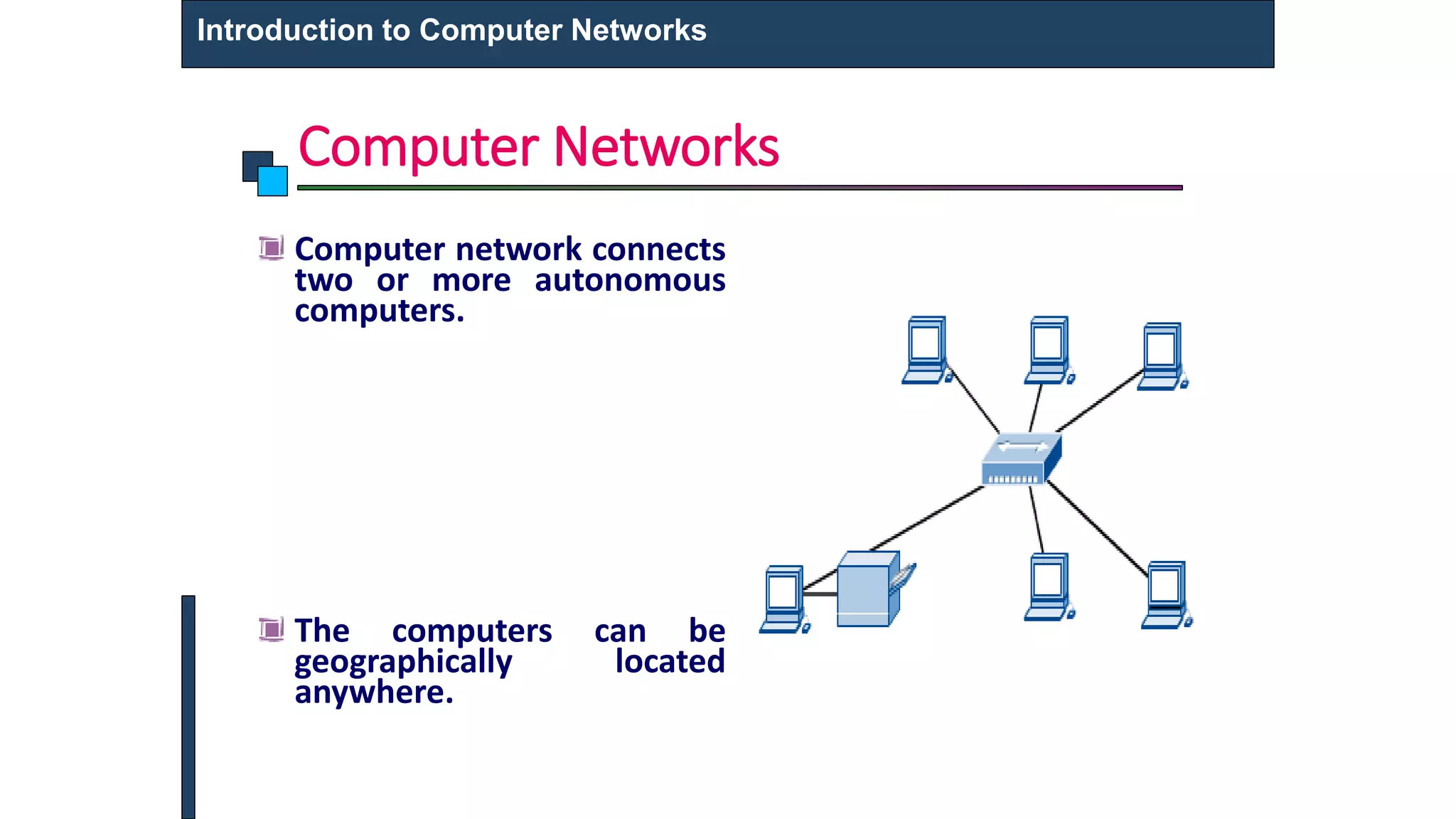
Computer network connects
two or more autonomous
computers.
The computers can be
geographically located
anywhere.
Introduction to Computer Networks
LAN, MAN & WAN
Introduction to Computer Networks
Network in small geographical Area (Room, Building or a
Campus) is called LAN (Local Area Network)
Network in a City is call MAN (Metropolitan Area Network)
Network spread geographically (Country or across Globe) is
called WAN (Wide Area Network)
Applications of Networks
Introduction to Computer Networks
Resource Sharing
Hardware (computing resources, disks, printers)
Software (application software)
Information Sharing
Easy accessibility from anywhere (files, databases)
Search Capability (WWW)
Communication
Email
Message broadcast
Remote computing
Distributed processing (GRID Computing)
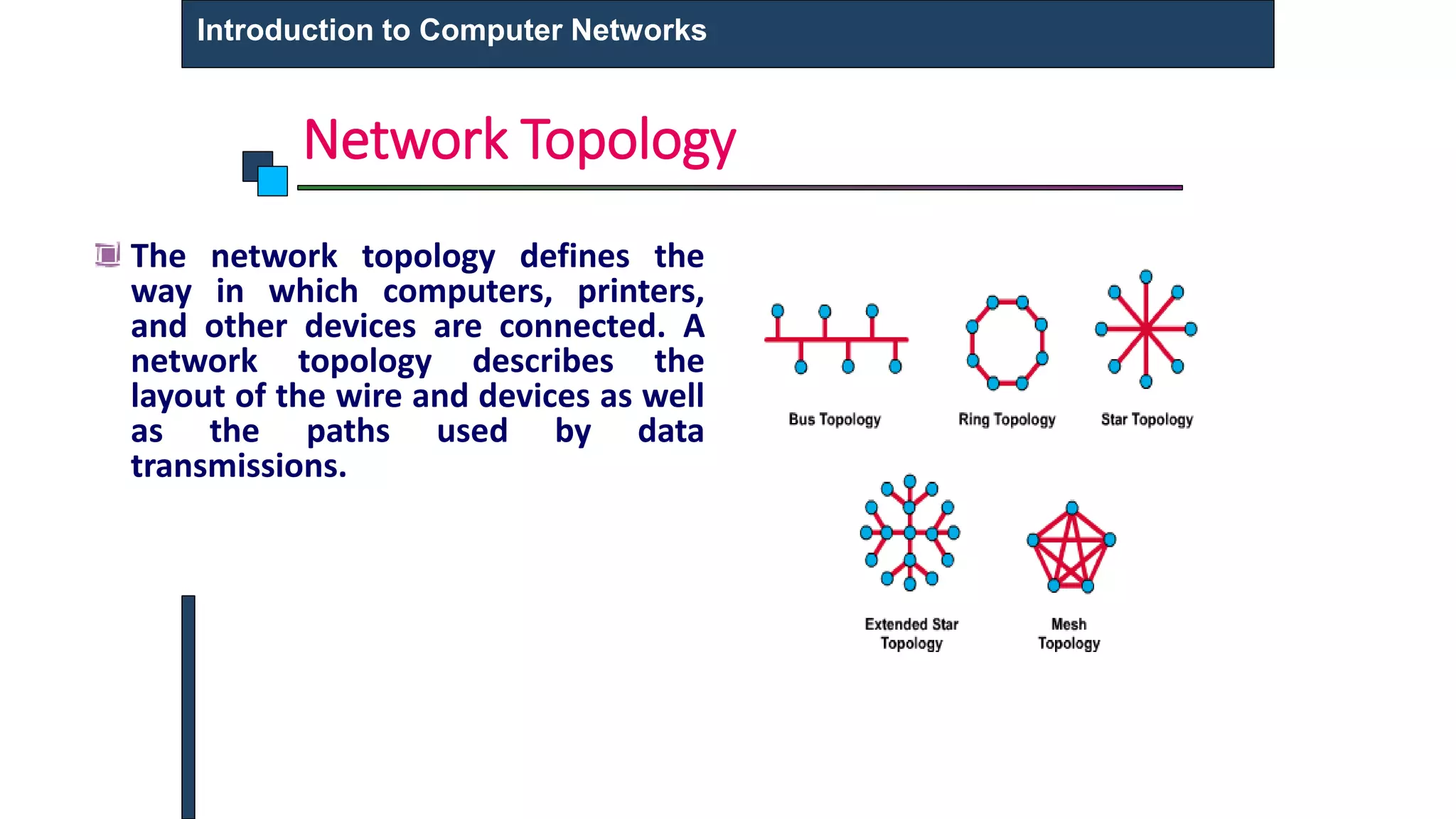
Network Topology
The network topology defines the
way in which computers, printers,
and other devices are connected. A
network topology describes the
layout of the wire and devices as well
as the paths used by data
transmissions.
Introduction to Computer Networks
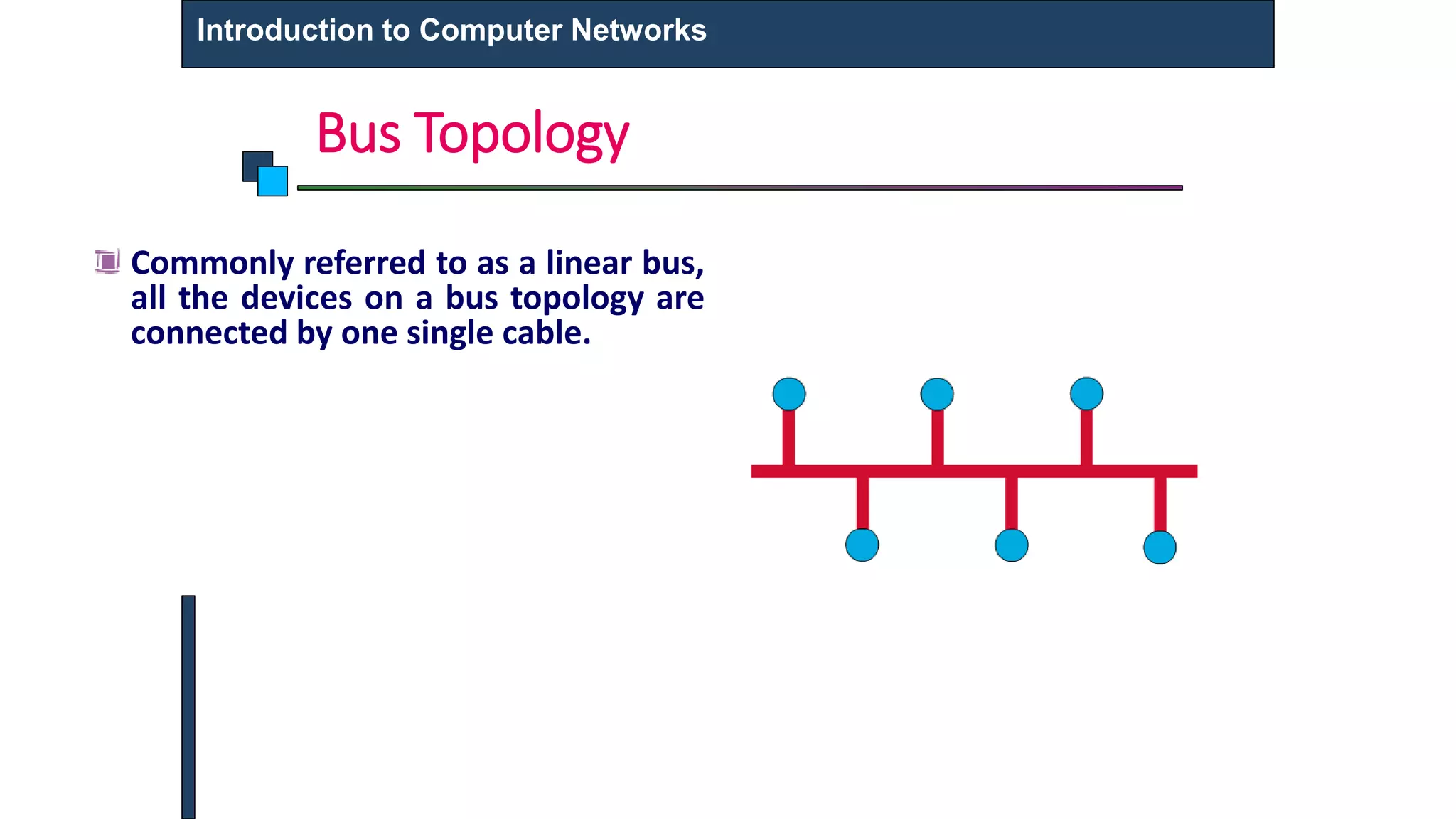
Bus Topology
Commonly referred to as a linear bus,
all the devices on a bus topology are
connected by one single cable.
Introduction to Computer Networks
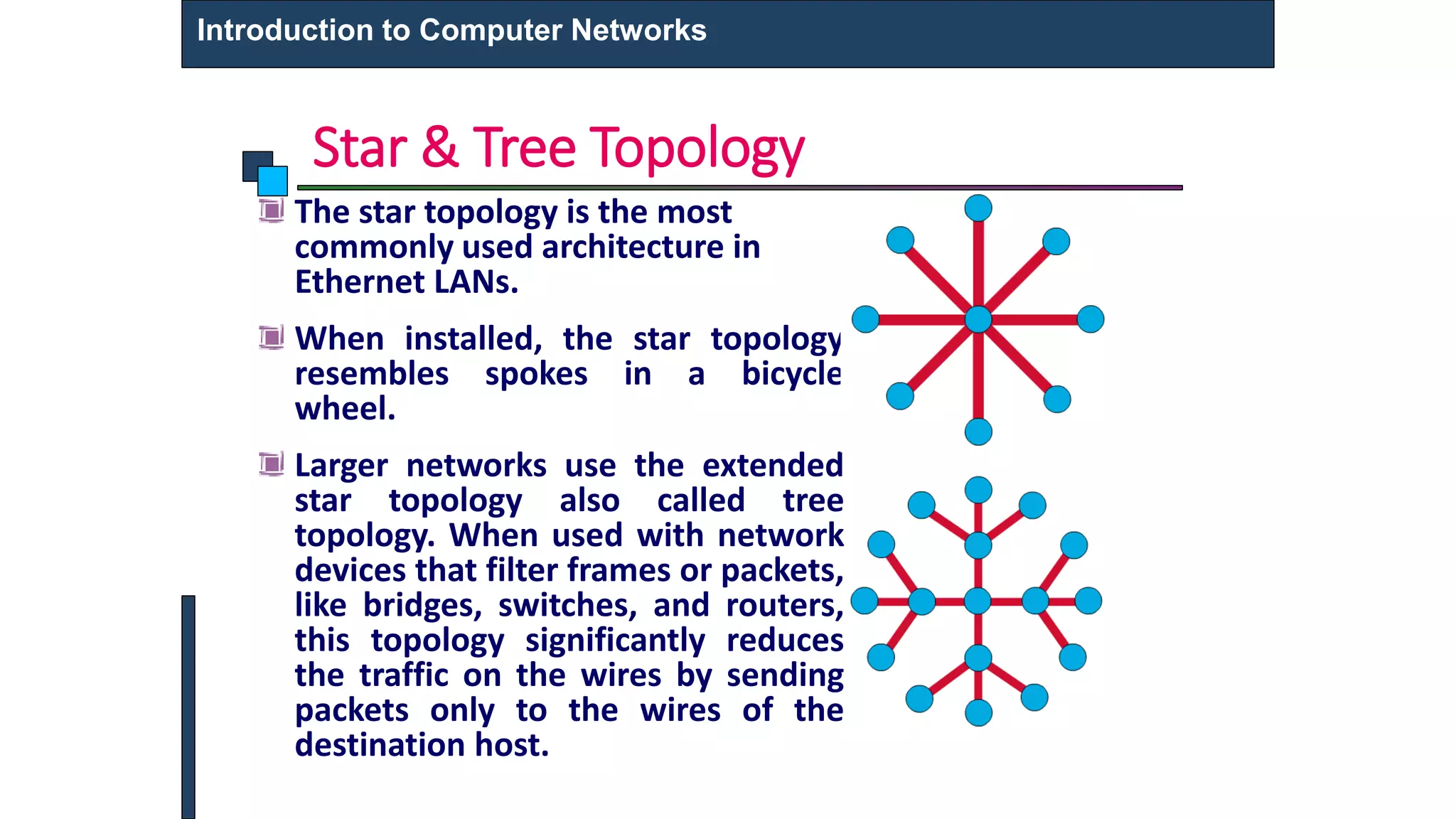
Star & Tree Topology
Introduction to Computer Networks
The star topology is the most
commonly used architecture in
Ethernet LANs.
When installed, the star topology
resembles spokes in a bicycle
wheel.
Larger networks use the extended
star topology also called tree
topology. When used with network
devices that filter frames or packets,
like bridges, switches, and routers,
this topology significantly reduces
the traffic on the wires by sending
packets only to the wires of the
destination host.
Ring Topology
Introduction to Computer Networks
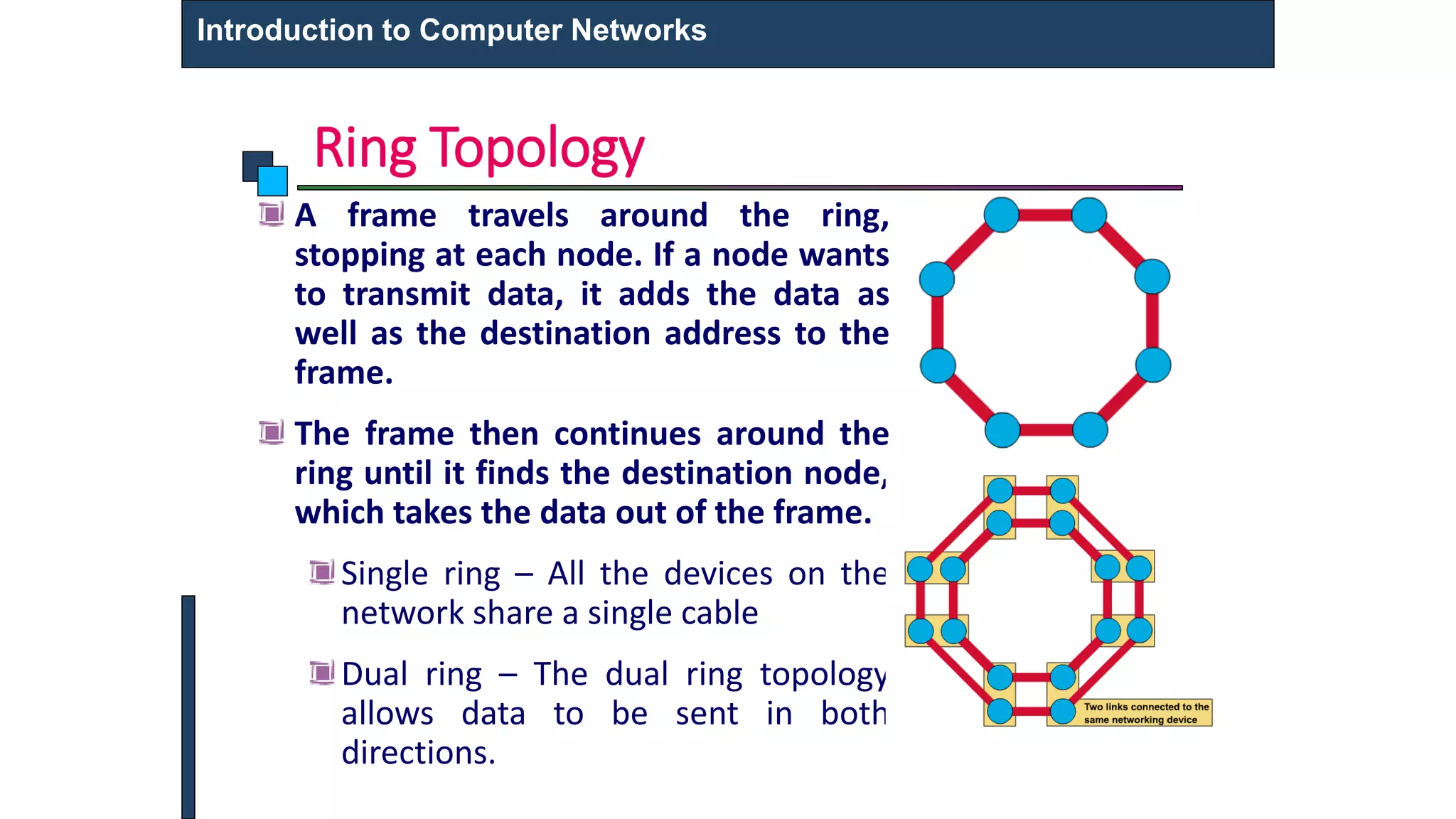
A frame travels around the ring,
stopping at each node. If a node wants
to transmit data, it adds the data as
well as the destination address to the
frame.
The frame then continues around the
ring until it finds the destination node,
which takes the data out of the frame.
Single ring – All the devices on the
network share a single cable
Dual ring – The dual ring topology
allows data to be sent in both
directions.
Mesh Topology
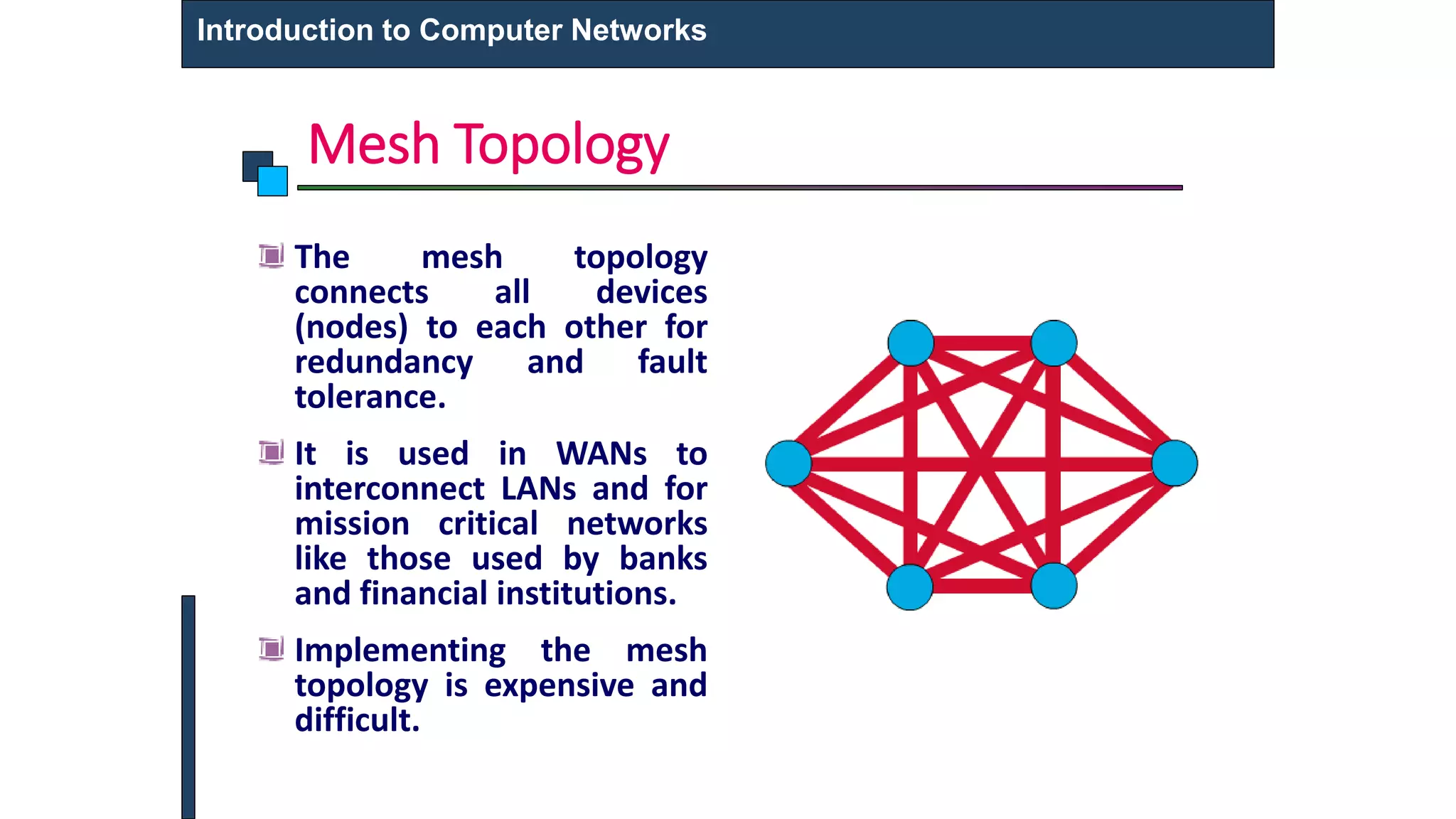
The mesh topology
connects all devices
(nodes) to each other for
redundancy and fault
tolerance.
It is used in WANs to
interconnect LANs and for
mission critical networks
like those used by banks
and financial institutions.
Implementing the mesh
topology is expensive and
difficult.
Introduction to Computer Networks
Network Components
Introduction to Computer Networks
Physical Media
Interconnecting Devices
Computers
Networking Software
Applications
Networking Media
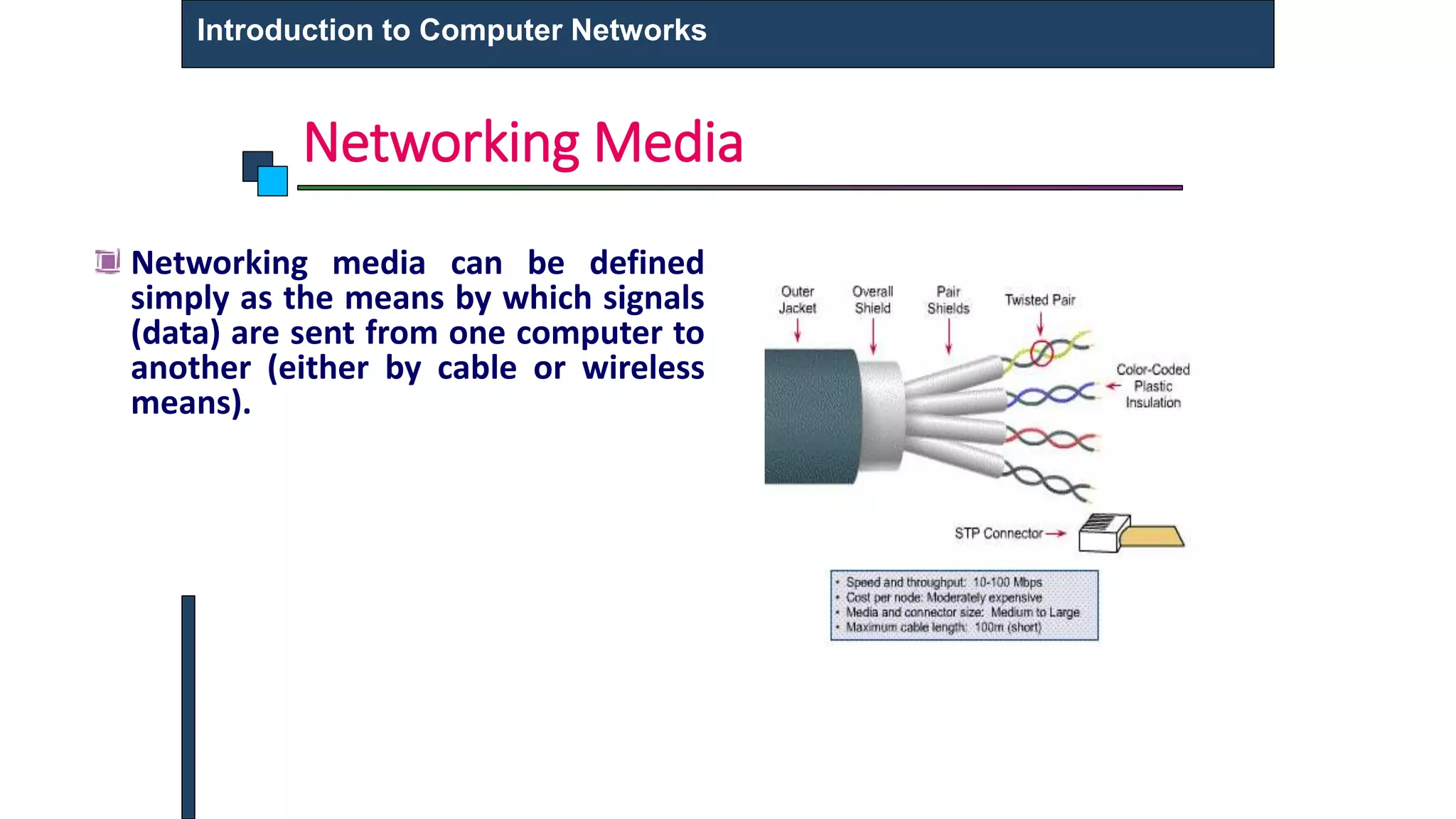
Networking media can be defined
simply as the means by which signals
(data) are sent from one computer to
another (either by cable or wireless
means).
Introduction to Computer Networks
Networking Devices
Introduction to Computer Networks
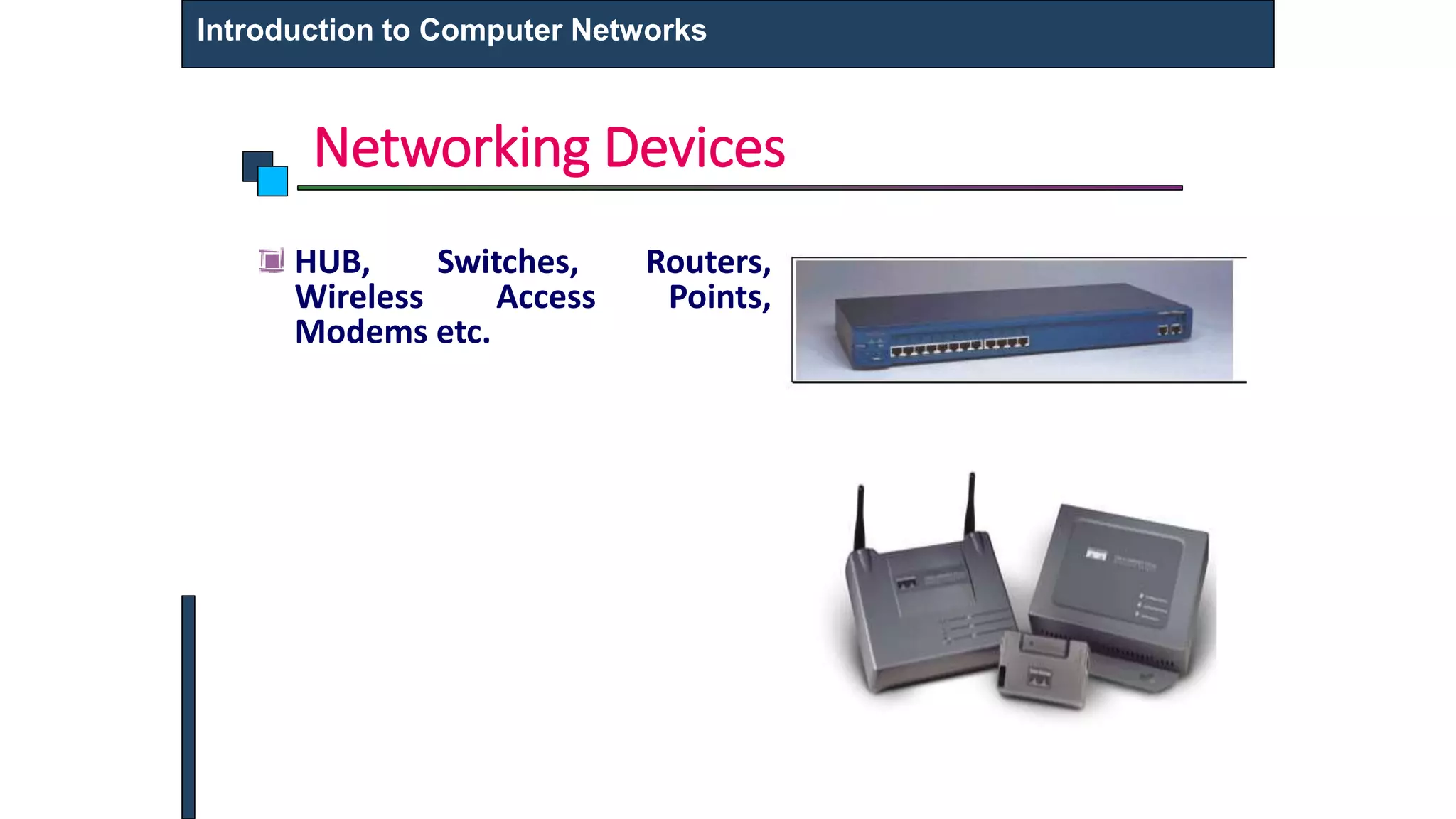
HUB, Switches, Routers,
Wireless Access Points,
Modems etc.
Computers: Clients and Servers
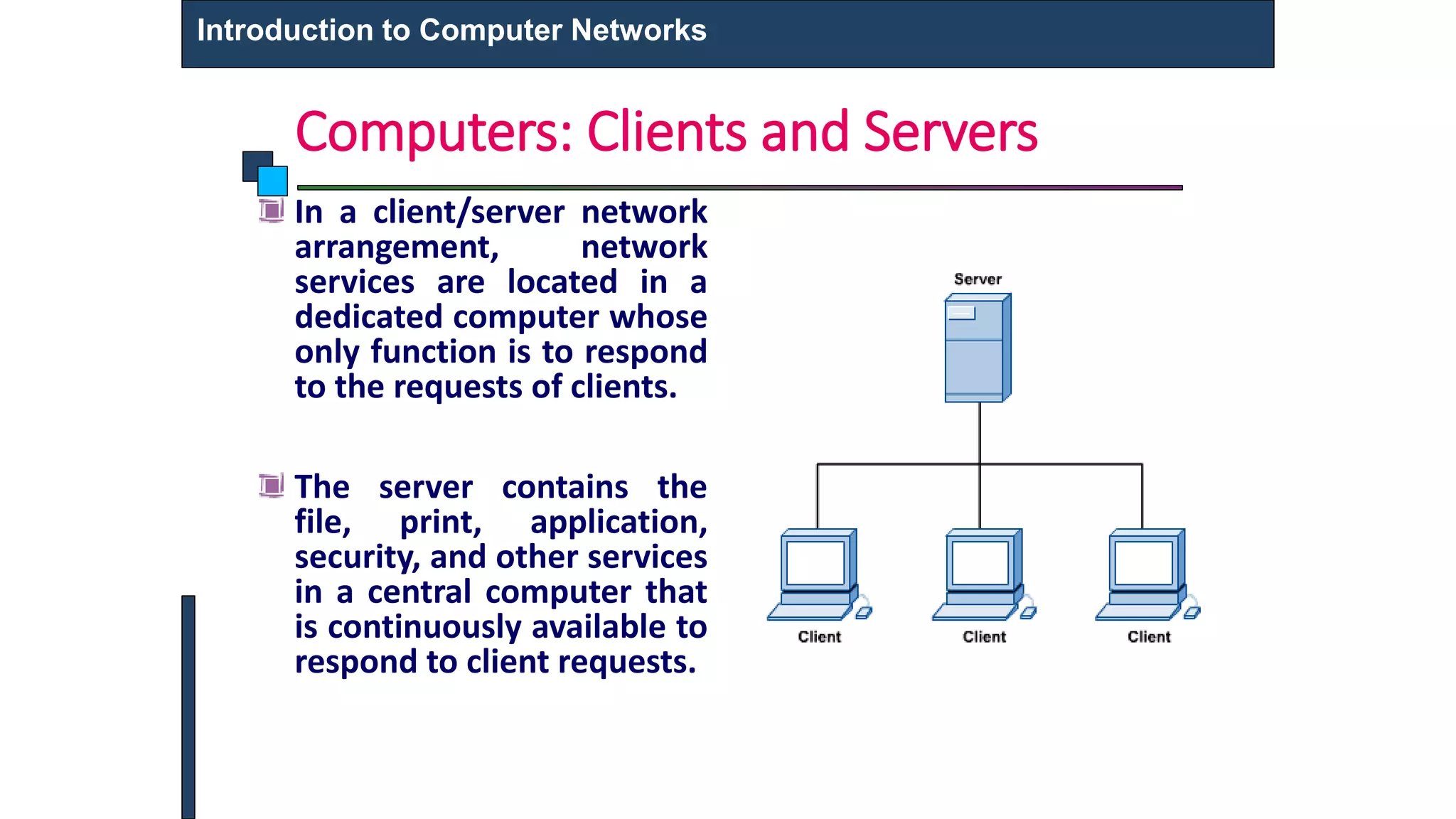
In a client/server network
arrangement, network
services are located in a
dedicated computer whose
only function is to respond
to the requests of clients.
The server contains the
file, print, application,
security, and other services
in a central computer that
is continuously available to
respond to client requests.
Introduction to Computer Networks
Applications
E-mail
Searchable Data (Web Sites)
E-Commerce
News Groups
Internet Telephony (VoIP)
Video Conferencing
Chat Groups
Instant Messengers
Internet Radio
Introduction to Computer Networks
GFGC CHIKKABASUR (INTRODUCTION TO COMPUTER APPLICATIONS)

GFGC CHIKKABASUR (INTRODUCTION TO COMPUTER APPLICATIONS)

  • 1.
    GOVT FIRST GRADECOLLEGE CHIKKABASUR Department of Computer Applications CLASS : BA II Year SUBJECT : Computer Applications II TOPIC NAME : Introduction to Computer Networks Presented By : Prof.Rakesh Shettar Dept of Computer Applications
  • 2.
    Introduction to ComputerNetworks INTRODUCTION TO COMPUTER NETWORKS
  • 3.
    Computer Networks Computer networkconnects two or more autonomous computers. The computers can be geographically located anywhere. Introduction to Computer Networks
  • 4.
    LAN, MAN &WAN Introduction to Computer Networks Network in small geographical Area (Room, Building or a Campus) is called LAN (Local Area Network) Network in a City is call MAN (Metropolitan Area Network) Network spread geographically (Country or across Globe) is called WAN (Wide Area Network)
  • 5.
    Applications of Networks Introductionto Computer Networks Resource Sharing Hardware (computing resources, disks, printers) Software (application software) Information Sharing Easy accessibility from anywhere (files, databases) Search Capability (WWW) Communication Email Message broadcast Remote computing Distributed processing (GRID Computing)
  • 6.
    Network Topology The networktopology defines the way in which computers, printers, and other devices are connected. A network topology describes the layout of the wire and devices as well as the paths used by data transmissions. Introduction to Computer Networks
  • 7.
    Bus Topology Commonly referredto as a linear bus, all the devices on a bus topology are connected by one single cable. Introduction to Computer Networks
  • 8.
    Star & TreeTopology Introduction to Computer Networks The star topology is the most commonly used architecture in Ethernet LANs. When installed, the star topology resembles spokes in a bicycle wheel. Larger networks use the extended star topology also called tree topology. When used with network devices that filter frames or packets, like bridges, switches, and routers, this topology significantly reduces the traffic on the wires by sending packets only to the wires of the destination host.
  • 9.
    Ring Topology Introduction toComputer Networks A frame travels around the ring, stopping at each node. If a node wants to transmit data, it adds the data as well as the destination address to the frame. The frame then continues around the ring until it finds the destination node, which takes the data out of the frame. Single ring – All the devices on the network share a single cable Dual ring – The dual ring topology allows data to be sent in both directions.
  • 10.
    Mesh Topology The meshtopology connects all devices (nodes) to each other for redundancy and fault tolerance. It is used in WANs to interconnect LANs and for mission critical networks like those used by banks and financial institutions. Implementing the mesh topology is expensive and difficult. Introduction to Computer Networks
  • 11.
    Network Components Introduction toComputer Networks Physical Media Interconnecting Devices Computers Networking Software Applications
  • 12.
    Networking Media Networking mediacan be defined simply as the means by which signals (data) are sent from one computer to another (either by cable or wireless means). Introduction to Computer Networks
  • 13.
    Networking Devices Introduction toComputer Networks HUB, Switches, Routers, Wireless Access Points, Modems etc.
  • 14.
    Computers: Clients andServers In a client/server network arrangement, network services are located in a dedicated computer whose only function is to respond to the requests of clients. The server contains the file, print, application, security, and other services in a central computer that is continuously available to respond to client requests. Introduction to Computer Networks
  • 15.
    Applications E-mail Searchable Data (WebSites) E-Commerce News Groups Internet Telephony (VoIP) Video Conferencing Chat Groups Instant Messengers Internet Radio Introduction to Computer Networks