
GETTING TO THE ROOT OF
DIFFICULT BEHAVIORS
William Sharp, PsyaDWilliam Sharp, PsyaD
Wheelock College AlumniWheelock College Alumni
SymposiumSymposium
March 22March 22ndnd
1-3pm1-3pm
@DRWILLIAMSHARP
#WheelockSymposium
K-W-L CHART:
 Know  Want to know
GOALS
1) List your personal goals in building healthy
relations
2) Understand how to figure out what typical
behaviors can mean
3) Apply guidelines for effective interactions with
people
WHAT IS THE STATE OF
RELATIONSHIPS THESES DAYS?
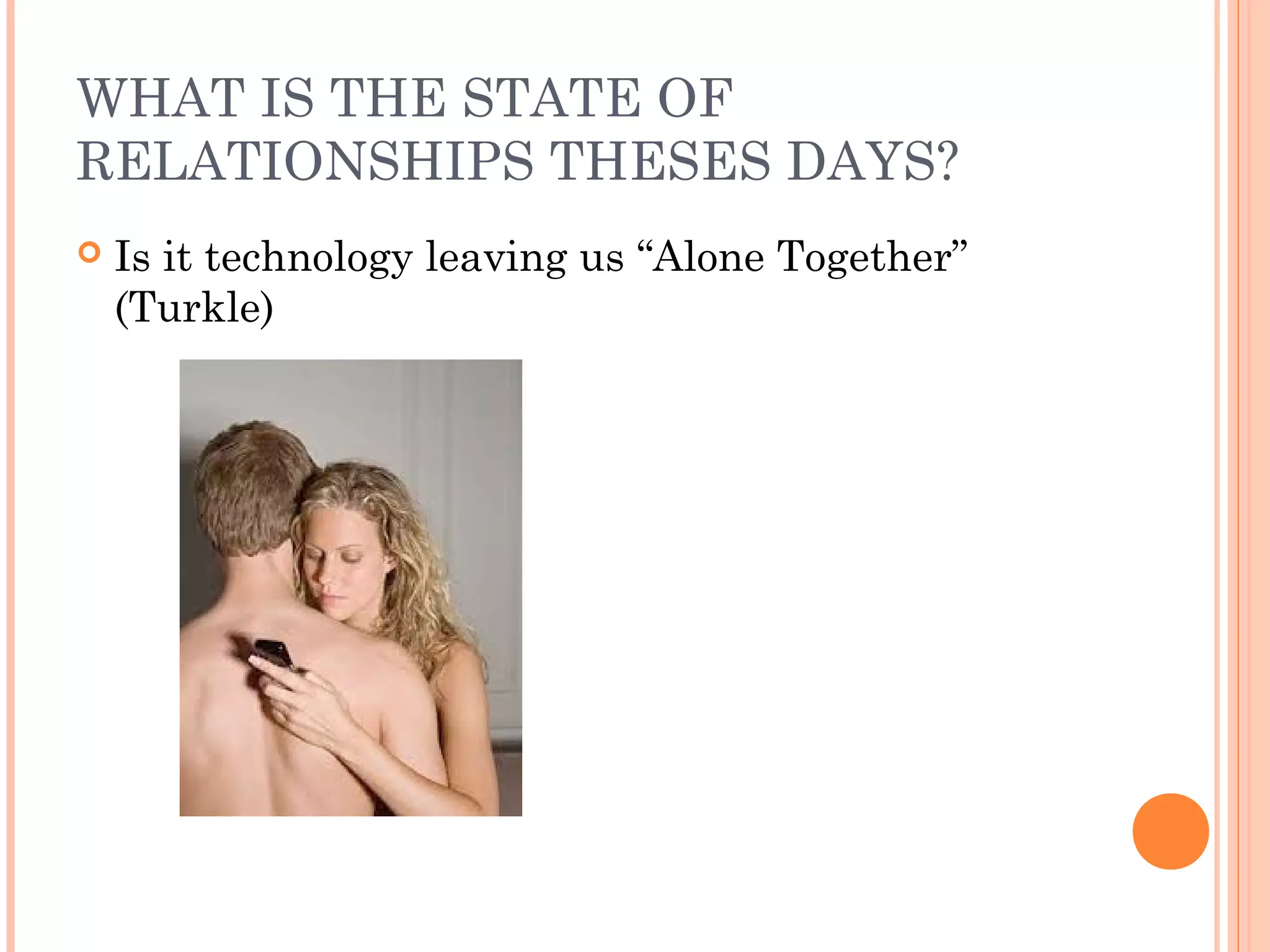
 Is it technology leaving us “Alone Together”
(Turkle)
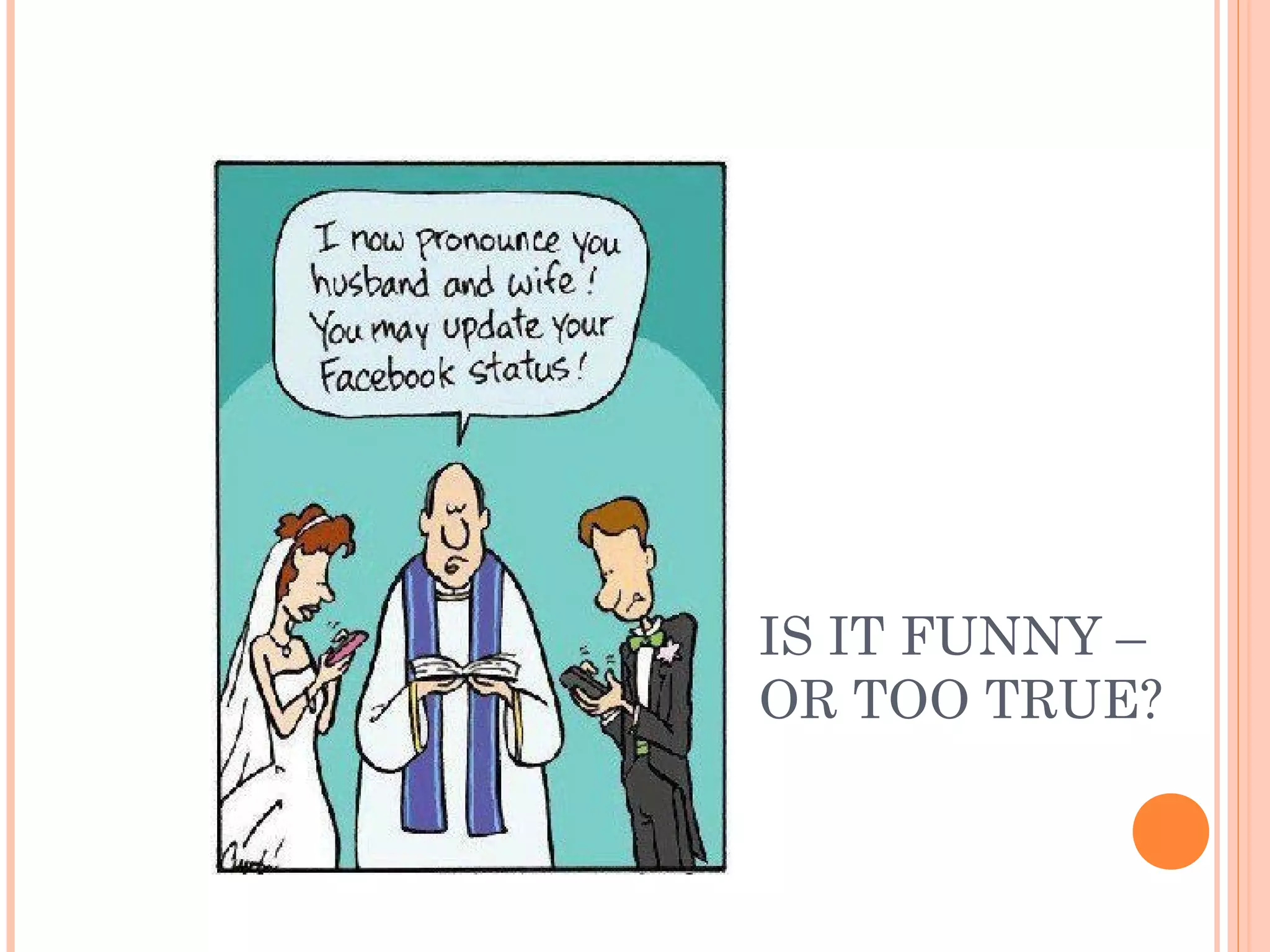
IS IT FUNNY –
OR TOO TRUE?
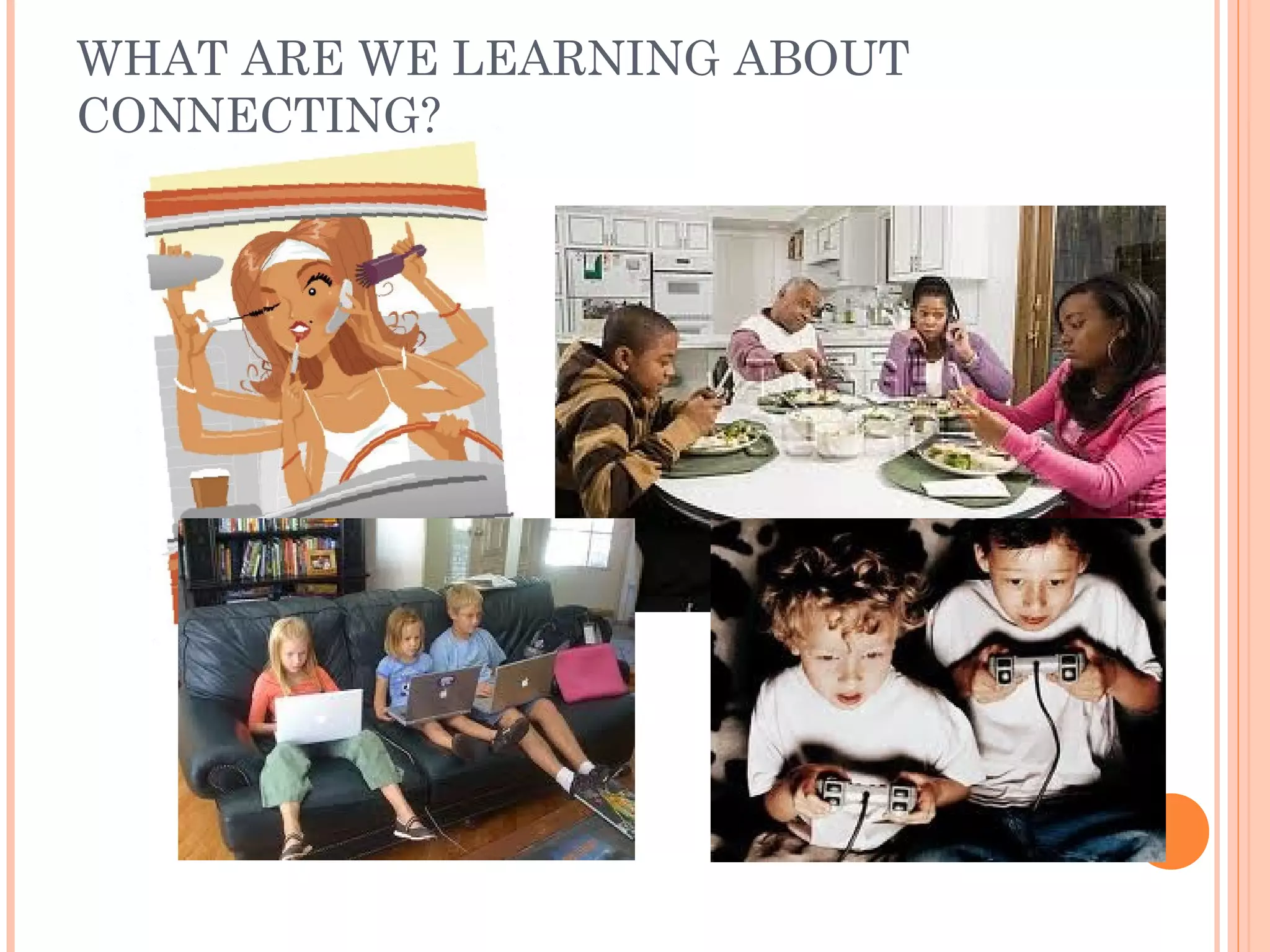
WHAT ARE WE LEARNING ABOUT
CONNECTING?
IS AGE-APPROPRIATE
EGOCENTRISM REMAINING AS A
NARCISSISTIC TRAIT?
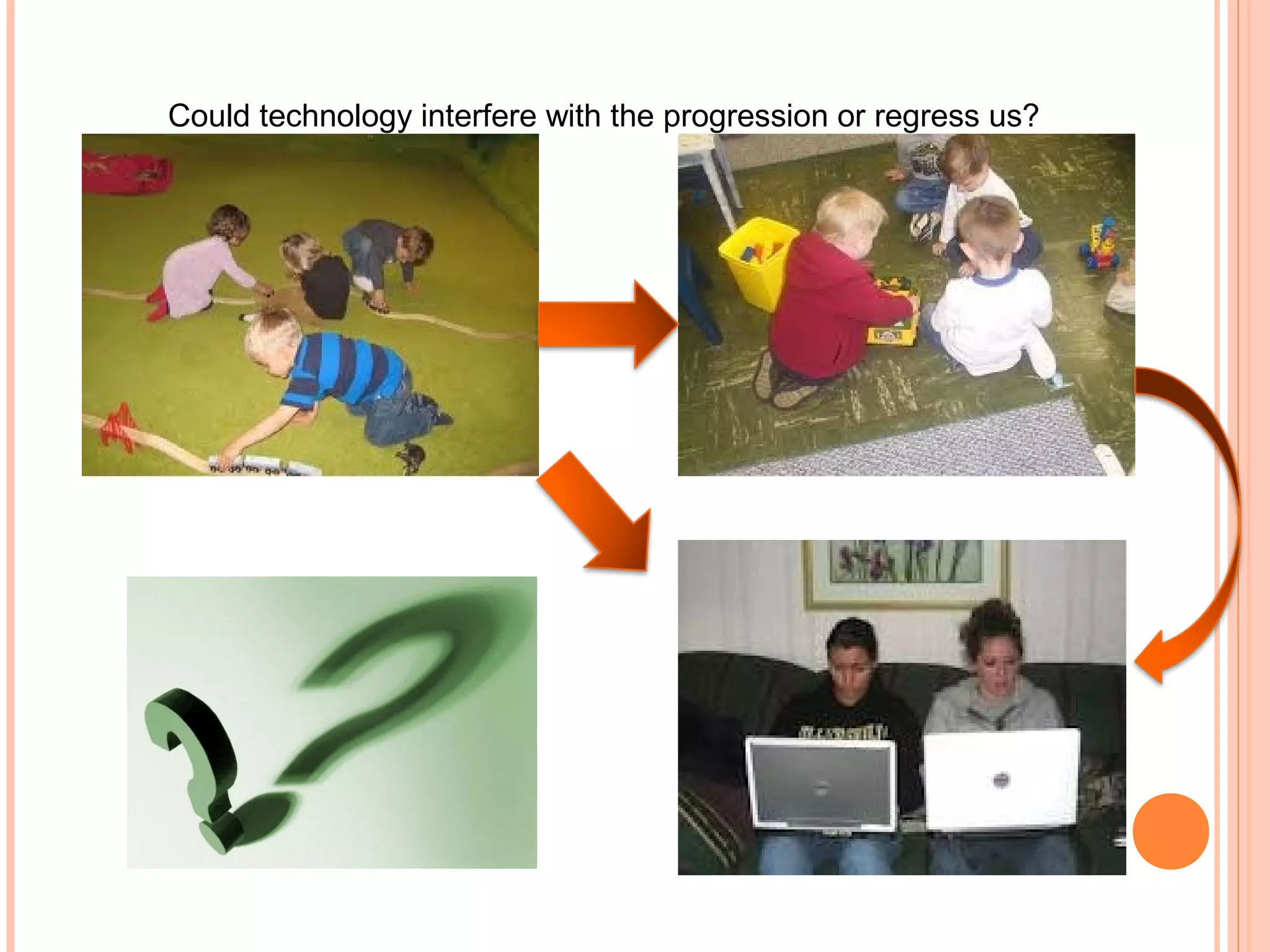
Could technology interfere with the progression or regress us?
TODAY’S TEENS?
“Today’s Teens: More Materialistic, Less Willing To
Work”
Study compared attitudes of three generations of
American HS seniors (1976-2007).
2005 – More money with less work!
62% lots of money is important (vs 48% from 1976-
78).
25% said work was important (vs 39% in 70s).
“This type of ‘fantasy gap’ is consistent with other
studies showing a generational increase in
narcissistism and entitlement.”
A RISE IN NARCISSISM?
 Narcissistic Personality Disorder (NPD) is 3x’s as
high for people in their 20s as for the generation
currently 65 or older.
 58% of college students scored higher on
narcissism scale in 2008 than in 1982
 40% of “millenials” believe they should be
promoted every two years, regardless of
performance.
Time Magazine, 2013, May 20th
The New Greatest Generation: Why Millenials will save us all.
A RISE IN NARCISSISM?
Of Millenials (b1980-2000) … “Their development
is stunted: more people ages 18-29 live with their
parents than with a spouse… and they are lazy.
In 1992, the nonprofit Families and Work
Institute reported that 80% of people under 23
wanted to one day have a job with greater
responsibility; 10 years later, on 60% did.”
Time Magazine, 2013, May 20th
The New Greatest Generation: Why Millenials will save us all.
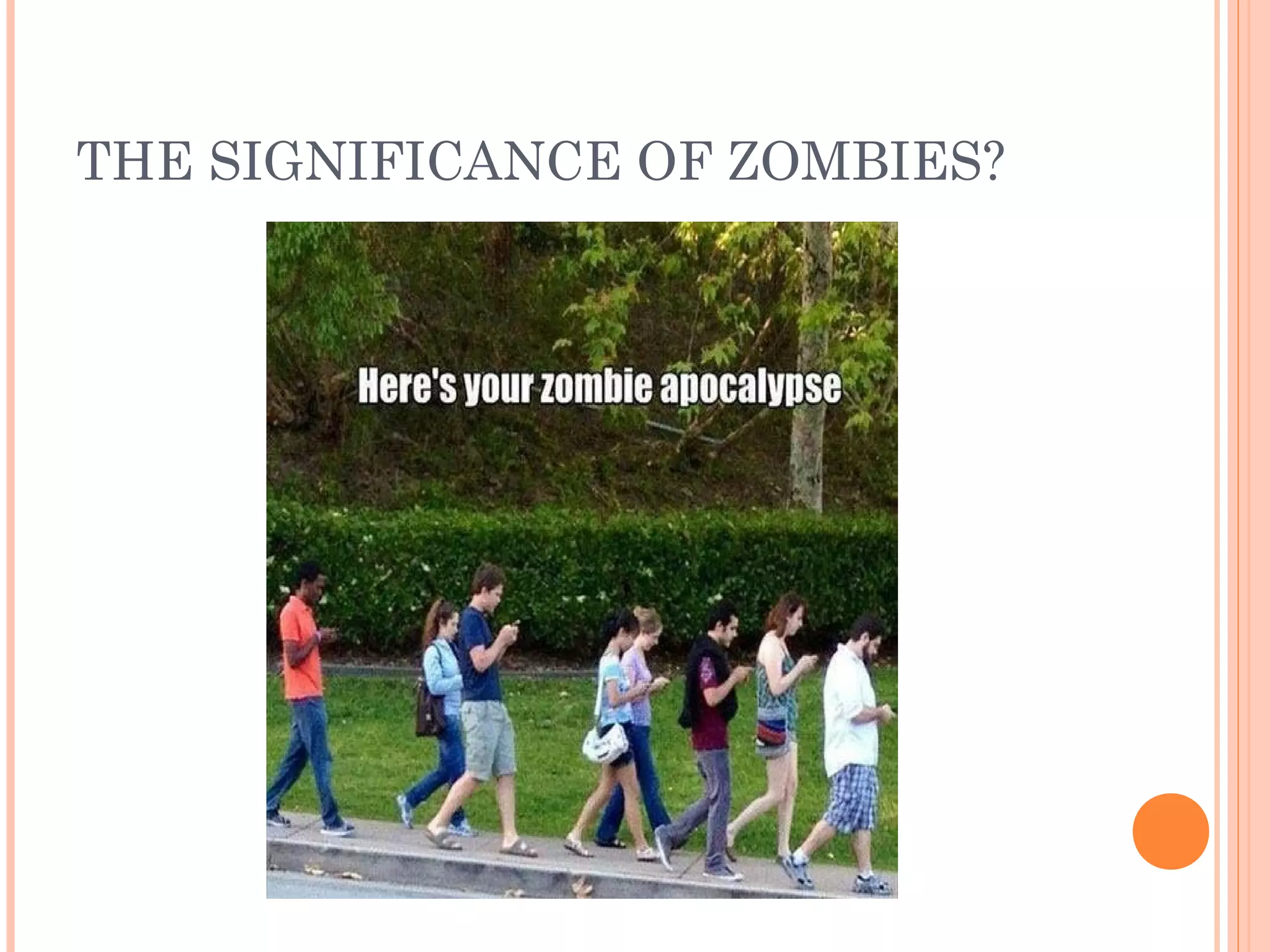
THE SIGNIFICANCE OF ZOMBIES?
IS THERE
HOPE?
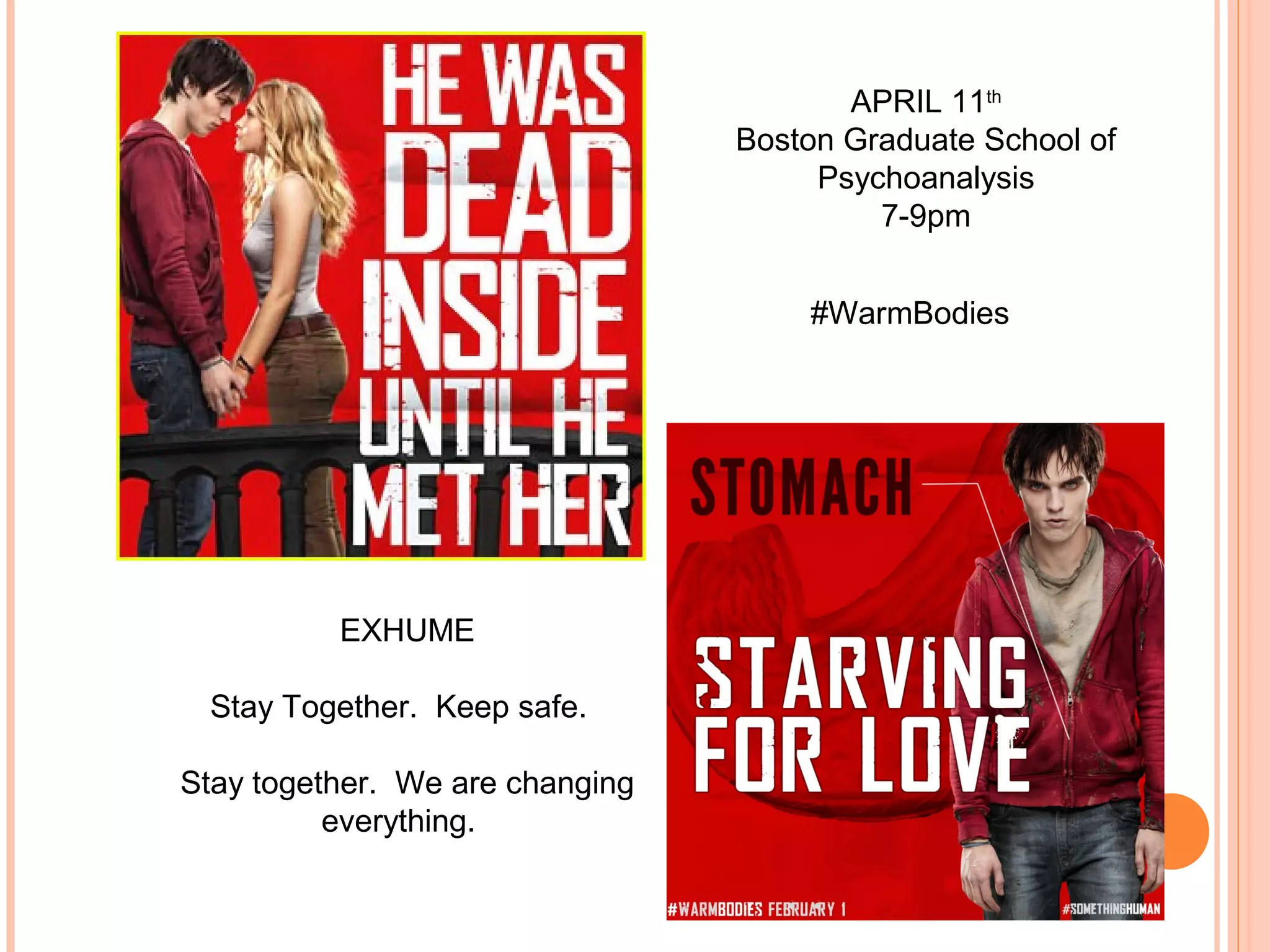
EXHUME
Stay Together. Keep safe.
Stay together. We are changing
everything.
APRIL 11th
Boston Graduate School of
Psychoanalysis
7-9pm
#WarmBodies
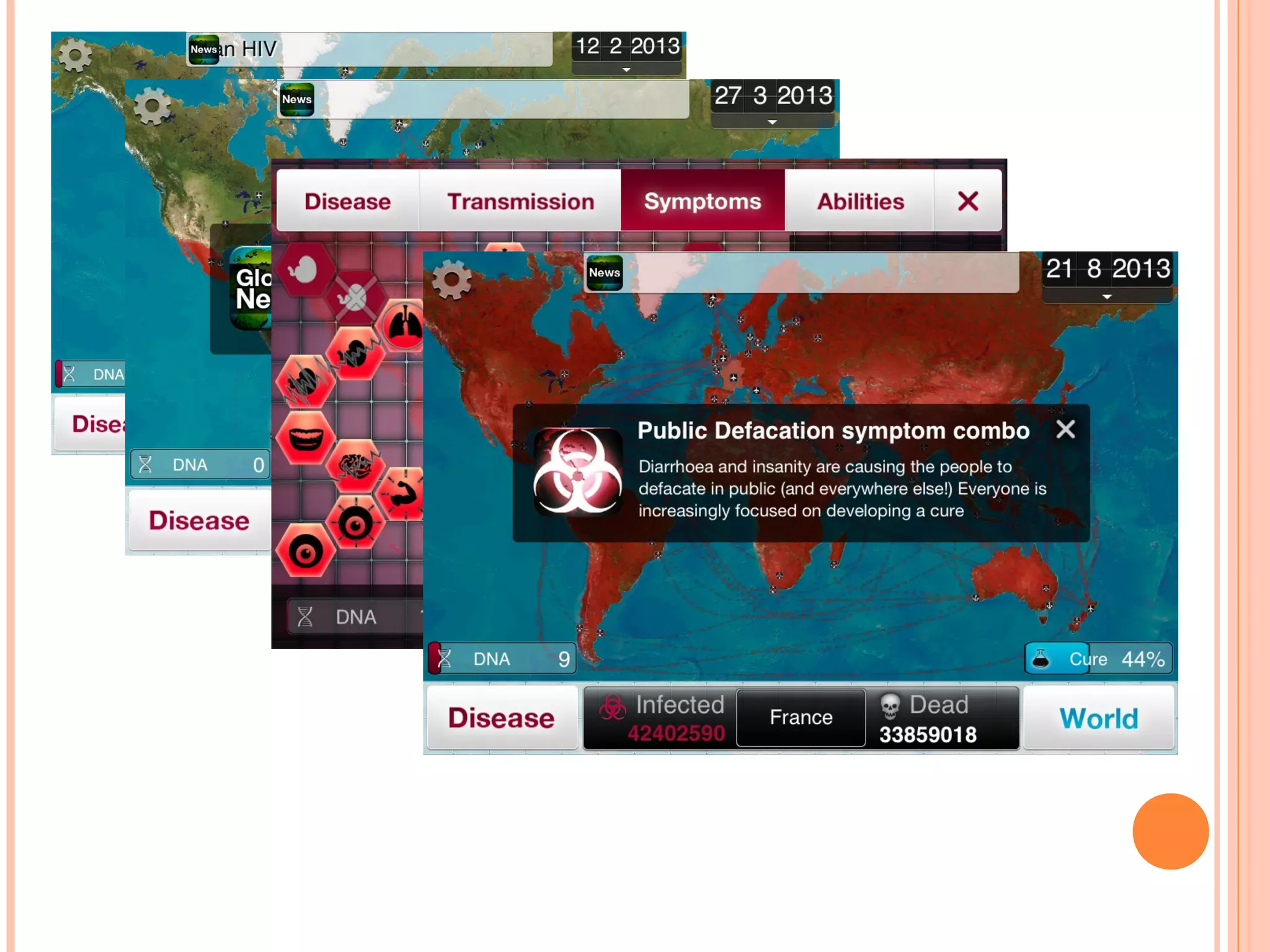
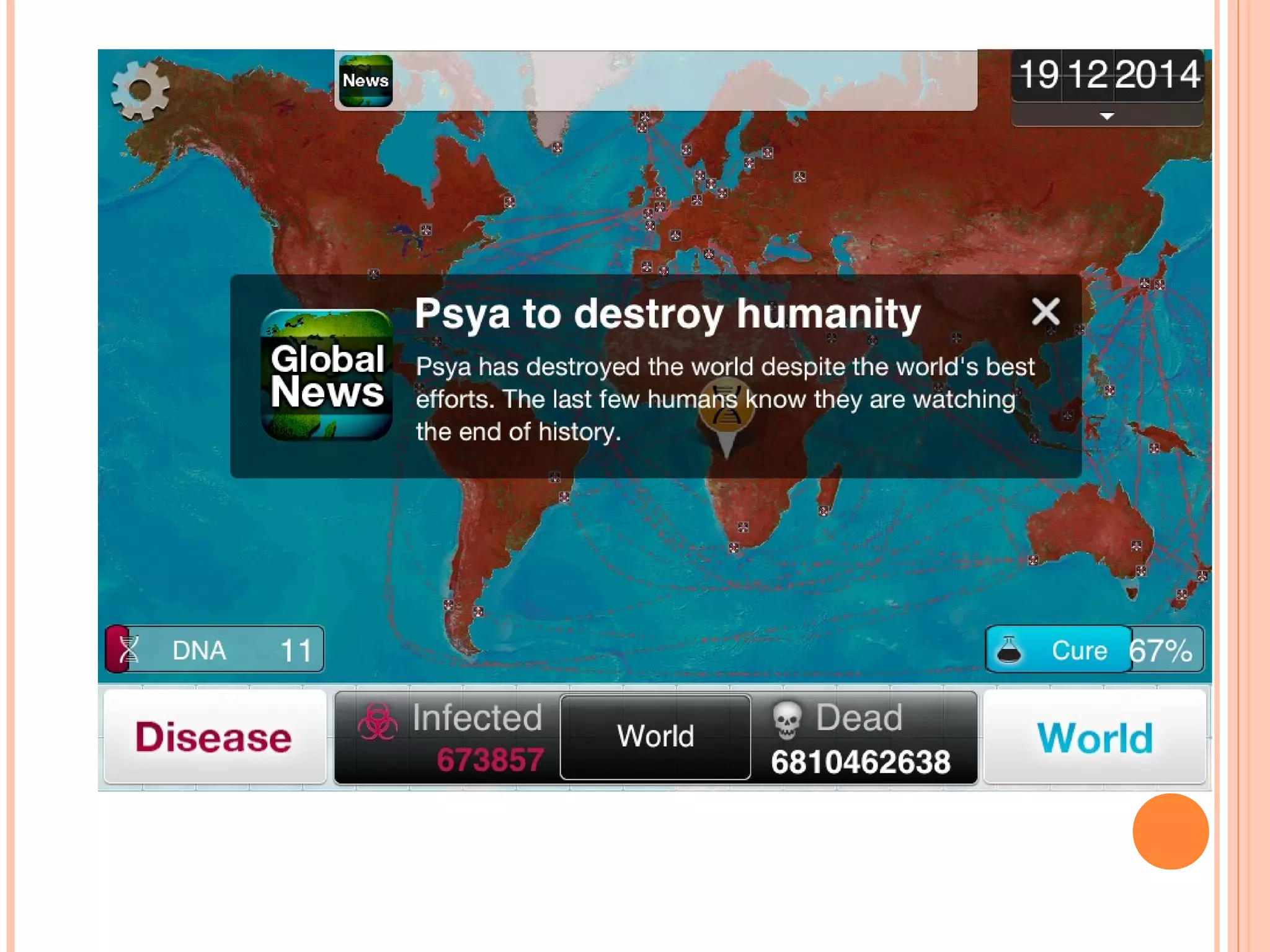
A PATIENT TOLD ME ABOUT A NEW
GAME…
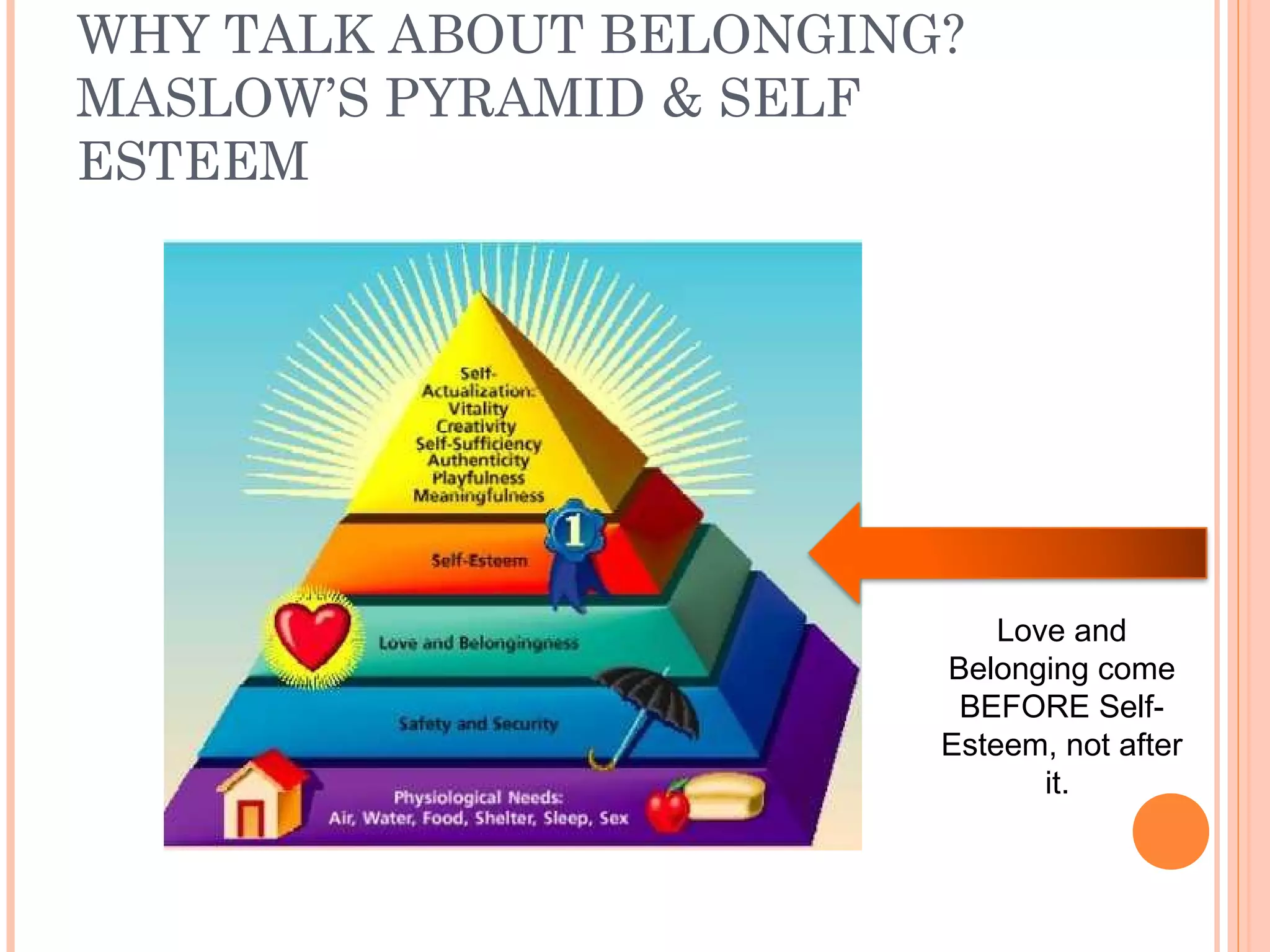
WHY TALK ABOUT BELONGING?
MASLOW’S PYRAMID & SELF
ESTEEM
Love and
Belonging come
BEFORE Self-
Esteem, not after
it.
S0 WHAT ARE YOUR PERSONAL
GOALS IN RELATIONSHIPS? WHY
CONNECT?
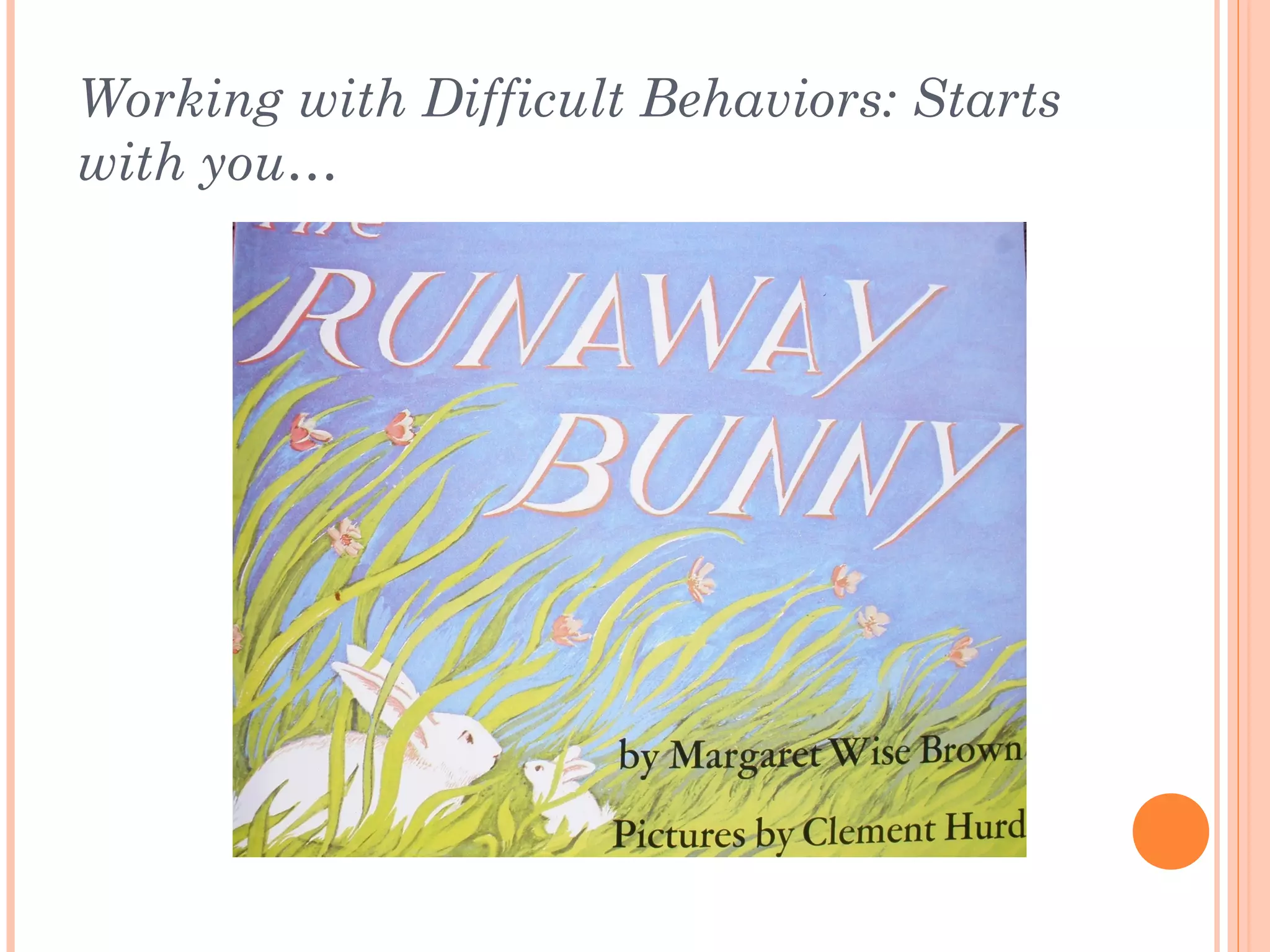
Working with Difficult Behaviors: Starts
with you…
THE THING YOU HAVE THE
MOST DIFFICULTY BEING,
IS GOING TO BE THE
THING THE MOST
DIFFICULT PERSON
NEEDS.
ALL BEHAVIOR IS AN
ATTEMPT TO
COMMUNICATE
SOMETHING.
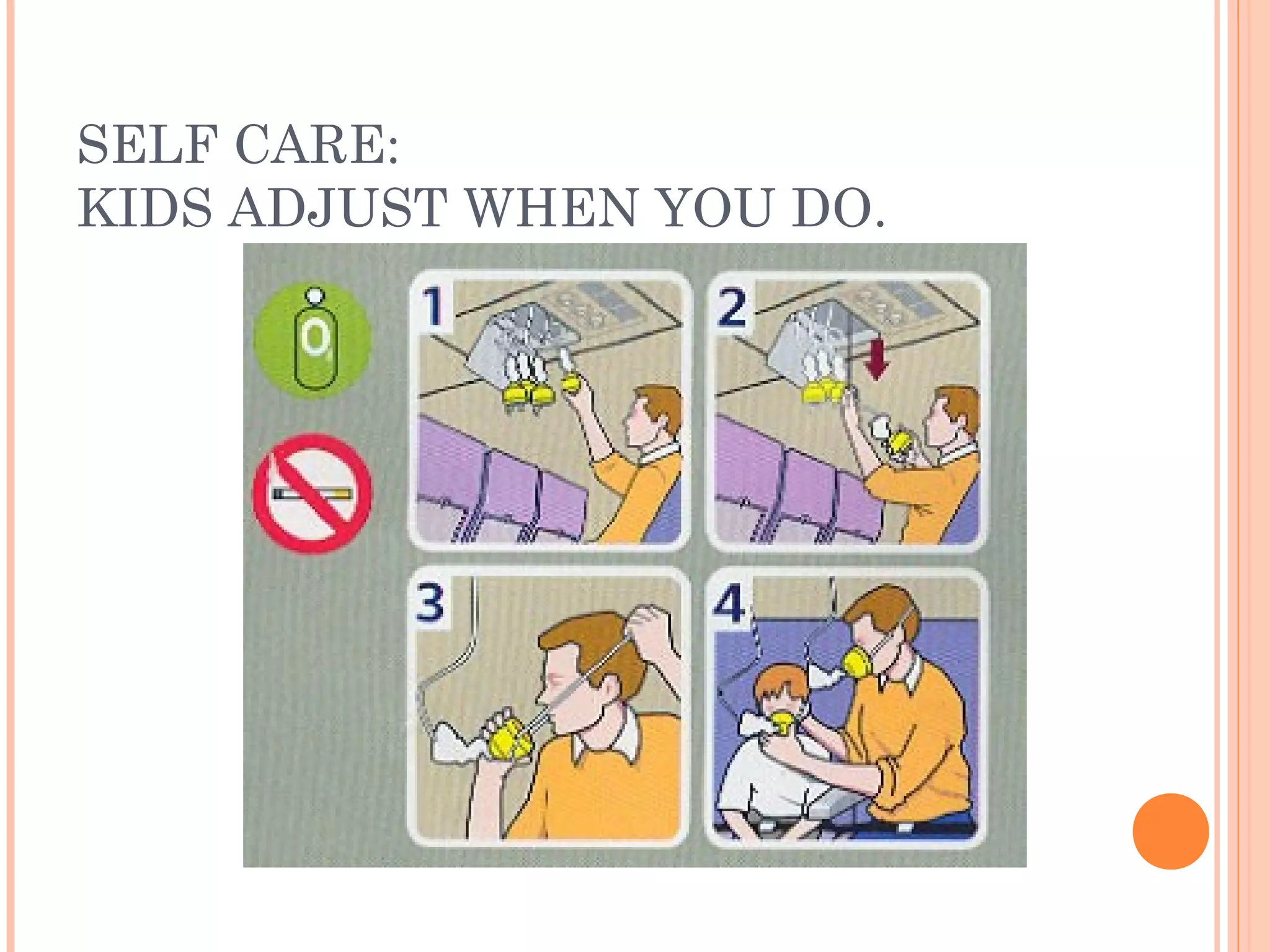
SELF CARE:
KIDS ADJUST WHEN YOU DO.
THE LION WON’T EAT ME- I AM A
VEGETARIAN:
Why love is not always the answer.
Remember, the more regressed, the more likely it
comes down to fight or flight.
What keeps you out of your critter brain?
THE HATE THAT CURES
 What is meant by an toxic overdose of love?
 The importance of structure in frustrating mind
WE BELIEVE WE ARE
THINKING CREATURES
WHO FEEL, BUT WE ARE
FEELING CREATURES
WHO THINK.
SOLUTIONS
Maintain boundaries
You can be friendly, but you cant be their friend
Avoid attacks on weak egos
(avoid the use of you in favor of I)
TALK TALK TALK.. .use your thoughts and
feelings to show words have a power without a
side effect.
SOLUTIONS (CONT)
Utilize strengths
Find creative ways to be with them
Try new things to see results
Get consultations and help
Refer out for special needs
Mind-body breaks
Breath
Count to 125
Be…
HOW WOULD YOU RESPOND IF
YOUR TEACHER SAID… “YOU
KIDS BETTER SHAPE UP, I AM
IN NO MOOD TO FOOL AROUND
TODAY.”
 “Oh, I better behave, she means business today.”
 “Oh, what have I been doing wrong so far, am I
fooling around now? Maybe I had better stay
perfectly still.” (Freeze or Flight into themselves)
 “Oh, she wants a fight… I can give her a fight.”
IF ONLY THIS WORK HAD WARNING
SIGNS… UNIVERSAL PRECAUTIONS FOR
WORKING WITH KIDS
TRANSFERENCES
You are not who you think you
are… there are ghosts, baggage,
and blue prints from other
relations and attachments.
COUNTER TRANSFERENCES
You have feelings about them
that are not necessarily about
them…
They may be displaced from
other places.
RESISTANCES
Remember to be aware of
anything that might block talking
in new a progressive ways.
Habits are hard to break- even
unhealthy ones- do you have one?
WHY DO THIS WORK?
Only work that
promotes growth and
ego development in
both patient [or
student] and therapist
[teacher/parent] is
worth what [it] costs
both to do.  
- Margaret Little
JUST ANOTHER ZANY IDEA FROM WILLIAM …
READ TO KIDS…
FAIRY TALES AND FANTASY
 If internal pressure is too much, it has to
get out of the child.
 If a child is told only “real” stories – he
may fail to get pleasure from unconscious
fantasy and either avoid all inner life or
totally engage in his head- Bettelheim,
p66 The Uses of Enchantment
BUILDING HEALTHY RELATIONS
Maturity:
It may have to start with you… they don’t have the
skills, modeling, etc.
You are the only thing you have control over.
Remember- people come to us with solutions, not
problems- they have evolved their ways of
dealing. We can only offer them other (better?)
solutions to getting what they want.
GREENSPAN WRITES (1998)
The ability to deal with group dynamics help children
to develop cognitive and social skills valuable in
school and beyond.
They learn that most life operates in shades of grey,
not all or nothing extremes.
(pg 25, The Challenging Child)
SKILL DEVELOPMENT
 Ability to look, listen, be calm
 Relate (to feel closeness)
 Make Mind/Apply Emotional Breaks-
learning to use words; “I am angry” as
opposed to hitting or withdrawing.
 Understanding and using non-verbal cues.
Use your own strength’s here…
Work on your weaknesses!
 PRACTICE AT THE DINNER TABLE!
Yes, make them eat with you!)
EXPLORATION WITH THE CHILD
 Listening does not mean agreeing!
 Object oriented questions
 Avoid YOU, use I or talk to the universe
 Share your adult ego with those who are thin
skinned.
 Ask what you are supposed to do when…
Read up on Active Listening…
HOW DO YOU DEAL WITH APATHY?
 Much of what we said really applies to apathy.
 DECIDE on your atmosphere and tenor
 TALK about it with peers and then the kids
 ADDRESS apathy.
REMEMBER: PREVENTION
STRATEGIES
 Talk vs Action!
 Identify triggers (what’s hardest for you is the
most needed in toughest situations- our lesson
from the Runaway Bunny)
 Decreasing tension- containment and holding-
aggression for destruction OR construction.
PREVENTION CONTINUED
 Appropriate language – where they are at, one
step behind, or one step ahead
 Respect- Modeled and enacted
 Repetition, Repetition, Repetition
GOALS OF ENGAGEMENT
Join their perceptions to get a better
understanding of the
communication.
Remember, you are in charge and
just because you are listening to
them doesn’t mean you agree with
them.
HOW DO I USE ANGER?
(*MINE AND THEIRS)
Training, Supervision, Therapy
Meet them where they are.
Be the mature adult.
Never work harder than them!
Optimal Frustration is the key to change.
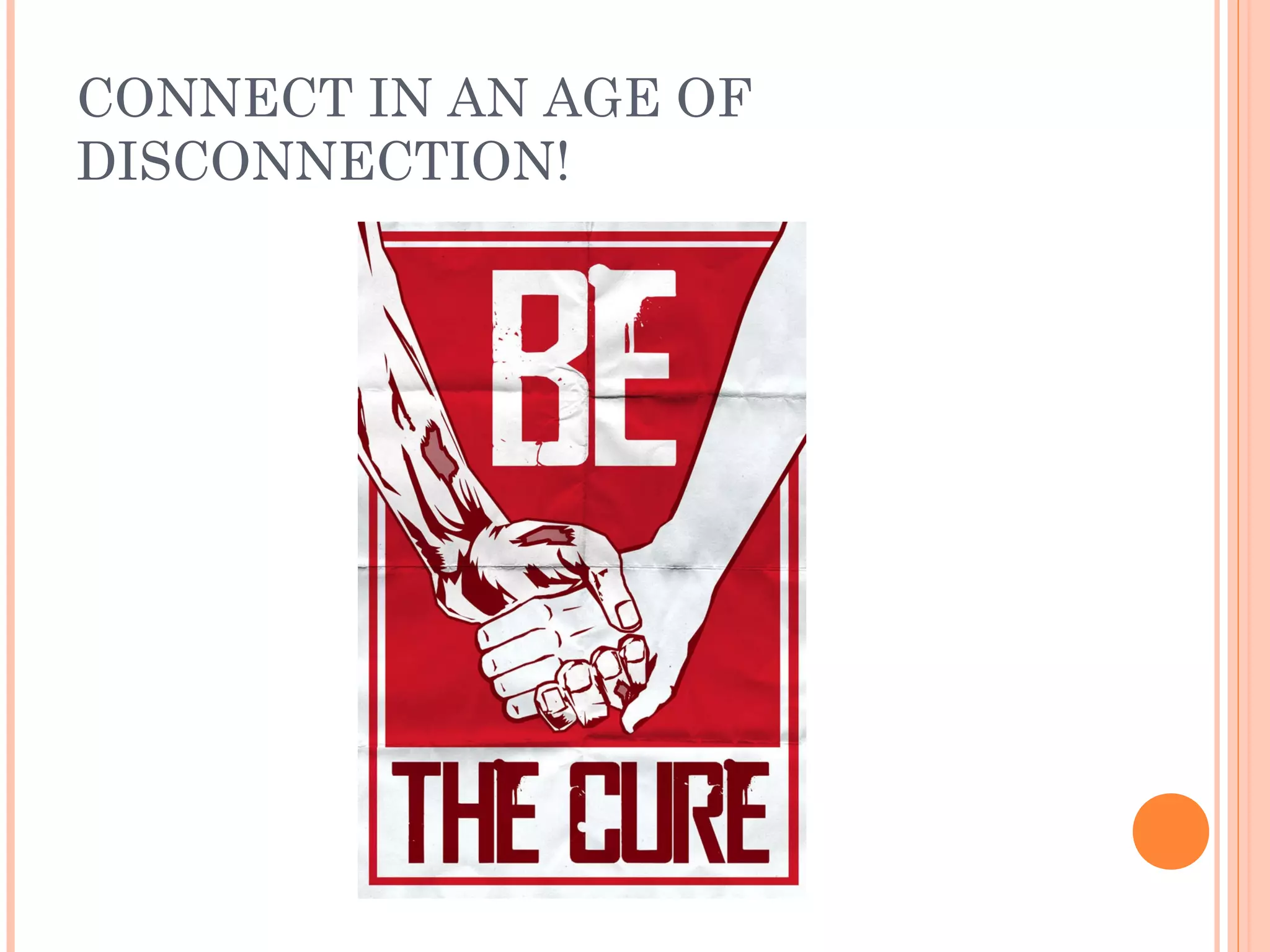
CONNECT IN AN AGE OF
DISCONNECTION!
@DRWILLIAMSHARP
#WheelockSymposium
#WarmBodies
RESOURCES
Interested in taking a Myer-Briggs type test:
 http://www.humanmetrics.com/cgi-win/JTypes2.asp
Good books:
Reaching the Unreachable Child, Shelia Zaretsky
Emotional Muscle, John and Kerry Novick (ages 0-
5, but it applies! )
RESOURCES CONTINUED
GOOD BOOKS ON ADOLESCENT
DEVELOPMENT
Highly recommend:
Get Out of My Life, but First Could You Drive Me
and Cheryl to the Mall?: A Parent's Guide to the
New Teenager.
How talk so your teen will listen.
Good as well:
I’d listen to my parents if they’d just shut up.
When we are in public, pretend you don’t know me.
Trust me mom, everyone is is going
Yes, Your Teen is Crazy
I’m not mad, I just hate you.
THEORETICAL BUT GOOD
Modern Psychoanalysis in the Schools, William
Kirman
Resolving Resistances, Leslie Rosenthal
SOMETHING I LIKE TO REVIEW NOW
AND THEN ABOUT THE LD CHILD.
http://www.youtube.com/watch?v=O4f4rX0XEBA&feature=re
Have you ever told someone to look at something
harder? How about bribing them instead of
intervening to help? How about threatening them
when the bribe didn’t work? Have you ever
blamed the victim (“you are not
trying”/motivated)?
2 OF 3
http://www.youtube.com/watch?v=01tGtFQ0Ivs&feature=rela
If you were learning disabled, do you see how you
might avoid taking risks? Do you see how lack of
reinforcement for the right answer and
punishment for the wrong answer can lead you to
not wanting to respond to surprises in class?
3 OF 3
http://www.youtube.com/watch?v=6G9--hUQDwY
Fair and Equal? Have you ever used the “its not
fair to others” argument to not help someone who
needed something?
DR WILLIAM SHARP
 Psychoanalyst
 617 216 3871
 DrWilliamSharp@gmail.com
 One Harvard St., Brookline MA 02445
 @DrWilliamSharp for Twitter Takeaways
PRESCRIPTION PAD
Parent: _______________
Authorized to:
__ join with a resistance instead of fight it
__ try something new when all regular methods
have failed.
__ get angry and be human as needed
Prescribing therapist: _____________________
William Sharp, PsyaD

Getting to the root of difficult behaviors

  • 1.
    GETTING TO THEROOT OF DIFFICULT BEHAVIORS William Sharp, PsyaDWilliam Sharp, PsyaD Wheelock College AlumniWheelock College Alumni SymposiumSymposium March 22March 22ndnd 1-3pm1-3pm
  • 2.
  • 3.
    K-W-L CHART:  Know Want to know
  • 4.
    GOALS 1) List yourpersonal goals in building healthy relations 2) Understand how to figure out what typical behaviors can mean 3) Apply guidelines for effective interactions with people
  • 5.
    WHAT IS THESTATE OF RELATIONSHIPS THESES DAYS?  Is it technology leaving us “Alone Together” (Turkle)
  • 6.
    IS IT FUNNY– OR TOO TRUE?
  • 7.
    WHAT ARE WELEARNING ABOUT CONNECTING?
  • 8.
  • 9.
    Could technology interferewith the progression or regress us?
  • 10.
    TODAY’S TEENS? “Today’s Teens:More Materialistic, Less Willing To Work” Study compared attitudes of three generations of American HS seniors (1976-2007). 2005 – More money with less work! 62% lots of money is important (vs 48% from 1976- 78). 25% said work was important (vs 39% in 70s). “This type of ‘fantasy gap’ is consistent with other studies showing a generational increase in narcissistism and entitlement.”
  • 11.
    A RISE INNARCISSISM?  Narcissistic Personality Disorder (NPD) is 3x’s as high for people in their 20s as for the generation currently 65 or older.  58% of college students scored higher on narcissism scale in 2008 than in 1982  40% of “millenials” believe they should be promoted every two years, regardless of performance. Time Magazine, 2013, May 20th The New Greatest Generation: Why Millenials will save us all.
  • 12.
    A RISE INNARCISSISM? Of Millenials (b1980-2000) … “Their development is stunted: more people ages 18-29 live with their parents than with a spouse… and they are lazy. In 1992, the nonprofit Families and Work Institute reported that 80% of people under 23 wanted to one day have a job with greater responsibility; 10 years later, on 60% did.” Time Magazine, 2013, May 20th The New Greatest Generation: Why Millenials will save us all.
  • 13.
  • 14.
    IS THERE HOPE? EXHUME Stay Together.Keep safe. Stay together. We are changing everything. APRIL 11th Boston Graduate School of Psychoanalysis 7-9pm #WarmBodies
  • 15.
    A PATIENT TOLDME ABOUT A NEW GAME…
  • 18.
    WHY TALK ABOUTBELONGING? MASLOW’S PYRAMID & SELF ESTEEM Love and Belonging come BEFORE Self- Esteem, not after it.
  • 19.
    S0 WHAT AREYOUR PERSONAL GOALS IN RELATIONSHIPS? WHY CONNECT?
  • 20.
    Working with DifficultBehaviors: Starts with you…
  • 21.
    THE THING YOUHAVE THE MOST DIFFICULTY BEING, IS GOING TO BE THE THING THE MOST DIFFICULT PERSON NEEDS.
  • 22.
    ALL BEHAVIOR ISAN ATTEMPT TO COMMUNICATE SOMETHING.
  • 23.
  • 24.
    THE LION WON’TEAT ME- I AM A VEGETARIAN: Why love is not always the answer. Remember, the more regressed, the more likely it comes down to fight or flight. What keeps you out of your critter brain?
  • 25.
    THE HATE THATCURES  What is meant by an toxic overdose of love?  The importance of structure in frustrating mind
  • 26.
    WE BELIEVE WEARE THINKING CREATURES WHO FEEL, BUT WE ARE FEELING CREATURES WHO THINK.
  • 27.
    SOLUTIONS Maintain boundaries You canbe friendly, but you cant be their friend Avoid attacks on weak egos (avoid the use of you in favor of I) TALK TALK TALK.. .use your thoughts and feelings to show words have a power without a side effect.
  • 28.
    SOLUTIONS (CONT) Utilize strengths Findcreative ways to be with them Try new things to see results Get consultations and help Refer out for special needs Mind-body breaks Breath Count to 125 Be…
  • 29.
    HOW WOULD YOURESPOND IF YOUR TEACHER SAID… “YOU KIDS BETTER SHAPE UP, I AM IN NO MOOD TO FOOL AROUND TODAY.”  “Oh, I better behave, she means business today.”  “Oh, what have I been doing wrong so far, am I fooling around now? Maybe I had better stay perfectly still.” (Freeze or Flight into themselves)  “Oh, she wants a fight… I can give her a fight.”
  • 30.
    IF ONLY THISWORK HAD WARNING SIGNS… UNIVERSAL PRECAUTIONS FOR WORKING WITH KIDS
  • 31.
    TRANSFERENCES You are notwho you think you are… there are ghosts, baggage, and blue prints from other relations and attachments.
  • 32.
    COUNTER TRANSFERENCES You havefeelings about them that are not necessarily about them… They may be displaced from other places.
  • 33.
    RESISTANCES Remember to beaware of anything that might block talking in new a progressive ways. Habits are hard to break- even unhealthy ones- do you have one?
  • 34.
    WHY DO THISWORK? Only work that promotes growth and ego development in both patient [or student] and therapist [teacher/parent] is worth what [it] costs both to do.   - Margaret Little
  • 35.
    JUST ANOTHER ZANYIDEA FROM WILLIAM … READ TO KIDS… FAIRY TALES AND FANTASY  If internal pressure is too much, it has to get out of the child.  If a child is told only “real” stories – he may fail to get pleasure from unconscious fantasy and either avoid all inner life or totally engage in his head- Bettelheim, p66 The Uses of Enchantment
  • 36.
    BUILDING HEALTHY RELATIONS Maturity: Itmay have to start with you… they don’t have the skills, modeling, etc. You are the only thing you have control over. Remember- people come to us with solutions, not problems- they have evolved their ways of dealing. We can only offer them other (better?) solutions to getting what they want.
  • 37.
    GREENSPAN WRITES (1998) Theability to deal with group dynamics help children to develop cognitive and social skills valuable in school and beyond. They learn that most life operates in shades of grey, not all or nothing extremes. (pg 25, The Challenging Child)
  • 38.
    SKILL DEVELOPMENT  Abilityto look, listen, be calm  Relate (to feel closeness)  Make Mind/Apply Emotional Breaks- learning to use words; “I am angry” as opposed to hitting or withdrawing.  Understanding and using non-verbal cues. Use your own strength’s here… Work on your weaknesses!  PRACTICE AT THE DINNER TABLE! Yes, make them eat with you!)
  • 39.
    EXPLORATION WITH THECHILD  Listening does not mean agreeing!  Object oriented questions  Avoid YOU, use I or talk to the universe  Share your adult ego with those who are thin skinned.  Ask what you are supposed to do when… Read up on Active Listening…
  • 40.
    HOW DO YOUDEAL WITH APATHY?  Much of what we said really applies to apathy.  DECIDE on your atmosphere and tenor  TALK about it with peers and then the kids  ADDRESS apathy.
  • 41.
    REMEMBER: PREVENTION STRATEGIES  Talkvs Action!  Identify triggers (what’s hardest for you is the most needed in toughest situations- our lesson from the Runaway Bunny)  Decreasing tension- containment and holding- aggression for destruction OR construction.
  • 42.
    PREVENTION CONTINUED  Appropriatelanguage – where they are at, one step behind, or one step ahead  Respect- Modeled and enacted  Repetition, Repetition, Repetition
  • 43.
    GOALS OF ENGAGEMENT Jointheir perceptions to get a better understanding of the communication. Remember, you are in charge and just because you are listening to them doesn’t mean you agree with them.
  • 44.
    HOW DO IUSE ANGER? (*MINE AND THEIRS) Training, Supervision, Therapy Meet them where they are. Be the mature adult. Never work harder than them! Optimal Frustration is the key to change.
  • 45.
    CONNECT IN ANAGE OF DISCONNECTION!
  • 46.
  • 47.
    RESOURCES Interested in takinga Myer-Briggs type test:  http://www.humanmetrics.com/cgi-win/JTypes2.asp Good books: Reaching the Unreachable Child, Shelia Zaretsky Emotional Muscle, John and Kerry Novick (ages 0- 5, but it applies! )
  • 48.
    RESOURCES CONTINUED GOOD BOOKSON ADOLESCENT DEVELOPMENT Highly recommend: Get Out of My Life, but First Could You Drive Me and Cheryl to the Mall?: A Parent's Guide to the New Teenager. How talk so your teen will listen. Good as well: I’d listen to my parents if they’d just shut up. When we are in public, pretend you don’t know me. Trust me mom, everyone is is going Yes, Your Teen is Crazy I’m not mad, I just hate you.
  • 49.
    THEORETICAL BUT GOOD ModernPsychoanalysis in the Schools, William Kirman Resolving Resistances, Leslie Rosenthal
  • 50.
    SOMETHING I LIKETO REVIEW NOW AND THEN ABOUT THE LD CHILD. http://www.youtube.com/watch?v=O4f4rX0XEBA&feature=re Have you ever told someone to look at something harder? How about bribing them instead of intervening to help? How about threatening them when the bribe didn’t work? Have you ever blamed the victim (“you are not trying”/motivated)?
  • 51.
    2 OF 3 http://www.youtube.com/watch?v=01tGtFQ0Ivs&feature=rela Ifyou were learning disabled, do you see how you might avoid taking risks? Do you see how lack of reinforcement for the right answer and punishment for the wrong answer can lead you to not wanting to respond to surprises in class?
  • 52.
    3 OF 3 http://www.youtube.com/watch?v=6G9--hUQDwY Fairand Equal? Have you ever used the “its not fair to others” argument to not help someone who needed something?
  • 53.
    DR WILLIAM SHARP Psychoanalyst  617 216 3871  DrWilliamSharp@gmail.com  One Harvard St., Brookline MA 02445  @DrWilliamSharp for Twitter Takeaways
  • 54.
    PRESCRIPTION PAD Parent: _______________ Authorizedto: __ join with a resistance instead of fight it __ try something new when all regular methods have failed. __ get angry and be human as needed Prescribing therapist: _____________________ William Sharp, PsyaD

Editor's Notes

  • #17 Although acceptable in the urban dictionary spelling, Defecate is misspelled here. As is diarrhea.
  • #21 The significance of running away and being found???
  • #25 Put them in a corner, fight or flight will come to pass.
  • #28 Note the differences in Talk and action-talk.
  • #35 (Little, p. 31) Little, Margaret  (1960).  Countertransference.  British Journal of Medical Psychology, 33:  29-31.
  • #36 The fairy tale purposefully sets up the “other reality” by making things a long time ago, far far away, when wishes worked, sun’s smiled, animals talked, etc. The things that are absurd to rational adults unable to integrate the two worlds of reality and fantasy, make sense to kids and help explain the real worlds that can overwhelm. For example, the grandmother replaced by wolf- there is a reasoning to it in the fantasy which can help the child deal with a loving cookie giving grandmother in one sense and a yelling grandmother in another. The child can also do this themselves- i.e. split the “somebody else” who wets their bed at nigth from the “them” of dry all day pants. Look to at Hans the Hedgehog and The seven Ravens for examples of how impulsivity on adults parts or anger and rashness leads to problems (children born with misfit heads but bodies that work). See also how little people can triumph (The tailor and the Giant) and how little apparently insignificant things can make a big different later (what I do now as a small child helps me later in life) The Golden Goose, The Spirit in the Bottle, and Puss-in-boots.
  • #39 The Challenging Child, Greenspan- blends across types- sensitivity varies by kid AND within kid by sensory system Motor planning- planning out out a series of movements to deal with tension states