Placeholder slide 
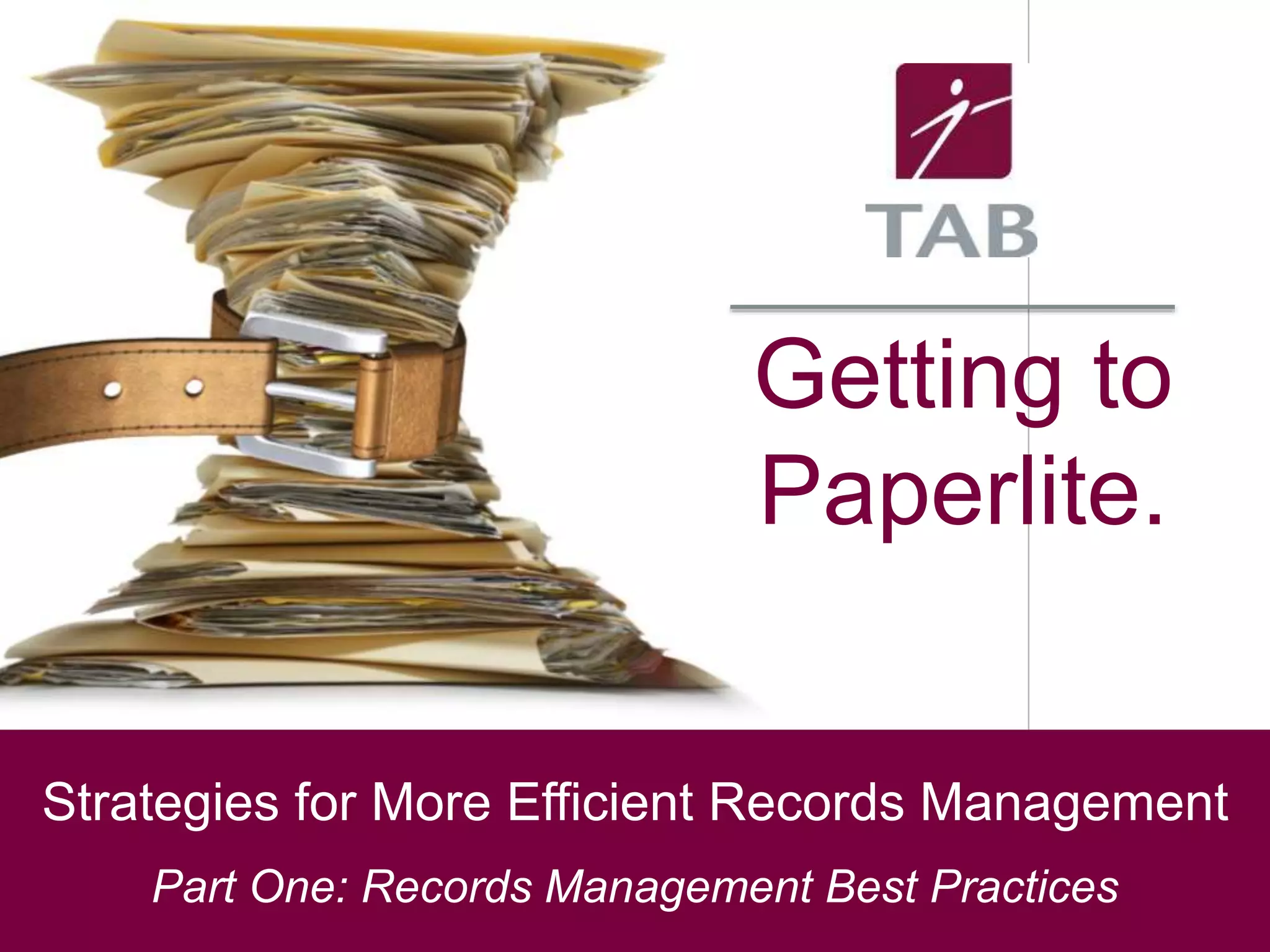
Event title Getting to 
Show logistical info such as dial in number, 
information about handouts or anything to help them 
prepare for the presentation 
Paperlite. 
Strategies for More Efficient Records Management 
Part One: Records Management Best Practices
Everyone wants to 
work with less paper, 
but very few people 
know how to make that 
happen. Today, we’re 
going to change that… 
We’re going to give 
you a plan that will get 
you to a paperlite environment.
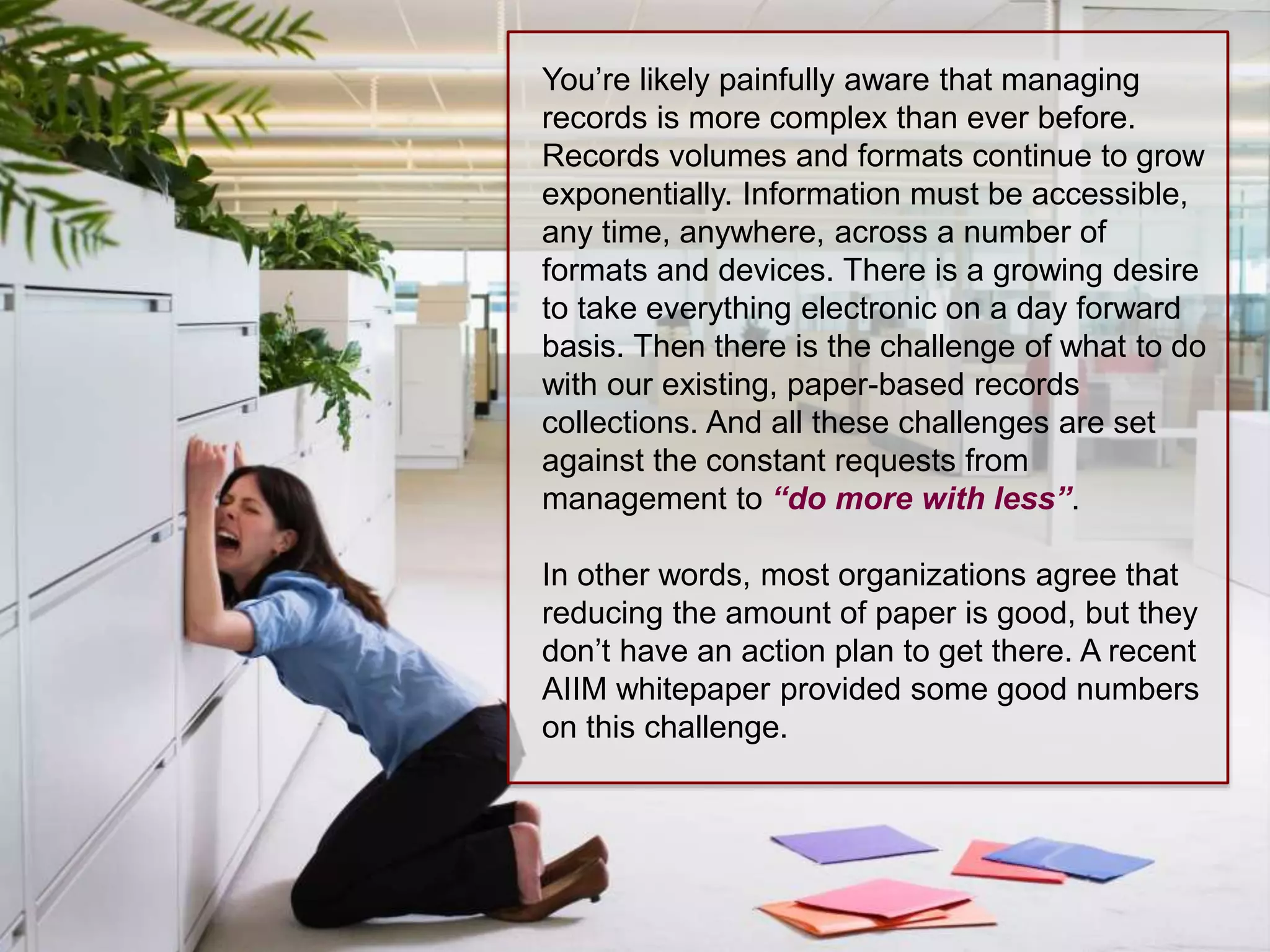
You’re likely painfully aware that managing 
records is more complex than ever before. 
Records volumes and formats continue to grow 
exponentially. Information must be accessible, 
any time, anywhere, across a number of 
formats and devices. There is a growing desire 
to take everything electronic on a day forward 
basis. Then there is the challenge of what to do 
with our existing, paper-based records 
collections. And all these challenges are set 
against the constant requests from 
management to “do more with less”. 
In other words, most organizations agree that 
reducing the amount of paper is good, but they 
don’t have an action plan to get there. A recent 
AIIM whitepaper provided some good numbers 
on this challenge.
AIIM White Paper Study: 
Paper Focused Business Processes 
For 74% of 
participants, paper 
reduction was a 
business process 
priority. 
But only 24% of these 
companies actually 
had policies and 
procedures to reduce 
the amount of paper 
they are working with.
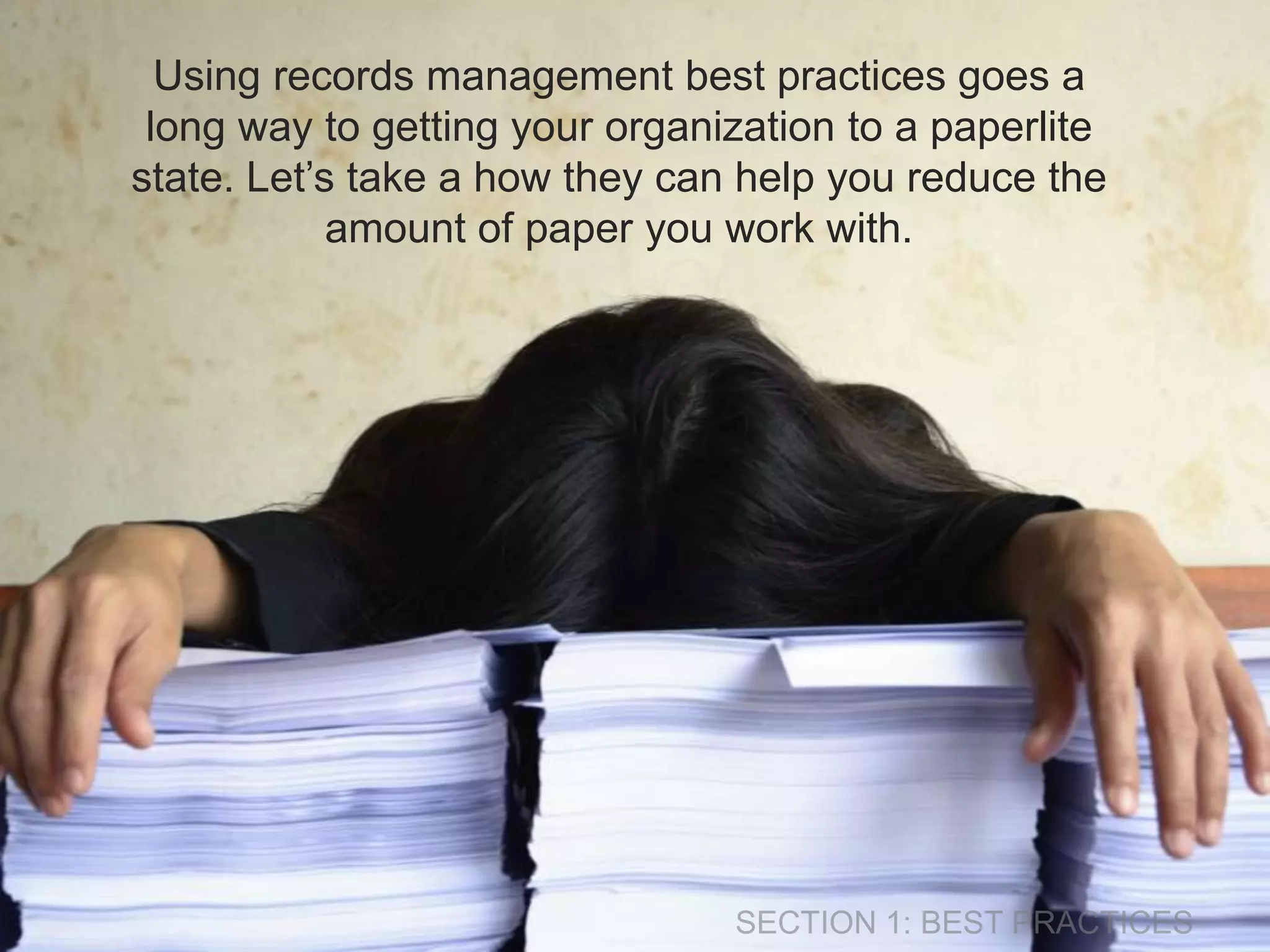
Using records management best practices goes a 
long way to getting your organization to a paperlite 
state. Let’s take a how they can help you reduce the 
amount of paper you work with.
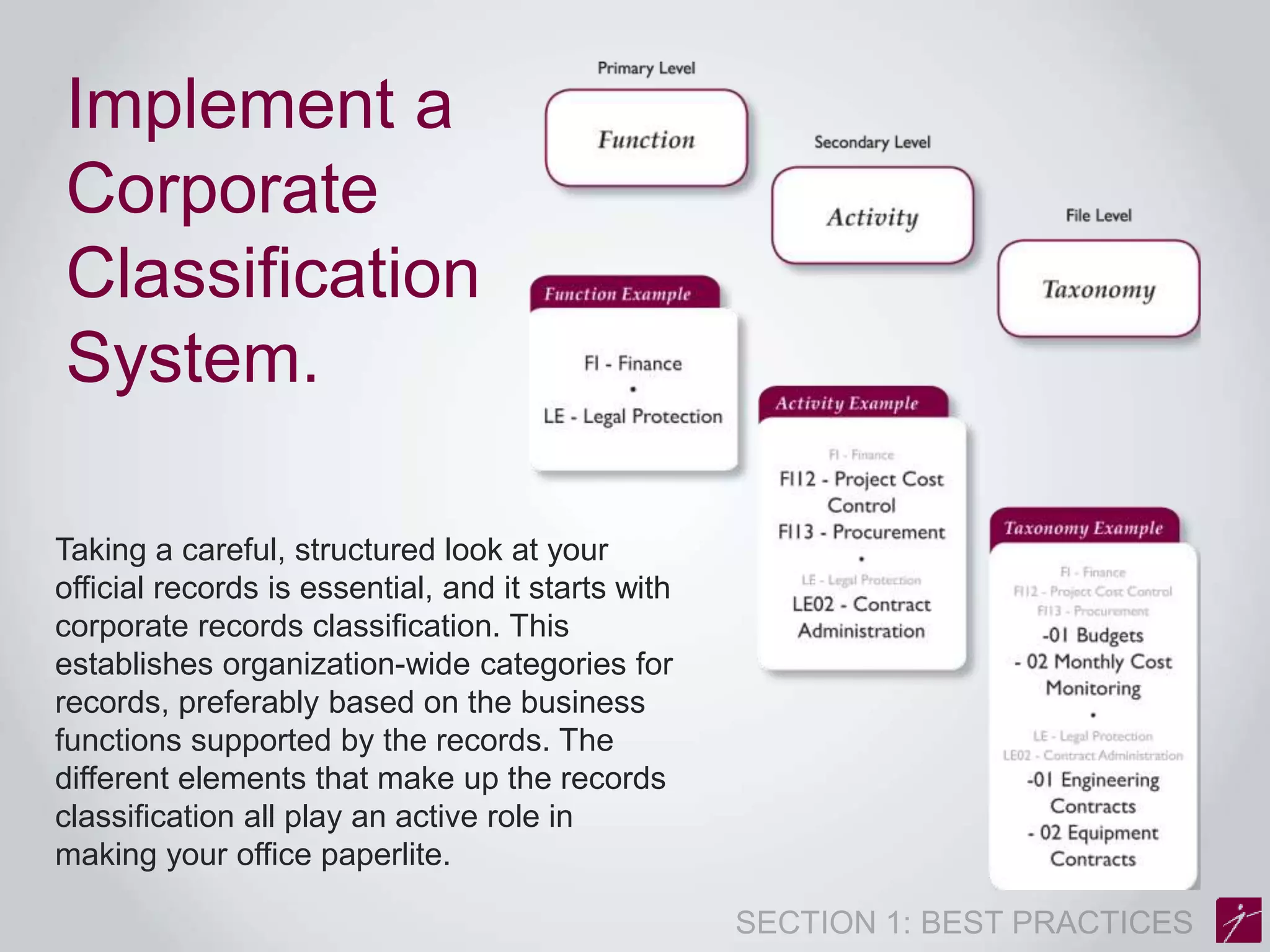
Implement a 
Corporate 
Classification 
System. 
Taking a careful, structured look at your 
official records is essential, and it starts with 
corporate records classification. This 
establishes organization-wide categories for 
records, preferably based on the business 
functions supported by the records. The 
different elements that make up the records 
classification all play an active role in 
making your office paperlite.
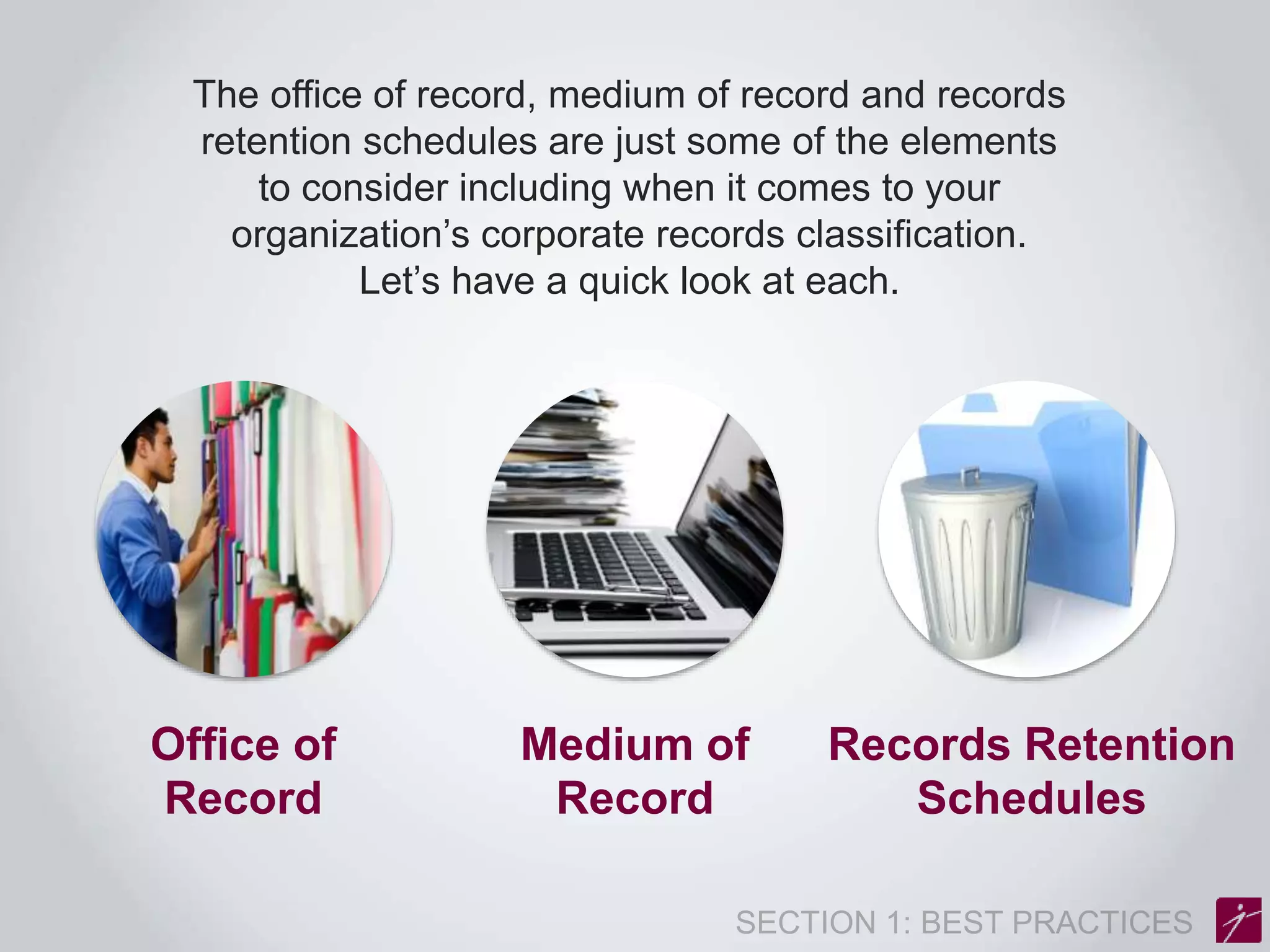
The office of record, medium of record and records 
retention schedules are just some of the elements 
to consider including when it comes to your 
organization’s corporate records classification. 
Let’s have a quick look at each. 
Office of 
Record 
Medium of 
Record 
Records Retention 
Schedules
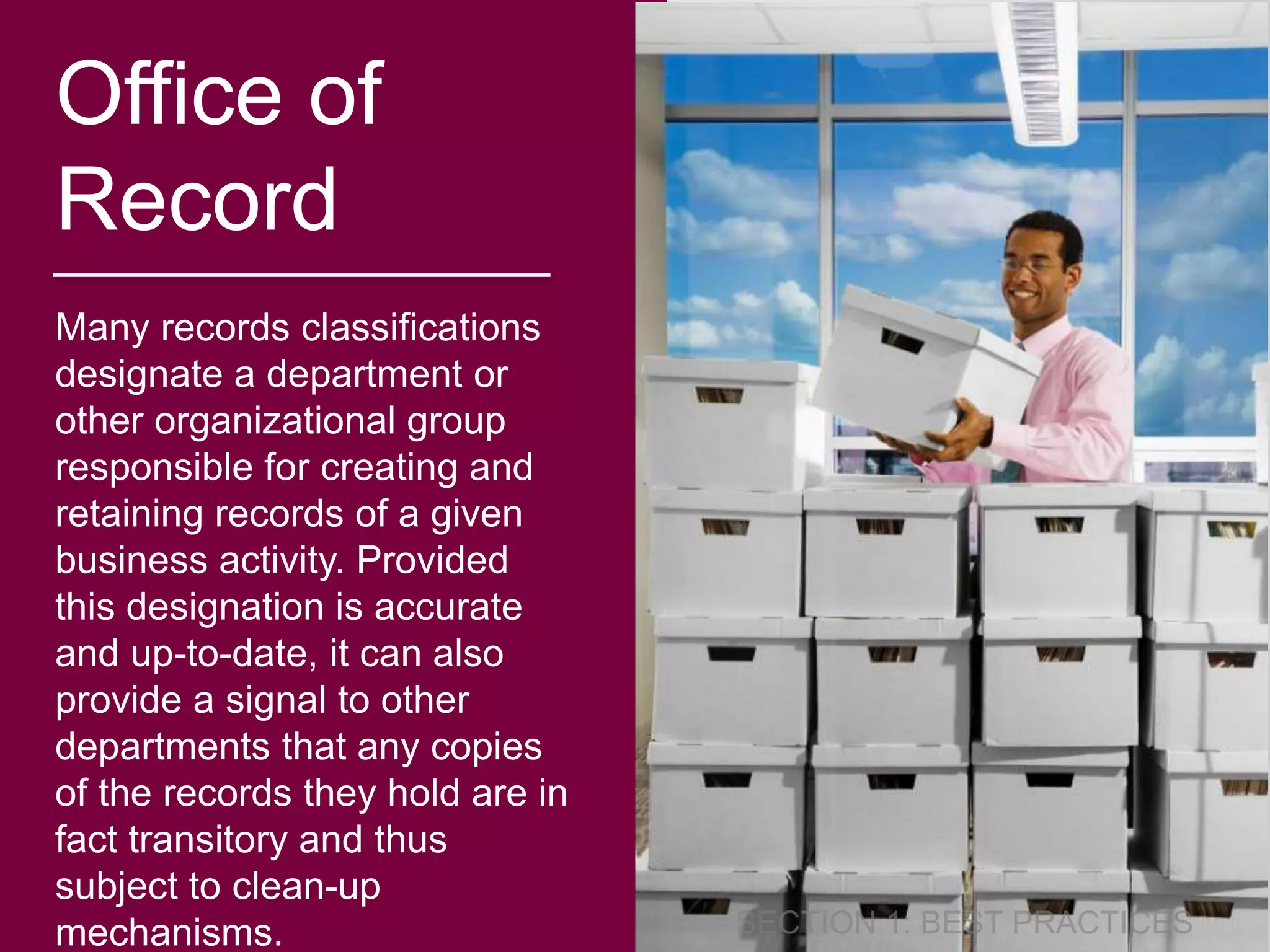
Office of 
Record 
Many records classifications 
designate a department or 
other organizational group 
responsible for creating and 
retaining records of a given 
business activity. Provided 
this designation is accurate 
and up-to-date, it can also 
provide a signal to other 
departments that any copies 
of the records they hold are in 
fact transitory and thus 
subject to clean-up 
mechanisms.
Medium of 
Record 
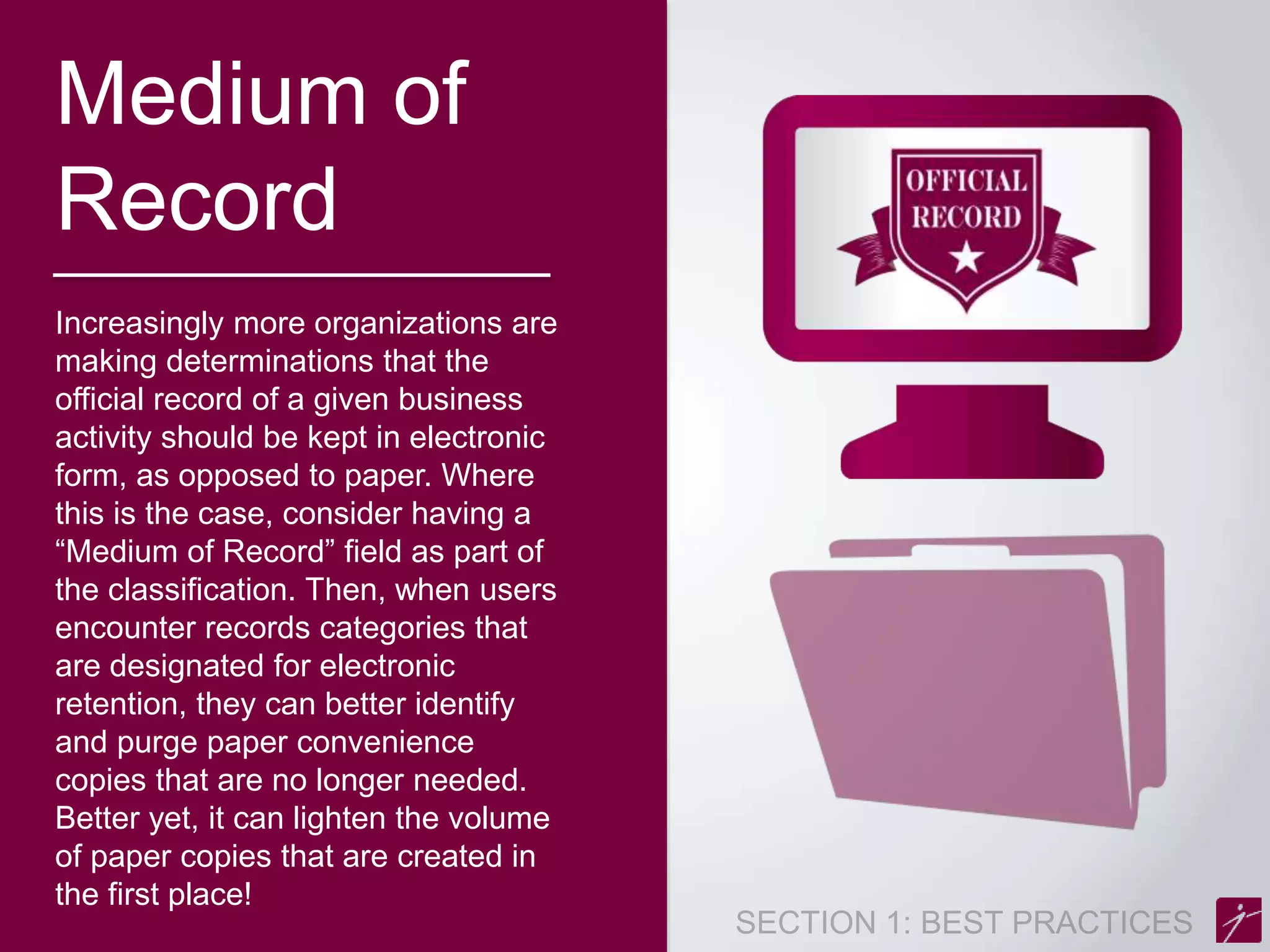
Increasingly more organizations are 
making determinations that the 
official record of a given business 
activity should be kept in electronic 
form, as opposed to paper. Where 
this is the case, consider having a 
“Medium of Record” field as part of 
the classification. Then, when users 
encounter records categories that 
are designated for electronic 
retention, they can better identify 
and purge paper convenience 
copies that are no longer needed. 
Better yet, it can lighten the volume 
of paper copies that are created in 
the first place!
Records Retention 
Schedules 
A good retention schedule is your best 
friend when it comes to creating a 
paperlite office. In fact, an effective 
retention program can help you reduce 
the amount of paper you store by one-third. 
How? Because your schedule 
details exactly what you need to keep 
and for how long, you are in a position 
to control the growth of your records 
collections. This way you ensure that 
you aren’t keeping paper records you 
don’t need. 
And even if your retention schedules 
dictate long retention periods for some 
categories, they are important to the 
paperlite office for two main reasons…
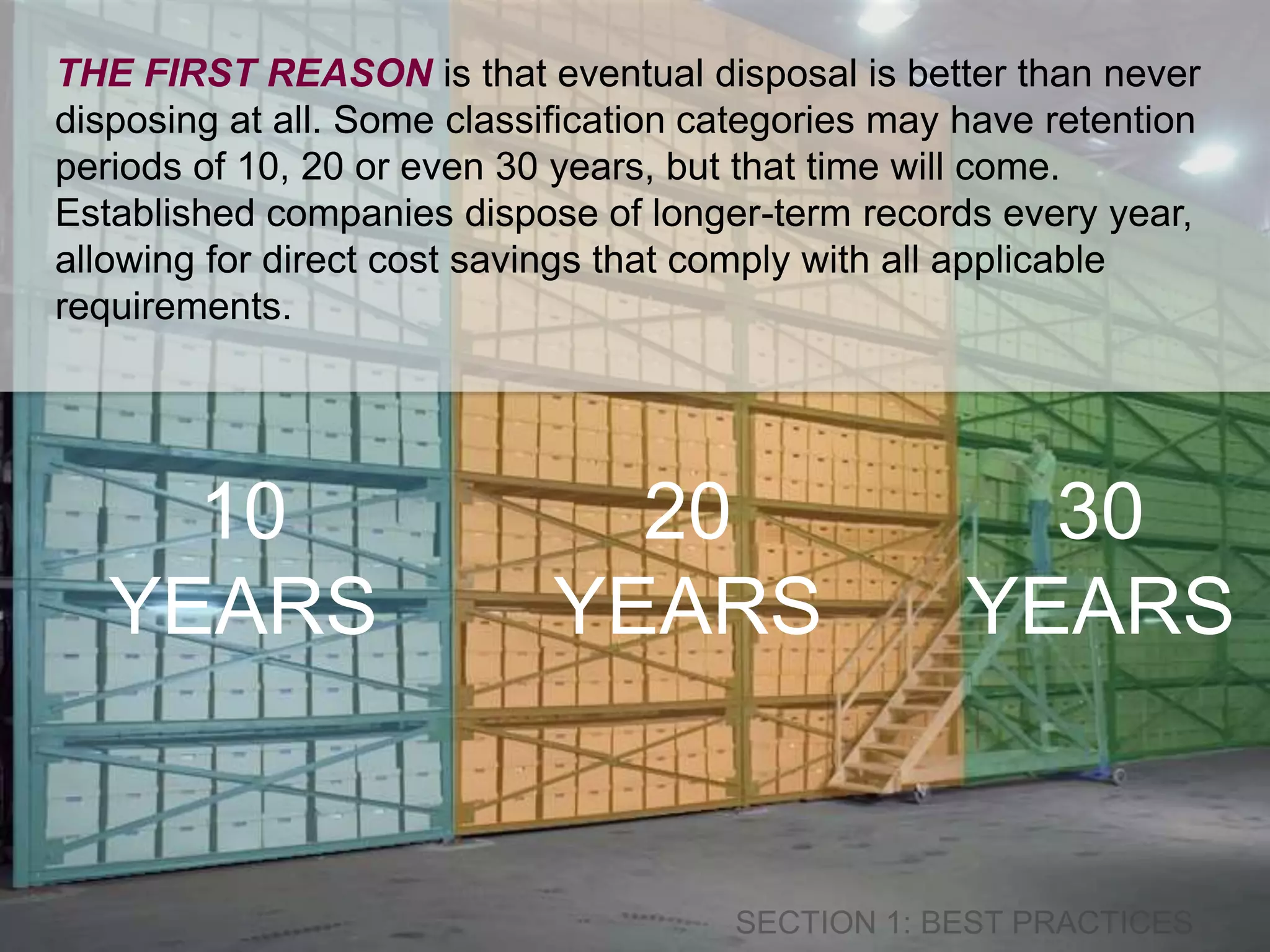
THE FIRST REASON is that eventual disposal is better than never 
disposing at all. Some classification categories may have retention 
periods of 10, 20 or even 30 years, but that time will come. 
Established companies dispose of longer-term records every year, 
allowing for direct cost savings that comply with all applicable 
requirements. 
10 
YEARS 
20 
YEARS 
30 
YEARS
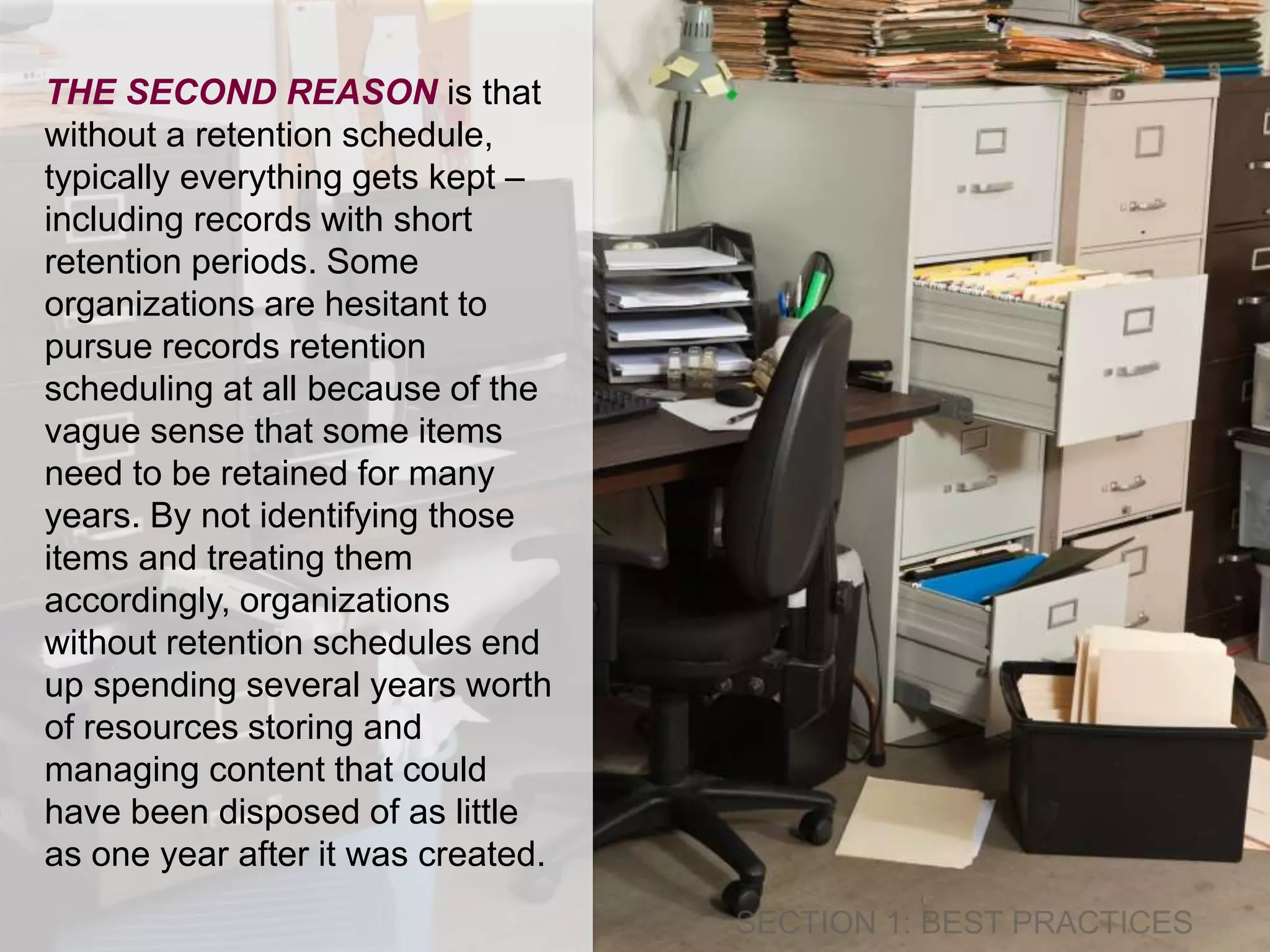
THE SECOND REASON is that 
without a retention schedule, 
typically everything gets kept – 
including records with short 
retention periods. Some 
organizations are hesitant to 
pursue records retention 
scheduling at all because of the 
vague sense that some items 
need to be retained for many 
years. By not identifying those 
items and treating them 
accordingly, organizations 
without retention schedules end 
up spending several years worth 
of resources storing and 
managing content that could 
have been disposed of as little 
as one year after it was created.
Create a Disposal Policy 
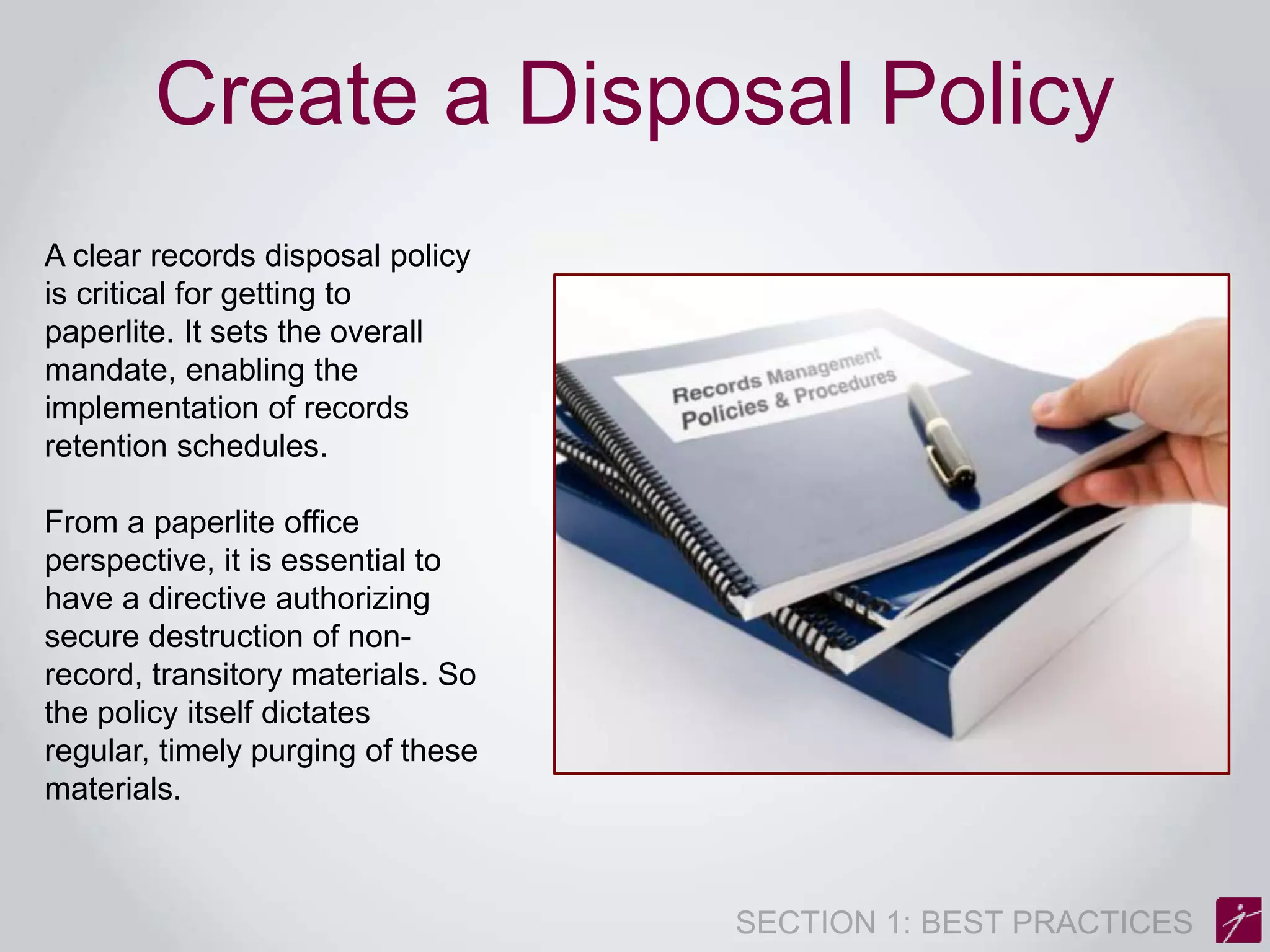
A clear records disposal policy 
is critical for getting to 
paperlite. It sets the overall 
mandate, enabling the 
implementation of records 
retention schedules. 
From a paperlite office 
perspective, it is essential to 
have a directive authorizing 
secure destruction of non-record, 
transitory materials. So 
the policy itself dictates 
regular, timely purging of these 
materials.
Records Disposition Process 
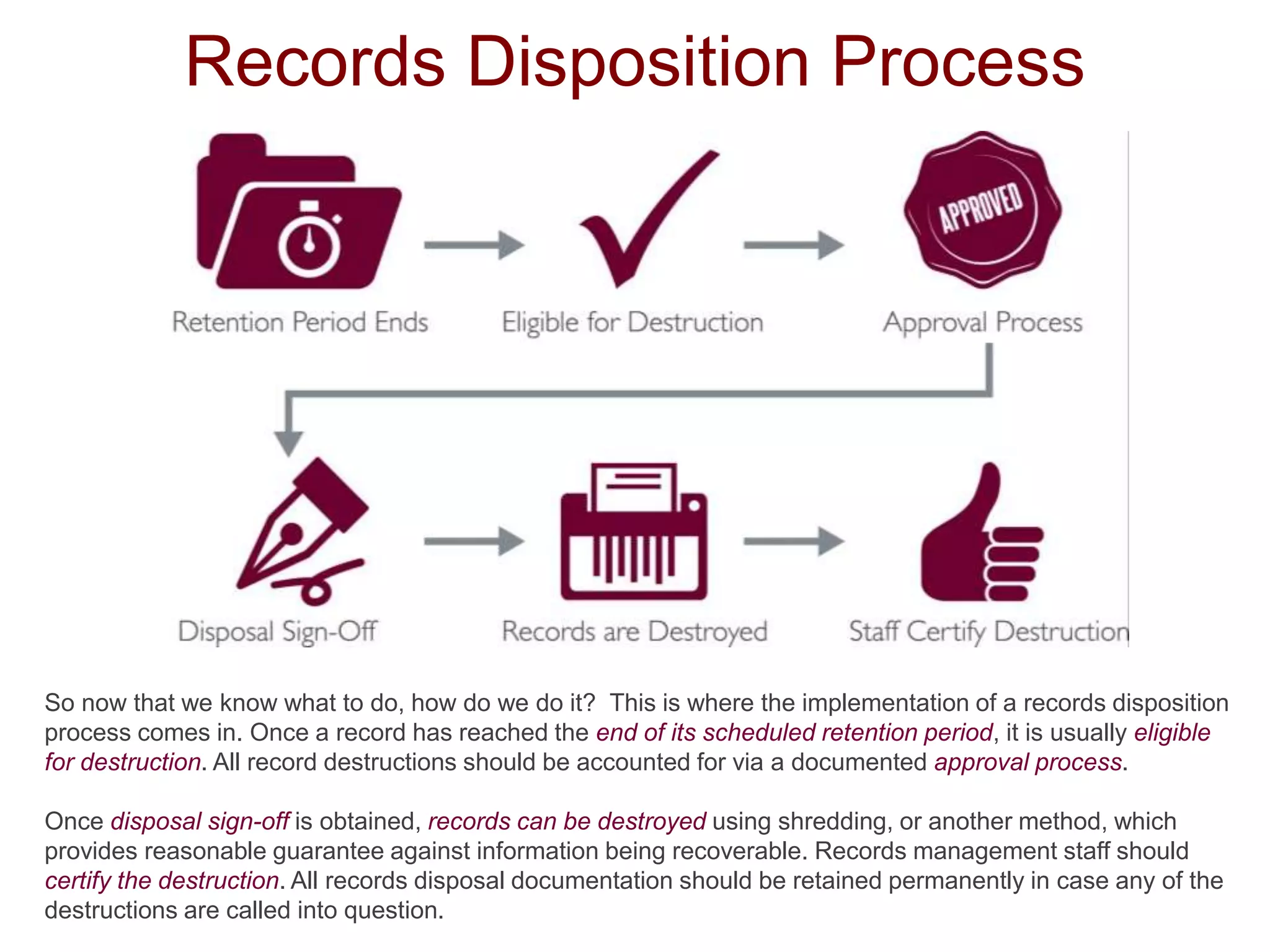
So now that we know what to do, how do we do it? This is where the implementation of a records disposition 
process comes in. Once a record has reached the end of its scheduled retention period, it is usually eligible 
for destruction. All record destructions should be accounted for via a documented approval process. 
Once disposal sign-off is obtained, records can be destroyed using shredding, or another method, which 
provides reasonable guarantee against information being recoverable. Records management staff should 
certify the destruction. All records disposal documentation should be retained permanently in case any of the 
destructions are called into question.
Thank you! 
In conclusion, Part One of “Getting to Paperlite” covers four records 
management best practices that are critical to achieving a paperlite 
office: implementing a corporate classification system, developing a 
records retention schedule, creating a disposal policy and implementing 
a records disposition process. 
In Parts Two and Three we’ll discuss tools to manage your existing 
collection for paperlite and strategies for handling your day-forward 
records. Look for these Slideshare presentations in the coming months! 
Visit us at 
www.tab.com/paperlite 
for more resources!

Getting to Paperlite: Strategies for More Efficient Records Management Part 1

  • 1.
    Placeholder slide Eventtitle Getting to Show logistical info such as dial in number, information about handouts or anything to help them prepare for the presentation Paperlite. Strategies for More Efficient Records Management Part One: Records Management Best Practices
  • 2.
    Everyone wants to work with less paper, but very few people know how to make that happen. Today, we’re going to change that… We’re going to give you a plan that will get you to a paperlite environment.
  • 3.
    You’re likely painfullyaware that managing records is more complex than ever before. Records volumes and formats continue to grow exponentially. Information must be accessible, any time, anywhere, across a number of formats and devices. There is a growing desire to take everything electronic on a day forward basis. Then there is the challenge of what to do with our existing, paper-based records collections. And all these challenges are set against the constant requests from management to “do more with less”. In other words, most organizations agree that reducing the amount of paper is good, but they don’t have an action plan to get there. A recent AIIM whitepaper provided some good numbers on this challenge.
  • 4.
    AIIM White PaperStudy: Paper Focused Business Processes For 74% of participants, paper reduction was a business process priority. But only 24% of these companies actually had policies and procedures to reduce the amount of paper they are working with.
  • 5.
    Using records managementbest practices goes a long way to getting your organization to a paperlite state. Let’s take a how they can help you reduce the amount of paper you work with.
  • 6.
    Implement a Corporate Classification System. Taking a careful, structured look at your official records is essential, and it starts with corporate records classification. This establishes organization-wide categories for records, preferably based on the business functions supported by the records. The different elements that make up the records classification all play an active role in making your office paperlite.
  • 7.
    The office ofrecord, medium of record and records retention schedules are just some of the elements to consider including when it comes to your organization’s corporate records classification. Let’s have a quick look at each. Office of Record Medium of Record Records Retention Schedules
  • 8.
    Office of Record Many records classifications designate a department or other organizational group responsible for creating and retaining records of a given business activity. Provided this designation is accurate and up-to-date, it can also provide a signal to other departments that any copies of the records they hold are in fact transitory and thus subject to clean-up mechanisms.
  • 9.
    Medium of Record Increasingly more organizations are making determinations that the official record of a given business activity should be kept in electronic form, as opposed to paper. Where this is the case, consider having a “Medium of Record” field as part of the classification. Then, when users encounter records categories that are designated for electronic retention, they can better identify and purge paper convenience copies that are no longer needed. Better yet, it can lighten the volume of paper copies that are created in the first place!
  • 10.
    Records Retention Schedules A good retention schedule is your best friend when it comes to creating a paperlite office. In fact, an effective retention program can help you reduce the amount of paper you store by one-third. How? Because your schedule details exactly what you need to keep and for how long, you are in a position to control the growth of your records collections. This way you ensure that you aren’t keeping paper records you don’t need. And even if your retention schedules dictate long retention periods for some categories, they are important to the paperlite office for two main reasons…
  • 11.
    THE FIRST REASONis that eventual disposal is better than never disposing at all. Some classification categories may have retention periods of 10, 20 or even 30 years, but that time will come. Established companies dispose of longer-term records every year, allowing for direct cost savings that comply with all applicable requirements. 10 YEARS 20 YEARS 30 YEARS
  • 12.
    THE SECOND REASONis that without a retention schedule, typically everything gets kept – including records with short retention periods. Some organizations are hesitant to pursue records retention scheduling at all because of the vague sense that some items need to be retained for many years. By not identifying those items and treating them accordingly, organizations without retention schedules end up spending several years worth of resources storing and managing content that could have been disposed of as little as one year after it was created.
  • 13.
    Create a DisposalPolicy A clear records disposal policy is critical for getting to paperlite. It sets the overall mandate, enabling the implementation of records retention schedules. From a paperlite office perspective, it is essential to have a directive authorizing secure destruction of non-record, transitory materials. So the policy itself dictates regular, timely purging of these materials.
  • 14.
    Records Disposition Process So now that we know what to do, how do we do it? This is where the implementation of a records disposition process comes in. Once a record has reached the end of its scheduled retention period, it is usually eligible for destruction. All record destructions should be accounted for via a documented approval process. Once disposal sign-off is obtained, records can be destroyed using shredding, or another method, which provides reasonable guarantee against information being recoverable. Records management staff should certify the destruction. All records disposal documentation should be retained permanently in case any of the destructions are called into question.
  • 15.
    Thank you! Inconclusion, Part One of “Getting to Paperlite” covers four records management best practices that are critical to achieving a paperlite office: implementing a corporate classification system, developing a records retention schedule, creating a disposal policy and implementing a records disposition process. In Parts Two and Three we’ll discuss tools to manage your existing collection for paperlite and strategies for handling your day-forward records. Look for these Slideshare presentations in the coming months! Visit us at www.tab.com/paperlite for more resources!

Editor's Notes

  • #2 Welcome to today’s webinar, Getting to Paperlite: Strategies for More Efficient Records Management. <click>
  • #3 Everyone wants to work with less paper, but very few people know how to make that happen. Today, we’re going to change that. We’re going to give you a plan that will get you to a paperlite environment. I’ll bet everyone attending this webinar is painfully aware that managing records is more complex than ever before. Records volumes and formats continue to grow exponentially. Information must be accessible, any time, anywhere, across a number of formats and devices. There is a growing desire to take everything electronic on a day forward basis. Then there is the challenge of what to do with our existing, paper-based records collections. And all these challenges are set against the constant requests from management to “do more with less”.   In other words, most organizations agree that reducing the amount of paper is good, but they don’t have an action plan to get there. A recent AIIM whitepaper provided some good numbers on this challenge. <click>
  • #5 Recently AIIM  sponsored a paper which looked at paper focused business processes.  One of the findings was the practices needed to deal with the increasing volume of paper were just not there. Specifically, a study that formed part of the paper found that for 74% of the participants paper reduction was a business process priority, <click> but only 24% of these companies actually have policies in place to reduce or eliminate the amount of paper in their collections.   Sound familiar? If so, you’re in the right webinar, because we’re going to give you a plan for getting to paperlite. <click>
  • #6 Using records management best practices goes a long way to getting your organization to a paperlite state. Let’s take a how they can help you reduce the amount of paper you work with. <click>
  • #7 Taking a careful, structured look at your official records is essential, and it starts with corporate records classification. This establishes organization-wide categories for records, preferably based on the business functions supported by the records. The different elements that make up the records classification all play an active role in making your office paperlite. <click>
  • #8 The office of record, medium of record and records retention schedules are just some of the elements to consider including when it comes to your organization’s corporate records classification. Let’s have a quick look at each.   <click>
  • #9 First of all, the Office of Record. Many records classifications designate a department or other organizational group responsible for creating and retaining records of a given business activity. Provided this designation is accurate and up-to-date, it can also provide a signal to other departments that any copies of the records they hold are in fact transitory and thus subject to the clean-up mechanisms described further along in the presentation. <click>
  • #10 Next is the Medium of Record. Increasingly more organizations are making determinations that the official record of a given business activity should be kept in electronic form, as opposed to paper. Where this is the case, consider having a “Medium of Record” field as part of the classification. Then, when users encounter records categories that are designated for electronic retention, they can better identify and purge paper convenience copies that are no longer needed. Better yet, it can lighten the volume of paper copies that are created in the first place! <click>   
  • #11 A good retention schedule is your best friend when it comes to creating a paperlite office. In fact, an effective retention program can help you reduce the amount of paper you store by one-third. How? Because your schedule details exactly what you need to keep and for how long, you are in a position to control the growth of your records collections. This way you ensure that you aren’t keeping paper records you don’t need.   And even if your retention schedules dictate long retention periods for some categories, they are important to the paperlite office for two main reasons:   <click>
  • #12 The first reason is that eventual disposal is better than never disposing at all. Some classification categories may have retention periods of 10, 20 or even 30 years, but that time will come. Established companies dispose of longer-term records every year, allowing for direct cost savings that comply with all applicable requirements.  
  • #13 The second reason is that without a retention schedule, typically everything gets kept including records with short retention periods. Some organizations are hesitant to pursue records retention scheduling at all because of the vague sense that some items need to be retained for many years. By not identifying those items and treating them accordingly, organizations without retention schedules end up spending several years worth of resources storing and managing content that could have been disposed of as little as one year after it was created.
  • #14 A clear records disposal policy is critical for getting to paperlite. It sets the overall mandate, enabling the implementation of records retention schedules   From a paperlite office perspective, it is essential to have a directive authorizing secure destruction of non-record, transitory materials. So the policy itself dictates regular, timely purging of these materials. <click>
  • #15 So know we know what to do, how do we do it? This is where the implementation of a records disposition process comes in. Once a record has reached the end of its scheduled retention period, it is usually eligible for destruction. All record destructions should be accounted for via a documented approval process.   Once disposal sign-off is obtained, records can be destroyed using shredding, or another method, which provides reasonable guarantee against information being recoverable.   Records management staff should certify the destruction. All records disposal documentation should be retained permanently in case any of the destructions are called into question. <click>