Getting To Know Your
Frog Anatomy
Directions
• Use this presentation to
complete the 1st table in
Section 1 of your Frog
Dissection Booklet.
• READ THE DIRECTIONS for
each section throughout the
entire book!
• The frogs skin is permeable.
(allows water in and out of body)
• Has glands that release toxins for
protection against predators.
• Camouflage color and pattern to
hide from predators.
• Used to regulate body
temperature.
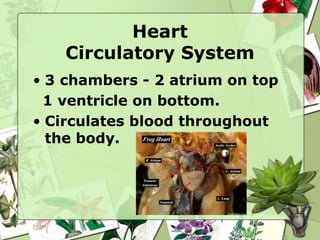
Heart
Circulatory System
• 3 chambers - 2 atrium on top
1 ventricle on bottom.
• Circulates blood throughout
the body.
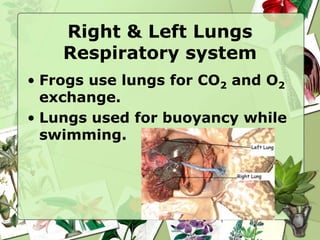
Right & Left Lungs
Respiratory system
• Frogs use lungs for CO2 and O2
exchange.
• Lungs used for buoyancy while
swimming.
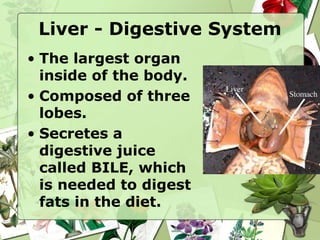
Liver - Digestive System
• The largest organ
inside of the body.
• Composed of three
lobes.
• Secretes a
digestive juice
called BILE, which
is needed to digest
fats in the diet.
Gall bladder
Digestive System
• A small balloon like organ
located under the liver.
• Stores bile
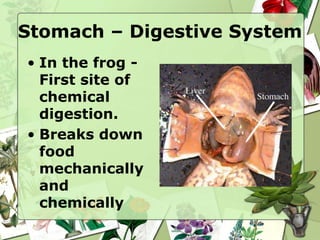
Stomach – Digestive System
• In the frog -
First site of
chemical
digestion.
• Breaks down
food
mechanically
and
chemically
Small Intestine
Digestive System
• Narrow tube
near the end of
the digestive
tract.
• Digests food into nutrients
which are absorbed into the
bloodstream through villi.
Large Intestine
Digestive System
• Short tube that stores solid
waste for excretion.
• Absorbs water.
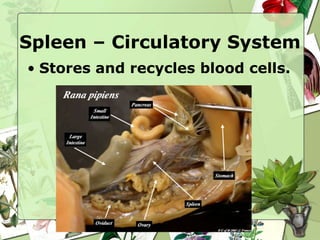
Spleen – Circulatory System
• Stores and recycles blood cells.
Fatty Bodies - Digestive &
Reproductive Systems
• Stores fat which
gives the frog
energy for
hibernation and
mating.
• Helps frog stay
warm.
• Enables frog to
float.
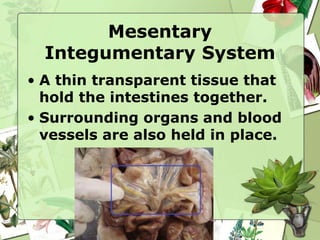
Mesentary
Integumentary System
• A thin transparent tissue that
hold the intestines together.
• Surrounding organs and blood
vessels are also held in place.
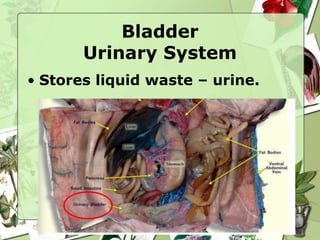
Bladder
Urinary System
• Stores liquid waste – urine.
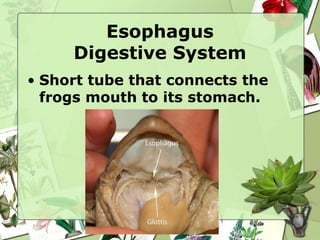
Esophagus
Digestive System
• Short tube that connects the
frogs mouth to its stomach.
The End
• Move onto the next Table in
section 1

Getting to know your frog anatomy

  • 1.
    Getting To KnowYour Frog Anatomy
  • 2.
    Directions • Use thispresentation to complete the 1st table in Section 1 of your Frog Dissection Booklet. • READ THE DIRECTIONS for each section throughout the entire book!
  • 3.
    • The frogsskin is permeable. (allows water in and out of body) • Has glands that release toxins for protection against predators. • Camouflage color and pattern to hide from predators. • Used to regulate body temperature.
  • 4.
    Heart Circulatory System • 3chambers - 2 atrium on top 1 ventricle on bottom. • Circulates blood throughout the body.
  • 5.
    Right & LeftLungs Respiratory system • Frogs use lungs for CO2 and O2 exchange. • Lungs used for buoyancy while swimming.
  • 6.
    Liver - DigestiveSystem • The largest organ inside of the body. • Composed of three lobes. • Secretes a digestive juice called BILE, which is needed to digest fats in the diet.
  • 7.
    Gall bladder Digestive System •A small balloon like organ located under the liver. • Stores bile
  • 8.
    Stomach – DigestiveSystem • In the frog - First site of chemical digestion. • Breaks down food mechanically and chemically
  • 9.
    Small Intestine Digestive System •Narrow tube near the end of the digestive tract. • Digests food into nutrients which are absorbed into the bloodstream through villi.
  • 10.
    Large Intestine Digestive System •Short tube that stores solid waste for excretion. • Absorbs water.
  • 11.
    Spleen – CirculatorySystem • Stores and recycles blood cells.
  • 12.
    Fatty Bodies -Digestive & Reproductive Systems • Stores fat which gives the frog energy for hibernation and mating. • Helps frog stay warm. • Enables frog to float.
  • 13.
    Mesentary Integumentary System • Athin transparent tissue that hold the intestines together. • Surrounding organs and blood vessels are also held in place.
  • 14.
    Bladder Urinary System • Storesliquid waste – urine.
  • 15.
    Esophagus Digestive System • Shorttube that connects the frogs mouth to its stomach.
  • 16.
    The End • Moveonto the next Table in section 1