Germany
About Germany


•   Officially the Federal Republic of Germany
•   The country consists of 16 states while the capital and largest city is Berlin.
•   Covers area of 357,021 km2
•   81.8 million inhabitants
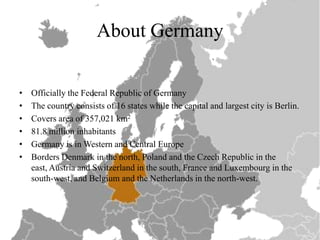
•   Germany is in Western and Central Europe
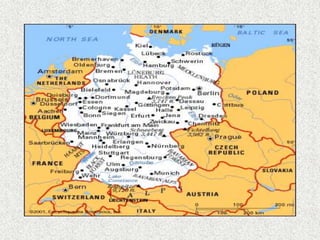
•   Borders Denmark in the north, Poland and the Czech Republic in the
    east, Austria and Switzerland in the south, France and Luxembourg in the
    south-west, and Belgium and the Netherlands in the north-west.
German Economy
•   Largest economy in the European
    Union
•   Founding member of the European
    Community in 1957, which became
    the EU in 1993
•   The world's 4th largest economy by
    nominal GDP and the 5th
    largest by purchasing power parity
    (PPP)
•   The 2nd largest exporter and third
    largest importer of goods
•   A very high standard of living and a
    comprehensive system of social
    security.
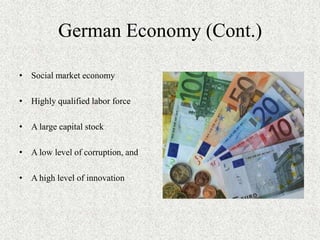
German Economy (Cont.)

• Social market economy

• Highly qualified labor force

• A large capital stock

• A low level of corruption, and

• A high level of innovation
Contribution of Various Sectors
               towards GDP

• Service sector 71%, employed 67.5% of the workforce.


• Industry 28%, excels in the production
  of automobiles, machinery, electrical equipment and chemicals.


• Agriculture 0.9%, the third largest agricultural producer in the European
  Union after France and Italy
Subcomponents of Service Sector


• Financial, Renting, and Business activities (30.5%);


• Trade, Hotels and Restaurants, and Transport (18%)


• Other service activities (21.7%)
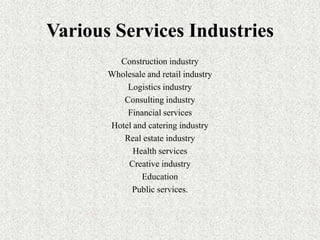
Various Services Industries
         Construction industry
       Wholesale and retail industry
           Logistics industry
          Consulting industry
           Financial services
       Hotel and catering industry
          Real estate industry
             Health services
           Creative industry
               Education
            Public services.
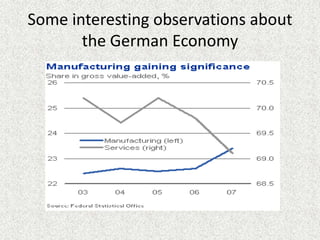
Some interesting observations about
       the German Economy
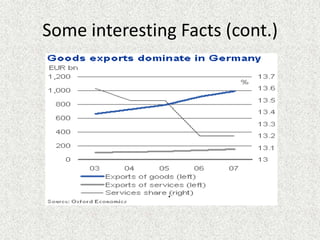
Some interesting Facts (cont.)


               .
Conclusion


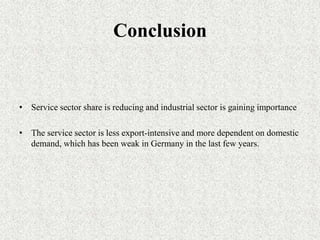
• Service sector share is reducing and industrial sector is gaining importance

• The service sector is less export-intensive and more dependent on domestic
  demand, which has been weak in Germany in the last few years.
Germany

Germany

  • 1.
  • 2.
    About Germany • Officially the Federal Republic of Germany • The country consists of 16 states while the capital and largest city is Berlin. • Covers area of 357,021 km2 • 81.8 million inhabitants • Germany is in Western and Central Europe • Borders Denmark in the north, Poland and the Czech Republic in the east, Austria and Switzerland in the south, France and Luxembourg in the south-west, and Belgium and the Netherlands in the north-west.
  • 3.
    German Economy • Largest economy in the European Union • Founding member of the European Community in 1957, which became the EU in 1993 • The world's 4th largest economy by nominal GDP and the 5th largest by purchasing power parity (PPP) • The 2nd largest exporter and third largest importer of goods • A very high standard of living and a comprehensive system of social security.
  • 5.
    German Economy (Cont.) •Social market economy • Highly qualified labor force • A large capital stock • A low level of corruption, and • A high level of innovation
  • 7.
    Contribution of VariousSectors towards GDP • Service sector 71%, employed 67.5% of the workforce. • Industry 28%, excels in the production of automobiles, machinery, electrical equipment and chemicals. • Agriculture 0.9%, the third largest agricultural producer in the European Union after France and Italy
  • 8.
    Subcomponents of ServiceSector • Financial, Renting, and Business activities (30.5%); • Trade, Hotels and Restaurants, and Transport (18%) • Other service activities (21.7%)
  • 9.
    Various Services Industries Construction industry Wholesale and retail industry Logistics industry Consulting industry Financial services Hotel and catering industry Real estate industry Health services Creative industry Education Public services.
  • 10.
    Some interesting observationsabout the German Economy
  • 11.
  • 12.
    Conclusion • Service sectorshare is reducing and industrial sector is gaining importance • The service sector is less export-intensive and more dependent on domestic demand, which has been weak in Germany in the last few years.