Downloaded 14 times
![Calling on Crowds Matt Ball, Vector1 Media @spatialsustain [email_address]](https://image.slidesharecdn.com/mbcrowdgeoint-111021135625-phpapp02/85/GeoInt-Crowdsourcing-Presentation-1-320.jpg)
![Calling on Crowds Matt Ball, Vector1 Media @spatialsustain [email_address]](https://image.slidesharecdn.com/mbcrowdgeoint-111021135625-phpapp02/75/GeoInt-Crowdsourcing-Presentation-1-2048.jpg)
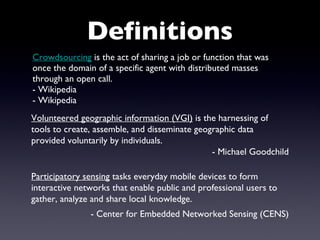
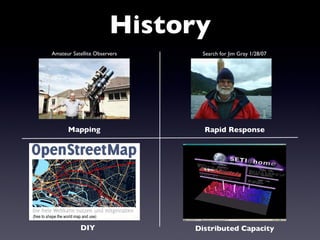
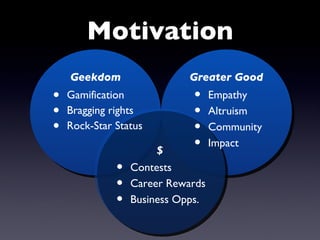
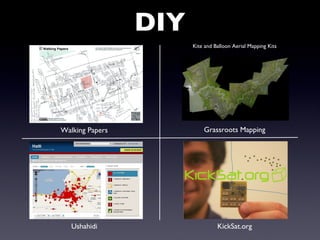
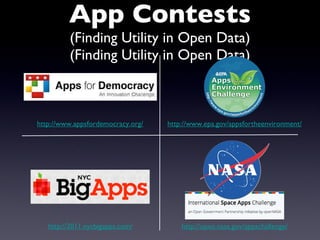
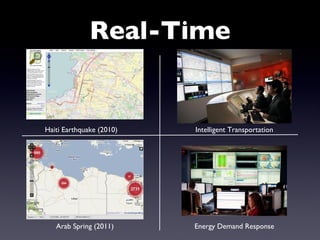
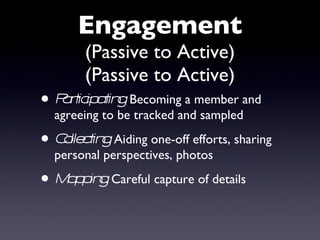
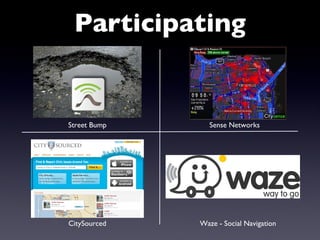
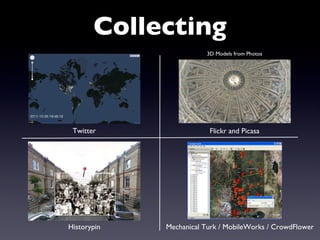
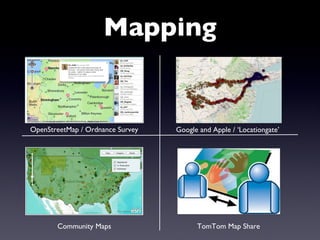
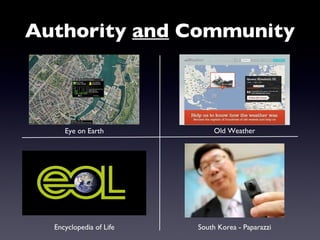
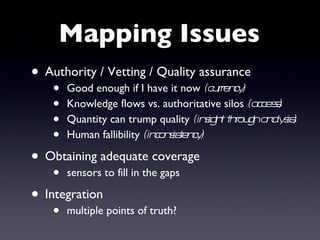

Crowdsourcing involves distributing tasks traditionally done by specific agents to a distributed group of people through an open call. It includes volunteered geographic information where individuals voluntarily provide geographic data, and participatory sensing where mobile devices form networks for individuals to gather and share local knowledge. Crowdsourcing provides benefits like gamification, community impact, and career opportunities, and is used for applications like mapping, crisis response, product testing, and gathering real-time energy and transportation data. Issues include ensuring quality, authority, and consistency as knowledge is gathered from diverse non-experts.


