

People Make Cities Smart 
Andrew Nash 
GreenCityStreets.com 
Conference: Why are cities smart? 
Miskolc, Hungary 
November 27, 2014
Photo by flowcomm - Creative Commons Attribution License https://www.flickr.com/photos/21162417@N07 Created with Haiku Deck
What makes a city smart? 
 Using technology to make cities 
more efficient e.g., energy saving? 
 Centralized control centres to monitor and 
manage infrastructure and services? 
 Using technology to increase public 
participation in activities of civic living?
Public participation … because it helps: 
• Generate better ideas 
Detailed local knowledge & fresh perspective 
• Provide political support 
Especially important for tough decisions 
• Create committed residents 
People willing to act
Information technology has 
vastly increased the ability 
of people to participate.
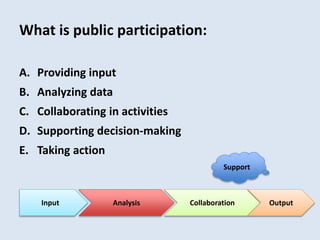
What is public participation: 
A. Providing input 
B. Analyzing data 
C. Collaborating in activities 
D. Supporting decision-making 
E. Taking action 
Support 
Input Analysis Collaboration Output
A. Collecting Input: efficiency + visibility 
• Mainstream social media (Twitter, Facebook) 
• Reporting applications
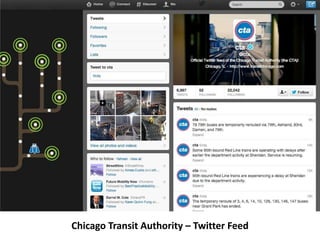
Chicago Transit Authority – Twitter Feed
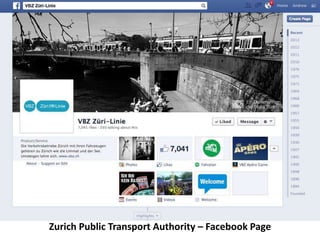
Zurich Public Transport Authority – Facebook Page
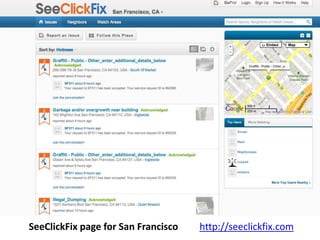
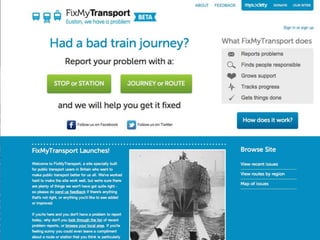
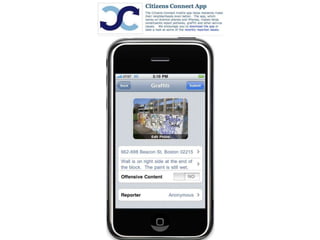
Reporting Applications
SeeClickFix page for San Francisco http://seeclickfix.com
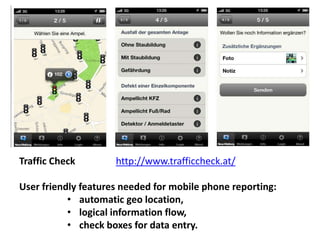
Traffic Check http://www.trafficcheck.at/ 
User friendly features needed for mobile phone reporting: 
• automatic geo location, 
• logical information flow, 
• check boxes for data entry.
Reporting Apps + GPS + Sensors
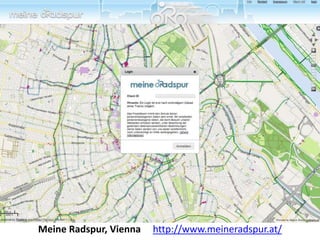
Meine Radspur, Vienna http://www.meineradspur.at/
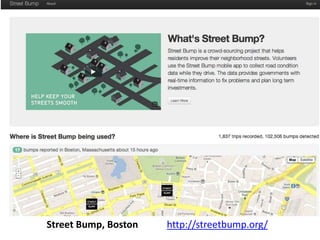
Street Bump, Boston http://streetbump.org/
B. Data Analysis: no longer a monopoly 
• City data – open data or scraped. 
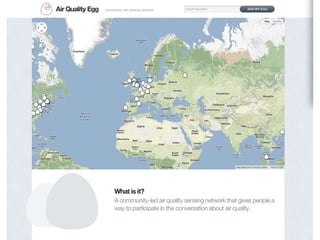
• Citizen data – cheap sensors.
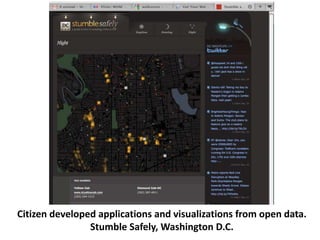
Citizen developed applications and visualizations from open data. 
Stumble Safely, Washington D.C.
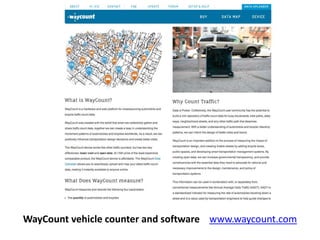
WayCount vehicle counter and software www.waycount.com
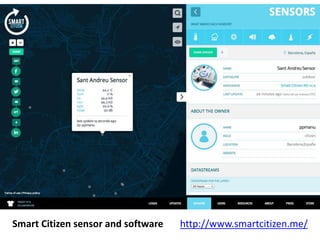
Smart Citizen sensor and software http://www.smartcitizen.me/
C. Collaboration: Participate efficiently
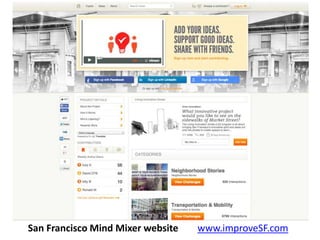
San Francisco Mind Mixer website www.improveSF.com
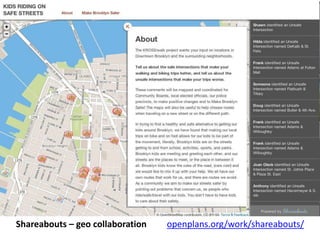
Shareabouts – geo collaboration openplans.org/work/shareabouts/
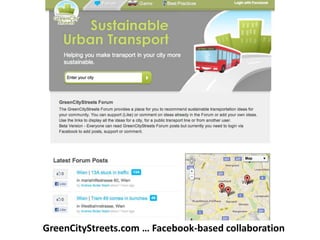
GreenCityStreets.com … Facebook-based collaboration
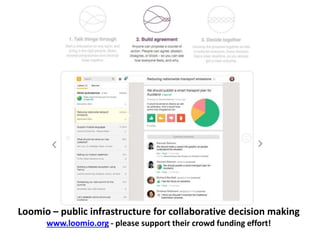
Loomio – public infrastructure for collaborative decision making 
www.loomio.org - please support their crowd funding effort!
D. Support: improved collaboration 
• Education – cities are complex 
• Better processes – meeting management 
• Increased engagement – more is better
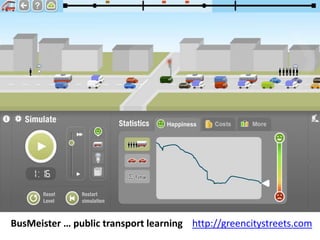
BusMeister … public transport learning http://greencitystreets.com
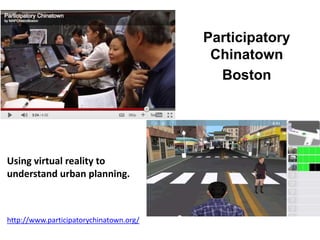
Participatory 
Chinatown 
Boston 
Using virtual reality to 
understand urban planning. 
http://www.participatorychinatown.org/
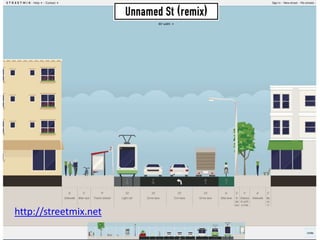
http://streetmix.net
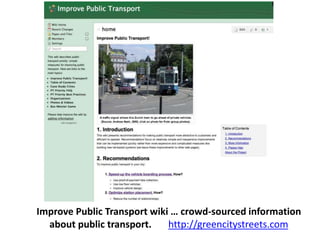
Improve Public Transport wiki … crowd-sourced information 
about public transport. http://greencitystreets.com
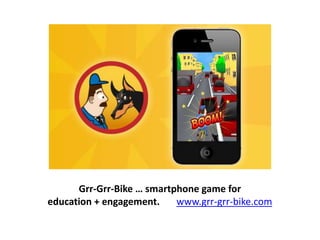
Grr-Grr-Bike … smartphone game for 
education + engagement. www.grr-grr-bike.com
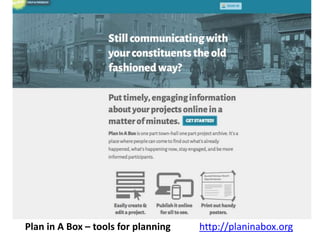
Plan in A Box – tools for planning http://planinabox.org
E. Action: it starts getting interesting … 
• Information – e.g. transit information 
• Clean-up days 
• P2P ridesharing – sharing culture 
• Casserole – shared meals and socialization 
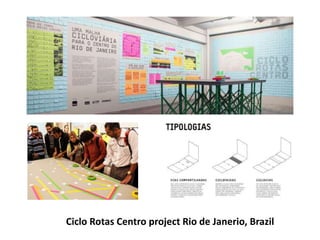
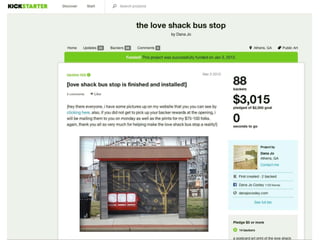
• Crowd-sourced civic works – Kickstarter
Ciclo Rotas Centro project Rio de Janerio, Brazil
So it’s not: 
Why are cities smart? 
But rather …
How are cities smart? 
When they … 
1. Actively involve the public in managing the city. 
2. Provide open data to increase understanding 
and solving problems (e.g., using new apps). 
3. Use apps to harness public energy efficiently. 
4. Recognize if they don’t do it – someone else will.
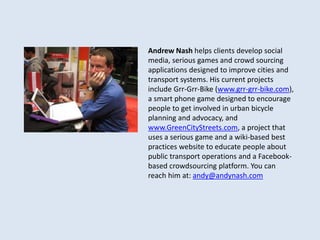
Andrew Nash helps clients develop social 
media, serious games and crowd sourcing 
applications designed to improve cities and 
transport systems. His current projects 
include Grr-Grr-Bike (www.grr-grr-bike.com), 
a smart phone game designed to encourage 
people to get involved in urban bicycle 
planning and advocacy, and 
www.GreenCityStreets.com, a project that 
uses a serious game and a wiki-based best 
practices website to educate people about 
public transport operations and a Facebook-based 
crowdsourcing platform. You can 
reach him at: andy@andynash.com
References 
• Nash, Andrew; A Proposed Structure for Understanding Interactive City 
Tools; May 2013, http://andynash.com/publications/ 
• “Interactive City Tool” from Play the City http://www.playthecity.nl/ 
• Code for America (CfA) http://codeforamerica.org/ 
• OpenPlans http://openplans.org 
• Open Knowledge Foundation http://okfn.org/ 
• GovLab Open Governance WIKI http://thegovlab.org/wiki/Main_Page 
Reporting Applications 
• Seeclickfix http://seeclickfix.org 
• Fix My Transport http://www.fixmytransport.com 
• Citizens Connect 
http://www.cityofboston.gov/doit/apps/citizensconnect.asp 
• Traffic Check http://www.trafficcheck.at/ 
• Verbeterdebuurt, Netherlands http://www.verbeterdebuurt.nl/
References - 2 
GPS Data Reporting Applications 
• CycleTracks, San Francisco – GPS data collection system for bicycling: 
http://www.sfcta.org/modeling-and-travel-forecasting/ 
• Meine Radspur, Vienna http://www.meineradspur.at/ 
• StreetBump, Boston http://streetbump.org 
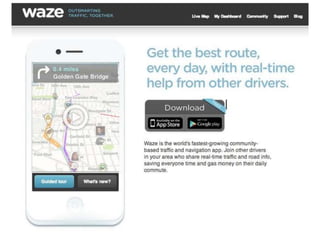
• Waze roadway GPS data collection www.waze.com 
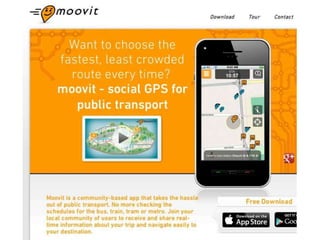
• Moovit public transport GPS reporting app: www.moovitapp.com 
Citizen Collected Data 
• WayCount traffic counter: http://trafficcom.org 
• Air Quality Egg: http://airqualityegg.com 
• Cosm sensor data sharing platform https://cosm.com/ 
• Seeplan – project by Even Westvang from Bengler – http://bengler.no/seeplan
References - 3 
Collaboration Applications 
• MindMixer www.mindmixer.com 
• Shareabouts http://shareabouts.org 
• GreenCityStreets.com www.greencitystreets.com 
• Loomio – crowd sourced decision making www.loomio.org 
• Bogotá – My ideal city 
http://www.miciudadideal.com/en/citizen_sourced 
Citizen Collected Data 
• WayCount traffic counter: http://trafficcom.org 
• Air Quality Egg: http://airqualityegg.com 
• Cosm sensor data sharing platform https://cosm.com/
References - 4 
Support and Education 
• Community Planit http://communityplanit.org 
• BusMeister Game http://www.greencitystreets.com 
• Participatory Chinatown http://www.participatorychinatown.org/ 
• Streetmix.net http://streetmix.net 
• Grr-Grr-Bike engagement game http://www.grr-grr-bike.com 
• Designing Chicago http://designingchicago.com/ 
• Plan in a Box http://planinabox.org/ 
• Simpl Challenge http://www.simpl.co/howitworks 
Taking Action 
• Everyday Growing Cultures http://everydaygrowingcultures.org 
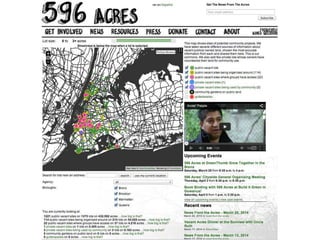
• 596 Acres – New York http://596acres.org/ 
• Ciclos Rotas Centro – Rio de Janeiro http://events.gsapp.org/event/ciclo-rotas-centro- 
0 
• Networks of Dispossession – Turkey http://mulksuzlestirme.org/index_en.html

People Make Cities Smart

  • 1.
    People Make CitiesSmart Andrew Nash GreenCityStreets.com Conference: Why are cities smart? Miskolc, Hungary November 27, 2014
  • 2.
    Photo by flowcomm- Creative Commons Attribution License https://www.flickr.com/photos/21162417@N07 Created with Haiku Deck
  • 3.
    What makes acity smart?  Using technology to make cities more efficient e.g., energy saving?  Centralized control centres to monitor and manage infrastructure and services?  Using technology to increase public participation in activities of civic living?
  • 4.
    Public participation …because it helps: • Generate better ideas Detailed local knowledge & fresh perspective • Provide political support Especially important for tough decisions • Create committed residents People willing to act
  • 5.
    Information technology has vastly increased the ability of people to participate.
  • 6.
    What is publicparticipation: A. Providing input B. Analyzing data C. Collaborating in activities D. Supporting decision-making E. Taking action Support Input Analysis Collaboration Output
  • 7.
    A. Collecting Input:efficiency + visibility • Mainstream social media (Twitter, Facebook) • Reporting applications
  • 8.
    Chicago Transit Authority– Twitter Feed
  • 9.
    Zurich Public TransportAuthority – Facebook Page
  • 10.
  • 11.
    SeeClickFix page forSan Francisco http://seeclickfix.com
  • 14.
    Traffic Check http://www.trafficcheck.at/ User friendly features needed for mobile phone reporting: • automatic geo location, • logical information flow, • check boxes for data entry.
  • 15.
    Reporting Apps +GPS + Sensors
  • 16.
    Meine Radspur, Viennahttp://www.meineradspur.at/
  • 17.
    Street Bump, Bostonhttp://streetbump.org/
  • 20.
    B. Data Analysis:no longer a monopoly • City data – open data or scraped. • Citizen data – cheap sensors.
  • 21.
    Citizen developed applicationsand visualizations from open data. Stumble Safely, Washington D.C.
  • 22.
    WayCount vehicle counterand software www.waycount.com
  • 23.
    Smart Citizen sensorand software http://www.smartcitizen.me/
  • 25.
  • 26.
    San Francisco MindMixer website www.improveSF.com
  • 27.
    Shareabouts – geocollaboration openplans.org/work/shareabouts/
  • 28.
  • 29.
    Loomio – publicinfrastructure for collaborative decision making www.loomio.org - please support their crowd funding effort!
  • 30.
    D. Support: improvedcollaboration • Education – cities are complex • Better processes – meeting management • Increased engagement – more is better
  • 31.
    BusMeister … publictransport learning http://greencitystreets.com
  • 32.
    Participatory Chinatown Boston Using virtual reality to understand urban planning. http://www.participatorychinatown.org/
  • 33.
  • 34.
    Improve Public Transportwiki … crowd-sourced information about public transport. http://greencitystreets.com
  • 35.
    Grr-Grr-Bike … smartphonegame for education + engagement. www.grr-grr-bike.com
  • 36.
    Plan in ABox – tools for planning http://planinabox.org
  • 37.
    E. Action: itstarts getting interesting … • Information – e.g. transit information • Clean-up days • P2P ridesharing – sharing culture • Casserole – shared meals and socialization • Crowd-sourced civic works – Kickstarter
  • 39.
    Ciclo Rotas Centroproject Rio de Janerio, Brazil
  • 41.
    So it’s not: Why are cities smart? But rather …
  • 42.
    How are citiessmart? When they … 1. Actively involve the public in managing the city. 2. Provide open data to increase understanding and solving problems (e.g., using new apps). 3. Use apps to harness public energy efficiently. 4. Recognize if they don’t do it – someone else will.
  • 43.
    Andrew Nash helpsclients develop social media, serious games and crowd sourcing applications designed to improve cities and transport systems. His current projects include Grr-Grr-Bike (www.grr-grr-bike.com), a smart phone game designed to encourage people to get involved in urban bicycle planning and advocacy, and www.GreenCityStreets.com, a project that uses a serious game and a wiki-based best practices website to educate people about public transport operations and a Facebook-based crowdsourcing platform. You can reach him at: andy@andynash.com
  • 44.
    References • Nash,Andrew; A Proposed Structure for Understanding Interactive City Tools; May 2013, http://andynash.com/publications/ • “Interactive City Tool” from Play the City http://www.playthecity.nl/ • Code for America (CfA) http://codeforamerica.org/ • OpenPlans http://openplans.org • Open Knowledge Foundation http://okfn.org/ • GovLab Open Governance WIKI http://thegovlab.org/wiki/Main_Page Reporting Applications • Seeclickfix http://seeclickfix.org • Fix My Transport http://www.fixmytransport.com • Citizens Connect http://www.cityofboston.gov/doit/apps/citizensconnect.asp • Traffic Check http://www.trafficcheck.at/ • Verbeterdebuurt, Netherlands http://www.verbeterdebuurt.nl/
  • 45.
    References - 2 GPS Data Reporting Applications • CycleTracks, San Francisco – GPS data collection system for bicycling: http://www.sfcta.org/modeling-and-travel-forecasting/ • Meine Radspur, Vienna http://www.meineradspur.at/ • StreetBump, Boston http://streetbump.org • Waze roadway GPS data collection www.waze.com • Moovit public transport GPS reporting app: www.moovitapp.com Citizen Collected Data • WayCount traffic counter: http://trafficcom.org • Air Quality Egg: http://airqualityegg.com • Cosm sensor data sharing platform https://cosm.com/ • Seeplan – project by Even Westvang from Bengler – http://bengler.no/seeplan
  • 46.
    References - 3 Collaboration Applications • MindMixer www.mindmixer.com • Shareabouts http://shareabouts.org • GreenCityStreets.com www.greencitystreets.com • Loomio – crowd sourced decision making www.loomio.org • Bogotá – My ideal city http://www.miciudadideal.com/en/citizen_sourced Citizen Collected Data • WayCount traffic counter: http://trafficcom.org • Air Quality Egg: http://airqualityegg.com • Cosm sensor data sharing platform https://cosm.com/
  • 47.
    References - 4 Support and Education • Community Planit http://communityplanit.org • BusMeister Game http://www.greencitystreets.com • Participatory Chinatown http://www.participatorychinatown.org/ • Streetmix.net http://streetmix.net • Grr-Grr-Bike engagement game http://www.grr-grr-bike.com • Designing Chicago http://designingchicago.com/ • Plan in a Box http://planinabox.org/ • Simpl Challenge http://www.simpl.co/howitworks Taking Action • Everyday Growing Cultures http://everydaygrowingcultures.org • 596 Acres – New York http://596acres.org/ • Ciclos Rotas Centro – Rio de Janeiro http://events.gsapp.org/event/ciclo-rotas-centro- 0 • Networks of Dispossession – Turkey http://mulksuzlestirme.org/index_en.html