IGCSE GEOGRAPHY
22. WEATHER & CLIMATE
DESERT CLIMATE
AND VEGETATION
CASE STUDY: LAS
VEGAS AND THE
MOJAVE DESERT
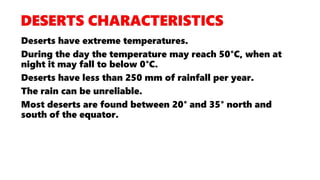
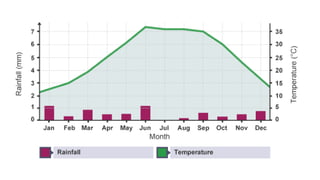
Deserts have extreme temperatures.
During the day the temperature may reach 50°C, when at
night it may fall to below 0°C.
Deserts have less than 250 mm of rainfall per year.
The rain can be unreliable.
Most deserts are found between 20° and 35° north and
south of the equator.
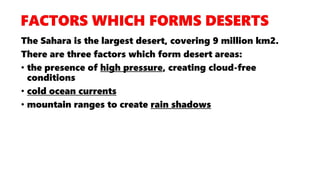
The Sahara is the largest desert, covering 9 million km2.
There are three factors which form desert areas:
• the presence of high pressure, creating cloud-free
conditions
• cold ocean currents
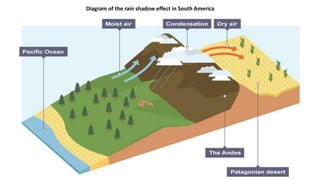
• mountain ranges to create rain shadows
Diagram of the rain shadow effect in South America
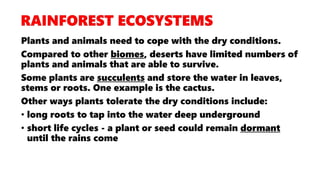
Plants and animals need to cope with the dry conditions.
Compared to other biomes, deserts have limited numbers of
plants and animals that are able to survive.
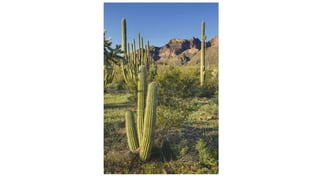
Some plants are succulents and store the water in leaves,
stems or roots. One example is the cactus.
Other ways plants tolerate the dry conditions include:
• long roots to tap into the water deep underground
• short life cycles - a plant or seed could remain dormant
until the rains come
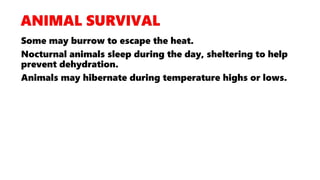
Some may burrow to escape the heat.
Nocturnal animals sleep during the day, sheltering to help
prevent dehydration.
Animals may hibernate during temperature highs or lows.
Deserts are areas with fragile and limited resources.
Despite the harsh conditions people live in desert areas, but
their need for food and water presents many challenges.
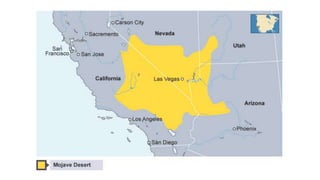
Las Vegas is an example of a city which is built in a desert
area.
Las Vegas is a fast-growing city - the population is expected
to double in 40 years.
It is located in the Mojave desert - one of America's smallest
and driest deserts, which has 15-25 cm of rain per year.
To cope with the population's demand for water, Las Vegas
diverts the water supply from Lake Mead on the Colorado
River.
650,000 people live in the desert.
In addition the Mojave desert is used by:
• tourists - visiting areas such as Death Valley
• military, as they test out airplanes and train troops
• hikers and rock climbers
• off-road vehicles - including quad bikes and motorcycles
making use of the varied terrain
• solar and wind energy generation
• film makers, attracted by the scenery
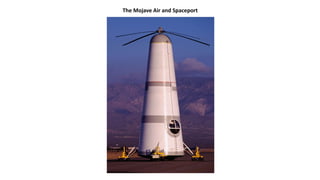
The Mojave Air and Spaceport
The way deserts are used presents many challenges.
The off-road vehicles damage the sensitive desert
ecosystem.
The growth of urban areas threatens the desert area, and
pollutes the air. The demand for water increases.
The city officials have encouraged the use of recycled waste
water and the removal of water thirsty lawns.
Fibre optic cables are routed through the desert connecting
urban areas - disrupting the fragile ecosystem and allowing
weeds to grow.
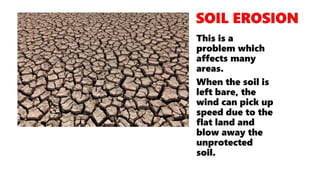
This is a
problem which
affects many
areas.
When the soil is
left bare, the
wind can pick up
speed due to the
flat land and
blow away the
unprotected
soil.
The soil is exposed and vulnerable to erosion as a result of the
removal of vegetation and overgrazing.
Trees, which provide protection from the wind and rain, are
removed to be used as fuel.
Nomadic tribes have become more sedentary, which puts
pressure on the land where they settle.
When soil is blown away the land becomes useless for grazing
and crops and causes desertification.
This is a problem in the Sahel region of Africa.
This problem is worsened when restrictions are placed on the
movement of nomadic tribes.
Salinisation occurs when the water in soils evaporates in high
temperatures, drawing salts from the soil to the surface.
These salts are toxic to many plants and make the land
unusable.
This has consequences such as low yields, poor profits and even
starvation. Irrigation of land - when water is brought to land
that is naturally dry - can cause salinisation on desert margins.
It is not just physical geography which is affected when humans
use desert environments.
Culturally, when tourists and new migrants come in culture may
be diluted or new languages picked up.
With a growing population there is more demand for food and
water.
This puts pressure on fragile and limited resources.
Overgazing and overcultivation to provide enough food are two
problems caused.

GEOGRAPHY IGCSE: DESERT CLIMATE

  • 1.
    IGCSE GEOGRAPHY 22. WEATHER& CLIMATE DESERT CLIMATE AND VEGETATION CASE STUDY: LAS VEGAS AND THE MOJAVE DESERT
  • 2.
    Deserts have extremetemperatures. During the day the temperature may reach 50°C, when at night it may fall to below 0°C. Deserts have less than 250 mm of rainfall per year. The rain can be unreliable. Most deserts are found between 20° and 35° north and south of the equator.
  • 4.
    The Sahara isthe largest desert, covering 9 million km2. There are three factors which form desert areas: • the presence of high pressure, creating cloud-free conditions • cold ocean currents • mountain ranges to create rain shadows
  • 5.
    Diagram of therain shadow effect in South America
  • 6.
    Plants and animalsneed to cope with the dry conditions. Compared to other biomes, deserts have limited numbers of plants and animals that are able to survive. Some plants are succulents and store the water in leaves, stems or roots. One example is the cactus. Other ways plants tolerate the dry conditions include: • long roots to tap into the water deep underground • short life cycles - a plant or seed could remain dormant until the rains come
  • 8.
    Some may burrowto escape the heat. Nocturnal animals sleep during the day, sheltering to help prevent dehydration. Animals may hibernate during temperature highs or lows.
  • 9.
    Deserts are areaswith fragile and limited resources. Despite the harsh conditions people live in desert areas, but their need for food and water presents many challenges.
  • 10.
    Las Vegas isan example of a city which is built in a desert area. Las Vegas is a fast-growing city - the population is expected to double in 40 years. It is located in the Mojave desert - one of America's smallest and driest deserts, which has 15-25 cm of rain per year. To cope with the population's demand for water, Las Vegas diverts the water supply from Lake Mead on the Colorado River.
  • 12.
    650,000 people livein the desert. In addition the Mojave desert is used by: • tourists - visiting areas such as Death Valley • military, as they test out airplanes and train troops • hikers and rock climbers • off-road vehicles - including quad bikes and motorcycles making use of the varied terrain • solar and wind energy generation • film makers, attracted by the scenery
  • 13.
    The Mojave Airand Spaceport
  • 14.
    The way desertsare used presents many challenges. The off-road vehicles damage the sensitive desert ecosystem. The growth of urban areas threatens the desert area, and pollutes the air. The demand for water increases. The city officials have encouraged the use of recycled waste water and the removal of water thirsty lawns. Fibre optic cables are routed through the desert connecting urban areas - disrupting the fragile ecosystem and allowing weeds to grow.
  • 15.
    This is a problemwhich affects many areas. When the soil is left bare, the wind can pick up speed due to the flat land and blow away the unprotected soil.
  • 16.
    The soil isexposed and vulnerable to erosion as a result of the removal of vegetation and overgrazing. Trees, which provide protection from the wind and rain, are removed to be used as fuel. Nomadic tribes have become more sedentary, which puts pressure on the land where they settle. When soil is blown away the land becomes useless for grazing and crops and causes desertification. This is a problem in the Sahel region of Africa. This problem is worsened when restrictions are placed on the movement of nomadic tribes.
  • 17.
    Salinisation occurs whenthe water in soils evaporates in high temperatures, drawing salts from the soil to the surface. These salts are toxic to many plants and make the land unusable. This has consequences such as low yields, poor profits and even starvation. Irrigation of land - when water is brought to land that is naturally dry - can cause salinisation on desert margins. It is not just physical geography which is affected when humans use desert environments. Culturally, when tourists and new migrants come in culture may be diluted or new languages picked up.
  • 18.
    With a growingpopulation there is more demand for food and water. This puts pressure on fragile and limited resources. Overgazing and overcultivation to provide enough food are two problems caused.