GERMANY
 By: Alston Grapengeter
Physical Characteristics
• The size of Germany is 357,021 sq
  km.
• Germany’s capital is Berlin.
• Germany includes flat
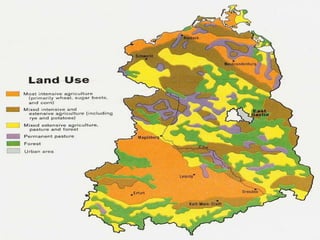
  lands, hills, lakes, rivers, mountains,
  and large areas of forest.
Physical Characteristics
           Continued
• Germany shares borders with nine
  other European countries.
1.   Austria
2.   Belgium
3.   Czech Republic
4.   Denmark
5.   France
6.   Luxembourg
7.   Netherlands
8.   Poland
9.   Switzerland
Physical Characteristics
         Continued
• Germany is separated into three section:
1. Northern Germany
2. Central Germany
3. Southern Germany
• The northern part of Germany is relatively
  flat while to southern part has a more
  elevated and rugged terrain.
• Three rivers enter Germany.
• The Elbe and Rhine river connect Germany to
  the sea.
Cultural Characteristics
•   It’s population is 82,329,758 people.
•   The official language spoken is German.
•   Christianity is the most popular religion there.
•   The people of Germany have very good etiquette
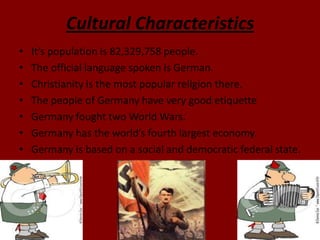
•   Germany fought two World Wars.
•   Germany has the world’s fourth largest economy.
•   Germany is based on a social and democratic federal state.
Customs and Traditions
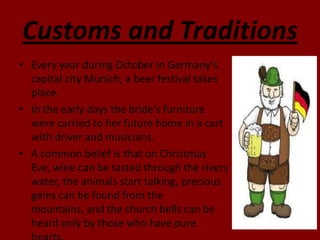
• Every year during October in Germany's
  capital city Munich, a beer festival takes
  place.
• In the early days the bride's furniture
  were carried to her future home in a cart
  with driver and musicians.
• A common belief is that on Christmas
  Eve, wine can be tasted through the rivers
  water, the animals start talking, precious
  gems can be found from the
  mountains, and the church bells can be
  heard only by those who have pure
Germany

Germany

  • 1.
    GERMANY By: AlstonGrapengeter
  • 2.
    Physical Characteristics • Thesize of Germany is 357,021 sq km. • Germany’s capital is Berlin. • Germany includes flat lands, hills, lakes, rivers, mountains, and large areas of forest.
  • 3.
    Physical Characteristics Continued • Germany shares borders with nine other European countries. 1. Austria 2. Belgium 3. Czech Republic 4. Denmark 5. France 6. Luxembourg 7. Netherlands 8. Poland 9. Switzerland
  • 4.
    Physical Characteristics Continued • Germany is separated into three section: 1. Northern Germany 2. Central Germany 3. Southern Germany • The northern part of Germany is relatively flat while to southern part has a more elevated and rugged terrain. • Three rivers enter Germany. • The Elbe and Rhine river connect Germany to the sea.
  • 7.
    Cultural Characteristics • It’s population is 82,329,758 people. • The official language spoken is German. • Christianity is the most popular religion there. • The people of Germany have very good etiquette • Germany fought two World Wars. • Germany has the world’s fourth largest economy. • Germany is based on a social and democratic federal state.
  • 8.
    Customs and Traditions •Every year during October in Germany's capital city Munich, a beer festival takes place. • In the early days the bride's furniture were carried to her future home in a cart with driver and musicians. • A common belief is that on Christmas Eve, wine can be tasted through the rivers water, the animals start talking, precious gems can be found from the mountains, and the church bells can be heard only by those who have pure