Geography BasicsGeog 100
How old is Planet Earth?
4.6 billion years oldHow do we know?Scientists think that Earth probably formed at about the same time as the rest of the solar system. They have determined that some chondrite meteorites, the unaltered remains from the formation of the solar system, are up to 4.6 billion years old. Scientists believe that Earth and other planets are probably that old. They can determine the ages of rocks by measuring the amounts of natural radioactive materials, such as uranium, in them. Radioactive elements decay (change into other elements) at a known rate. For example, uranium gives off radiation and decays into lead. Scientists know the time it takes for uranium to change to lead. They can determine the age of a rock by comparing the amount of uranium to the amount of lead.    Source: NASA
The Earth changes over timehttp://www.youtube.com/watch?v=Cm5giPd5Uro
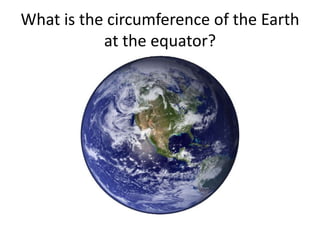
What is the circumference of the Earth at the equator?
24,901.55 milesHow long would it take you to walk around the Equator of the Earth?
The 7 ContinentsAsiaEuropeAfricaNorth AmericaSouth AmericaAustraliaAntarctica
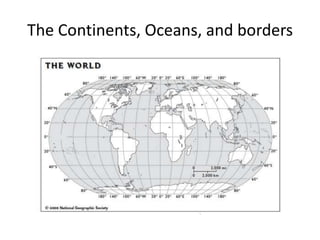
The Continents, Oceans, and borders
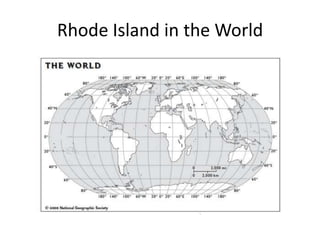
Where is Rhode Island?Latitude 41 degrees NorthLongitude 71 degrees West
Rhode Island in the World
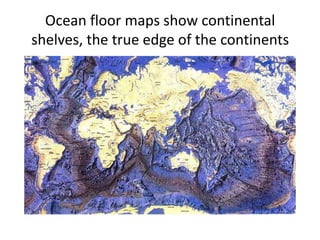
Ocean floor maps show continental shelves, the true edge of the continents
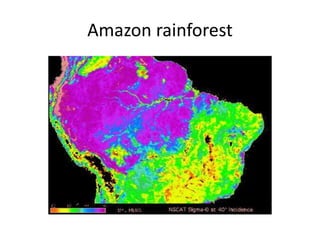
Amazon rainforest
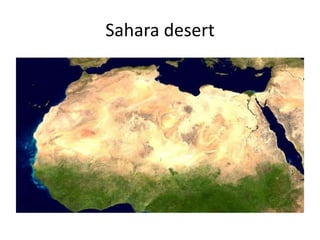
Sahara desert
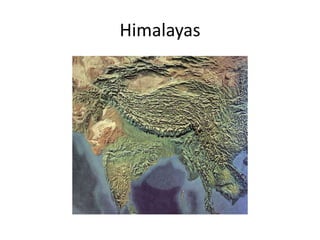
Himalayas
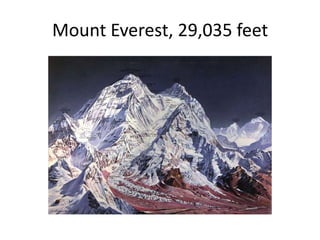
Mount Everest, 29,035 feet
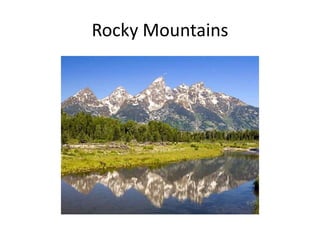
Rocky Mountains
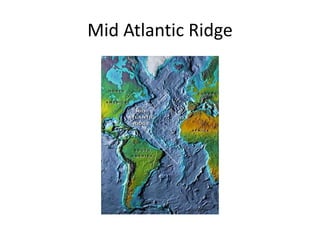
Mid Atlantic Ridge
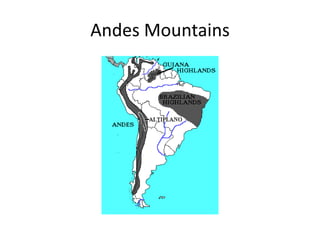
Andes Mountains
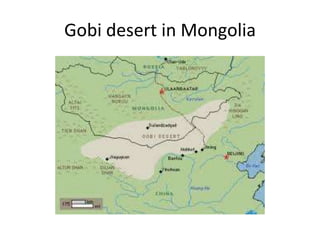
Gobi desert in Mongolia
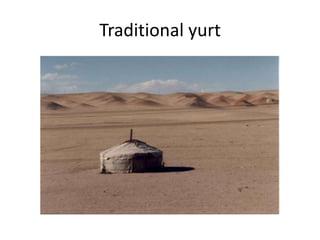
Traditional yurt
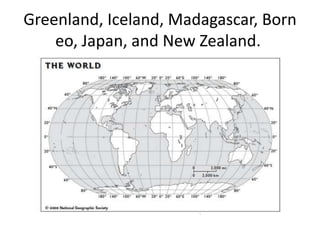
Greenland, Iceland, Madagascar, Borneo, Japan, and New Zealand. 
7 billion people on Earth?World population clock
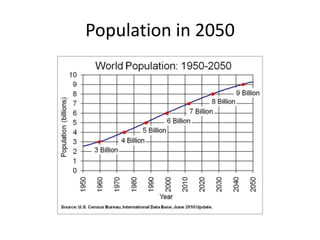
Population in 2050
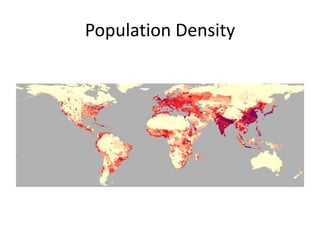
Population Density
The Human Footprinthttp://www.wcs.org/humanfootprint/
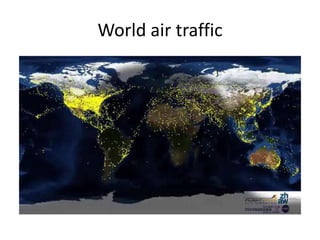
World air traffic
The Age of Humans - Anthropocenehttp://www.globaia.org/en/anthropocene/
Environmental ChangeOver billions of years, earth systems change.Humans have been on earth for about 1 or 2 million yearsAbout 12,000 years ago, with end of Ice Age, humans migrated into North & South AmericaAbout 10,000 years ago, agriculture was developed in the Middle EastSince then, the human footprint has expanded rapidly … I = P A TSustainability – what does it mean?
Environmental movementhttp://www.nytimes.com/interactive/2010/04/22/science/earth/20100422_environment_timeline.html?ref=science
TodayWe live on a changing planet… change is the norm.The human interaction with natural systems is complex – we are part of nature, not apart from nature.The future will be what we make it to be … all things are possible.
Next week - WaterWhat is a watershed? What watershed do you live in?Where does your water come from? What is the quality of the water? What environmental factors affect that quality?Who controls the water? Who oversees its quality?How much do you use? How much does it cost?
For Next WeekExplore your town via Google maps.Find out what watershed you live in.Find out where your water comes from and anything else you can find out about it.Read the short article about water posted on the course Web site.  Come to class prepared to discuss what you learned and also hand in a written report (1 or 2 pages).Include in that a summary of what you learned from the article plus one or two questions about water.

Geog100 1 2011