GEO TEXTILE
HISTORY
• The first application of geo textile were woven industry fabrics used in 1950.
• A waterfront structure was built in Florida in 1958.
• The first nonwoven geo textile was developed in 1968 by the Rhone opulence
company in FRANCE .
• In France thick needle- punched polyester, which was used in dam construction in
197
INTRODUCTION
A geotextile is typically defined as any permeable textile material used to increase
soil stability, provide erosion control or aid in drainage. More simply put, if it is
made of fabric and buried in the ground it is probably a geotextile. Geotextiles are
a permeable synthetic material made of textile materials. They are usually made
from polymers such as polyester or polypropylene.
TYPES OF GEOTEXTILE:
Geotextiles are a permeable synthetic material made of textile materials. They are
usually made from polymers such as polyester or polypropylene. The
geotextiles are further prepared in three different categories;
• Woven geotextile,
• Non-woven geotextile.
• Now a days Jute are also applied as geotextile.
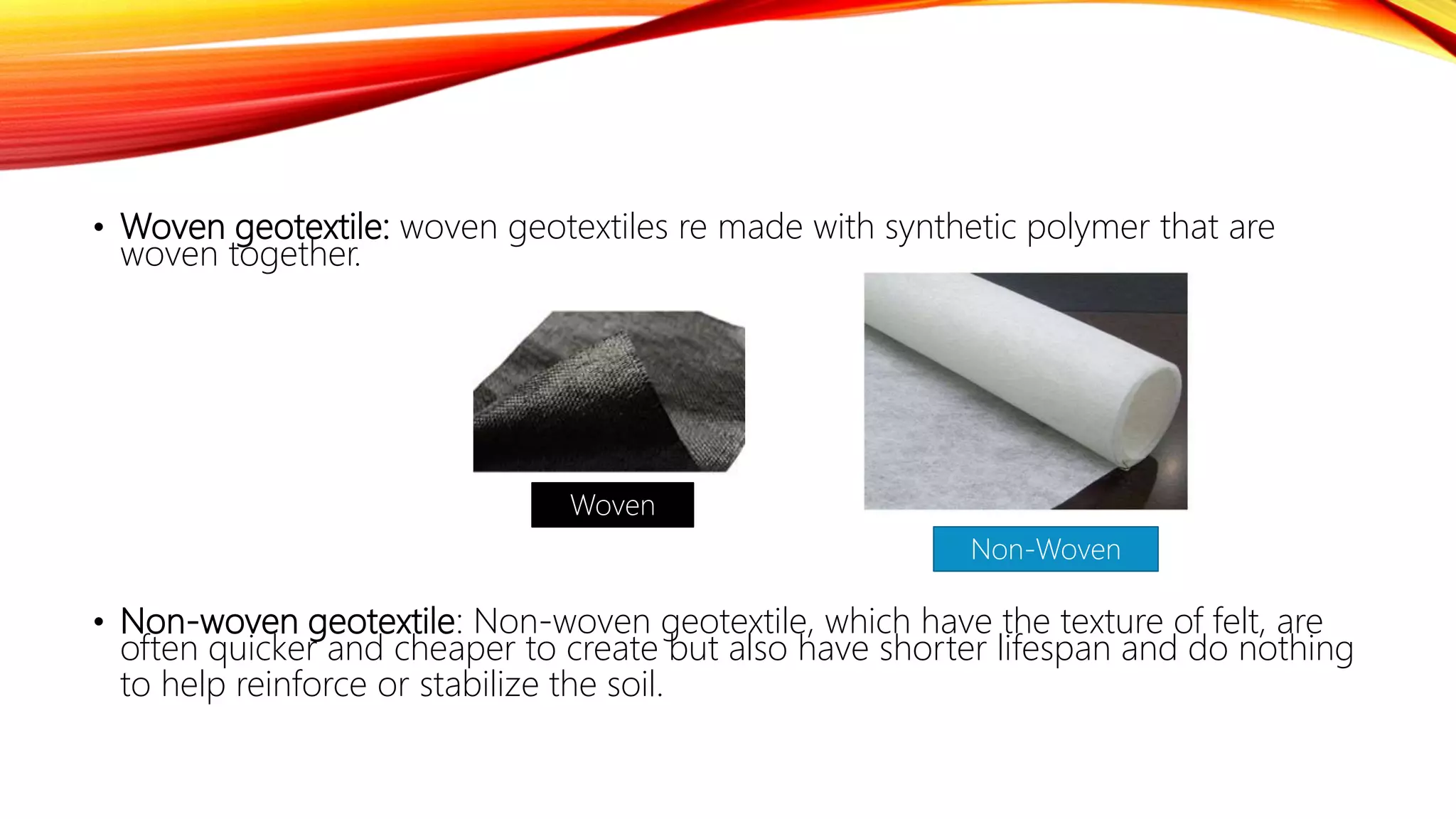
• Woven geotextile: woven geotextiles re made with synthetic polymer that are
woven together.
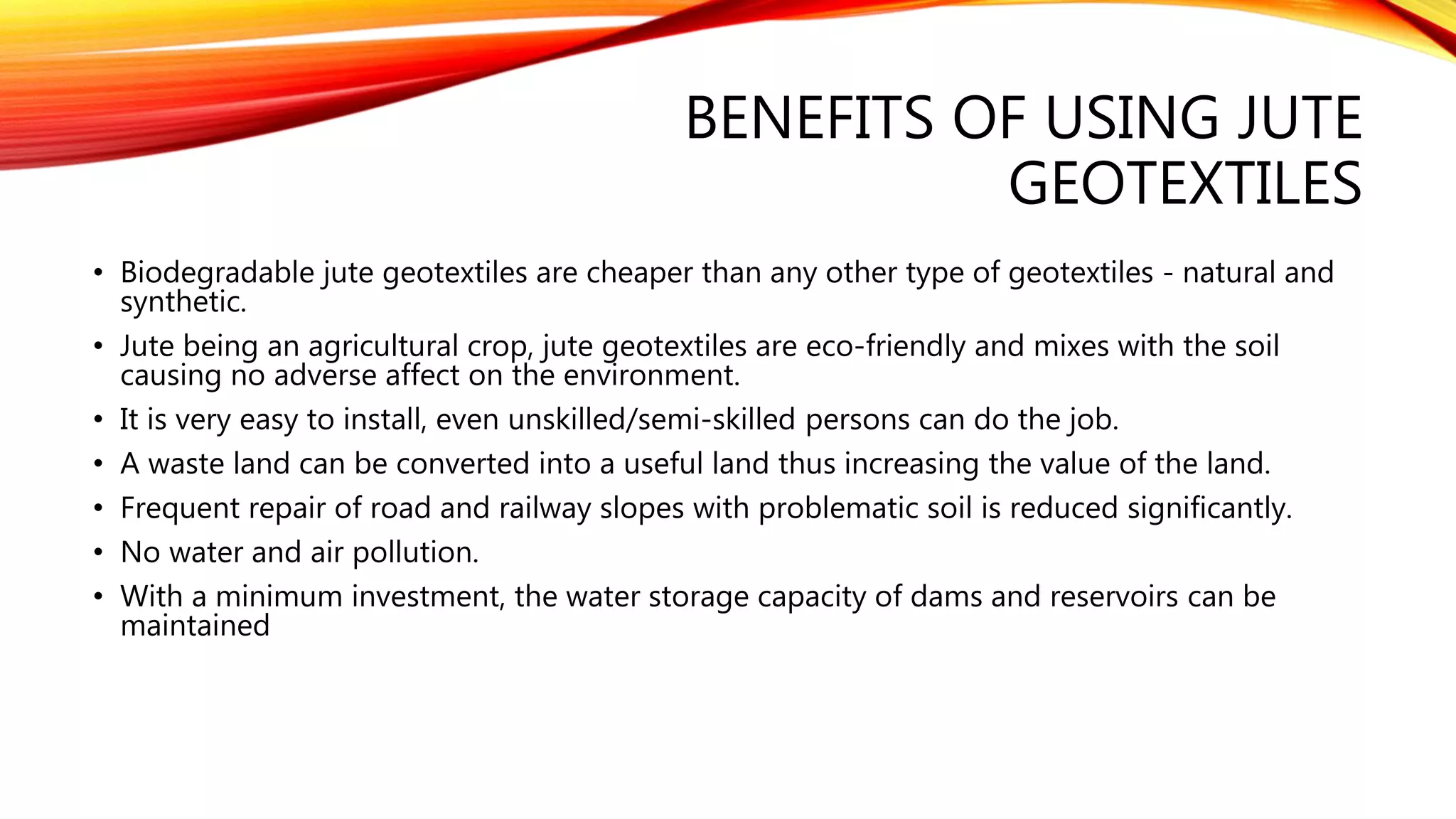
• Non-woven geotextile: Non-woven geotextile, which have the texture of felt, are
often quicker and cheaper to create but also have shorter lifespan and do nothing
to help reinforce or stabilize the soil.
Woven
Non-Woven
• Jute Geotextile: It is made of bast fibers of jute plant. Jute geotextiles (JGT) has
emerged as a strong alternative to synthetic geotextiles for many civil engineering
applications. Synthetic geotextiles being made from non-biodegradable polymer
based constituents such as polypropylene, polyester or polyethylene, have
advantage over natural fibre based biodegradable JGT for long-term applications.
Jute Used in road construction
BENEFITS OF USING JUTE
GEOTEXTILES
• Biodegradable jute geotextiles are cheaper than any other type of geotextiles - natural and
synthetic.
• Jute being an agricultural crop, jute geotextiles are eco-friendly and mixes with the soil
causing no adverse affect on the environment.
• It is very easy to install, even unskilled/semi-skilled persons can do the job.
• A waste land can be converted into a useful land thus increasing the value of the land.
• Frequent repair of road and railway slopes with problematic soil is reduced significantly.
• No water and air pollution.
• With a minimum investment, the water storage capacity of dams and reservoirs can be
maintained
BASIC FUNCTIONS
• Filtration
• Separation
• Reinforcement
• Drainage
• Filtration: Geotextile are an ideal interface for reverse filtration in the soil
adjacent to the geotextile.
• Separation: The introduction of a flexible porous textile placed between dissimilar
materials so that the integrity and functioning of both the materials can remain
intact or be improved.
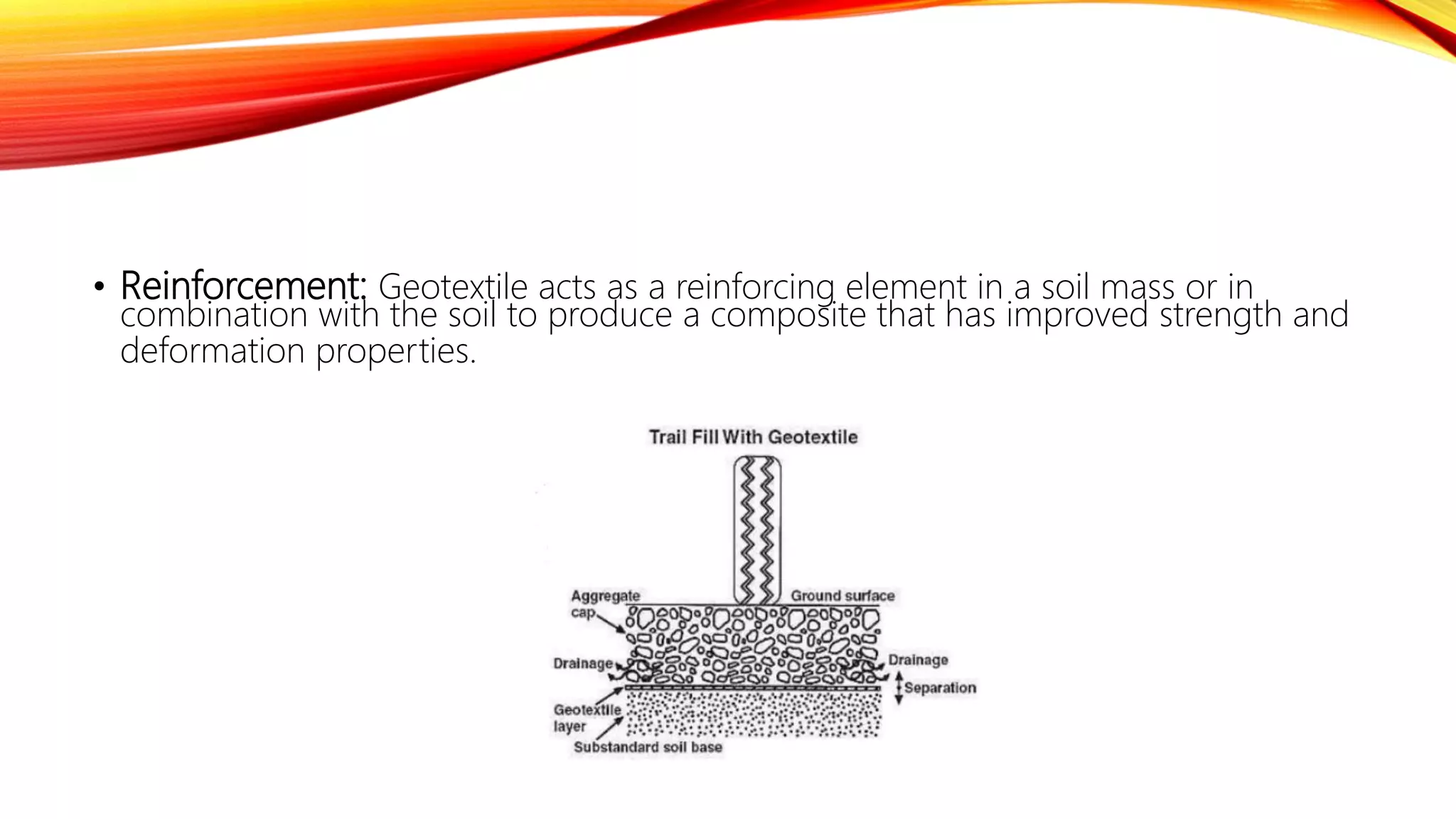
• Reinforcement: Geotextile acts as a reinforcing element in a soil mass or in
combination with the soil to produce a composite that has improved strength and
deformation properties.
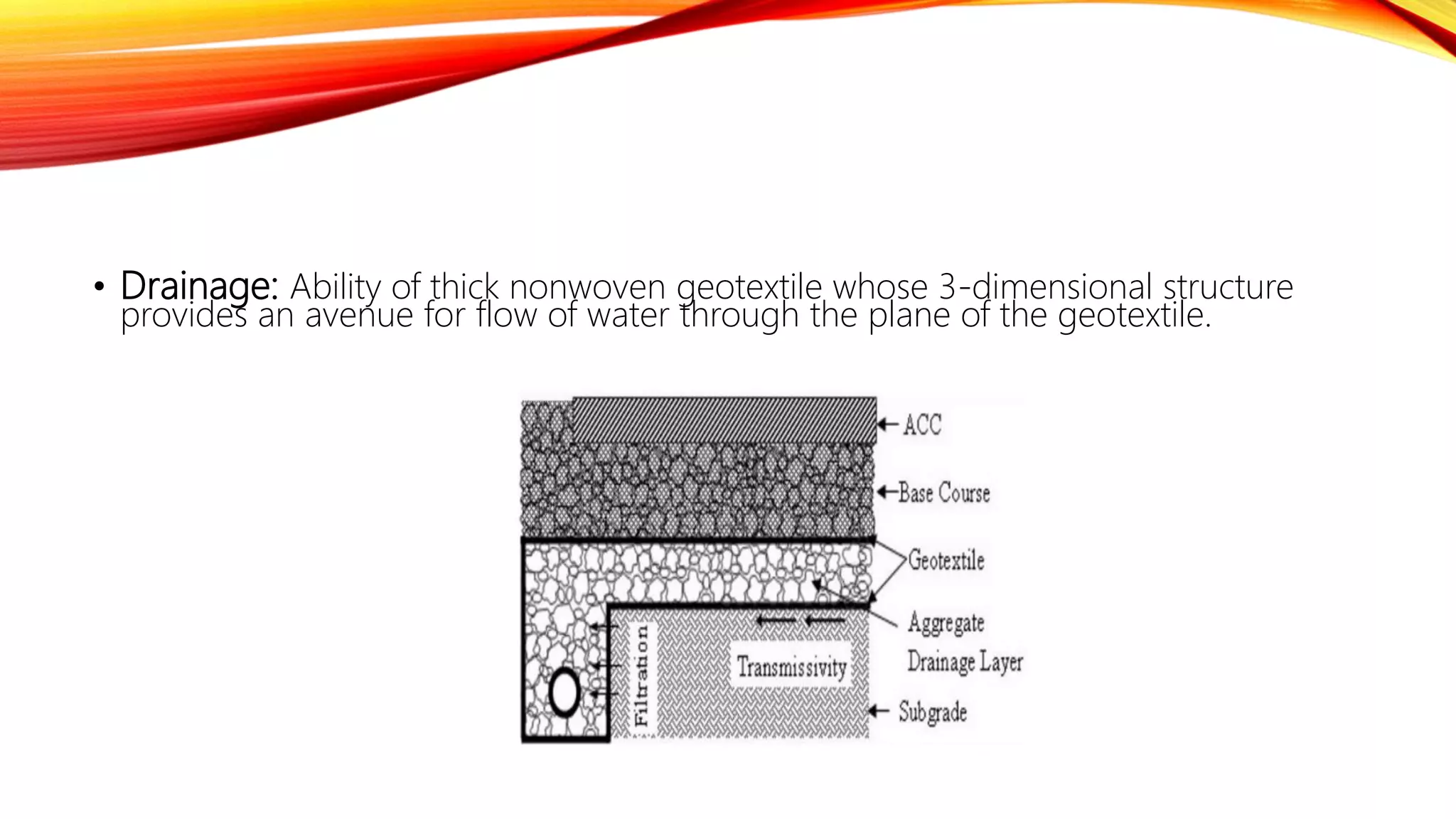
• Drainage: Ability of thick nonwoven geotextile whose 3-dimensional structure
provides an avenue for flow of water through the plane of the geotextile.
GEOTEXTILE APPLICATIONS
• Between subgrade and stone base in unpaved and paved roads and airfields
• Between subgrade in railroads
• Between land fills and stone base courses
• Between geomembranes and sand drainage layers
• Beneath sidewalks slabs
• Beneath curb areas
• Beneath parking lots
• Beneath sport and athletic fields

Geo textile

  • 1.
  • 2.
    HISTORY • The firstapplication of geo textile were woven industry fabrics used in 1950. • A waterfront structure was built in Florida in 1958. • The first nonwoven geo textile was developed in 1968 by the Rhone opulence company in FRANCE . • In France thick needle- punched polyester, which was used in dam construction in 197
  • 3.
    INTRODUCTION A geotextile istypically defined as any permeable textile material used to increase soil stability, provide erosion control or aid in drainage. More simply put, if it is made of fabric and buried in the ground it is probably a geotextile. Geotextiles are a permeable synthetic material made of textile materials. They are usually made from polymers such as polyester or polypropylene.
  • 4.
    TYPES OF GEOTEXTILE: Geotextilesare a permeable synthetic material made of textile materials. They are usually made from polymers such as polyester or polypropylene. The geotextiles are further prepared in three different categories; • Woven geotextile, • Non-woven geotextile. • Now a days Jute are also applied as geotextile.
  • 5.
    • Woven geotextile:woven geotextiles re made with synthetic polymer that are woven together. • Non-woven geotextile: Non-woven geotextile, which have the texture of felt, are often quicker and cheaper to create but also have shorter lifespan and do nothing to help reinforce or stabilize the soil. Woven Non-Woven
  • 6.
    • Jute Geotextile:It is made of bast fibers of jute plant. Jute geotextiles (JGT) has emerged as a strong alternative to synthetic geotextiles for many civil engineering applications. Synthetic geotextiles being made from non-biodegradable polymer based constituents such as polypropylene, polyester or polyethylene, have advantage over natural fibre based biodegradable JGT for long-term applications. Jute Used in road construction
  • 7.
    BENEFITS OF USINGJUTE GEOTEXTILES • Biodegradable jute geotextiles are cheaper than any other type of geotextiles - natural and synthetic. • Jute being an agricultural crop, jute geotextiles are eco-friendly and mixes with the soil causing no adverse affect on the environment. • It is very easy to install, even unskilled/semi-skilled persons can do the job. • A waste land can be converted into a useful land thus increasing the value of the land. • Frequent repair of road and railway slopes with problematic soil is reduced significantly. • No water and air pollution. • With a minimum investment, the water storage capacity of dams and reservoirs can be maintained
  • 8.
    BASIC FUNCTIONS • Filtration •Separation • Reinforcement • Drainage
  • 9.
    • Filtration: Geotextileare an ideal interface for reverse filtration in the soil adjacent to the geotextile.
  • 10.
    • Separation: Theintroduction of a flexible porous textile placed between dissimilar materials so that the integrity and functioning of both the materials can remain intact or be improved.
  • 11.
    • Reinforcement: Geotextileacts as a reinforcing element in a soil mass or in combination with the soil to produce a composite that has improved strength and deformation properties.
  • 12.
    • Drainage: Abilityof thick nonwoven geotextile whose 3-dimensional structure provides an avenue for flow of water through the plane of the geotextile.
  • 13.
    GEOTEXTILE APPLICATIONS • Betweensubgrade and stone base in unpaved and paved roads and airfields • Between subgrade in railroads • Between land fills and stone base courses • Between geomembranes and sand drainage layers • Beneath sidewalks slabs • Beneath curb areas • Beneath parking lots • Beneath sport and athletic fields