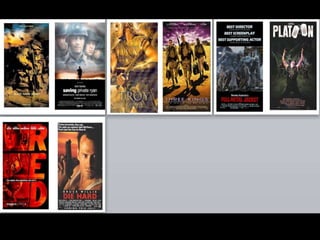
Male and Female characters (normally mid to late twenties)USAHand to hand combatCoffee shopGunsSometimes comedy ExplosionsRevengeCar chases or collisionsPhysical strength (often unrealistic)Two opposing forcesWorkplaceBest friend Car chases or collisionsLove songsLoves me Loves me Not themeSlapstick aspectDevil may care attitudes
Male and Female characters (normally mid to late twenties)USAHand to hand combatCoffee shopGunsSometimes comedyExplosionsRevengeCar chases or collisionsPhysical strength (often unrealistic)Two opposing forcesWorkplaceBest friend Car chases or collisionsLove songsLoves me Loves me Not themeSlapstick aspectDevil may care attitudes
Film Genre
Learn the meaning of the term “Genre”Apply the term to FilmLook at how genre is used to analyse filmic aspectsUnderstand iconography as a part of genre analysisApply iconography to film clipsUnderstand “Film Genre” and how it is usedObjectives
Genre in FilmGenre is a French word meaning “form” or “type” and can be used to categorise something. It refers to a number of specific styles or characteristics. When used in terms of films, it may include the conventions and expectations of how a film will look and what will be included. It can cover many aspects including: Narrative		Characterisation		Basic Themes		SettingsFilmic Techniques		Iconography
The Romantic Comedy Genreespecially for Jordon…Answer  with this in mind!
Things to consider when you analyse the genre of a film:Narrative – what ?    Similar sometimes formulaic plots and structures,      predictable situations, sequences, episodes,     obstacles, conflicts and resolutions.Characterisation– what?   Similar types of characters sometimes stereotypes,         roles, personal qualities, motivations, goals,                  behaviour. Analysis
Basic themes?   Topics, social, cultural, psychological, professional, political, sexual and moral. Settings?   Geographical and historical.Filmic techniques?   Stylistic or formal conventions of camerawork, lighting, sound-recording, use of colour, editing etc.  Analysis
IconographyA familiar stock of images or motifs, the connotations or meaning of which have become fixed.Primarily but not necessarily visual these can include:  Sets, costumes and propsCertain 'typecast‘ or iconic performers.Familiar patterns of dialogue, characteristic music and sounds.Analysis
When you look at some of the main genres, these elements become essential to an audience's understanding of the film.They will be able to recognise iconic or typecasts stars.Specific conflicts and narrative themes.And most obviously the iconography.Film Genre
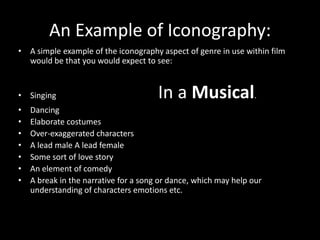
A simple example of the iconography aspect of genre in use within film would be that you would expect to see:  Singing In a Musical. DancingElaborate costumes Over-exaggerated characters A lead male A lead female Some sort of love story An element of comedy A break in the narrative for a song or dance, which may help our understanding of characters emotions etc. An Example of Iconography:
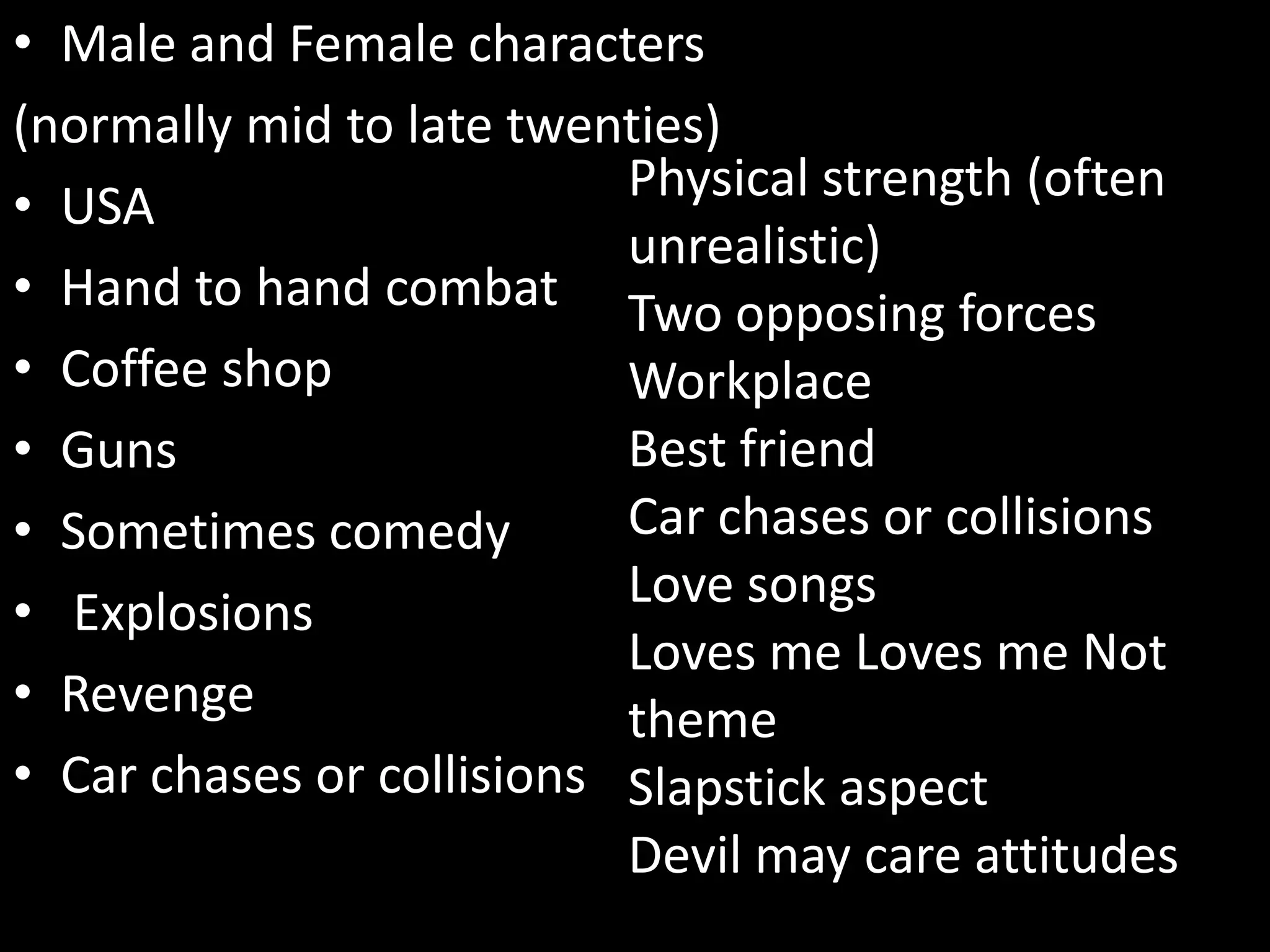
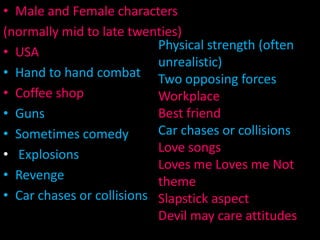
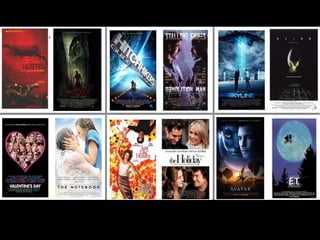
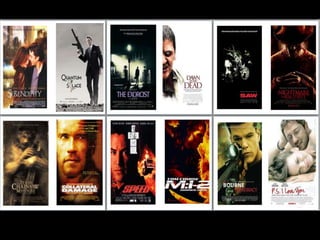
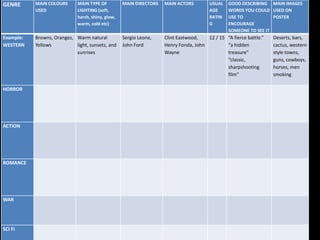
Now watching the clips from some of the main genres do the films conform to audiences genre expectations? List the iconography that you see, including, stars, characters, props, costumes and anything else you feel is relevant to genre recognition.Genre
How do you know what you’ve signed up for? Iconography –visual and sound signifiershttp://www.youtube.com/watch?v=pxYdbGHzaTk&feature=relatedhttp://www.youtube.com/watch?v=gUg4gWjOgXshttp://www.youtube.com/watch?v=d9pY8EWE06o
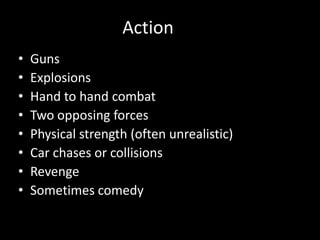
Action GunsExplosionsHand to hand combatTwo opposing forcesPhysical strength (often unrealistic)Car chases or collisionsRevengeSometimes comedy
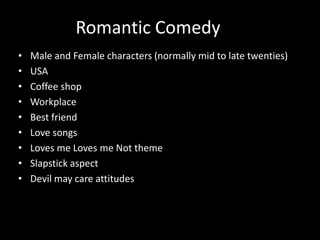
Romantic ComedyMale and Female characters (normally mid to late twenties)USACoffee shop WorkplaceBest friend Love songsLoves me Loves me Not themeSlapstick aspectDevil may care attitudes
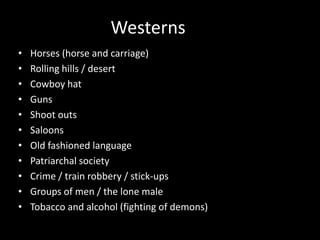
Westerns Horses (horse and carriage)Rolling hills / desert Cowboy hatGunsShoot outsSaloonsOld fashioned languagePatriarchal societyCrime / train robbery / stick-upsGroups of men / the lone male Tobacco and alcohol (fighting of demons)
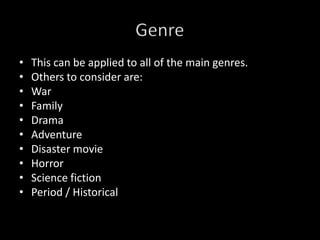
This can be applied to all of the main genres.Others to consider are:WarFamilyDramaAdventureDisaster movieHorrorScience fictionPeriod / HistoricalGenre
Genre is important in the study of films as it helps to target specific audiences, or on the other hand can act as a signpost to audiences, helping them decide what to watch.The term genre can be applied to many Media forms, such as Radio Programmes, TV, Films, Websites and many more. Genre is not Media specific and is a word used throughout the English language and over many disciplines. To Conclude
Think of your favourite film or films and discuss what genre it fits into?List some features found in your favourite film / or expectations of your film, in terms of:NarrativeCharacterisation Basic ThemesSettingsFilmic TechniquesIconographyList all the film genres you can think of with at least one expectation:Period drama – elaborate costumes / formal language / linear narrative Task
?Any Questions

Genre1 fm1

  • 1.
    Male and Femalecharacters (normally mid to late twenties)USAHand to hand combatCoffee shopGunsSometimes comedy ExplosionsRevengeCar chases or collisionsPhysical strength (often unrealistic)Two opposing forcesWorkplaceBest friend Car chases or collisionsLove songsLoves me Loves me Not themeSlapstick aspectDevil may care attitudes
  • 2.
    Male and Femalecharacters (normally mid to late twenties)USAHand to hand combatCoffee shopGunsSometimes comedyExplosionsRevengeCar chases or collisionsPhysical strength (often unrealistic)Two opposing forcesWorkplaceBest friend Car chases or collisionsLove songsLoves me Loves me Not themeSlapstick aspectDevil may care attitudes
  • 3.
  • 8.
    Learn the meaningof the term “Genre”Apply the term to FilmLook at how genre is used to analyse filmic aspectsUnderstand iconography as a part of genre analysisApply iconography to film clipsUnderstand “Film Genre” and how it is usedObjectives
  • 9.
    Genre in FilmGenreis a French word meaning “form” or “type” and can be used to categorise something. It refers to a number of specific styles or characteristics. When used in terms of films, it may include the conventions and expectations of how a film will look and what will be included. It can cover many aspects including: Narrative Characterisation Basic Themes SettingsFilmic Techniques Iconography
  • 10.
    The Romantic ComedyGenreespecially for Jordon…Answer with this in mind!
  • 11.
    Things to considerwhen you analyse the genre of a film:Narrative – what ? Similar sometimes formulaic plots and structures, predictable situations, sequences, episodes, obstacles, conflicts and resolutions.Characterisation– what? Similar types of characters sometimes stereotypes, roles, personal qualities, motivations, goals, behaviour. Analysis
  • 12.
    Basic themes? Topics, social, cultural, psychological, professional, political, sexual and moral. Settings? Geographical and historical.Filmic techniques? Stylistic or formal conventions of camerawork, lighting, sound-recording, use of colour, editing etc. Analysis
  • 13.
    IconographyA familiar stockof images or motifs, the connotations or meaning of which have become fixed.Primarily but not necessarily visual these can include: Sets, costumes and propsCertain 'typecast‘ or iconic performers.Familiar patterns of dialogue, characteristic music and sounds.Analysis
  • 14.
    When you lookat some of the main genres, these elements become essential to an audience's understanding of the film.They will be able to recognise iconic or typecasts stars.Specific conflicts and narrative themes.And most obviously the iconography.Film Genre
  • 15.
    A simple exampleof the iconography aspect of genre in use within film would be that you would expect to see: Singing In a Musical. DancingElaborate costumes Over-exaggerated characters A lead male A lead female Some sort of love story An element of comedy A break in the narrative for a song or dance, which may help our understanding of characters emotions etc. An Example of Iconography:
  • 16.
    Now watching theclips from some of the main genres do the films conform to audiences genre expectations? List the iconography that you see, including, stars, characters, props, costumes and anything else you feel is relevant to genre recognition.Genre
  • 17.
    How do youknow what you’ve signed up for? Iconography –visual and sound signifiershttp://www.youtube.com/watch?v=pxYdbGHzaTk&feature=relatedhttp://www.youtube.com/watch?v=gUg4gWjOgXshttp://www.youtube.com/watch?v=d9pY8EWE06o
  • 18.
    Action GunsExplosionsHand tohand combatTwo opposing forcesPhysical strength (often unrealistic)Car chases or collisionsRevengeSometimes comedy
  • 19.
    Romantic ComedyMale andFemale characters (normally mid to late twenties)USACoffee shop WorkplaceBest friend Love songsLoves me Loves me Not themeSlapstick aspectDevil may care attitudes
  • 20.
    Westerns Horses (horseand carriage)Rolling hills / desert Cowboy hatGunsShoot outsSaloonsOld fashioned languagePatriarchal societyCrime / train robbery / stick-upsGroups of men / the lone male Tobacco and alcohol (fighting of demons)
  • 21.
    This can beapplied to all of the main genres.Others to consider are:WarFamilyDramaAdventureDisaster movieHorrorScience fictionPeriod / HistoricalGenre
  • 22.
    Genre is importantin the study of films as it helps to target specific audiences, or on the other hand can act as a signpost to audiences, helping them decide what to watch.The term genre can be applied to many Media forms, such as Radio Programmes, TV, Films, Websites and many more. Genre is not Media specific and is a word used throughout the English language and over many disciplines. To Conclude
  • 23.
    Think of yourfavourite film or films and discuss what genre it fits into?List some features found in your favourite film / or expectations of your film, in terms of:NarrativeCharacterisation Basic ThemesSettingsFilmic TechniquesIconographyList all the film genres you can think of with at least one expectation:Period drama – elaborate costumes / formal language / linear narrative Task
  • 24.