GENOMICS
Course Radiation and Molecular Biology
Semester MPhil 3rd
Section Morning
Department of Zoology Wildlife and Fisheries
University of Agriculture Faisalabad
Group members
• M. Ehsan Maqbool 2020-ag-1056
• Amna Tehreem 2020-ag-1029
• Muhammad aseem 2020-ag-1025
• Umaira Kanwal 2020-ag-1026
• Saeed Akhtar 2020-ag-1024
• Iqra Sarwar 2020-ag-1020
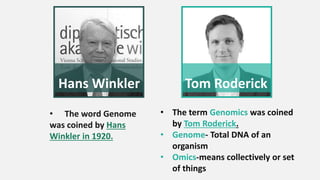
Tom Roderick
Hans Winkler
• The word Genome
was coined by Hans
Winkler in 1920.
• The term Genomics was coined
by Tom Roderick.m Roderick
• Genome- Total DNA of an
organism
• Omics-means collectively or set
of things
Genetics V/S Genomics
• The study of heredity.
• “Gene” refers to the
specific sequence of
DNA on a single
chromosome.
• It involves study of
function and structure
of a “single gene” at a
time.
• It is the study of entire
genome of an organism.
• “Genome” refers to an
organism's entire
genetic makeup.
• It involves study all
genes.
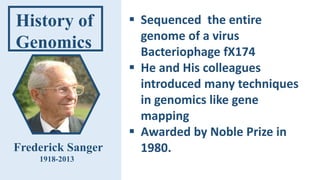
Frederick Sanger
1918-2013
 Sequenced the entire
genome of a virus
Bacteriophage fX174
 He and His colleagues
introduced many techniques
in genomics like gene
mapping
 Awarded by Noble Prize in
1980.
History of
Genomics
 1990---Human Genome Project launched.
 In 1995--- the genome of first
prokaryote, Haemophilus influenza, was
sequenced.
 1996--- First eukaryotic genome (yeast)
was sequenced.
 2003---HGP was completed.
 2004--- Genome of mouse was sequenced.
Why to Sequence
Genome?
• Finding Sequence of whole Genome
• Genes interaction with one another
• To understand how genes function
• Helps to deal DNA more precisely and quickly
• Comparison of normal sequence in DNA with
mutated DNA sequences
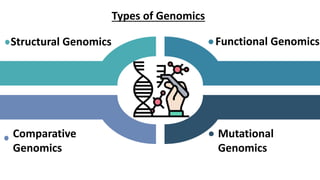
Types of Genomics
Structural Genomics Functional Genomics
Mutational
Genomics
Comparative
Genomics
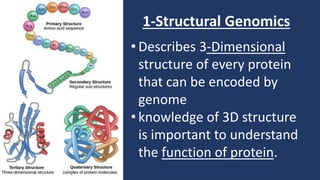
1-Structural Genomics
• Describes 3-Dimensional
structure of every protein
that can be encoded by
genome
• knowledge of 3D structure
is important to understand
the function of protein.
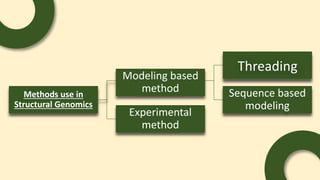
Methods use in
Structural Genomics
Experimental
method
Sequence based
modeling
Modeling based
method
Threading
DNA
mRNA
Proteins
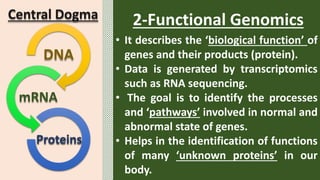
Central Dogma
• It describes the ‘biological function’ of
genes and their products (protein).
• Data is generated by transcriptomics
such as RNA sequencing.
• The goal is to identify the processes
and ‘pathways’ involved in normal and
abnormal state of genes.
• Helps in the identification of functions
of many ‘unknown proteins’ in our
body.
2-Functional Genomics
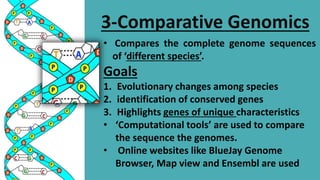
3-Comparative Genomics
• Compares the complete genome sequences
of ‘different species’.
Goals
1. Evolutionary changes among species
2. identification of conserved genes
3. Highlights genes of unique characteristics
• ‘Computational tools’ are used to compare
the sequence the genomes.
• Online websites like BlueJay Genome
Browser, Map view and Ensembl are used
4-Mutational Genomics
• Deals with “mutation
associated genes”
Principle
Identifies
• cancer pathways
• causes
• types of mutation (point
mutation and frame shift
mutation)
• International scientific
research project
• World's first largest
collaborative biological
project
• Aimed to determine
complte gene map of
human DNA .
• Project launced--- 1990
• Project completed---2003
GOALS of HGP
• Identification of all genes
of human DNA
• Determining Sequence of
all 3 billion bases of
human DNA
• To store obtained
information in databases.
• To develop tools for data
analysis
Applications
In Health field
In Agriculture
Forensic analysis
Diagnosis of
infectious disease
Healthcare
• A disease can be detected long
before symptoms appear.
• If Symptom develops, it helps in
its diagnosis.
• By finding specific alternation in
genome for a disease, specific
medicine can be made for that
alternation.
Applications in Agriculture
Genetically engineered plant
(GMOs) strains are possible to
develop
New strains have more
productivity and more
nutritional value
More productivity means
herbicide tolerance, pest
repellent and immunization to
various infections
Applications in
Forensic field
• Has replaced the traditional testing methods
• New fast and valid techniques have been introduced,
For example
• DNA isolation techniques
• Mitigation of non-human contaminants
• Bio-informatics methods for defining genetic relationships
• DNA sequencing and next generation sequencing
Diagnosis of infectious diseases
• Sequencing the genome of
microrganism which is the cause of
infection
• Helps to identify the exact disease
causing pathogen.
• Helps in prediction of suitable
medicine for effective treatment
Success Story
Advancement in Cancer
• Large-scale research projects, such as The Cancer Genome Atlas have
started
• Have used DNA sequencing to investigate many types of cancer.
• Genetic tests have been introduced for assessing cancer risk in
individuals with a family history of cancer
• New tests are also being developed to find and treat cancer at an
earlier stage.
• Many targeted cancer therapies have been introduced
• Drugs that block the growth and spread of cancer are available
Thank
You

Genomics

  • 1.
  • 2.
    Course Radiation andMolecular Biology Semester MPhil 3rd Section Morning Department of Zoology Wildlife and Fisheries University of Agriculture Faisalabad
  • 3.
    Group members • M.Ehsan Maqbool 2020-ag-1056 • Amna Tehreem 2020-ag-1029 • Muhammad aseem 2020-ag-1025 • Umaira Kanwal 2020-ag-1026 • Saeed Akhtar 2020-ag-1024 • Iqra Sarwar 2020-ag-1020
  • 4.
    Tom Roderick Hans Winkler •The word Genome was coined by Hans Winkler in 1920. • The term Genomics was coined by Tom Roderick.m Roderick • Genome- Total DNA of an organism • Omics-means collectively or set of things
  • 5.
    Genetics V/S Genomics •The study of heredity. • “Gene” refers to the specific sequence of DNA on a single chromosome. • It involves study of function and structure of a “single gene” at a time. • It is the study of entire genome of an organism. • “Genome” refers to an organism's entire genetic makeup. • It involves study all genes.
  • 6.
    Frederick Sanger 1918-2013  Sequencedthe entire genome of a virus Bacteriophage fX174  He and His colleagues introduced many techniques in genomics like gene mapping  Awarded by Noble Prize in 1980. History of Genomics
  • 7.
     1990---Human GenomeProject launched.  In 1995--- the genome of first prokaryote, Haemophilus influenza, was sequenced.  1996--- First eukaryotic genome (yeast) was sequenced.  2003---HGP was completed.  2004--- Genome of mouse was sequenced.
  • 8.
    Why to Sequence Genome? •Finding Sequence of whole Genome • Genes interaction with one another • To understand how genes function • Helps to deal DNA more precisely and quickly • Comparison of normal sequence in DNA with mutated DNA sequences
  • 9.
    Types of Genomics StructuralGenomics Functional Genomics Mutational Genomics Comparative Genomics
  • 10.
    1-Structural Genomics • Describes3-Dimensional structure of every protein that can be encoded by genome • knowledge of 3D structure is important to understand the function of protein.
  • 11.
    Methods use in StructuralGenomics Experimental method Sequence based modeling Modeling based method Threading
  • 12.
    DNA mRNA Proteins Central Dogma • Itdescribes the ‘biological function’ of genes and their products (protein). • Data is generated by transcriptomics such as RNA sequencing. • The goal is to identify the processes and ‘pathways’ involved in normal and abnormal state of genes. • Helps in the identification of functions of many ‘unknown proteins’ in our body. 2-Functional Genomics
  • 13.
    3-Comparative Genomics • Comparesthe complete genome sequences of ‘different species’. Goals 1. Evolutionary changes among species 2. identification of conserved genes 3. Highlights genes of unique characteristics • ‘Computational tools’ are used to compare the sequence the genomes. • Online websites like BlueJay Genome Browser, Map view and Ensembl are used
  • 14.
    4-Mutational Genomics • Dealswith “mutation associated genes” Principle Identifies • cancer pathways • causes • types of mutation (point mutation and frame shift mutation)
  • 15.
    • International scientific researchproject • World's first largest collaborative biological project • Aimed to determine complte gene map of human DNA . • Project launced--- 1990 • Project completed---2003
  • 16.
    GOALS of HGP •Identification of all genes of human DNA • Determining Sequence of all 3 billion bases of human DNA • To store obtained information in databases. • To develop tools for data analysis
  • 17.
    Applications In Health field InAgriculture Forensic analysis Diagnosis of infectious disease
  • 18.
    Healthcare • A diseasecan be detected long before symptoms appear. • If Symptom develops, it helps in its diagnosis. • By finding specific alternation in genome for a disease, specific medicine can be made for that alternation.
  • 19.
    Applications in Agriculture Geneticallyengineered plant (GMOs) strains are possible to develop New strains have more productivity and more nutritional value More productivity means herbicide tolerance, pest repellent and immunization to various infections
  • 20.
    Applications in Forensic field •Has replaced the traditional testing methods • New fast and valid techniques have been introduced, For example • DNA isolation techniques • Mitigation of non-human contaminants • Bio-informatics methods for defining genetic relationships • DNA sequencing and next generation sequencing
  • 21.
    Diagnosis of infectiousdiseases • Sequencing the genome of microrganism which is the cause of infection • Helps to identify the exact disease causing pathogen. • Helps in prediction of suitable medicine for effective treatment
  • 22.
    Success Story Advancement inCancer • Large-scale research projects, such as The Cancer Genome Atlas have started • Have used DNA sequencing to investigate many types of cancer. • Genetic tests have been introduced for assessing cancer risk in individuals with a family history of cancer • New tests are also being developed to find and treat cancer at an earlier stage. • Many targeted cancer therapies have been introduced • Drugs that block the growth and spread of cancer are available
  • 23.