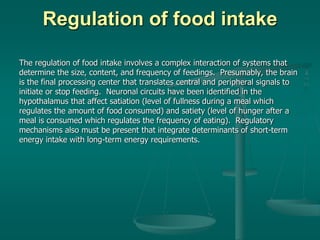
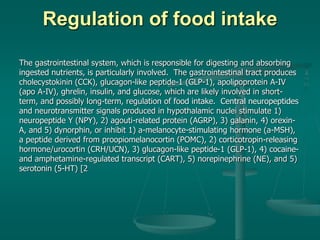
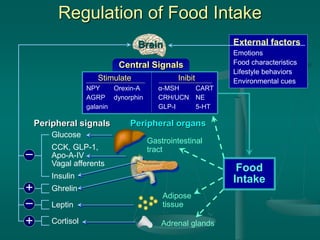
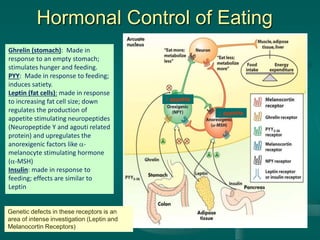
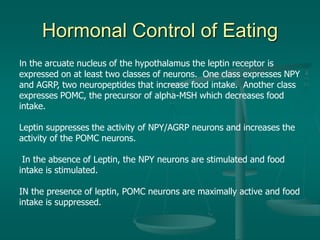
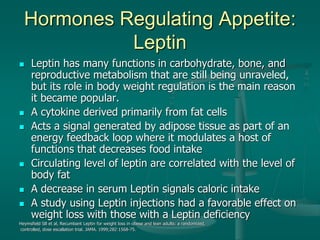
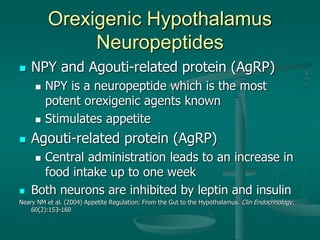
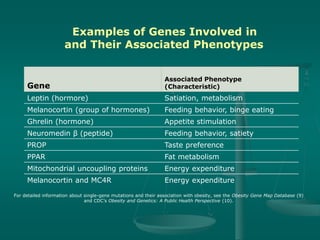
The regulation of food intake is a complex process involving both central and peripheral systems. In the brain, the hypothalamus integrates various hunger and satiety signals to control eating behaviors. Peripherally, organs like the gastrointestinal tract and adipose tissue release hormones that signal energy status to the brain. Key players in this process include the fat-derived hormone leptin, which signals satiety, and ghrelin from the stomach, which stimulates appetite. Understanding the many genetic and physiological factors involved in regulating food intake is important for developing new obesity treatments.

![Regulation of food intake
The discovery of leptin, the protein product of the ob/ob gene, in 1995 [1]
led to a marked increase in our understanding of the regulation of food
intake. Leptin is produced by fat cells, released into the circulation, and it
crosses the blood-brain barrier to bind to its receptor in the hypothalamus,
which stimulates the expression of neuropeptides and neurotransmitters that
inhibit food intake. Therefore, leptin provides a unique feedback signaling
system that transmits information regarding adipose tissue energy stores to
the central nervous system. Other peripheral organs also communicate with
the brain about energy intake through neural signaling and endocrine
pathways.](https://image.slidesharecdn.com/ppt2-160506194632/85/Genetic-Factors-II-3-320.jpg)













![우리 뇌는 식욕을 어떻게 조절할까? [2016 대한청소년정신의학회 추계학술대회]](https://cdn.slidesharecdn.com/ss_thumbnails/20161013-170201014103-thumbnail.jpg?width=640&height=640&fit=bounds)


