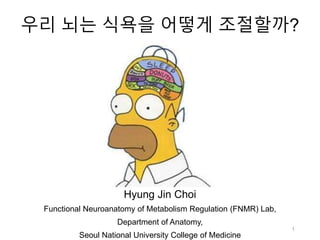

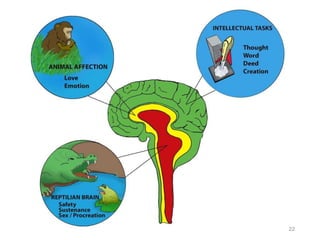

우리 뇌는 식욕을 어떻게 조절할까?
Hyung Jin Choi
Functional Neuroanatomy of Metabolism Regulation (FNMR) Lab,
Department of Anatomy,
Seoul National University College of Medicine
1
Contents
1. Motivation: What Drives Our Mind and Body?
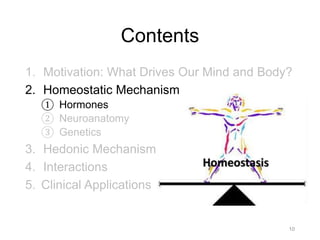
2. Homeostatic Mechanism
3. Hedonic Mechanism
4. Interactions
5. Clinical Applications
2
Contents
1. Motivation: What Drives Our Mind and Body?
2. Homeostatic Mechanism
3. Hedonic Mechanism
4. Interactions
5. Clinical Applications
3
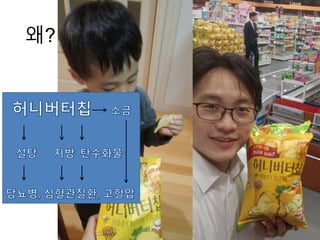
왜?
4
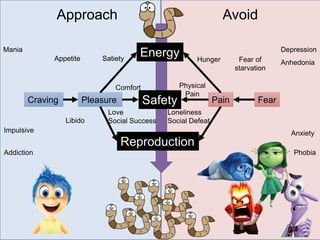
고통을 회피하는 것과 쾌락을 원하는 것은
모든 행위의 두 가지 시동장치이다.
Man can do what he wills,
but he cannot will what he
wills.
—Arthur Schopenhauer,
On the Freedom of the Will
5
고통을 회피하는 것과 쾌락을 원하는 것은
모든 행위의 두 가지 시동장치이다.
- 베르나르 베르베르 “뇌”
Pleasure Pain
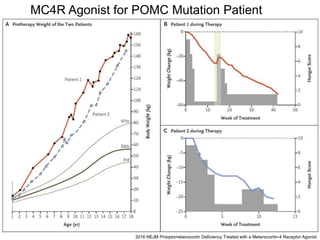
Satiety
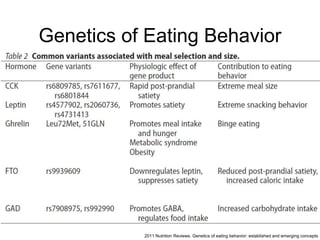
Libido
Hunger
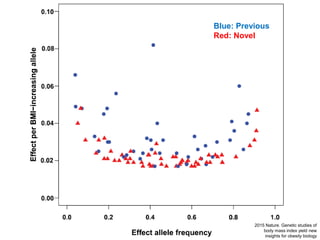
Approach Avoid
Craving Fear
Anxiety
Appetite
Comfort Physical
Pain
Loneliness
Social Defeat
Love
Social Success
Fear of
starvation
Mania Depression
Anhedonia
Impulsive
Energy
Reproduction
Safety
Addiction Phobia
6
7
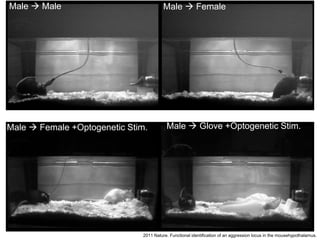
2011 Nature. Functional identification of an aggression locus in the mousehypothalamus.
Male  Male Male  Female
Male  Female +Optogenetic Stim. Male  Glove +Optogenetic Stim.
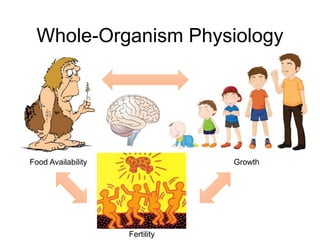
Food Availability Growth
Fertility
Whole-Organism Physiology
9
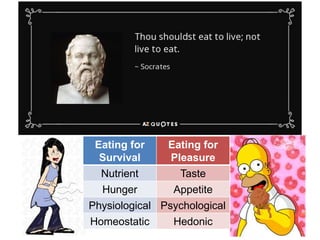
Eating for
Survival
Eating for
Pleasure
Nutrient Taste
Hunger Appetite
Physiological Psychological
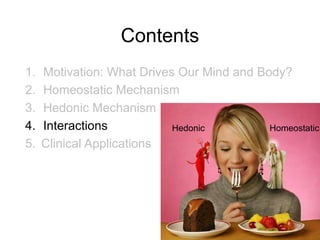
Homeostatic Hedonic
Contents
1. Motivation: What Drives Our Mind and Body?
2. Homeostatic Mechanism
① Hormones
② Neuroanatomy
③ Genetics
3. Hedonic Mechanism
4. Interactions
5. Clinical Applications
10
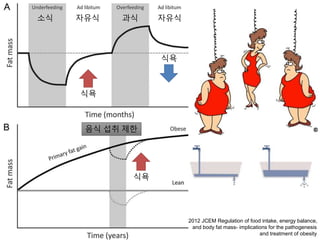
2012 JCEM Regulation of food intake, energy balance,
and body fat mass- implications for the pathogenesis
and treatment of obesity
식욕
식욕
식욕
음식 섭취 제한
소식 자유식 과식 자유식
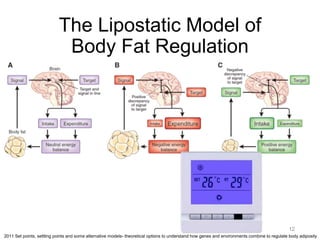
The Lipostatic Model of
Body Fat Regulation
12
2011 Set points, settling points and some alternative models- theoretical options to understand how genes and environments combine to regulate body adiposity
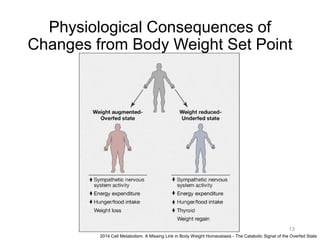
Physiological Consequences of
Changes from Body Weight Set Point
13
2014 Cell Metabolism. A Missing Link in Body Weight Homeostasis - The Catabolic Signal of the Overfed State
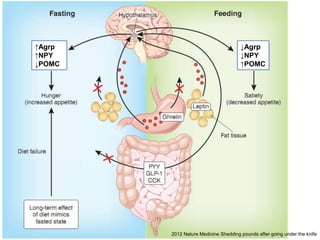
2012 Nature Medicine Shedding pounds after going under the knife
↑Agrp
↑NPY
↓POMC
↓Agrp
↓NPY
↑POMC
15
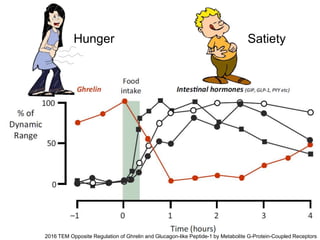
2016 TEM Opposite Regulation of Ghrelin and Glucagon-like Peptide-1 by Metabolite G-Protein-Coupled Receptors
Hunger Satiety
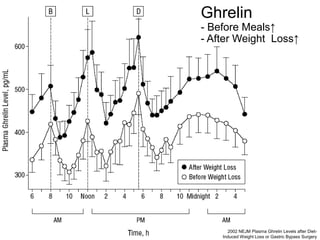
Ghrelin
- Before Meals↑
- After Weight Loss↑
2002 NEJM Plasma Ghrelin Levels after Diet-
Induced Weight Loss or Gastric Bypass Surgery
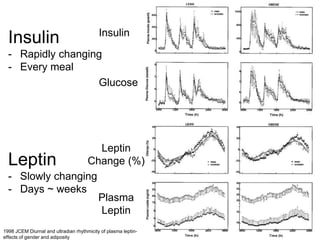
1998 JCEM Diurnal and ultradian rhythmicity of plasma leptin-
effects of gender and adiposity
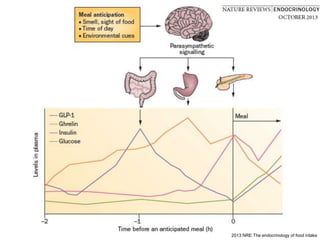
Insulin
Glucose
Leptin
Change (%)
Plasma
Leptin
Insulin
- Rapidly changing
- Every meal
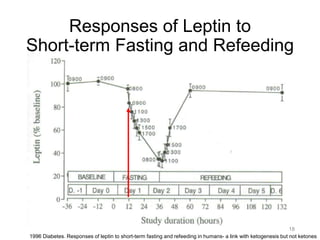
Leptin
- Slowly changing
- Days ~ weeks
Responses of Leptin to
Short-term Fasting and Refeeding
18
1996 Diabetes. Responses of leptin to short-term fasting and refeeding in humans- a link with ketogenesis but not ketones
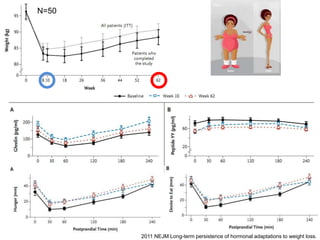
2011 NEJM Long-term persistence of hormonal adaptations to weight loss.
N=50
2013 NRE The endocrinology of food intake
Contents
1. Motivation: What Drives Our Mind and Body?
2. Homeostatic Mechanism
① Hormones
② Neuroanatomy
③ Genetics
3. Hedonic Mechanism
4. Interactions
5. Clinical Applications
21
22
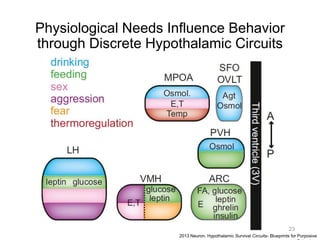
Physiological Needs Influence Behavior
through Discrete Hypothalamic Circuits
2013 Neuron. Hypothalamic Survival Circuits- Blueprints for Purposive
23
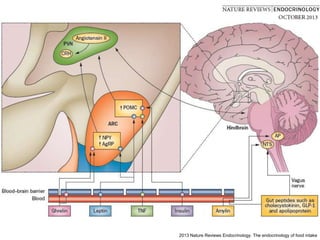
2013 Nature Reviews Endocrinology. The endocrinology of food intake
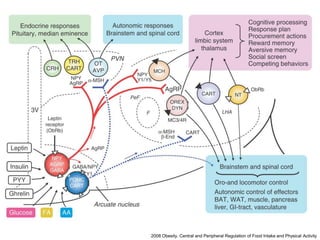
2008 Obesity. Central and Peripheral Regulation of Food Intake and Physical Activity
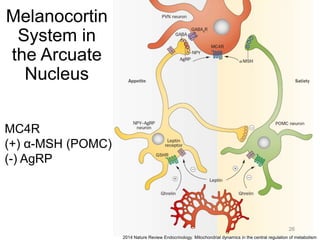
Melanocortin
System in
the Arcuate
Nucleus
26
2014 Nature Review Endocrinology. Mitochondrial dynamics in the central regulation of metabolism
MC4R
(+) α-MSH (POMC)
(-) AgRP
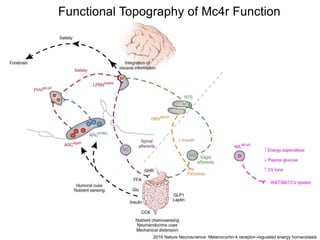
2016 Nature Neuroscience. Melanocortin-4 receptor–regulated energy homeostasis
Functional Topography of Mc4r Function
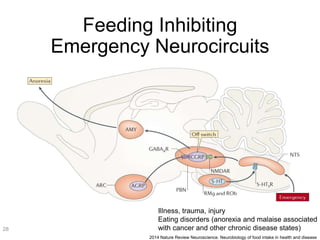
Feeding Inhibiting
Emergency Neurocircuits
28
2014 Nature Review Neuroscience. Neurobiology of food intake in health and disease
Illness, trauma, injury
Eating disorders (anorexia and malaise associated
with cancer and other chronic disease states)
Contents
1. Motivation: What Drives Our Mind and Body?
2. Homeostatic Mechanism
① Hormones
② Neuroanatomy
③ Genetics
3. Hedonic Mechanism
4. Interactions
5. Clinical Applications
29
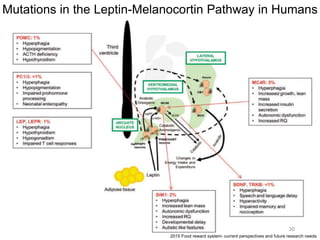
Mutations in the Leptin-Melanocortin Pathway in Humans
30
2015 Food reward system- current perspectives and future research needs
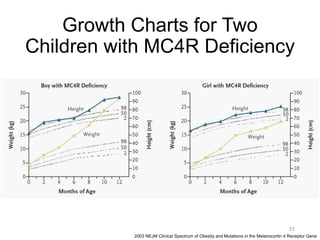
Growth Charts for Two
Children with MC4R Deficiency
31
2003 NEJM Clinical Spectrum of Obesity and Mutations in the Melanocortin 4 Receptor Gene
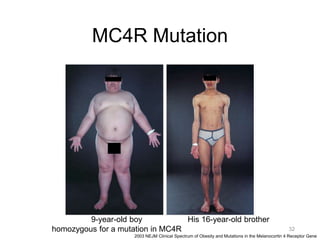
MC4R Mutation
32
2003 NEJM Clinical Spectrum of Obesity and Mutations in the Melanocortin 4 Receptor Gene
9-year-old boy
homozygous for a mutation in MC4R
His 16-year-old brother
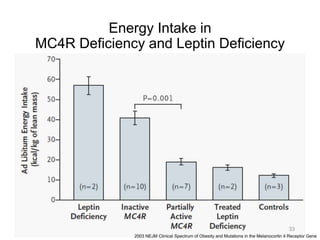
Energy Intake in
MC4R Deficiency and Leptin Deficiency
33
2003 NEJM Clinical Spectrum of Obesity and Mutations in the Melanocortin 4 Receptor Gene
2016 NEJM Proopiomelanocortin Deficiency Treated with a Melanocortin-4 Receptor Agonist
MC4R Agonist for POMC Mutation Patient
Genetics of Eating Behavior
2011 Nutrition Reviews. Genetics of eating behavior: established and emerging concepts
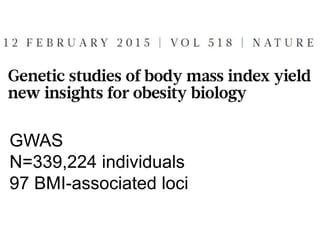
GWAS
N=339,224 individuals
97 BMI-associated loci
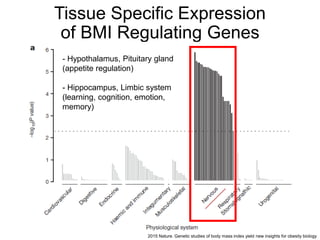
Tissue Specific Expression
of BMI Regulating Genes
2015 Nature. Genetic studies of body mass index yield new insights for obesity biology
- Hypothalamus, Pituitary gland
(appetite regulation)
- Hippocampus, Limbic system
(learning, cognition, emotion,
memory)
2015 Nature. Genetic studies of
body mass index yield new
insights for obesity biology
Blue: Previous
Red: Novel
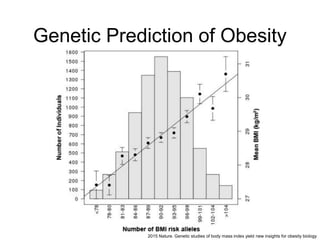
Genetic Prediction of Obesity
2015 Nature. Genetic studies of body mass index yield new insights for obesity biology
Contents
1. Motivation: What Drives Our Mind and Body?
2. Homeostatic Mechanism
3. Hedonic Mechanism
4. Interactions
5. Clinical Applications
40
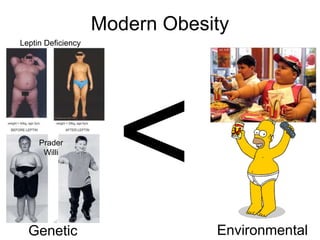
Modern Obesity
Genetic Environmental
Prader
Willi
Leptin Deficiency
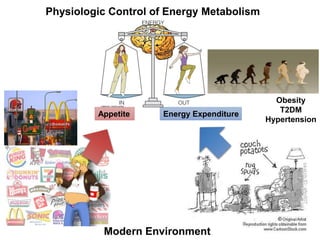
Physiologic Control of Energy Metabolism
Energy ExpenditureAppetite
Obesity
T2DM
Hypertension
Modern Environment
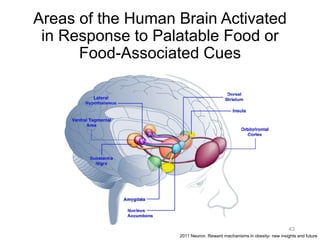
Areas of the Human Brain Activated
in Response to Palatable Food or
Food-Associated Cues
43
2011 Neuron. Reward mechanisms in obesity- new insights and future
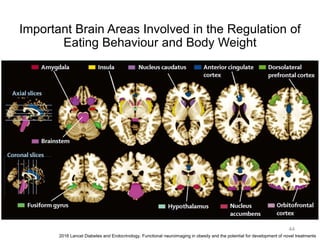
Important Brain Areas Involved in the Regulation of
Eating Behaviour and Body Weight
44
2016 Lancet Diabetes and Endocrinology. Functional neuroimaging in obesity and the potential for development of novel treatments
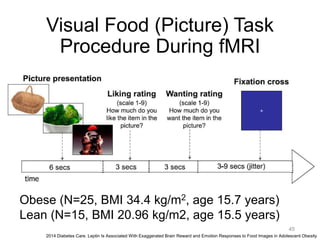
Visual Food (Picture) Task
Procedure During fMRI
2014 Diabetes Care. Leptin Is Associated With Exaggerated Brain Reward and Emotion Responses to Food Images in Adolescent Obesity
Obese (N=25, BMI 34.4 kg/m2, age 15.7 years)
Lean (N=15, BMI 20.96 kg/m2, age 15.5 years)
45
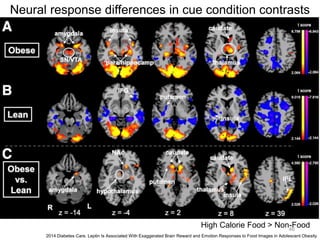
Neural response differences in cue condition contrasts
2014 Diabetes Care. Leptin Is Associated With Exaggerated Brain Reward and Emotion Responses to Food Images in Adolescent Obesity
High Calorie Food > Non-Food46
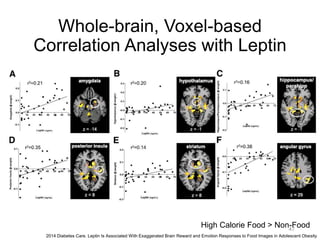
Whole-brain, Voxel-based
Correlation Analyses with Leptin
2014 Diabetes Care. Leptin Is Associated With Exaggerated Brain Reward and Emotion Responses to Food Images in Adolescent Obesity
High Calorie Food > Non-Food47
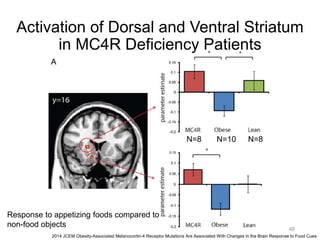
48
2014 JCEM Obesity-Associated Melanocortin-4 Receptor Mutations Are Associated With Changes in the Brain Response to Food Cues
Activation of Dorsal and Ventral Striatum
in MC4R Deficiency Patients
Response to appetizing foods compared to
non-food objects
N=8 N=10 N=8
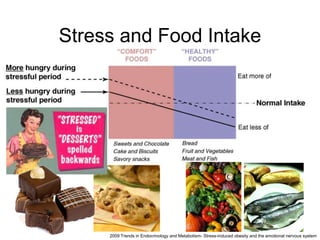
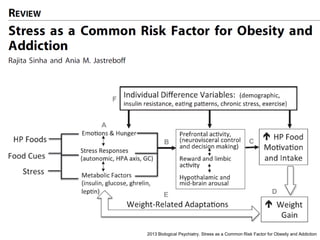
Stress and Food Intake
2009 Trends in Endocrinology and Metabolism- Stress-induced obesity and the emotional nervous system
2013 Biological Psychiatry. Stress as a Common Risk Factor for Obesity and Addiction
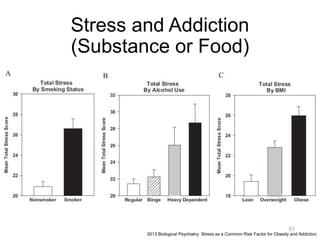
Stress and Addiction
(Substance or Food)
51
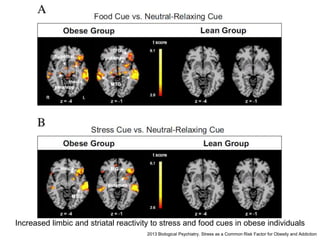
2013 Biological Psychiatry. Stress as a Common Risk Factor for Obesity and Addiction
Increased limbic and striatal reactivity to stress and food cues in obese individuals
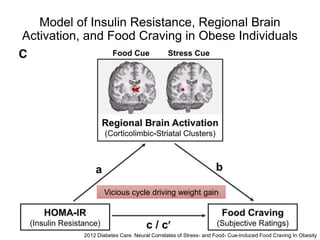
Model of Insulin Resistance, Regional Brain
Activation, and Food Craving in Obese Individuals
2012 Diabetes Care. Neural Correlates of Stress- and Food- Cue-Induced Food Craving In Obesity
Vicious cycle driving weight gain
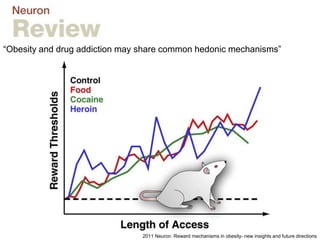
“Obesity and drug addiction may share common hedonic mechanisms”
2011 Neuron. Reward mechanisms in obesity- new insights and future directions
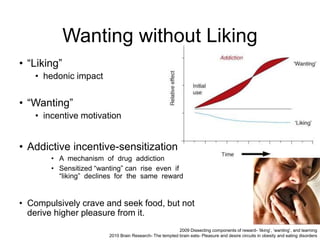
Wanting without Liking
• “Liking”
• hedonic impact
• “Wanting”
• incentive motivation
• Addictive incentive-sensitization
• A mechanism of drug addiction
• Sensitized “wanting” can rise even if
“liking” declines for the same reward
• Compulsively crave and seek food, but not
derive higher pleasure from it.
2009 Dissecting components of reward- ‘liking’, ‘wanting’, and learning
2010 Brain Research- The tempted brain eats- Pleasure and desire circuits in obesity and eating disorders
“Wanting” without “Liking”
56
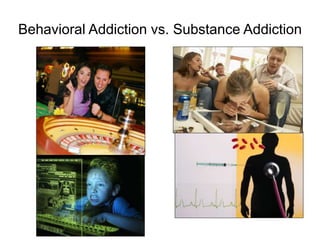
Behavioral Addiction vs. Substance Addiction
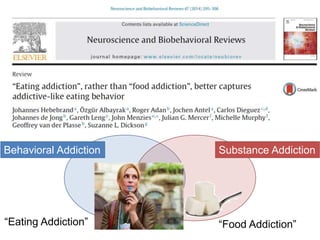
“Eating Addiction” “Food Addiction”
Behavioral Addiction Substance Addiction
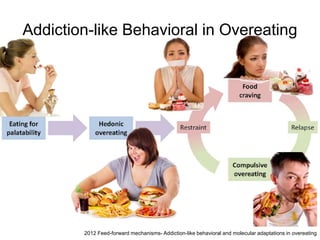
Addiction-like Behavioral in Overeating
2012 Feed-forward mechanisms- Addiction-like behavioral and molecular adaptations in overeating
Contents
1. Motivation: What Drives Our Mind and Body?
2. Homeostatic Mechanism
3. Hedonic Mechanism
4. Interactions
5. Clinical Applications
60
Hedonic Homeostatic
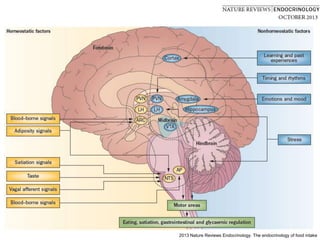
2013 Nature Reviews Endocrinology. The endocrinology of food intake
62
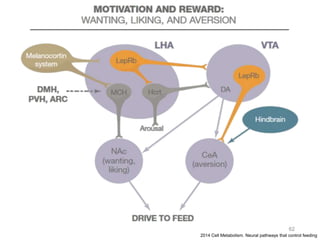
2014 Cell Metabolism. Neural pathways that control feeding
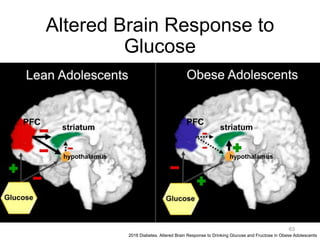
Altered Brain Response to
Glucose
63
2016 Diabetes. Altered Brain Response to Drinking Glucose and Fructose in Obese Adolescents
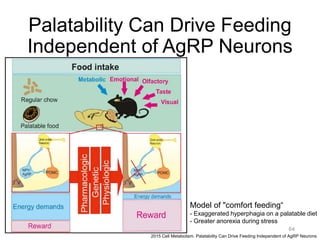
Palatability Can Drive Feeding
Independent of AgRP Neurons
64
2015 Cell Metabolism. Palatability Can Drive Feeding Independent of AgRP Neurons
Model of "comfort feeding“
- Exaggerated hyperphagia on a palatable diet
- Greater anorexia during stress
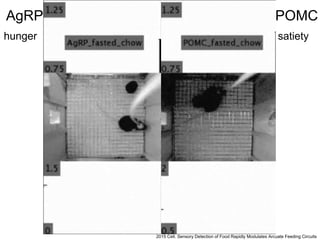
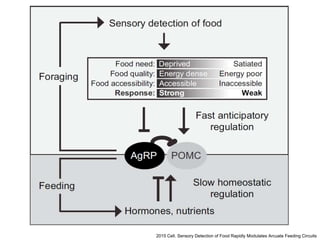
2015 Cell. Sensory Detection of Food Rapidly Modulates Arcuate Feeding Circuits
AgRP POMC
hunger satiety
2015 Cell. Sensory Detection of Food Rapidly Modulates Arcuate Feeding Circuits
2015 Cell. The Hunger Genes- Pathways to Obesity
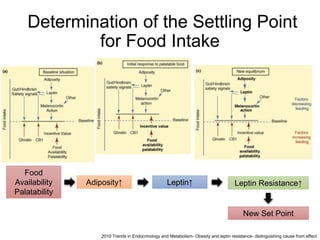
Determination of the Settling Point
for Food Intake
Food
Availability
Palatability
Leptin Resistance↑Adiposity↑ Leptin↑
2010 Trends in Endocrinology and Metabolism- Obesity and leptin resistance- distinguishing cause from effect
New Set Point
69
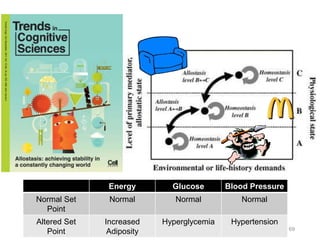
Energy Glucose Blood Pressure
Normal Set
Point
Normal Normal Normal
Altered Set
Point
Increased
Adiposity
Hyperglycemia Hypertension
Contents
1. Motivation: What Drives Our Mind and Body?
2. Homeostatic Mechanism
3. Hedonic Mechanism
4. Interactions
5. Clinical Applications
70
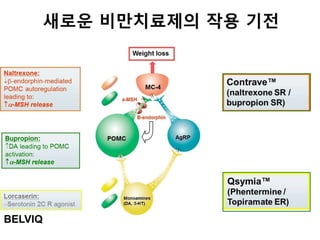
BELVIQ
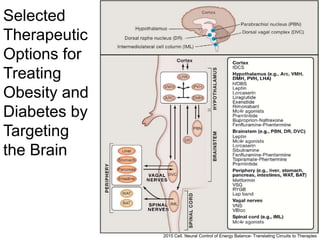
2015 Cell. Neural Control of Energy Balance- Translating Circuits to Therapies
Selected
Therapeutic
Options for
Treating
Obesity and
Diabetes by
Targeting
the Brain
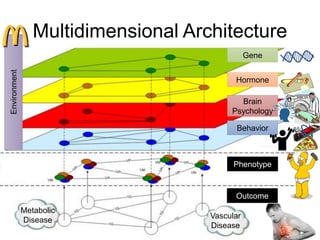
Multidimensional Architecture
73
Gene
Hormone
Brain
Psychology
Behavior
Phenotype
Outcome
Metabolic
Disease
Vascular
Disease
Environment
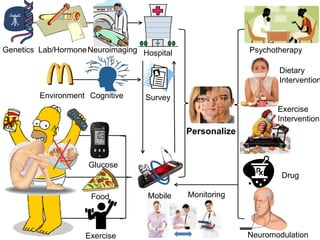
Environment Survey
NeuroimagingGenetics Lab/Hormone Hospital
Cognitive
Personalize
Psychotherapy
Dietary
Intervention
Exercise
Intervention
Food
Exercise
Glucose
Mobile
Drug
Neuromodulation
Monitoring
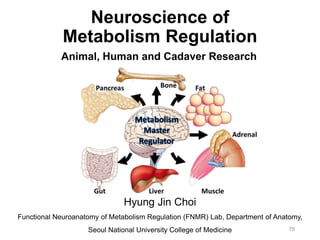
Neuroscience of
Metabolism Regulation
Hyung Jin Choi
Functional Neuroanatomy of Metabolism Regulation (FNMR) Lab, Department of Anatomy,
Seoul National University College of Medicine 75
Animal, Human and Cadaver Research
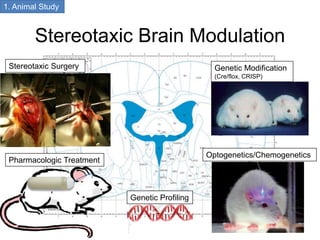
Stereotaxic Brain Modulation
Stereotaxic Surgery
Pharmacologic Treatment
Genetic Modification
(Cre/flox, CRISP)
Optogenetics/Chemogenetics
Genetic Profiling
1. Animal Study
76
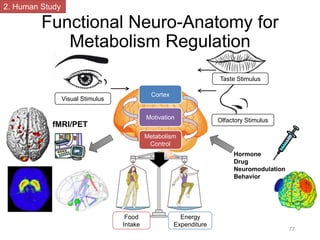
Metabolism
Control
Motivation
Cortex
Food
Intake
Energy
Expenditure
Visual Stimulus
Olfactory Stimulus
Taste Stimulus
fMRI/PET
Hormone
Drug
Neuromodulation
Behavior
2. Human Study
Functional Neuro-Anatomy for
Metabolism Regulation
77
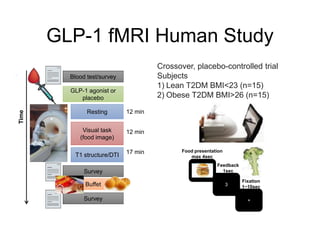
GLP-1 fMRI Human Study
3
+
Food presentation
max 4sec
Feedback
1sec
Fixation
1~10sec
Time
GLP-1 agonist or
placebo
Visual task
(food image)
Blood test/survey
Resting
T1 structure/DTI 17 min
12 min
12 min
Survey
Crossover, placebo-controlled trial
Subjects
1) Lean T2DM BMI<23 (n=15)
2) Obese T2DM BMI>26 (n=15)
Survey
Buffet
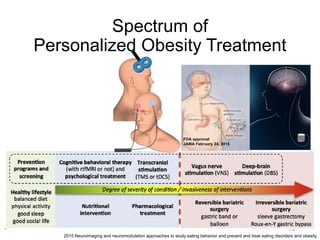
Spectrum of
Personalized Obesity Treatment
79
FDA approval
JAMA February 24, 2015
2015 Neuroimaging and neuromodulation approaches to study eating behavior and prevent and treat eating disorders and obesity
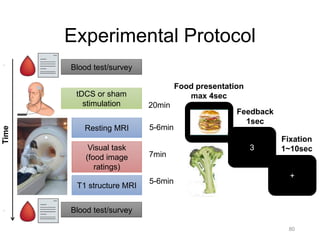
Experimental Protocol
3
+
Food presentation
max 4sec
Feedback
1sec
Fixation
1~10sec
Time
tDCS or sham
stimulation
Visual task
(food image
ratings)
Blood test/survey
Resting MRI
T1 structure MRI
5-6min
7min
5-6min
20min
Blood test/survey
80
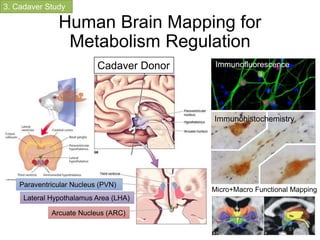
Human Brain Mapping for
Metabolism Regulation
Paraventricular Nucleus (PVN)
Lateral Hypothalamus Area (LHA)
Arcuate Nucleus (ARC)
Cadaver Donor
3. Cadaver Study
Immunofluorescence
Immunohistochemistry
Micro+Macro Functional Mapping
81
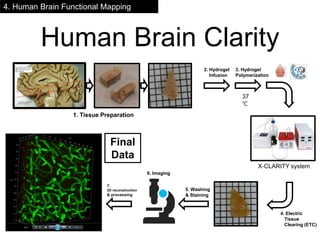
1. Tissue Preparation
2. Hydrogel
Infusion
3. Hydrogel
Polymerization
37
℃
X-CLARITY system
4. Electric
Tissue
Clearing (ETC)
5. Washing
& Staining
6. Imaging
7.
3D reconstruction
& processing
Final
Data
Human Brain Clarity
4. Human Brain Functional Mapping

우리 뇌는 식욕을 어떻게 조절할까? [2016 대한청소년정신의학회 추계학술대회]

  • 1.
    우리 뇌는 식욕을어떻게 조절할까? Hyung Jin Choi Functional Neuroanatomy of Metabolism Regulation (FNMR) Lab, Department of Anatomy, Seoul National University College of Medicine 1
  • 2.
    Contents 1. Motivation: WhatDrives Our Mind and Body? 2. Homeostatic Mechanism 3. Hedonic Mechanism 4. Interactions 5. Clinical Applications 2
  • 3.
    Contents 1. Motivation: WhatDrives Our Mind and Body? 2. Homeostatic Mechanism 3. Hedonic Mechanism 4. Interactions 5. Clinical Applications 3
  • 4.
  • 5.
    고통을 회피하는 것과쾌락을 원하는 것은 모든 행위의 두 가지 시동장치이다. Man can do what he wills, but he cannot will what he wills. —Arthur Schopenhauer, On the Freedom of the Will 5 고통을 회피하는 것과 쾌락을 원하는 것은 모든 행위의 두 가지 시동장치이다. - 베르나르 베르베르 “뇌”
  • 6.
    Pleasure Pain Satiety Libido Hunger Approach Avoid CravingFear Anxiety Appetite Comfort Physical Pain Loneliness Social Defeat Love Social Success Fear of starvation Mania Depression Anhedonia Impulsive Energy Reproduction Safety Addiction Phobia 6
  • 7.
    7 2011 Nature. Functionalidentification of an aggression locus in the mousehypothalamus. Male  Male Male  Female Male  Female +Optogenetic Stim. Male  Glove +Optogenetic Stim.
  • 8.
  • 9.
    9 Eating for Survival Eating for Pleasure NutrientTaste Hunger Appetite Physiological Psychological Homeostatic Hedonic
  • 10.
    Contents 1. Motivation: WhatDrives Our Mind and Body? 2. Homeostatic Mechanism ① Hormones ② Neuroanatomy ③ Genetics 3. Hedonic Mechanism 4. Interactions 5. Clinical Applications 10
  • 11.
    2012 JCEM Regulationof food intake, energy balance, and body fat mass- implications for the pathogenesis and treatment of obesity 식욕 식욕 식욕 음식 섭취 제한 소식 자유식 과식 자유식
  • 12.
    The Lipostatic Modelof Body Fat Regulation 12 2011 Set points, settling points and some alternative models- theoretical options to understand how genes and environments combine to regulate body adiposity
  • 13.
    Physiological Consequences of Changesfrom Body Weight Set Point 13 2014 Cell Metabolism. A Missing Link in Body Weight Homeostasis - The Catabolic Signal of the Overfed State
  • 14.
    2012 Nature MedicineShedding pounds after going under the knife ↑Agrp ↑NPY ↓POMC ↓Agrp ↓NPY ↑POMC
  • 15.
    15 2016 TEM OppositeRegulation of Ghrelin and Glucagon-like Peptide-1 by Metabolite G-Protein-Coupled Receptors Hunger Satiety
  • 16.
    Ghrelin - Before Meals↑ -After Weight Loss↑ 2002 NEJM Plasma Ghrelin Levels after Diet- Induced Weight Loss or Gastric Bypass Surgery
  • 17.
    1998 JCEM Diurnaland ultradian rhythmicity of plasma leptin- effects of gender and adiposity Insulin Glucose Leptin Change (%) Plasma Leptin Insulin - Rapidly changing - Every meal Leptin - Slowly changing - Days ~ weeks
  • 18.
    Responses of Leptinto Short-term Fasting and Refeeding 18 1996 Diabetes. Responses of leptin to short-term fasting and refeeding in humans- a link with ketogenesis but not ketones
  • 19.
    2011 NEJM Long-termpersistence of hormonal adaptations to weight loss. N=50
  • 20.
    2013 NRE Theendocrinology of food intake
  • 21.
    Contents 1. Motivation: WhatDrives Our Mind and Body? 2. Homeostatic Mechanism ① Hormones ② Neuroanatomy ③ Genetics 3. Hedonic Mechanism 4. Interactions 5. Clinical Applications 21
  • 22.
  • 23.
    Physiological Needs InfluenceBehavior through Discrete Hypothalamic Circuits 2013 Neuron. Hypothalamic Survival Circuits- Blueprints for Purposive 23
  • 24.
    2013 Nature ReviewsEndocrinology. The endocrinology of food intake
  • 25.
    2008 Obesity. Centraland Peripheral Regulation of Food Intake and Physical Activity
  • 26.
    Melanocortin System in the Arcuate Nucleus 26 2014Nature Review Endocrinology. Mitochondrial dynamics in the central regulation of metabolism MC4R (+) α-MSH (POMC) (-) AgRP
  • 27.
    2016 Nature Neuroscience.Melanocortin-4 receptor–regulated energy homeostasis Functional Topography of Mc4r Function
  • 28.
    Feeding Inhibiting Emergency Neurocircuits 28 2014Nature Review Neuroscience. Neurobiology of food intake in health and disease Illness, trauma, injury Eating disorders (anorexia and malaise associated with cancer and other chronic disease states)
  • 29.
    Contents 1. Motivation: WhatDrives Our Mind and Body? 2. Homeostatic Mechanism ① Hormones ② Neuroanatomy ③ Genetics 3. Hedonic Mechanism 4. Interactions 5. Clinical Applications 29
  • 30.
    Mutations in theLeptin-Melanocortin Pathway in Humans 30 2015 Food reward system- current perspectives and future research needs
  • 31.
    Growth Charts forTwo Children with MC4R Deficiency 31 2003 NEJM Clinical Spectrum of Obesity and Mutations in the Melanocortin 4 Receptor Gene
  • 32.
    MC4R Mutation 32 2003 NEJMClinical Spectrum of Obesity and Mutations in the Melanocortin 4 Receptor Gene 9-year-old boy homozygous for a mutation in MC4R His 16-year-old brother
  • 33.
    Energy Intake in MC4RDeficiency and Leptin Deficiency 33 2003 NEJM Clinical Spectrum of Obesity and Mutations in the Melanocortin 4 Receptor Gene
  • 34.
    2016 NEJM ProopiomelanocortinDeficiency Treated with a Melanocortin-4 Receptor Agonist MC4R Agonist for POMC Mutation Patient
  • 35.
    Genetics of EatingBehavior 2011 Nutrition Reviews. Genetics of eating behavior: established and emerging concepts
  • 36.
  • 37.
    Tissue Specific Expression ofBMI Regulating Genes 2015 Nature. Genetic studies of body mass index yield new insights for obesity biology - Hypothalamus, Pituitary gland (appetite regulation) - Hippocampus, Limbic system (learning, cognition, emotion, memory)
  • 38.
    2015 Nature. Geneticstudies of body mass index yield new insights for obesity biology Blue: Previous Red: Novel
  • 39.
    Genetic Prediction ofObesity 2015 Nature. Genetic studies of body mass index yield new insights for obesity biology
  • 40.
    Contents 1. Motivation: WhatDrives Our Mind and Body? 2. Homeostatic Mechanism 3. Hedonic Mechanism 4. Interactions 5. Clinical Applications 40
  • 41.
  • 42.
    Physiologic Control ofEnergy Metabolism Energy ExpenditureAppetite Obesity T2DM Hypertension Modern Environment
  • 43.
    Areas of theHuman Brain Activated in Response to Palatable Food or Food-Associated Cues 43 2011 Neuron. Reward mechanisms in obesity- new insights and future
  • 44.
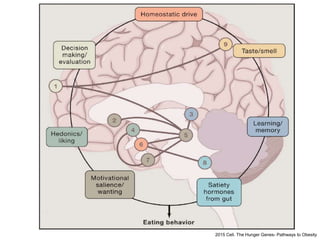
    Important Brain AreasInvolved in the Regulation of Eating Behaviour and Body Weight 44 2016 Lancet Diabetes and Endocrinology. Functional neuroimaging in obesity and the potential for development of novel treatments
  • 45.
    Visual Food (Picture)Task Procedure During fMRI 2014 Diabetes Care. Leptin Is Associated With Exaggerated Brain Reward and Emotion Responses to Food Images in Adolescent Obesity Obese (N=25, BMI 34.4 kg/m2, age 15.7 years) Lean (N=15, BMI 20.96 kg/m2, age 15.5 years) 45
  • 46.
    Neural response differencesin cue condition contrasts 2014 Diabetes Care. Leptin Is Associated With Exaggerated Brain Reward and Emotion Responses to Food Images in Adolescent Obesity High Calorie Food > Non-Food46
  • 47.
    Whole-brain, Voxel-based Correlation Analyseswith Leptin 2014 Diabetes Care. Leptin Is Associated With Exaggerated Brain Reward and Emotion Responses to Food Images in Adolescent Obesity High Calorie Food > Non-Food47
  • 48.
    48 2014 JCEM Obesity-AssociatedMelanocortin-4 Receptor Mutations Are Associated With Changes in the Brain Response to Food Cues Activation of Dorsal and Ventral Striatum in MC4R Deficiency Patients Response to appetizing foods compared to non-food objects N=8 N=10 N=8
  • 49.
    Stress and FoodIntake 2009 Trends in Endocrinology and Metabolism- Stress-induced obesity and the emotional nervous system
  • 50.
    2013 Biological Psychiatry.Stress as a Common Risk Factor for Obesity and Addiction
  • 51.
    Stress and Addiction (Substanceor Food) 51 2013 Biological Psychiatry. Stress as a Common Risk Factor for Obesity and Addiction
  • 52.
    2013 Biological Psychiatry.Stress as a Common Risk Factor for Obesity and Addiction Increased limbic and striatal reactivity to stress and food cues in obese individuals
  • 53.
    Model of InsulinResistance, Regional Brain Activation, and Food Craving in Obese Individuals 2012 Diabetes Care. Neural Correlates of Stress- and Food- Cue-Induced Food Craving In Obesity Vicious cycle driving weight gain
  • 54.
    “Obesity and drugaddiction may share common hedonic mechanisms” 2011 Neuron. Reward mechanisms in obesity- new insights and future directions
  • 55.
    Wanting without Liking •“Liking” • hedonic impact • “Wanting” • incentive motivation • Addictive incentive-sensitization • A mechanism of drug addiction • Sensitized “wanting” can rise even if “liking” declines for the same reward • Compulsively crave and seek food, but not derive higher pleasure from it. 2009 Dissecting components of reward- ‘liking’, ‘wanting’, and learning 2010 Brain Research- The tempted brain eats- Pleasure and desire circuits in obesity and eating disorders
  • 56.
  • 57.
    Behavioral Addiction vs.Substance Addiction
  • 58.
    “Eating Addiction” “FoodAddiction” Behavioral Addiction Substance Addiction
  • 59.
    Addiction-like Behavioral inOvereating 2012 Feed-forward mechanisms- Addiction-like behavioral and molecular adaptations in overeating
  • 60.
    Contents 1. Motivation: WhatDrives Our Mind and Body? 2. Homeostatic Mechanism 3. Hedonic Mechanism 4. Interactions 5. Clinical Applications 60 Hedonic Homeostatic
  • 61.
    2013 Nature ReviewsEndocrinology. The endocrinology of food intake
  • 62.
    62 2014 Cell Metabolism.Neural pathways that control feeding
  • 63.
    Altered Brain Responseto Glucose 63 2016 Diabetes. Altered Brain Response to Drinking Glucose and Fructose in Obese Adolescents
  • 64.
    Palatability Can DriveFeeding Independent of AgRP Neurons 64 2015 Cell Metabolism. Palatability Can Drive Feeding Independent of AgRP Neurons Model of "comfort feeding“ - Exaggerated hyperphagia on a palatable diet - Greater anorexia during stress
  • 65.
    2015 Cell. SensoryDetection of Food Rapidly Modulates Arcuate Feeding Circuits AgRP POMC hunger satiety
  • 66.
    2015 Cell. SensoryDetection of Food Rapidly Modulates Arcuate Feeding Circuits
  • 67.
    2015 Cell. TheHunger Genes- Pathways to Obesity
  • 68.
    Determination of theSettling Point for Food Intake Food Availability Palatability Leptin Resistance↑Adiposity↑ Leptin↑ 2010 Trends in Endocrinology and Metabolism- Obesity and leptin resistance- distinguishing cause from effect New Set Point
  • 69.
    69 Energy Glucose BloodPressure Normal Set Point Normal Normal Normal Altered Set Point Increased Adiposity Hyperglycemia Hypertension
  • 70.
    Contents 1. Motivation: WhatDrives Our Mind and Body? 2. Homeostatic Mechanism 3. Hedonic Mechanism 4. Interactions 5. Clinical Applications 70
  • 71.
  • 72.
    2015 Cell. NeuralControl of Energy Balance- Translating Circuits to Therapies Selected Therapeutic Options for Treating Obesity and Diabetes by Targeting the Brain
  • 73.
  • 74.
    Environment Survey NeuroimagingGenetics Lab/HormoneHospital Cognitive Personalize Psychotherapy Dietary Intervention Exercise Intervention Food Exercise Glucose Mobile Drug Neuromodulation Monitoring
  • 75.
    Neuroscience of Metabolism Regulation HyungJin Choi Functional Neuroanatomy of Metabolism Regulation (FNMR) Lab, Department of Anatomy, Seoul National University College of Medicine 75 Animal, Human and Cadaver Research
  • 76.
    Stereotaxic Brain Modulation StereotaxicSurgery Pharmacologic Treatment Genetic Modification (Cre/flox, CRISP) Optogenetics/Chemogenetics Genetic Profiling 1. Animal Study 76
  • 77.
    Metabolism Control Motivation Cortex Food Intake Energy Expenditure Visual Stimulus Olfactory Stimulus TasteStimulus fMRI/PET Hormone Drug Neuromodulation Behavior 2. Human Study Functional Neuro-Anatomy for Metabolism Regulation 77
  • 78.
    GLP-1 fMRI HumanStudy 3 + Food presentation max 4sec Feedback 1sec Fixation 1~10sec Time GLP-1 agonist or placebo Visual task (food image) Blood test/survey Resting T1 structure/DTI 17 min 12 min 12 min Survey Crossover, placebo-controlled trial Subjects 1) Lean T2DM BMI<23 (n=15) 2) Obese T2DM BMI>26 (n=15) Survey Buffet
  • 79.
    Spectrum of Personalized ObesityTreatment 79 FDA approval JAMA February 24, 2015 2015 Neuroimaging and neuromodulation approaches to study eating behavior and prevent and treat eating disorders and obesity
  • 80.
    Experimental Protocol 3 + Food presentation max4sec Feedback 1sec Fixation 1~10sec Time tDCS or sham stimulation Visual task (food image ratings) Blood test/survey Resting MRI T1 structure MRI 5-6min 7min 5-6min 20min Blood test/survey 80
  • 81.
    Human Brain Mappingfor Metabolism Regulation Paraventricular Nucleus (PVN) Lateral Hypothalamus Area (LHA) Arcuate Nucleus (ARC) Cadaver Donor 3. Cadaver Study Immunofluorescence Immunohistochemistry Micro+Macro Functional Mapping 81
  • 82.
    1. Tissue Preparation 2.Hydrogel Infusion 3. Hydrogel Polymerization 37 ℃ X-CLARITY system 4. Electric Tissue Clearing (ETC) 5. Washing & Staining 6. Imaging 7. 3D reconstruction & processing Final Data Human Brain Clarity 4. Human Brain Functional Mapping