Success rate of IVF is only 20% 
www.dnaindia.com
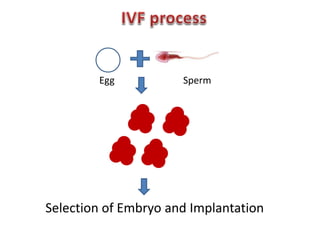
Egg Sperm 
Selection of Embryo and Implantation
Chromosomal abnormalities often 
neglected at the time of 
embryo selection 
Conventional methods of embryo selection 
• Embryoscopy 
• Physical identification 
• Morphological characteristics
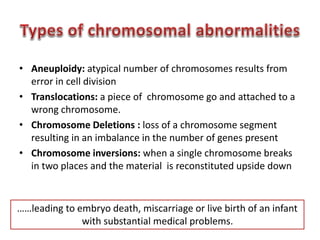
• Aneuploidy: atypical number of chromosomes results from 
error in cell division 
• Translocations: a piece of chromosome go and attached to a 
wrong chromosome. 
• Chromosome Deletions : loss of a chromosome segment 
resulting in an imbalance in the number of genes present 
• Chromosome inversions: when a single chromosome breaks 
in two places and the material is reconstituted upside down 
……leading to embryo death, miscarriage or live birth of an infant 
with substantial medical problems.
• A healthy baby has 46 chromosomes in each cell of 
the body 
• Chromosomal abnormality refers to an atypical 
number of chromosomes and is generally caused by 
an error in cell division in either the egg or sperm or 
in the first few days of embryo development.
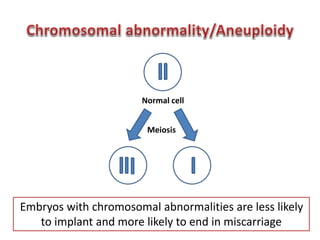
Normal cell 
Meiosis 
Embryos with chromosomal abnormalities are less likely 
to implant and more likely to end in miscarriage
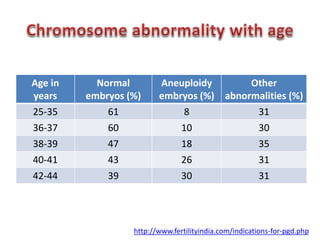
Age in 
years 
Normal 
embryos (%) 
Aneuploidy 
embryos (%) 
Other 
abnormalities (%) 
25-35 61 8 31 
36-37 60 10 30 
38-39 47 18 35 
40-41 43 26 31 
42-44 39 30 31 
http://www.fertilityindia.com/indications-for-pgd.php
• Decreased embryo transfer 
• Implantation failure, 
• Recurrent pregnancy loss, or miscarriage 
• Birth defects 
• Mental or physical problems in offspring
Babies born with chromosome abnormalities 
have mental retardation and / or birth defects 
Ex: Down syndrome
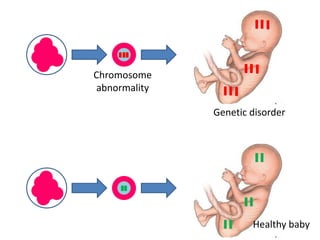
Chromosome 
abnormality 
Genetic disorder 
Healthy baby
• Age more than 35 years (chances of embryo transfer 
(<75%) 
• Couples with a family history of X-linked disorders 
(25% risk of having an affected embryo) 
• Carriers of autosomal recessive diseases: means 
two copies of an abnormal gene (the risk an embryo 
may be affected is 25%.) 
• Carriers of autosomal dominant diseases: abnormal 
gene in one parent (the risk an embryo may be 
affected is 50%.)
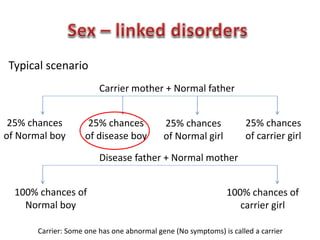
Typical scenario 
Carrier mother + Normal father 
25% chances 
of Normal boy 
25% chances 
of disease boy 
25% chances 
of Normal girl 
25% chances 
of carrier girl 
Disease father + Normal mother 
100% chances of 
Normal boy 
100% chances of 
carrier girl 
Carrier: Some one has one abnormal gene (No symptoms) is called a carrier
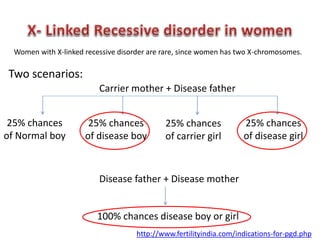
Women with X-linked recessive disorder are rare, since women has two X-chromosomes. 
Two scenarios: 
Carrier mother + Disease father 
25% chances 
of Normal boy 
25% chances 
of disease boy 
25% chances 
of carrier girl 
25% chances 
of disease girl 
Disease father + Disease mother 
100% chances disease boy or girl 
http://www.fertilityindia.com/indications-for-pgd.php
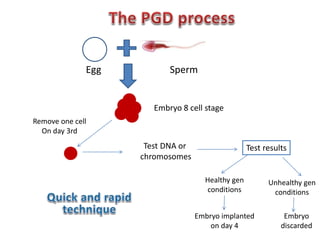
Egg Sperm 
Remove one cell 
On day 3rd 
Embryo 8 cell stage 
Test DNA or 
chromosomes 
Test results 
Healthy gen 
conditions 
Unhealthy gen 
conditions 
Embryo implanted 
on day 4 
Embryo 
discarded
• Couples with advanced maternal age (>35) 
• Unexplained infertility 
• Y-chromosome deletion: found in 5-20% men with low sperm 
count 
• Couples who have experienced repeated miscarriages 
• Couples who have experienced repeated IVF failures 
• Couples who have previously had a pregnancy with a 
chromosomal abnormality 
• Couples at risk of having children with a particular X-linked 
disorder 
• couples where one partner carries a balanced chromosomal 
translocations
• In only few centers it is available in India 
• Most well known center is Jaslok Hospital, Mumbai 
• It takes 3 days 
• It is limited to chromosomes 13, 18, 21 only
• PGD is highly accurate across all chromosomes 
• It yields quick results which allows for a fresh embryo 
transfer on day 4 when it is tested on day 3 
• PGD prevents transmission of genetic disorders onto 
future generations.
• There are two main types of preimplantation 
genetic screening 
– Aneuploidy screening by fluorescent in situ 
hybridization (FISH) and 
– Aneuploidy screening by Molecular Array 
Comparative Genomic Hybridization (CGH-24)
• It screens the most common chromosomes seen in 
miscarriages and live born abnormality disorders like 
Down syndrome-chromosomes 13, 16, 18, 21 and 22. 
• When one parent is carrier of heritable X-linked disease 
such as Muscular dystrophy, Hemophilia A, or 
ectodermal Dysplasia. 
• FISH examines chromosomes X and Y plus chromosomes 
13, 18, and 21
• This is single cell technology to test aneuploidy, 
translocations, inversion and chromosomal abnormality 
• It is unique and it can make thousands of independent 
measurements of each chromosome at molecular level 
• No freezing and ICISI is required 
• It is automated and high degree of results accuracy 
• It gives the results with 20 hours than the standard 36-48 
hours
• On day 3rd: Biopsy of a blastomere from an embryo 
at IVF center 
– The fixation of blastomere on slides for FISH analysis or 
transfer into PCR tube with lysis buffer for CGH analysis 
– Test for FISH or CGH at genetic center : results within 12-20 
hours 
• Day 4: Embryo transfer on day 4

Pgd 121115232648-phpapp02 (1)

  • 2.
    Success rate ofIVF is only 20% www.dnaindia.com
  • 3.
    Egg Sperm Selectionof Embryo and Implantation
  • 4.
    Chromosomal abnormalities often neglected at the time of embryo selection Conventional methods of embryo selection • Embryoscopy • Physical identification • Morphological characteristics
  • 5.
    • Aneuploidy: atypicalnumber of chromosomes results from error in cell division • Translocations: a piece of chromosome go and attached to a wrong chromosome. • Chromosome Deletions : loss of a chromosome segment resulting in an imbalance in the number of genes present • Chromosome inversions: when a single chromosome breaks in two places and the material is reconstituted upside down ……leading to embryo death, miscarriage or live birth of an infant with substantial medical problems.
  • 6.
    • A healthybaby has 46 chromosomes in each cell of the body • Chromosomal abnormality refers to an atypical number of chromosomes and is generally caused by an error in cell division in either the egg or sperm or in the first few days of embryo development.
  • 7.
    Normal cell Meiosis Embryos with chromosomal abnormalities are less likely to implant and more likely to end in miscarriage
  • 8.
    Age in years Normal embryos (%) Aneuploidy embryos (%) Other abnormalities (%) 25-35 61 8 31 36-37 60 10 30 38-39 47 18 35 40-41 43 26 31 42-44 39 30 31 http://www.fertilityindia.com/indications-for-pgd.php
  • 9.
    • Decreased embryotransfer • Implantation failure, • Recurrent pregnancy loss, or miscarriage • Birth defects • Mental or physical problems in offspring
  • 10.
    Babies born withchromosome abnormalities have mental retardation and / or birth defects Ex: Down syndrome
  • 11.
    Chromosome abnormality Geneticdisorder Healthy baby
  • 12.
    • Age morethan 35 years (chances of embryo transfer (<75%) • Couples with a family history of X-linked disorders (25% risk of having an affected embryo) • Carriers of autosomal recessive diseases: means two copies of an abnormal gene (the risk an embryo may be affected is 25%.) • Carriers of autosomal dominant diseases: abnormal gene in one parent (the risk an embryo may be affected is 50%.)
  • 13.
    Typical scenario Carriermother + Normal father 25% chances of Normal boy 25% chances of disease boy 25% chances of Normal girl 25% chances of carrier girl Disease father + Normal mother 100% chances of Normal boy 100% chances of carrier girl Carrier: Some one has one abnormal gene (No symptoms) is called a carrier
  • 14.
    Women with X-linkedrecessive disorder are rare, since women has two X-chromosomes. Two scenarios: Carrier mother + Disease father 25% chances of Normal boy 25% chances of disease boy 25% chances of carrier girl 25% chances of disease girl Disease father + Disease mother 100% chances disease boy or girl http://www.fertilityindia.com/indications-for-pgd.php
  • 16.
    Egg Sperm Removeone cell On day 3rd Embryo 8 cell stage Test DNA or chromosomes Test results Healthy gen conditions Unhealthy gen conditions Embryo implanted on day 4 Embryo discarded
  • 17.
    • Couples withadvanced maternal age (>35) • Unexplained infertility • Y-chromosome deletion: found in 5-20% men with low sperm count • Couples who have experienced repeated miscarriages • Couples who have experienced repeated IVF failures • Couples who have previously had a pregnancy with a chromosomal abnormality • Couples at risk of having children with a particular X-linked disorder • couples where one partner carries a balanced chromosomal translocations
  • 18.
    • In onlyfew centers it is available in India • Most well known center is Jaslok Hospital, Mumbai • It takes 3 days • It is limited to chromosomes 13, 18, 21 only
  • 19.
    • PGD ishighly accurate across all chromosomes • It yields quick results which allows for a fresh embryo transfer on day 4 when it is tested on day 3 • PGD prevents transmission of genetic disorders onto future generations.
  • 21.
    • There aretwo main types of preimplantation genetic screening – Aneuploidy screening by fluorescent in situ hybridization (FISH) and – Aneuploidy screening by Molecular Array Comparative Genomic Hybridization (CGH-24)
  • 22.
    • It screensthe most common chromosomes seen in miscarriages and live born abnormality disorders like Down syndrome-chromosomes 13, 16, 18, 21 and 22. • When one parent is carrier of heritable X-linked disease such as Muscular dystrophy, Hemophilia A, or ectodermal Dysplasia. • FISH examines chromosomes X and Y plus chromosomes 13, 18, and 21
  • 23.
    • This issingle cell technology to test aneuploidy, translocations, inversion and chromosomal abnormality • It is unique and it can make thousands of independent measurements of each chromosome at molecular level • No freezing and ICISI is required • It is automated and high degree of results accuracy • It gives the results with 20 hours than the standard 36-48 hours
  • 24.
    • On day3rd: Biopsy of a blastomere from an embryo at IVF center – The fixation of blastomere on slides for FISH analysis or transfer into PCR tube with lysis buffer for CGH analysis – Test for FISH or CGH at genetic center : results within 12-20 hours • Day 4: Embryo transfer on day 4