GENETIC CODE
INTRODUCTION
The genetic code is a set of three-letter
combinations of nucleotides called codons,
each of which corresponds to a specific amino
acid or stop signal.
In other words, genetic code is the nucleotide
sequence of the base on DNA which is
translated into a sequence of amino acids of
the protein to be synthesized.
• The genetic code can be defined as the set of
certain rules using which the living cells
translate the information encoded within
genetic material (DNA or mRNA sequences).
The ribosomes are responsible to accomplish
the process of translation. They link the amino
acids in an mRNA-specified (messenger RNA)
order using tRNA (transfer RNA ) molecules to
carry amino acids and to read the mRNA three
nucleotides at a time.
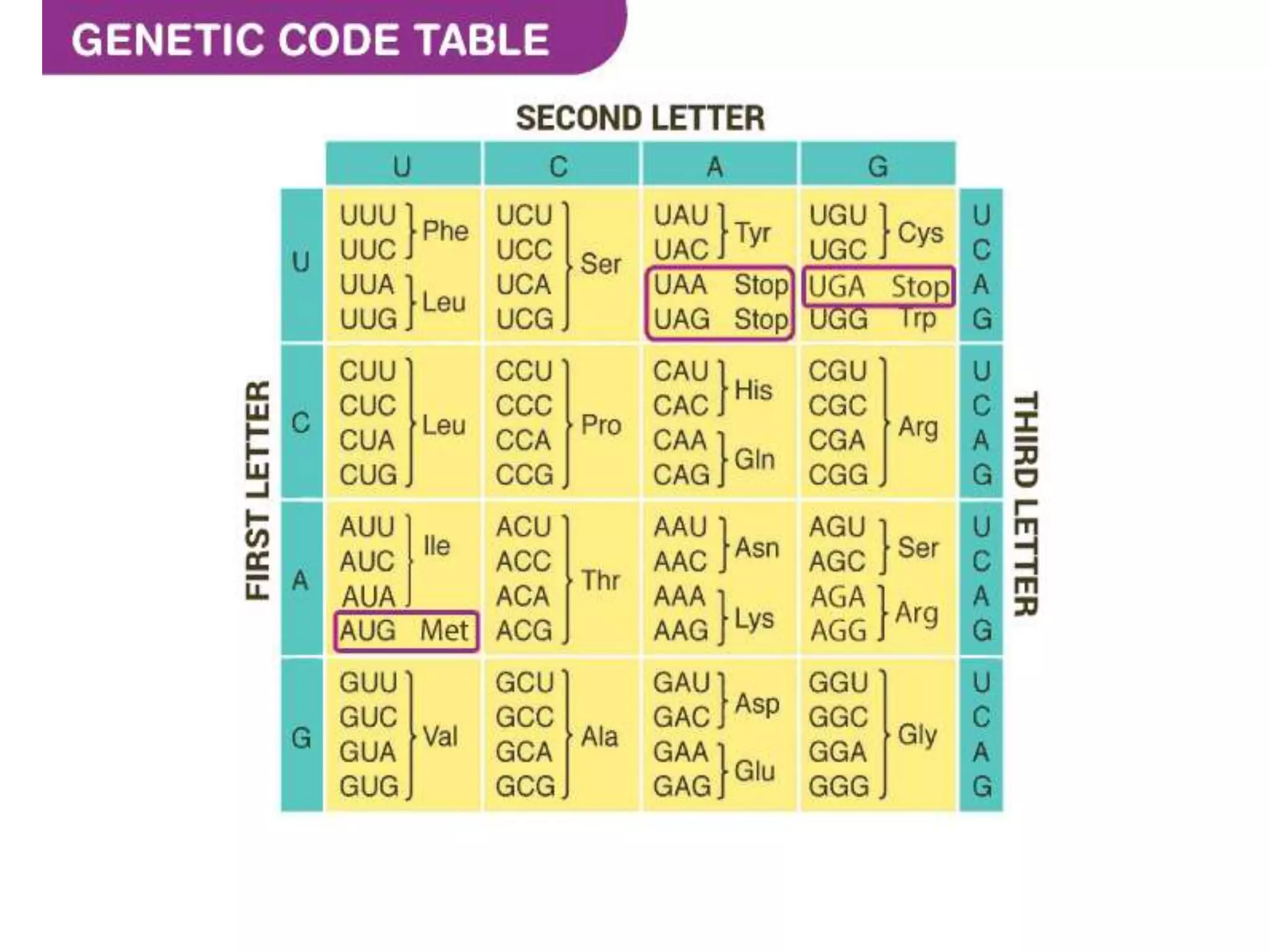
• The complete set of relationships
among amino acids and codons is said to be a
genetic code which is often summarized in a
table.
• A codon is a sequence of three nucleotides
which together form a unit of genetic code in a
DNA or RNA molecule.
PROPERTIES OF GENETIC CODE
• Triplet code
The four bases of nucleotide i.e, (A, G, C, and U)
are used to produce three-base codons. The 64
codons involve sense codons (that specify amino
acids). Hence, there are 64 codons for 20 amino
acids since every codon for one amino acid means
that there exist more than ONE code for the same
amino acid.
Triplet code
A codon or a code word is defined as a group of
bases that specify an amino acid.
The four bases of nucleotide i.e, (A, G, C, and
U) are used to produce three-base codons.
The 64 codons involve sense codons (that
specify amino acids). Hence, there are 64
codons for 20 amino acids since every codon
for one amino acid means that there exist
more than code for the same amino acid.
Commaless code
There is no room for punctuation in between
codons. It indicates that every codon is
adjacent to the previous one without any
nucleotides between them.
Nonoverlapping code
The code is read sequentially in a group of
three and a nucleotide which becomes a part of
triplet never becomes part of the next triplet.
For example
5’-UCU-3’ codes for Serine
5’-AUG-3’ codes for methionine
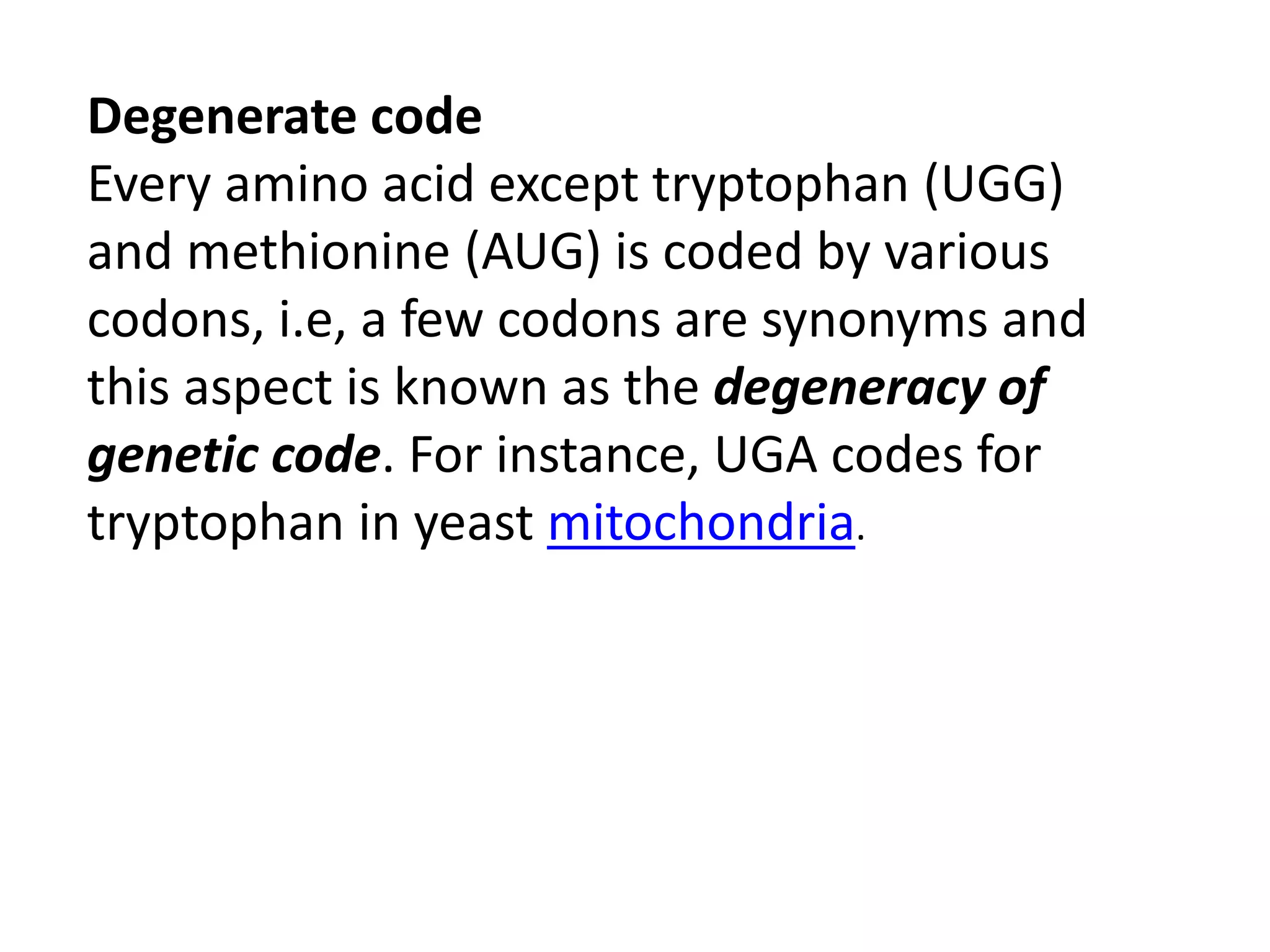
Degenerate code
Every amino acid except tryptophan (UGG)
and methionine (AUG) is coded by various
codons, i.e, a few codons are synonyms and
this aspect is known as the degeneracy of
genetic code. For instance, UGA codes for
tryptophan in yeast mitochondria.
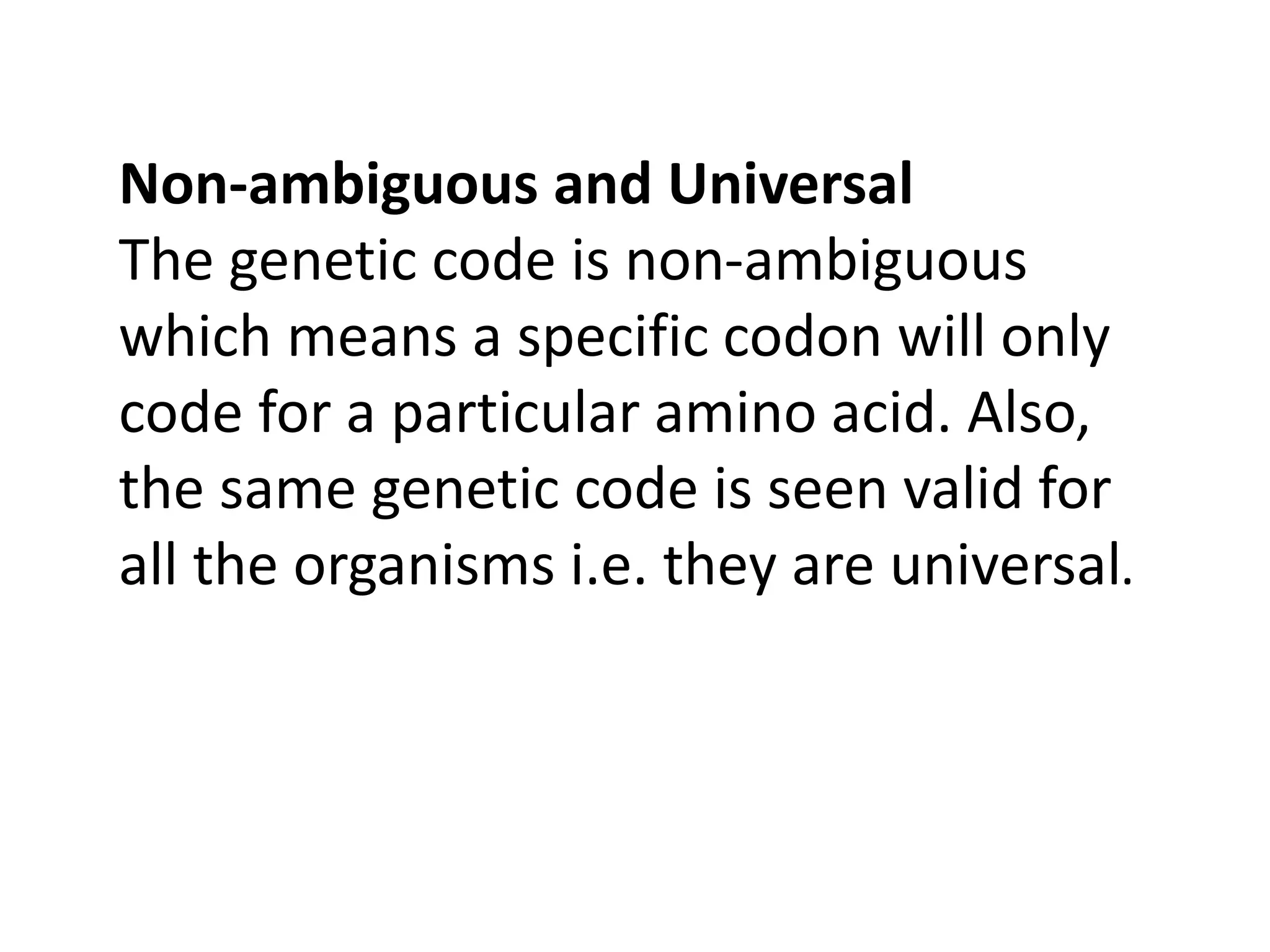
Non-ambiguous and Universal
The genetic code is non-ambiguous
which means a specific codon will only
code for a particular amino acid. Also,
the same genetic code is seen valid for
all the organisms i.e. they are universal.
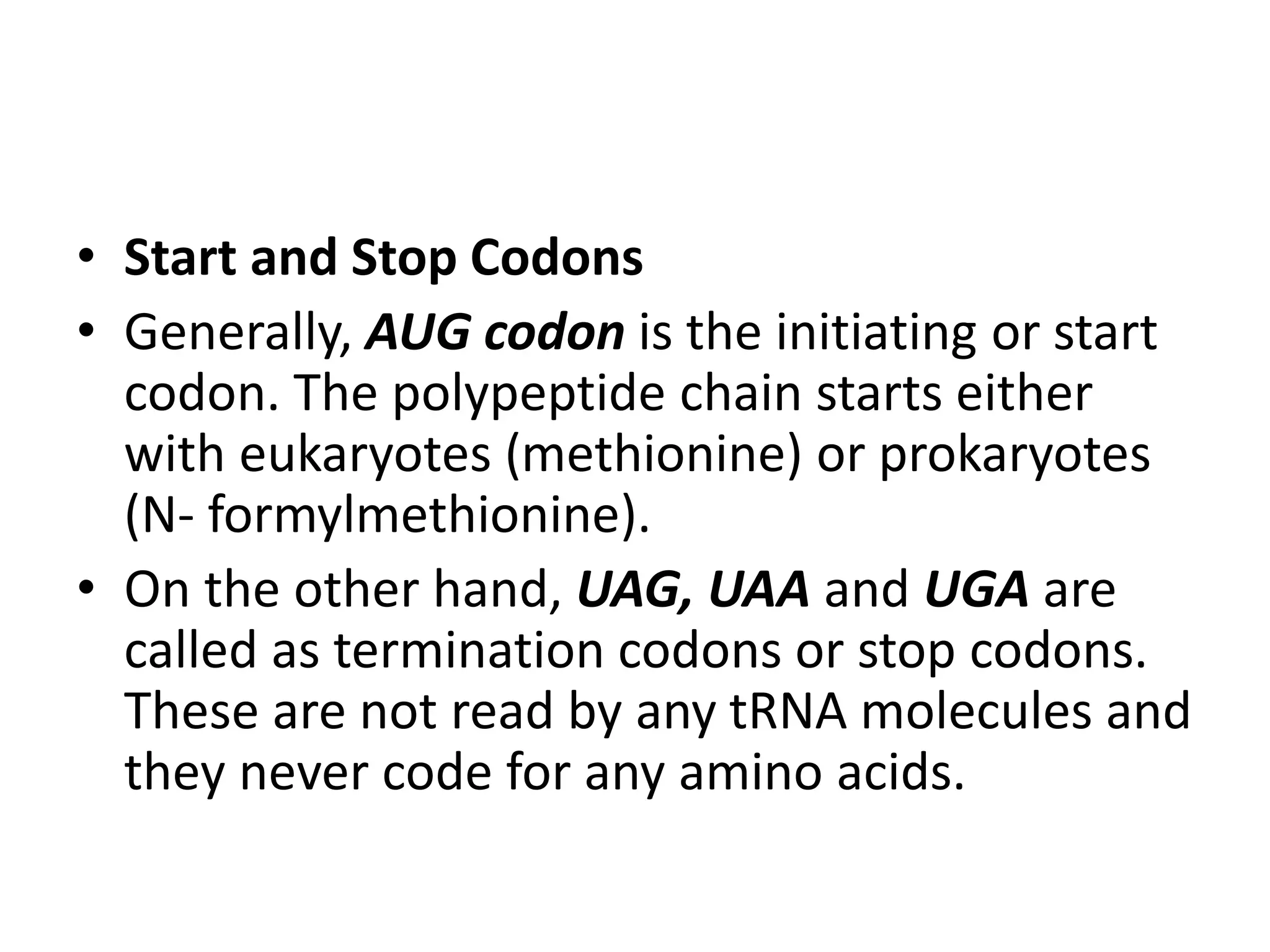
• Start and Stop Codons
• Generally, AUG codon is the initiating or start
codon. The polypeptide chain starts either
with eukaryotes (methionine) or prokaryotes
(N- formylmethionine).
• On the other hand, UAG, UAA and UGA are
called as termination codons or stop codons.
These are not read by any tRNA molecules and
they never code for any amino acids.

GENETIC CODE.pptx

  • 1.
  • 2.
    INTRODUCTION The genetic codeis a set of three-letter combinations of nucleotides called codons, each of which corresponds to a specific amino acid or stop signal. In other words, genetic code is the nucleotide sequence of the base on DNA which is translated into a sequence of amino acids of the protein to be synthesized.
  • 3.
    • The geneticcode can be defined as the set of certain rules using which the living cells translate the information encoded within genetic material (DNA or mRNA sequences). The ribosomes are responsible to accomplish the process of translation. They link the amino acids in an mRNA-specified (messenger RNA) order using tRNA (transfer RNA ) molecules to carry amino acids and to read the mRNA three nucleotides at a time.
  • 4.
    • The completeset of relationships among amino acids and codons is said to be a genetic code which is often summarized in a table. • A codon is a sequence of three nucleotides which together form a unit of genetic code in a DNA or RNA molecule.
  • 6.
    PROPERTIES OF GENETICCODE • Triplet code The four bases of nucleotide i.e, (A, G, C, and U) are used to produce three-base codons. The 64 codons involve sense codons (that specify amino acids). Hence, there are 64 codons for 20 amino acids since every codon for one amino acid means that there exist more than ONE code for the same amino acid.
  • 7.
    Triplet code A codonor a code word is defined as a group of bases that specify an amino acid. The four bases of nucleotide i.e, (A, G, C, and U) are used to produce three-base codons. The 64 codons involve sense codons (that specify amino acids). Hence, there are 64 codons for 20 amino acids since every codon for one amino acid means that there exist more than code for the same amino acid.
  • 8.
    Commaless code There isno room for punctuation in between codons. It indicates that every codon is adjacent to the previous one without any nucleotides between them. Nonoverlapping code The code is read sequentially in a group of three and a nucleotide which becomes a part of triplet never becomes part of the next triplet. For example 5’-UCU-3’ codes for Serine 5’-AUG-3’ codes for methionine
  • 9.
    Degenerate code Every aminoacid except tryptophan (UGG) and methionine (AUG) is coded by various codons, i.e, a few codons are synonyms and this aspect is known as the degeneracy of genetic code. For instance, UGA codes for tryptophan in yeast mitochondria.
  • 10.
    Non-ambiguous and Universal Thegenetic code is non-ambiguous which means a specific codon will only code for a particular amino acid. Also, the same genetic code is seen valid for all the organisms i.e. they are universal.
  • 11.
    • Start andStop Codons • Generally, AUG codon is the initiating or start codon. The polypeptide chain starts either with eukaryotes (methionine) or prokaryotes (N- formylmethionine). • On the other hand, UAG, UAA and UGA are called as termination codons or stop codons. These are not read by any tRNA molecules and they never code for any amino acids.