
Genetic code
-Darshan.R.M

Genetic code :-
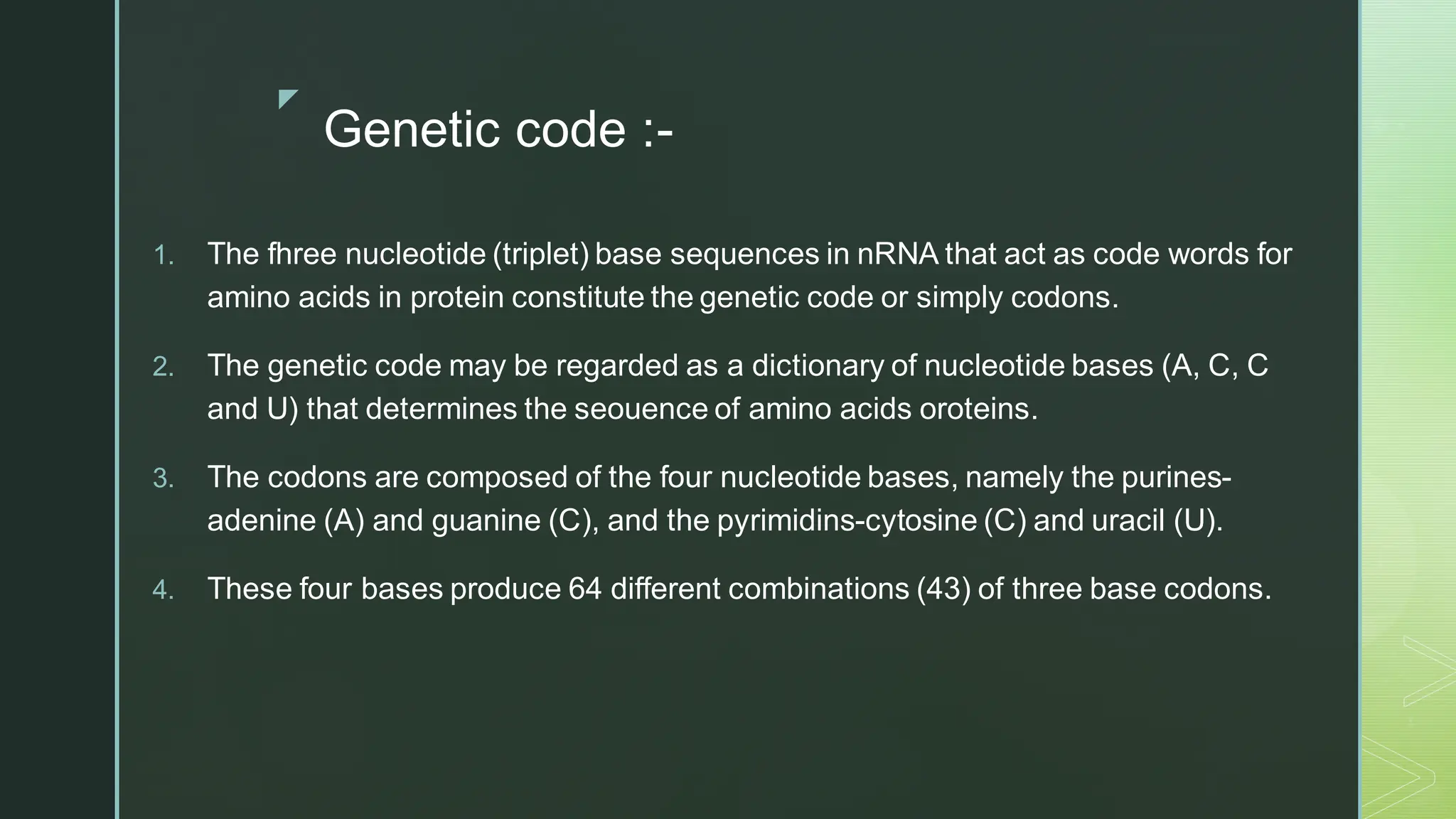
1. The fhree nucleotide (triplet) base sequences in nRNA that act as code words for
amino acids in protein constitute the genetic code or simply codons.
2. The genetic code may be regarded as a dictionary of nucleotide bases (A, C, C
and U) that determines the seouence of amino acids oroteins.
3. The codons are composed of the four nucleotide bases, namely the purines-
adenine (A) and guanine (C), and the pyrimidins-cytosine (C) and uracil (U).
4. These four bases produce 64 different combinations (43) of three base codons.

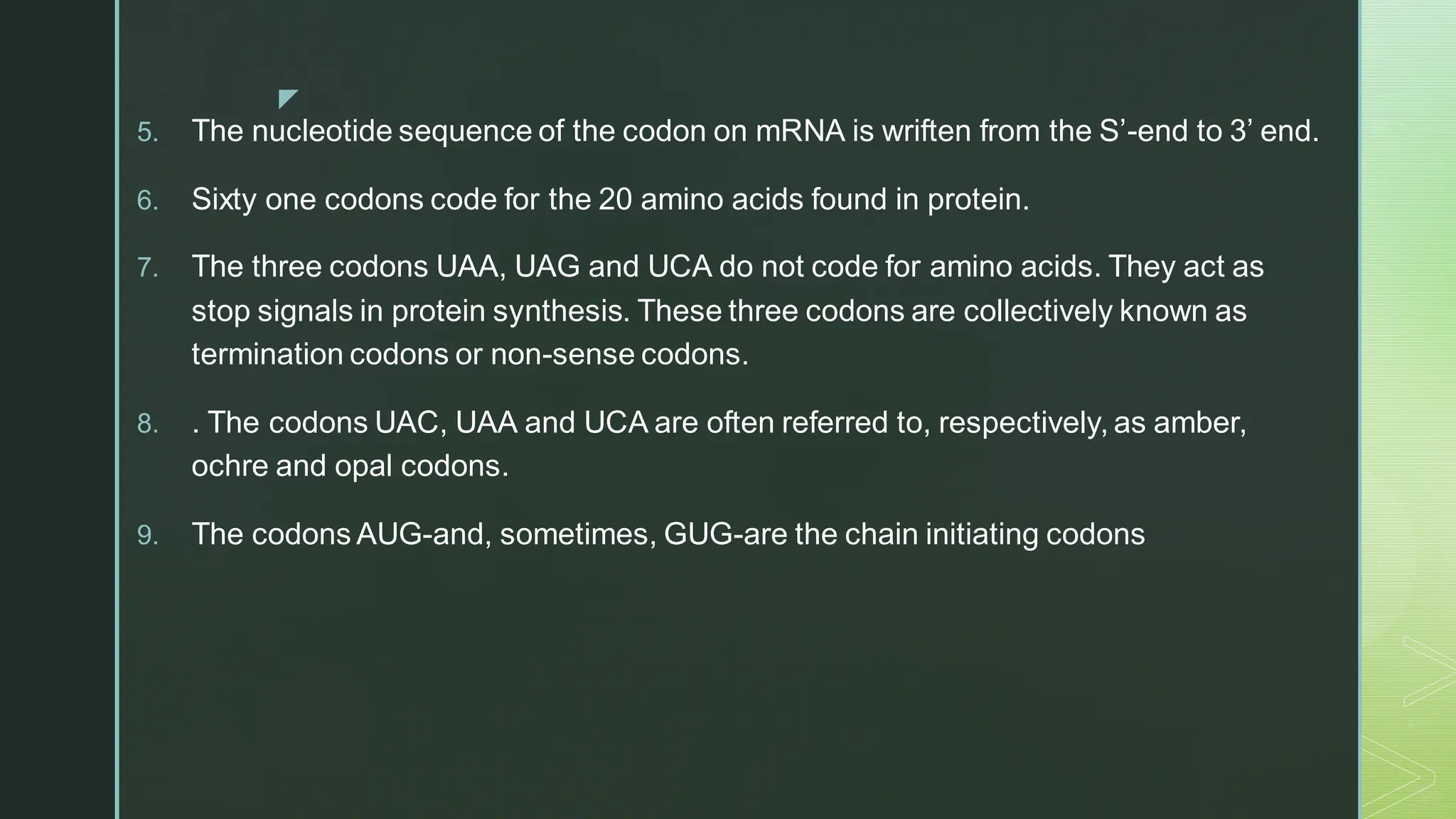
5. The nucleotide sequence of the codon on mRNA is wriften from the S’-end to 3’ end.
6. Sixty one codons code for the 20 amino acids found in protein.
7. The three codons UAA, UAG and UCA do not code for amino acids. They act as
stop signals in protein synthesis. These three codons are collectively known as
termination codons or non-sense codons.
8. . The codons UAC, UAA and UCA are often referred to, respectively, as amber,
ochre and opal codons.
9. The codons AUG-and, sometimes, GUG-are the chain initiating codons

Other characteristics of genetic code :-
The genetic code is universal, specific, non-overlapping and
degenerate.

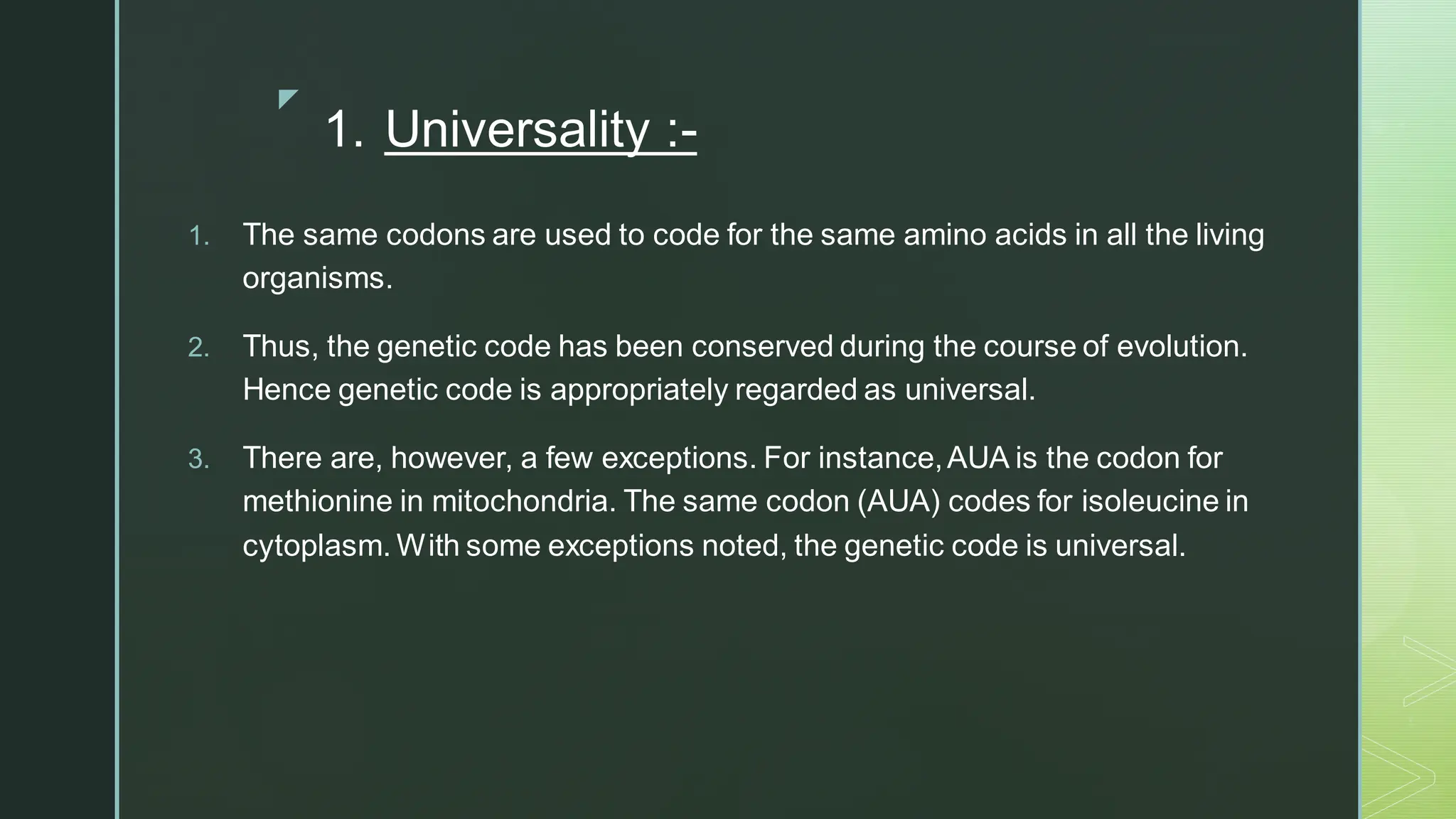
1. Universality :-
1. The same codons are used to code for the same amino acids in all the living
organisms.
2. Thus, the genetic code has been conserved during the course of evolution.
Hence genetic code is appropriately regarded as universal.
3. There are, however, a few exceptions. For instance,AUA is the codon for
methionine in mitochondria. The same codon (AUA) codes for isoleucine in
cytoplasm. With some exceptions noted, the genetic code is universal.

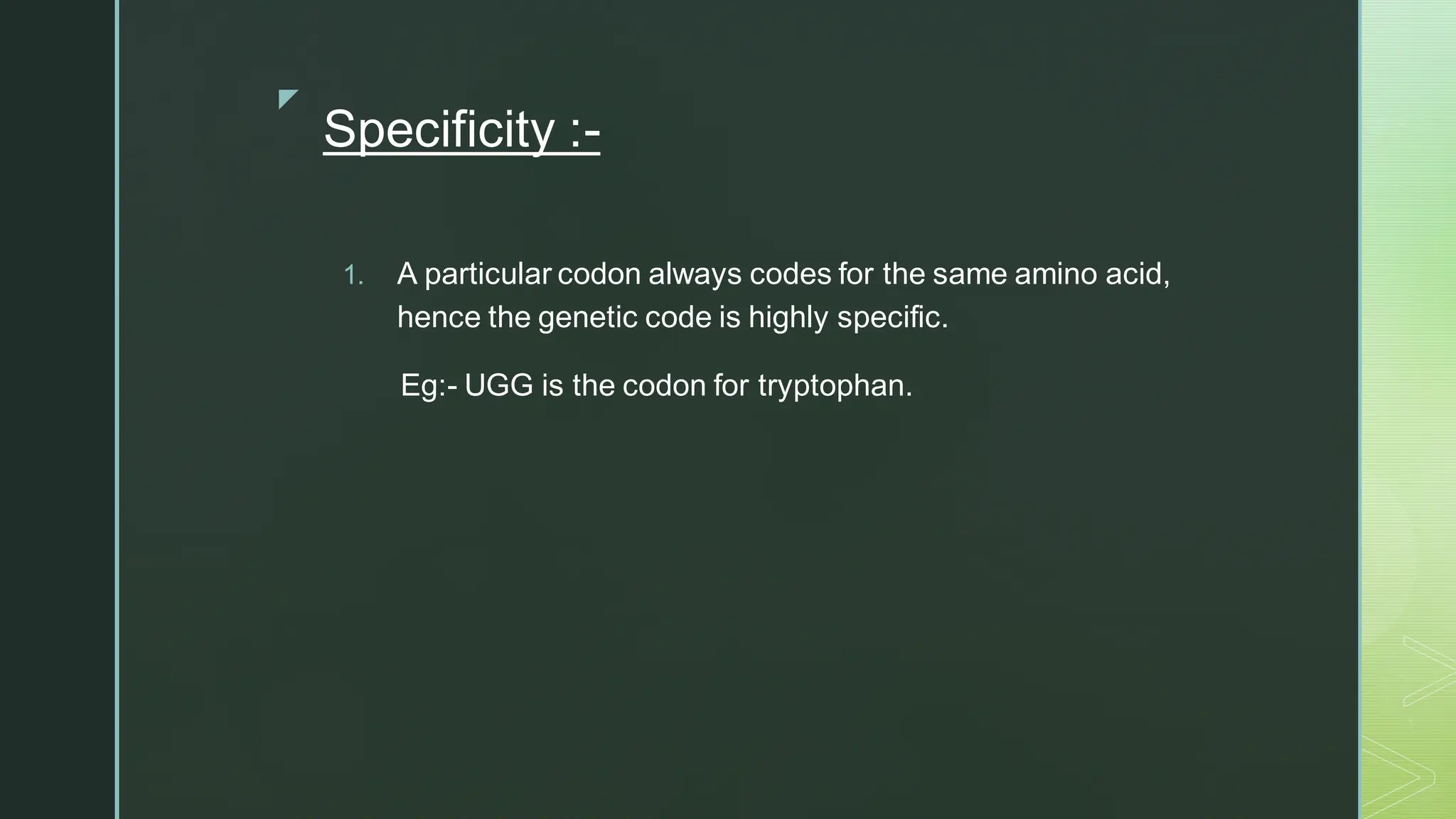
Specificity :-
1. A particular codon always codes for the same amino acid,
hence the genetic code is highly specific.
Eg:- UGG is the codon for tryptophan.

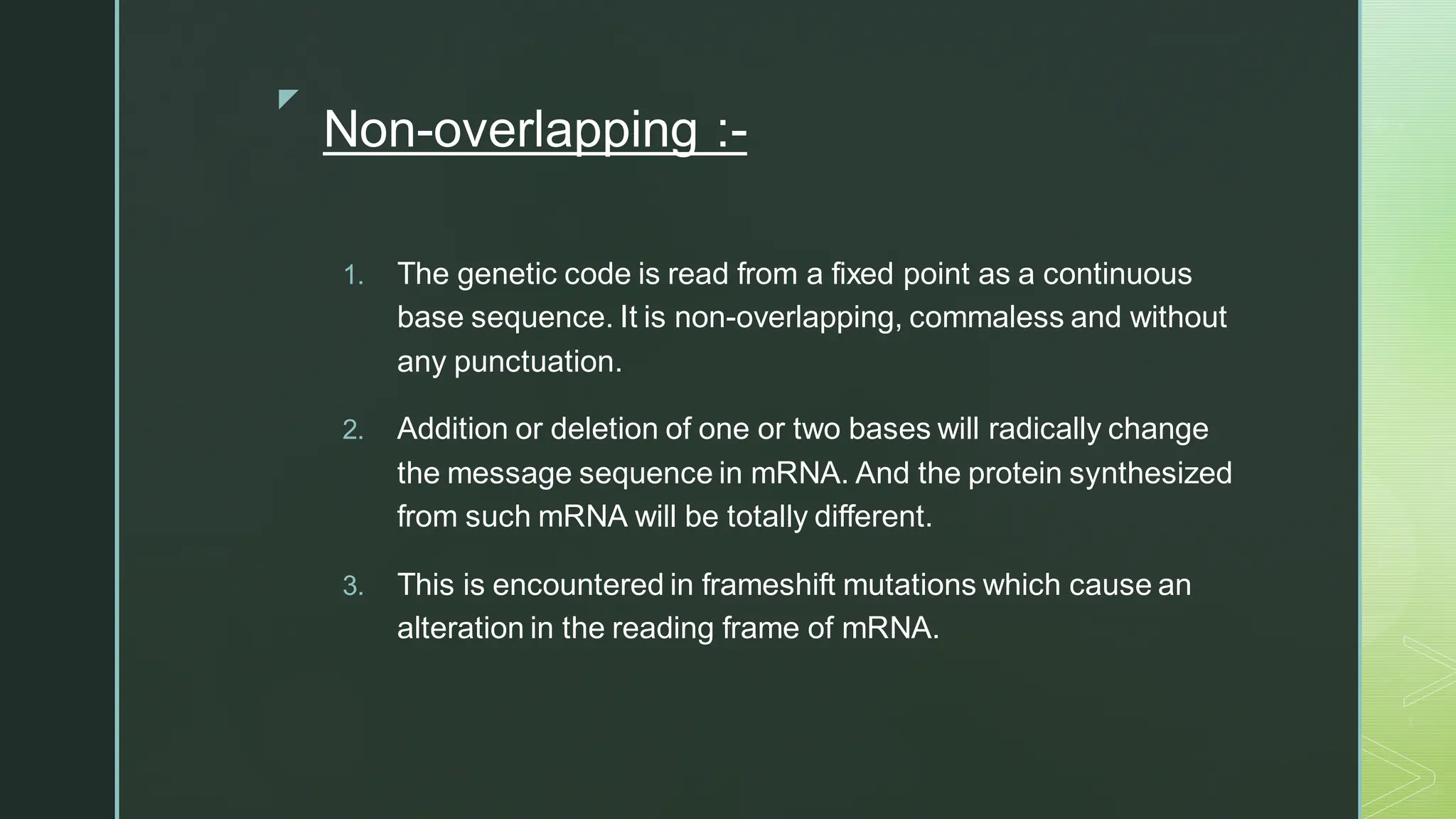
Non-overlapping :-
1. The genetic code is read from a fixed point as a continuous
base sequence. It is non-overlapping, commaless and without
any punctuation.
2. Addition or deletion of one or two bases will radically change
the message sequence in mRNA. And the protein synthesized
from such mRNA will be totally different.
3. This is encountered in frameshift mutations which cause an
alteration in the reading frame of mRNA.

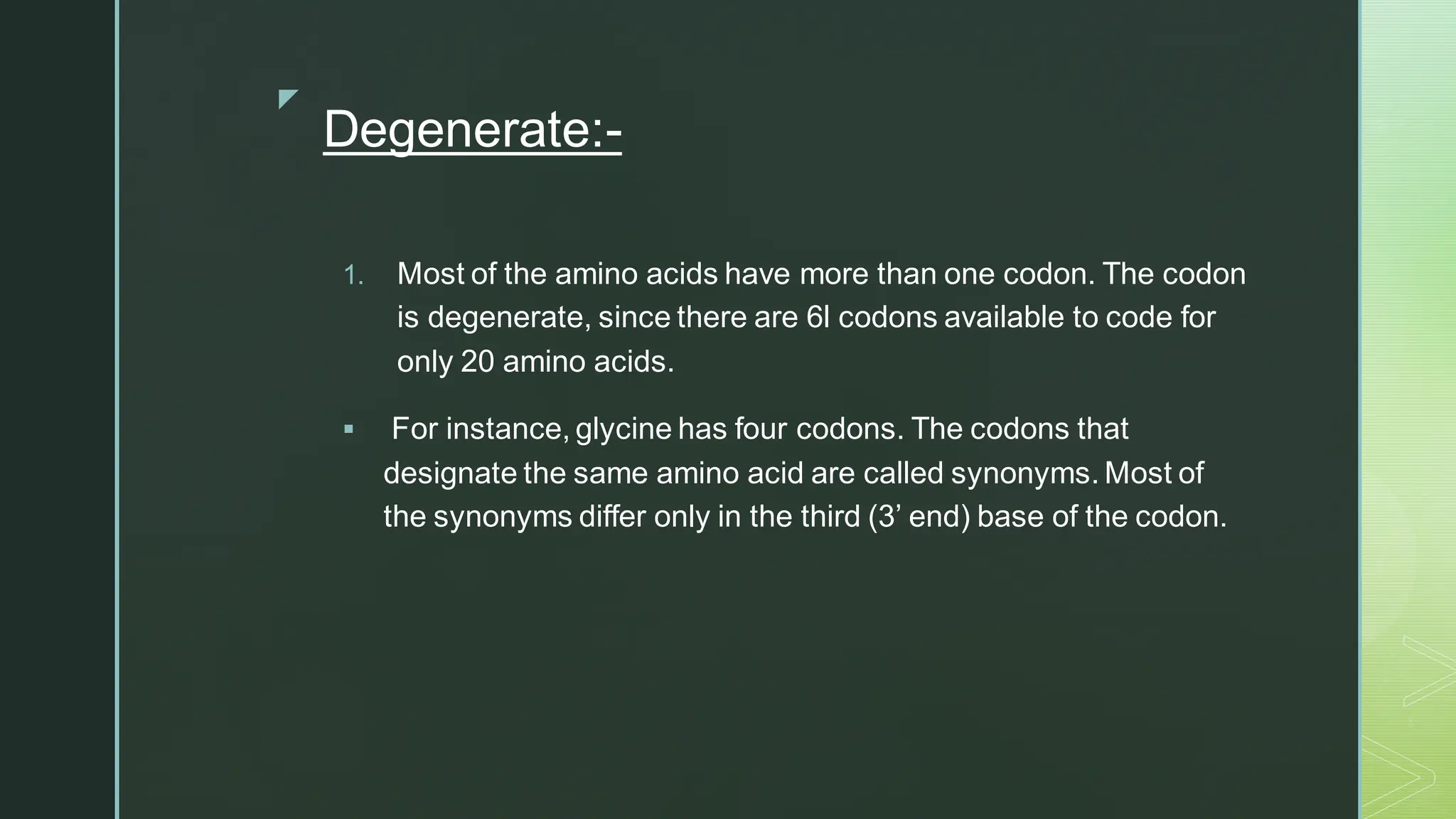
Degenerate:-
1. Most of the amino acids have more than one codon. The codon
is degenerate, since there are 6l codons available to code for
only 20 amino acids.
▪ For instance, glycine has four codons. The codons that
designate the same amino acid are called synonyms. Most of
the synonyms differ only in the third (3’ end) base of the codon.

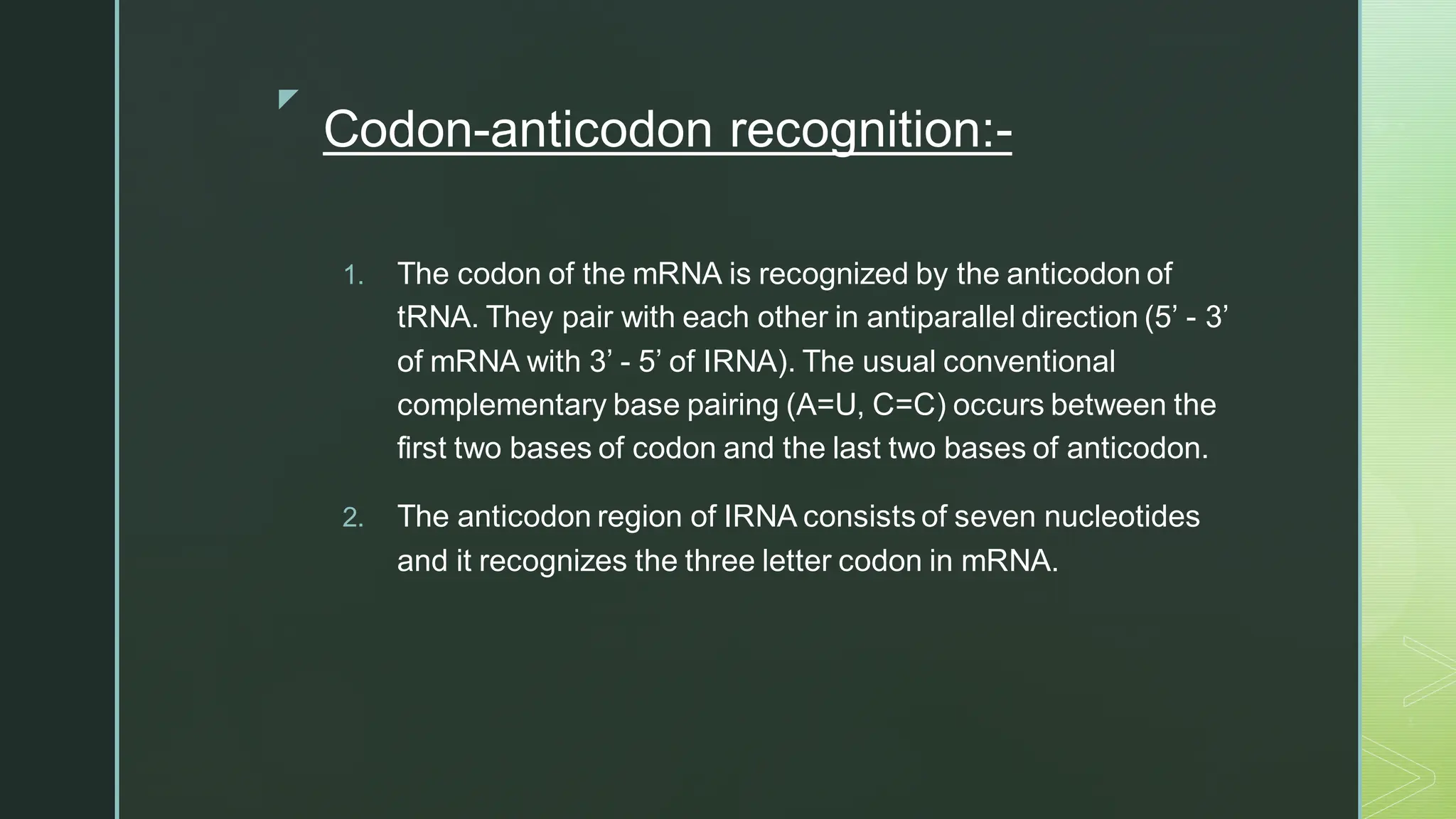
Codon-anticodon recognition:-
1. The codon of the mRNA is recognized by the anticodon of
tRNA. They pair with each other in antiparallel direction (5’ - 3’
of mRNA with 3’ - 5’ of IRNA). The usual conventional
complementary base pairing (A=U, C=C) occurs between the
first two bases of codon and the last two bases of anticodon.
2. The anticodon region of IRNA consists of seven nucleotides
and it recognizes the three letter codon in mRNA.

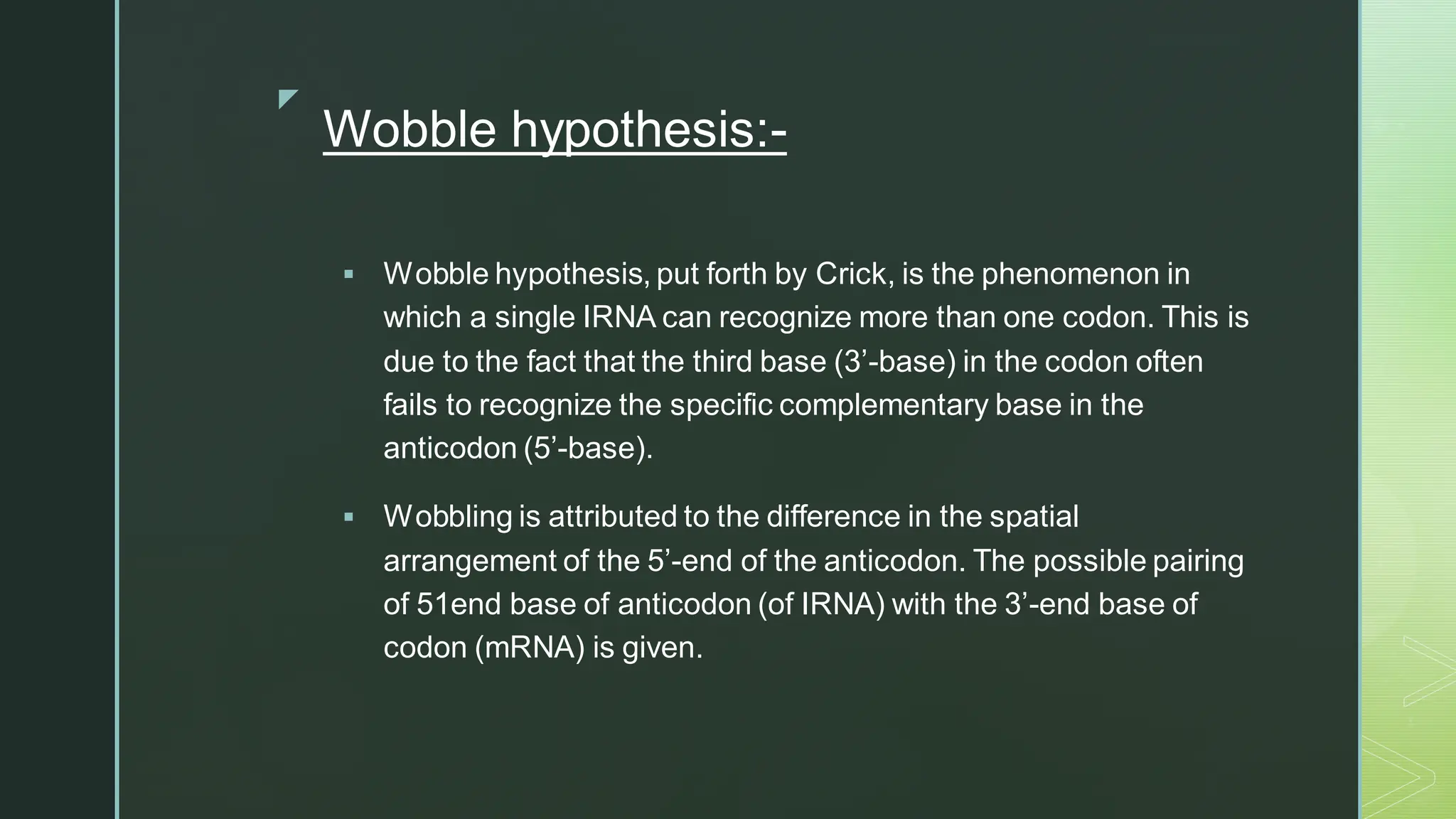
Wobble hypothesis:-
▪ Wobble hypothesis, put forth by Crick, is the phenomenon in
which a single IRNA can recognize more than one codon. This is
due to the fact that the third base (3’-base) in the codon often
fails to recognize the specific complementary base in the
anticodon (5’-base).
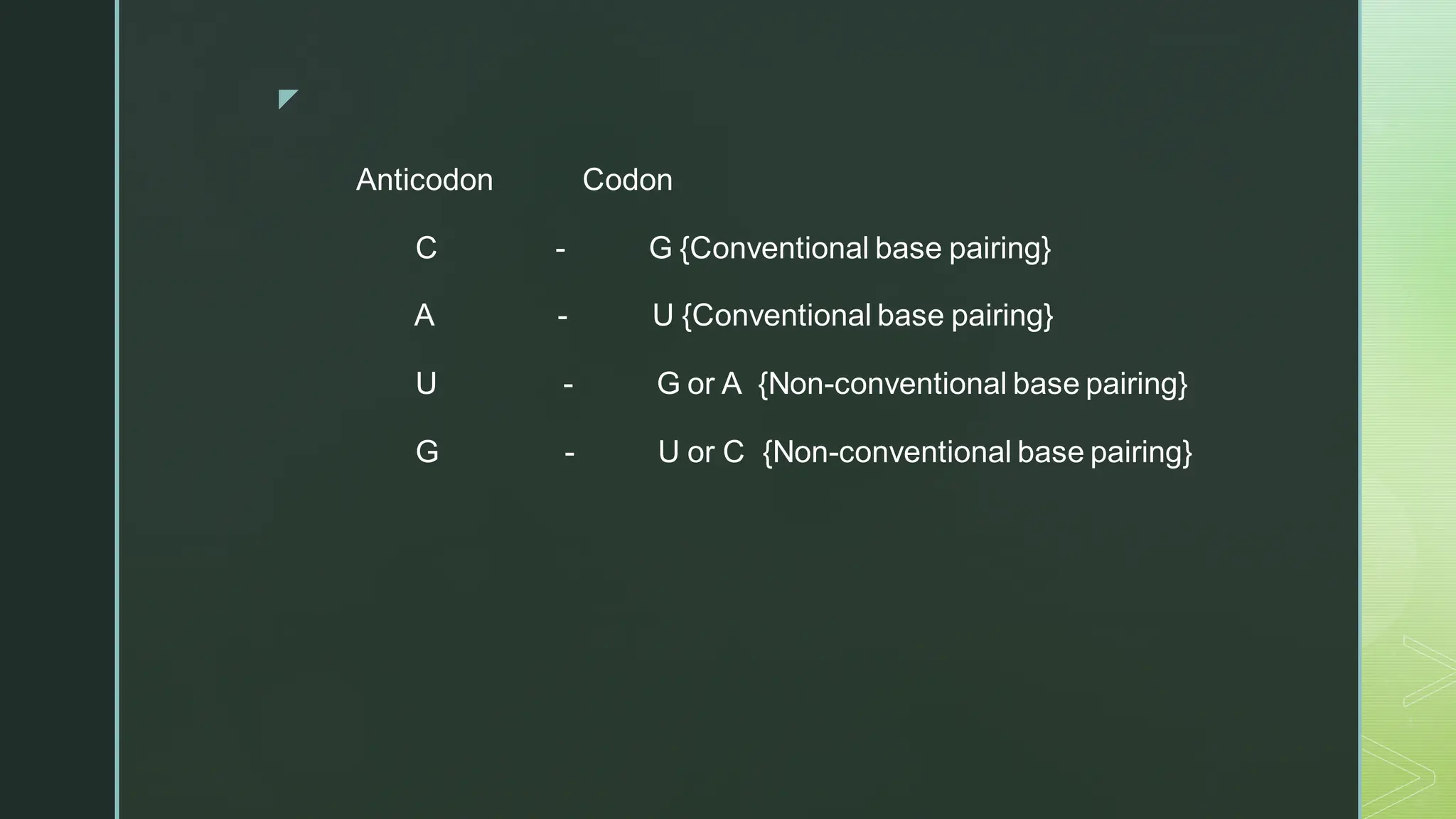
▪ Wobbling is attributed to the difference in the spatial
arrangement of the 5’-end of the anticodon. The possible pairing
of 51end base of anticodon (of IRNA) with the 3’-end base of
codon (mRNA) is given.

Anticodon Codon
C - G {Conventional base pairing}
A - U {Conventional base pairing}
U - G or A {Non-conventional base pairing}
G - U or C {Non-conventional base pairing}

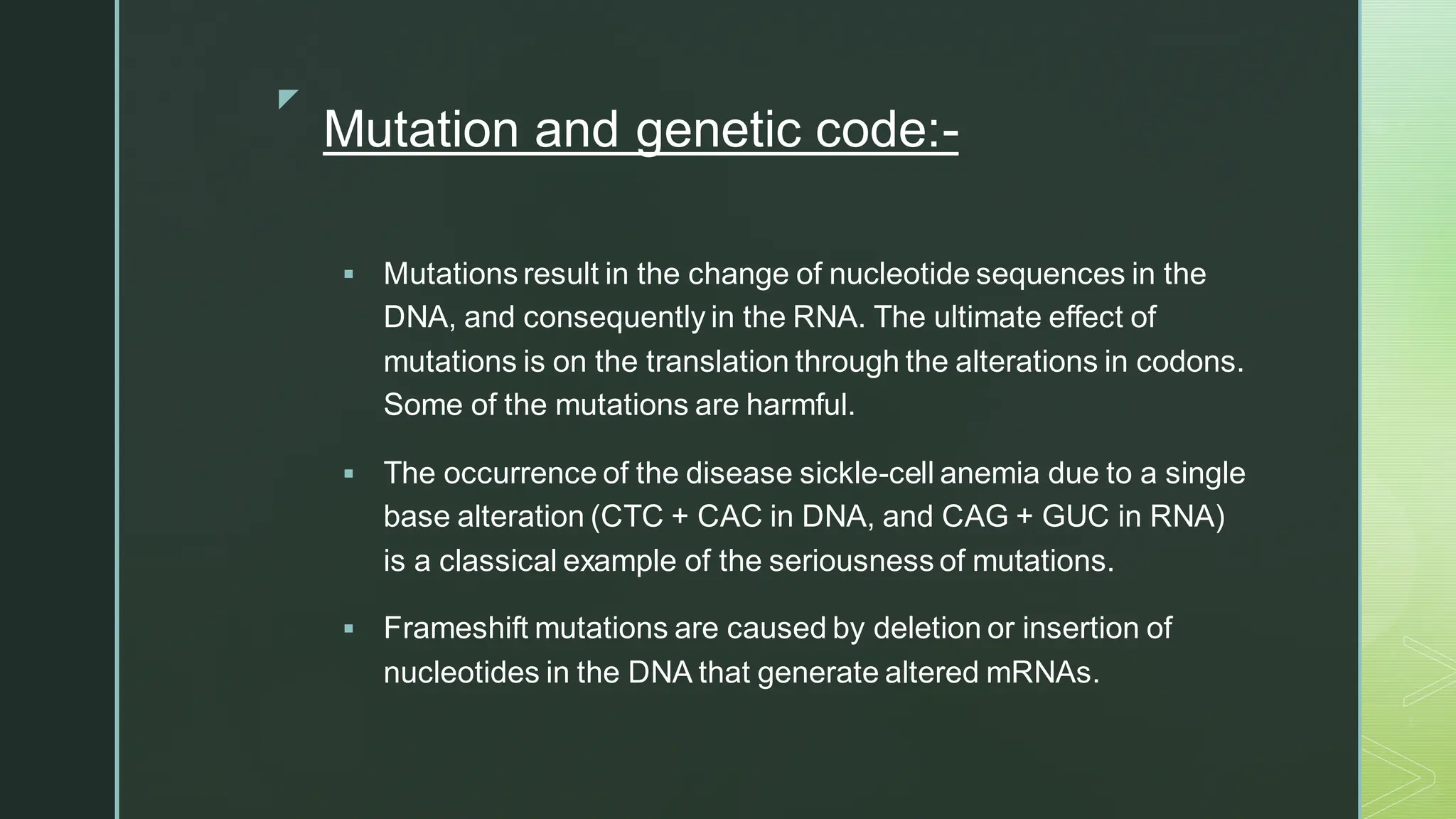
Mutation and genetic code:-
▪ Mutations result in the change of nucleotide sequences in the
DNA, and consequently in the RNA. The ultimate effect of
mutations is on the translation through the alterations in codons.
Some of the mutations are harmful.
▪ The occurrence of the disease sickle-cell anemia due to a single
base alteration (CTC + CAC in DNA, and CAG + GUC in RNA)
is a classical example of the seriousness of mutations.
▪ Frameshift mutations are caused by deletion or insertion of
nucleotides in the DNA that generate altered mRNAs.

Genetic code a presentation on genetic code how a gene express themselves

  • 1.
  • 2.
     Genetic code :- 1.The fhree nucleotide (triplet) base sequences in nRNA that act as code words for amino acids in protein constitute the genetic code or simply codons. 2. The genetic code may be regarded as a dictionary of nucleotide bases (A, C, C and U) that determines the seouence of amino acids oroteins. 3. The codons are composed of the four nucleotide bases, namely the purines- adenine (A) and guanine (C), and the pyrimidins-cytosine (C) and uracil (U). 4. These four bases produce 64 different combinations (43) of three base codons.
  • 3.
     5. The nucleotidesequence of the codon on mRNA is wriften from the S’-end to 3’ end. 6. Sixty one codons code for the 20 amino acids found in protein. 7. The three codons UAA, UAG and UCA do not code for amino acids. They act as stop signals in protein synthesis. These three codons are collectively known as termination codons or non-sense codons. 8. . The codons UAC, UAA and UCA are often referred to, respectively, as amber, ochre and opal codons. 9. The codons AUG-and, sometimes, GUG-are the chain initiating codons
  • 4.
     Other characteristics ofgenetic code :- The genetic code is universal, specific, non-overlapping and degenerate.
  • 5.
     1. Universality :- 1.The same codons are used to code for the same amino acids in all the living organisms. 2. Thus, the genetic code has been conserved during the course of evolution. Hence genetic code is appropriately regarded as universal. 3. There are, however, a few exceptions. For instance,AUA is the codon for methionine in mitochondria. The same codon (AUA) codes for isoleucine in cytoplasm. With some exceptions noted, the genetic code is universal.
  • 6.
     Specificity :- 1. Aparticular codon always codes for the same amino acid, hence the genetic code is highly specific. Eg:- UGG is the codon for tryptophan.
  • 7.
     Non-overlapping :- 1. Thegenetic code is read from a fixed point as a continuous base sequence. It is non-overlapping, commaless and without any punctuation. 2. Addition or deletion of one or two bases will radically change the message sequence in mRNA. And the protein synthesized from such mRNA will be totally different. 3. This is encountered in frameshift mutations which cause an alteration in the reading frame of mRNA.
  • 8.
     Degenerate:- 1. Most ofthe amino acids have more than one codon. The codon is degenerate, since there are 6l codons available to code for only 20 amino acids. ▪ For instance, glycine has four codons. The codons that designate the same amino acid are called synonyms. Most of the synonyms differ only in the third (3’ end) base of the codon.
  • 9.
     Codon-anticodon recognition:- 1. Thecodon of the mRNA is recognized by the anticodon of tRNA. They pair with each other in antiparallel direction (5’ - 3’ of mRNA with 3’ - 5’ of IRNA). The usual conventional complementary base pairing (A=U, C=C) occurs between the first two bases of codon and the last two bases of anticodon. 2. The anticodon region of IRNA consists of seven nucleotides and it recognizes the three letter codon in mRNA.
  • 10.
     Wobble hypothesis:- ▪ Wobblehypothesis, put forth by Crick, is the phenomenon in which a single IRNA can recognize more than one codon. This is due to the fact that the third base (3’-base) in the codon often fails to recognize the specific complementary base in the anticodon (5’-base). ▪ Wobbling is attributed to the difference in the spatial arrangement of the 5’-end of the anticodon. The possible pairing of 51end base of anticodon (of IRNA) with the 3’-end base of codon (mRNA) is given.
  • 11.
     Anticodon Codon C -G {Conventional base pairing} A - U {Conventional base pairing} U - G or A {Non-conventional base pairing} G - U or C {Non-conventional base pairing}
  • 12.
     Mutation and geneticcode:- ▪ Mutations result in the change of nucleotide sequences in the DNA, and consequently in the RNA. The ultimate effect of mutations is on the translation through the alterations in codons. Some of the mutations are harmful. ▪ The occurrence of the disease sickle-cell anemia due to a single base alteration (CTC + CAC in DNA, and CAG + GUC in RNA) is a classical example of the seriousness of mutations. ▪ Frameshift mutations are caused by deletion or insertion of nucleotides in the DNA that generate altered mRNAs.