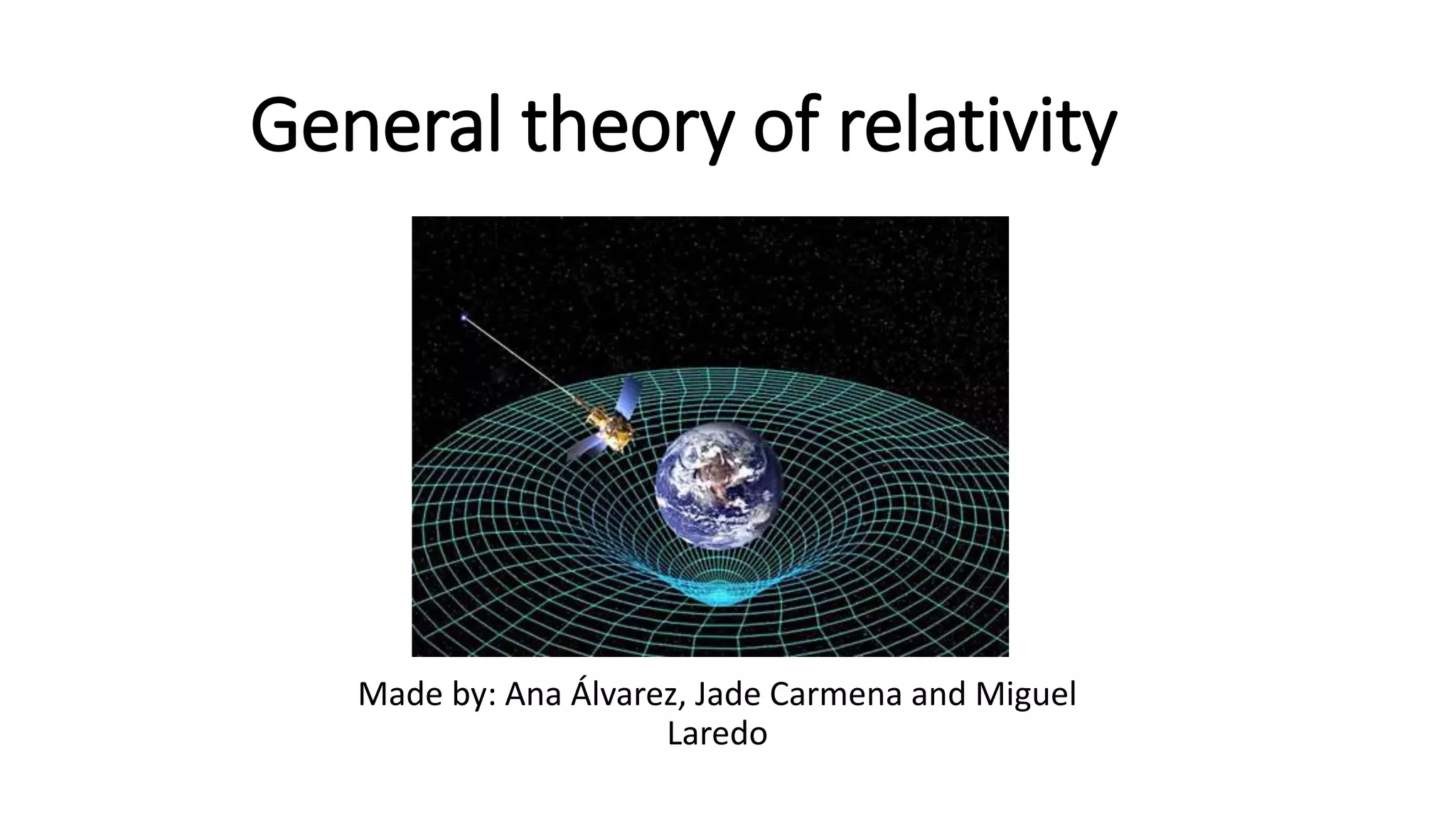
General theory of relativity
Made by: Ana Álvarez, Jade Carmena and Miguel
Laredo
Index
• Introduction
• General relativity
• Special relativity
Introduction
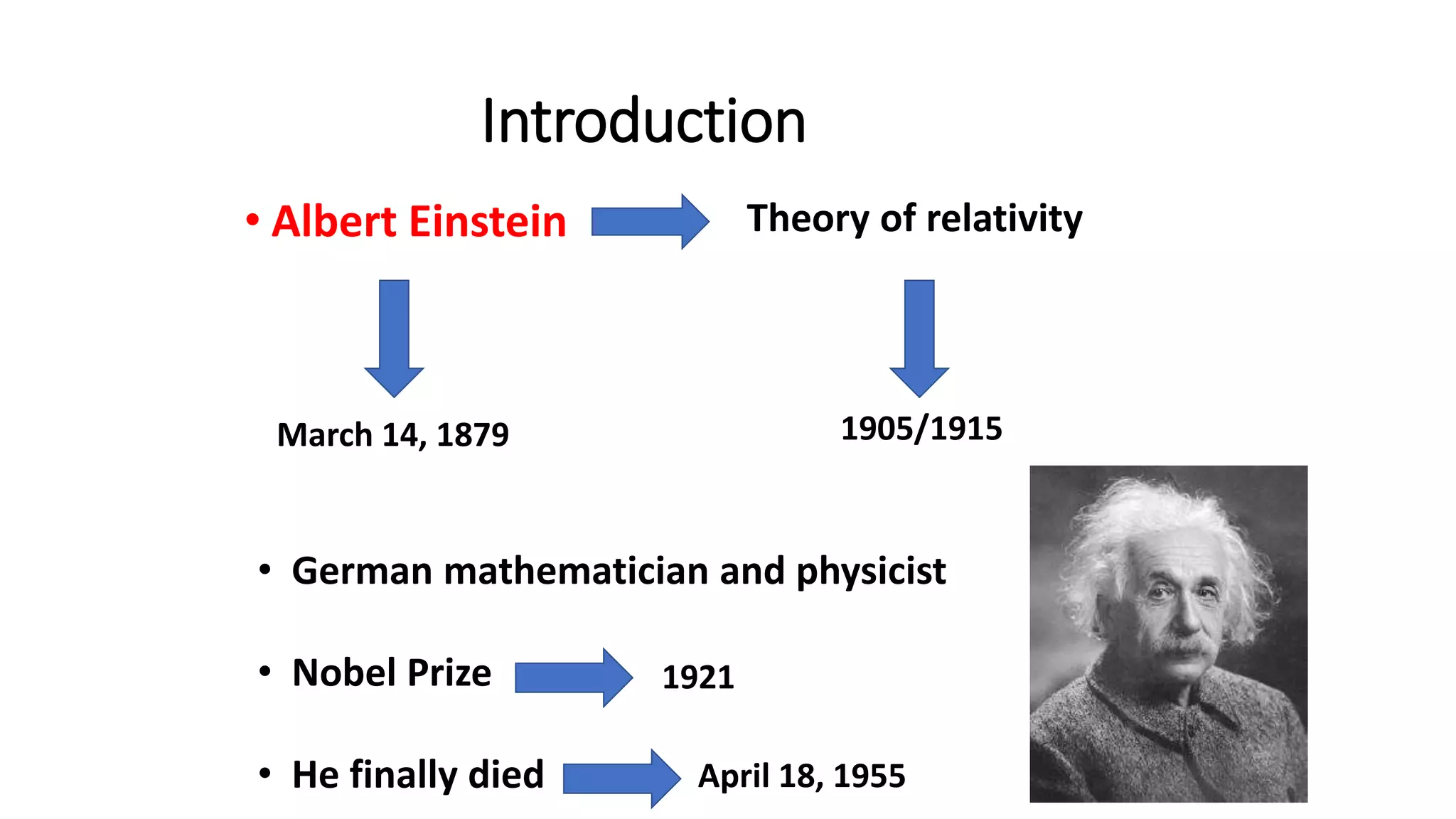
• Albert Einstein
March 14, 1879
Theory of relativity
1905/1915
• German mathematician and physicist
• Nobel Prize
• He finally died April 18, 1955
1921
Introduction
General theory of relativity
• Galileo, Isaac Newton and Einstein
• Describes the history and expansion of the universe, the
physics of black holes and the motion of the planets
• Einstein's relativity theory is simple and consists of just
three rules
Special relativity
1905 1915
General relativity
Special Relativity
General information
• Developed by Albert Einstein in 1905.
• Space and time are linked for objects that are moving at a constant
speed in a straight line(=no acceleration).
• If acceleration is introduced it’s general relativity.
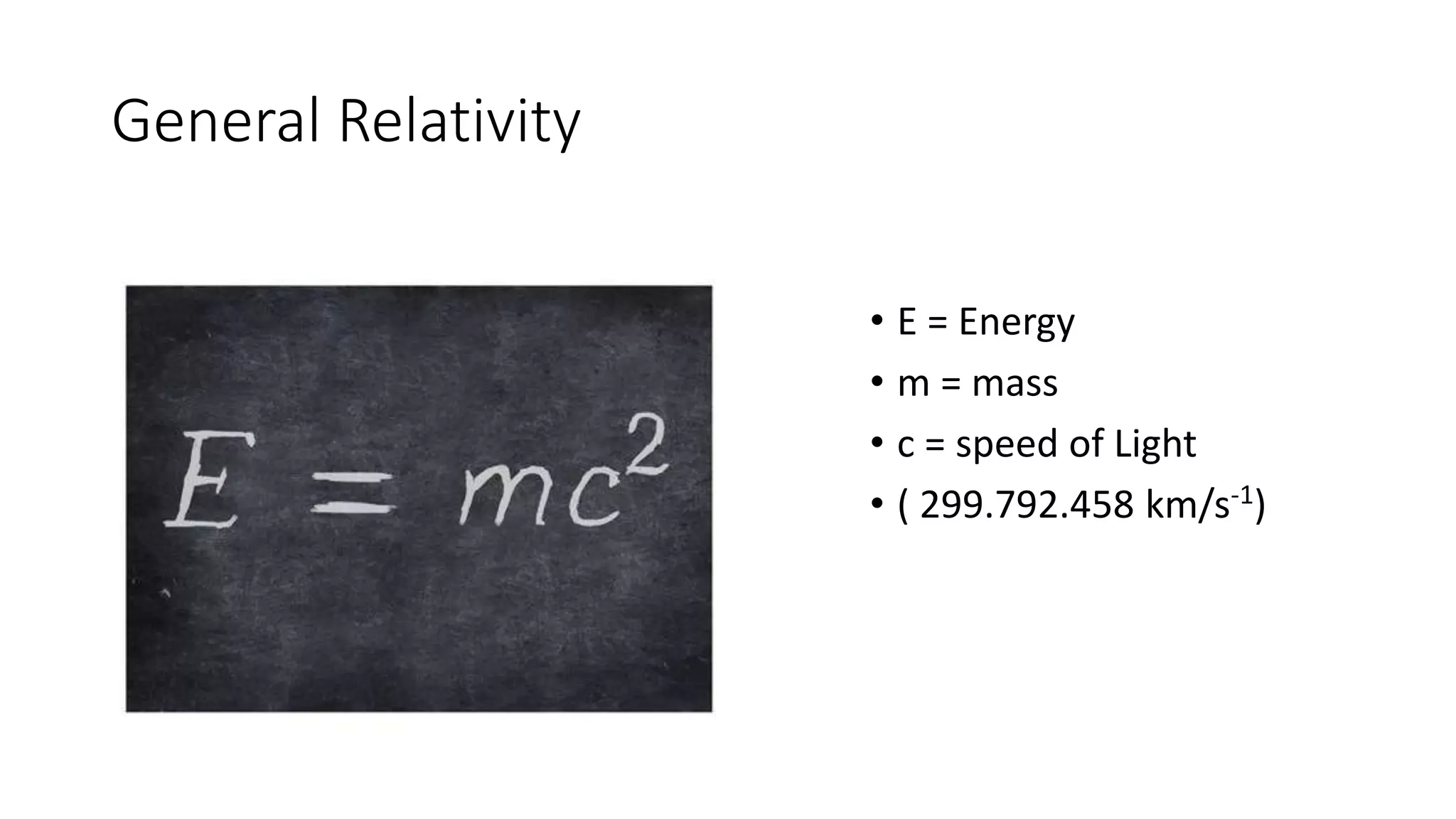
• Equation: E = mc^2 (energy equals mass times the speed of light
squared.)
It is based on two postulates
• The laws of physics are identical in all inertial systems (frame of
reference in which a body remains at rest or moves with a constant
speed).
• The speed of light in a vacuum is the same for all observers,
regardless of the motion of the light source.
Fundamental experiments
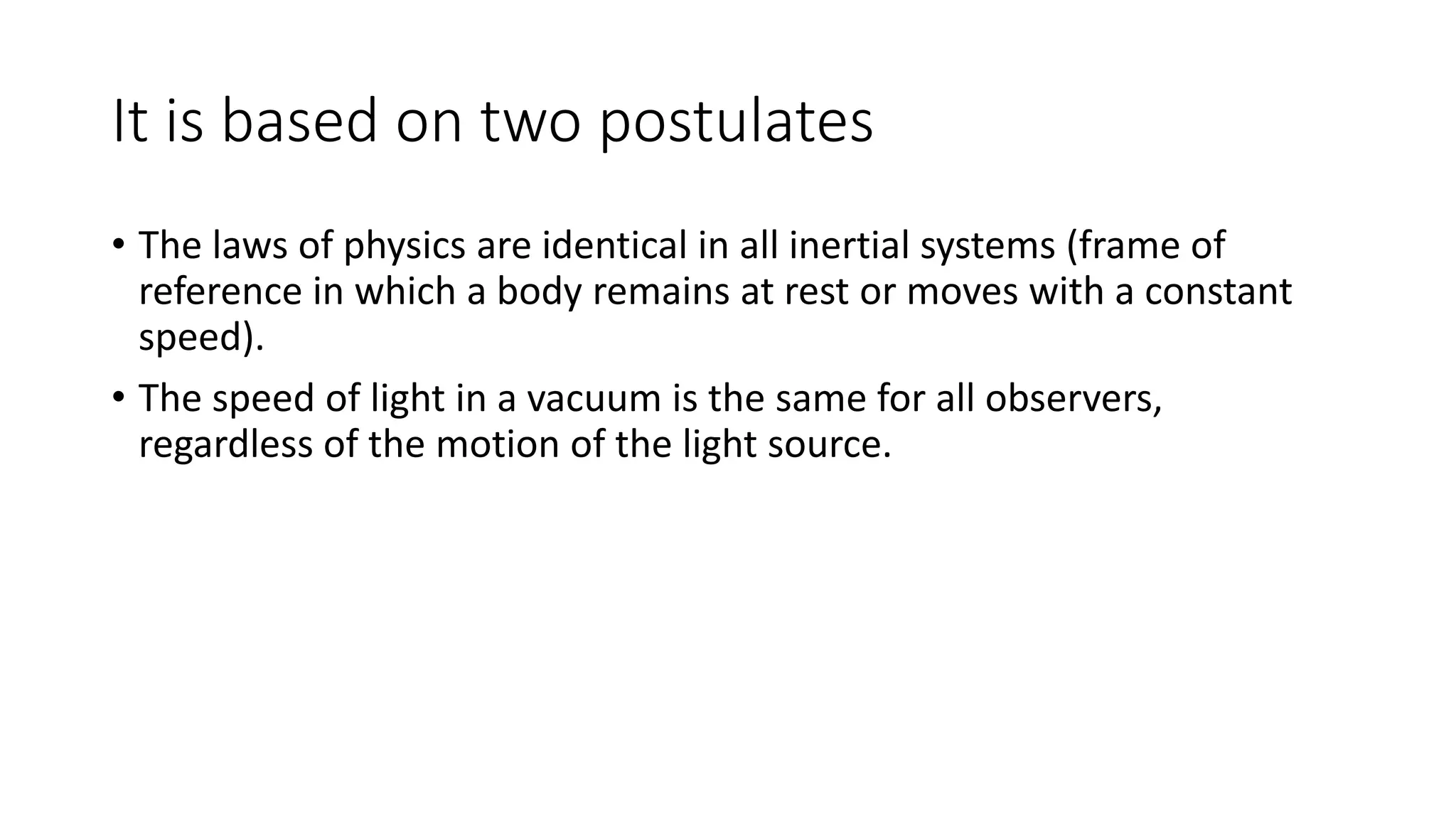
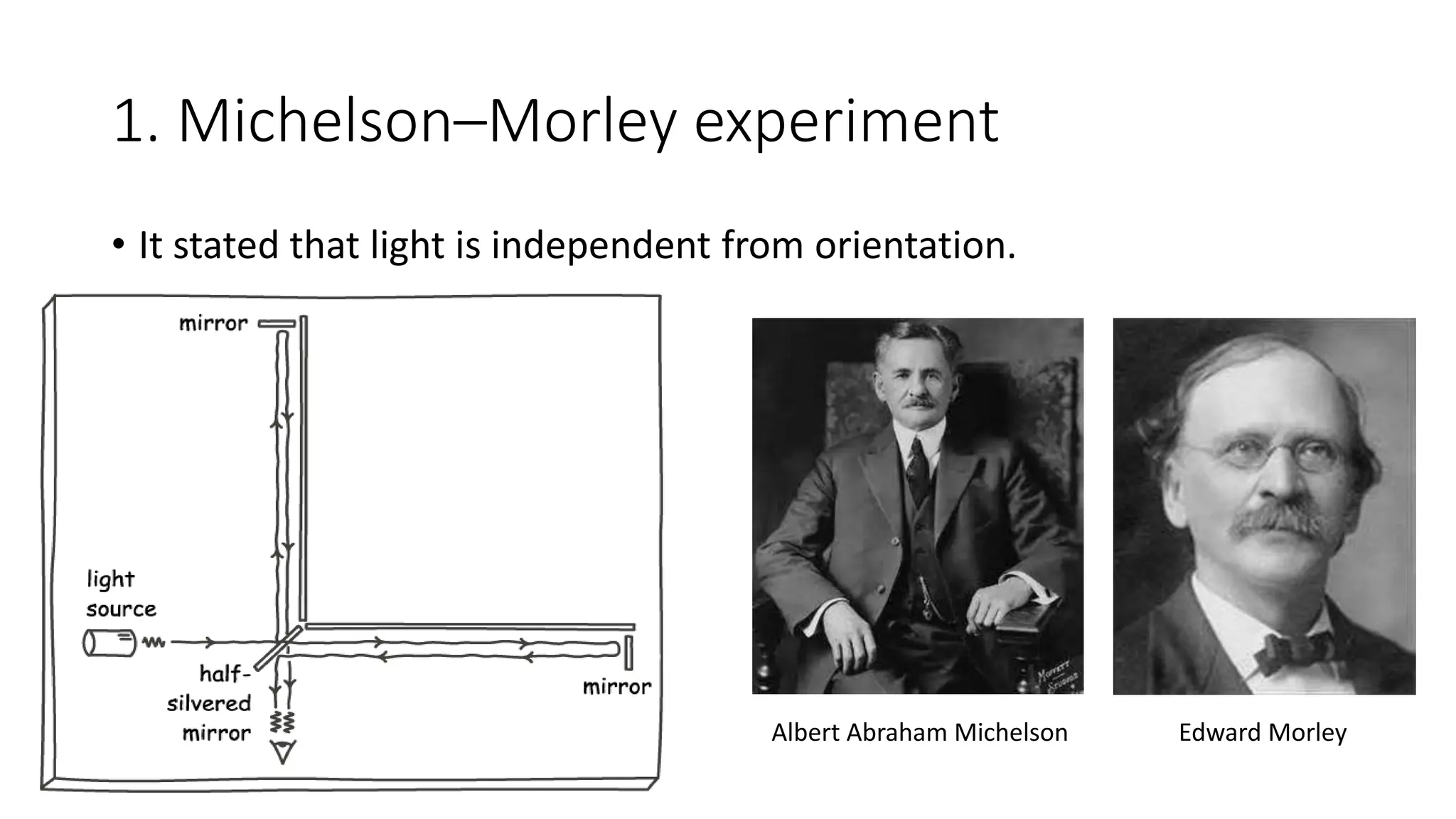
1. Michelson–Morley experiment
• It stated that light is independent from orientation.
Albert Abraham Michelson Edward Morley
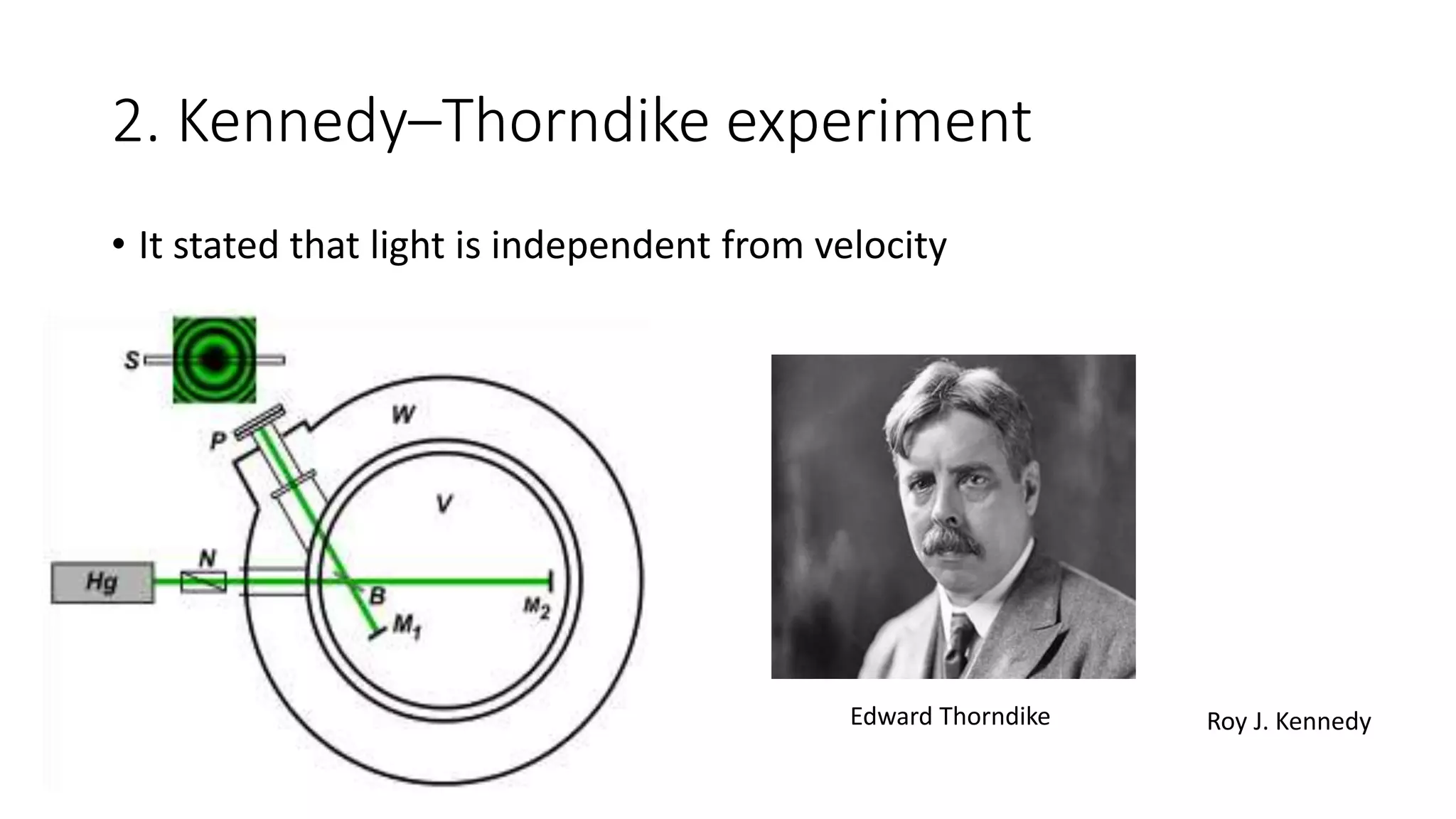
2. Kennedy–Thorndike experiment
• It stated that light is independent from velocity
Edward Thorndike Roy J. Kennedy
General Relativity
• E = Energy
• m = mass
• c = speed of Light
• ( 299.792.458 km/s-1)
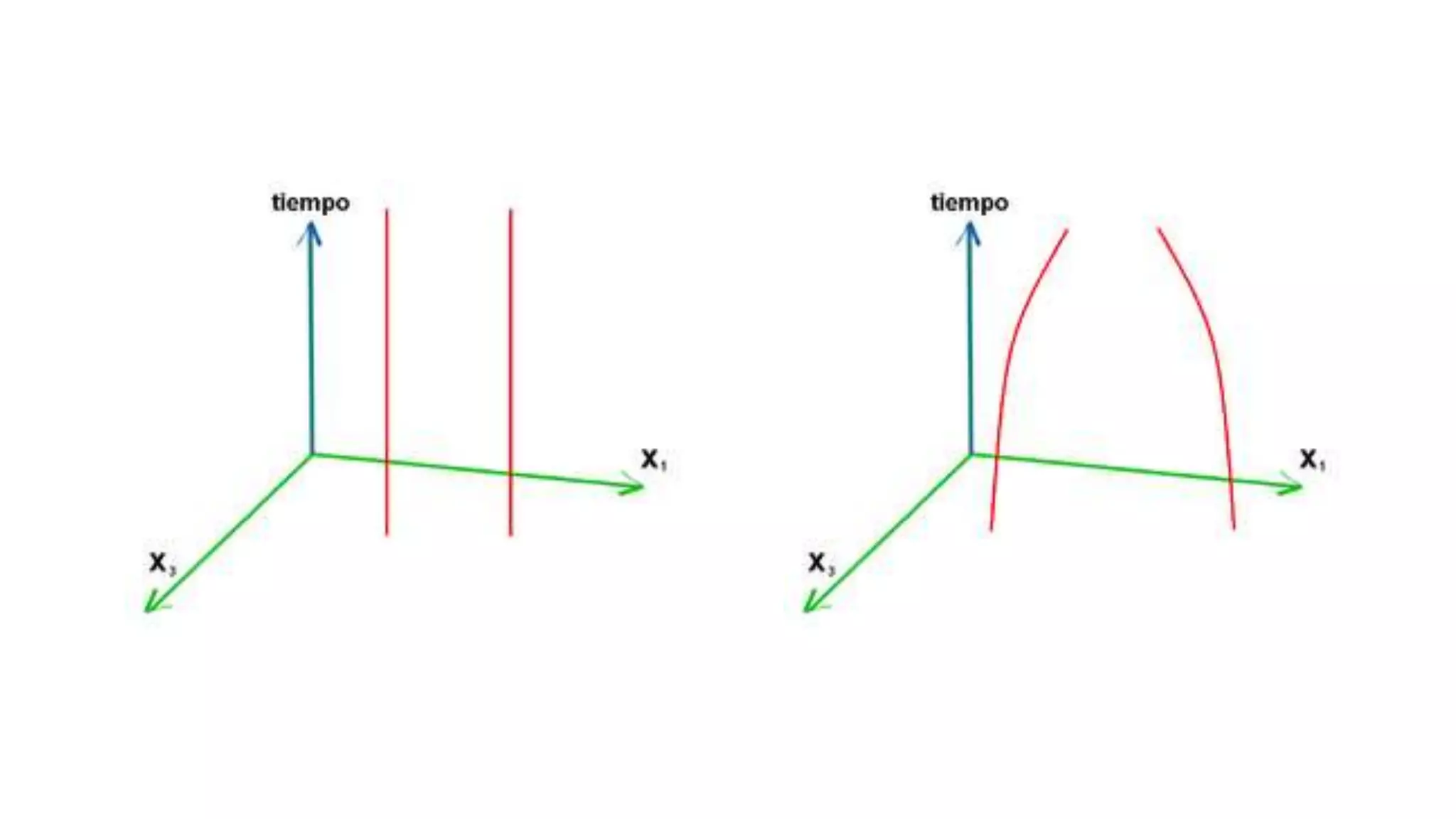
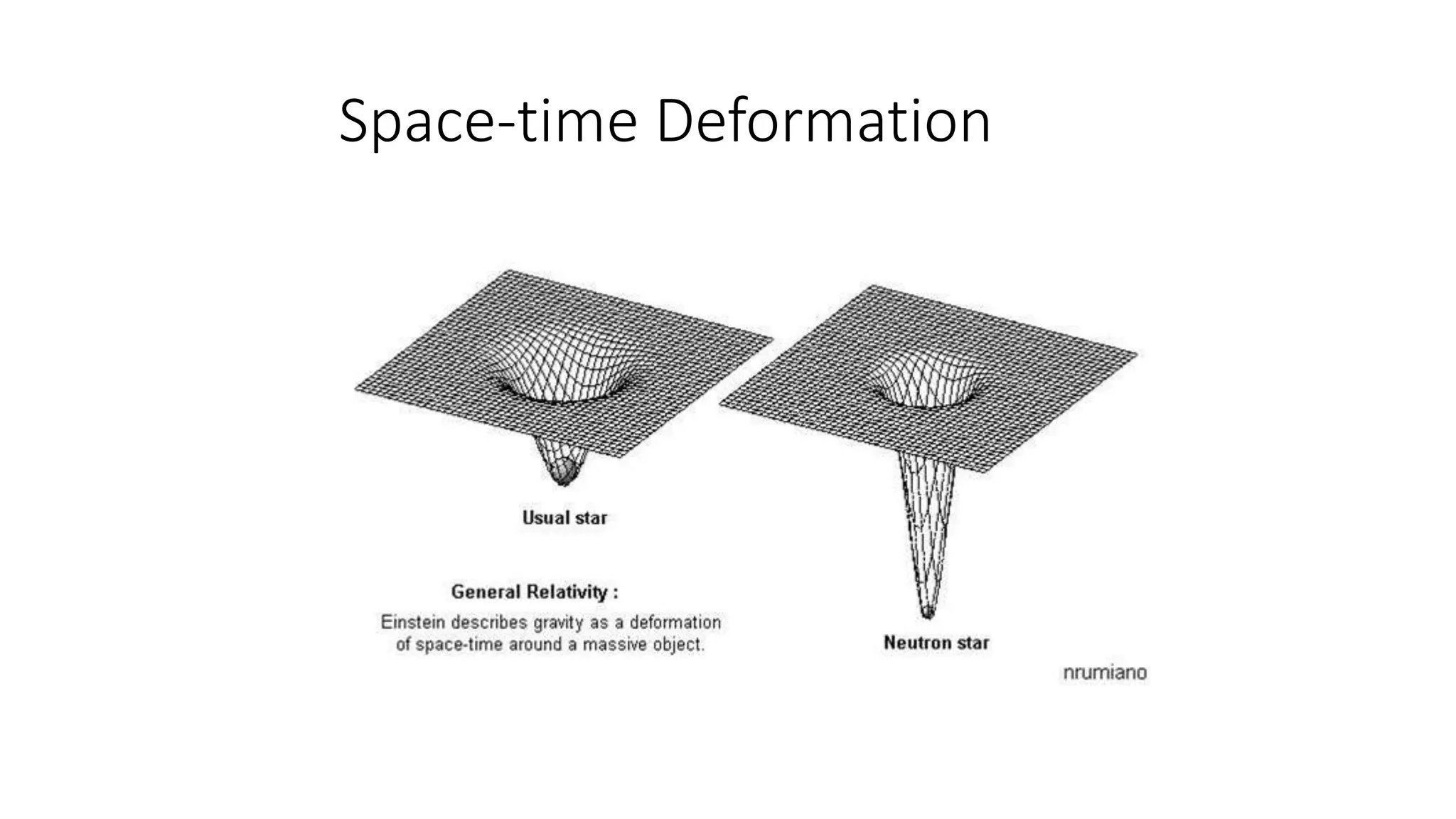
Space-time Deformation
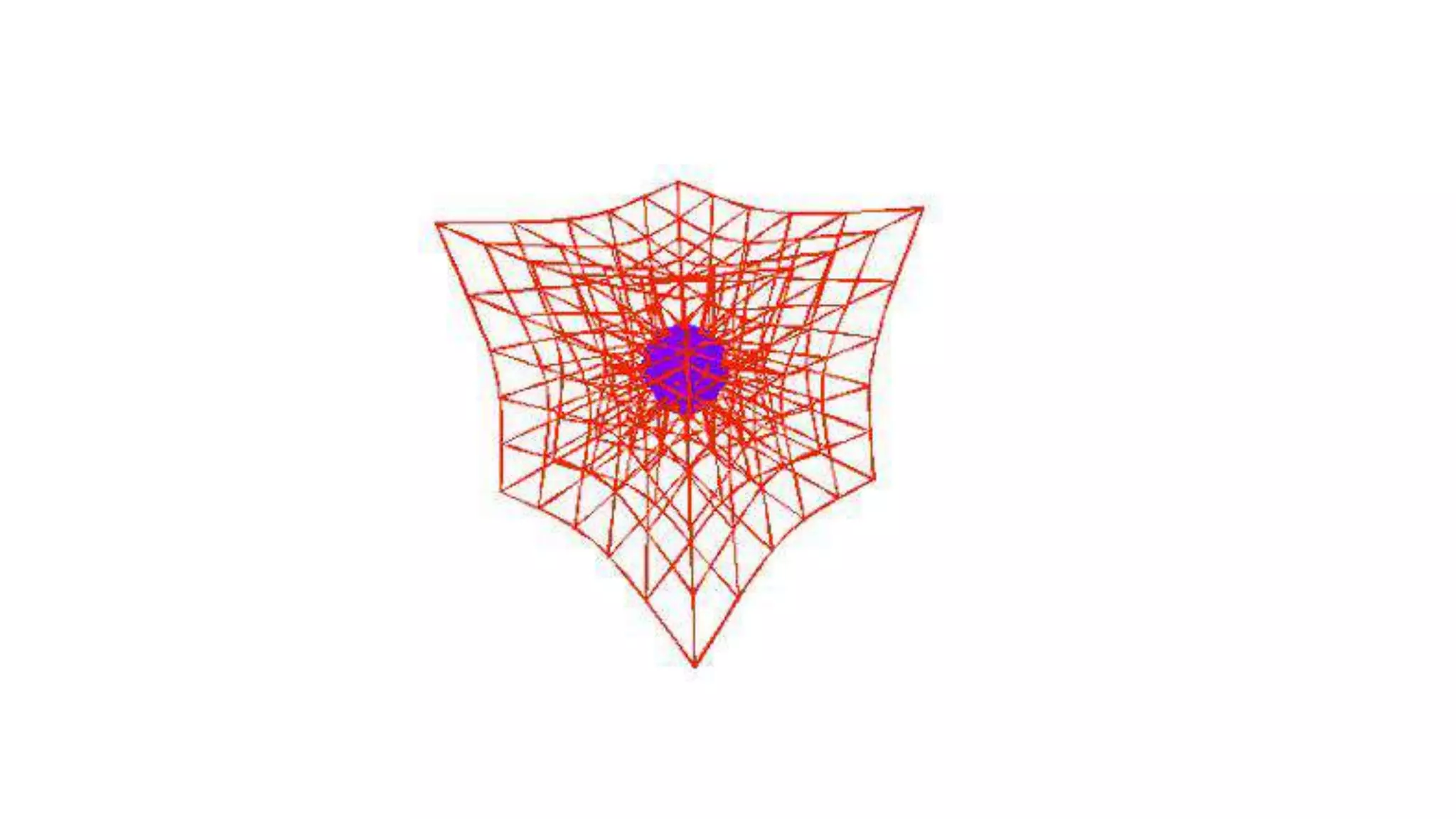
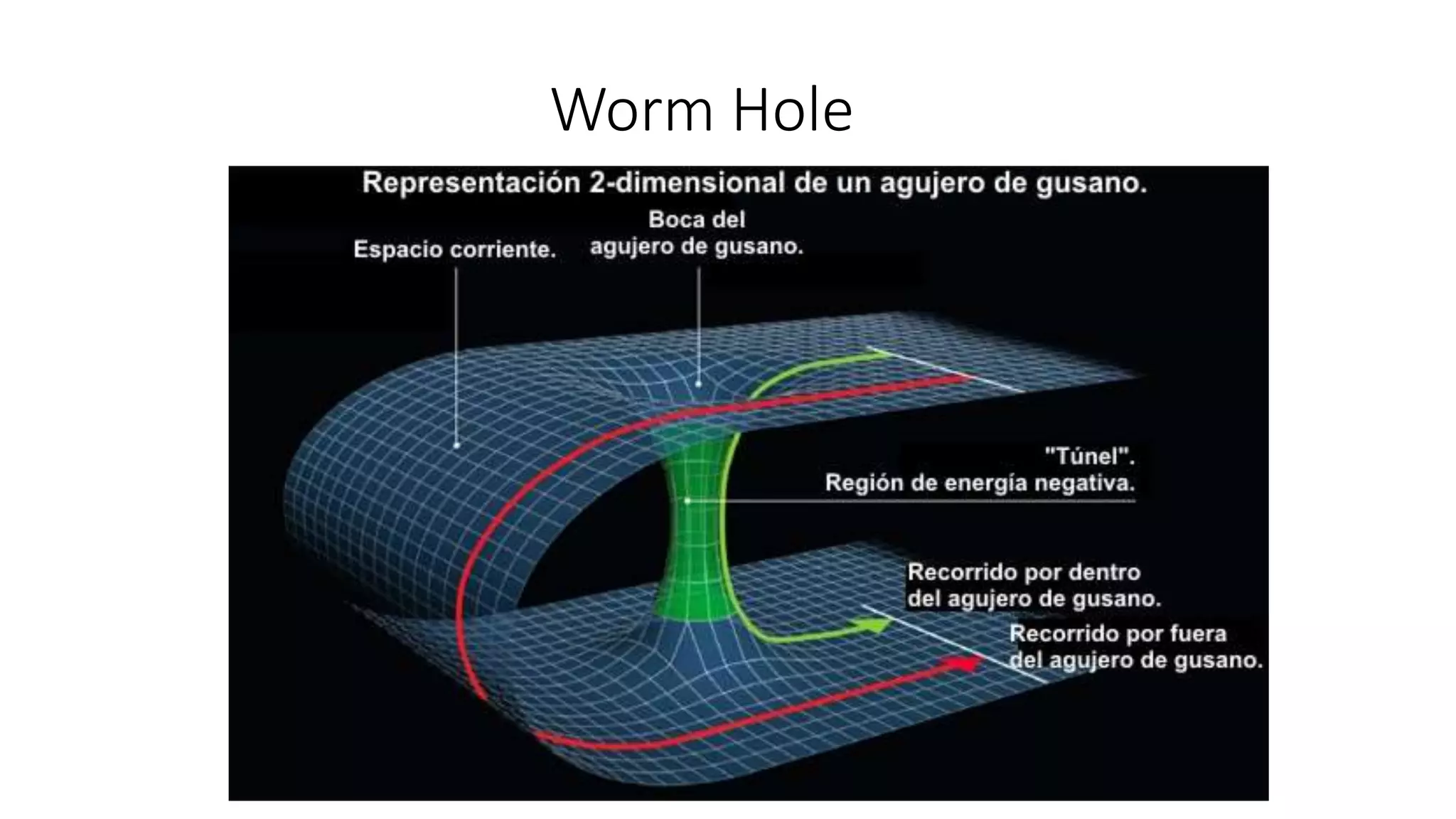
Worm Hole
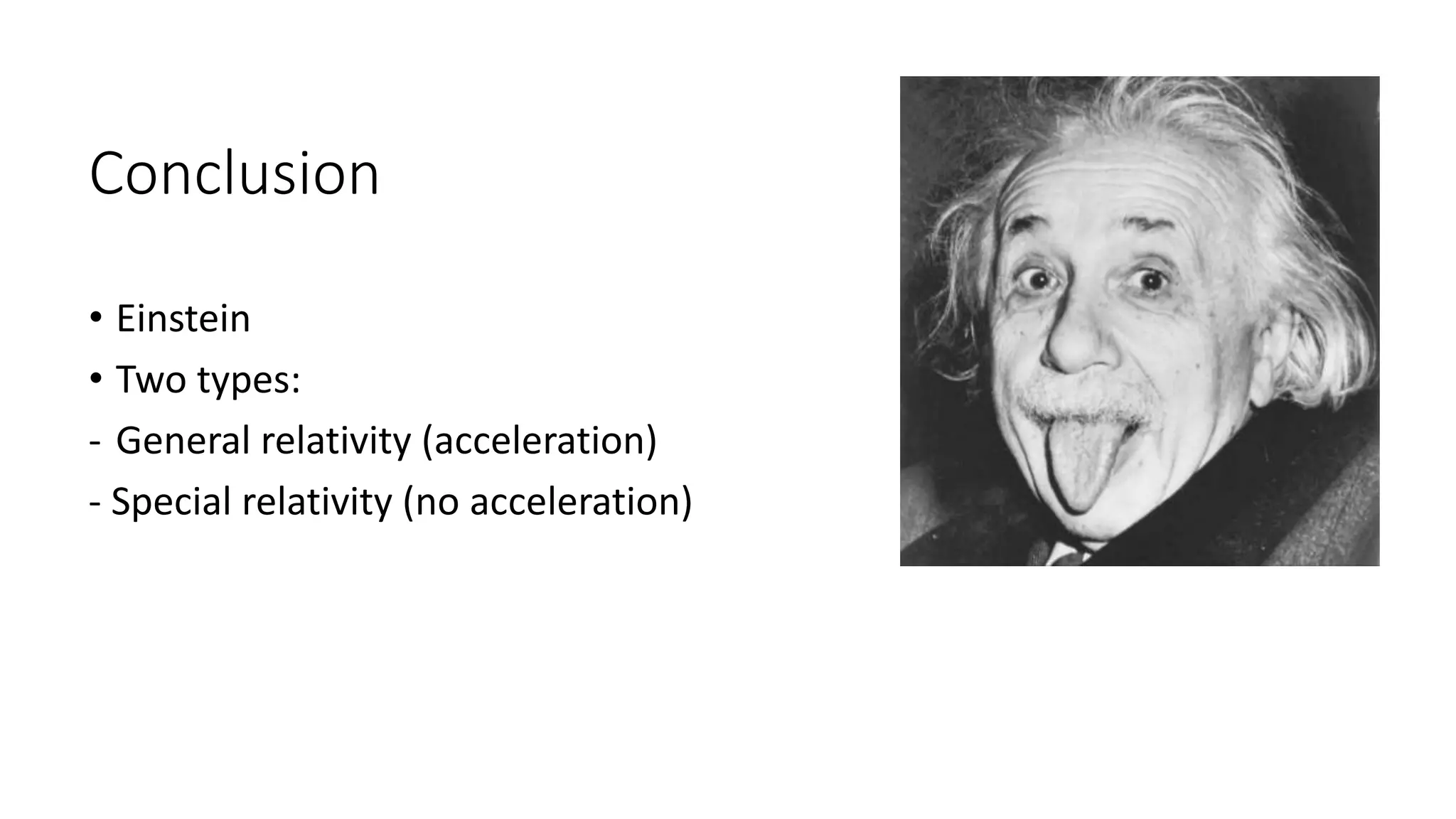
Conclusion
• Einstein
• Two types:
- General relativity (acceleration)
- Special relativity (no acceleration)
General theory of relativity

General theory of relativity