z
GENERAL CONSIDERATONS
FOR ANAESTHESIA
Submitted To-Dr.Adarsh Thakur
Submitted By- Manpreet Singh
z
ANAESTHESIA
 Refers to the state in which an animal is insensible to pain
resulting from the trauma or surgery.
 The term ‘analgesia’ is Greek word for ‘without pain’.
 The term ‘anaesthesia’ was coined by Oliver Wendell Holmes
in 1846 .
Aim Of Anaesthesia
 Humane treatment of the animal
 Provision of adequate conditions for the procedure
z
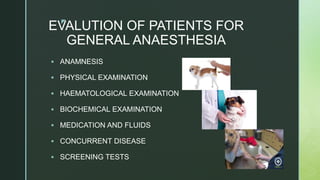
EVALUTION OF PATIENTS FOR
GENERAL ANAESTHESIA
 ANAMNESIS
 PHYSICAL EXAMINATION
 HAEMATOLOGICAL EXAMINATION
 BIOCHEMICAL EXAMINATION
 MEDICATION AND FLUIDS
 CONCURRENT DISEASE
 SCREENING TESTS
z
ANAMNESIS
AGE
 Geriatric Patients- cardiopulmonary,hepatic;renal system should be
evaluated properly. Short acting, easily eliminated at low end of the dose
range. Use balanced anaesthetic technique to avoid using higher dose.
 Paediatric Patients- low dose is required because of insuffiency of
hepatic microsomal enzymes.
SIZE OF PATIENT
 Small animal has higher BMR therefore more dose is required than in large
animals.
z
SEX OF THE ANIMAL-
 BMR of male animals is app.7% higher than female animals .
 In females BMR rise occur during pregnancy.
TEMPRAMENT AND ACTIVITY-
 Active animals have high value of BMR
z
 BREED-
 Greyhounds -sensitive to thiopental
 -Prolonged recovery from propofol
 Brachiocephalic breeds-challenging intubation
 -Risk of airways obstruction
 - Choice of endotracheal tube size
 Toy breeds - hypothermia
 Giant breeds -require lower drug dosages
 - Body weight ratio e.g. Boxer breed
sensitive to ACP
z
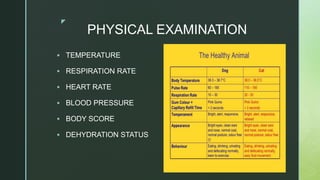
PHYSICAL EXAMINATION
 TEMPERATURE
 RESPIRATION RATE
 HEART RATE
 BLOOD PRESSURE
 BODY SCORE
 DEHYDRATION STATUS
z
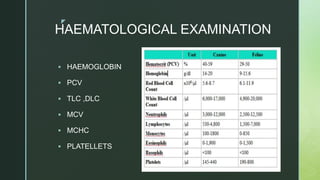
HAEMATOLOGICAL EXAMINATION
 HAEMOGLOBIN
 PCV
 TLC ,DLC
 MCV
 MCHC
 PLATELLETS
z
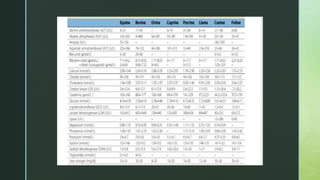
BIOCHEMICAL EXAMINATION
 BUN
 CREATININE
 AST
 ALT
 SERUM CALCIUM
z
z
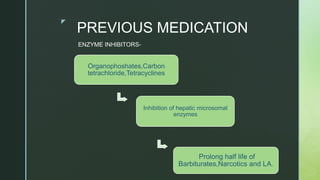
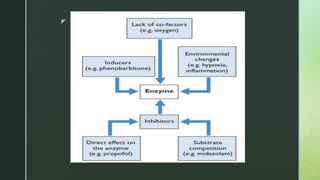
PREVIOUS MEDICATION
Organophoshates,Carbon
tetrachloride,Tetracyclines
Inhibition of hepatic microsomal
enzymes
Prolong half life of
Barbiturates,Narcotics and LA.
ENZYME INHIBITORS-
z
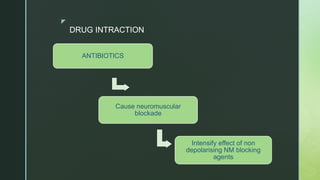
DRUG INTRACTION
ANTIBIOTICS
Cause neuromuscular
blockade
Intensify effect of non
depolarising NM blocking
agents
z
z
 BLOOD GAS ANALYSIS
 BLOOD PRESSURE MEASUREMENT
 ELECTROCARDIOGRAPHY
z
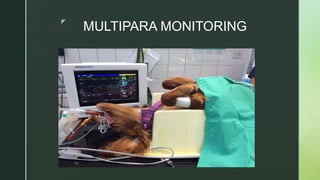
MULTIPARA MONITORING
z
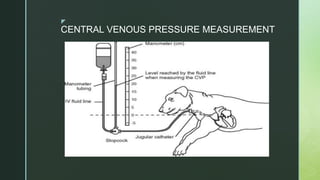
CENTRAL VENOUS PRESSURE MEASUREMENT
zANESTHETIC CONSIDERATIONS IN
TRAUMA AND SHOCK PATIENT
MONITORING
CVP –Measures direct atrial blood pressure
OSCILLOMETRIC TECHNIQUE -Most accurate in cats
SUPPORTIVE THERAPY - (fluids and electrolyte)
Two intravenous catheters can be placed @ Dogs -90ml/kg body weight
Cats – 70ml/kg body weight
o Plasma extenders preoperatively
o Hypoglycaemia due to shock -5% dextrose
o In severe blood loss -whole blood transfusion
zANESTHETIC CONSIDERATIONS IN
RENAL PATIENTS
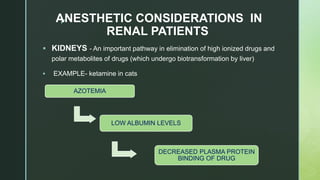
 KIDNEYS - An important pathway in elimination of high ionized drugs and
polar metabolites of drugs (which undergo biotransformation by liver)
 EXAMPLE- ketamine in cats
AZOTEMIA
LOW ALBUMIN LEVELS
DECREASED PLASMA PROTEIN
BINDING OF DRUG
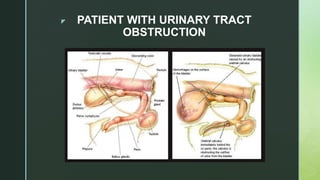
z PATIENT WITH URINARY TRACT
OBSTRUCTION
z
ANAESTHETIC CONSIDERATIONS IN
OBSTRUCTIVE URINARY TRACT DISORDERS
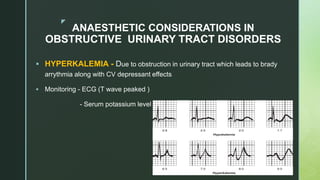
 HYPERKALEMIA - Due to obstruction in urinary tract which leads to brady
arrythmia along with CV depressant effects
 Monitoring - ECG (T wave peaked )
- Serum potassium level
z
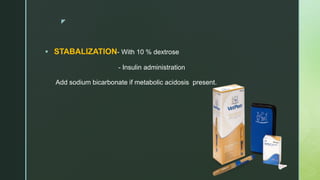
 STABALIZATION- With 10 % dextrose
- Insulin administration
Add sodium bicarbonate if metabolic acidosis present.
z
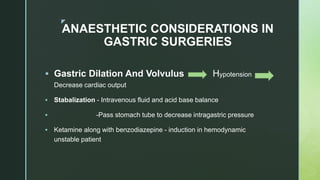
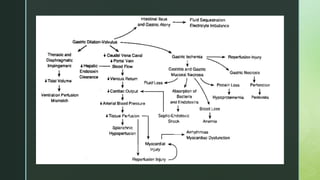
ANAESTHETIC CONSIDERATIONS IN
GASTRIC SURGERIES
 Gastric Dilation And Volvulus Hypotension
Decrease cardiac output
 Stabalization - Intravenous fluid and acid base balance
 -Pass stomach tube to decrease intragastric pressure
 Ketamine along with benzodiazepine - induction in hemodynamic
unstable patient
z
z
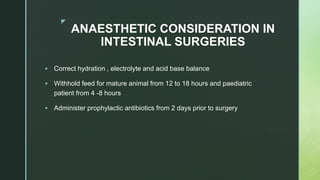
ANAESTHETIC CONSIDERATION IN
INTESTINAL SURGERIES
 Correct hydration , electrolyte and acid base balance
 Withhold feed for mature animal from 12 to 18 hours and paediatric
patient from 4 -8 hours
 Administer prophylactic antibiotics from 2 days prior to surgery
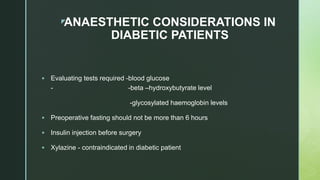
zANAESTHETIC CONSIDERATIONS IN
DIABETIC PATIENTS
 Evaluating tests required -blood glucose
- -beta –hydroxybutyrate level
-glycosylated haemoglobin levels
 Preoperative fasting should not be more than 6 hours
 Insulin injection before surgery
 Xylazine - contraindicated in diabetic patient
zANESTHETIC CONSIDERATIONS IN
HYPOTHYROID AND HYPERTHYROID
PATIENTS
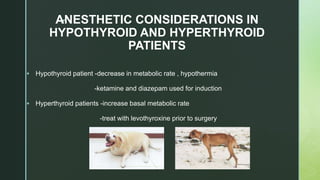
 Hypothyroid patient -decrease in metabolic rate , hypothermia
-ketamine and diazepam used for induction
 Hyperthyroid patients -increase basal metabolic rate
-treat with levothyroxine prior to surgery
z
ANAESTHETIC CONSIDERATIONS
IN PEDIARTRIC PATIENTS
 Low % of drug binding to plasma proteins ( neonatal hypalbuminaemia)
 Low% of body fat result in inadequate drug distribution
 Hepatic metabolism and renal excretion is insufficient
 Neonatal heart has less contractile tissue hypovolemia
 High metabolic rate increase oxygen consumption
z
ANAESTHETIC CONSIDERATIONS
FOR CASEAREN SECTION
 Ventilation - increased to cope up with extra demand of oxygen
 Gastric motility - reduced leads to increased regurgitation and aspiration
pneumonia
 Oxygen -administered before induction to prevent foetal hypoxia
 Ultra short acting drugs are choicest agents e.g. propofol
 Ketamine is contraindicated in dogs
z

General considerations for anesthesia in small animals

  • 1.
    z GENERAL CONSIDERATONS FOR ANAESTHESIA SubmittedTo-Dr.Adarsh Thakur Submitted By- Manpreet Singh
  • 2.
    z ANAESTHESIA  Refers tothe state in which an animal is insensible to pain resulting from the trauma or surgery.  The term ‘analgesia’ is Greek word for ‘without pain’.  The term ‘anaesthesia’ was coined by Oliver Wendell Holmes in 1846 . Aim Of Anaesthesia  Humane treatment of the animal  Provision of adequate conditions for the procedure
  • 3.
    z EVALUTION OF PATIENTSFOR GENERAL ANAESTHESIA  ANAMNESIS  PHYSICAL EXAMINATION  HAEMATOLOGICAL EXAMINATION  BIOCHEMICAL EXAMINATION  MEDICATION AND FLUIDS  CONCURRENT DISEASE  SCREENING TESTS
  • 4.
    z ANAMNESIS AGE  Geriatric Patients-cardiopulmonary,hepatic;renal system should be evaluated properly. Short acting, easily eliminated at low end of the dose range. Use balanced anaesthetic technique to avoid using higher dose.  Paediatric Patients- low dose is required because of insuffiency of hepatic microsomal enzymes. SIZE OF PATIENT  Small animal has higher BMR therefore more dose is required than in large animals.
  • 5.
    z SEX OF THEANIMAL-  BMR of male animals is app.7% higher than female animals .  In females BMR rise occur during pregnancy. TEMPRAMENT AND ACTIVITY-  Active animals have high value of BMR
  • 6.
    z  BREED-  Greyhounds-sensitive to thiopental  -Prolonged recovery from propofol  Brachiocephalic breeds-challenging intubation  -Risk of airways obstruction  - Choice of endotracheal tube size  Toy breeds - hypothermia  Giant breeds -require lower drug dosages  - Body weight ratio e.g. Boxer breed sensitive to ACP
  • 7.
    z PHYSICAL EXAMINATION  TEMPERATURE RESPIRATION RATE  HEART RATE  BLOOD PRESSURE  BODY SCORE  DEHYDRATION STATUS
  • 8.
    z HAEMATOLOGICAL EXAMINATION  HAEMOGLOBIN PCV  TLC ,DLC  MCV  MCHC  PLATELLETS
  • 9.
    z BIOCHEMICAL EXAMINATION  BUN CREATININE  AST  ALT  SERUM CALCIUM
  • 10.
  • 11.
    z PREVIOUS MEDICATION Organophoshates,Carbon tetrachloride,Tetracyclines Inhibition ofhepatic microsomal enzymes Prolong half life of Barbiturates,Narcotics and LA. ENZYME INHIBITORS-
  • 12.
    z DRUG INTRACTION ANTIBIOTICS Cause neuromuscular blockade Intensifyeffect of non depolarising NM blocking agents
  • 13.
  • 14.
    z  BLOOD GASANALYSIS  BLOOD PRESSURE MEASUREMENT  ELECTROCARDIOGRAPHY
  • 15.
  • 16.
  • 17.
    zANESTHETIC CONSIDERATIONS IN TRAUMAAND SHOCK PATIENT MONITORING CVP –Measures direct atrial blood pressure OSCILLOMETRIC TECHNIQUE -Most accurate in cats SUPPORTIVE THERAPY - (fluids and electrolyte) Two intravenous catheters can be placed @ Dogs -90ml/kg body weight Cats – 70ml/kg body weight o Plasma extenders preoperatively o Hypoglycaemia due to shock -5% dextrose o In severe blood loss -whole blood transfusion
  • 18.
    zANESTHETIC CONSIDERATIONS IN RENALPATIENTS  KIDNEYS - An important pathway in elimination of high ionized drugs and polar metabolites of drugs (which undergo biotransformation by liver)  EXAMPLE- ketamine in cats AZOTEMIA LOW ALBUMIN LEVELS DECREASED PLASMA PROTEIN BINDING OF DRUG
  • 19.
    z PATIENT WITHURINARY TRACT OBSTRUCTION
  • 20.
    z ANAESTHETIC CONSIDERATIONS IN OBSTRUCTIVEURINARY TRACT DISORDERS  HYPERKALEMIA - Due to obstruction in urinary tract which leads to brady arrythmia along with CV depressant effects  Monitoring - ECG (T wave peaked ) - Serum potassium level
  • 21.
    z  STABALIZATION- With10 % dextrose - Insulin administration Add sodium bicarbonate if metabolic acidosis present.
  • 22.
    z ANAESTHETIC CONSIDERATIONS IN GASTRICSURGERIES  Gastric Dilation And Volvulus Hypotension Decrease cardiac output  Stabalization - Intravenous fluid and acid base balance  -Pass stomach tube to decrease intragastric pressure  Ketamine along with benzodiazepine - induction in hemodynamic unstable patient
  • 23.
  • 24.
    z ANAESTHETIC CONSIDERATION IN INTESTINALSURGERIES  Correct hydration , electrolyte and acid base balance  Withhold feed for mature animal from 12 to 18 hours and paediatric patient from 4 -8 hours  Administer prophylactic antibiotics from 2 days prior to surgery
  • 25.
    zANAESTHETIC CONSIDERATIONS IN DIABETICPATIENTS  Evaluating tests required -blood glucose - -beta –hydroxybutyrate level -glycosylated haemoglobin levels  Preoperative fasting should not be more than 6 hours  Insulin injection before surgery  Xylazine - contraindicated in diabetic patient
  • 26.
    zANESTHETIC CONSIDERATIONS IN HYPOTHYROIDAND HYPERTHYROID PATIENTS  Hypothyroid patient -decrease in metabolic rate , hypothermia -ketamine and diazepam used for induction  Hyperthyroid patients -increase basal metabolic rate -treat with levothyroxine prior to surgery
  • 27.
    z ANAESTHETIC CONSIDERATIONS IN PEDIARTRICPATIENTS  Low % of drug binding to plasma proteins ( neonatal hypalbuminaemia)  Low% of body fat result in inadequate drug distribution  Hepatic metabolism and renal excretion is insufficient  Neonatal heart has less contractile tissue hypovolemia  High metabolic rate increase oxygen consumption
  • 28.
    z ANAESTHETIC CONSIDERATIONS FOR CASEARENSECTION  Ventilation - increased to cope up with extra demand of oxygen  Gastric motility - reduced leads to increased regurgitation and aspiration pneumonia  Oxygen -administered before induction to prevent foetal hypoxia  Ultra short acting drugs are choicest agents e.g. propofol  Ketamine is contraindicated in dogs
  • 29.