B R Y N N S T R E P P A
Things To Know About
Genderlect Theory
What is Genderlect Theory?
Simply put, Genderlect Theory suggests that women
and men speak in two distinct dialects.
Who?
Deborah Tannen is an author and linguistic professor
at Georgetown University, she is mainly responsible
for Genderlect Theory.
Different dialects…so what?
It’s important to understand the differences in
masculine and feminine dialects in order to prevent
miscommunication between the genders in the work
force, family life, and relationships.
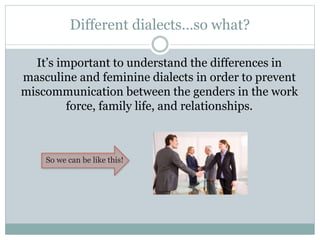
So we can be like this!
Some disagree…
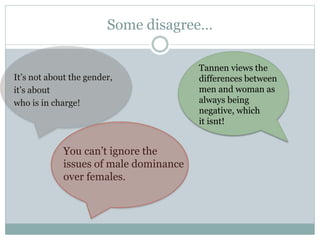
It’s not about the gender,
it’s about
who is in charge!
Tannen views the
differences between
men and woman as
always being
negative, which
it isnt!
You can’t ignore the
issues of male dominance
over females.
So…next time you hear these words from your significant
other…
Realize that the talking is
probably what’s causing
the problems in the first
place! It’s not your fault!
And then, as my dear friend Stephen Covey would say...
“Seek first to understand, then to be understood.”

Genderlect Theory- Streppa

  • 1.
    B R YN N S T R E P P A Things To Know About Genderlect Theory
  • 2.
    What is GenderlectTheory? Simply put, Genderlect Theory suggests that women and men speak in two distinct dialects.
  • 3.
    Who? Deborah Tannen isan author and linguistic professor at Georgetown University, she is mainly responsible for Genderlect Theory.
  • 4.
    Different dialects…so what? It’simportant to understand the differences in masculine and feminine dialects in order to prevent miscommunication between the genders in the work force, family life, and relationships. So we can be like this!
  • 5.
    Some disagree… It’s notabout the gender, it’s about who is in charge! Tannen views the differences between men and woman as always being negative, which it isnt! You can’t ignore the issues of male dominance over females.
  • 6.
    So…next time youhear these words from your significant other… Realize that the talking is probably what’s causing the problems in the first place! It’s not your fault! And then, as my dear friend Stephen Covey would say... “Seek first to understand, then to be understood.”