Better lives through livestock
Gender, diversity and equity in agricultural
research for development: examples from Africa
Isabelle Baltenweck and Alessandra Galiè
Program Leader
International Livestock Research Institute (ILRI)
i.Baltenweck@cgiar.org
9 December 2022
2
International Livestock Research Institute (ILRI)
Vision: equitable and sustainable livelihood systems through livestock
Goals: food and nutrition security; economic development and poverty
reduction; human, animal and environmental health
Focus: improved production; access to animal-source foods; equitable
livestock value chains; access to animal vaccines; livestock & climate
change
3
ILRI is co-hosted by both the
governments of Ethiopia and Kenya,
with offices in 8 other countries in
Africa (Burking Faso, Burundi, Mali,
Nigeria, Senegal, Tanzania, Uganda and
Zimbabwe); 4 countries in Asia (China,
India, Nepal and Vietnam).
ILRI has approximately 600 permanent
staff (with a gender breakdown of 40%
female and 60% male).
ILRI offices and
staff worldwide
ILRI is one of 15 CGIAR research centre
CGIAR is a global research partnership for a food-secure future www.cgiar.org
4
Equitable livestock systems: the gender team at ILRI
ILRI’s Vision: equitable and sustainable livelihood systems through
livestock
Equity is central in the work of the gender team at ILRI
What we do: We apply a gender lens in livestock development
How: We conduct gender analysis to develop and test interventions
that help us progress on gender equality for and through livestock
5
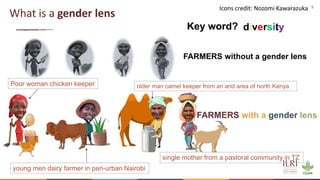
FARMERS without a gender lens
FARMERS with a gender lens
What is a gender lens
Icons credit: Nozomi Kawarazuka
Poor woman chicken keeper
single mother from a pastoral community in TZ
young men dairy farmer in peri-urban Nairobi
older man camel keeper from an arid area of north Kenya
Key word? diversity
6
Diversity? Individual markers…
7
Interaction between individual markers makes lives unique
8
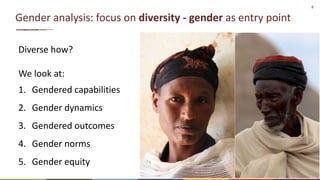
Gender analysis: focus on diversity - gender as entry point
Diverse how?
We look at:
1. Gendered capabilities
2. Gender dynamics
3. Gendered outcomes
4. Gender norms
5. Gender equity
9
Gendered capabilities: who has what, does what, needs what
Land:
Info:
Technology:
10
New technologies (e.g. ) interact with gender dynamics…
…and shape life outcomes
11
Gender norms also play a role in shaping outcomes
What is acceptable for an older men to own, do, desire? a young poor men?...
12
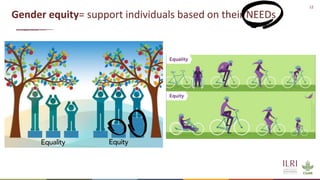
Gender equity= support individuals based on their NEEDs
13
Gender team at ILRI
We study diverse needs, preferences, capabilities, aspirations
affected by gender and other individual markers
To develop and test gender-equitable livestock-related solutions
on the ground so that
everyone achieves outcomes of equal value
(not same outcomes)
14
AIM TO ACHIEVE
OUTCOMES OF
EQUAL VALUE
STUDY DIVERSE
INDIVIDUALS
WITH DIVERSE
CAPABILITIES
AND
ASPIRATIONS
OUR EQUITABLE
INTERVENTIONS
BASED ON
IDENTIFIED
NEEDS,
PREFERENCES,
ASPIRATIONS
MARKET
More
conducive
norms
MARKET
15
Empowerment
Responding to aspirations
Addressing needs, constraints, preferences
Leveraging opportunities
=
EMPOWERMENT
We support the empowerment of diverse women and men in
livestock
16
Empowerment as an end goal
Capability of women for self-determination:
to take control over their own circumstances and to realize their
aspirations in order to live a life they have reason to value
(Annas, 2003; Kabeer, 1999; Sen, 1990)
17
Empowerment as a means (to livestock development)
Only empowered livestock keepers
(and women are the majority of them)
can ensure
that the livestock sector progresses and
that its benefits can be enjoyed by society at large
Women’s empowerment
for livestock
Livestock for
women’s empowerment
19
Livestock key for women’s empowerment
 Women are the majority of poor livestock keepers (FAO 2011)
 Livestock more easily controlled by women than other assets (Galiè et al 2015)
 Livestock and products for daily income and nutrition (Randolph 2007)
 Livestock as a mobile bank… (Njuki and Sanginga 2013)
 …that can be taken in case of divorce
20
Agnes: “I feel empowered when I can take
decisions about the cattle I raise and can
decide how to use the income from the cattle”
(Price at al 2018)
Fatma: “When I started selling
the milk, I started making money
and felt empowered. But the
village was not approving. My
husband left us”
22
Women in Business:
chicken seed dissemination
in Ethiopia and Tanzania
https://youtu.be/vXMhV0wlf3o
THANK YOU

Gender diversity

  • 1.
    Better lives throughlivestock Gender, diversity and equity in agricultural research for development: examples from Africa Isabelle Baltenweck and Alessandra Galiè Program Leader International Livestock Research Institute (ILRI) i.Baltenweck@cgiar.org 9 December 2022
  • 2.
    2 International Livestock ResearchInstitute (ILRI) Vision: equitable and sustainable livelihood systems through livestock Goals: food and nutrition security; economic development and poverty reduction; human, animal and environmental health Focus: improved production; access to animal-source foods; equitable livestock value chains; access to animal vaccines; livestock & climate change
  • 3.
    3 ILRI is co-hostedby both the governments of Ethiopia and Kenya, with offices in 8 other countries in Africa (Burking Faso, Burundi, Mali, Nigeria, Senegal, Tanzania, Uganda and Zimbabwe); 4 countries in Asia (China, India, Nepal and Vietnam). ILRI has approximately 600 permanent staff (with a gender breakdown of 40% female and 60% male). ILRI offices and staff worldwide ILRI is one of 15 CGIAR research centre CGIAR is a global research partnership for a food-secure future www.cgiar.org
  • 4.
    4 Equitable livestock systems:the gender team at ILRI ILRI’s Vision: equitable and sustainable livelihood systems through livestock Equity is central in the work of the gender team at ILRI What we do: We apply a gender lens in livestock development How: We conduct gender analysis to develop and test interventions that help us progress on gender equality for and through livestock
  • 5.
    5 FARMERS without agender lens FARMERS with a gender lens What is a gender lens Icons credit: Nozomi Kawarazuka Poor woman chicken keeper single mother from a pastoral community in TZ young men dairy farmer in peri-urban Nairobi older man camel keeper from an arid area of north Kenya Key word? diversity
  • 6.
  • 7.
    7 Interaction between individualmarkers makes lives unique
  • 8.
    8 Gender analysis: focuson diversity - gender as entry point Diverse how? We look at: 1. Gendered capabilities 2. Gender dynamics 3. Gendered outcomes 4. Gender norms 5. Gender equity
  • 9.
    9 Gendered capabilities: whohas what, does what, needs what Land: Info: Technology:
  • 10.
    10 New technologies (e.g.) interact with gender dynamics… …and shape life outcomes
  • 11.
    11 Gender norms alsoplay a role in shaping outcomes What is acceptable for an older men to own, do, desire? a young poor men?...
  • 12.
    12 Gender equity= supportindividuals based on their NEEDs
  • 13.
    13 Gender team atILRI We study diverse needs, preferences, capabilities, aspirations affected by gender and other individual markers To develop and test gender-equitable livestock-related solutions on the ground so that everyone achieves outcomes of equal value (not same outcomes)
  • 14.
    14 AIM TO ACHIEVE OUTCOMESOF EQUAL VALUE STUDY DIVERSE INDIVIDUALS WITH DIVERSE CAPABILITIES AND ASPIRATIONS OUR EQUITABLE INTERVENTIONS BASED ON IDENTIFIED NEEDS, PREFERENCES, ASPIRATIONS MARKET More conducive norms MARKET
  • 15.
    15 Empowerment Responding to aspirations Addressingneeds, constraints, preferences Leveraging opportunities = EMPOWERMENT We support the empowerment of diverse women and men in livestock
  • 16.
    16 Empowerment as anend goal Capability of women for self-determination: to take control over their own circumstances and to realize their aspirations in order to live a life they have reason to value (Annas, 2003; Kabeer, 1999; Sen, 1990)
  • 17.
    17 Empowerment as ameans (to livestock development) Only empowered livestock keepers (and women are the majority of them) can ensure that the livestock sector progresses and that its benefits can be enjoyed by society at large
  • 18.
  • 19.
    19 Livestock key forwomen’s empowerment  Women are the majority of poor livestock keepers (FAO 2011)  Livestock more easily controlled by women than other assets (Galiè et al 2015)  Livestock and products for daily income and nutrition (Randolph 2007)  Livestock as a mobile bank… (Njuki and Sanginga 2013)  …that can be taken in case of divorce
  • 20.
    20 Agnes: “I feelempowered when I can take decisions about the cattle I raise and can decide how to use the income from the cattle” (Price at al 2018)
  • 21.
    Fatma: “When Istarted selling the milk, I started making money and felt empowered. But the village was not approving. My husband left us”
  • 22.
    22 Women in Business: chickenseed dissemination in Ethiopia and Tanzania https://youtu.be/vXMhV0wlf3o
  • 23.

Editor's Notes

  • #6 The world without a critical gender lens looks like this. Here we use general terms such as farmers that are automatically linked to male farmers. The world with a crucial gender lens pay attention to difference, diversity and power dynamics among the value-chain actors.