 What is software piracy


 Varieties   of piracy

 How it effects


 Case study


 Prevention
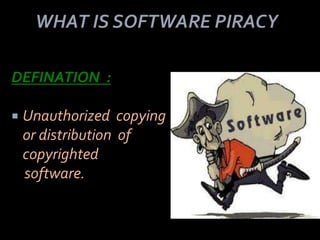
DEFINATION :

   Unauthorized copying
    or distribution of
    copyrighted
    software.
    Computer software is a new form of
    intellectual property.

   Stealing this property is no different than
    stealing any other form of copyrighted content,
    and the punishment for doing so is the same.
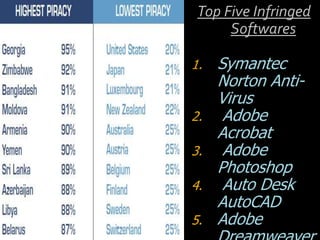
Top Five Infringed
      Softwares

1.   Symantec
     Norton Anti-
     Virus
2.    Adobe
     Acrobat
3.    Adobe
     Photoshop
4.    Auto Desk
     AutoCAD
5.   Adobe
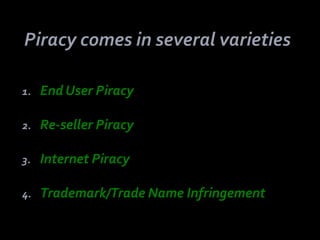
1.   End User Piracy

2.   Re-seller Piracy

3.   Internet Piracy

4.   Trademark/Trade Name Infringement
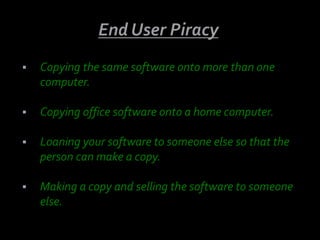
   Copying the same software onto more than one
    computer.

   Copying office software onto a home computer.

   Loaning your software to someone else so that the
    person can make a copy.

   Making a copy and selling the software to someone
    else.
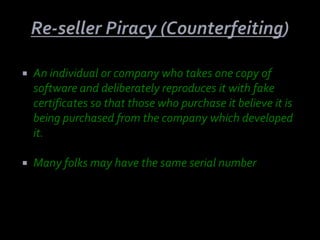
   An individual or company who takes one copy of
    software and deliberately reproduces it with fake
    certificates so that those who purchase it believe it is
    being purchased from the company which developed
    it.

   Many folks may have the same serial number.
•   Distribution of software via Internet.

•   Fake sites which are set up to distribute
    pirated software.


    Trademark/Trade Name Infringement

•   Improper use of a registered trademark.
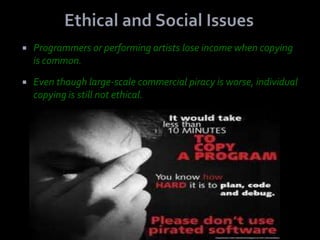
   Programmers or performing artists lose income when copying
    is common.

   Even though large-scale commercial piracy is worse, individual
    copying is still not ethical.
   People buy pirated software without
    realizing what they're doing.

   If you buy Windows, it
     doesn't belong to you, it's
     Microsoft's. They're just
     letting you use it.


   Pricing that is far below the manufacturer's
    price can be a tip-off, but many people think
    they are getting a bargain, not a pirated
    program.
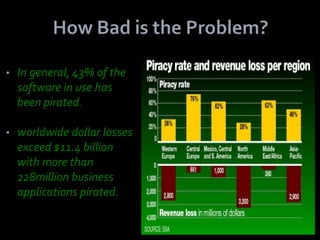
•   In general, 43% of the
    software in use has
    been pirated.

•   worldwide dollar losses
    exceed $11.4 billion
    with more than
    228million business
    applications pirated.
On the Industry
 Reduces profits for the software developer.
 reduces development money for future
  products.

On the Pirate
 Expense, embarrassment, ethically wrong.
 Fines up to $250,000.
 Jail sentence of up to 5 years.
 payment of legal fees.
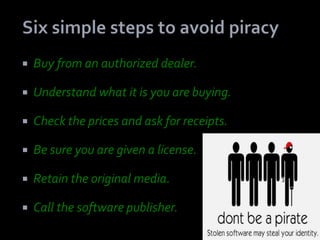
   Buy from an authorized dealer.

   Understand what it is you are buying.

   Check the prices and ask for receipts.

   Be sure you are given a license.

   Retain the original media.

   Call the software publisher.
   Business Software Alliance Hot Line (800)688-BSA1
    or email software@bsa.org
     http://www.bsa.org/


   Microsoft Antipiracy Hot Line (800)R U LEGIT or
    email piracy@microsoft.com

   Software Publishers Association -To report Software
    Piracy (SPA) (800)388-7478
     http://www.spa.org/
NAME : PRITI S NAIK
        ROLL NO : 30

Soft piracy

  • 2.
     What issoftware piracy  Varieties of piracy  How it effects  Case study  Prevention
  • 3.
    DEFINATION :  Unauthorized copying or distribution of copyrighted software.
  • 4.
    Computer software is a new form of intellectual property.  Stealing this property is no different than stealing any other form of copyrighted content, and the punishment for doing so is the same.
  • 5.
    Top Five Infringed Softwares 1. Symantec Norton Anti- Virus 2. Adobe Acrobat 3. Adobe Photoshop 4. Auto Desk AutoCAD 5. Adobe
  • 6.
    1. End User Piracy 2. Re-seller Piracy 3. Internet Piracy 4. Trademark/Trade Name Infringement
  • 7.
    Copying the same software onto more than one computer.  Copying office software onto a home computer.  Loaning your software to someone else so that the person can make a copy.  Making a copy and selling the software to someone else.
  • 8.
    An individual or company who takes one copy of software and deliberately reproduces it with fake certificates so that those who purchase it believe it is being purchased from the company which developed it.  Many folks may have the same serial number.
  • 9.
    Distribution of software via Internet. • Fake sites which are set up to distribute pirated software. Trademark/Trade Name Infringement • Improper use of a registered trademark.
  • 10.
    Programmers or performing artists lose income when copying is common.  Even though large-scale commercial piracy is worse, individual copying is still not ethical.
  • 11.
    People buy pirated software without realizing what they're doing.  If you buy Windows, it doesn't belong to you, it's Microsoft's. They're just letting you use it.  Pricing that is far below the manufacturer's price can be a tip-off, but many people think they are getting a bargain, not a pirated program.
  • 12.
    In general, 43% of the software in use has been pirated. • worldwide dollar losses exceed $11.4 billion with more than 228million business applications pirated.
  • 13.
    On the Industry Reduces profits for the software developer.  reduces development money for future products. On the Pirate  Expense, embarrassment, ethically wrong.  Fines up to $250,000.  Jail sentence of up to 5 years.  payment of legal fees.
  • 14.
    Buy from an authorized dealer.  Understand what it is you are buying.  Check the prices and ask for receipts.  Be sure you are given a license.  Retain the original media.  Call the software publisher.
  • 15.
    Business Software Alliance Hot Line (800)688-BSA1 or email software@bsa.org  http://www.bsa.org/  Microsoft Antipiracy Hot Line (800)R U LEGIT or email piracy@microsoft.com  Software Publishers Association -To report Software Piracy (SPA) (800)388-7478  http://www.spa.org/
  • 16.
    NAME : PRITIS NAIK ROLL NO : 30