New GASB Updates and Rating Agency Comments
Presented By
Henrich Y. Edimo
History
 On June 25,2012, GASB took Steps to improve the reporting of pension
liabilities by states and local governments and pension plans by using
statements No. 67 (Financial Reporting for Pension Plan) and No. 68
(Accounting and Financial Reporting for Pensions).
 These improvements among others, include the requirement for net
pension liability to be reported on the Balance Sheet
 Prior to the implementation of GASB’s Statement No. 68, some
estimates put government net pension liability at approximately $1
trillion. Estimates of this unfunded liability after Statement No. 68
exceed $3 trillion.
Types of Retirement Systems
 Single Employer: Employer has its own separate account with specific
details regarding its pension assets and liabilities in the annual
financials.
 Agent Multi-employer: Same as single employer system (e.g. Virginia
Employees Retirement System).
 Cost Sharing: Employers don’t have their own separate account and
they have no specific details regarding their pension assets and
liabilities in the annual financials. Only system –wide assets and
liability are shown.
Disclosures
 GASB Statement No. 67
 It mandates a statement of fiduciary net position (amount held in trust
for paying retirement benefits) and a statement of changes in fiduciary
net position.
 It enhances note disclosure s and the RSI (Required Supplementary
Information) for both defined benefit and defined contribution plans.
 It requires the presentation of new information about annual money-
weighted ROR in the footnotes and in 10-years RSI Schedule.
 Defines contribution plan remain unchanged.
Disclosures Continued
 GASB Statement No. 68
 It requires governments providing defined benefit plans to report the
net pension liability in their statement of net assets (Difference
between the present value of pension liability and the fair value of
pension assets, set aside in a trust).
 It mandates pension expenses to be recognized currently. These
expenses/cost structure include: annual service cost and interest on
pension liability, effect on the net pension liability on changes in
benefit terms, effect on difference actuarial assumptions and actual
experience.
 For governments participating in cost-sharing plans, Statement No. 68
requires reporting liabilities and expenses equal to their proportionate
share of their collective net pension liabilities and expenses for the
plan.
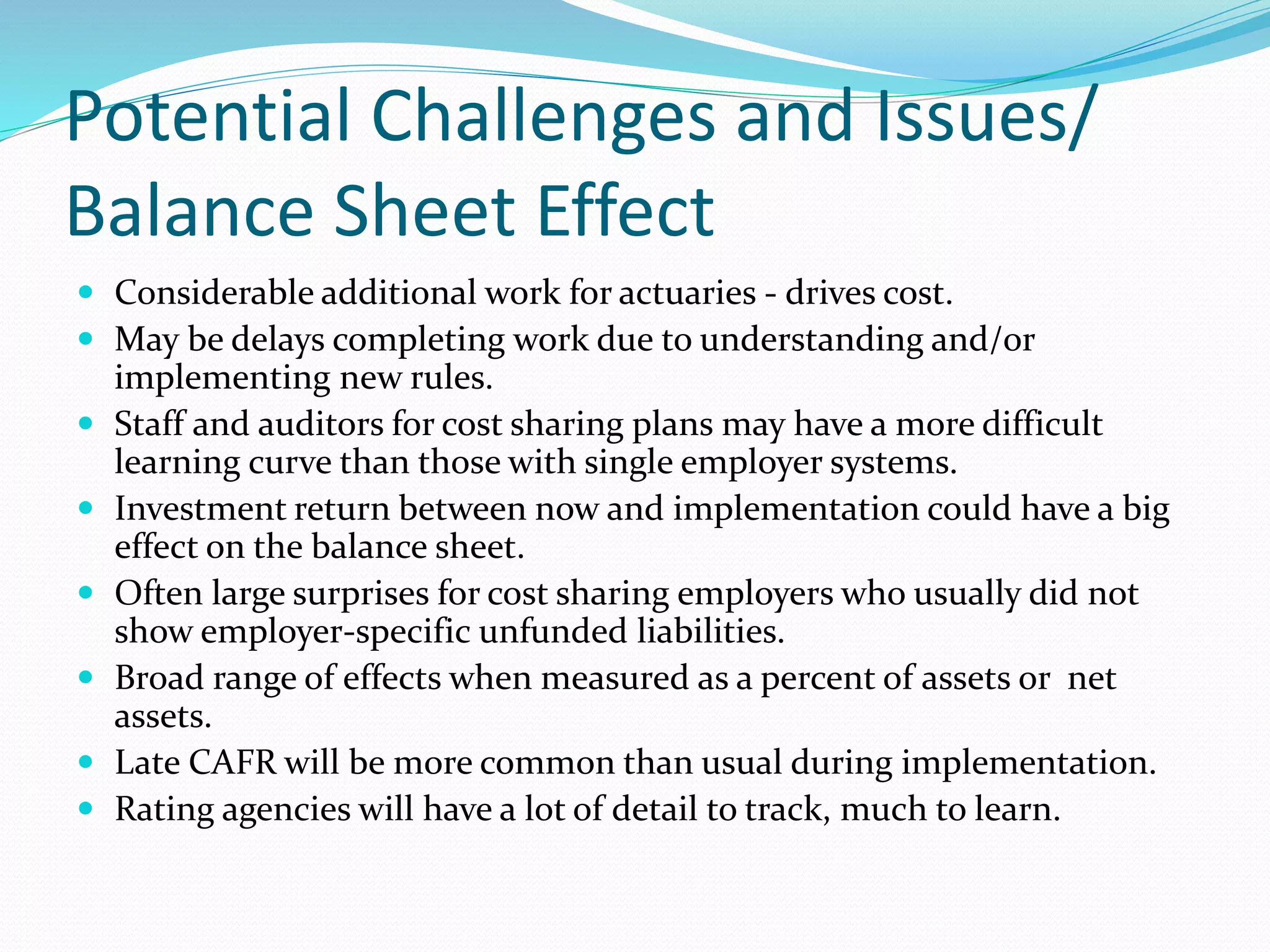
Potential Challenges and Issues/
Balance Sheet Effect
 Considerable additional work for actuaries - drives cost.
 May be delays completing work due to understanding and/or
implementing new rules.
 Staff and auditors for cost sharing plans may have a more difficult
learning curve than those with single employer systems.
 Investment return between now and implementation could have a big
effect on the balance sheet.
 Often large surprises for cost sharing employers who usually did not
show employer-specific unfunded liabilities.
 Broad range of effects when measured as a percent of assets or net
assets.
 Late CAFR will be more common than usual during implementation.
 Rating agencies will have a lot of detail to track, much to learn.
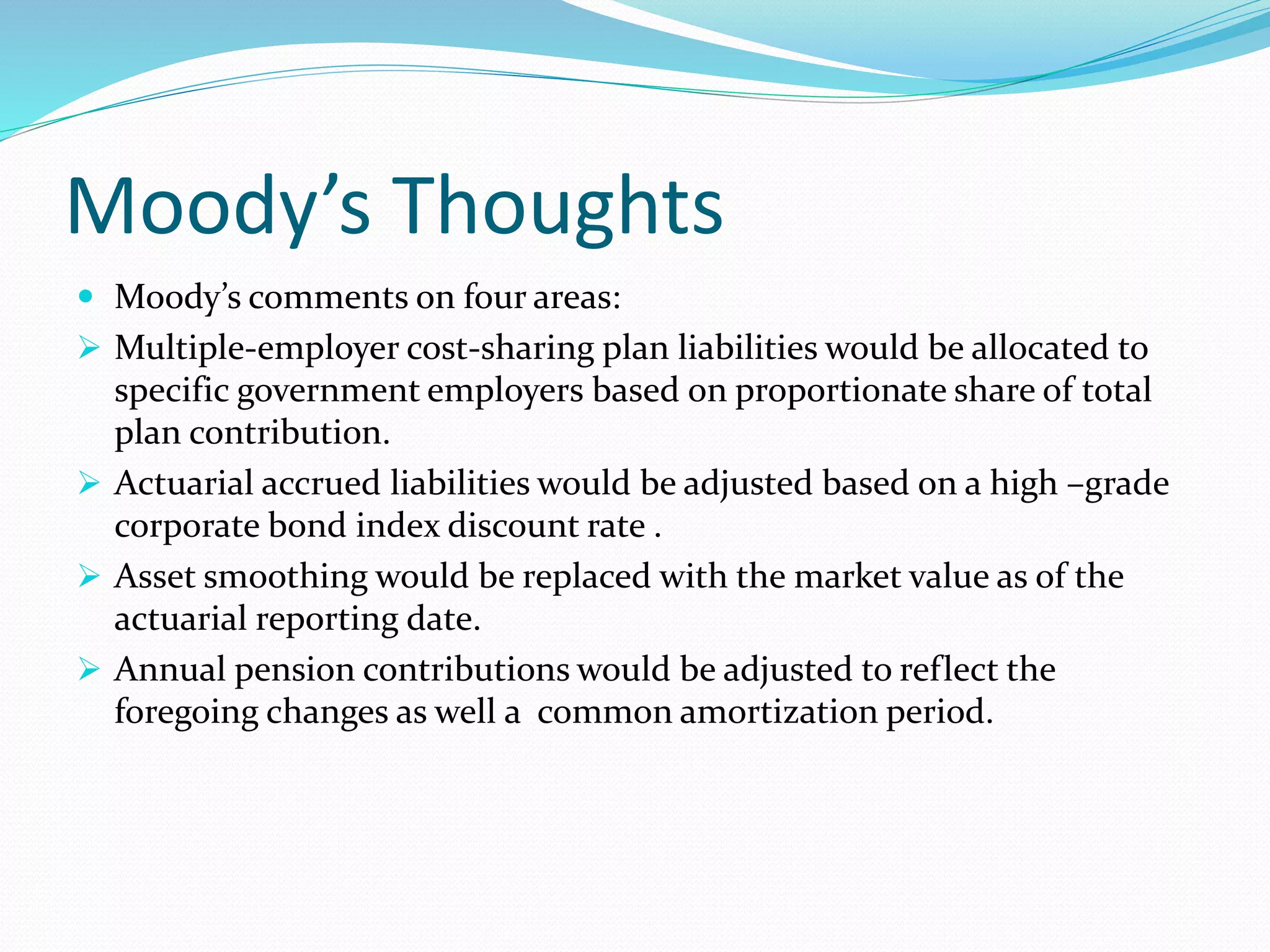
Moody’s Thoughts
 Moody’s comments on four areas:
 Multiple-employer cost-sharing plan liabilities would be allocated to
specific government employers based on proportionate share of total
plan contribution.
 Actuarial accrued liabilities would be adjusted based on a high –grade
corporate bond index discount rate .
 Asset smoothing would be replaced with the market value as of the
actuarial reporting date.
 Annual pension contributions would be adjusted to reflect the
foregoing changes as well a common amortization period.
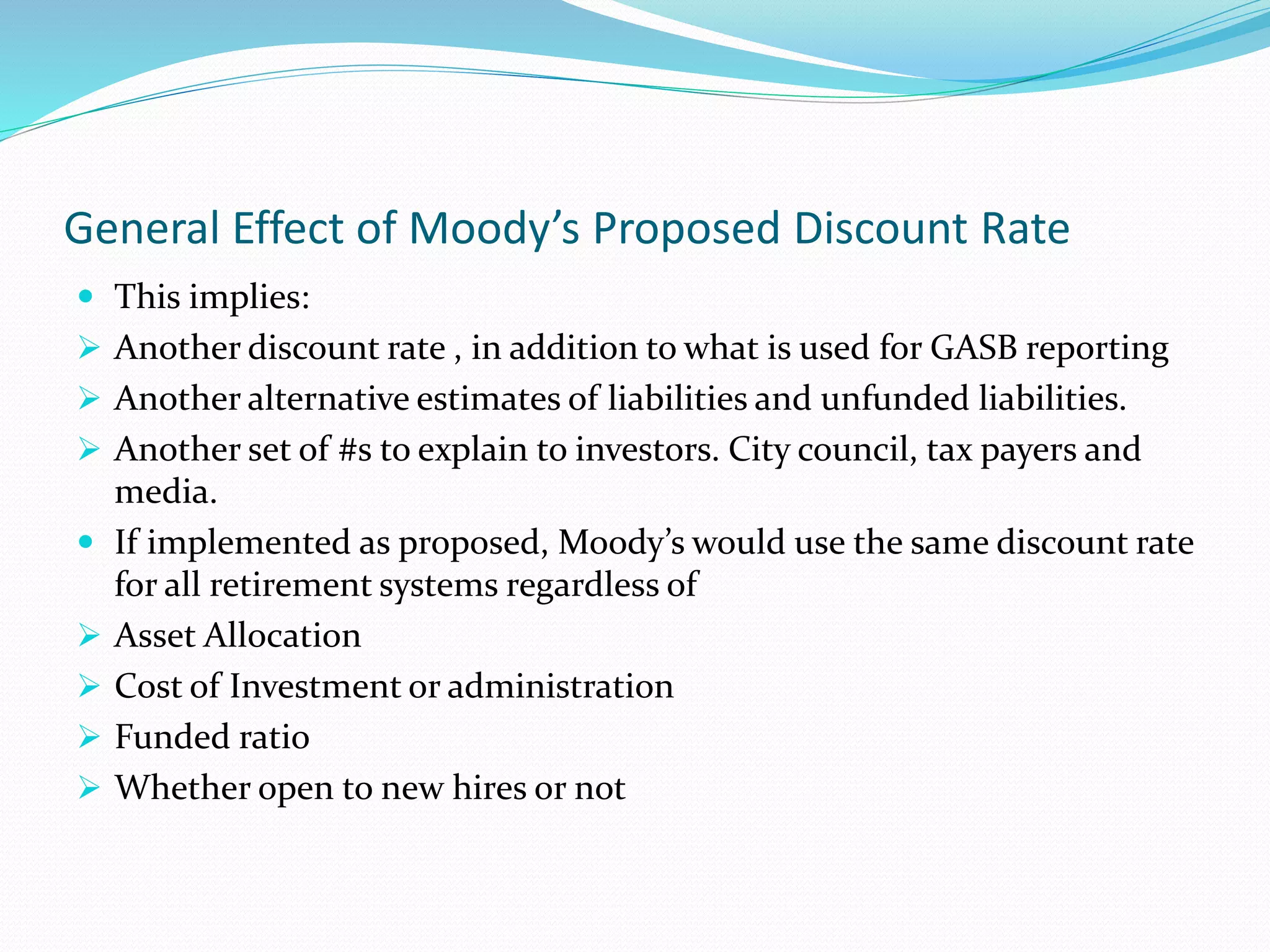
General Effect of Moody’s Proposed Discount Rate
 This implies:
 Another discount rate , in addition to what is used for GASB reporting
 Another alternative estimates of liabilities and unfunded liabilities.
 Another set of #s to explain to investors. City council, tax payers and
media.
 If implemented as proposed, Moody’s would use the same discount rate
for all retirement systems regardless of
 Asset Allocation
 Cost of Investment or administration
 Funded ratio
 Whether open to new hires or not
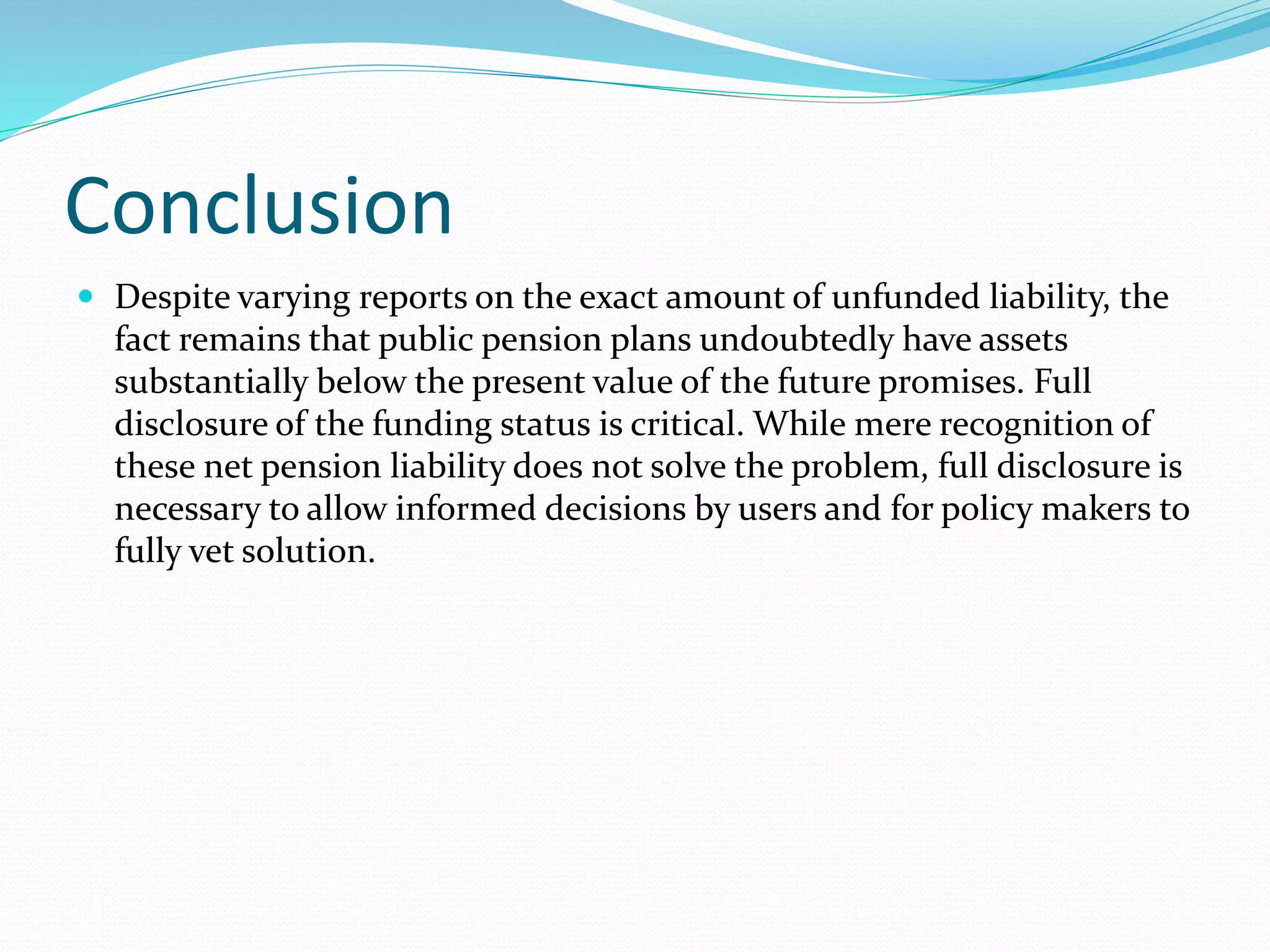
Conclusion
 Despite varying reports on the exact amount of unfunded liability, the
fact remains that public pension plans undoubtedly have assets
substantially below the present value of the future promises. Full
disclosure of the funding status is critical. While mere recognition of
these net pension liability does not solve the problem, full disclosure is
necessary to allow informed decisions by users and for policy makers to
fully vet solution.
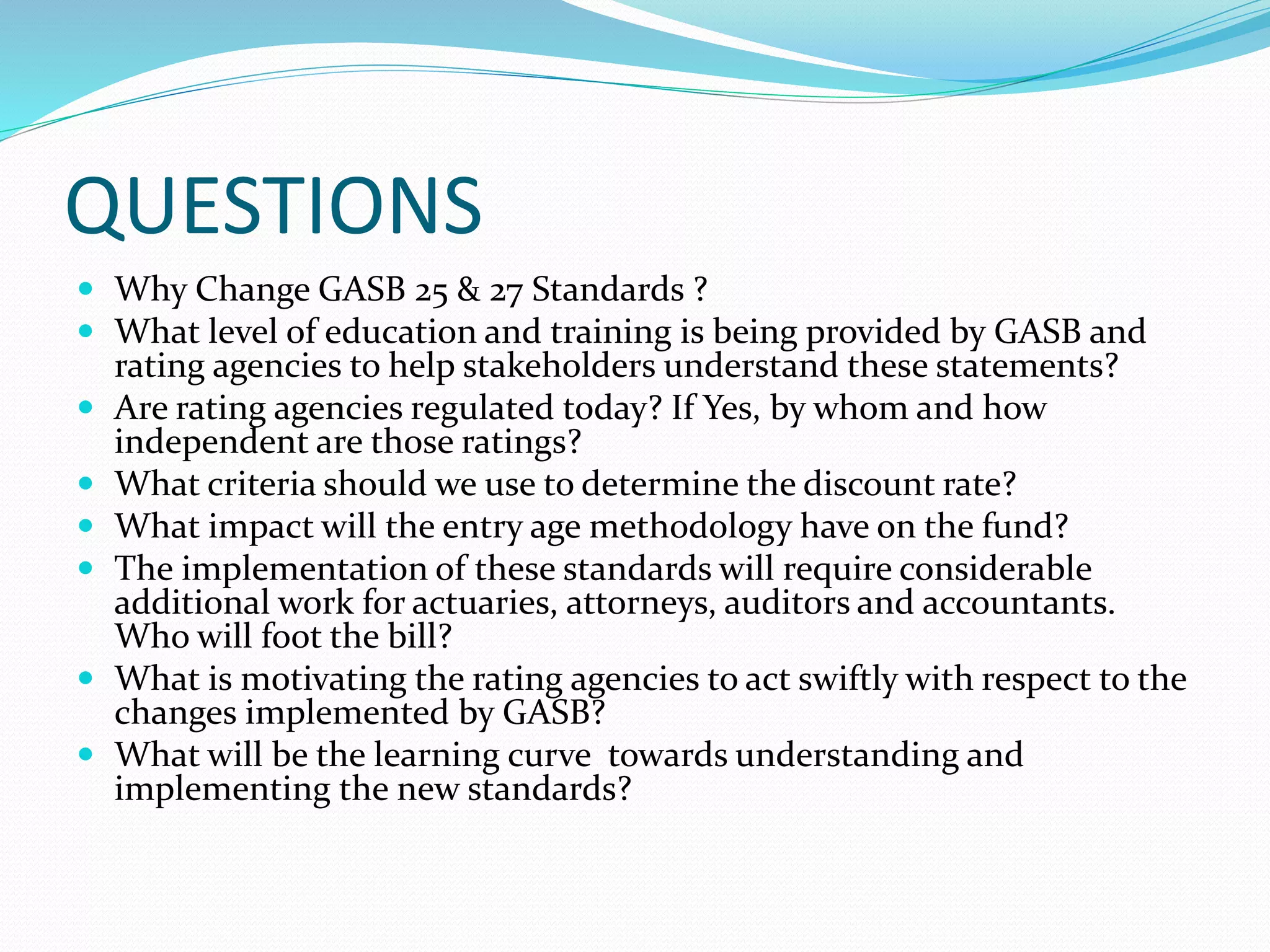
QUESTIONS
 Why Change GASB 25 & 27 Standards ?
 What level of education and training is being provided by GASB and
rating agencies to help stakeholders understand these statements?
 Are rating agencies regulated today? If Yes, by whom and how
independent are those ratings?
 What criteria should we use to determine the discount rate?
 What impact will the entry age methodology have on the fund?
 The implementation of these standards will require considerable
additional work for actuaries, attorneys, auditors and accountants.
Who will foot the bill?
 What is motivating the rating agencies to act swiftly with respect to the
changes implemented by GASB?
 What will be the learning curve towards understanding and
implementing the new standards?

GASB Statements 67 68

  • 1.
    New GASB Updatesand Rating Agency Comments Presented By Henrich Y. Edimo
  • 2.
    History  On June25,2012, GASB took Steps to improve the reporting of pension liabilities by states and local governments and pension plans by using statements No. 67 (Financial Reporting for Pension Plan) and No. 68 (Accounting and Financial Reporting for Pensions).  These improvements among others, include the requirement for net pension liability to be reported on the Balance Sheet  Prior to the implementation of GASB’s Statement No. 68, some estimates put government net pension liability at approximately $1 trillion. Estimates of this unfunded liability after Statement No. 68 exceed $3 trillion.
  • 3.
    Types of RetirementSystems  Single Employer: Employer has its own separate account with specific details regarding its pension assets and liabilities in the annual financials.  Agent Multi-employer: Same as single employer system (e.g. Virginia Employees Retirement System).  Cost Sharing: Employers don’t have their own separate account and they have no specific details regarding their pension assets and liabilities in the annual financials. Only system –wide assets and liability are shown.
  • 4.
    Disclosures  GASB StatementNo. 67  It mandates a statement of fiduciary net position (amount held in trust for paying retirement benefits) and a statement of changes in fiduciary net position.  It enhances note disclosure s and the RSI (Required Supplementary Information) for both defined benefit and defined contribution plans.  It requires the presentation of new information about annual money- weighted ROR in the footnotes and in 10-years RSI Schedule.  Defines contribution plan remain unchanged.
  • 5.
    Disclosures Continued  GASBStatement No. 68  It requires governments providing defined benefit plans to report the net pension liability in their statement of net assets (Difference between the present value of pension liability and the fair value of pension assets, set aside in a trust).  It mandates pension expenses to be recognized currently. These expenses/cost structure include: annual service cost and interest on pension liability, effect on the net pension liability on changes in benefit terms, effect on difference actuarial assumptions and actual experience.  For governments participating in cost-sharing plans, Statement No. 68 requires reporting liabilities and expenses equal to their proportionate share of their collective net pension liabilities and expenses for the plan.
  • 6.
    Potential Challenges andIssues/ Balance Sheet Effect  Considerable additional work for actuaries - drives cost.  May be delays completing work due to understanding and/or implementing new rules.  Staff and auditors for cost sharing plans may have a more difficult learning curve than those with single employer systems.  Investment return between now and implementation could have a big effect on the balance sheet.  Often large surprises for cost sharing employers who usually did not show employer-specific unfunded liabilities.  Broad range of effects when measured as a percent of assets or net assets.  Late CAFR will be more common than usual during implementation.  Rating agencies will have a lot of detail to track, much to learn.
  • 7.
    Moody’s Thoughts  Moody’scomments on four areas:  Multiple-employer cost-sharing plan liabilities would be allocated to specific government employers based on proportionate share of total plan contribution.  Actuarial accrued liabilities would be adjusted based on a high –grade corporate bond index discount rate .  Asset smoothing would be replaced with the market value as of the actuarial reporting date.  Annual pension contributions would be adjusted to reflect the foregoing changes as well a common amortization period.
  • 8.
    General Effect ofMoody’s Proposed Discount Rate  This implies:  Another discount rate , in addition to what is used for GASB reporting  Another alternative estimates of liabilities and unfunded liabilities.  Another set of #s to explain to investors. City council, tax payers and media.  If implemented as proposed, Moody’s would use the same discount rate for all retirement systems regardless of  Asset Allocation  Cost of Investment or administration  Funded ratio  Whether open to new hires or not
  • 9.
    Conclusion  Despite varyingreports on the exact amount of unfunded liability, the fact remains that public pension plans undoubtedly have assets substantially below the present value of the future promises. Full disclosure of the funding status is critical. While mere recognition of these net pension liability does not solve the problem, full disclosure is necessary to allow informed decisions by users and for policy makers to fully vet solution.
  • 10.
    QUESTIONS  Why ChangeGASB 25 & 27 Standards ?  What level of education and training is being provided by GASB and rating agencies to help stakeholders understand these statements?  Are rating agencies regulated today? If Yes, by whom and how independent are those ratings?  What criteria should we use to determine the discount rate?  What impact will the entry age methodology have on the fund?  The implementation of these standards will require considerable additional work for actuaries, attorneys, auditors and accountants. Who will foot the bill?  What is motivating the rating agencies to act swiftly with respect to the changes implemented by GASB?  What will be the learning curve towards understanding and implementing the new standards?