We have the OPEB numbers, now what? MASBO Annual Conference April 30, 2009
Topics What do all these numbers mean? What do we have to do with them?  What happens in the second and third years? What actions should we consider?
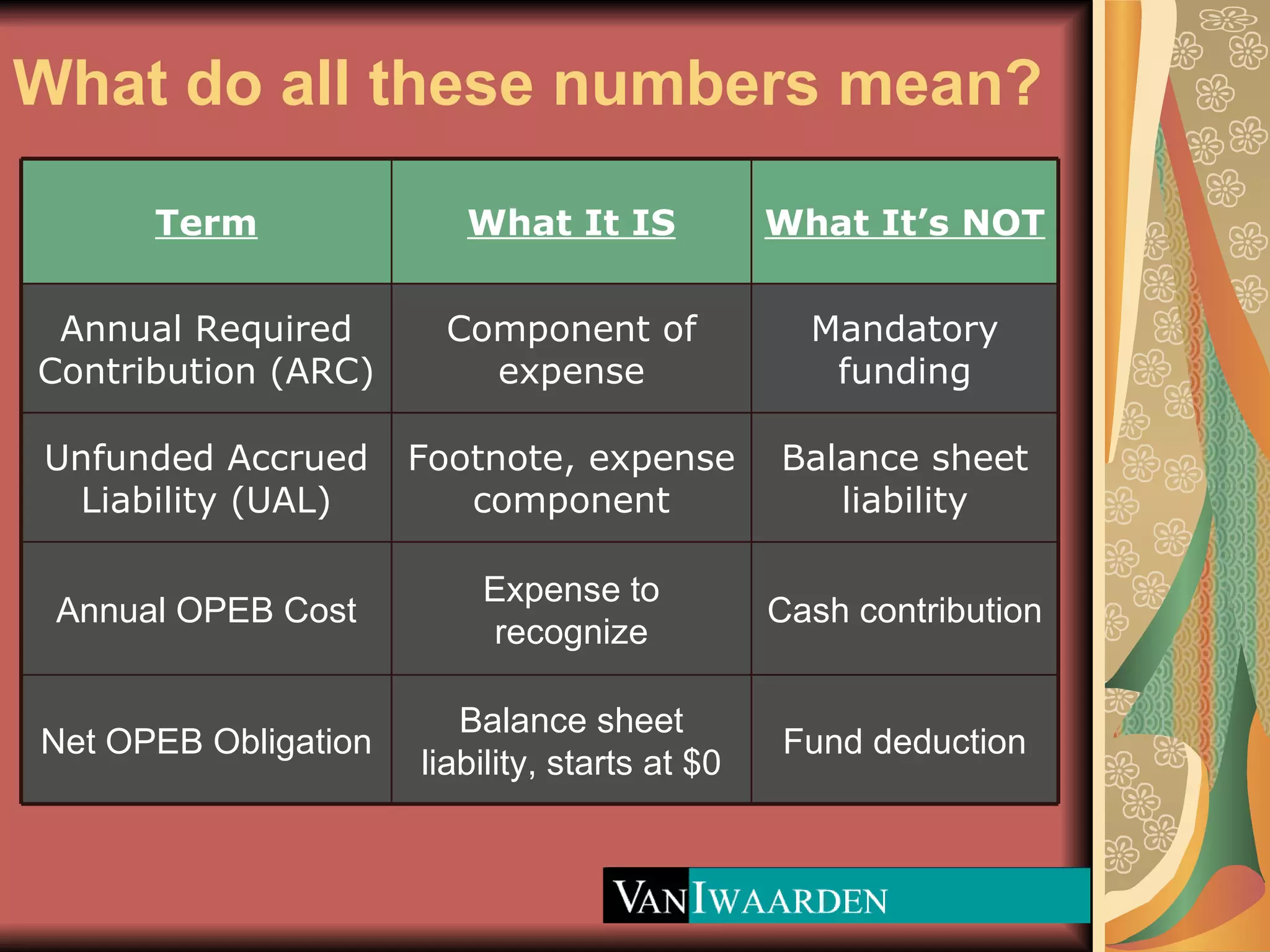
What do all these numbers mean? Fund deduction Balance sheet liability, starts at $0 Net OPEB Obligation Cash contribution Expense to recognize Annual OPEB Cost Balance sheet liability Footnote, expense component Unfunded Accrued Liability (UAL) Mandatory funding Component of expense Annual Required Contribution (ARC) What It’s NOT What It IS Term
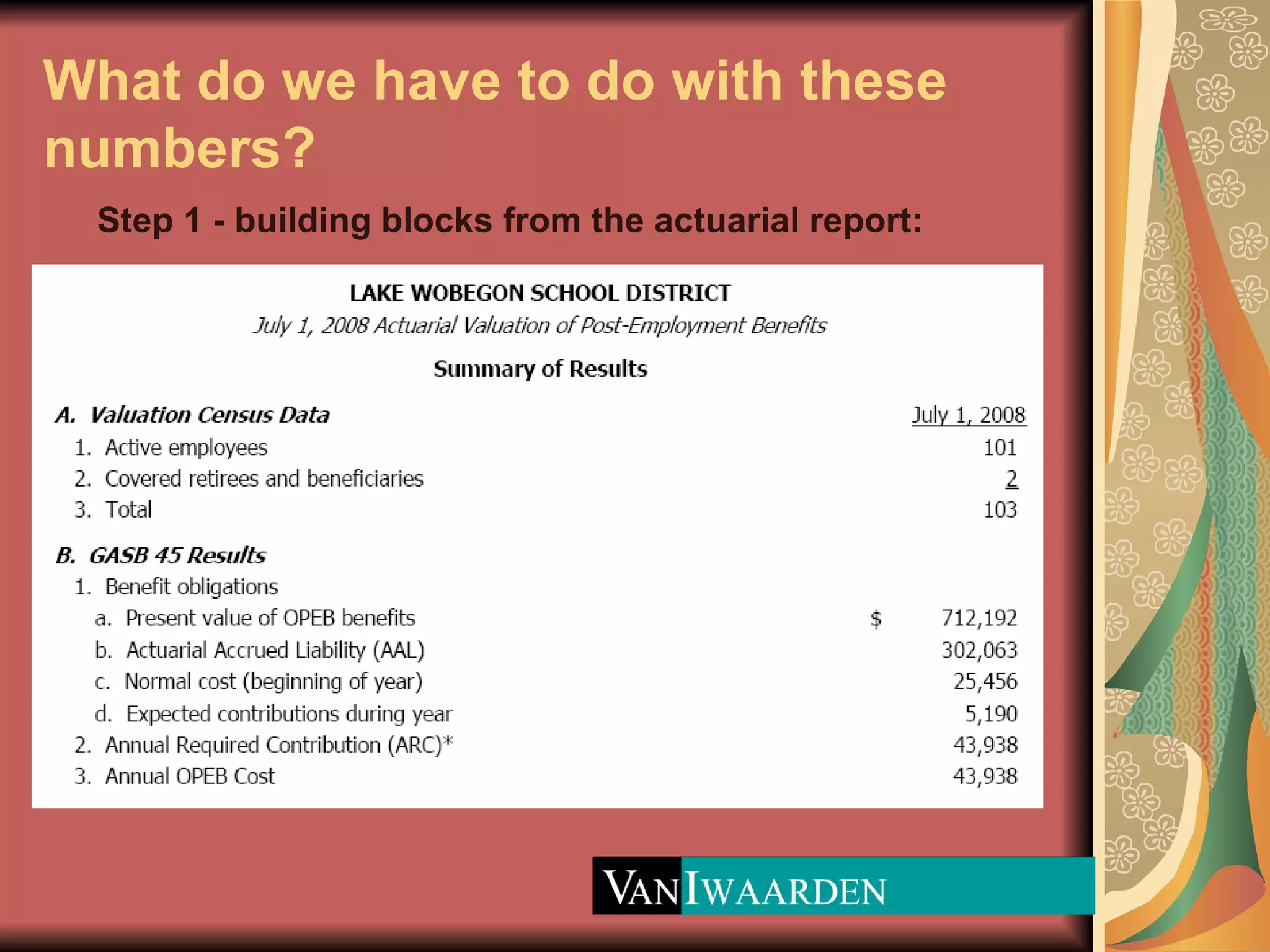
What do we have to do with these numbers? Step 1 - building blocks from the actuarial report:
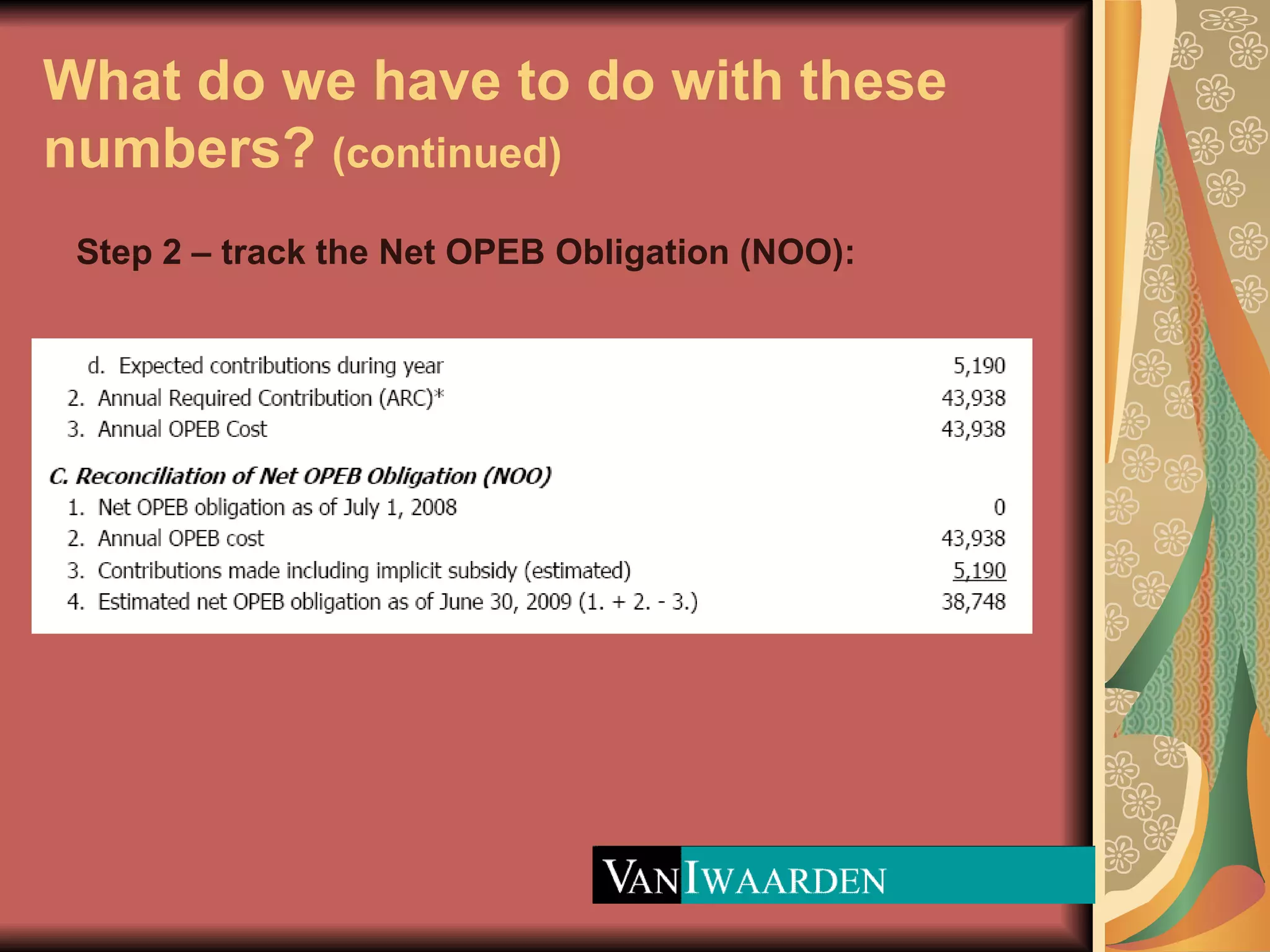
What do we have to do with these numbers?  (continued) Step 2 – track the Net OPEB Obligation (NOO):
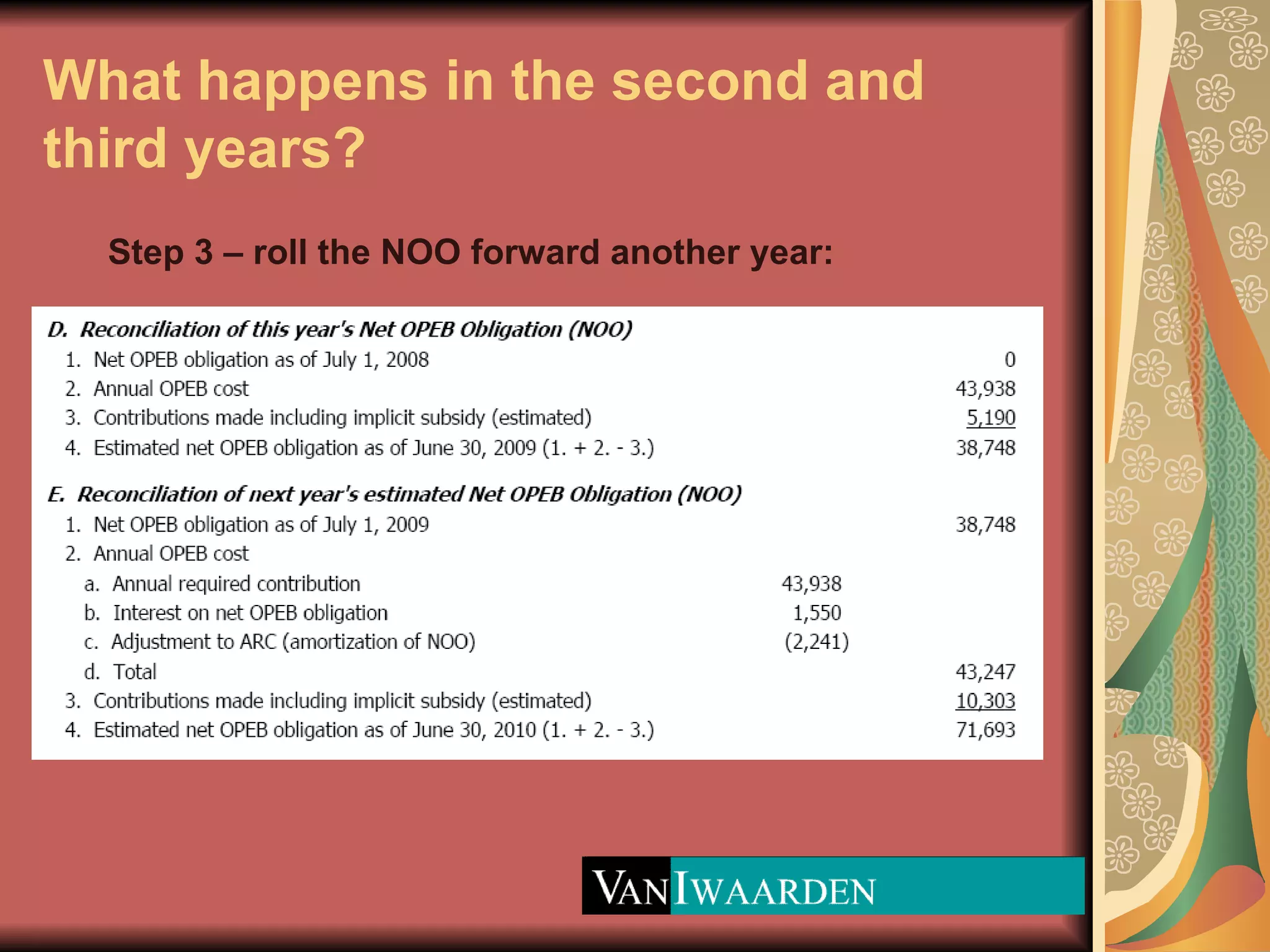
What happens in the second and third years? Step 3 – roll the NOO forward another year:
What actions should we consider?  (OPEB cost control) Plan “tweaks” Funding / bonding Defined contribution accounts
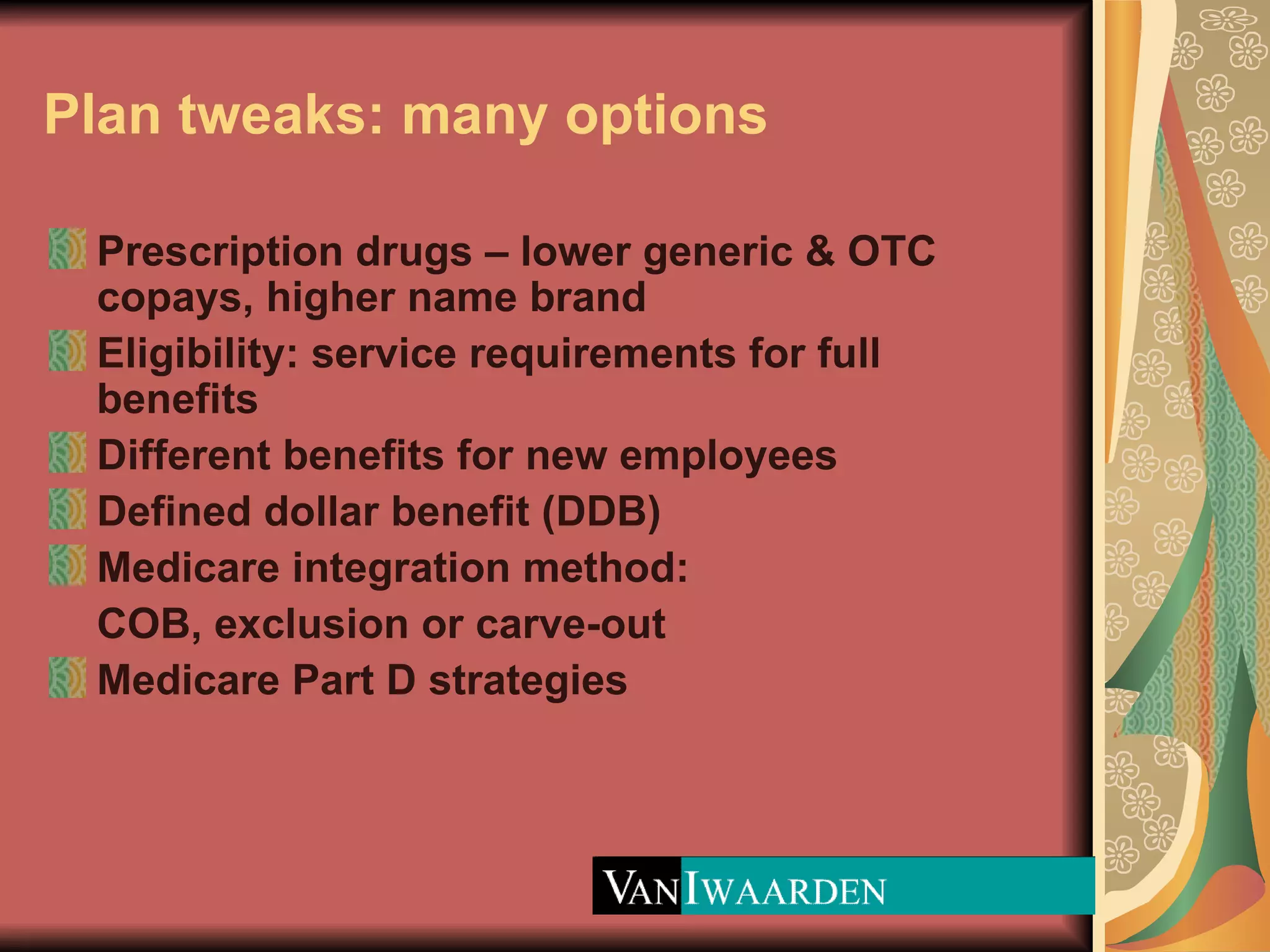
Plan tweaks: many options Prescription drugs – lower generic & OTC copays, higher name brand Eligibility: service requirements for full benefits Different benefits for new employees Defined dollar benefit (DDB) Medicare integration method:  COB, exclusion or carve-out Medicare Part D strategies
Funding Potential higher discount rate (lower liabilities) Possible greater flexibility in investments Smaller ARC and Net OPEB Obligation Better credit rating * Note that pre-funding is NOT required
OPEB Funding Rules GASB’s requirements for a funded plan Employer contributions irrevocable Assets dedicated to providing retiree benefits Assets protected from creditors Funding vehicles 501(c)(9) trust, aka VEBA  Section 115 Trust Insurance Contract
Bonding Many MN districts have issued OPEB bonds Can issue bonds up to “actuarially determined liabilities” (interpret to mean UAL) Money goes into OPEB trust  revocable – more flexibility irrevocable – counts as assets for GASB No referendum required for levy
Defined Contribution Accounts What they do Replace open-ended liabilities with known cost Potentially more secure benefits for employees
Defined Contribution Accounts Transition from defined benefit: Palmdale Preserve current benefits for those near retirement Evaluate benefits for eligible employees Set up an individual account for each with: a starting balance for past-service benefits regular payroll contributions  Invest in default or chosen funds Web-based claim and premium payments
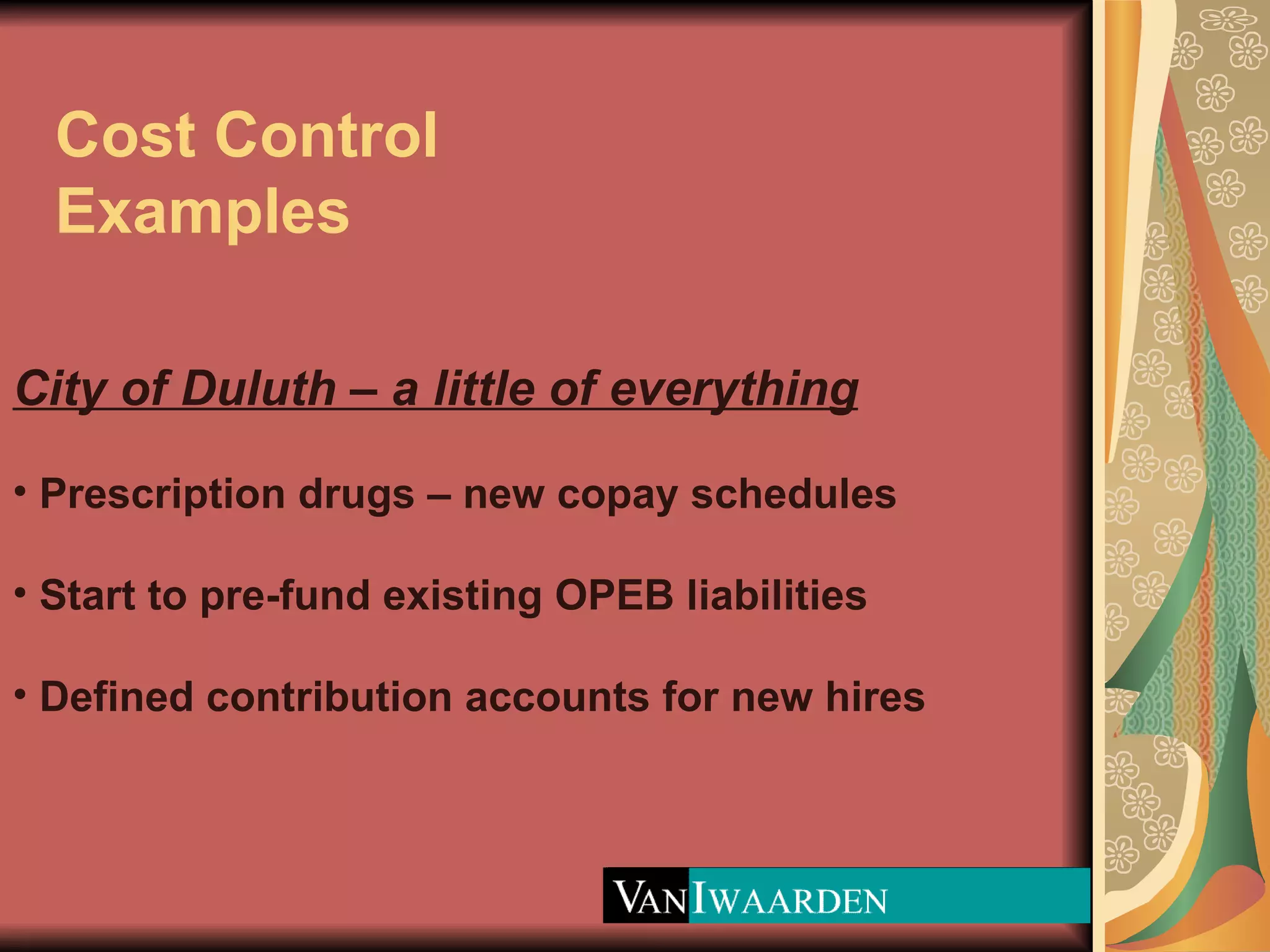
Cost Control Examples City of Duluth – a little of everything Prescription drugs – new copay schedules Start to pre-fund existing OPEB liabilities Defined contribution accounts for new hires
Questions?? James A. Van Iwaarden, FSA Sandra L. Bruns, FSA Brenda K. Hardy, ASA Peter J. Cullen, EA Mark W. Schulte, FSA Mark D. Meyer, FSA www.vaniwaarden.com 888.596.5960 toll free, 612.596.5960 TC

Opeb now what

  • 1.
    We have theOPEB numbers, now what? MASBO Annual Conference April 30, 2009
  • 2.
    Topics What doall these numbers mean? What do we have to do with them?  What happens in the second and third years? What actions should we consider?
  • 3.
    What do allthese numbers mean? Fund deduction Balance sheet liability, starts at $0 Net OPEB Obligation Cash contribution Expense to recognize Annual OPEB Cost Balance sheet liability Footnote, expense component Unfunded Accrued Liability (UAL) Mandatory funding Component of expense Annual Required Contribution (ARC) What It’s NOT What It IS Term
  • 4.
    What do wehave to do with these numbers? Step 1 - building blocks from the actuarial report:
  • 5.
    What do wehave to do with these numbers? (continued) Step 2 – track the Net OPEB Obligation (NOO):
  • 6.
    What happens inthe second and third years? Step 3 – roll the NOO forward another year:
  • 7.
    What actions shouldwe consider? (OPEB cost control) Plan “tweaks” Funding / bonding Defined contribution accounts
  • 8.
    Plan tweaks: manyoptions Prescription drugs – lower generic & OTC copays, higher name brand Eligibility: service requirements for full benefits Different benefits for new employees Defined dollar benefit (DDB) Medicare integration method: COB, exclusion or carve-out Medicare Part D strategies
  • 9.
    Funding Potential higherdiscount rate (lower liabilities) Possible greater flexibility in investments Smaller ARC and Net OPEB Obligation Better credit rating * Note that pre-funding is NOT required
  • 10.
    OPEB Funding RulesGASB’s requirements for a funded plan Employer contributions irrevocable Assets dedicated to providing retiree benefits Assets protected from creditors Funding vehicles 501(c)(9) trust, aka VEBA Section 115 Trust Insurance Contract
  • 11.
    Bonding Many MNdistricts have issued OPEB bonds Can issue bonds up to “actuarially determined liabilities” (interpret to mean UAL) Money goes into OPEB trust revocable – more flexibility irrevocable – counts as assets for GASB No referendum required for levy
  • 12.
    Defined Contribution AccountsWhat they do Replace open-ended liabilities with known cost Potentially more secure benefits for employees
  • 13.
    Defined Contribution AccountsTransition from defined benefit: Palmdale Preserve current benefits for those near retirement Evaluate benefits for eligible employees Set up an individual account for each with: a starting balance for past-service benefits regular payroll contributions Invest in default or chosen funds Web-based claim and premium payments
  • 14.
    Cost Control ExamplesCity of Duluth – a little of everything Prescription drugs – new copay schedules Start to pre-fund existing OPEB liabilities Defined contribution accounts for new hires
  • 15.
    Questions?? James A.Van Iwaarden, FSA Sandra L. Bruns, FSA Brenda K. Hardy, ASA Peter J. Cullen, EA Mark W. Schulte, FSA Mark D. Meyer, FSA www.vaniwaarden.com 888.596.5960 toll free, 612.596.5960 TC