Name: Parimal Mahato
Applied Geology M.Sc ( 3rd sem)
Durgapur Govt. College
Gamma log has three types-
1.True gamma log /Normal gamma log
2.Spectral gamma log
3.Gamma-Gamma log /Scattered gamma log
PRINCIPLE
 The formation density tools are induced
radition tools
 They bombard the formation with radition
and measure how much radition returns to a
sensor
DENSITY TOOL
Tool consist of-
 A radioactive source: Caesium-137 and Cobalt-60
 A short range detector: Placed 7 inches from the
source.
 A long range detector: Placed 16 inches from the
sources.
PROCESS OF MEASURING
DETERMINATION OF POROSITY
 The porosity of a
formation can be obtain
from the bulk density if
the mean density of the
rock matrix and that of
the fluids it contains are
known.
fma
bma






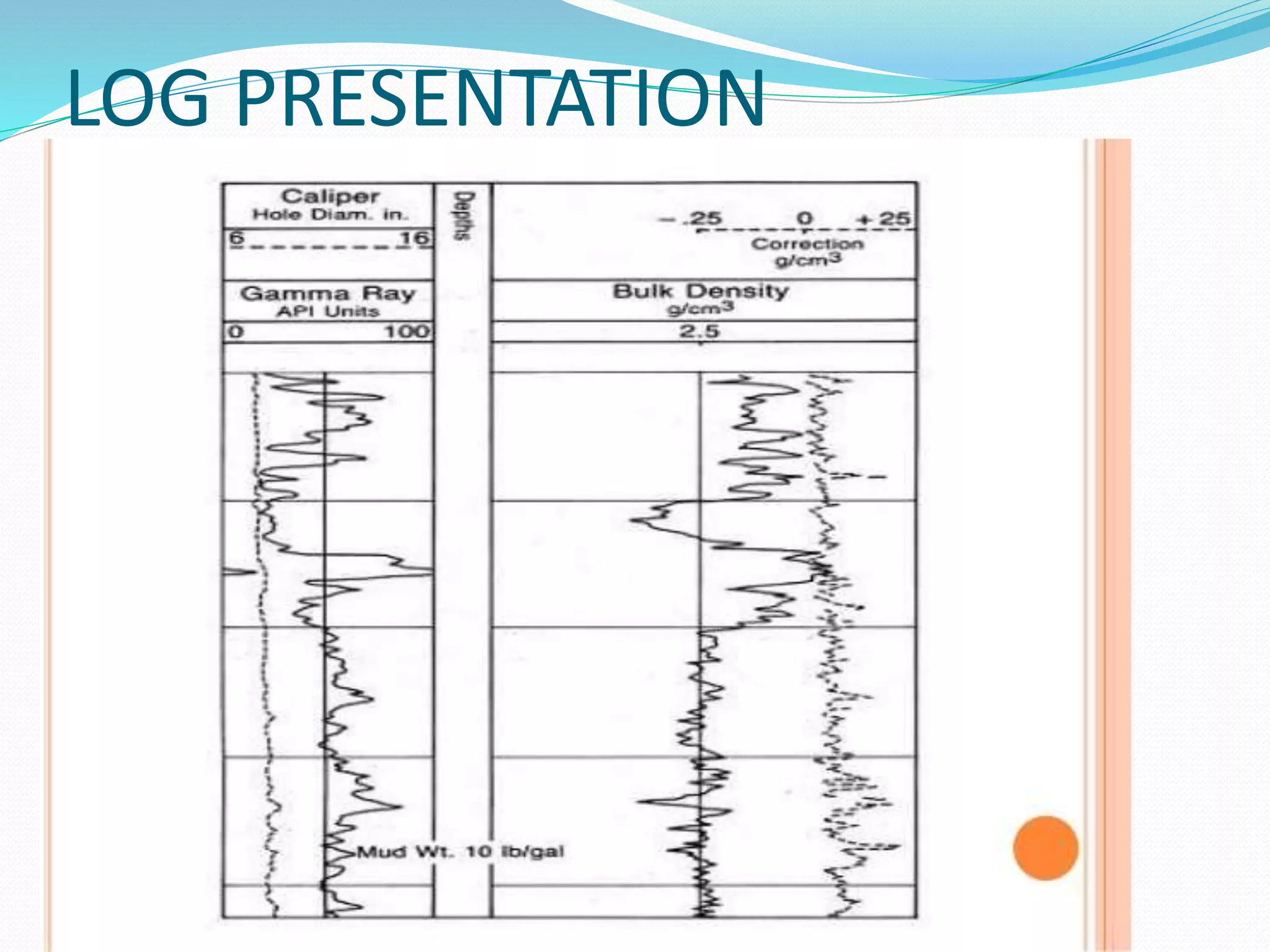
LOG PRESENTATION
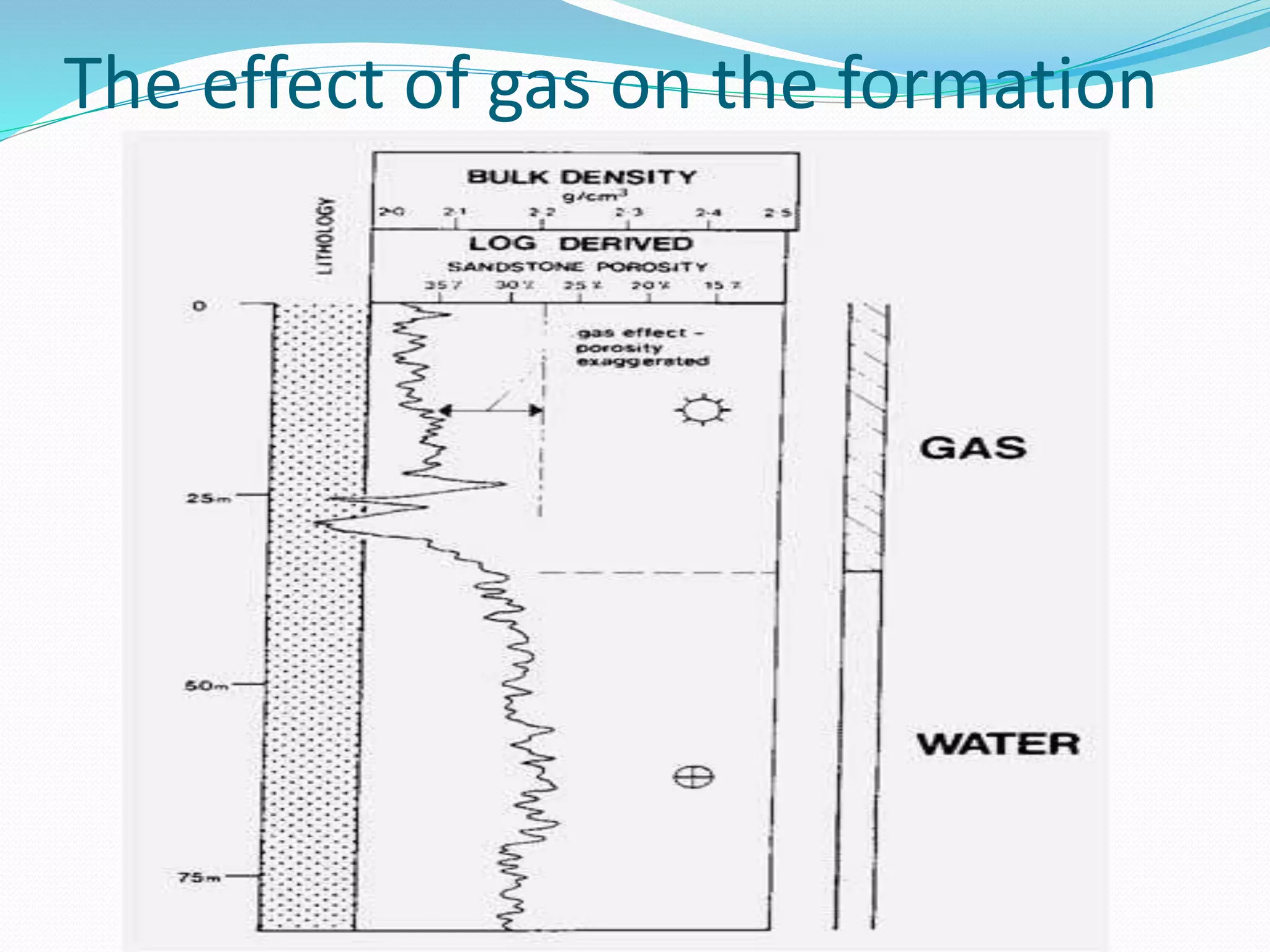
The effect of gas on the formation
USES OF THE FORMATION DENSITY
LOG
 Determine total porosity of the formation.
 Recognition of gas bearing zone.
 Identification of minerals(particularly
evaporites).
 The combination of formation density log
data with neutron log data gives one of the
best ways of identifying lithologies in a
borehole.
References
 Ellis, D. V., & Singer, J. M. (2007). Well logging for earth
scientists(Vol. 692). Dordrecht: Springer.
 Darling, T. (2005). Well logging and formation evaluation.
Elsevier.
 Johnson, D. E., & Pile, K. E. (2002). Well logging in
nontechnical language. PennWell Books.
THANK YOU

Gamma gamma log

  • 1.
    Name: Parimal Mahato AppliedGeology M.Sc ( 3rd sem) Durgapur Govt. College
  • 2.
    Gamma log hasthree types- 1.True gamma log /Normal gamma log 2.Spectral gamma log 3.Gamma-Gamma log /Scattered gamma log
  • 3.
    PRINCIPLE  The formationdensity tools are induced radition tools  They bombard the formation with radition and measure how much radition returns to a sensor
  • 4.
  • 5.
    Tool consist of- A radioactive source: Caesium-137 and Cobalt-60  A short range detector: Placed 7 inches from the source.  A long range detector: Placed 16 inches from the sources. PROCESS OF MEASURING
  • 6.
    DETERMINATION OF POROSITY The porosity of a formation can be obtain from the bulk density if the mean density of the rock matrix and that of the fluids it contains are known. fma bma      
  • 7.
  • 8.
    The effect ofgas on the formation
  • 9.
    USES OF THEFORMATION DENSITY LOG  Determine total porosity of the formation.  Recognition of gas bearing zone.  Identification of minerals(particularly evaporites).  The combination of formation density log data with neutron log data gives one of the best ways of identifying lithologies in a borehole.
  • 10.
    References  Ellis, D.V., & Singer, J. M. (2007). Well logging for earth scientists(Vol. 692). Dordrecht: Springer.  Darling, T. (2005). Well logging and formation evaluation. Elsevier.  Johnson, D. E., & Pile, K. E. (2002). Well logging in nontechnical language. PennWell Books.
  • 11.