Gamestorming,
not Brainstorming
Brynn Evans            UX4Good
gplus.to/brynn        May 4, 2012
twitter.com/brynn   #gamestorming
Hi, I’m Brynn Evans
gogamestorm.com
@davegray
@macgeo
@sunnibrown


The Book
amzn.to/GamestormingBook


My “Cheat Sheet”
bit.ly/GamestormingGuide
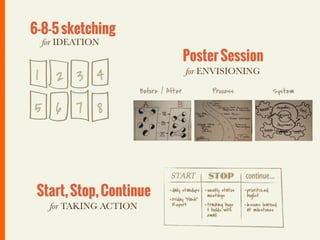
6-8-5 sketching
  for IDEATION
                                        Poster Session
 1 2 3 4                                for ENVISIONING

                       Before / After        Process      System

5 6 7 8


 Start, Stop, Continue
   for TAKING ACTION
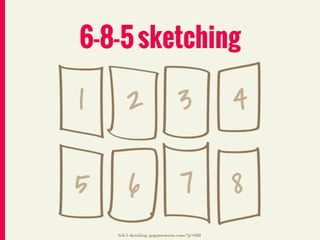
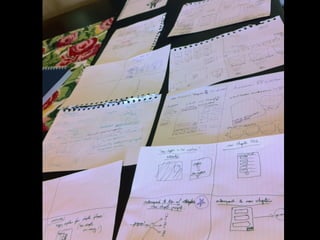
6-8-5 sketching

1      2 3                                    4

5       6                        7            8
    6-8-5 sketching: gogamestorm.com/?p=688
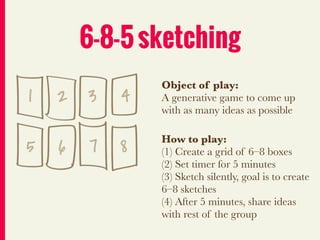
6-8-5 sketching
                Object of play:
1   2 3     4   A generative game to come up
                with as many ideas as possible


5   6   7   8   How to play:
                (1) Create a grid of 6–8 boxes
                (2) Set timer for 5 minutes
                (3) Sketch silently, goal is to create
                6–8 sketches
                (4) After 5 minutes, share ideas
                with rest of the group
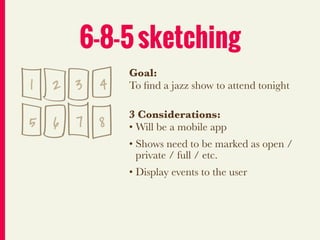
6-8-5 sketching
            Goal:
1   2 3 4   To find a jazz show to attend tonight

            3 Considerations:
5 6 7 8     • Will be a mobile app
            • Shows need to be marked as open /
              private / full / etc.
            • Display events to the user
Games for ideation
Brainwriting (p. 82)
includes everyone in evolving an idea (silent brainstorming,
followed by collaborative building on ideas), all done in silence

3-12-3 (p. 78)
good for generating & developing lots of ideas in only 1 hour

Post-ups (p.19, 69)
to generate a lot of ideas; one idea per post-it.

Party Invitations
improve the onboarding process of a product or service
gogamestorm.com/?p=297


(Page numbers reference the Gamestorming Book. See bit.ly/GamestormingGuide for more)
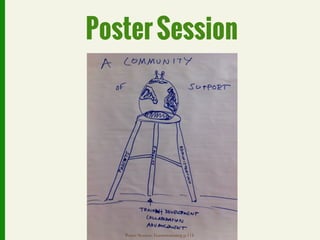
Poster Session


   Poster Session: Gamestorming p.114
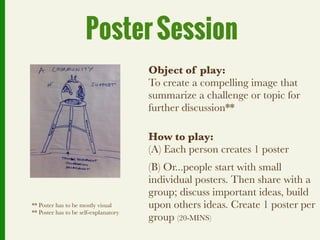
Poster Session
                                       Object of play:
                                       To create a compelling image that
                                       summarize a challenge or topic for
                                       further discussion**

                                       How to play:
                                       (A) Each person creates 1 poster
                                       (B) Or...people start with small
                                       individual posters. Then share with a
                                       group; discuss important ideas, build
** Poster has to be mostly visual      upon others ideas. Create 1 poster per
** Poster has to be self-explanatory
                                       group (20-MINS)
Photos by: flickr.com/photos/abovethefold
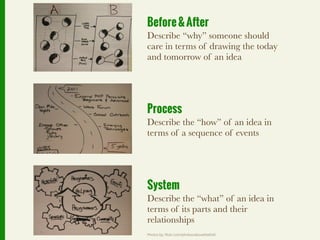
Before & After
Describe “why” someone should
care in terms of drawing the today
and tomorrow of an idea


Process
Describe the “how” of an idea in
terms of a sequence of events


System
Describe the “what” of an idea in
terms of its parts and their
relationships
Photos by: flickr.com/photos/abovethefold
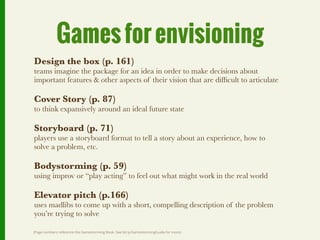
Games for envisioning
Design the box (p. 161)
teams imagine the package for an idea in order to make decisions about
important features & other aspects of their vision that are difficult to articulate

Cover Story (p. 87)
to think expansively around an ideal future state

Storyboard (p. 71)
players use a storyboard format to tell a story about an experience, how to
solve a problem, etc.

Bodystorming (p. 59)
using improv or “play acting” to feel out what might work in the real world

Elevator pitch (p.166)
uses madlibs to come up with a short, compelling description of the problem
you’re trying to solve

(Page numbers reference the Gamestorming Book. See bit.ly/GamestormingGuide for more)
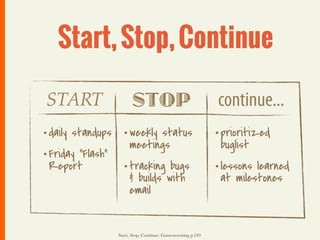
Start, Stop, Continue

START                  STOP                                 continue...
• daily standups • weekly status                            • prioritized
                   meetings                                  buglist
• Friday “Flash”
  Report         • tracking bugs                            • lessons learned
                     & builds with                           at milestones
                     email


                Start, Stop, Continue: Gamestorming p.249
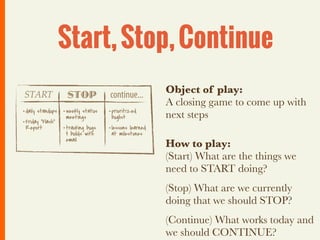
Start, Stop, Continue
START              STOP            continue...         Object of play:
                                                       A closing game to come up with
• daily standups • weekly status   • prioritized
                   meetings         buglist            next steps
• Friday “Flash”
  Report         • tracking bugs   • lessons learned
                  & builds with     at milestones
                  email
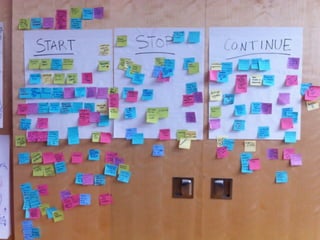
                                                       How to play:
                                                       (Start) What are the things we
                                                       need to START doing?
                                                       (Stop) What are we currently
                                                       doing that we should STOP?
                                                       (Continue) What works today and
                                                       we should CONTINUE?
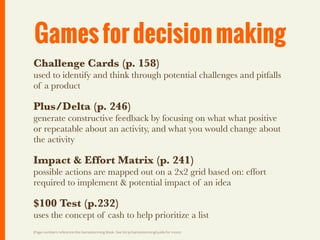
Games for decision making
Challenge Cards (p. 158)
used to identify and think through potential challenges and pitfalls
of a product

Plus/Delta (p. 246)
generate constructive feedback by focusing on what what positive
or repeatable about an activity, and what you would change about
the activity

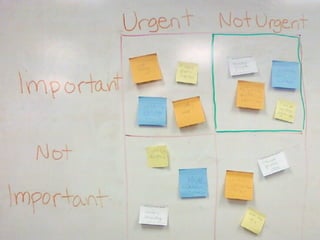
Impact & Effort Matrix (p. 241)
possible actions are mapped out on a 2x2 grid based on: effort
required to implement & potential impact of an idea

$100 Test (p.232)
uses the concept of cash to help prioritize a list
(Page numbers reference the Gamestorming Book. See bit.ly/GamestormingGuide for more)

Gamestorming, not Brainstorming

  • 1.
    Gamestorming, not Brainstorming Brynn Evans UX4Good gplus.to/brynn May 4, 2012 twitter.com/brynn #gamestorming
  • 2.
  • 3.
  • 6.
    6-8-5 sketching for IDEATION Poster Session 1 2 3 4 for ENVISIONING Before / After Process System 5 6 7 8 Start, Stop, Continue for TAKING ACTION
  • 7.
    6-8-5 sketching 1 2 3 4 5 6 7 8 6-8-5 sketching: gogamestorm.com/?p=688
  • 8.
    6-8-5 sketching Object of play: 1 2 3 4 A generative game to come up with as many ideas as possible 5 6 7 8 How to play: (1) Create a grid of 6–8 boxes (2) Set timer for 5 minutes (3) Sketch silently, goal is to create 6–8 sketches (4) After 5 minutes, share ideas with rest of the group
  • 9.
    6-8-5 sketching Goal: 1 2 3 4 To find a jazz show to attend tonight 3 Considerations: 5 6 7 8 • Will be a mobile app • Shows need to be marked as open / private / full / etc. • Display events to the user
  • 11.
    Games for ideation Brainwriting(p. 82) includes everyone in evolving an idea (silent brainstorming, followed by collaborative building on ideas), all done in silence 3-12-3 (p. 78) good for generating & developing lots of ideas in only 1 hour Post-ups (p.19, 69) to generate a lot of ideas; one idea per post-it. Party Invitations improve the onboarding process of a product or service gogamestorm.com/?p=297 (Page numbers reference the Gamestorming Book. See bit.ly/GamestormingGuide for more)
  • 12.
    Poster Session Poster Session: Gamestorming p.114
  • 13.
    Poster Session Object of play: To create a compelling image that summarize a challenge or topic for further discussion** How to play: (A) Each person creates 1 poster (B) Or...people start with small individual posters. Then share with a group; discuss important ideas, build ** Poster has to be mostly visual upon others ideas. Create 1 poster per ** Poster has to be self-explanatory group (20-MINS)
  • 14.
  • 15.
    Before & After Describe“why” someone should care in terms of drawing the today and tomorrow of an idea Process Describe the “how” of an idea in terms of a sequence of events System Describe the “what” of an idea in terms of its parts and their relationships Photos by: flickr.com/photos/abovethefold
  • 16.
    Games for envisioning Designthe box (p. 161) teams imagine the package for an idea in order to make decisions about important features & other aspects of their vision that are difficult to articulate Cover Story (p. 87) to think expansively around an ideal future state Storyboard (p. 71) players use a storyboard format to tell a story about an experience, how to solve a problem, etc. Bodystorming (p. 59) using improv or “play acting” to feel out what might work in the real world Elevator pitch (p.166) uses madlibs to come up with a short, compelling description of the problem you’re trying to solve (Page numbers reference the Gamestorming Book. See bit.ly/GamestormingGuide for more)
  • 17.
    Start, Stop, Continue START STOP continue... • daily standups • weekly status • prioritized meetings buglist • Friday “Flash” Report • tracking bugs • lessons learned & builds with at milestones email Start, Stop, Continue: Gamestorming p.249
  • 18.
    Start, Stop, Continue START STOP continue... Object of play: A closing game to come up with • daily standups • weekly status • prioritized meetings buglist next steps • Friday “Flash” Report • tracking bugs • lessons learned & builds with at milestones email How to play: (Start) What are the things we need to START doing? (Stop) What are we currently doing that we should STOP? (Continue) What works today and we should CONTINUE?
  • 20.
    Games for decisionmaking Challenge Cards (p. 158) used to identify and think through potential challenges and pitfalls of a product Plus/Delta (p. 246) generate constructive feedback by focusing on what what positive or repeatable about an activity, and what you would change about the activity Impact & Effort Matrix (p. 241) possible actions are mapped out on a 2x2 grid based on: effort required to implement & potential impact of an idea $100 Test (p.232) uses the concept of cash to help prioritize a list (Page numbers reference the Gamestorming Book. See bit.ly/GamestormingGuide for more)