
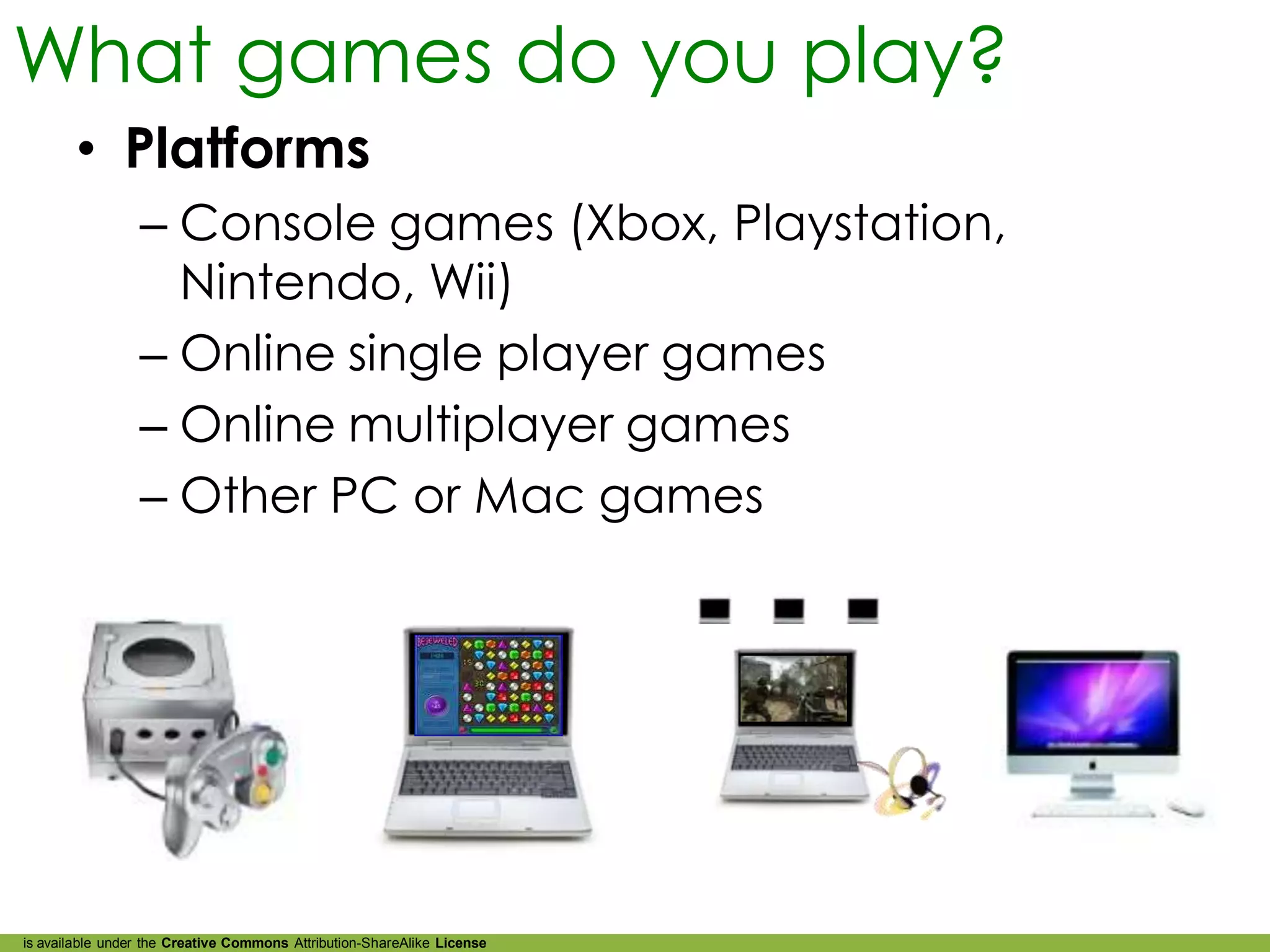

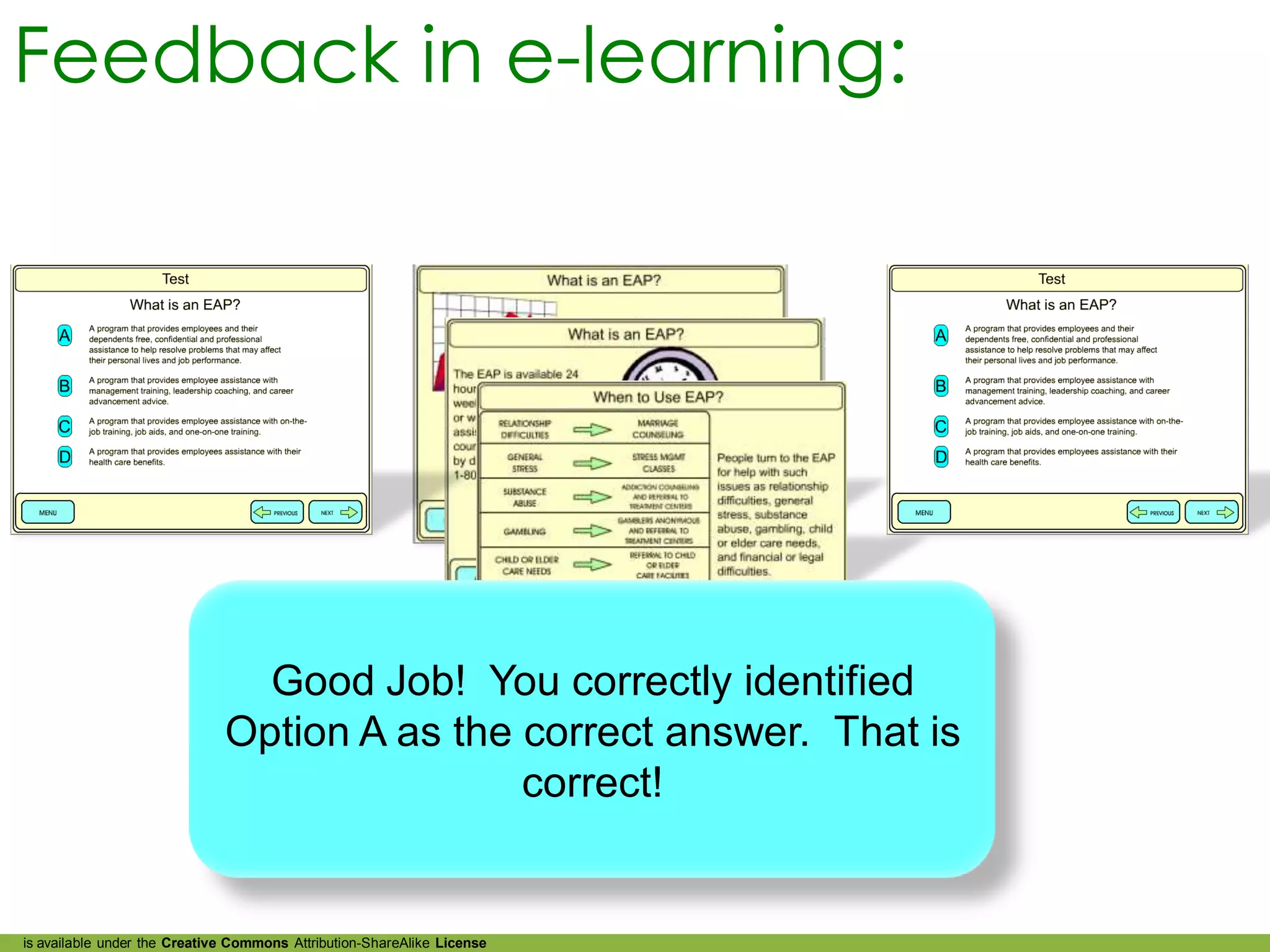
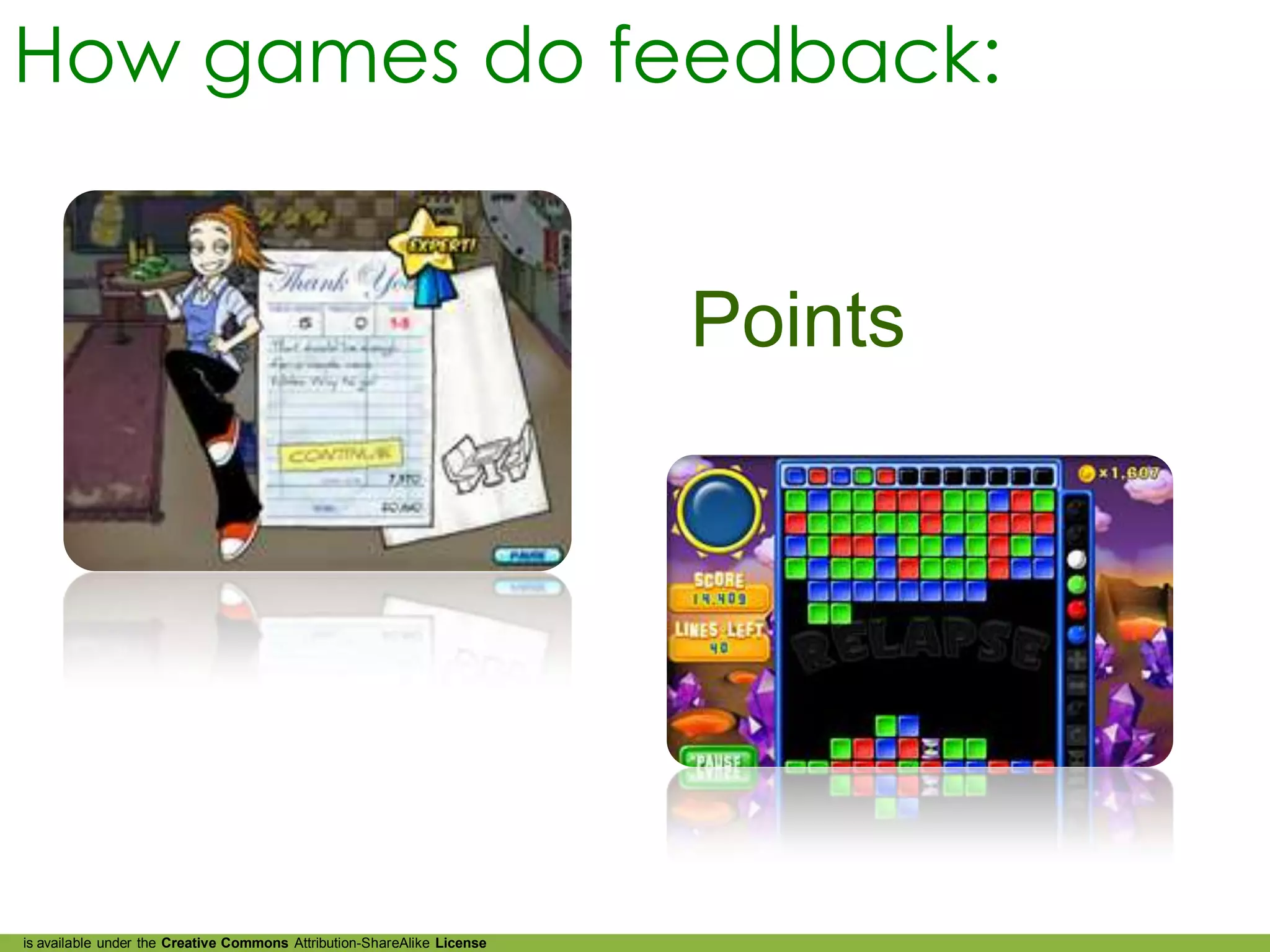
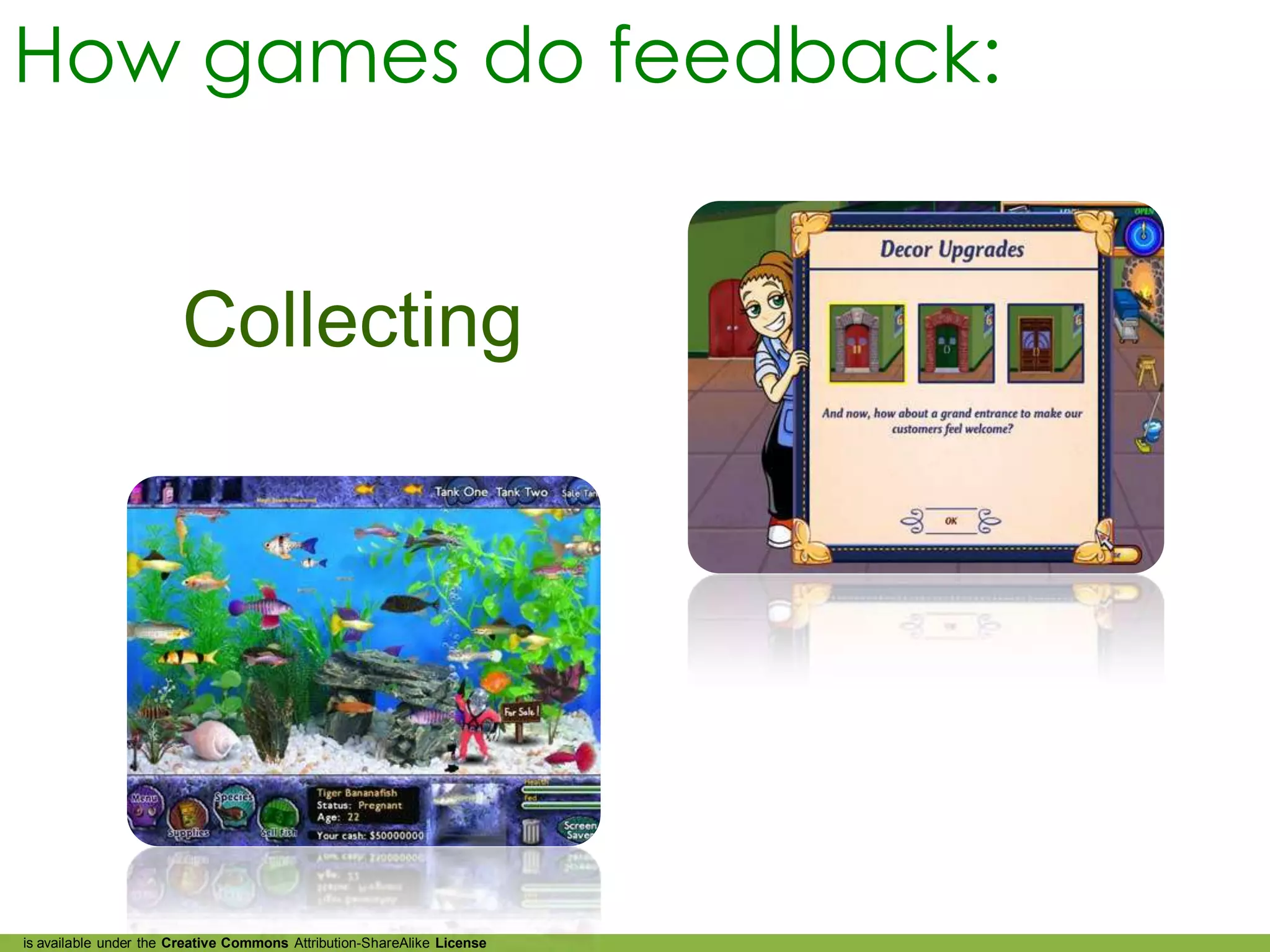
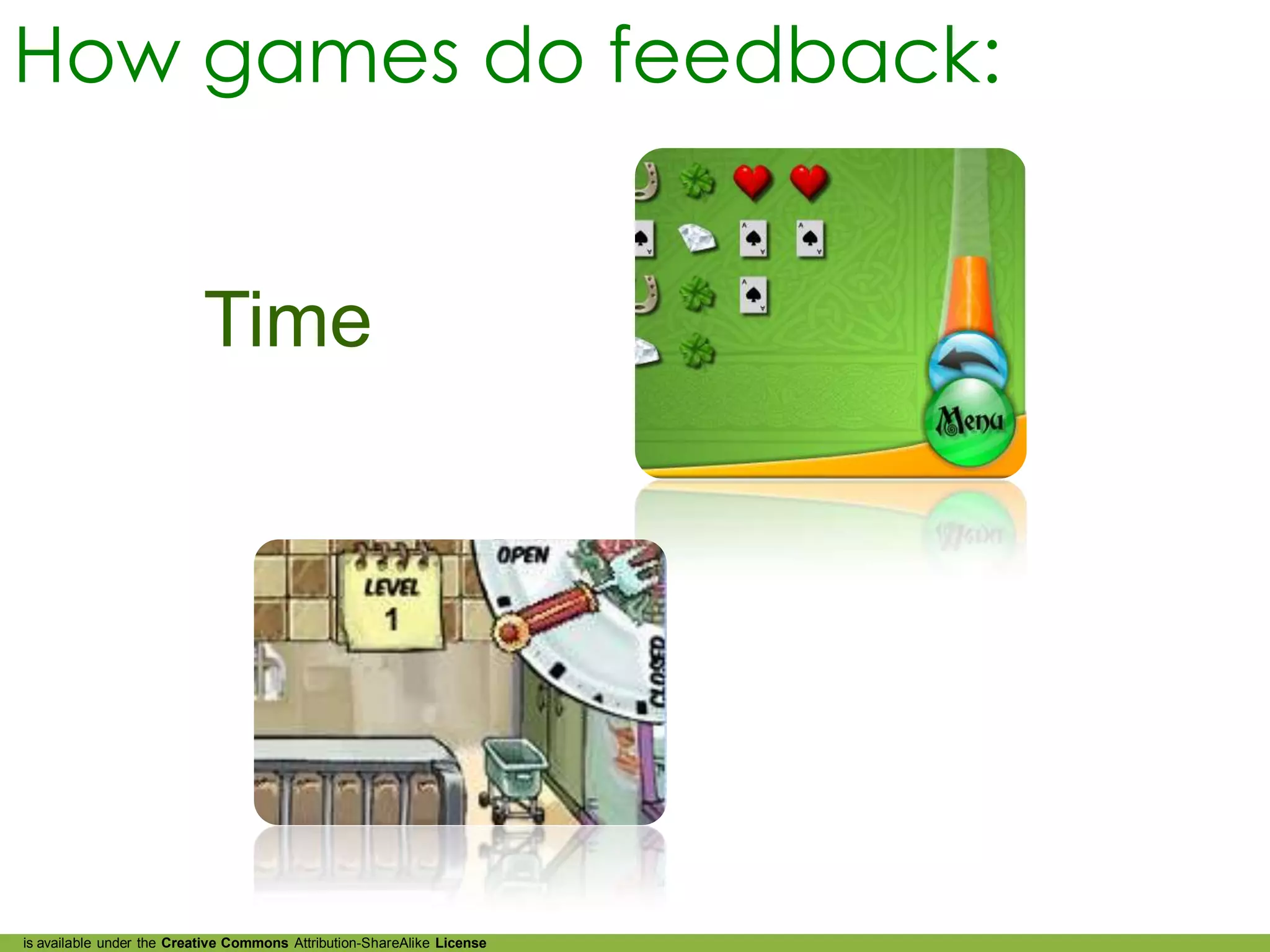
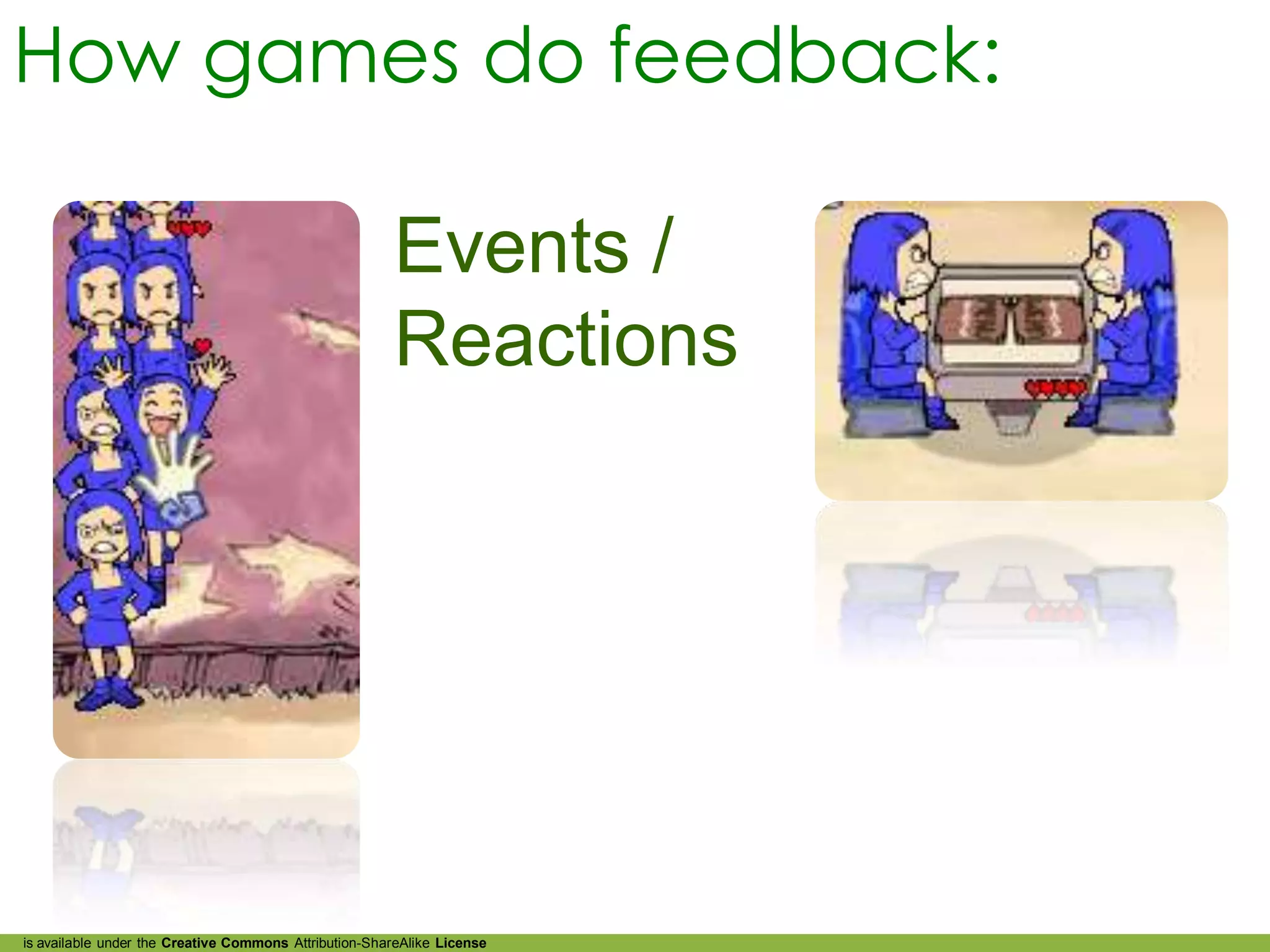
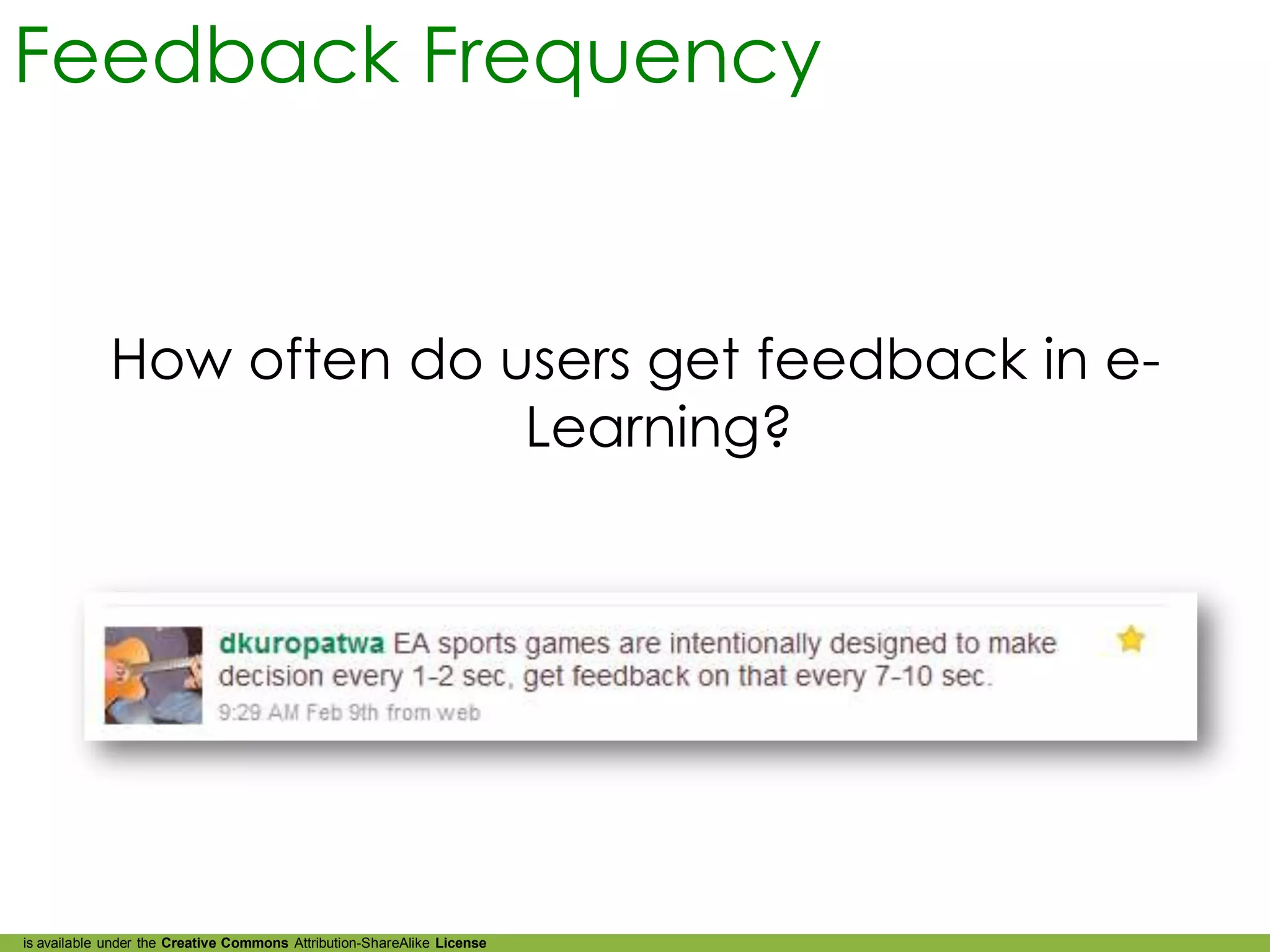
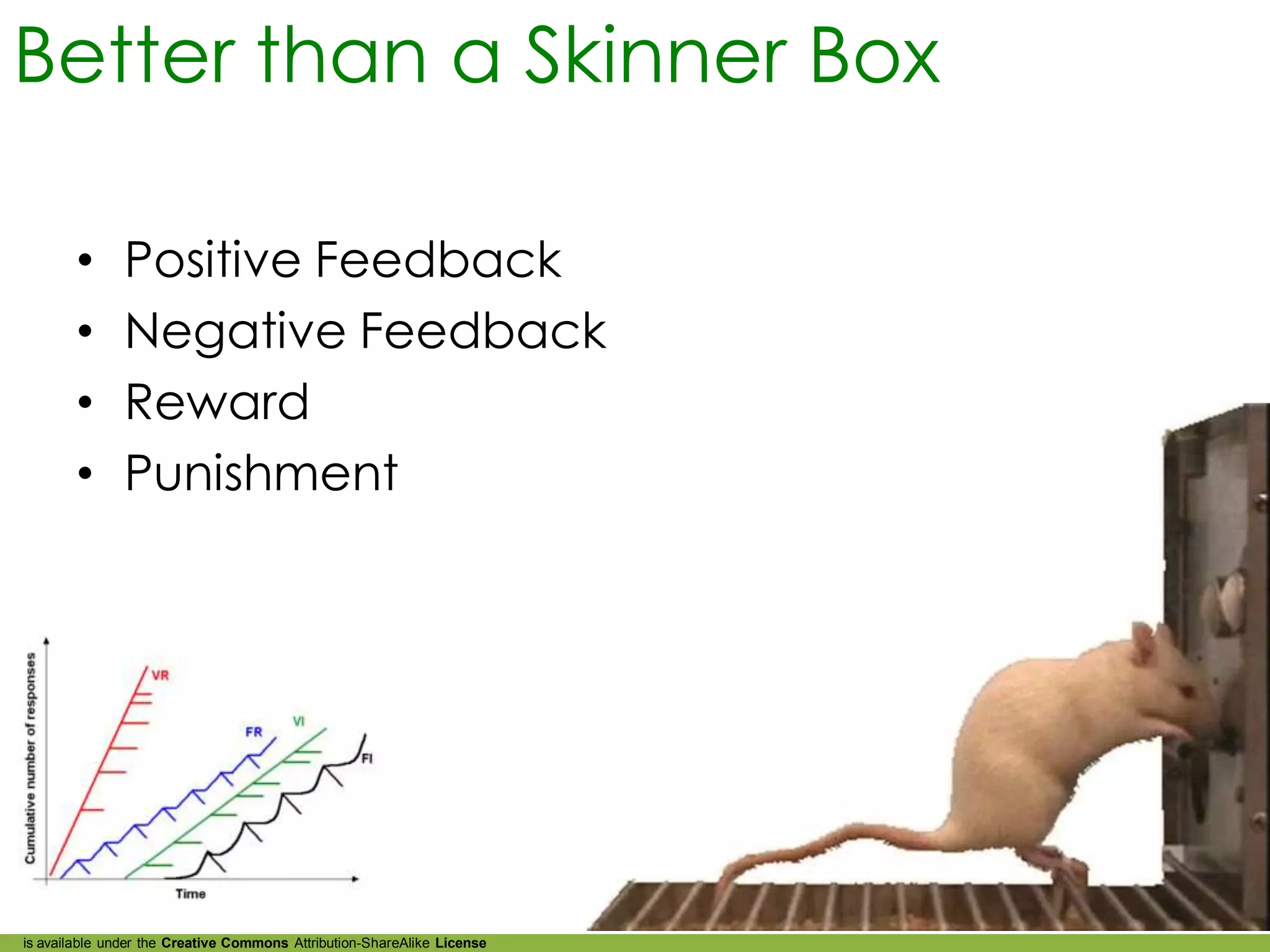
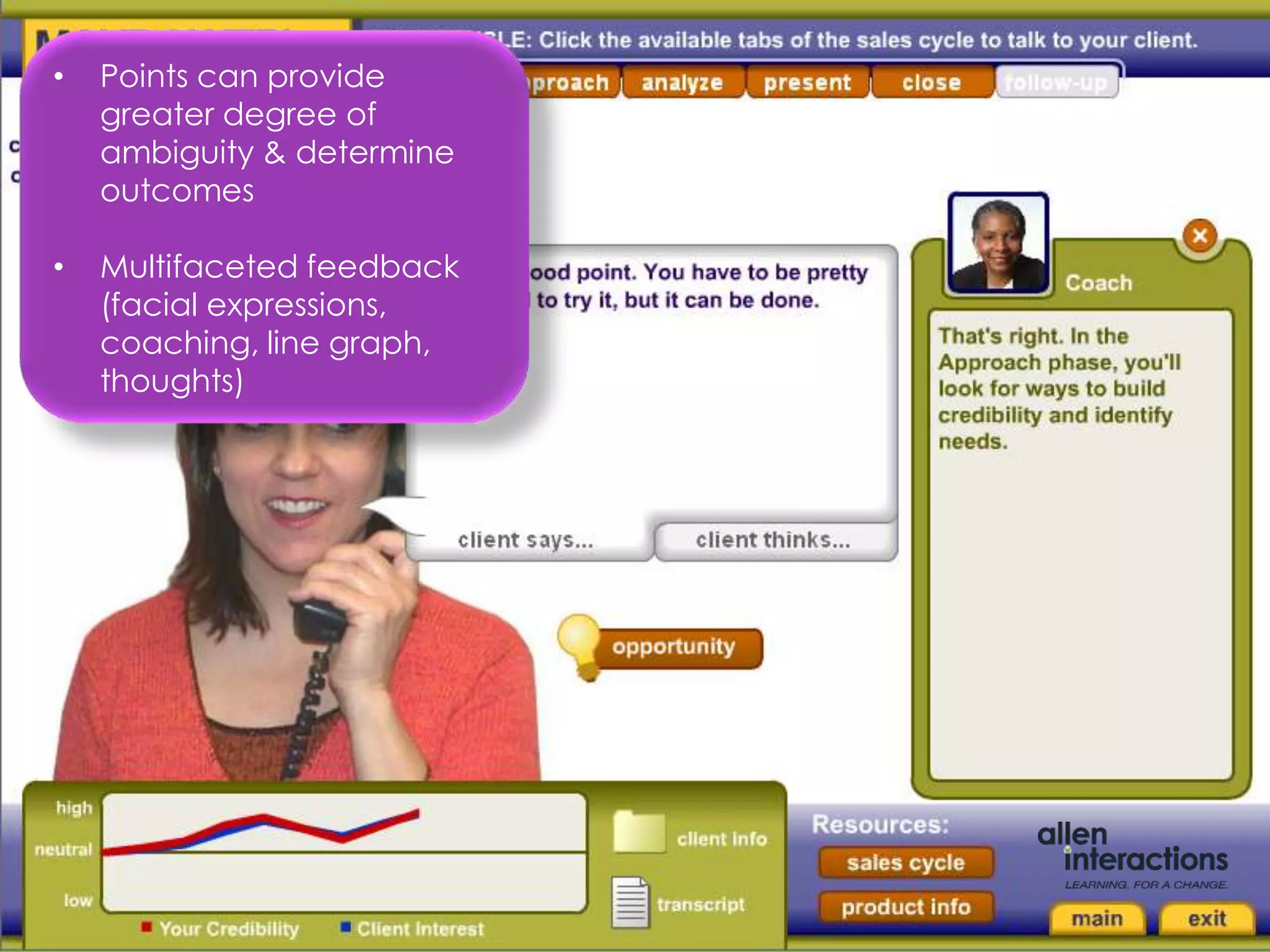
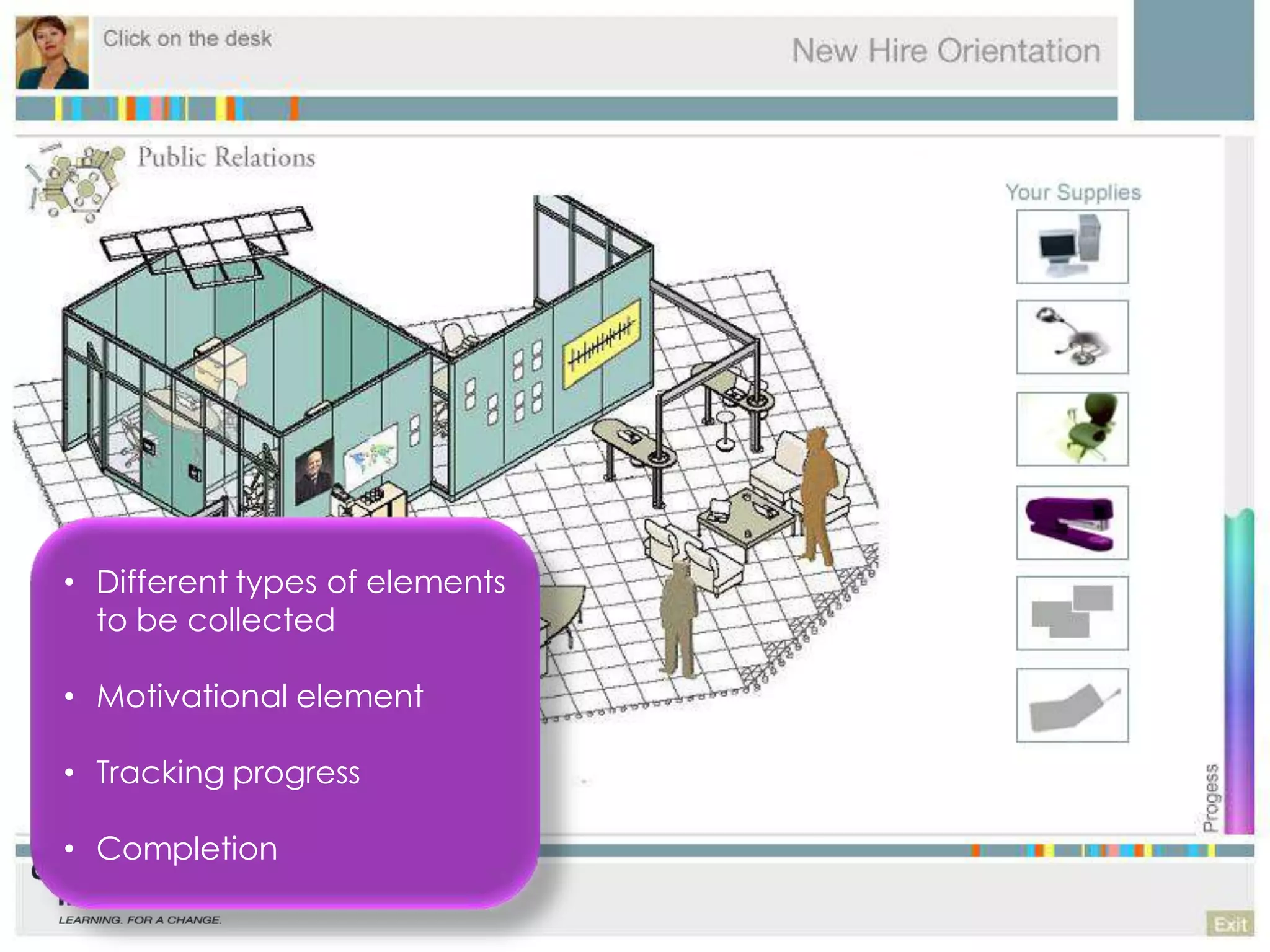
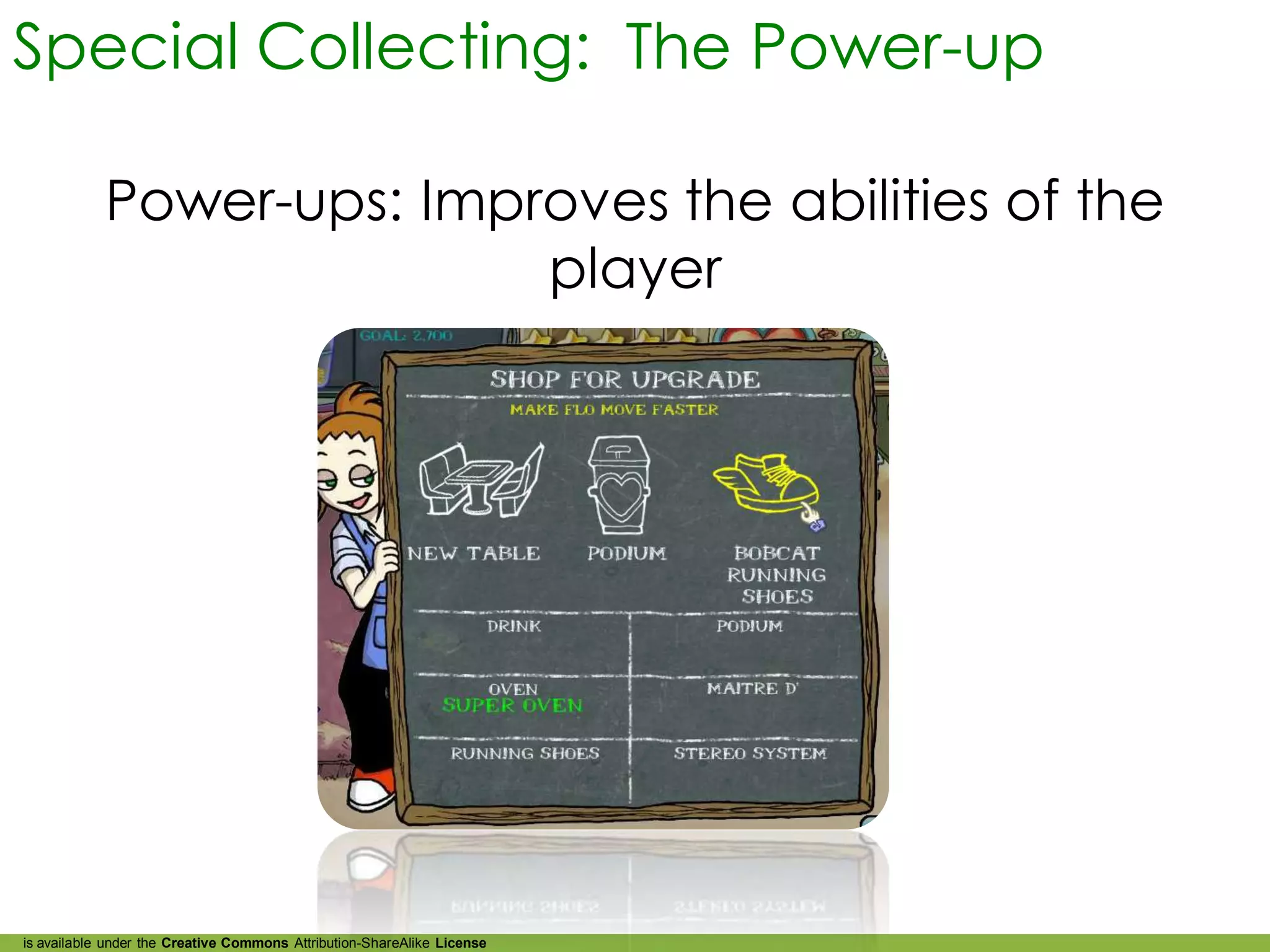

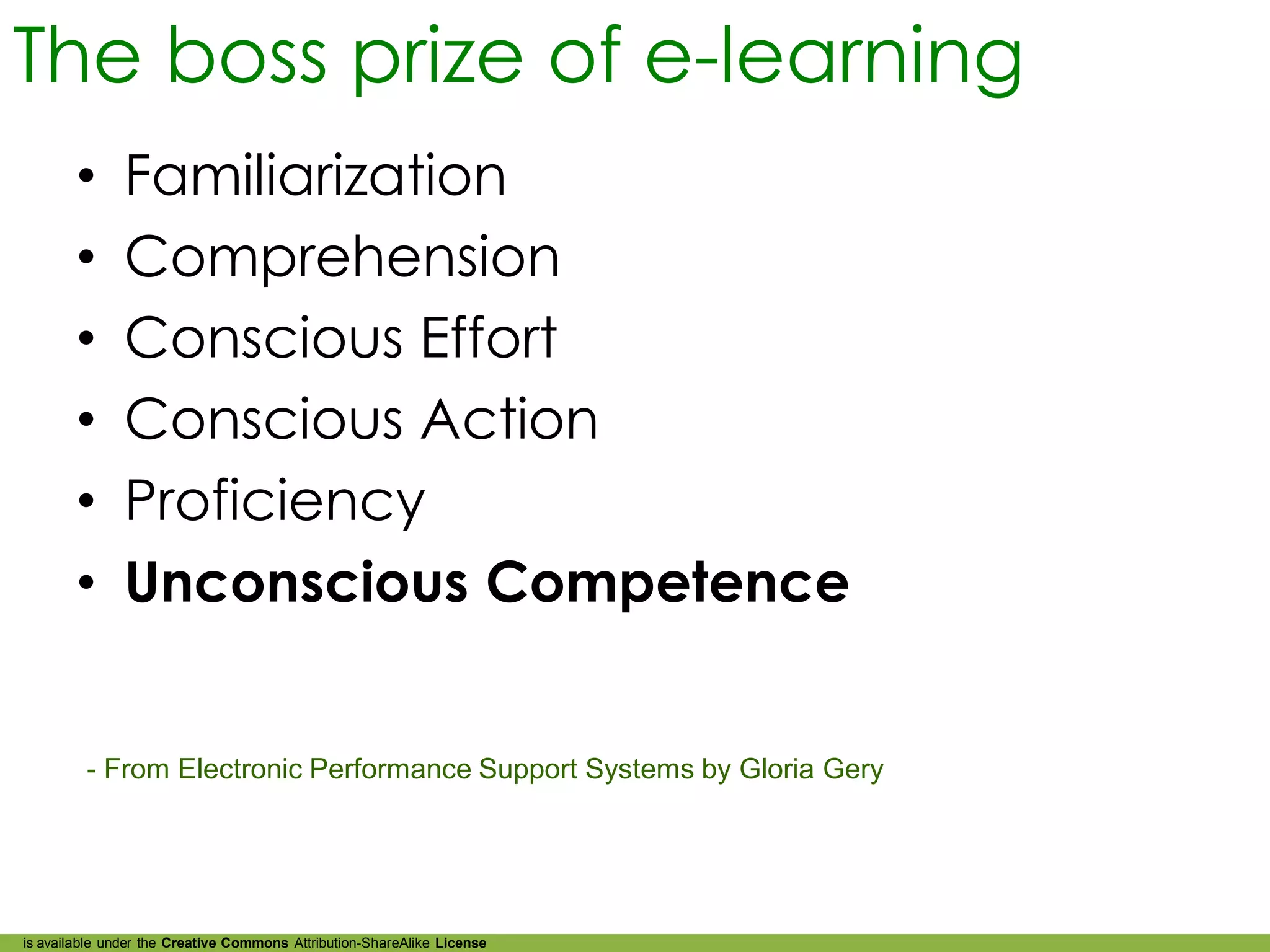
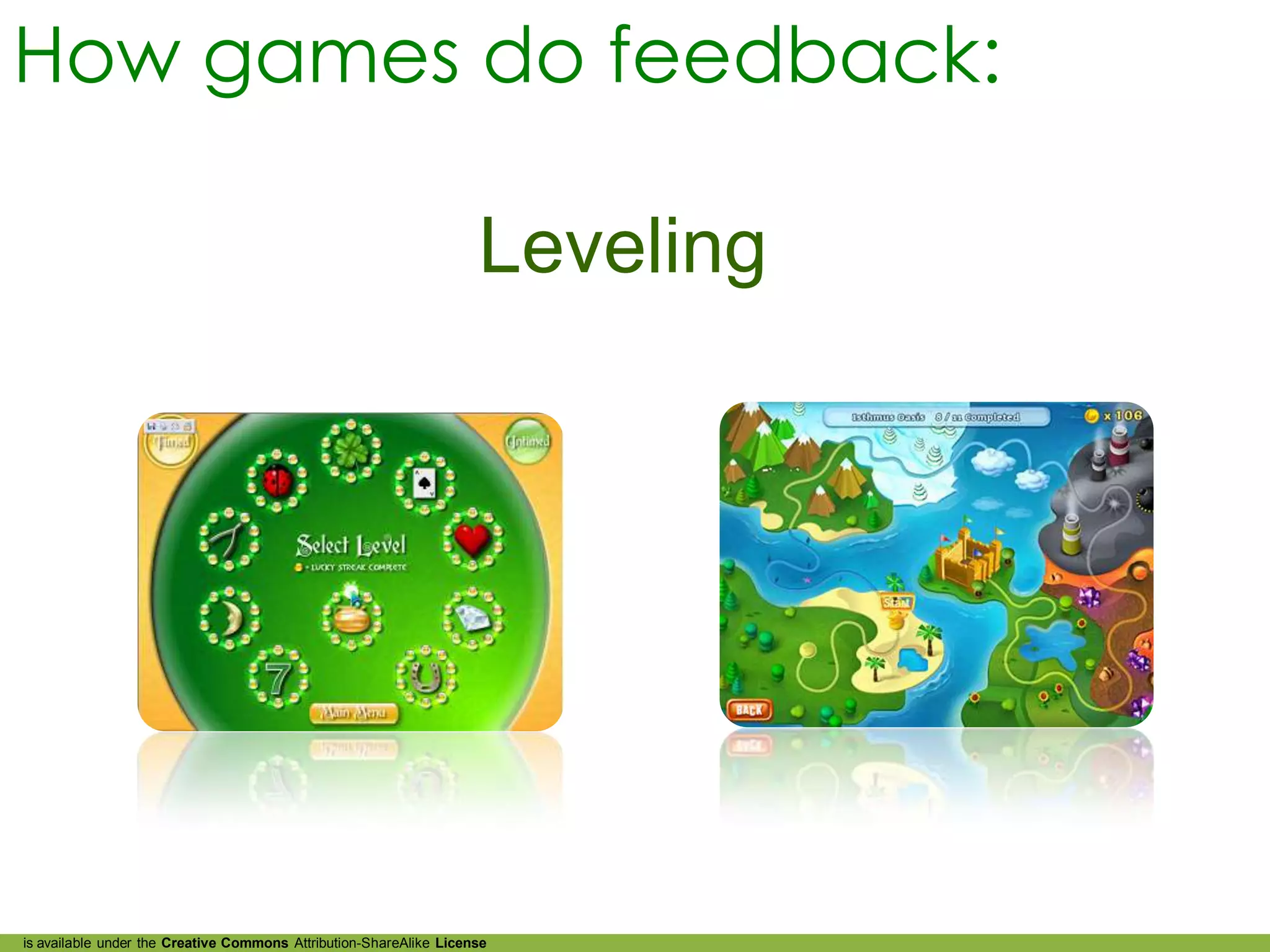
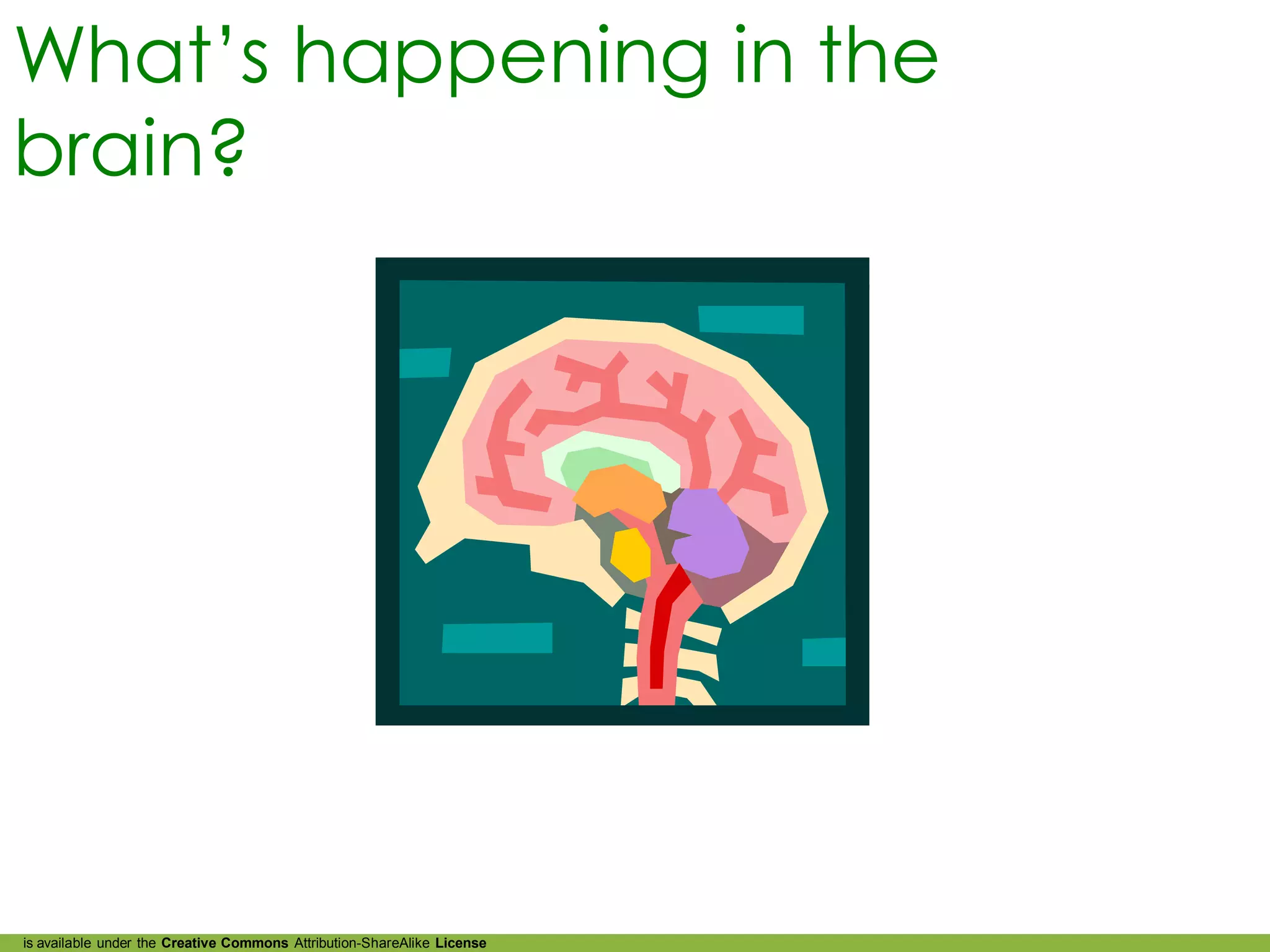
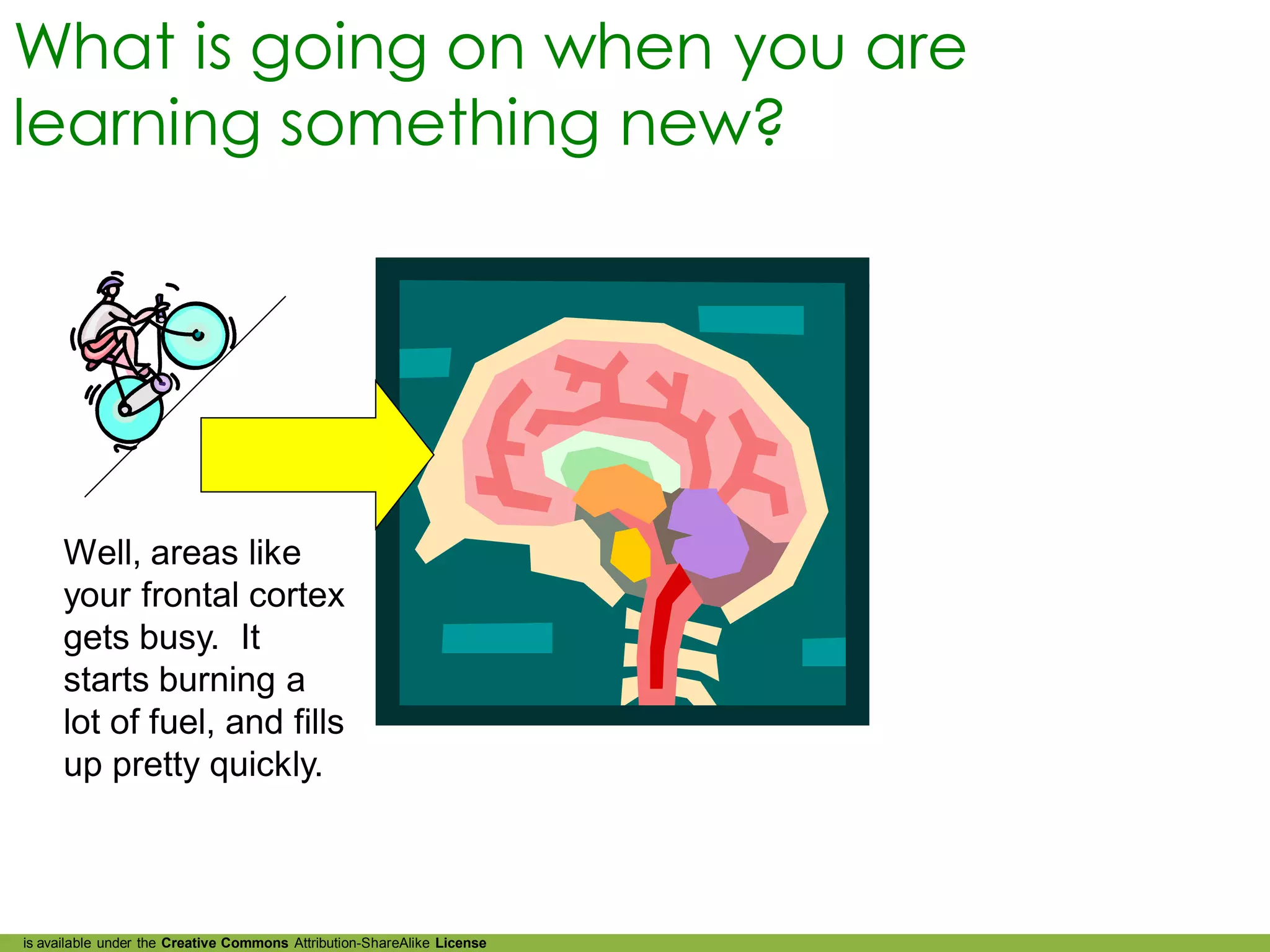
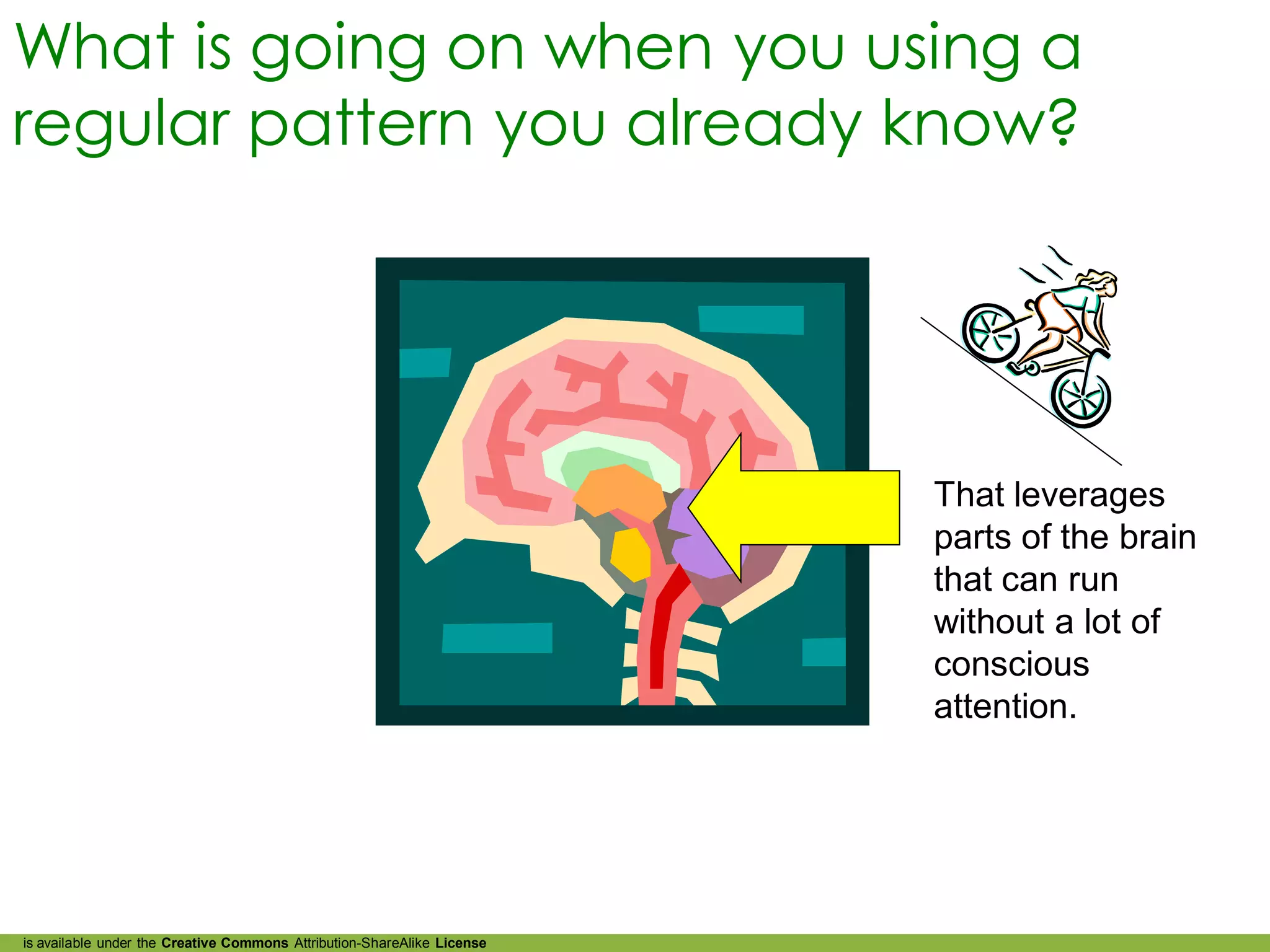

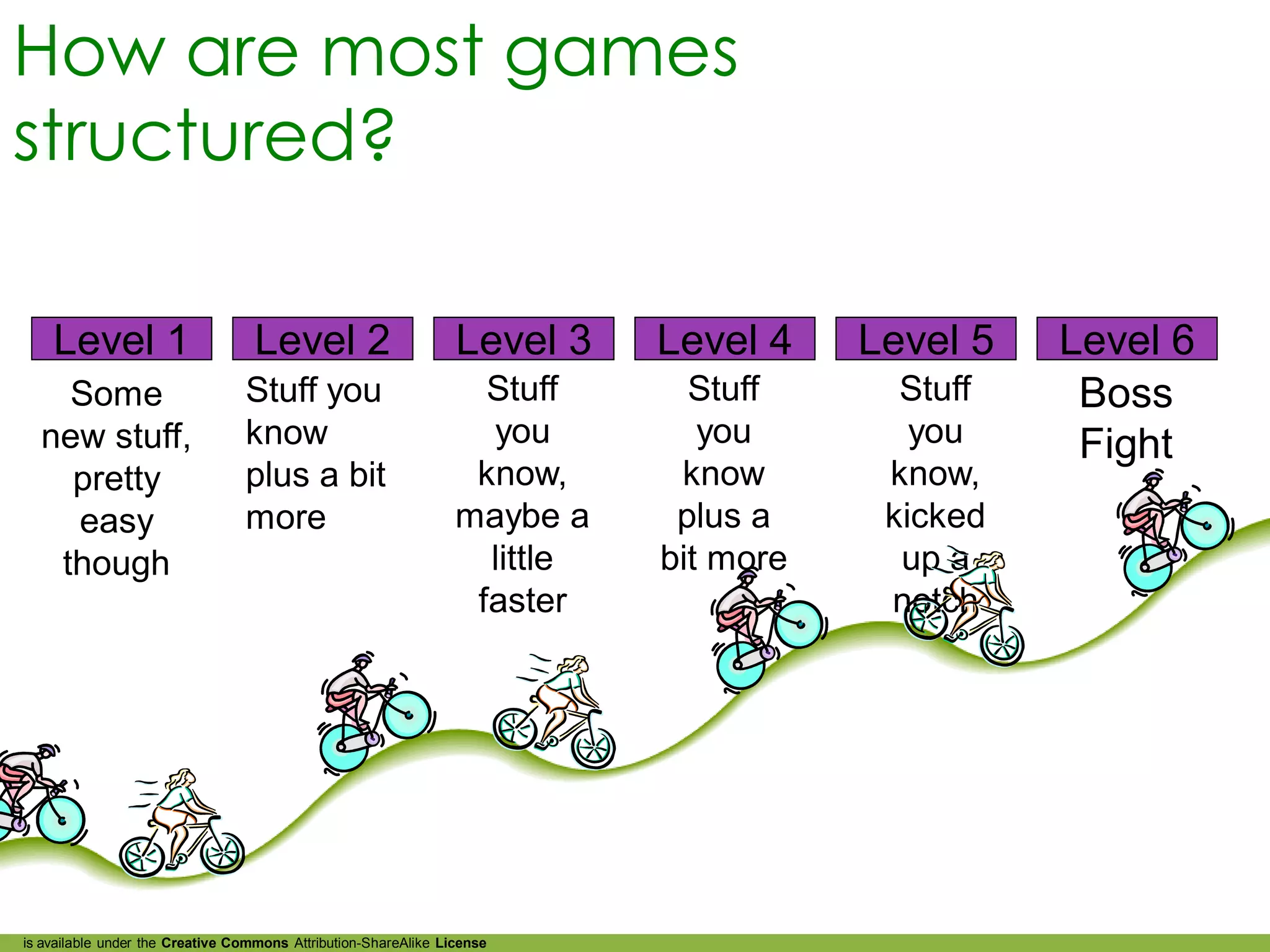
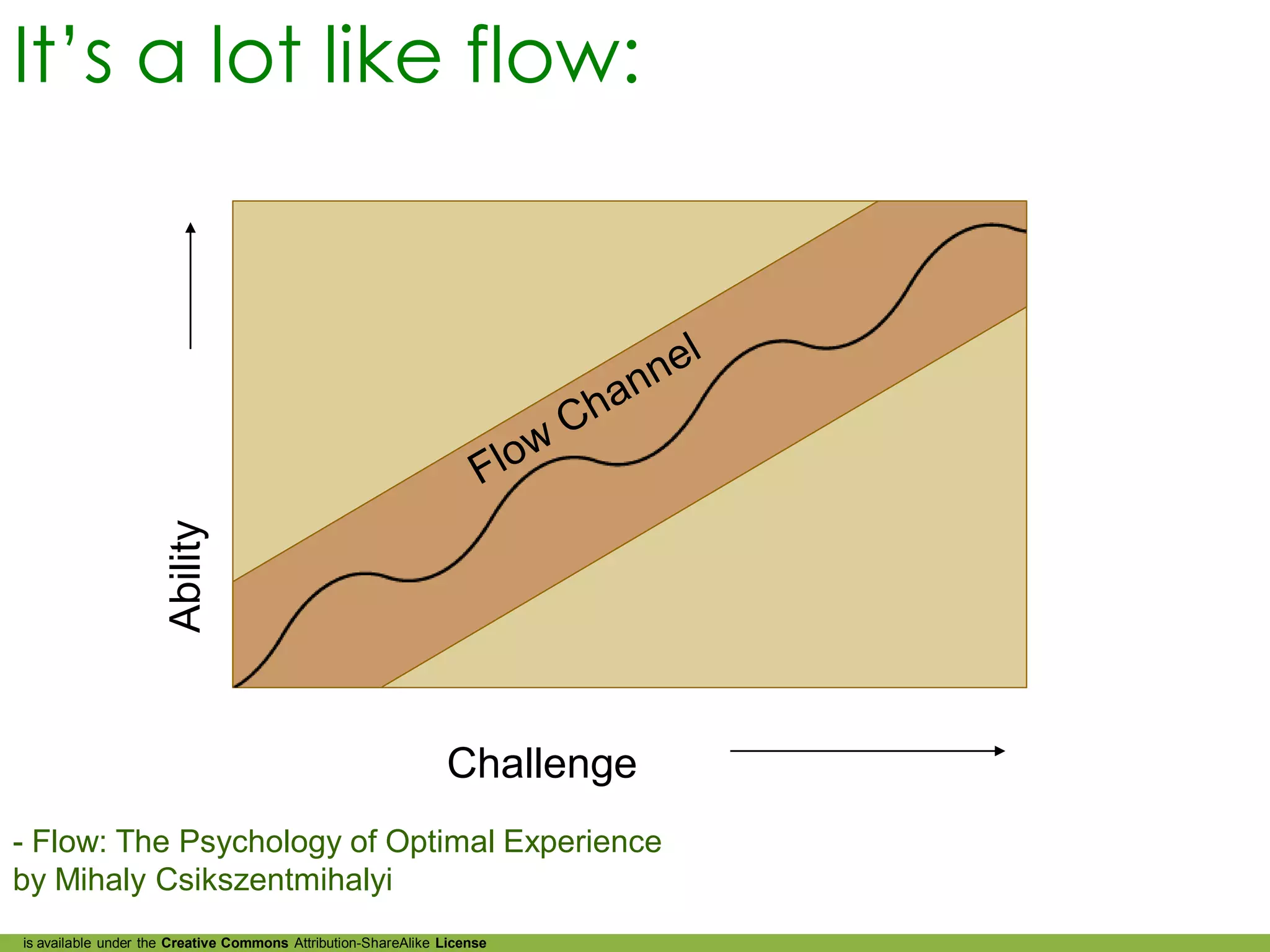
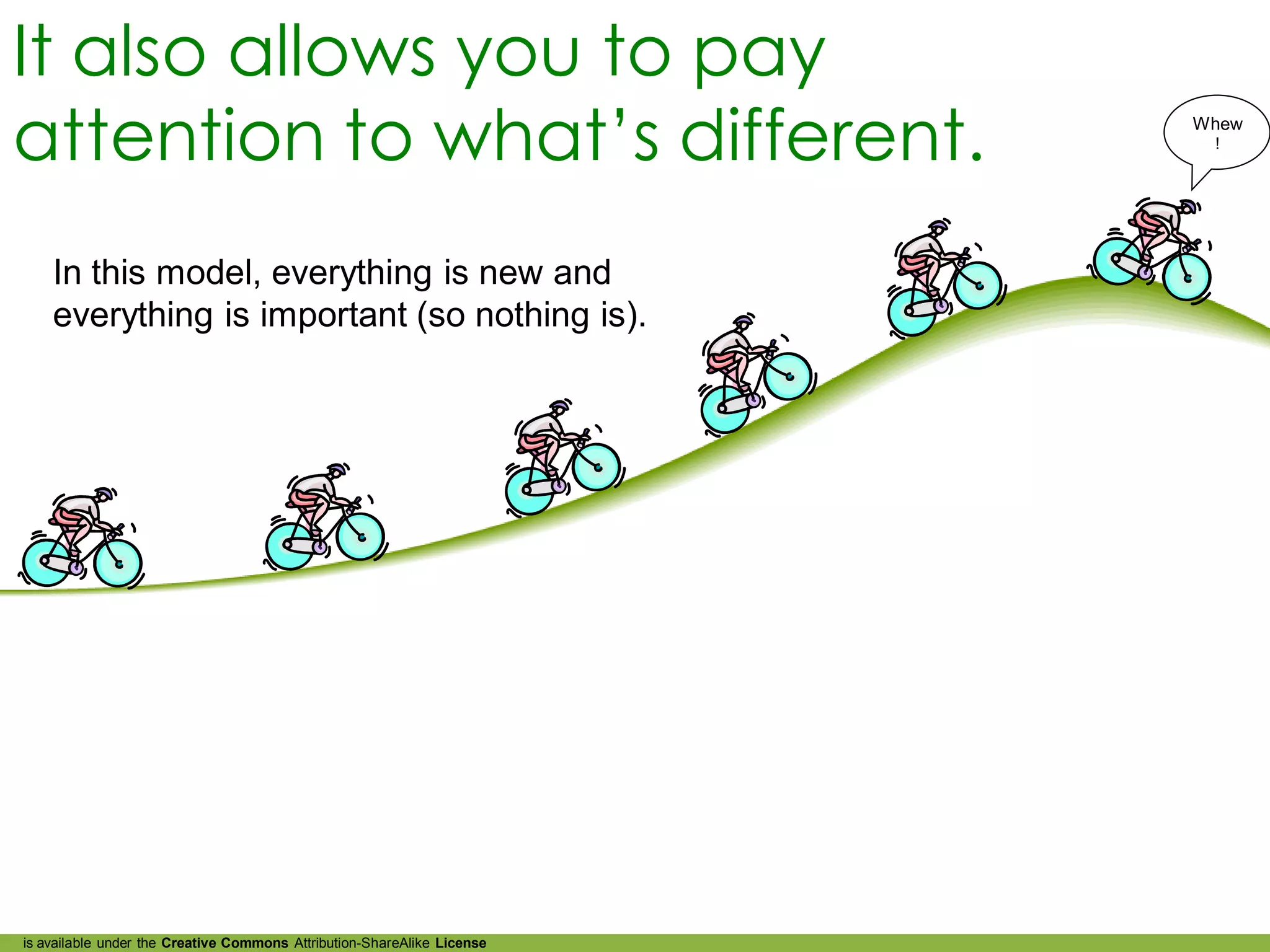
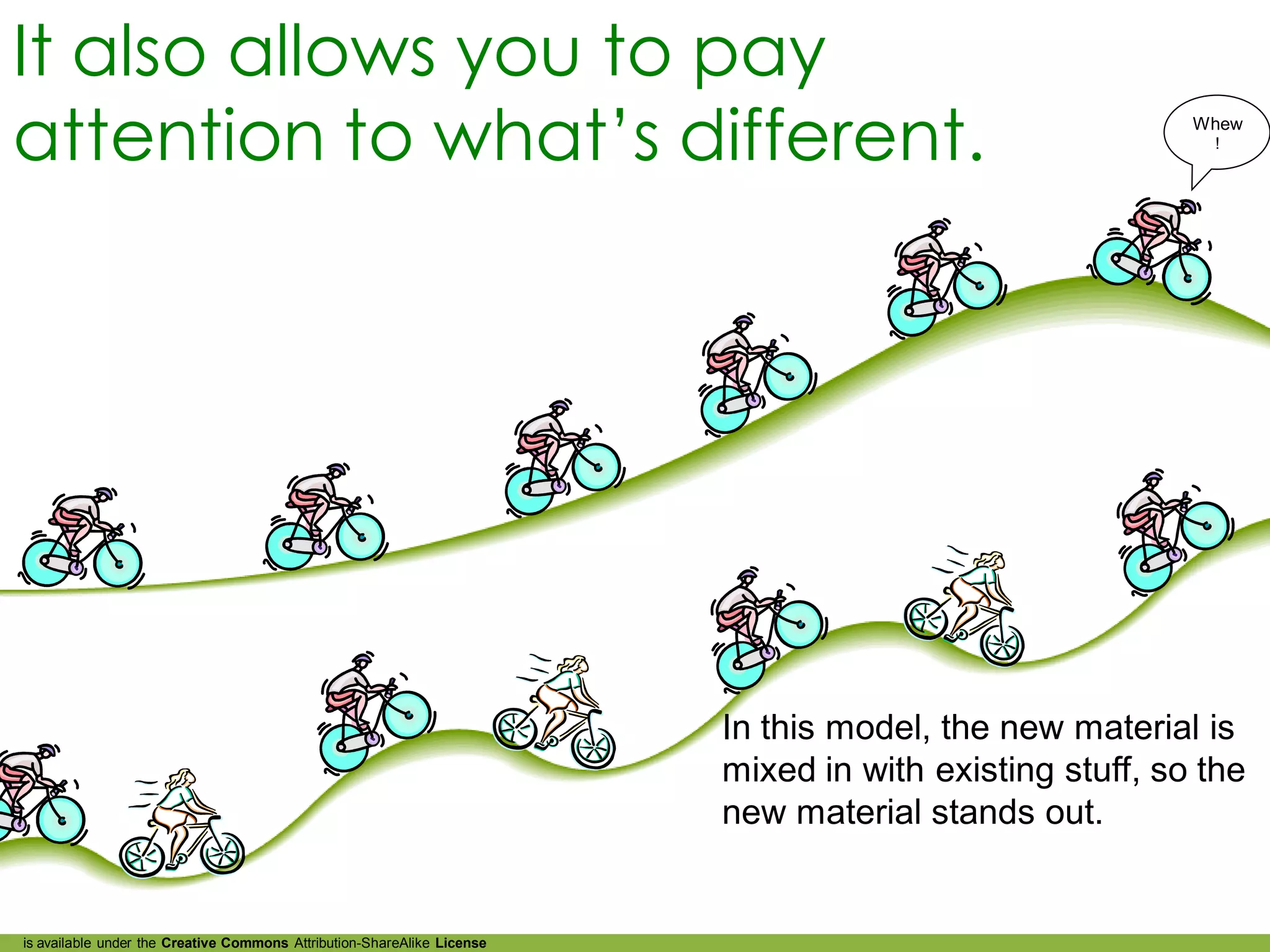
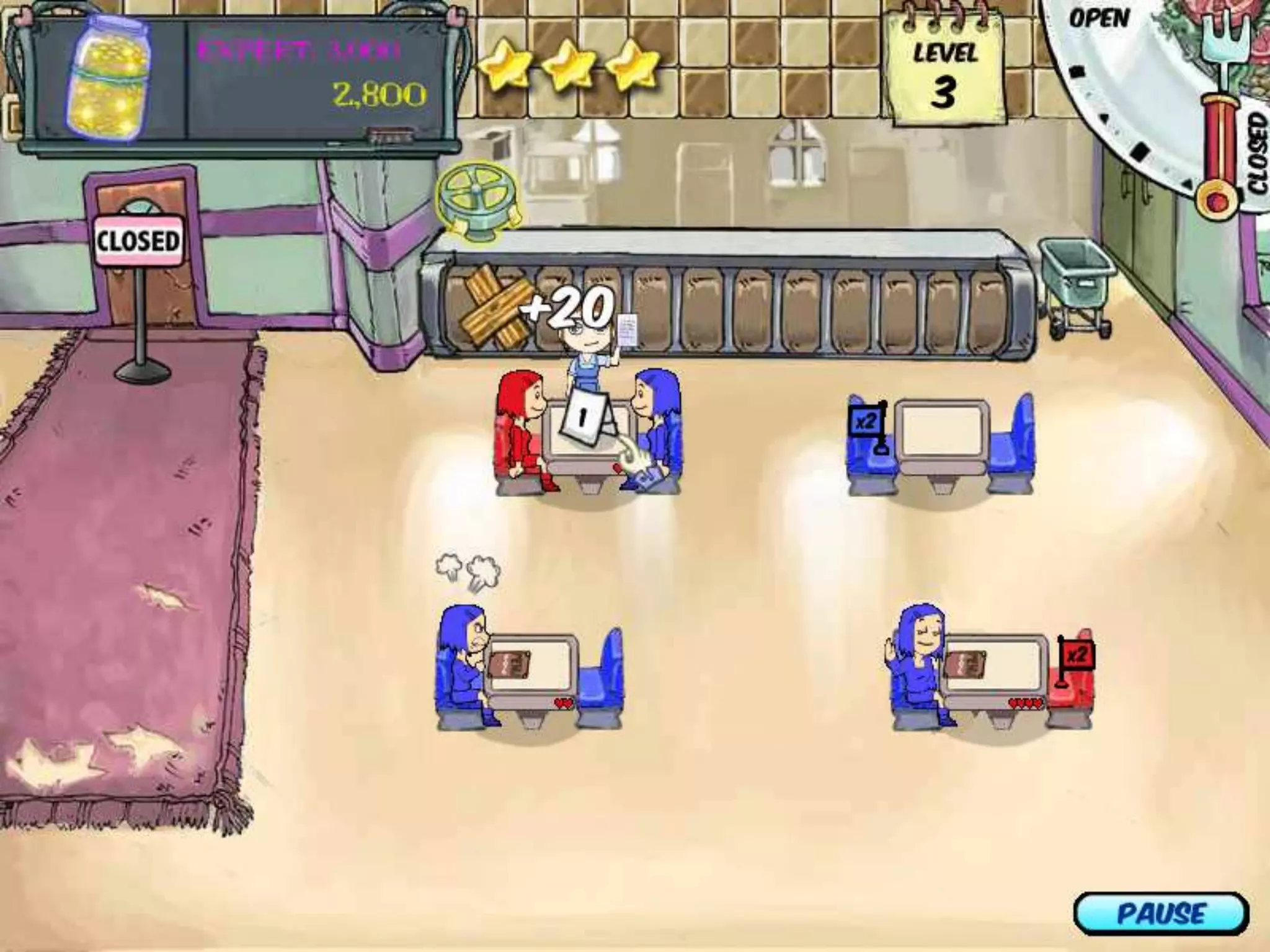
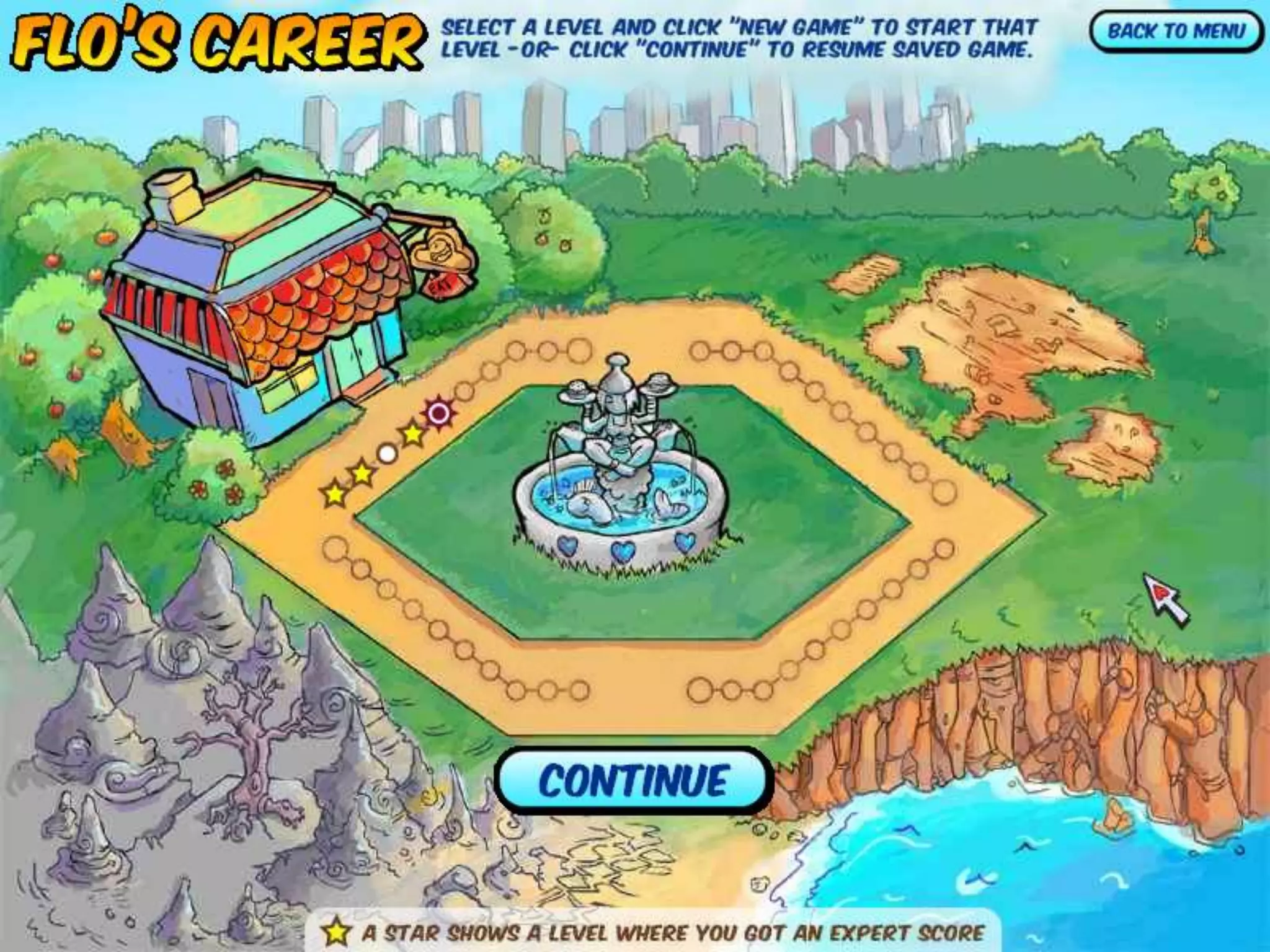

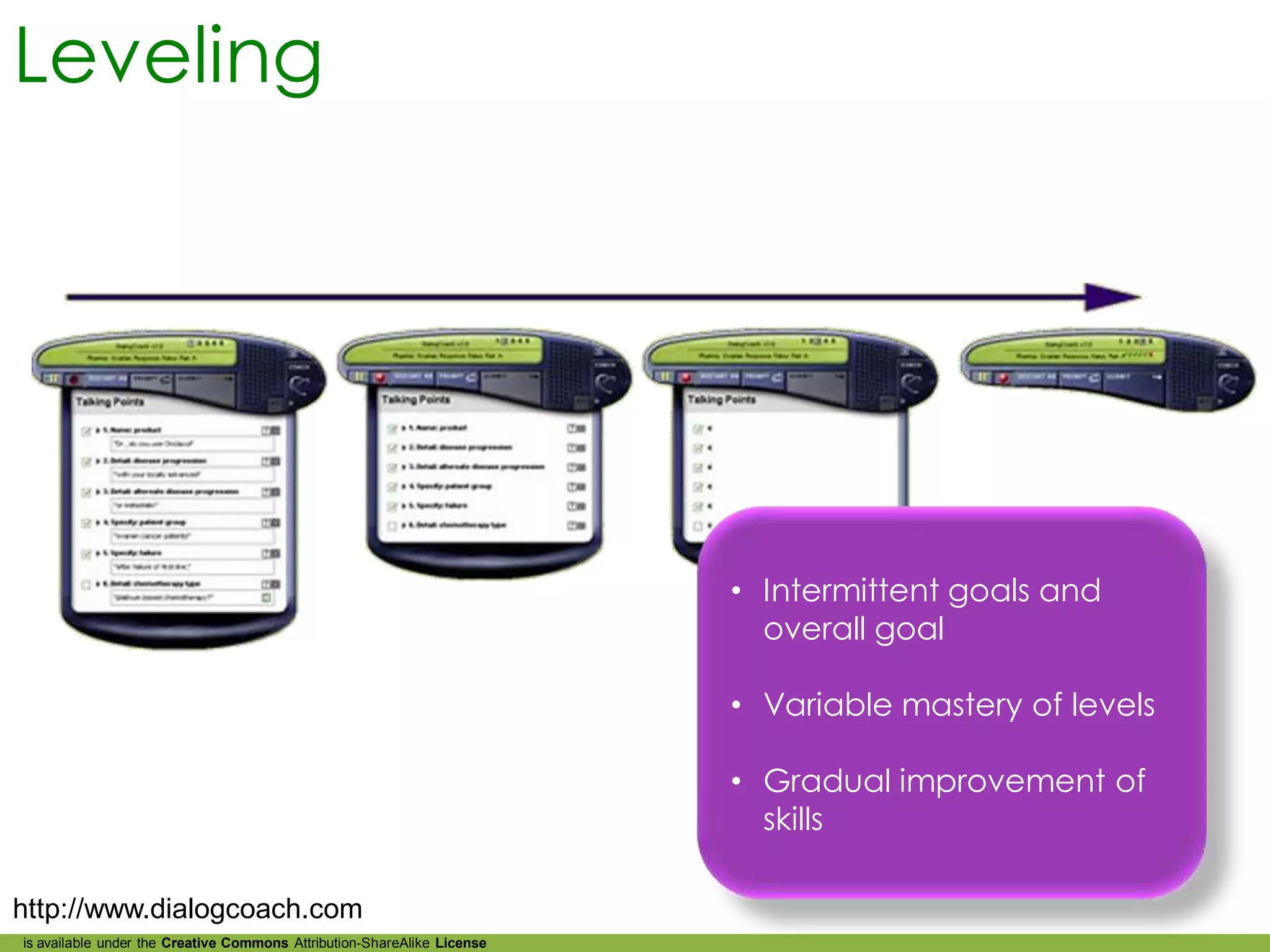
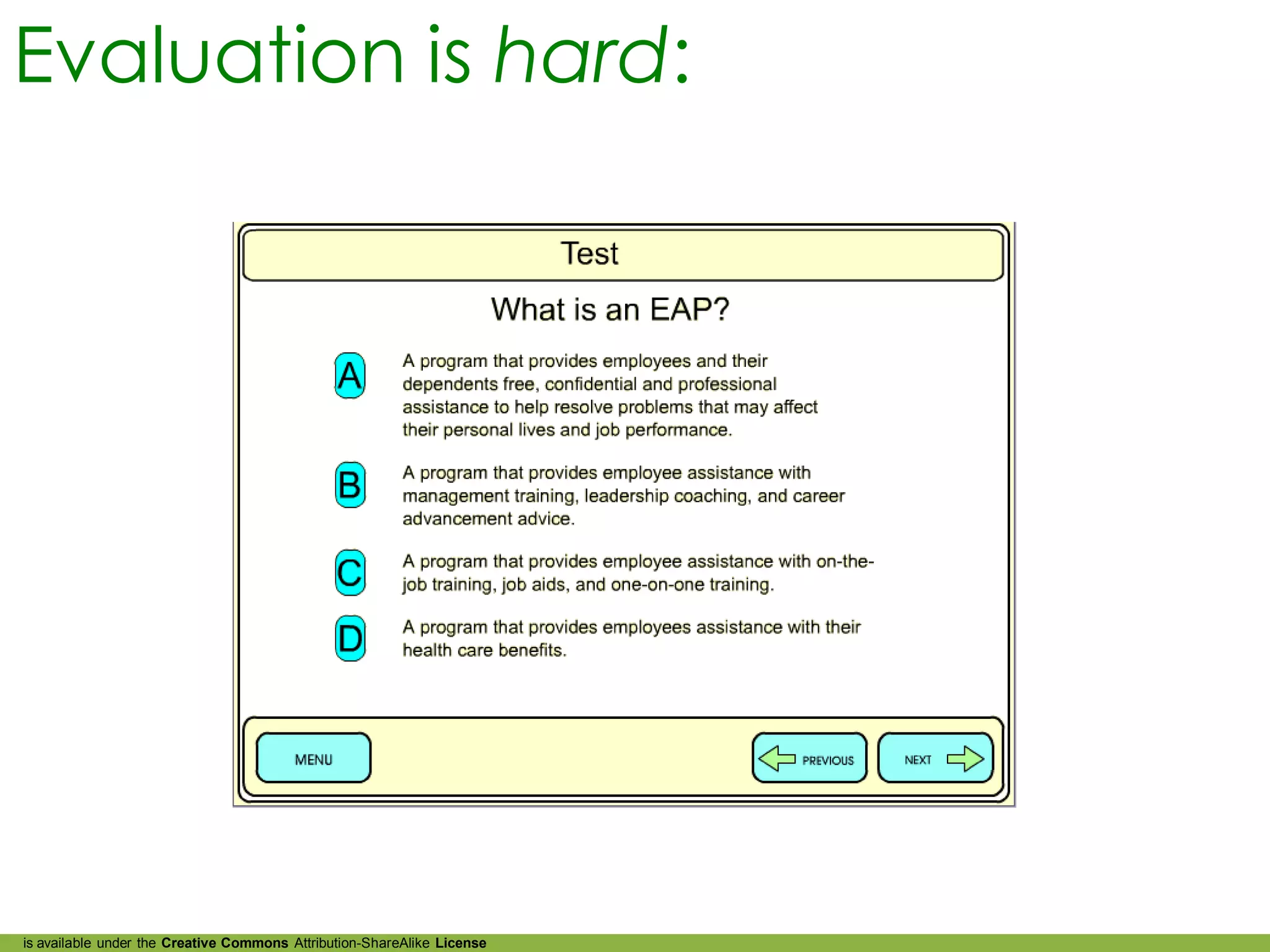
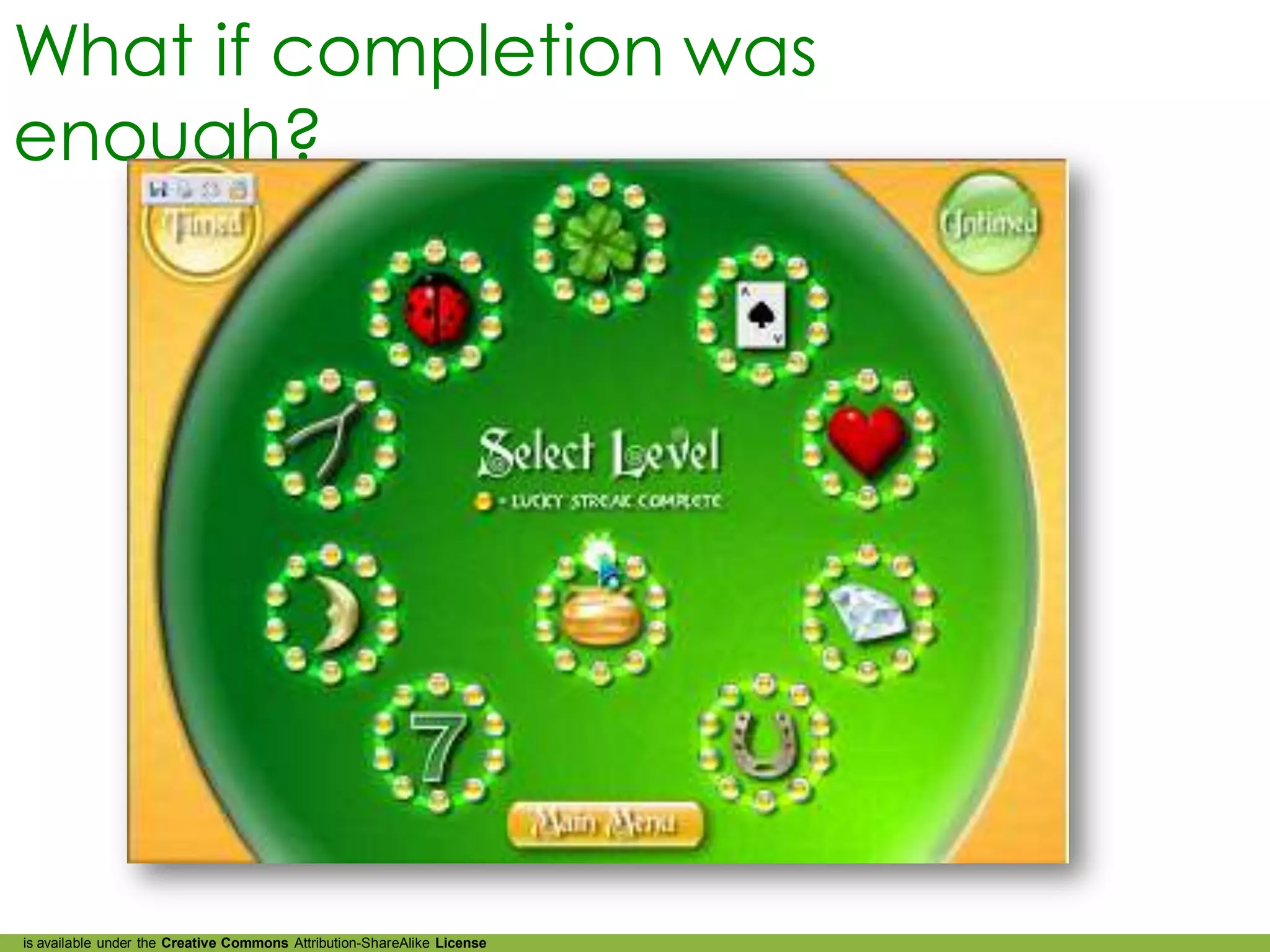
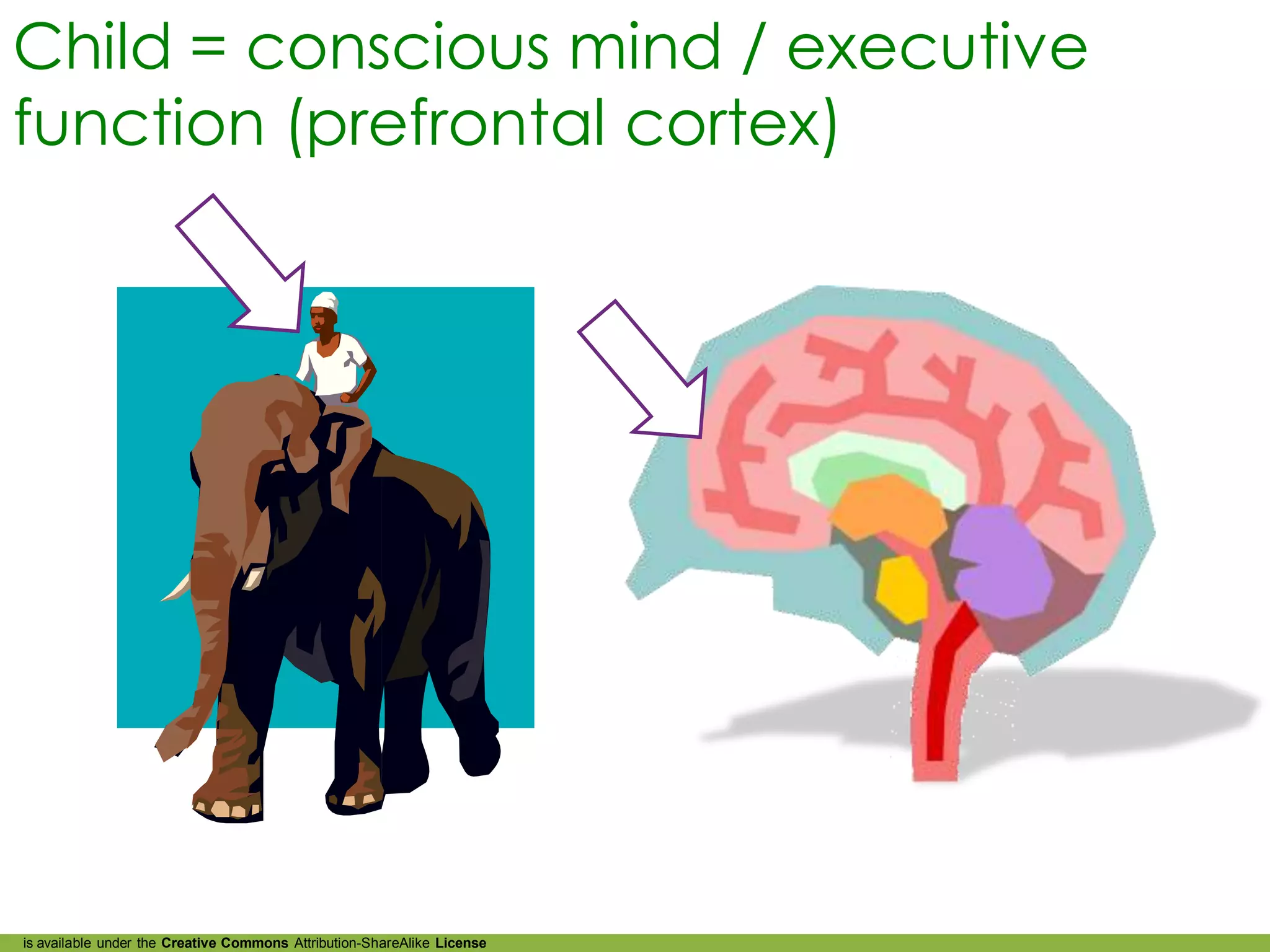
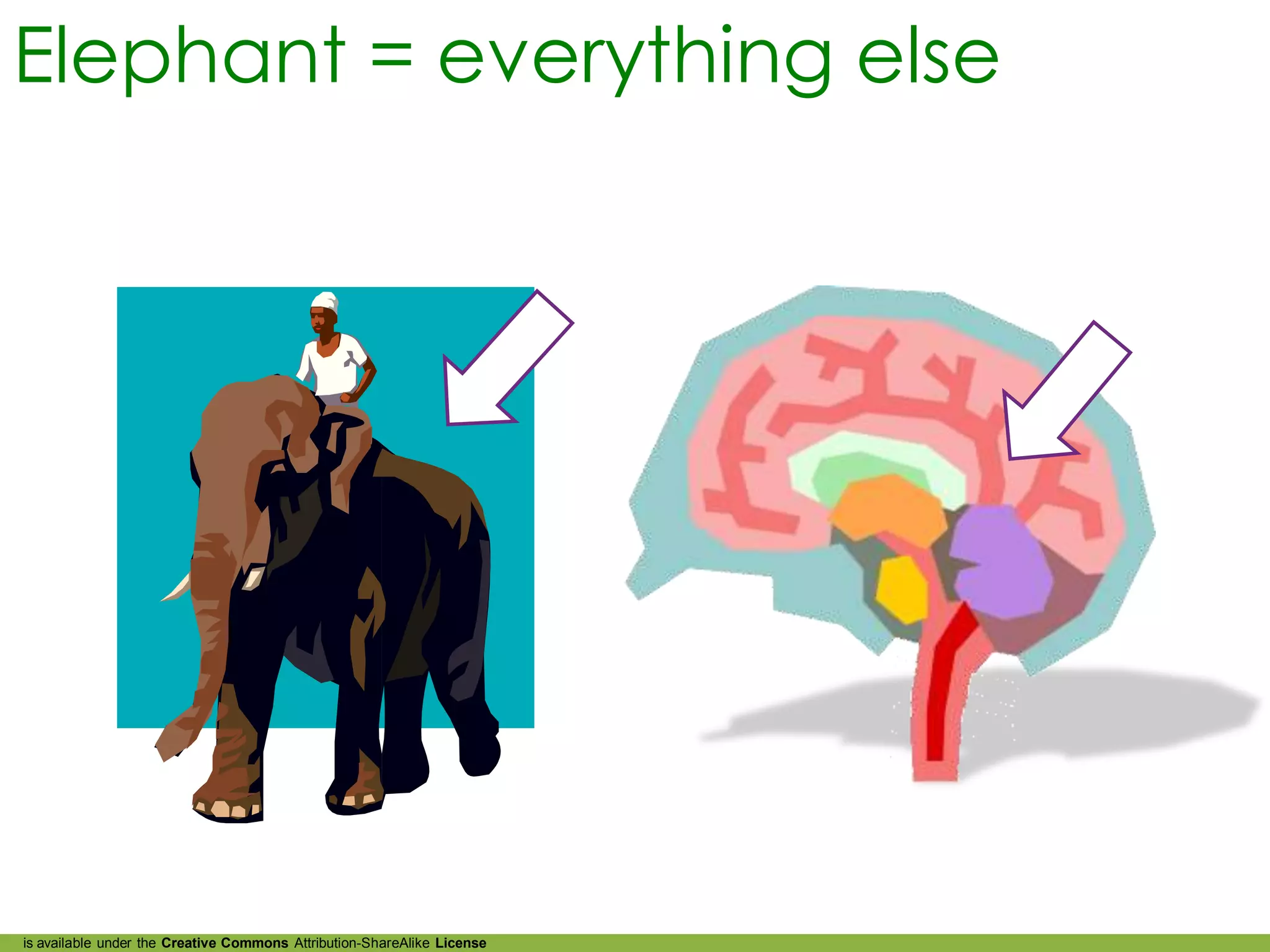




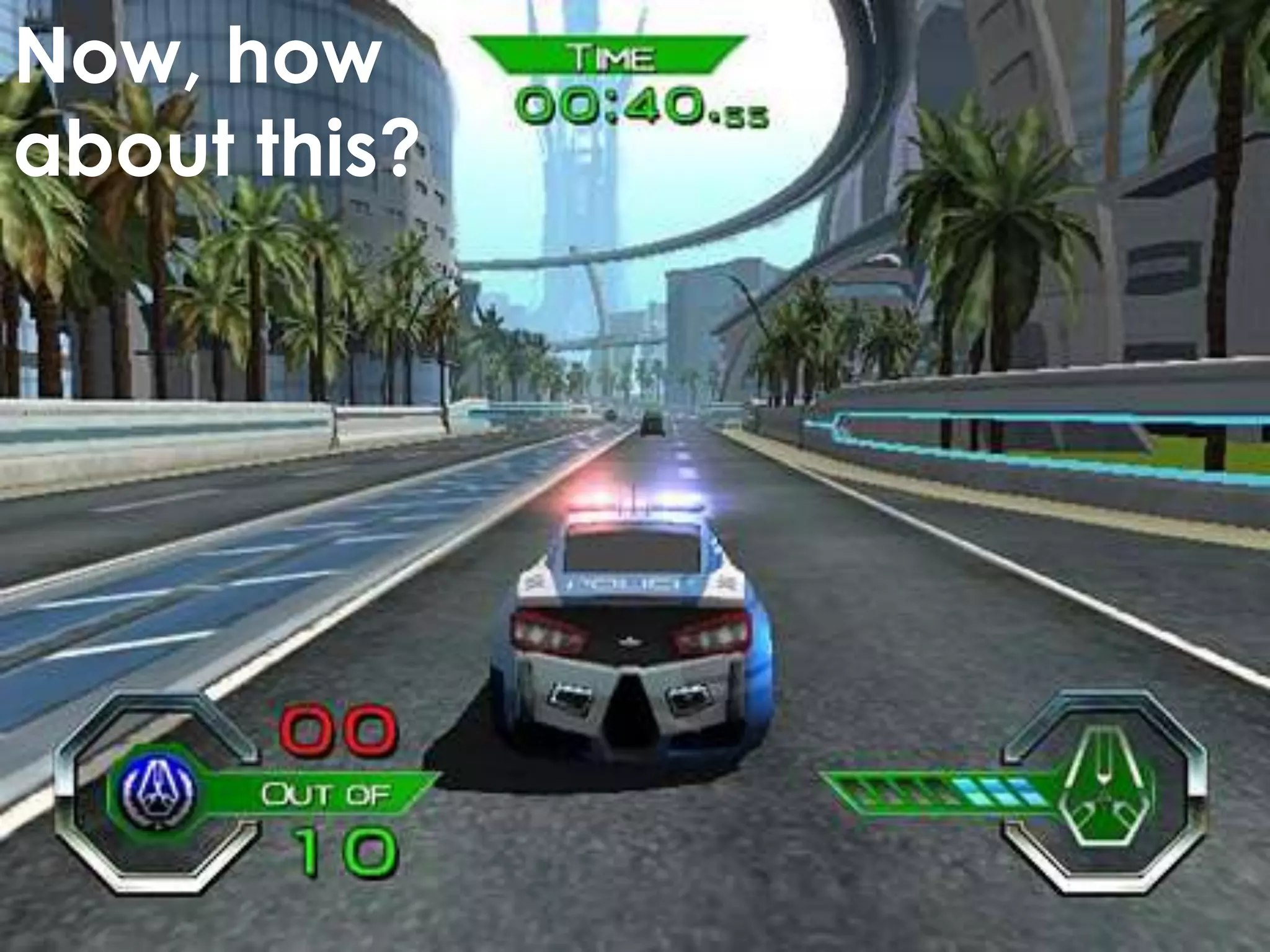
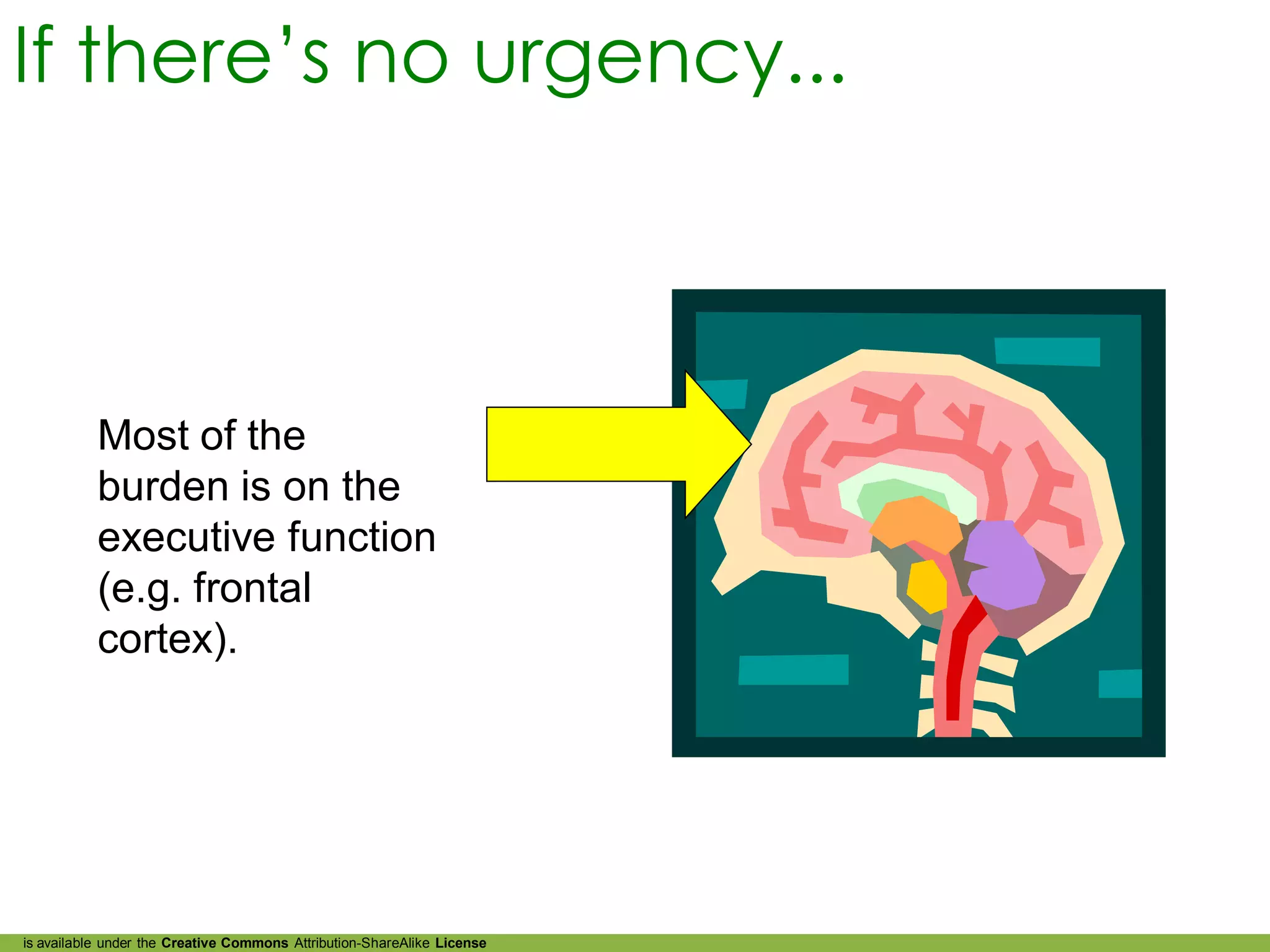
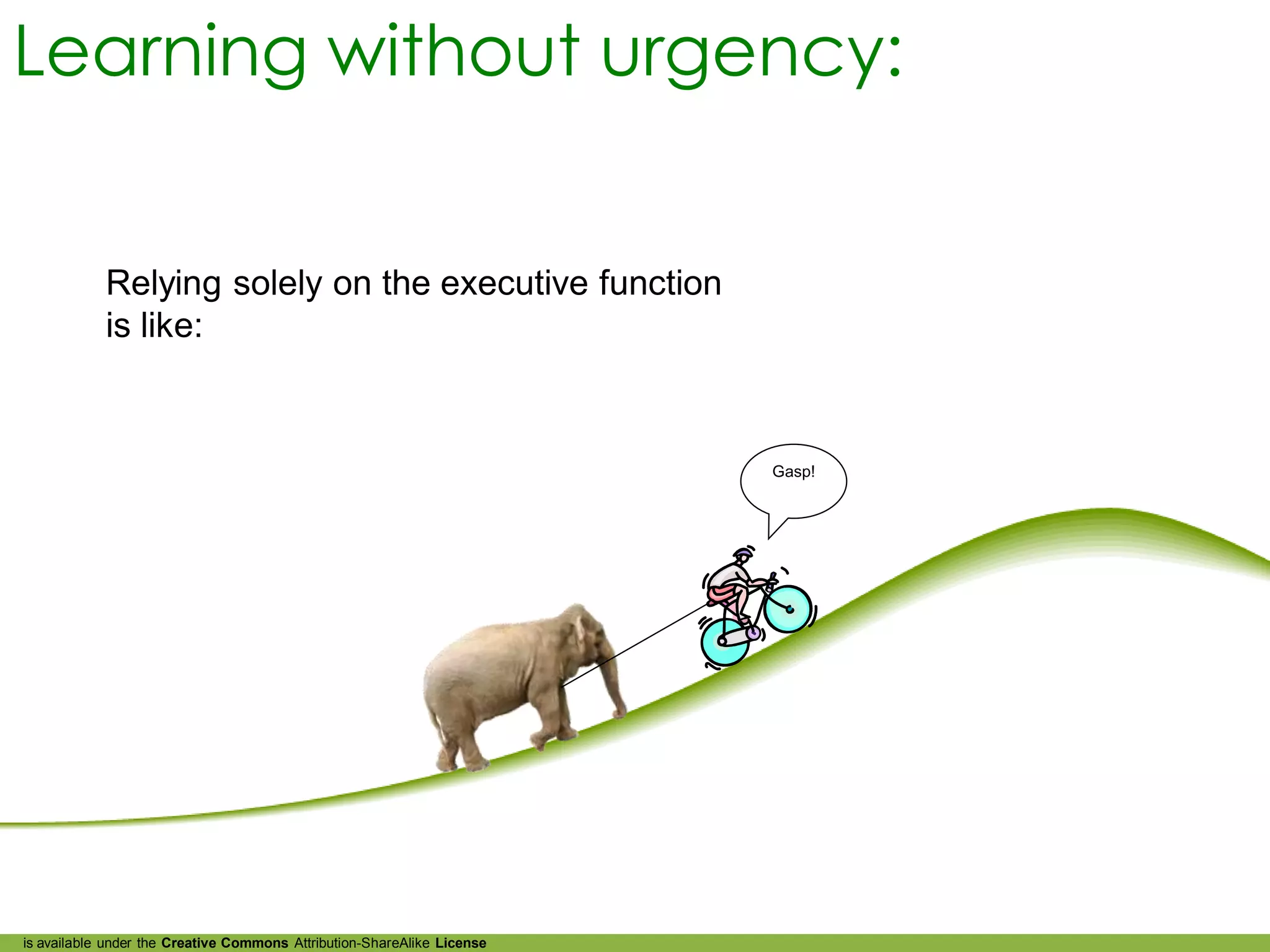
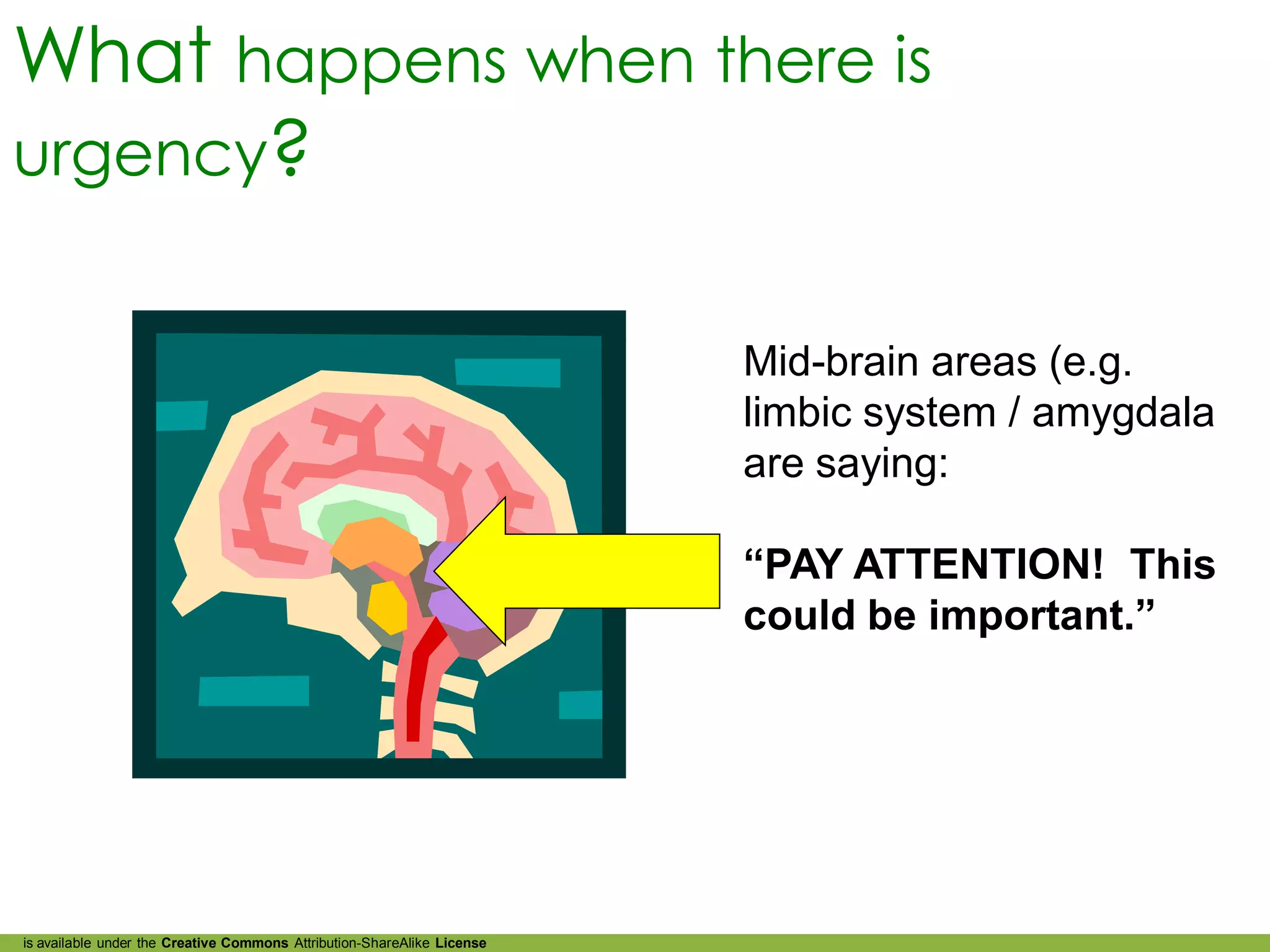
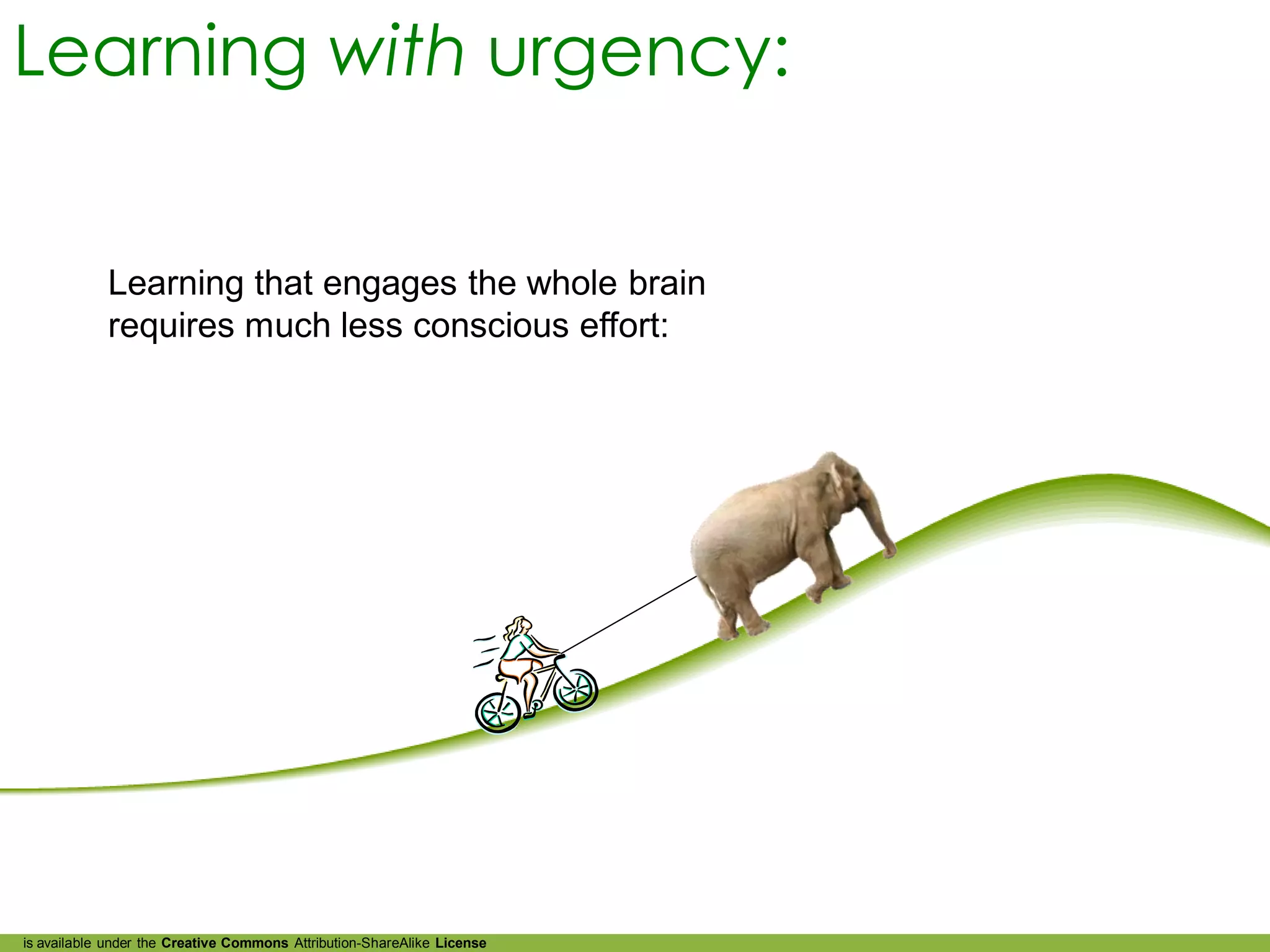
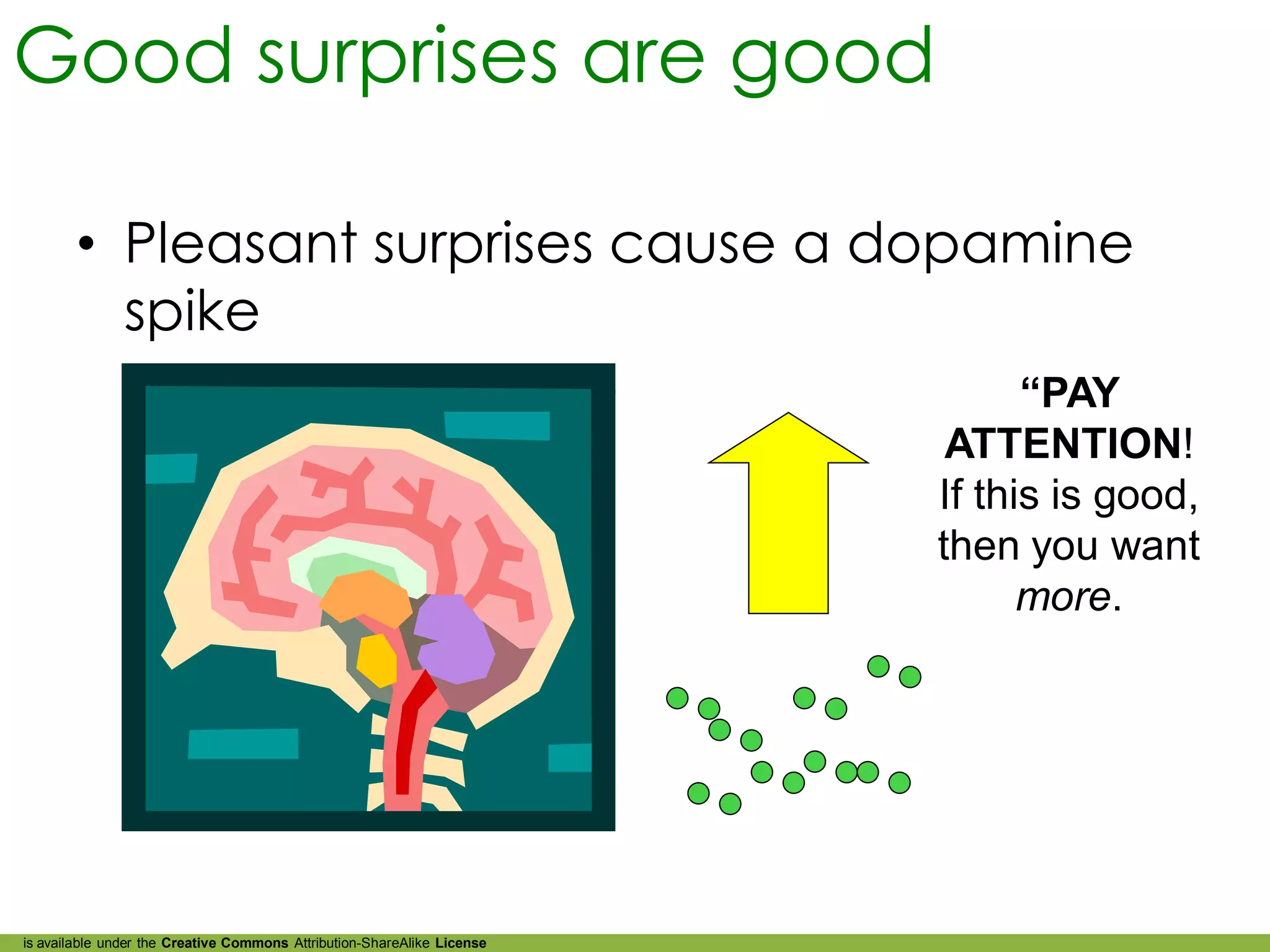
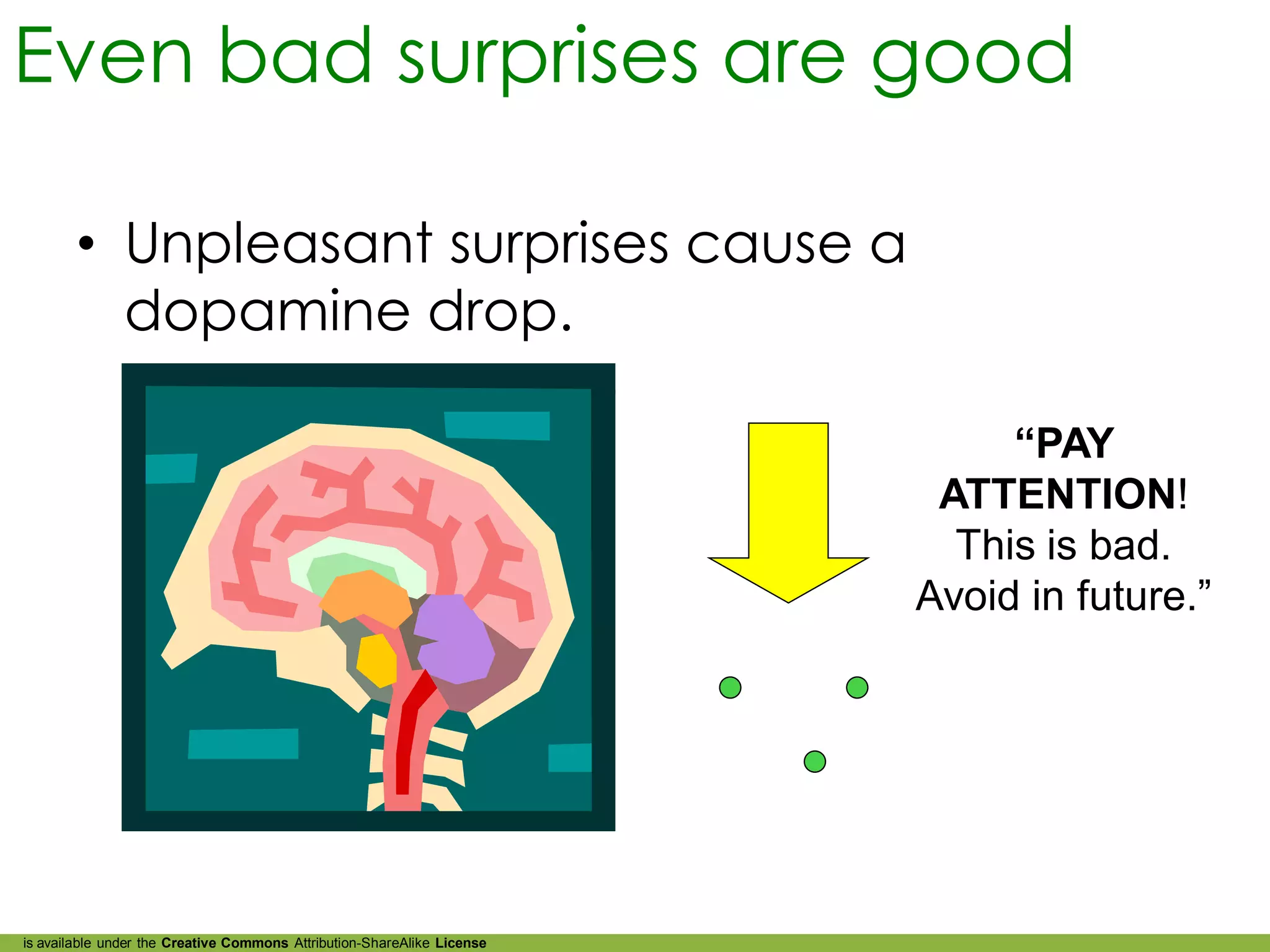
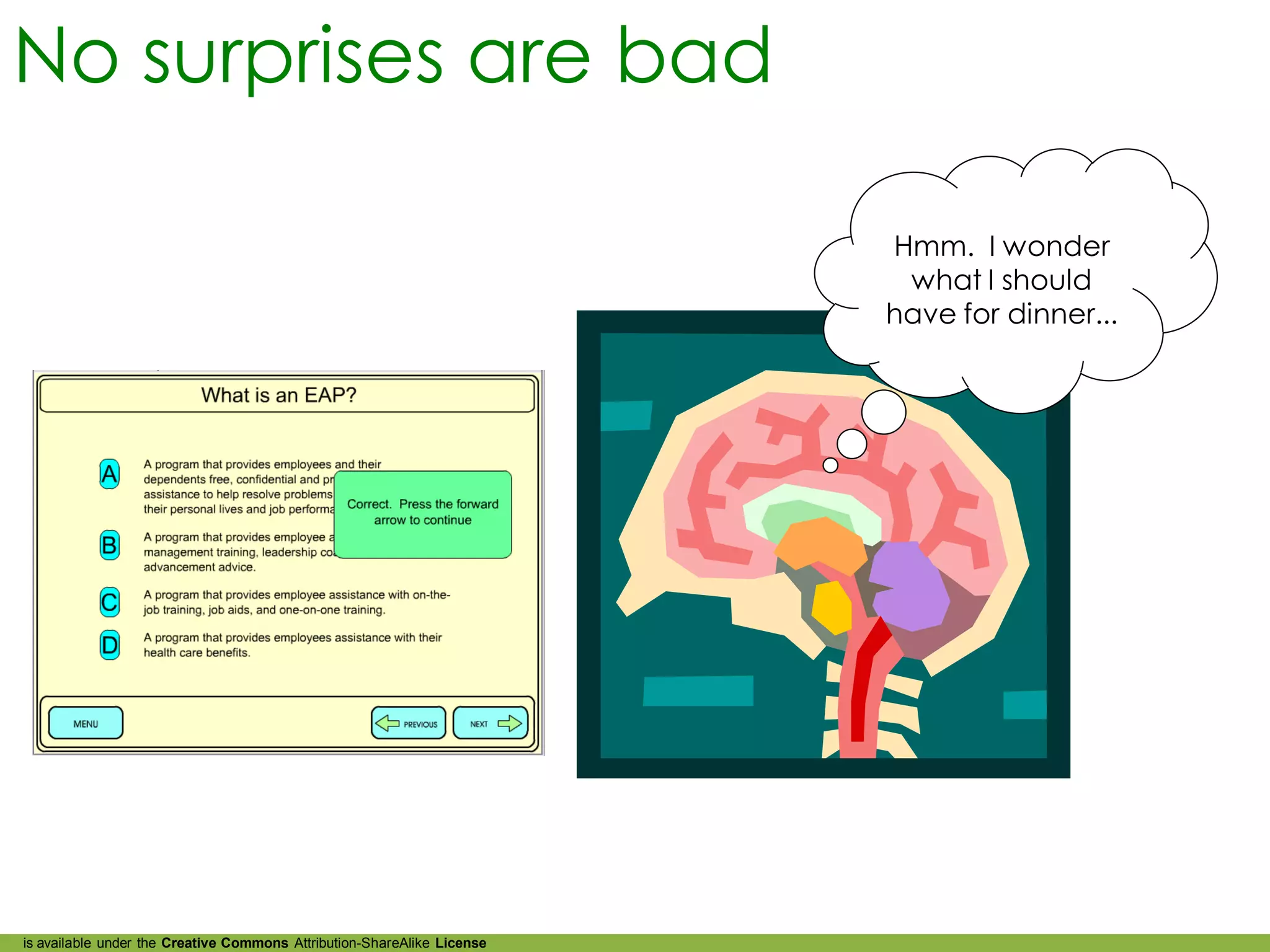
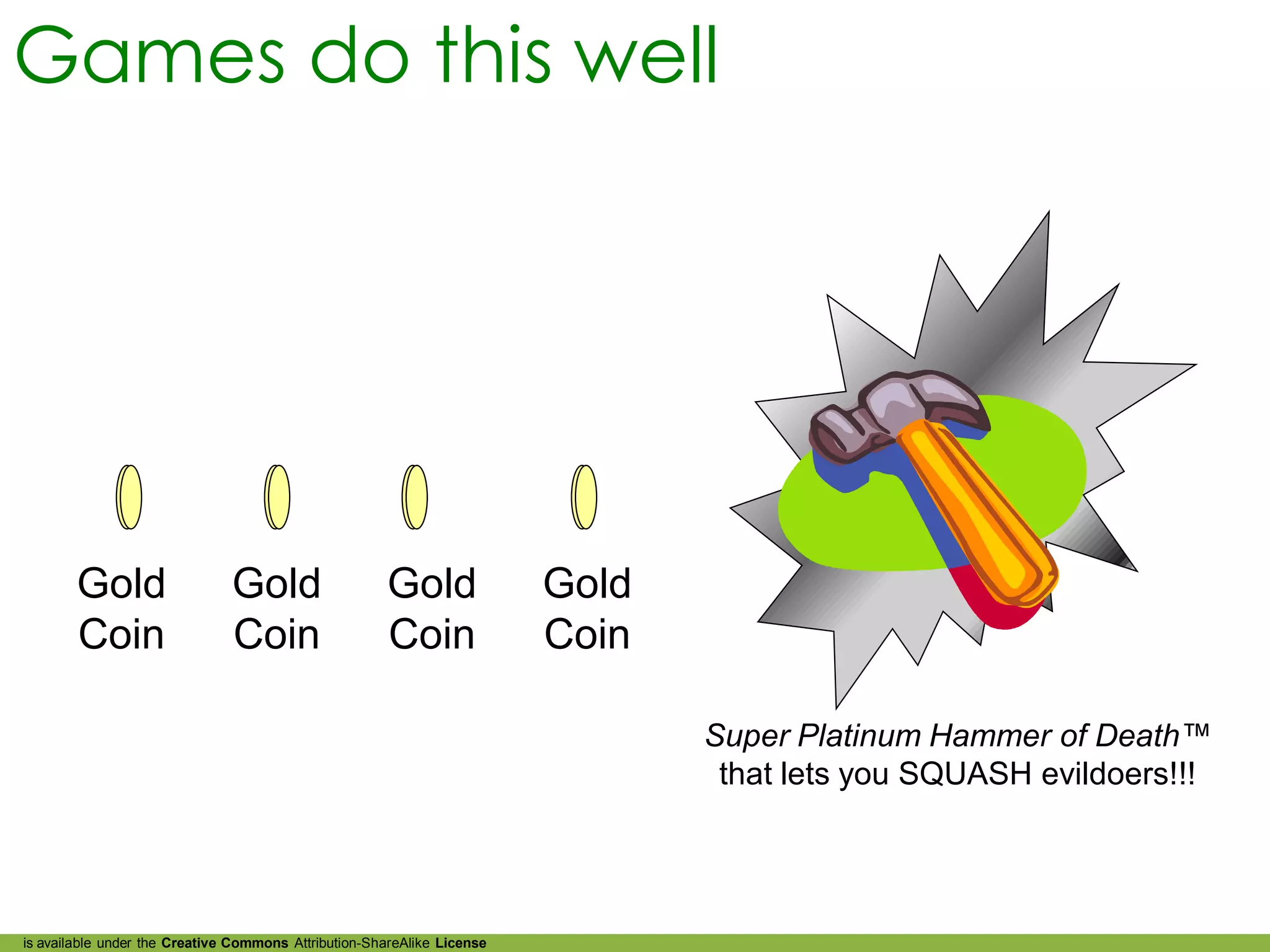


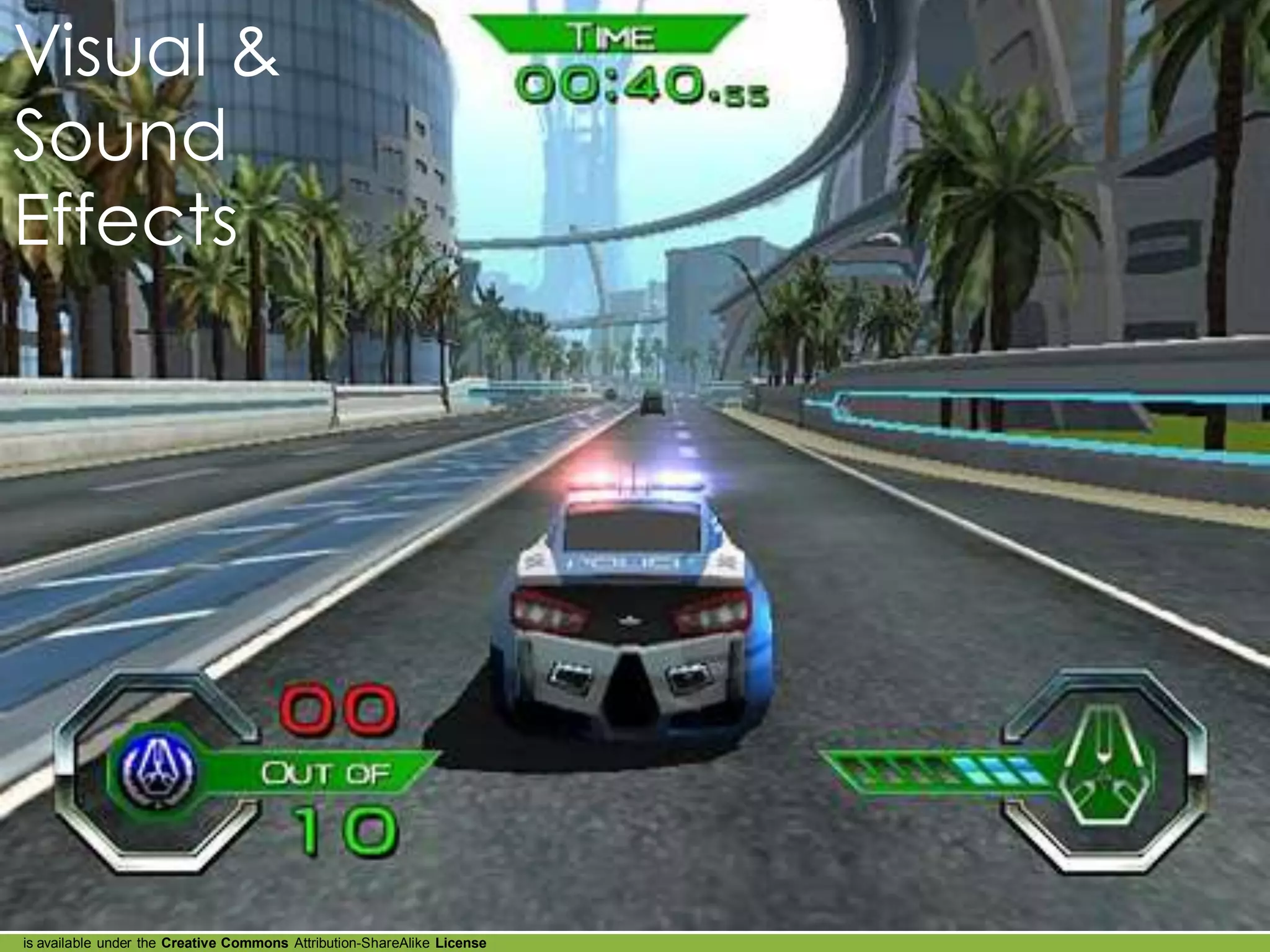







The document discusses how to create game-like engagement for learning without a large budget by incorporating elements from game design. It argues learning should be structured like games with feedback, levels, and cycles of expertise that transition from conscious to unconscious competence. Games provide frequent, multifaceted feedback through points, collectibles, time tracking and sound/visual reactions that motivate learning in a way similar to Skinnerian principles. The document also notes the brain works differently during familiar routine tasks compared to new learning, and game structures leverage routine learning to reduce cognitive load.


