Information for Parents and Students.
Game Sense 
Game sense approach is one method that 
develops a broader meaning of sport and 
physical activity. (AusSport) 
Game sense approach is used so that students 
are placed in situations that both decision 
making and problem solving are used for a 
successful outcome. 
Game sense approach requires students to have 
a basic understanding of the sport so that they 
are able to adjust a game that is challenging for 
themselves. Children are then able to 
understand similarities between games and 
explore common principles (Curry 2011)
• Game sense approach helps students develop self-expression, 
socialisation skills and conflict resolution with others. All of which are 
important point in the syllabus of stage 2 subject matter. Which can be 
found on the board of studies Pages 42-43: http://goo.gl/c47BZP 
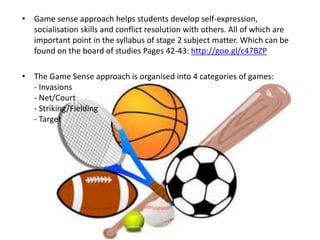
• The Game Sense approach is organised into 4 categories of games: 
- Invasions 
- Net/Court 
- Striking/Fielding 
- Target
Why do we do This? 
• Cognitive thinking is used through critical thinking and movement of the 
body during the game. 
• There are three main outcomes that we focus on in a game sense 
approach 
- To get students to understand the aim and purpose of the game they are 
playing 
- To get students to understand what they need to be successful in the game, 
such as skills and tactics 
- To help students discover how many of the skills and tactic's they learn are 
transferrable across the sporting arena. 
• Game Sense Approach enhances and develops cognitive thinking through 
questioning and discussion of strategies and tactics that are used within a 
game. (Light, 2006)
How Do We Implement Game Sense? 
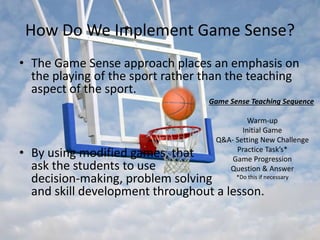
• The Game Sense approach places an emphasis on 
the playing of the sport rather than the teaching 
aspect of the sport. 
Game Sense Teaching Sequence 
Warm-up 
Initial Game 
Q&A- Setting New Challenge 
Practice Task’s* 
Game Progression 
Question & Answer 
*Do this if necessary 
• By using modified games, that 
ask the students to use 
decision-making, problem solving 
and skill development throughout a lesson.
Strengths 
• More children get involved with the game, because there is a more holistic 
approach to playing the game. 
• Both thinking students and physically gifted students are rewarded when 
playing. 
• Develops leadership among peers and students feel more part of a social 
setting. 
• Social skills are being developed both verbal and non-verbal due game 
sense interactive approach.
References 
• Brookes, L. (n.d.). How The Game Sense Approach in Physical Education 
Develop Cognitive Thinking 
• Curry, C. (2011). ‘Using the Game Sense Approach in Physical Education’. 
Engaging Learning, pp.8-12 
• Curry, C., & Light, R. (2006). Addressing the NSW Quality teaching 
framework in physical education: Is Game Sense the answeer. In Asia 
Pacific conference on Teaching Sport and Physical Education for 
Understanding, pp.7-19.
References 
• Light, R. (2004). Coaches' experiences of Game Sense: opportunities and 
challenges. Physical Education & Sport Pedagogy, 9(2), 115-131 
• Light, R. (2003) ‘The Joy of Learning: emotion and learning in games 
through TGfU’. Journal of physical education New Zealand. 
• Teaching games for understanding. (n.d.). Retrieved September 30th, 
2014, from http://www.ausport.gov.au/ 
• PDHPE Syllabus K-6, Board Of Studies. Retrieved from 
http://k6.boardofstudies.nsw.edu.au/wps/wcm/connect/330e5ccb-782a- 
432b-8ce5-122a8c42967e/k6_pdhpe_syl.pdf?MOD=AJPERES

Game sense approch year 4 pdhpe

  • 1.
  • 2.
    Game Sense Gamesense approach is one method that develops a broader meaning of sport and physical activity. (AusSport) Game sense approach is used so that students are placed in situations that both decision making and problem solving are used for a successful outcome. Game sense approach requires students to have a basic understanding of the sport so that they are able to adjust a game that is challenging for themselves. Children are then able to understand similarities between games and explore common principles (Curry 2011)
  • 3.
    • Game senseapproach helps students develop self-expression, socialisation skills and conflict resolution with others. All of which are important point in the syllabus of stage 2 subject matter. Which can be found on the board of studies Pages 42-43: http://goo.gl/c47BZP • The Game Sense approach is organised into 4 categories of games: - Invasions - Net/Court - Striking/Fielding - Target
  • 4.
    Why do wedo This? • Cognitive thinking is used through critical thinking and movement of the body during the game. • There are three main outcomes that we focus on in a game sense approach - To get students to understand the aim and purpose of the game they are playing - To get students to understand what they need to be successful in the game, such as skills and tactics - To help students discover how many of the skills and tactic's they learn are transferrable across the sporting arena. • Game Sense Approach enhances and develops cognitive thinking through questioning and discussion of strategies and tactics that are used within a game. (Light, 2006)
  • 5.
    How Do WeImplement Game Sense? • The Game Sense approach places an emphasis on the playing of the sport rather than the teaching aspect of the sport. Game Sense Teaching Sequence Warm-up Initial Game Q&A- Setting New Challenge Practice Task’s* Game Progression Question & Answer *Do this if necessary • By using modified games, that ask the students to use decision-making, problem solving and skill development throughout a lesson.
  • 6.
    Strengths • Morechildren get involved with the game, because there is a more holistic approach to playing the game. • Both thinking students and physically gifted students are rewarded when playing. • Develops leadership among peers and students feel more part of a social setting. • Social skills are being developed both verbal and non-verbal due game sense interactive approach.
  • 7.
    References • Brookes,L. (n.d.). How The Game Sense Approach in Physical Education Develop Cognitive Thinking • Curry, C. (2011). ‘Using the Game Sense Approach in Physical Education’. Engaging Learning, pp.8-12 • Curry, C., & Light, R. (2006). Addressing the NSW Quality teaching framework in physical education: Is Game Sense the answeer. In Asia Pacific conference on Teaching Sport and Physical Education for Understanding, pp.7-19.
  • 8.
    References • Light,R. (2004). Coaches' experiences of Game Sense: opportunities and challenges. Physical Education & Sport Pedagogy, 9(2), 115-131 • Light, R. (2003) ‘The Joy of Learning: emotion and learning in games through TGfU’. Journal of physical education New Zealand. • Teaching games for understanding. (n.d.). Retrieved September 30th, 2014, from http://www.ausport.gov.au/ • PDHPE Syllabus K-6, Board Of Studies. Retrieved from http://k6.boardofstudies.nsw.edu.au/wps/wcm/connect/330e5ccb-782a- 432b-8ce5-122a8c42967e/k6_pdhpe_syl.pdf?MOD=AJPERES