A review framework for school libraries
By
Leonie McIlvenny
The Future-focused Library
http://japanese-forearm-tattoos.blogspot.com.au/2012_03_01_archive.html
How do we create a future
focused library and what
does it look like?
The hallmark of a school library in the
21st century is not its collections, its
systems, its technology, its staffing, its
building, but its actions and evidence
that show that it makes a real
difference to student learning, that it
contributes in tangible and significant
ways to the development of meaning
making and constructing knowledge.
Transitions for preferred futures for school libraries (Todd, 2001, 4)
From: Future Learning and School Libraries (ASLA)
Support curriculum goals
Provide expertise
Advocate lifelong learning
Provide intellectual agency
Enable students to become information and digital
literate
The role and impact of the teacher-librarian can be
synthesized quite simply: teacher-librarians impact student
learning and achievement by forming strong and positive
relationships with members of the school community,
especially the school principal; by collaborating with
classroom colleagues to plan, develop and assess
independent learning abilities in students; by fostering a
recreational reading culture in the building; and by
providing informal staff development opportunities.
K. Haycock (personal communication, December 8, 2013)
Learners and
Learning
Teachers and
Teaching
Resourcing
the
Curriculum
Facilitating
Access to
Information
Developing
the Physical
Environment
LEARNING FOR THE FUTURE
Learning
Outcomes
This guide has been our major
reference for library reform in
Australia since 1993. It was updated
in 2001 to reflect the changes
brought about mainly by the impact
of digital literacies / technologies
that became part of the educational
landscape.
The question is…
IS IT STILL
RELEVANT
TODAY?
Don’t throw
the baby out
with the
bathwater
FUTURE READY SCHOOLS
Space and time
Curriculum,
instruction &
assessment
Professional
Learning
Robust
Infrastructure
Budget &
Resources
Community
Partnerships
Data & Privacy
Collaborative
Leadership
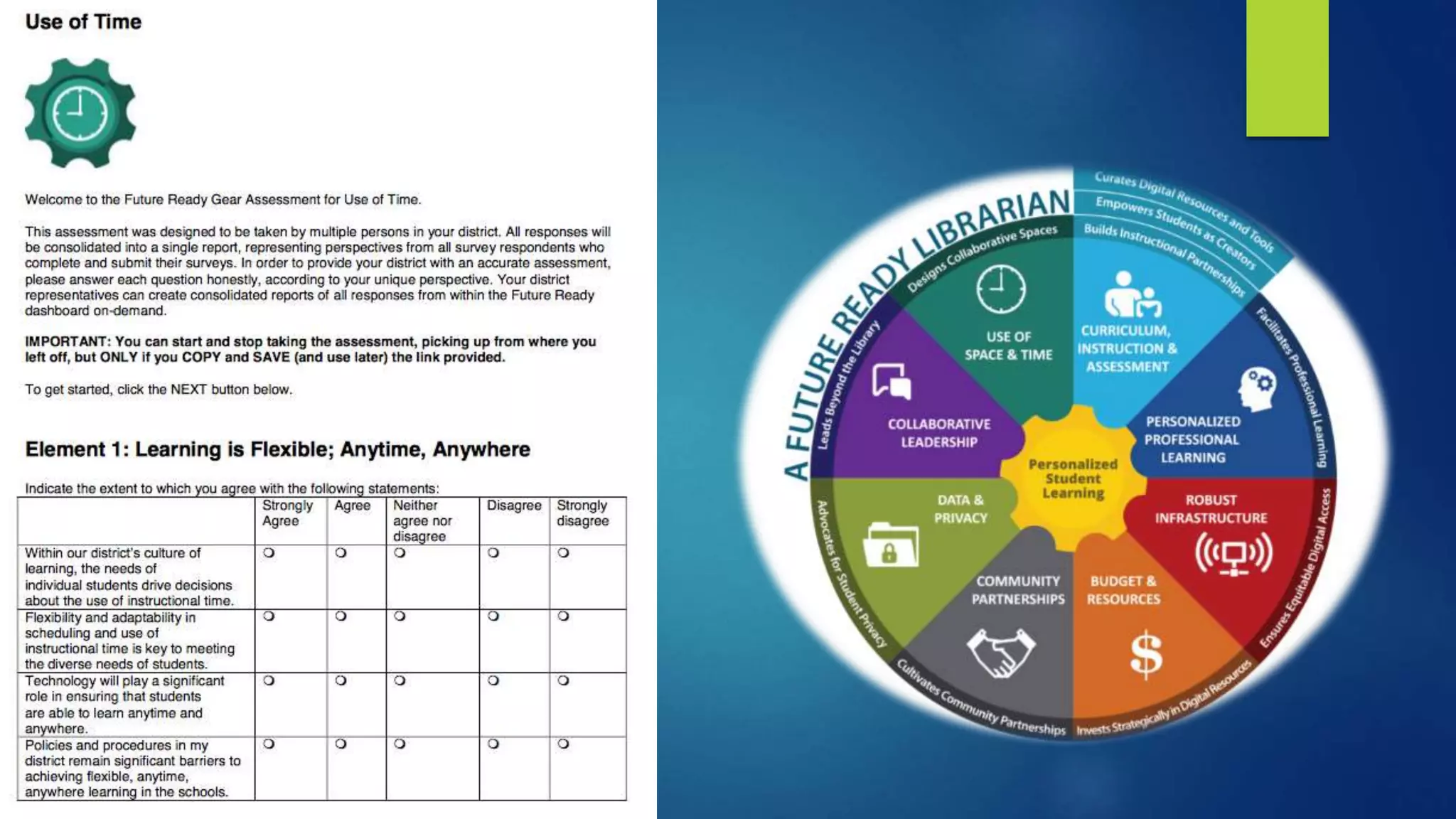
FUTURE READY
LIBRARIAN
Framework based on
the Future Ready
School Project
FUTURE READY
LIBRARIAN
Framework based on
the Future Ready
School Project
As schools seek to become Future Ready, it is
necessary to identify and cultivate leadership
beyond district and building leaders. School
librarians lead, teach and support the Future Ready
goals of their school and district in a variety of ways
through their professional practice, programs and
spaces. If properly prepared and supported, school
librarians are well-positioned to be at the leading
edge of the digital transformation of learning.
Changing the conversation about
librarians
Are librarians the key to a Future Ready
School?
The alliance for Excellent Education launched its Future Ready Schools (FRS) initiative in
October 2014 with the aim of leveraging technology and connectivity to personalise and
transform learning. In June 2016, the Alliance, in partnership with the U.S. Department
of Education’s Office of technology expanded FRS to position school librarians as
leaders in this effort.
There is a growing recognition that librarians were essential to the process. The FR
Librarians Framework acknowledges that librarians play a powerful role in:
 Curating digital resources and tools
 Empowering students as creators
 Building instructional partnerships
 Designing collaborative spaces
http://escholnews.com/2016/12/16/librarians-key-future-ready-school
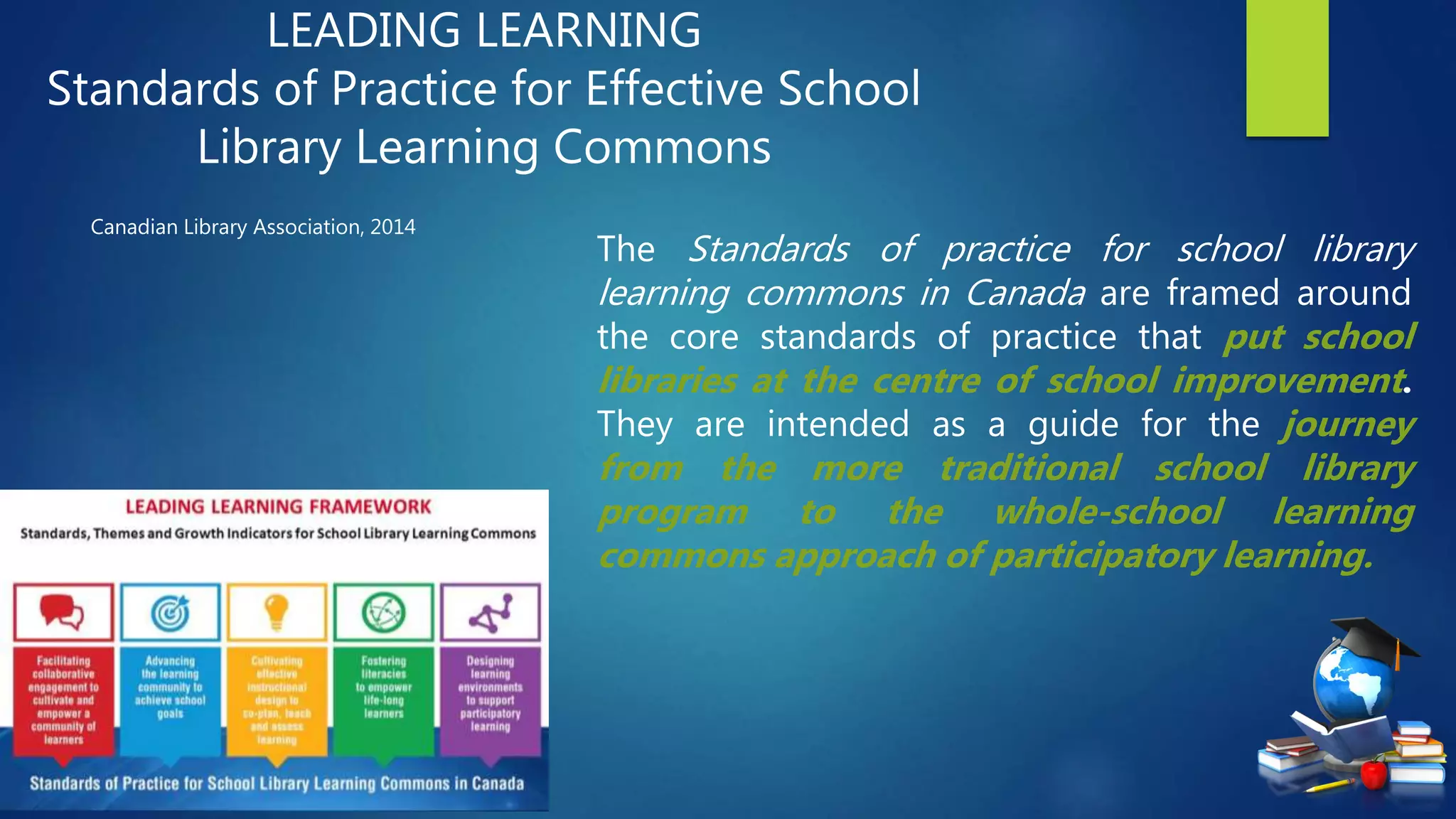
Collaborative
Engagement
Learning
Community
Instructional
Design
Fostering
Literacies
Learning
Environments
LEADING LEARNING
Standards of Practice for
Effective School Library
Learning Commons
Canadian Library Association
2014
LEADING LEARNING
Standards of Practice for Effective School
Library Learning Commons
Canadian Library Association, 2014
The Standards of practice for school library
learning commons in Canada are framed around
the core standards of practice that put school
libraries at the centre of school improvement.
They are intended as a guide for the journey
from the more traditional school library
program to the whole-school learning
commons approach of participatory learning.
Reading
Engagement
Information
Literacy
Technological
Literacy
Reading
Resources
Technological
Infrastructure
Information
Resources
Model of the school library
as a dynamic agent of
learning
School Libraries Work!
Research Foundation paper 20018
Model of the school library
as a dynamic agent of
learning
School Libraries Work!
Research Foundation paper 20018
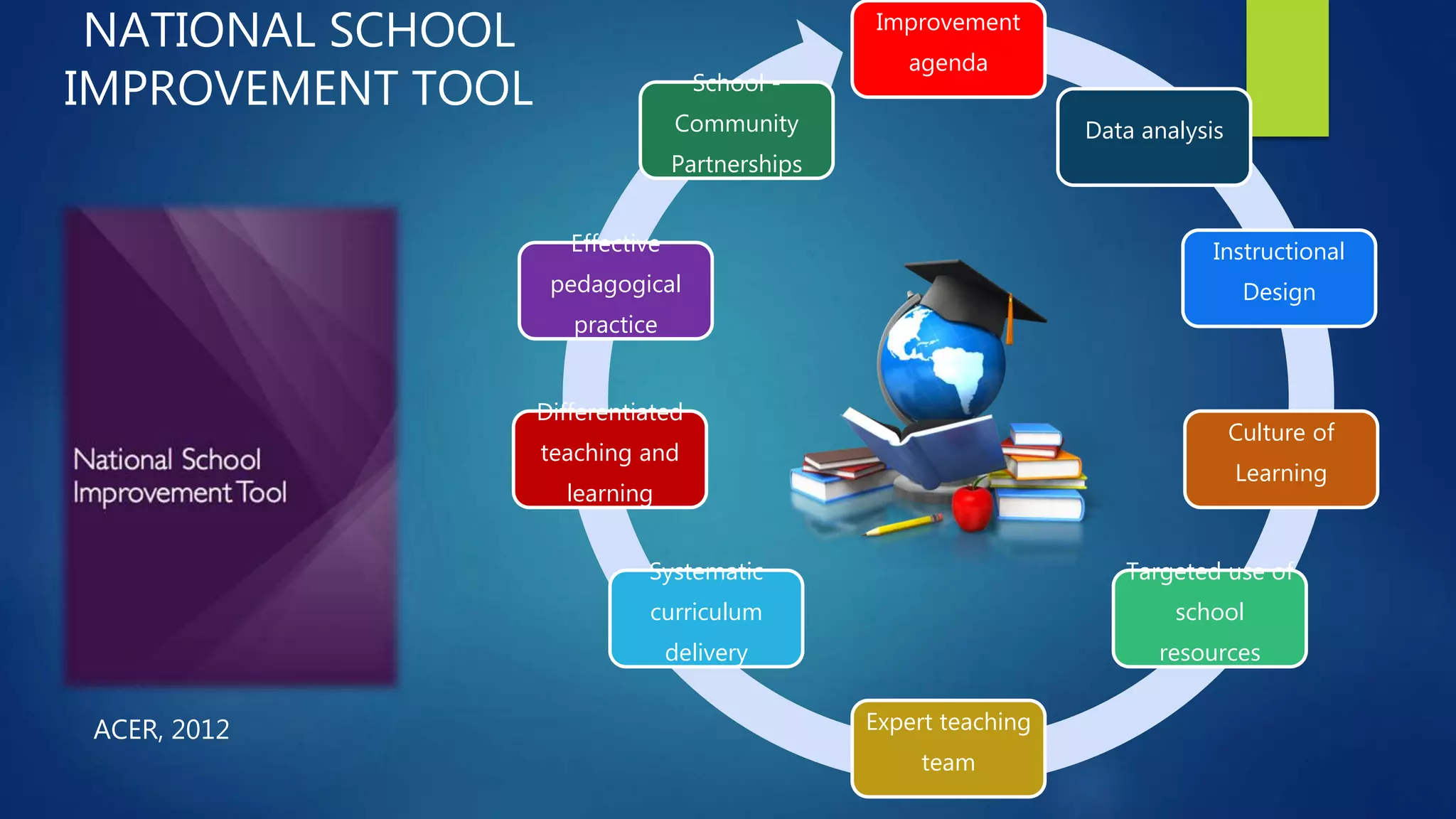
Improvement
agenda
Data analysis
Instructional
Design
Culture of
Learning
Targeted use of
school
resources
Expert teaching
team
Systematic
curriculum
delivery
Differentiated
teaching and
learning
Effective
pedagogical
practice
School -
Community
Partnerships
NATIONAL SCHOOL
IMPROVEMENT TOOL
ACER, 2012
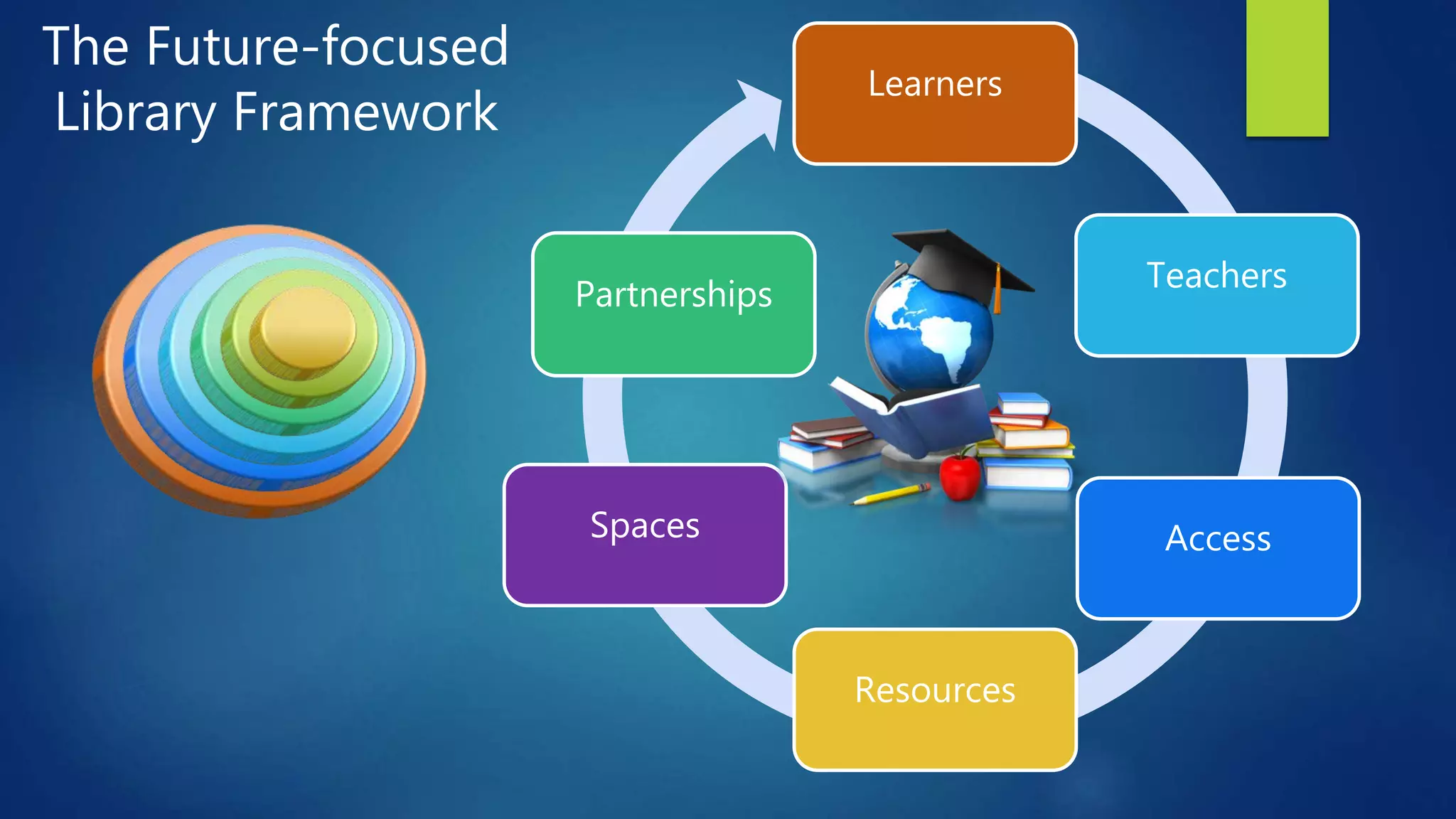
Learners
Teachers
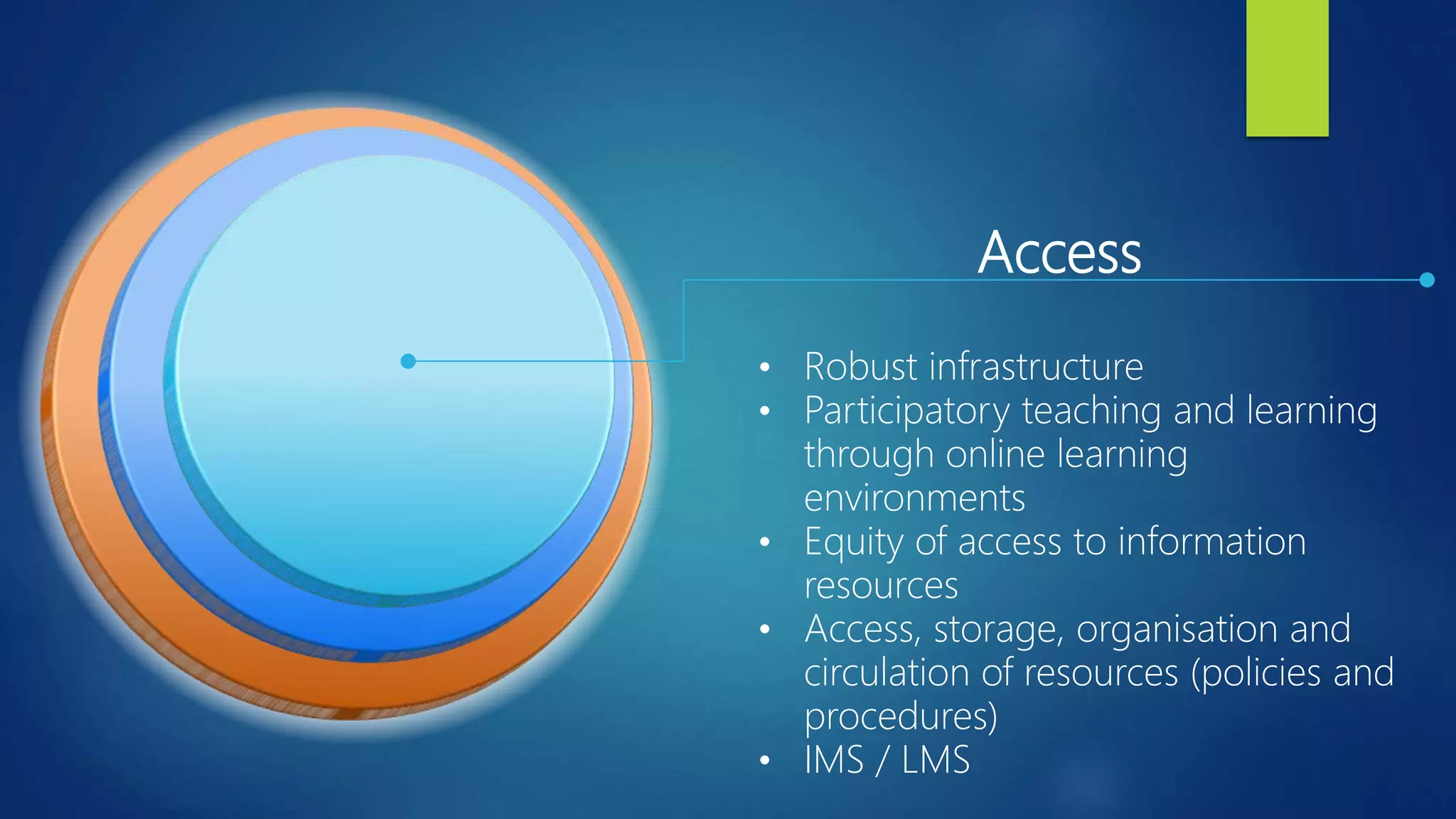
Access
Resources
Spaces
Partnerships
The Future-focused
Library Framework
Learners
• Resource-based inquiry learning
• Reflection and metacognition
• Students as curators and creators of
information and knowledge
• Engaged readers
• Student self-efficacy
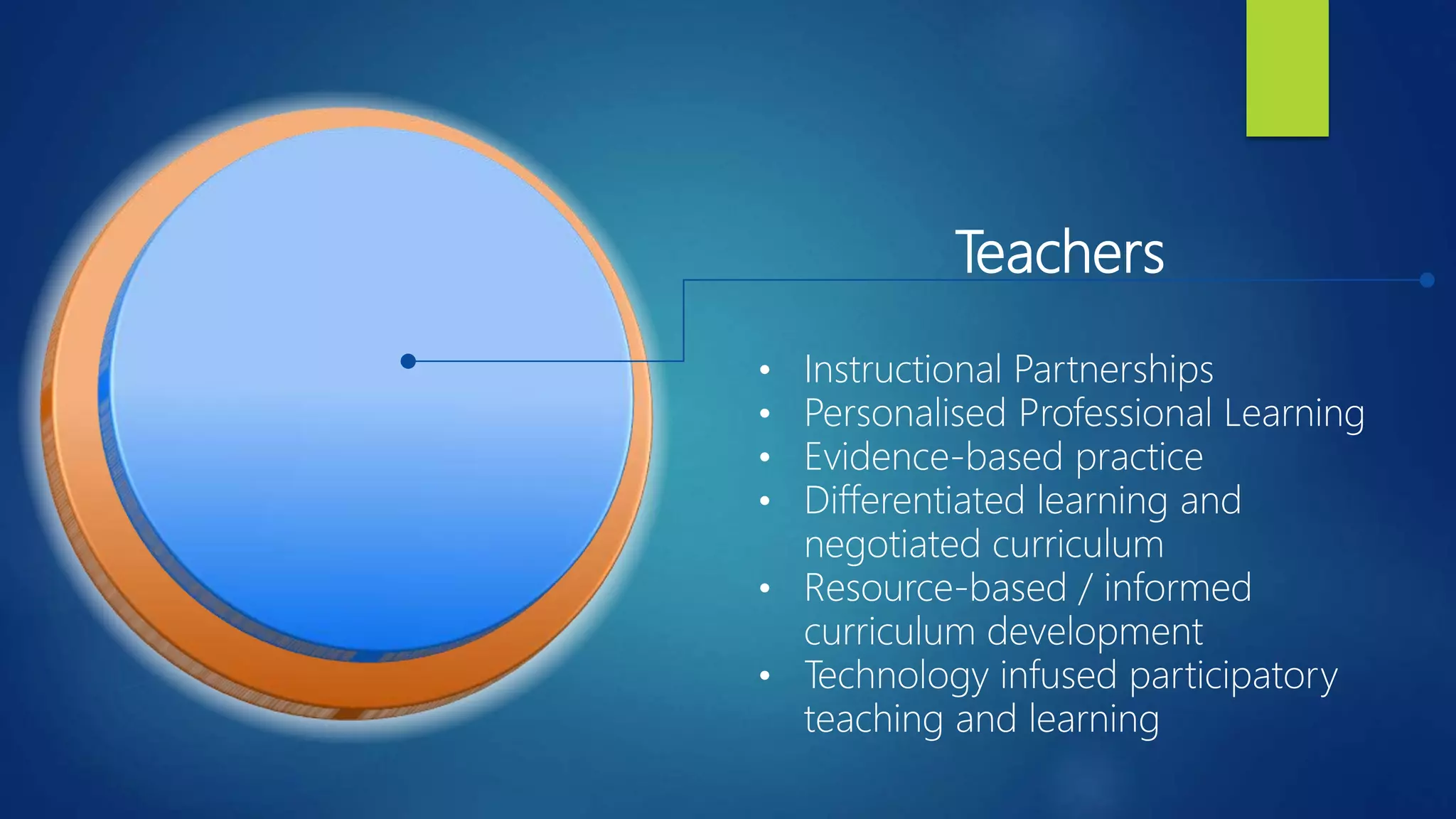
Teachers
• Instructional Partnerships
• Personalised Professional Learning
• Evidence-based practice
• Differentiated learning and
negotiated curriculum
• Resource-based / informed
curriculum development
• Technology infused participatory
teaching and learning
Access
• Robust infrastructure
• Participatory teaching and learning
through online learning
environments
• Equity of access to information
resources
• Access, storage, organisation and
circulation of resources (policies and
procedures)
• IMS / LMS
Resources
• Use of space and time
• Resource selection, acquisition and
management
• Budget
• Equity of access to information
resources
• Access, storage, organisation and
circulation of resources (policies and
procedures)
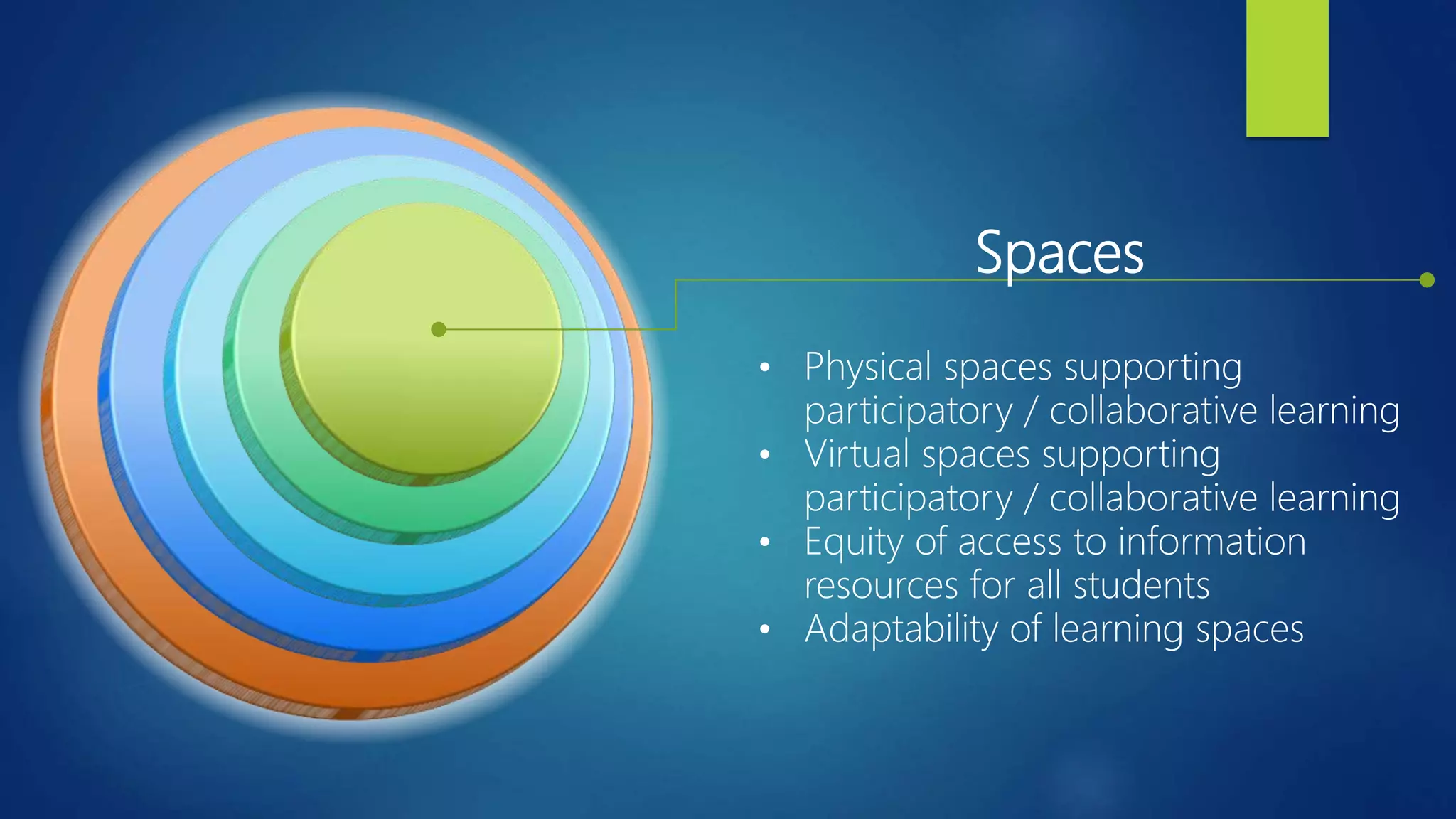
Spaces
• Physical spaces supporting
participatory / collaborative learning
• Virtual spaces supporting
participatory / collaborative learning
• Equity of access to information
resources for all students
• Adaptability of learning spaces
Partnerships
• Collaborative teaching and learning
• Community partnerships
• Consultative partnerships
• Professional Learning Networks
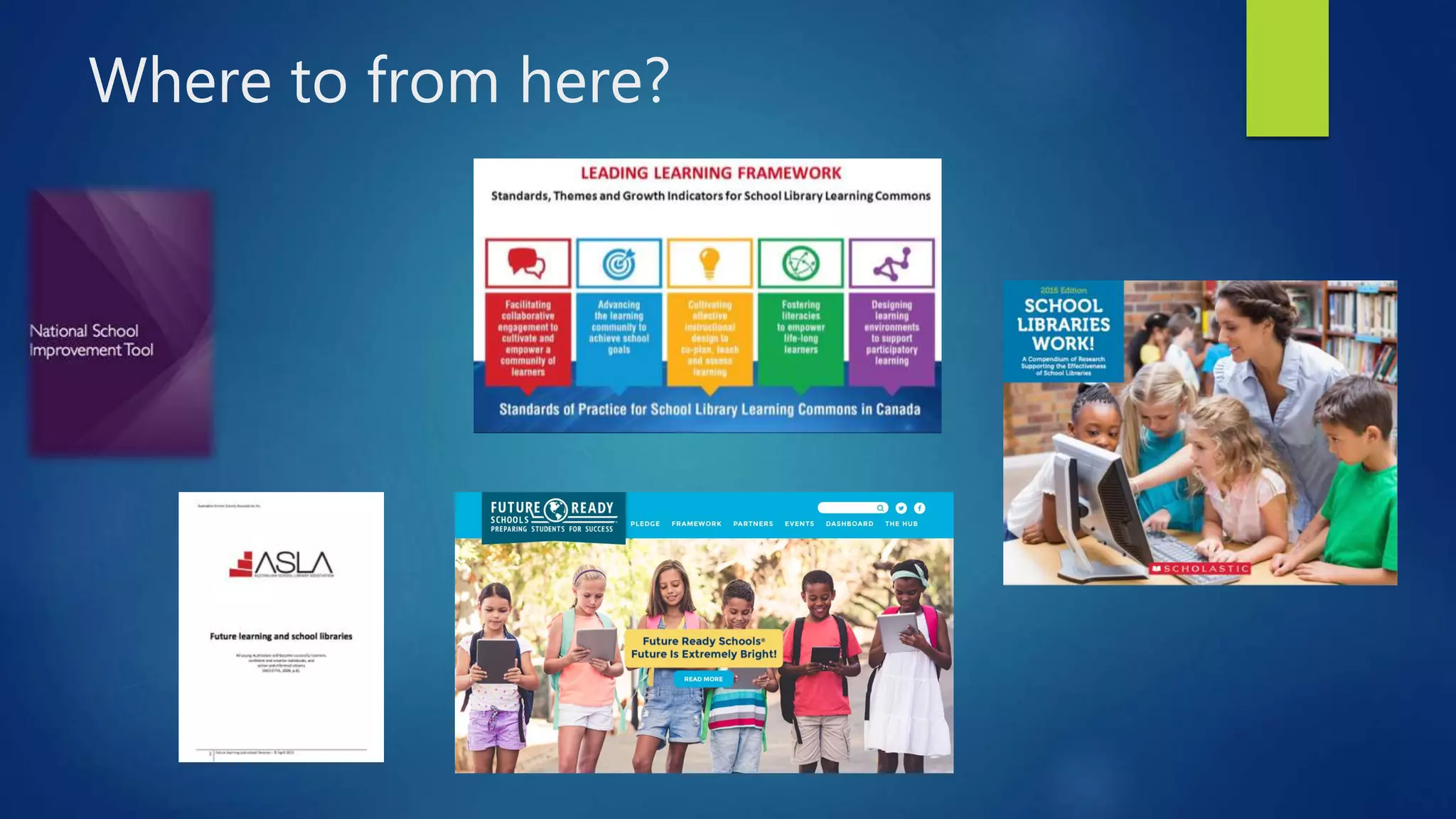
Where to from here?
A teacher librarian, within a
21stcentury learning environment, is
an instructional leader, curriculum
designer, consultant, collaborator,
mediator for students and staff to
achieve best practice in learning.
Create your own definition……..
Plan of action
 Establish your own review framework or choose one that closely
relates to your context.
 Identify the key performance indicators that will you will use for the
review process
 Establish your current situation for each of these KPIs
 Prioritise each in the order of importance or maximal impact
 Set short-term, medium-term and long-term goals
 Take action on one goal
 Be visible and vocal in what you are doing.
 Formalise the process and document in such a way that it addresses
any systemic and or school requirements.
AITSL Standards
 Explore how this process addresses the AITSL Standards.
QUESTIONS?
Leonie McIlvenny
leoniem@westnet.com.au

Future focused library master

  • 1.
    A review frameworkfor school libraries By Leonie McIlvenny The Future-focused Library
  • 2.
  • 3.
    How do wecreate a future focused library and what does it look like?
  • 4.
    The hallmark ofa school library in the 21st century is not its collections, its systems, its technology, its staffing, its building, but its actions and evidence that show that it makes a real difference to student learning, that it contributes in tangible and significant ways to the development of meaning making and constructing knowledge. Transitions for preferred futures for school libraries (Todd, 2001, 4)
  • 5.
    From: Future Learningand School Libraries (ASLA) Support curriculum goals Provide expertise Advocate lifelong learning Provide intellectual agency Enable students to become information and digital literate
  • 6.
    The role andimpact of the teacher-librarian can be synthesized quite simply: teacher-librarians impact student learning and achievement by forming strong and positive relationships with members of the school community, especially the school principal; by collaborating with classroom colleagues to plan, develop and assess independent learning abilities in students; by fostering a recreational reading culture in the building; and by providing informal staff development opportunities. K. Haycock (personal communication, December 8, 2013)
  • 9.
    Learners and Learning Teachers and Teaching Resourcing the Curriculum Facilitating Accessto Information Developing the Physical Environment LEARNING FOR THE FUTURE Learning Outcomes This guide has been our major reference for library reform in Australia since 1993. It was updated in 2001 to reflect the changes brought about mainly by the impact of digital literacies / technologies that became part of the educational landscape. The question is… IS IT STILL RELEVANT TODAY?
  • 10.
    Don’t throw the babyout with the bathwater
  • 12.
  • 13.
    Space and time Curriculum, instruction& assessment Professional Learning Robust Infrastructure Budget & Resources Community Partnerships Data & Privacy Collaborative Leadership FUTURE READY LIBRARIAN Framework based on the Future Ready School Project
  • 14.
    FUTURE READY LIBRARIAN Framework basedon the Future Ready School Project As schools seek to become Future Ready, it is necessary to identify and cultivate leadership beyond district and building leaders. School librarians lead, teach and support the Future Ready goals of their school and district in a variety of ways through their professional practice, programs and spaces. If properly prepared and supported, school librarians are well-positioned to be at the leading edge of the digital transformation of learning.
  • 15.
    Changing the conversationabout librarians
  • 18.
    Are librarians thekey to a Future Ready School? The alliance for Excellent Education launched its Future Ready Schools (FRS) initiative in October 2014 with the aim of leveraging technology and connectivity to personalise and transform learning. In June 2016, the Alliance, in partnership with the U.S. Department of Education’s Office of technology expanded FRS to position school librarians as leaders in this effort. There is a growing recognition that librarians were essential to the process. The FR Librarians Framework acknowledges that librarians play a powerful role in:  Curating digital resources and tools  Empowering students as creators  Building instructional partnerships  Designing collaborative spaces http://escholnews.com/2016/12/16/librarians-key-future-ready-school
  • 19.
  • 20.
    LEADING LEARNING Standards ofPractice for Effective School Library Learning Commons Canadian Library Association, 2014 The Standards of practice for school library learning commons in Canada are framed around the core standards of practice that put school libraries at the centre of school improvement. They are intended as a guide for the journey from the more traditional school library program to the whole-school learning commons approach of participatory learning.
  • 22.
    Reading Engagement Information Literacy Technological Literacy Reading Resources Technological Infrastructure Information Resources Model of theschool library as a dynamic agent of learning School Libraries Work! Research Foundation paper 20018
  • 23.
    Model of theschool library as a dynamic agent of learning School Libraries Work! Research Foundation paper 20018
  • 25.
    Improvement agenda Data analysis Instructional Design Culture of Learning Targeteduse of school resources Expert teaching team Systematic curriculum delivery Differentiated teaching and learning Effective pedagogical practice School - Community Partnerships NATIONAL SCHOOL IMPROVEMENT TOOL ACER, 2012
  • 28.
  • 29.
    Learners • Resource-based inquirylearning • Reflection and metacognition • Students as curators and creators of information and knowledge • Engaged readers • Student self-efficacy
  • 31.
    Teachers • Instructional Partnerships •Personalised Professional Learning • Evidence-based practice • Differentiated learning and negotiated curriculum • Resource-based / informed curriculum development • Technology infused participatory teaching and learning
  • 32.
    Access • Robust infrastructure •Participatory teaching and learning through online learning environments • Equity of access to information resources • Access, storage, organisation and circulation of resources (policies and procedures) • IMS / LMS
  • 33.
    Resources • Use ofspace and time • Resource selection, acquisition and management • Budget • Equity of access to information resources • Access, storage, organisation and circulation of resources (policies and procedures)
  • 34.
    Spaces • Physical spacessupporting participatory / collaborative learning • Virtual spaces supporting participatory / collaborative learning • Equity of access to information resources for all students • Adaptability of learning spaces
  • 36.
    Partnerships • Collaborative teachingand learning • Community partnerships • Consultative partnerships • Professional Learning Networks
  • 38.
  • 39.
    A teacher librarian,within a 21stcentury learning environment, is an instructional leader, curriculum designer, consultant, collaborator, mediator for students and staff to achieve best practice in learning. Create your own definition……..
  • 40.
    Plan of action Establish your own review framework or choose one that closely relates to your context.  Identify the key performance indicators that will you will use for the review process  Establish your current situation for each of these KPIs  Prioritise each in the order of importance or maximal impact  Set short-term, medium-term and long-term goals  Take action on one goal  Be visible and vocal in what you are doing.  Formalise the process and document in such a way that it addresses any systemic and or school requirements.
  • 41.
    AITSL Standards  Explorehow this process addresses the AITSL Standards.
  • 42.

Editor's Notes

  • #4 At a time when many schools are repurposing their libraries, building new innovation centres and creating new learning spaces, commons and hubs it is a perfect time for library professionals to step –up and take on a role of guidance support in an advisory capacity. But how can we do this? What road maps are out there to help us in this endeavour? Today’s webinar is designed to explore a number of strategies, tools and frameworks that I have found that may help guide that transition into a future ready status for us and our libraries.
  • #5 There is no shortage of evidence and quotes which espouse the virtues and value of having a qualified staff in the school library but….
  • #11 While many may consider that the performance indicators /criteria identified in each of the 5 domains in Learning for the Future I am very much of the opinion that one must not throw the baby out with the bathwater – It’s a good idea to look closely at what once was an essential document / framework to see if it is still relevant.