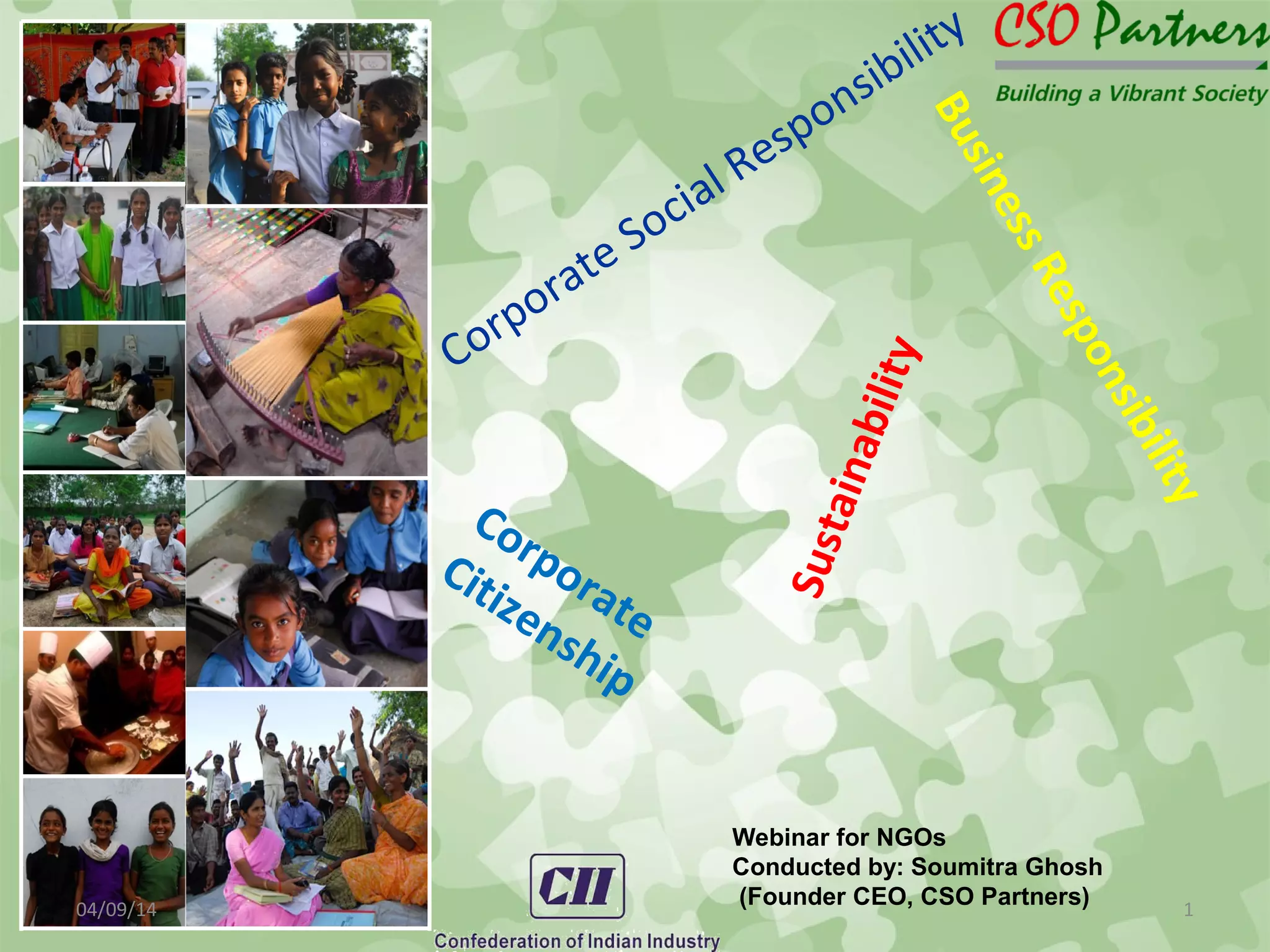
Corporate Social Responsibility
BusinessResponsibility
Corporate
Citizenship
Sustainability04/09/14 1
Webinar for NGOs
Conducted by: Soumitra Ghosh
(Founder CEO, CSO Partners)
Conceptual framework of business responsibility
Overview of international standards and norms
Role of NGOs/CSOs in business responsibility
Case review
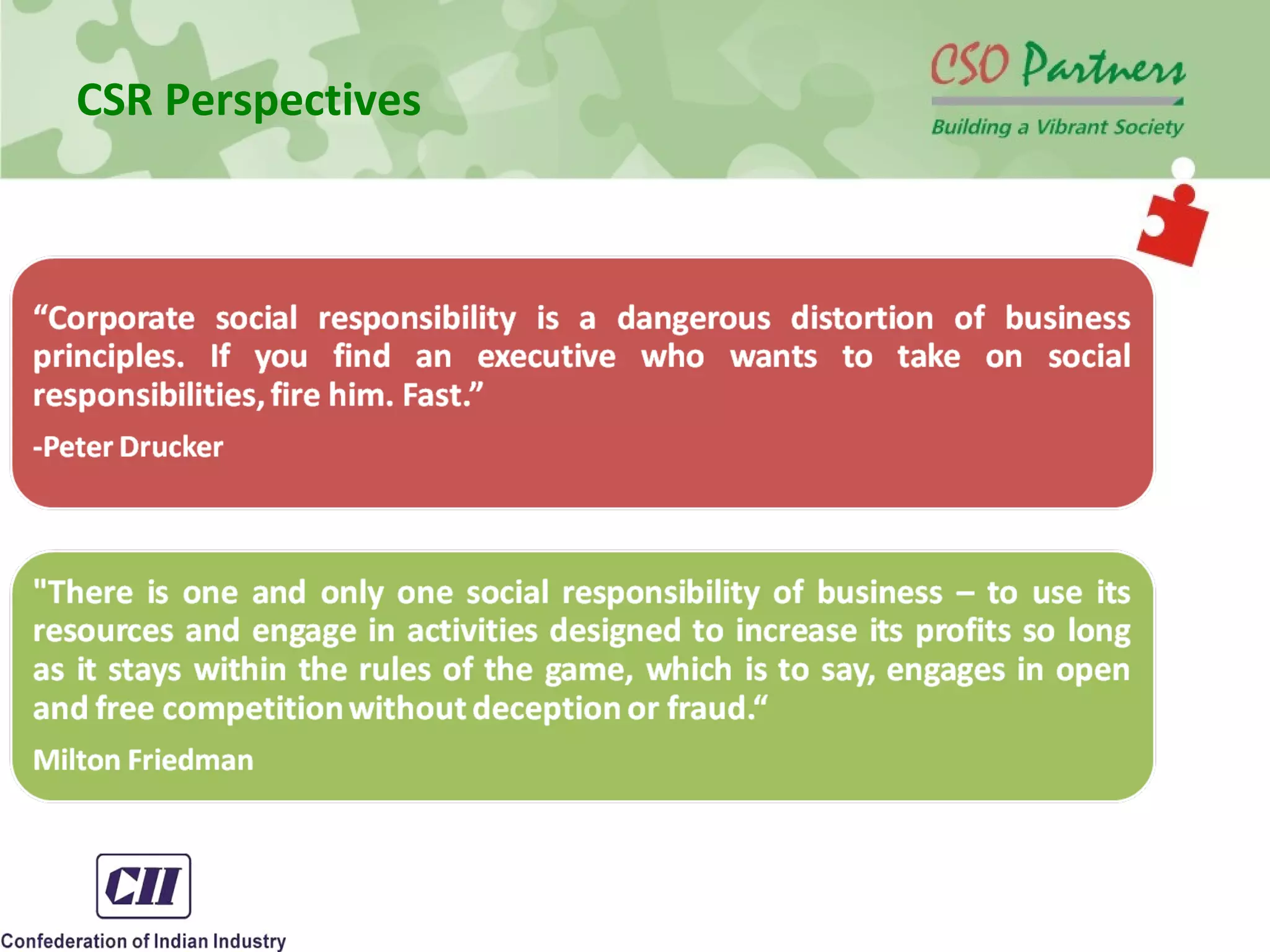
CSR Perspectives
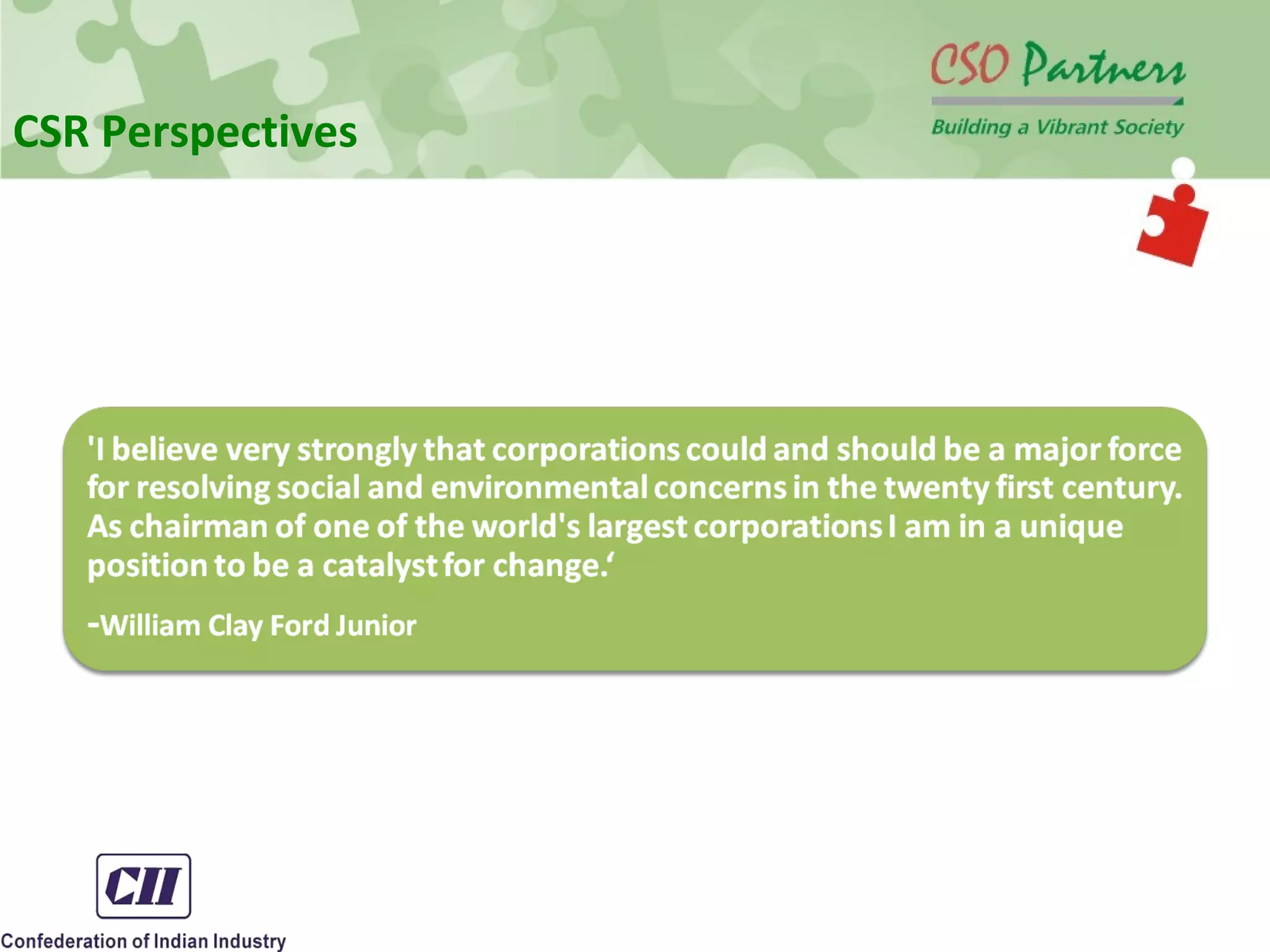
CSR Perspectives
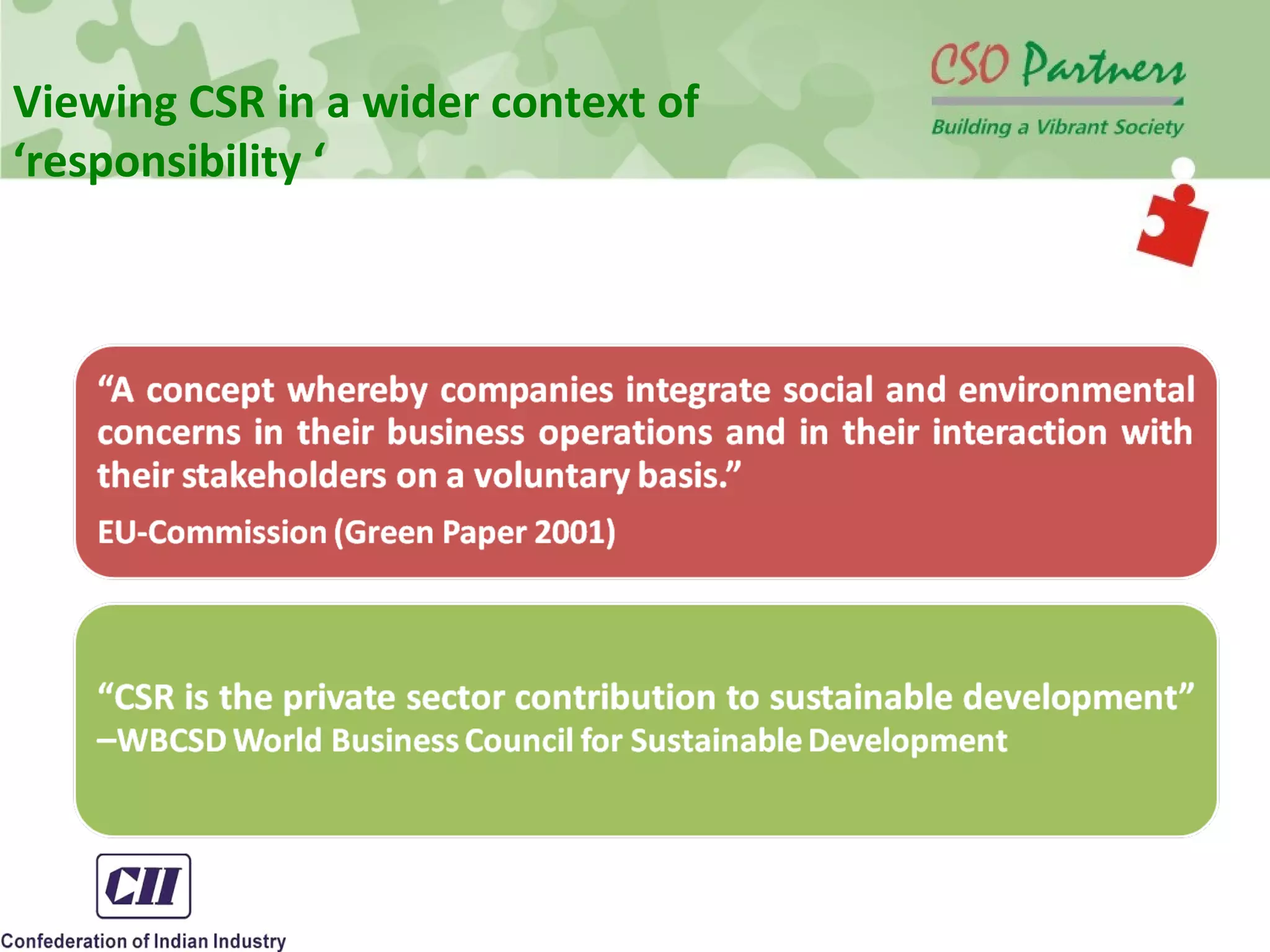
Viewing CSR in a wider context of
‘responsibility ‘
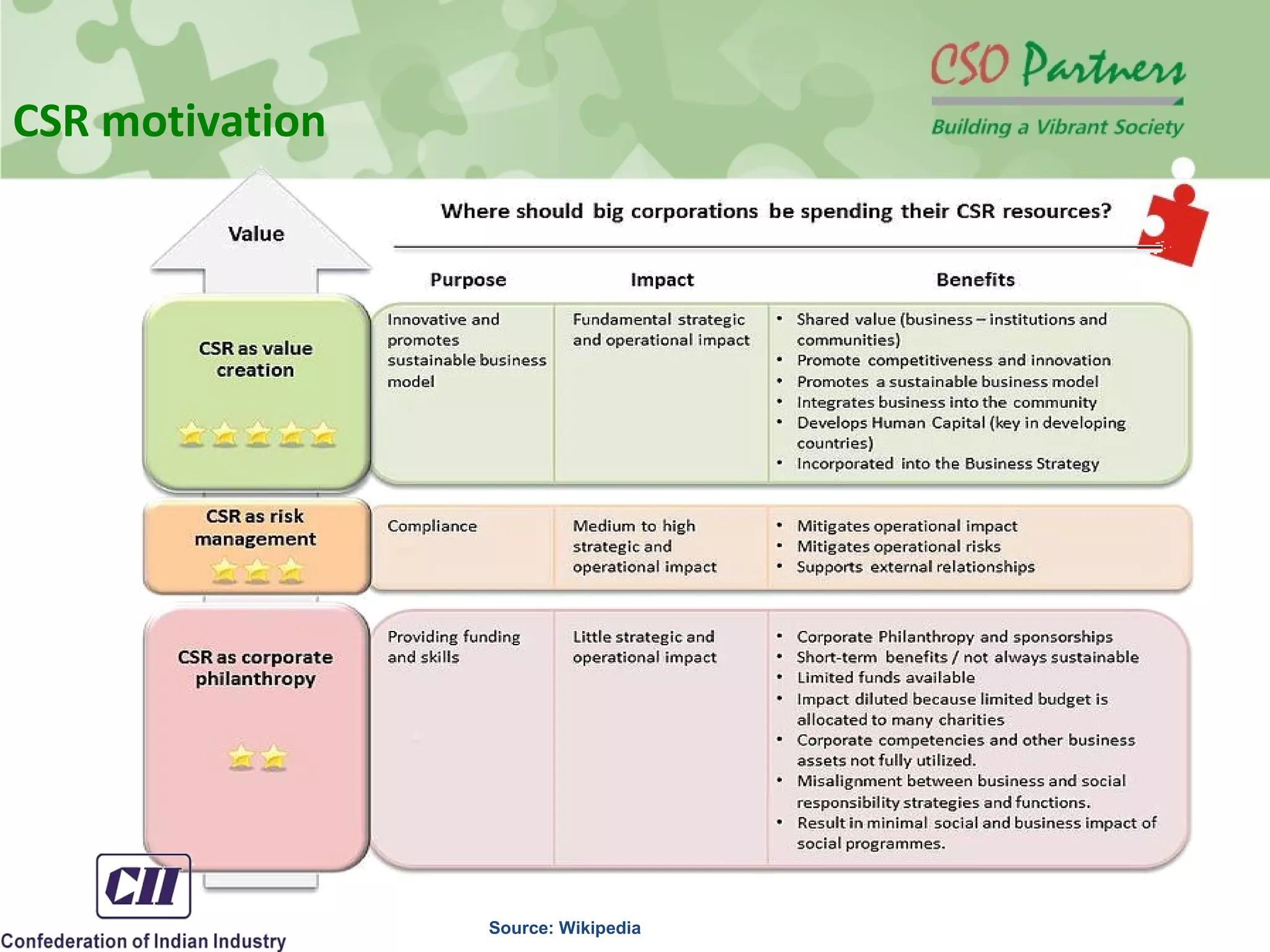
CSR motivation
Source: Wikipedia
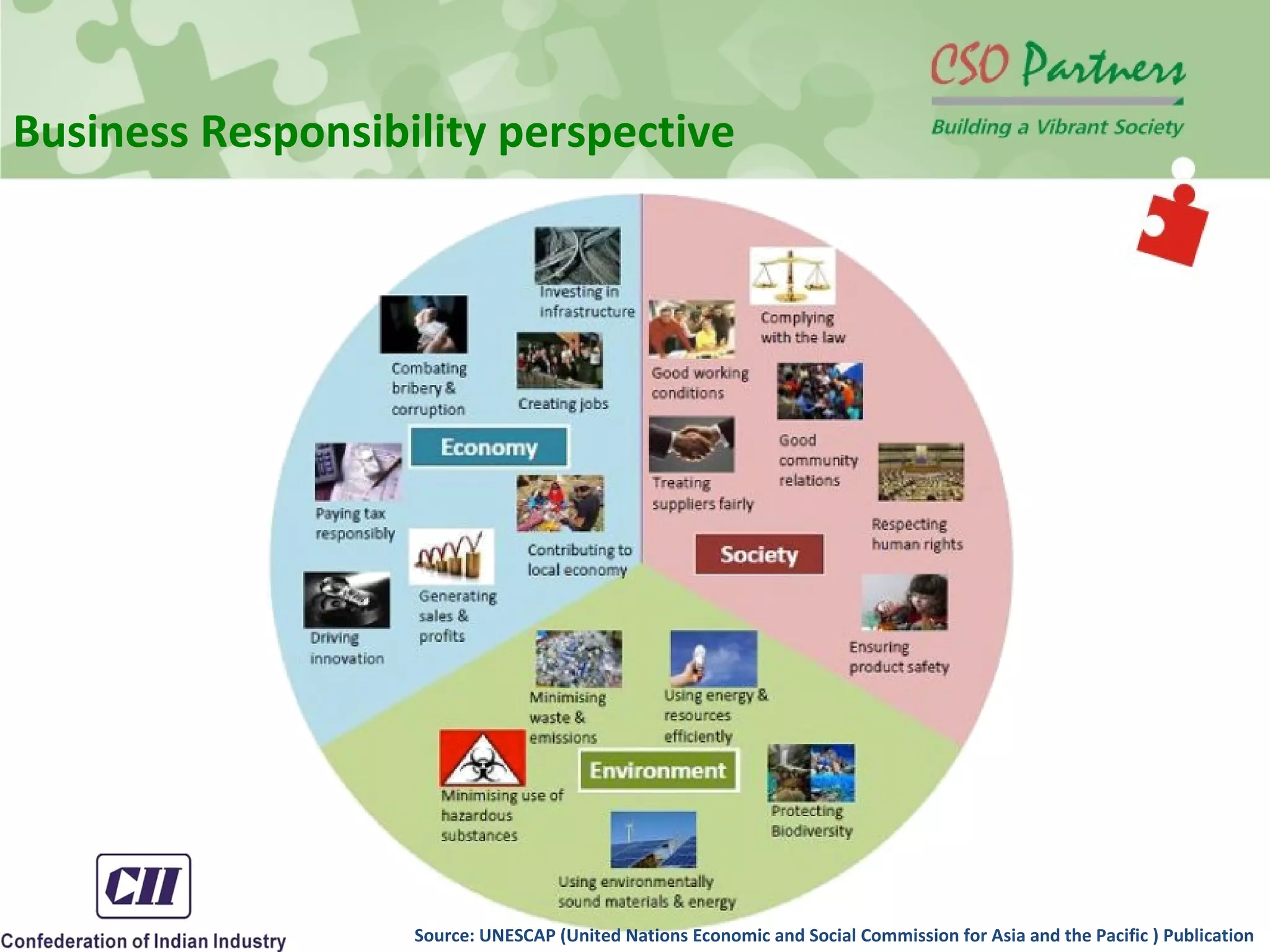
Source: UNESCAP (United Nations Economic and Social Commission for Asia and the Pacific ) Publication
Business Responsibility perspective
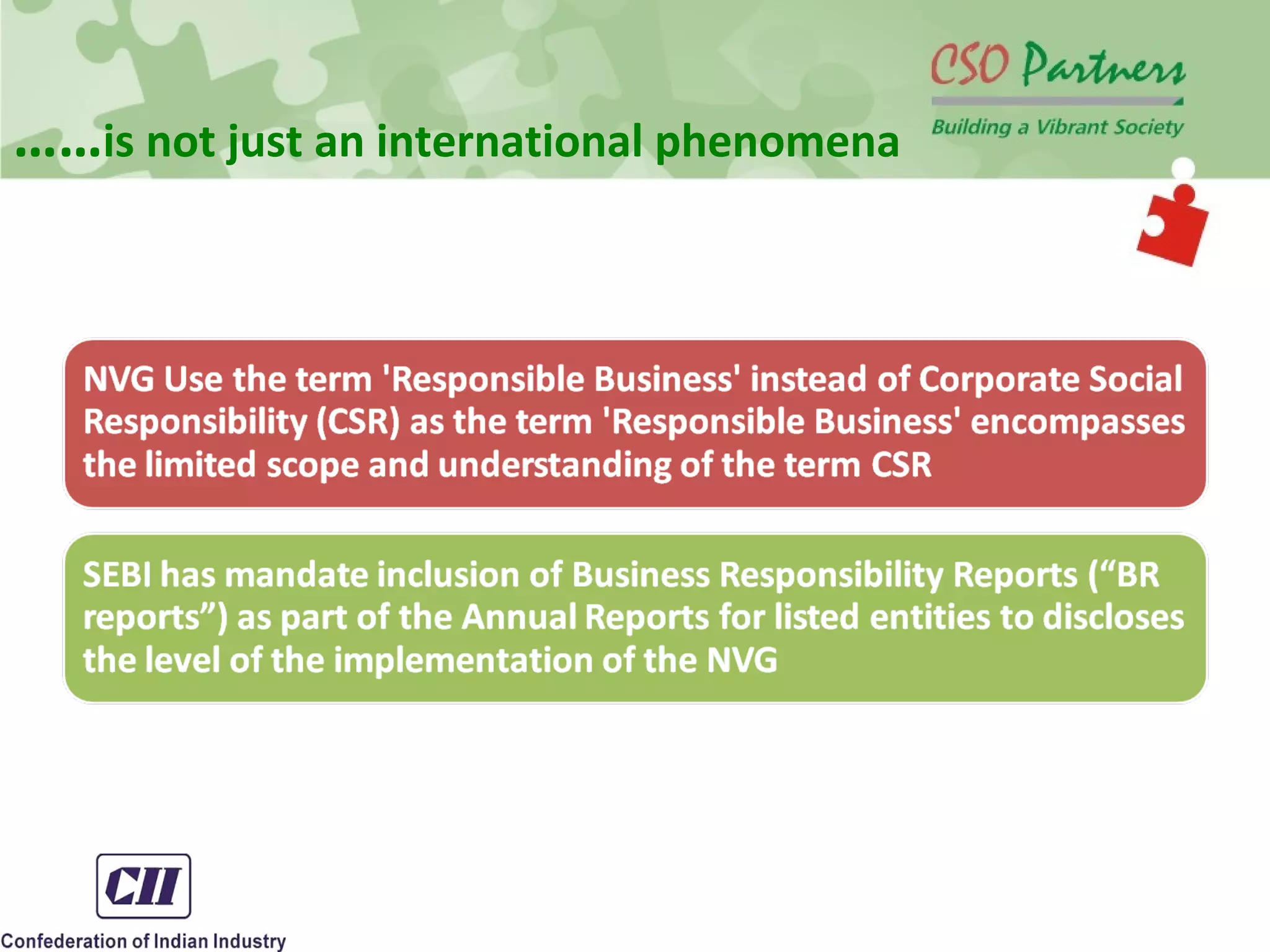
……is not just an international phenomena
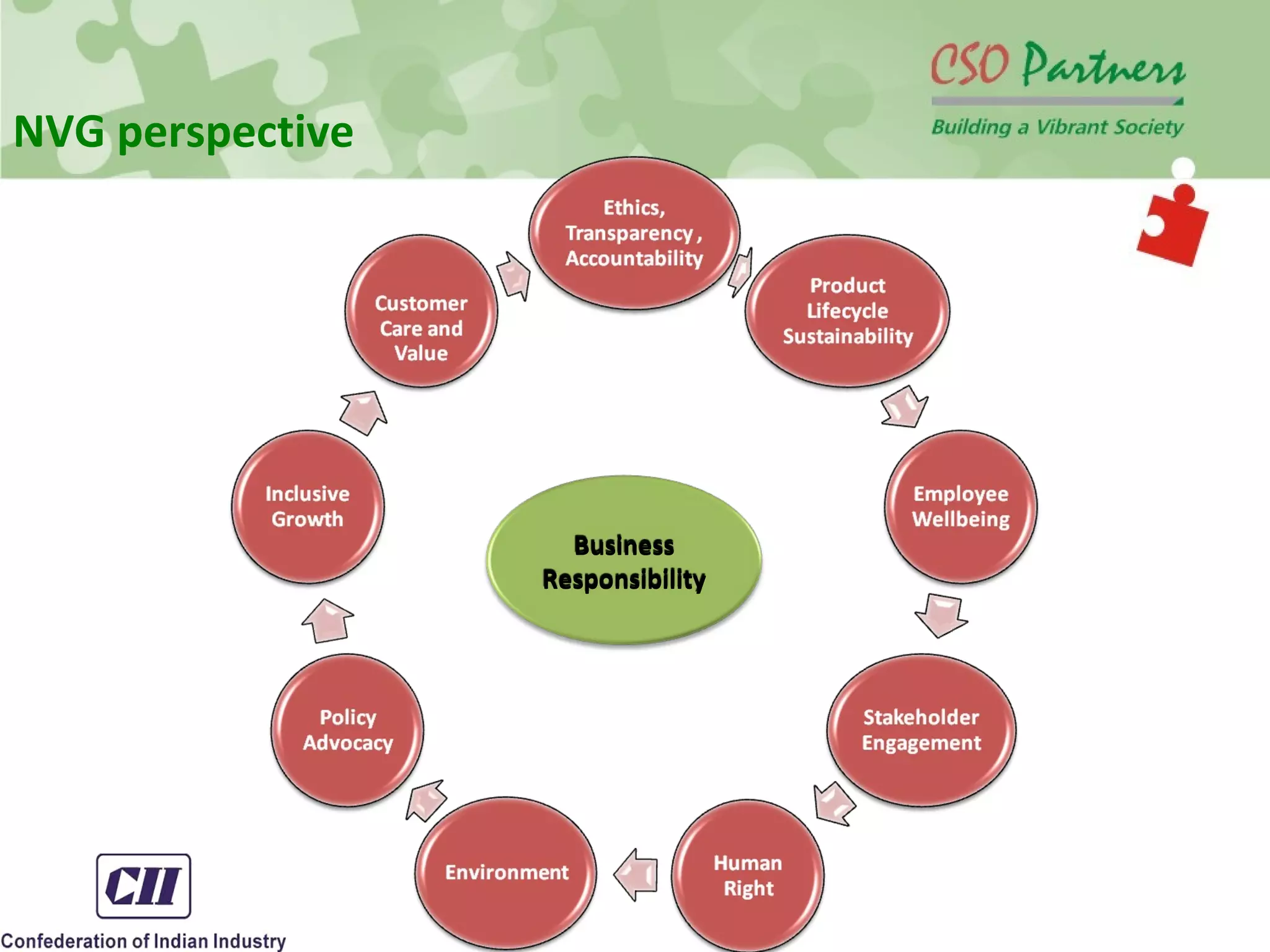
NVG perspective
Business
Responsibility
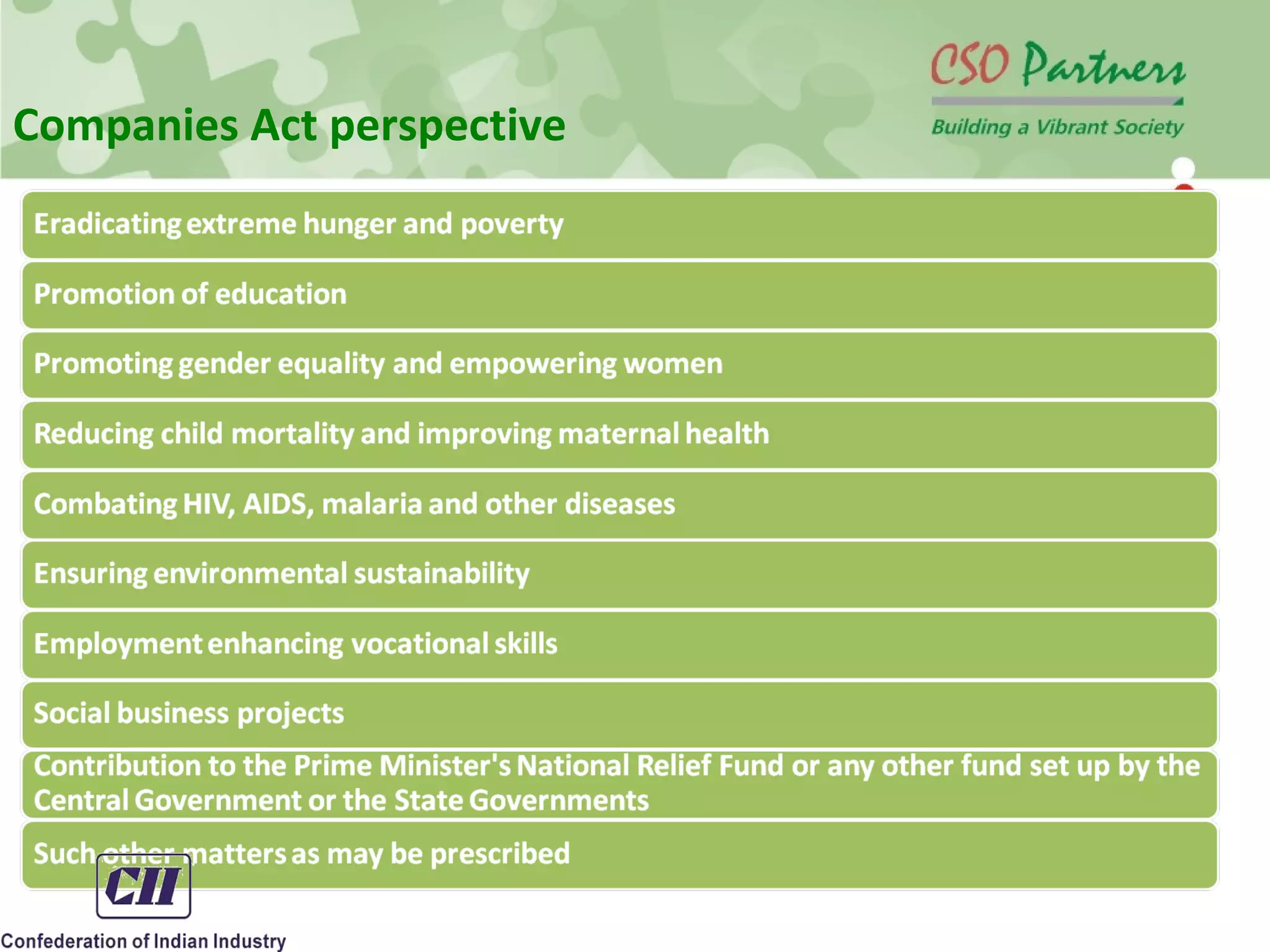
Companies Act perspective
Conceptual framework of business responsibility
Overview of international standards and norms
Role of NGOs/CSOs in business responsibility
Case review
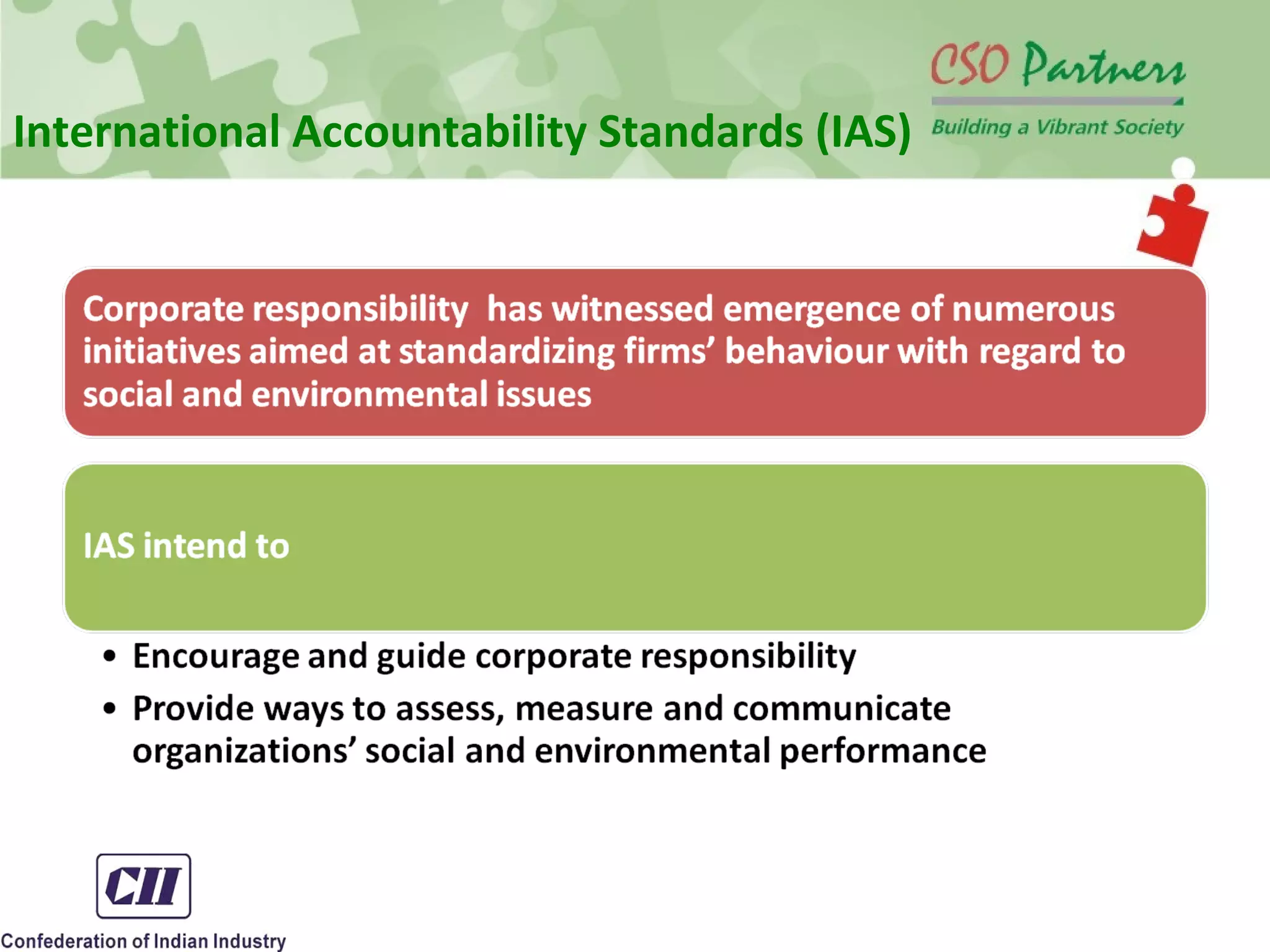
International Accountability Standards (IAS)
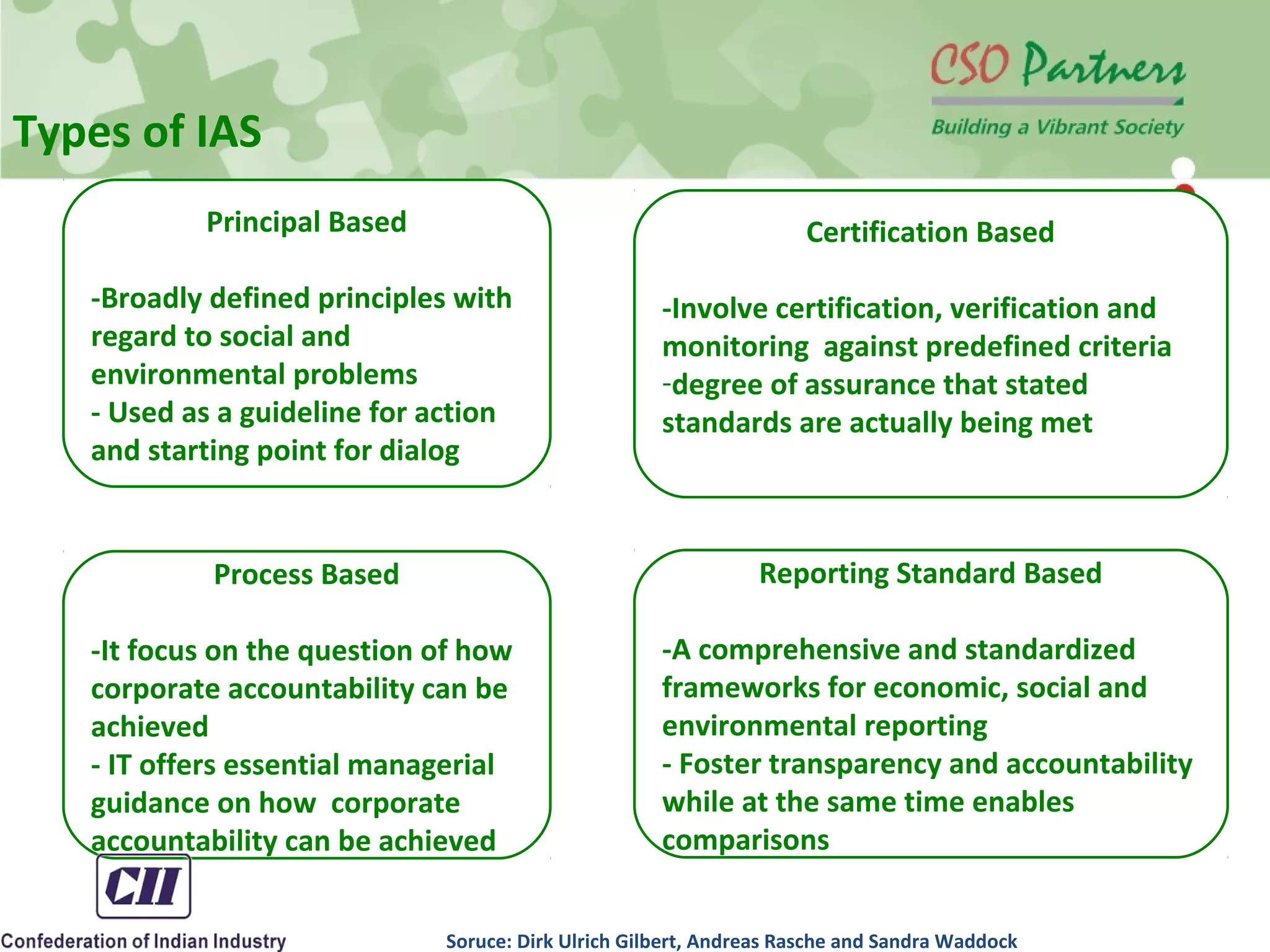
Types of IAS
Principal Based
-Broadly defined principles with
regard to social and
environmental problems
- Used as a guideline for action
and starting point for dialog
Certification Based
-Involve certification, verification and
monitoring against predefined criteria
-degree of assurance that stated
standards are actually being met
Reporting Standard Based
-A comprehensive and standardized
frameworks for economic, social and
environmental reporting
- Foster transparency and accountability
while at the same time enables
comparisons
Process Based
-It focus on the question of how
corporate accountability can be
achieved
- IT offers essential managerial
guidance on how corporate
accountability can be achieved
Soruce: Dirk Ulrich Gilbert, Andreas Rasche and Sandra Waddock
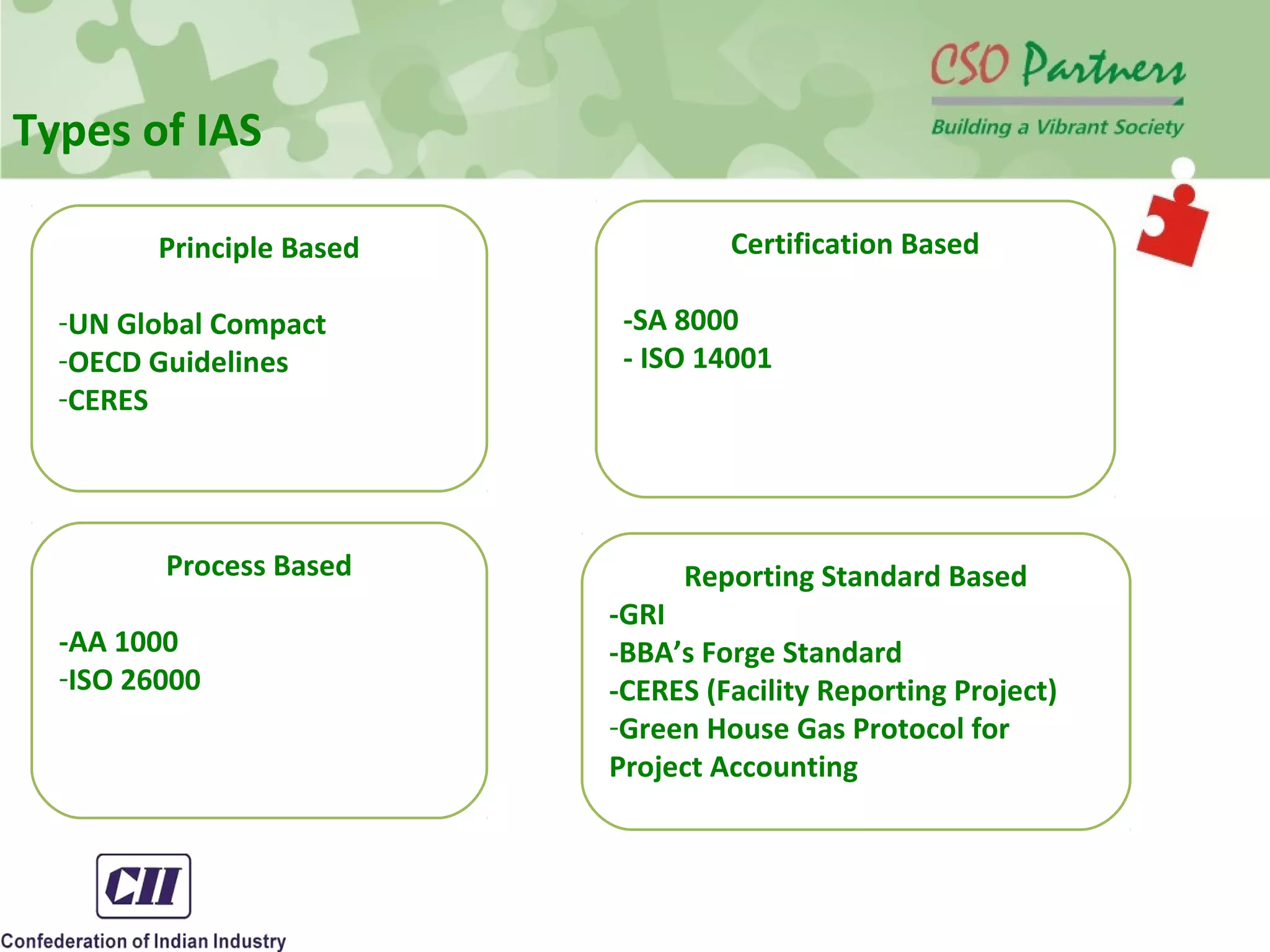
Principle Based
-UN Global Compact
-OECD Guidelines
-CERES
Certification Based
-SA 8000
- ISO 14001
Process Based
-AA 1000
-ISO 26000
Reporting Standard Based
-GRI
-BBA’s Forge Standard
-CERES (Facility Reporting Project)
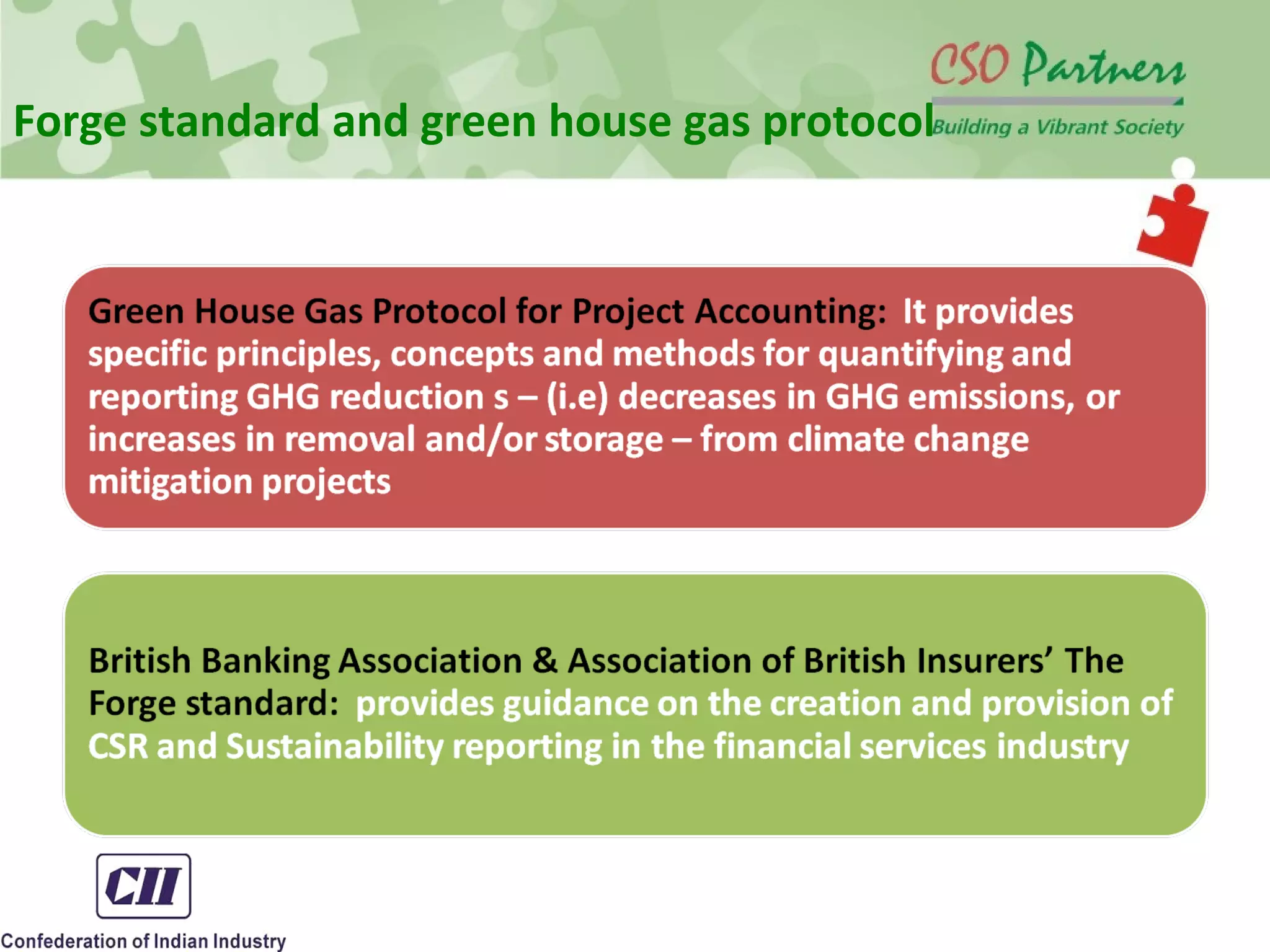
-Green House Gas Protocol for
Project Accounting
Types of IAS
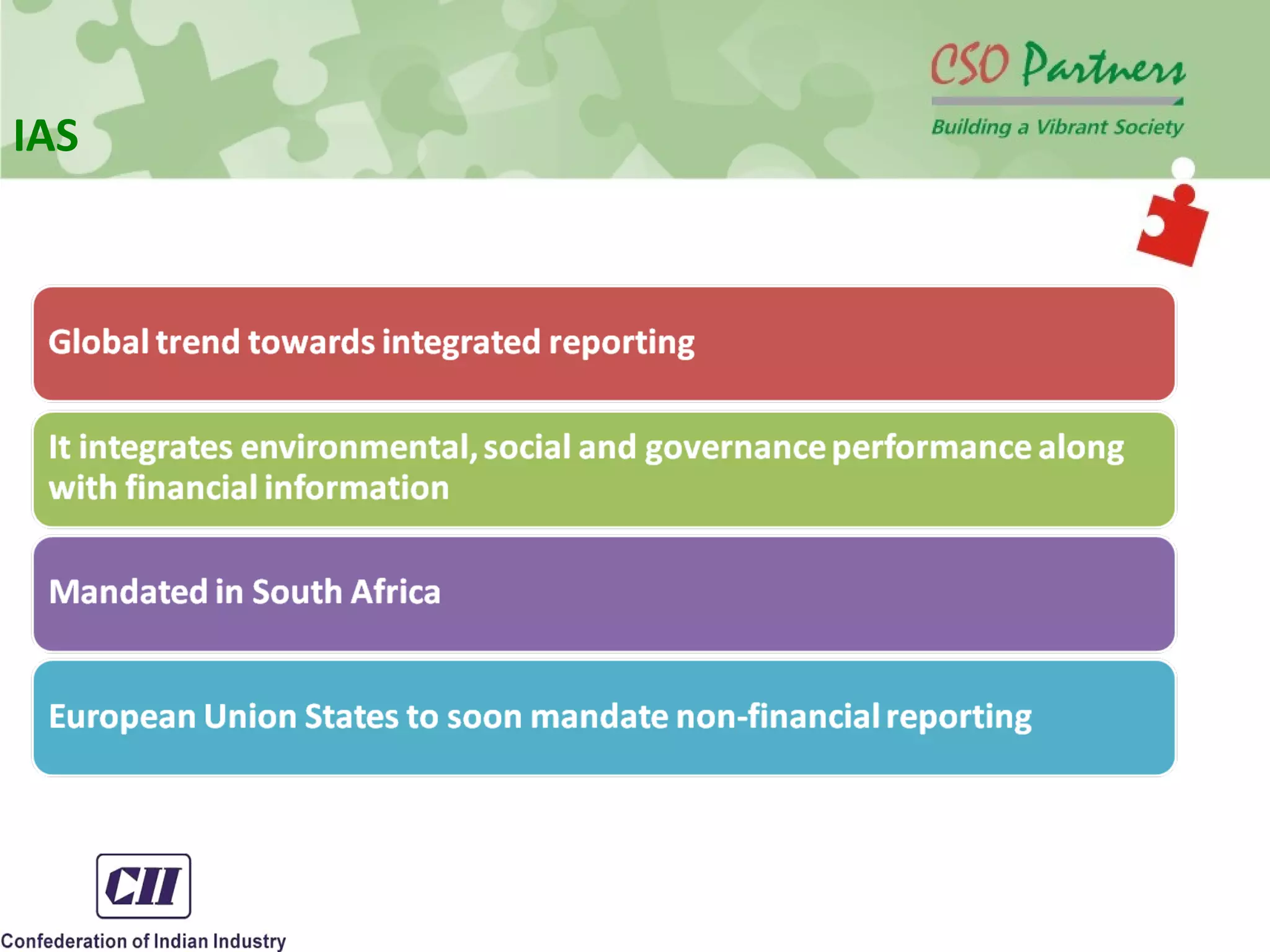
IAS
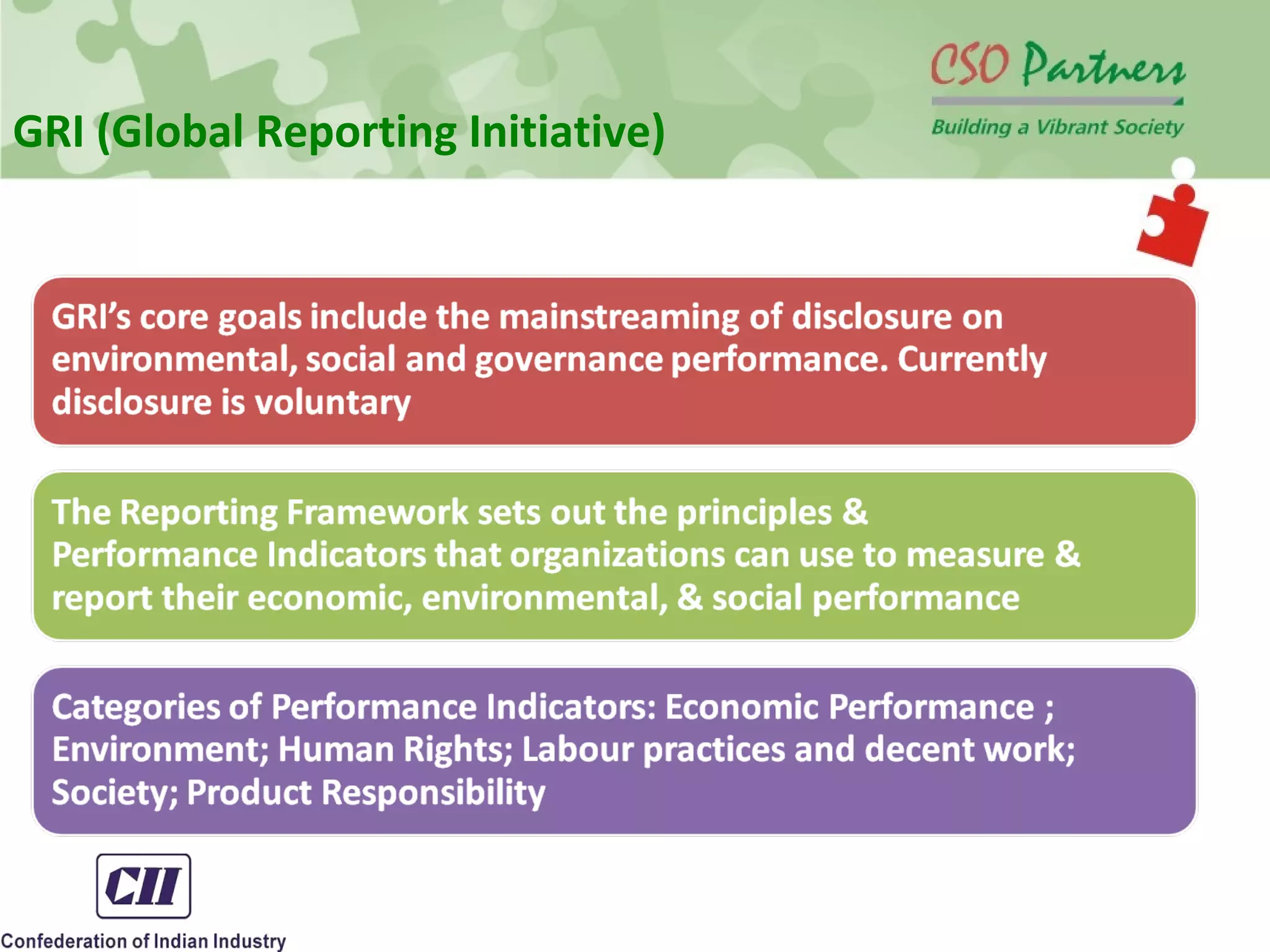
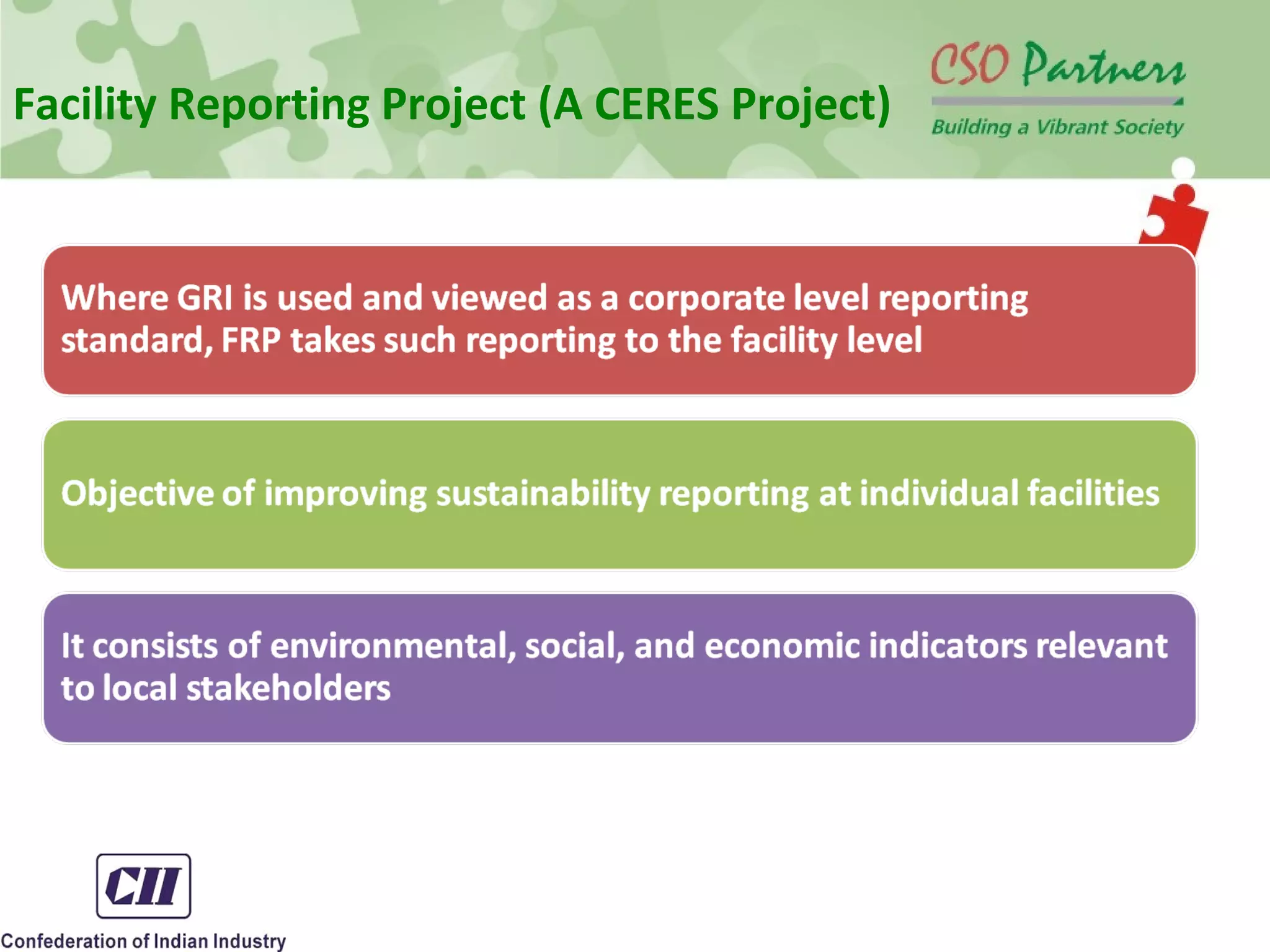
GRI (Global Reporting Initiative)
Facility Reporting Project (A CERES Project)
Forge standard and green house gas protocol
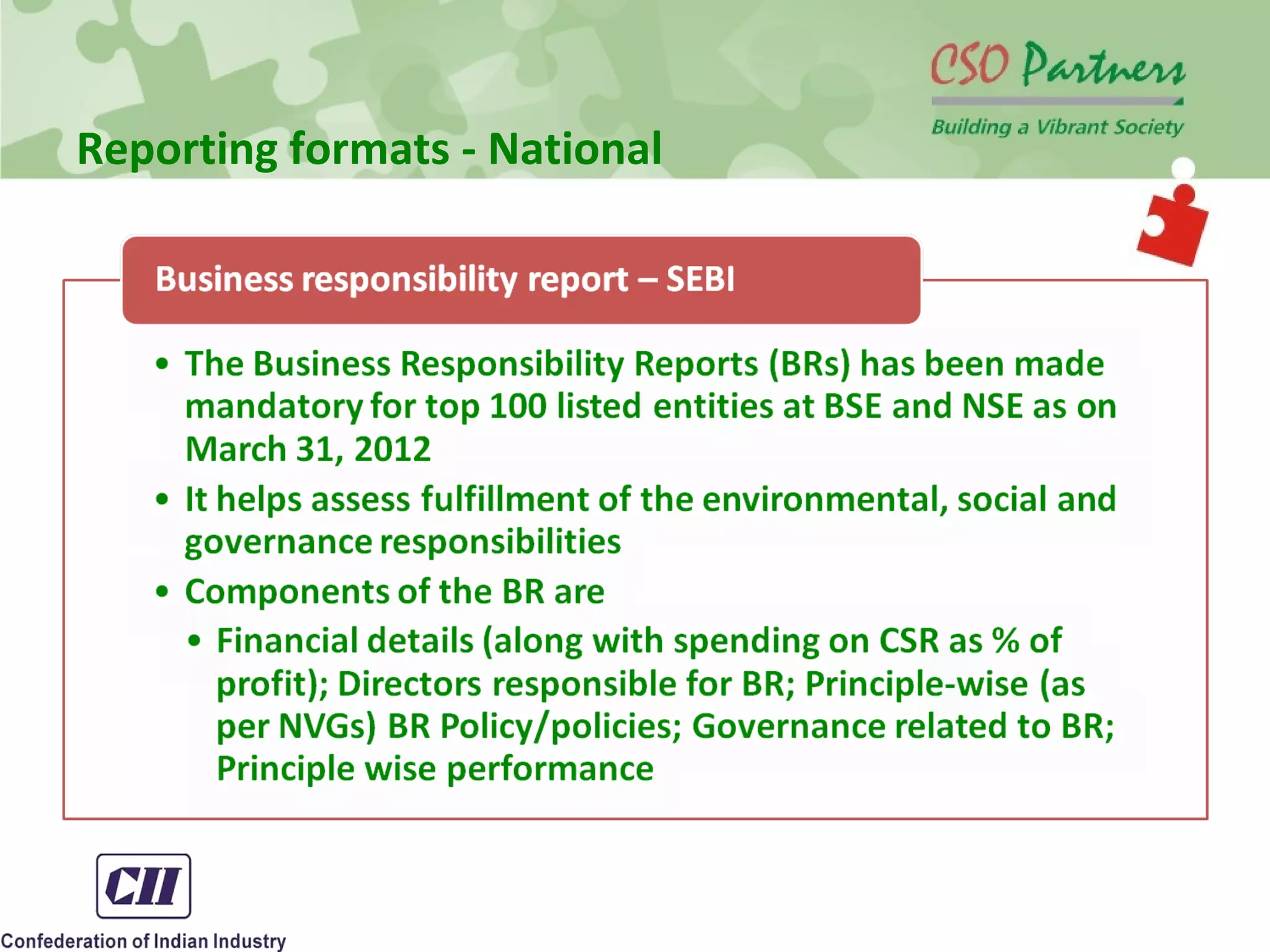
Reporting formats - National
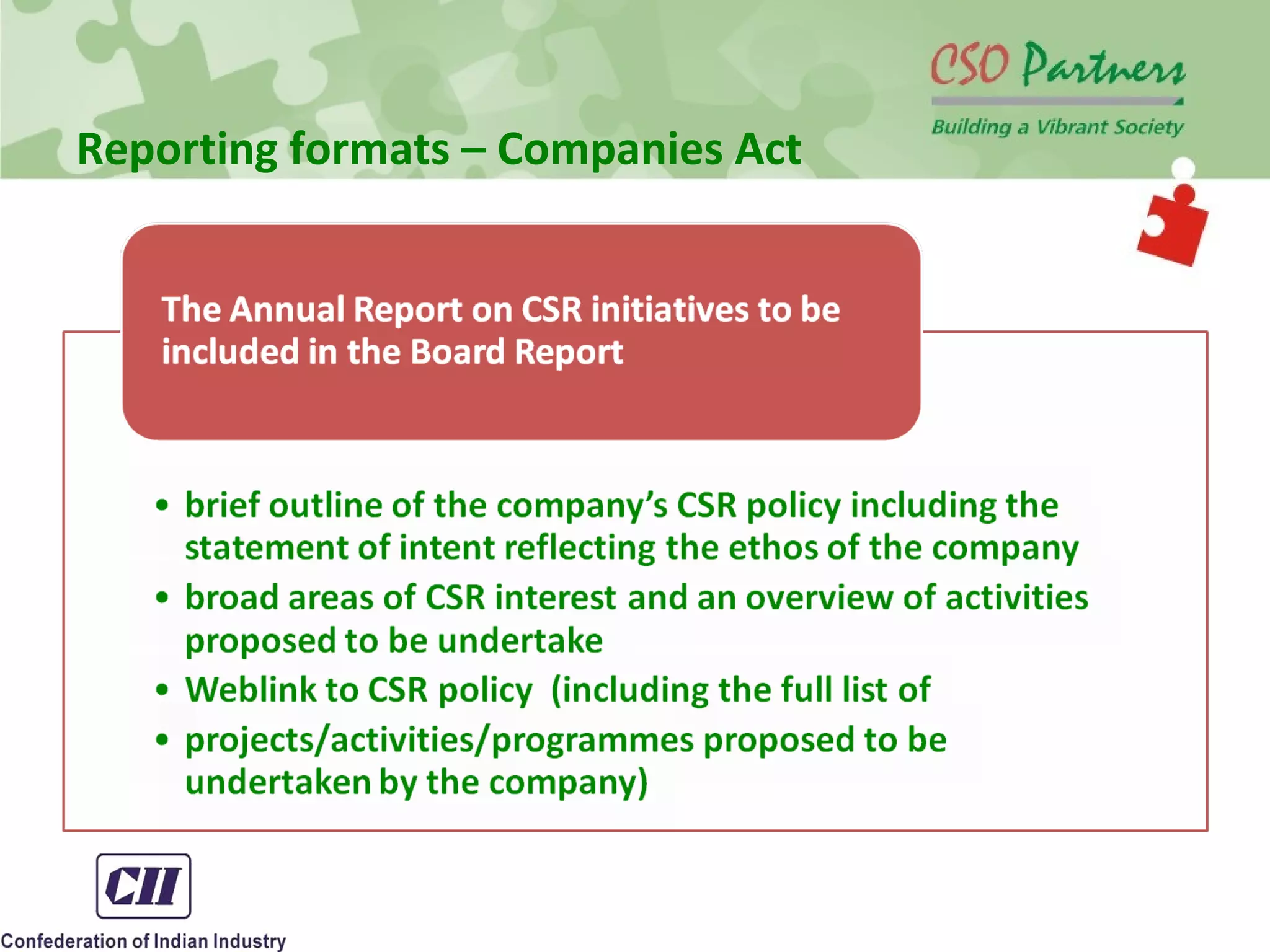
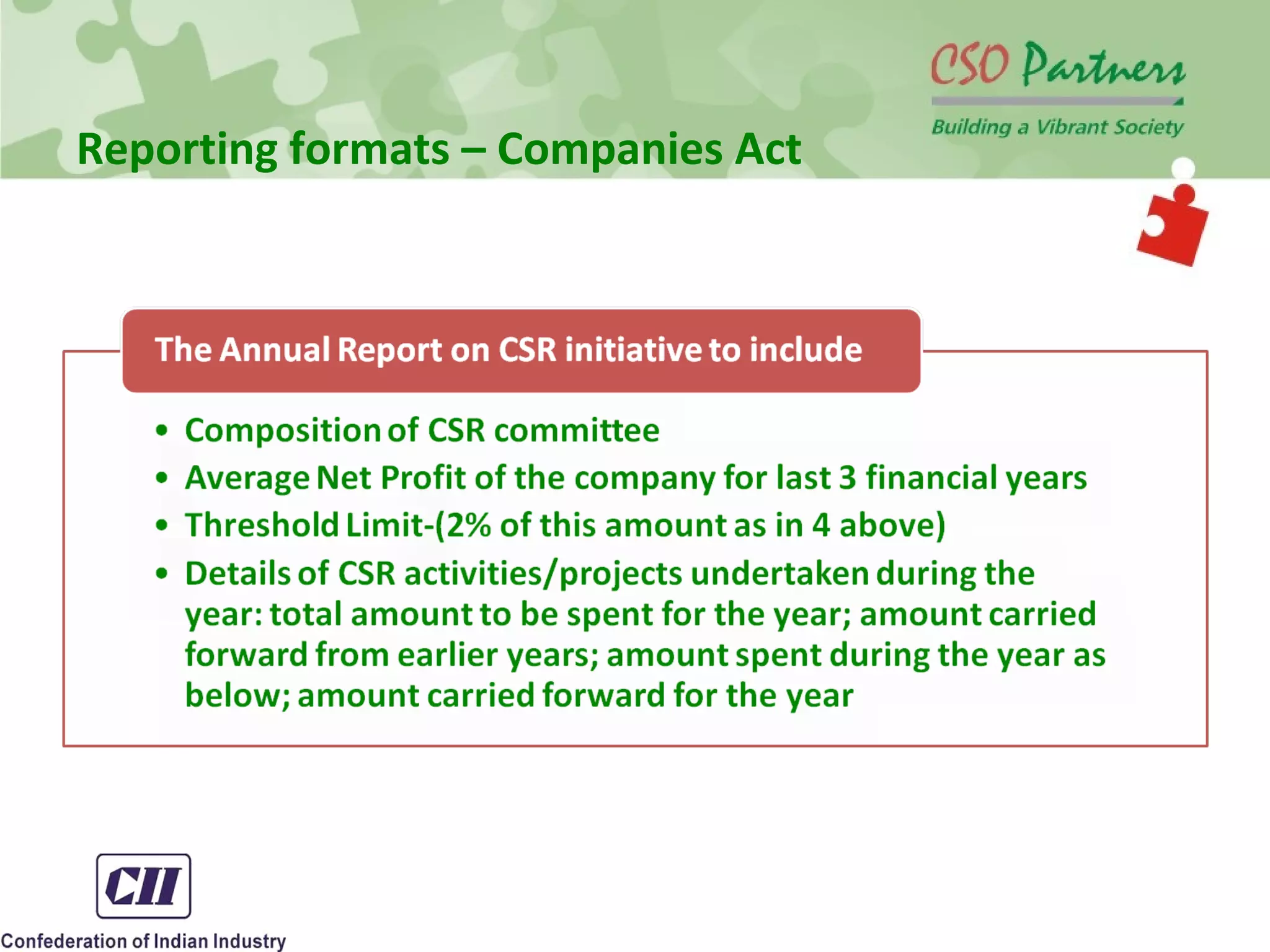
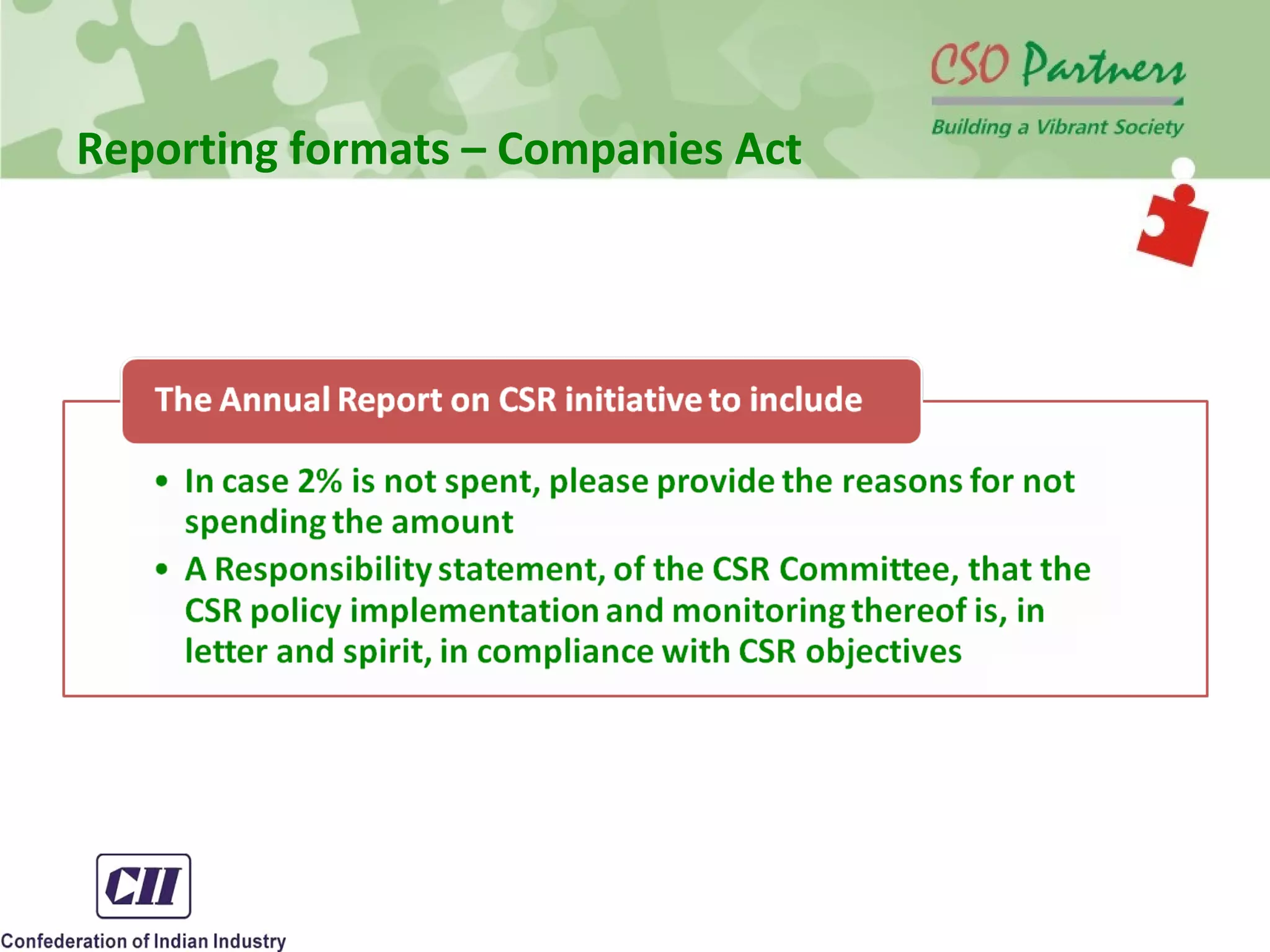
Reporting formats – Companies Act
Conceptual framework of business responsibility
Overview of international standards and norms
Role of NGOs/CSOs in business responsibility
Case review
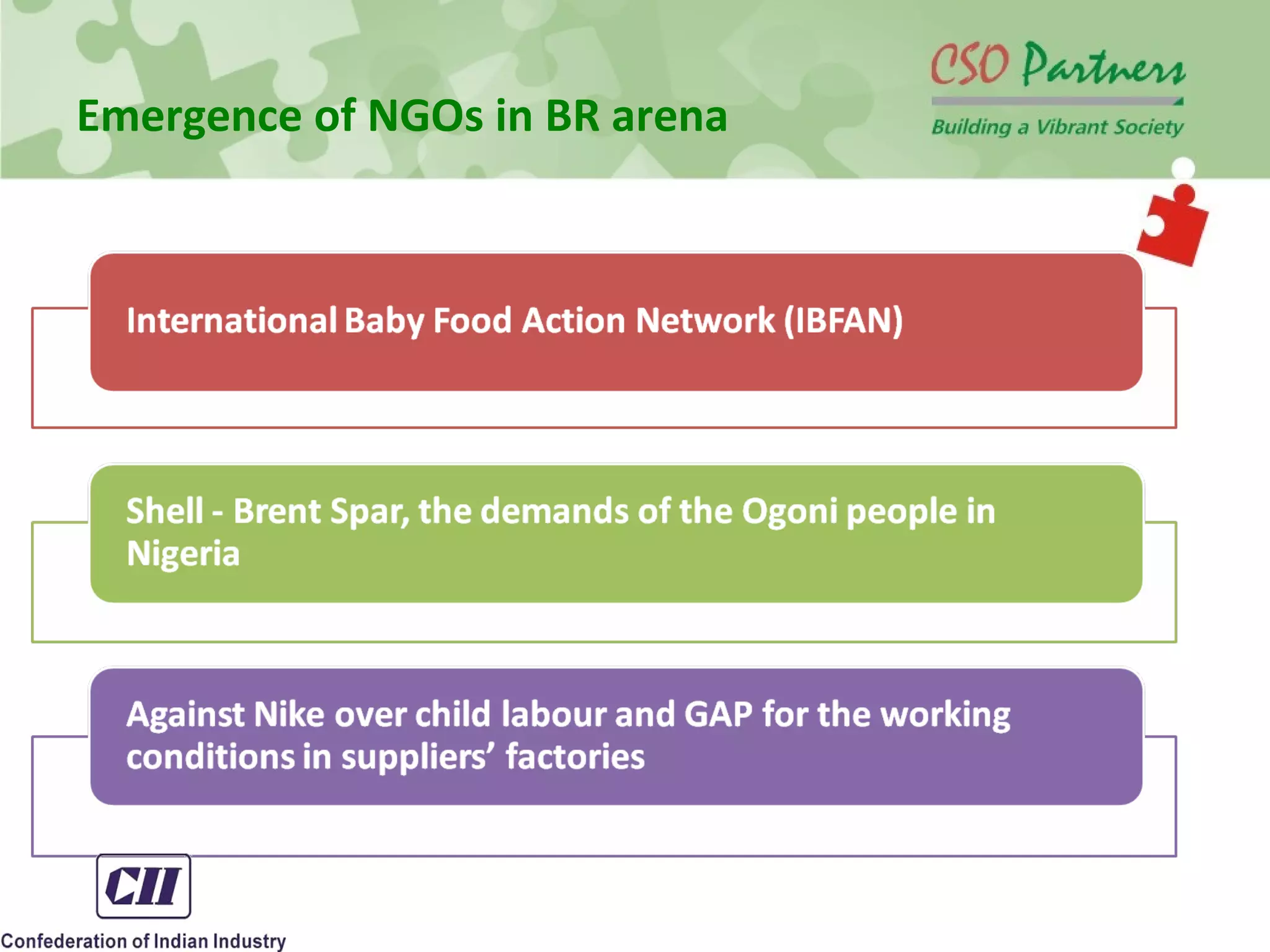
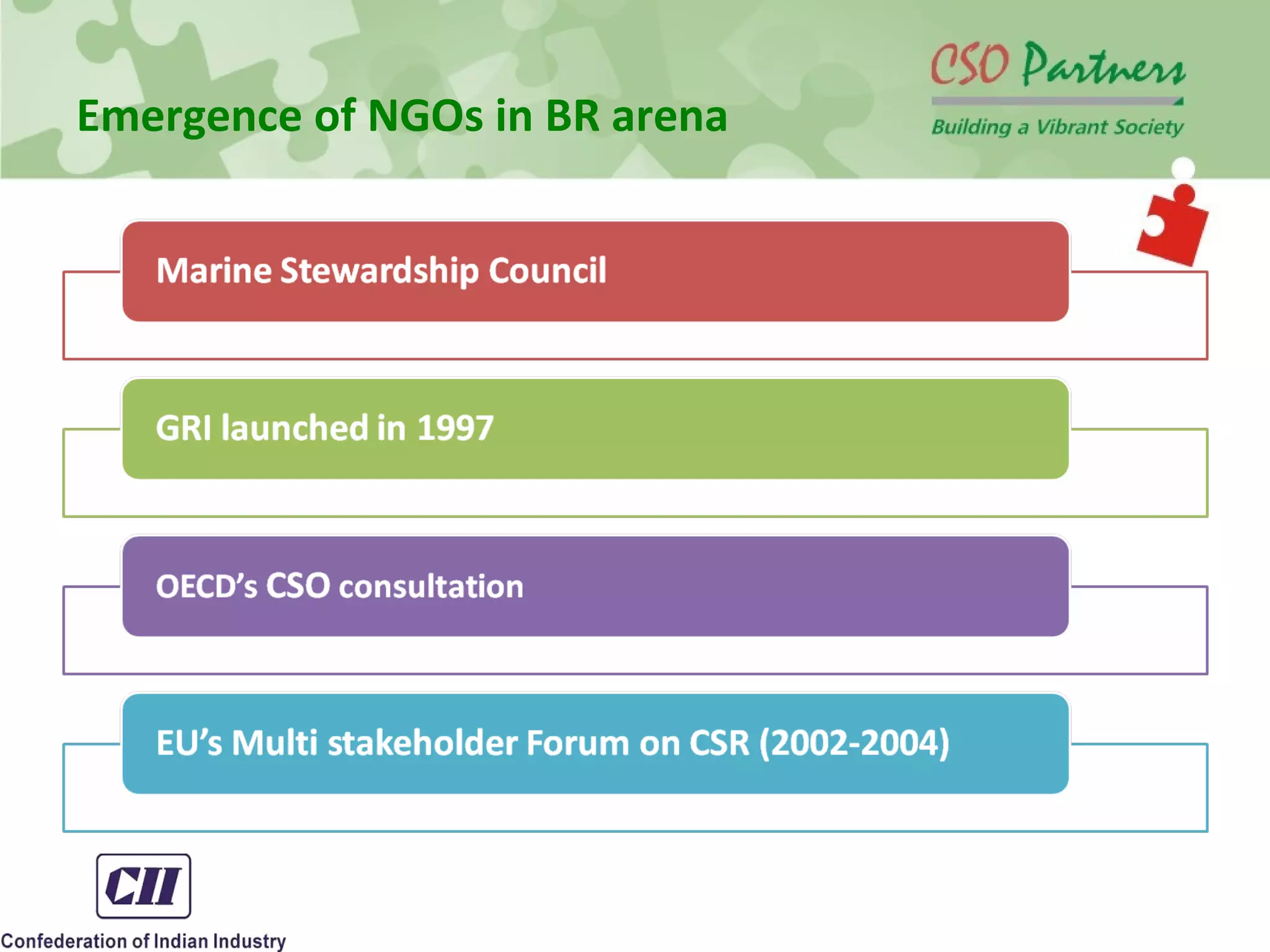
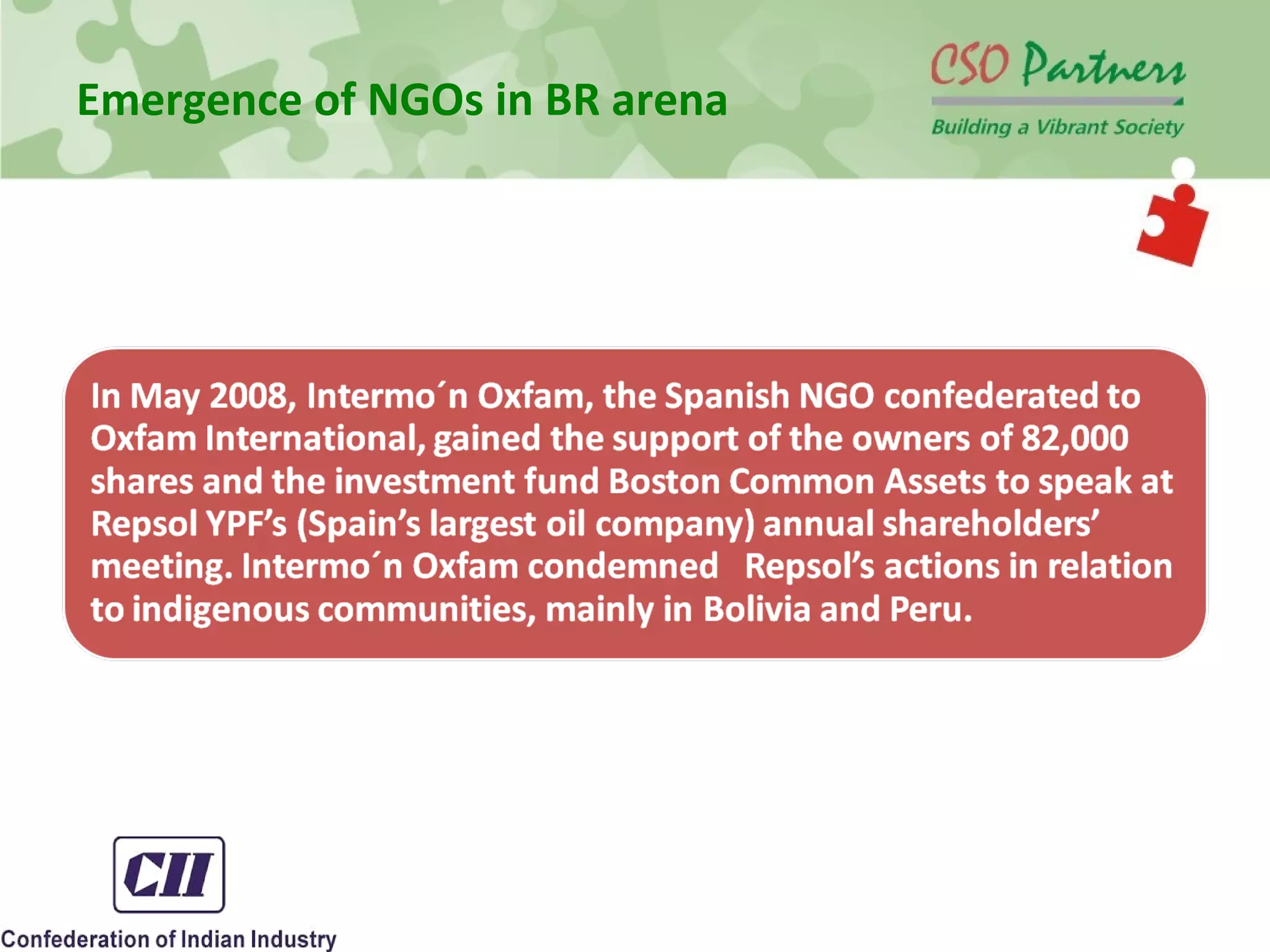
Emergence of NGOs in BR arena
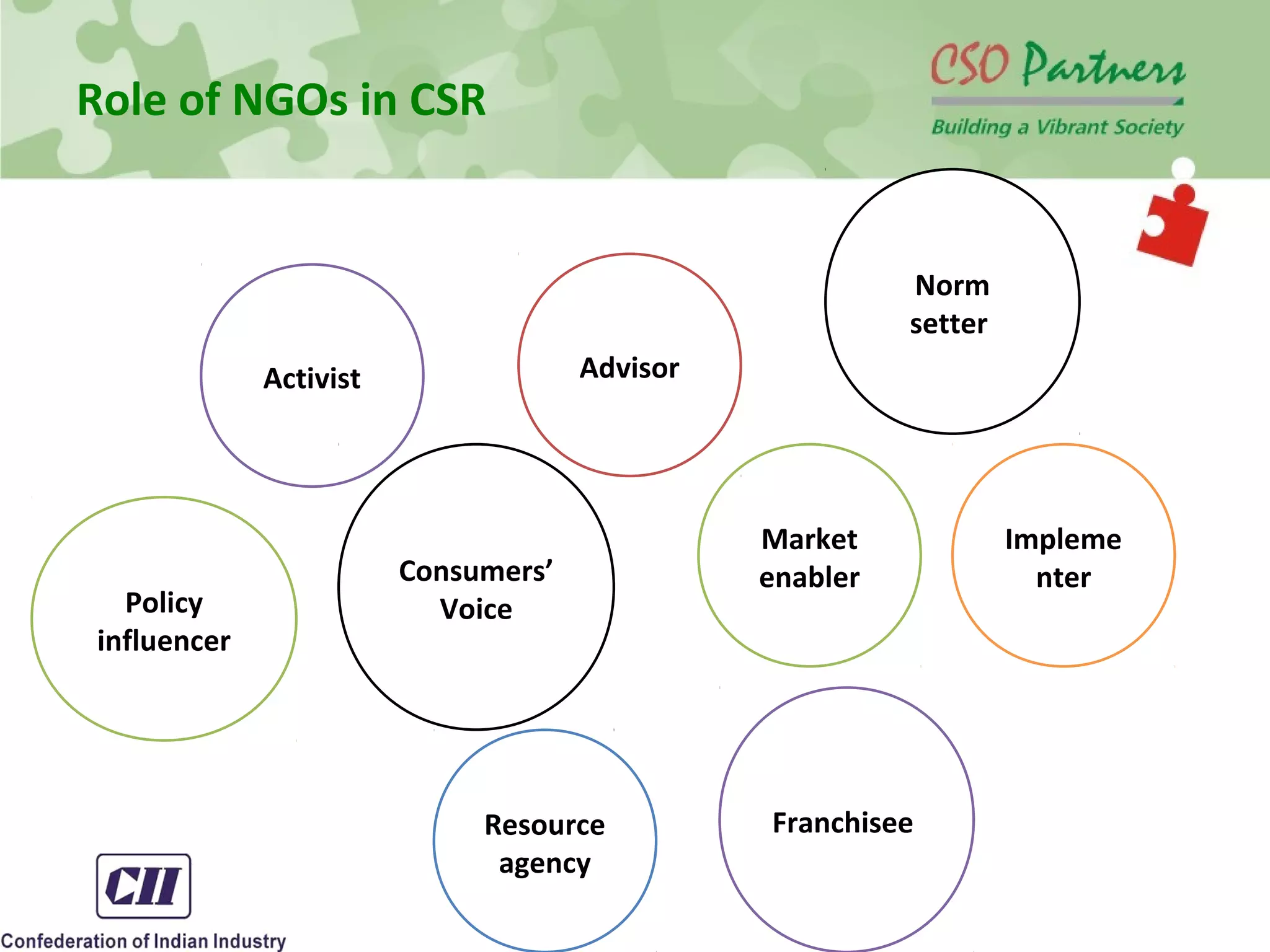
Role of NGOs in CSR
Activist
Resource
agency
Franchisee
Policy
influencer
Market
enablerConsumers’
Voice
Advisor
Impleme
nter
Norm
setter
Conceptual framework of business responsibility
Overview of international standards and norms
Role of NGOs/CSOs in business responsibility
NGO Campaigns
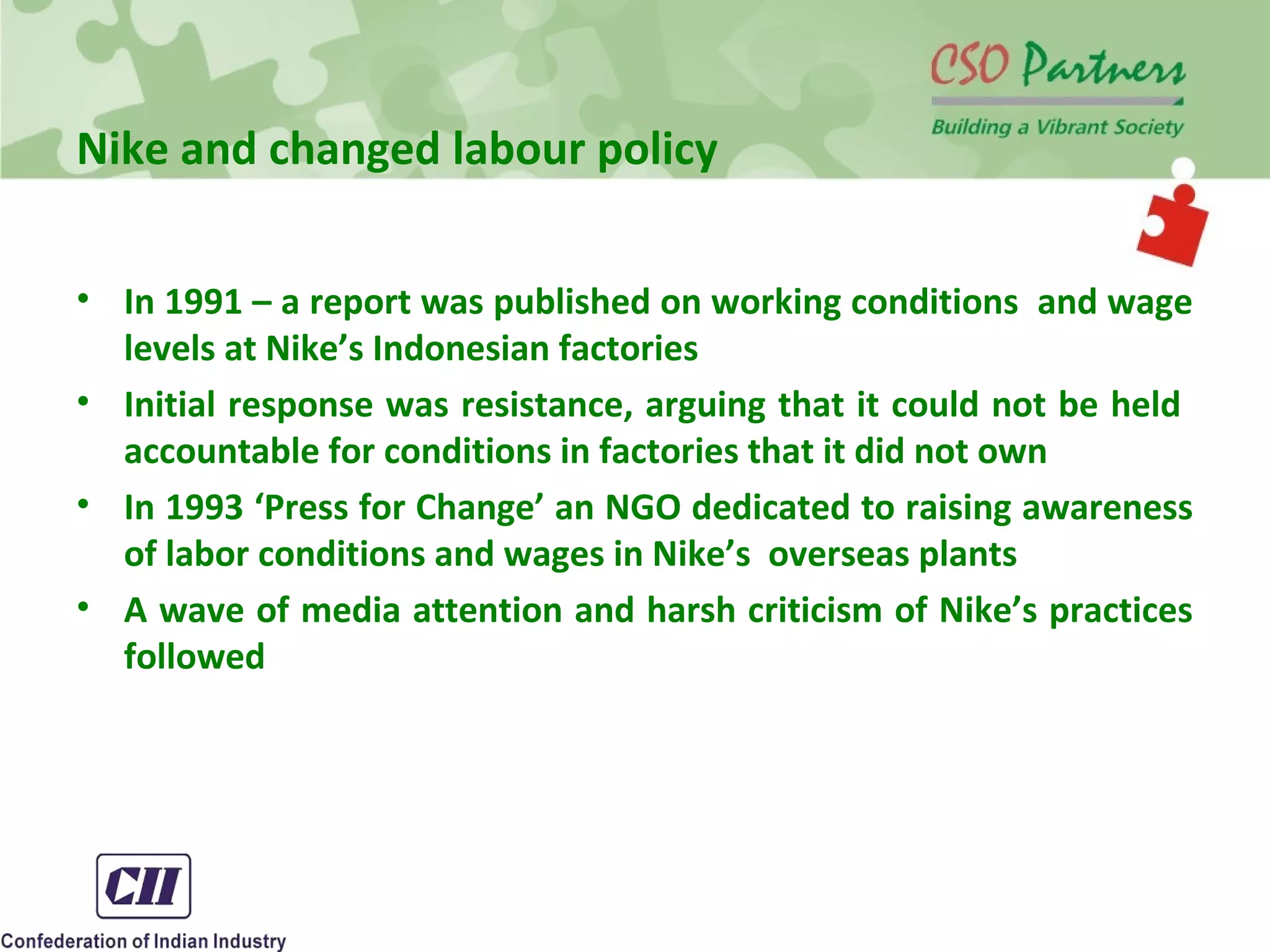
Nike and changed labour policy
• In 1991 – a report was published on working conditions and wage
levels at Nike’s Indonesian factories
• Initial response was resistance, arguing that it could not be held
accountable for conditions in factories that it did not own
• In 1993 ‘Press for Change’ an NGO dedicated to raising awareness
of labor conditions and wages in Nike’s overseas plants
• A wave of media attention and harsh criticism of Nike’s practices
followed
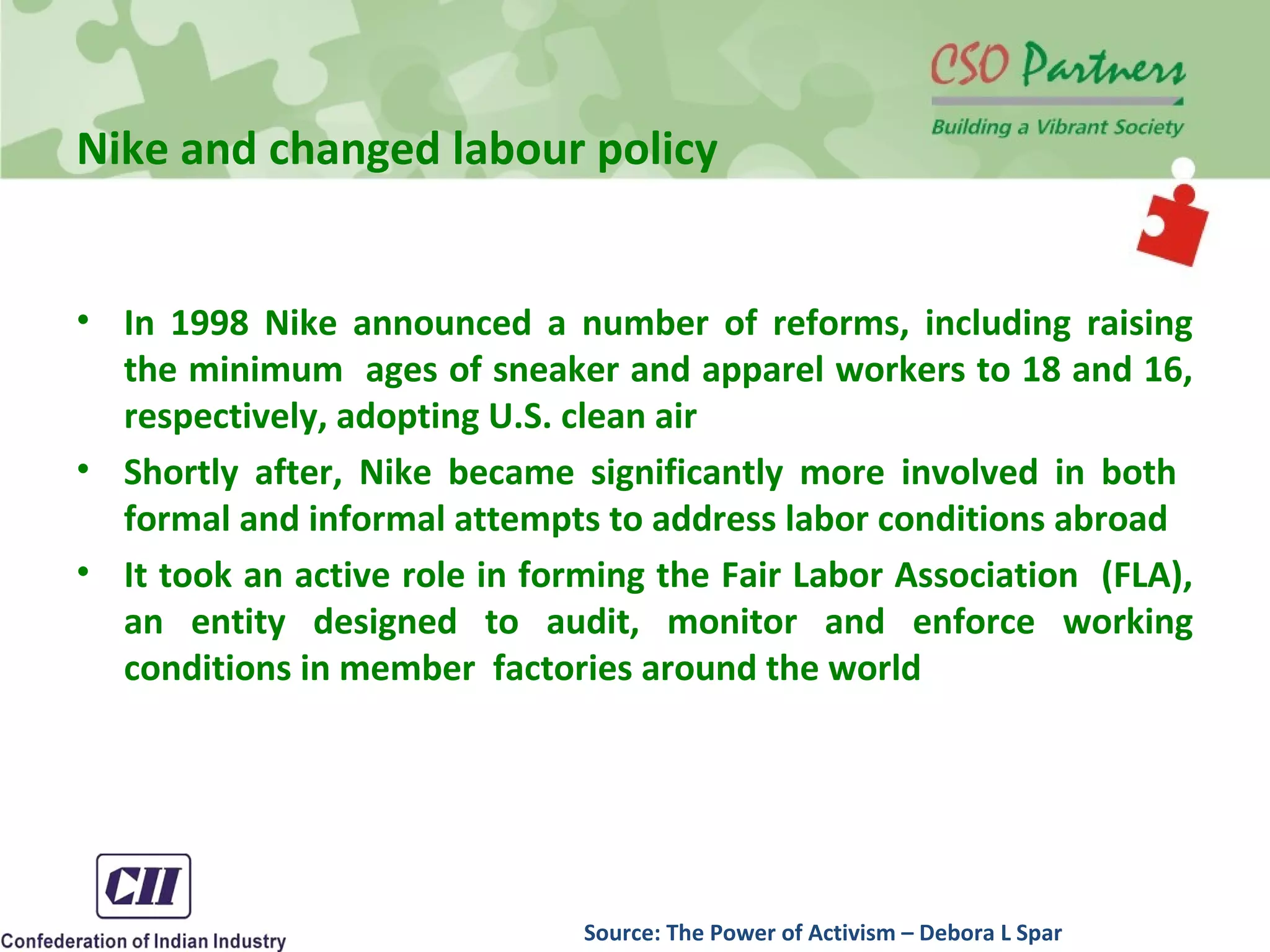
Nike and changed labour policy
• In 1998 Nike announced a number of reforms, including raising
the minimum ages of sneaker and apparel workers to 18 and 16,
respectively, adopting U.S. clean air
• Shortly after, Nike became significantly more involved in both
formal and informal attempts to address labor conditions abroad
• It took an active role in forming the Fair Labor Association (FLA),
an entity designed to audit, monitor and enforce working
conditions in member factories around the world
Source: The Power of Activism – Debora L Spar
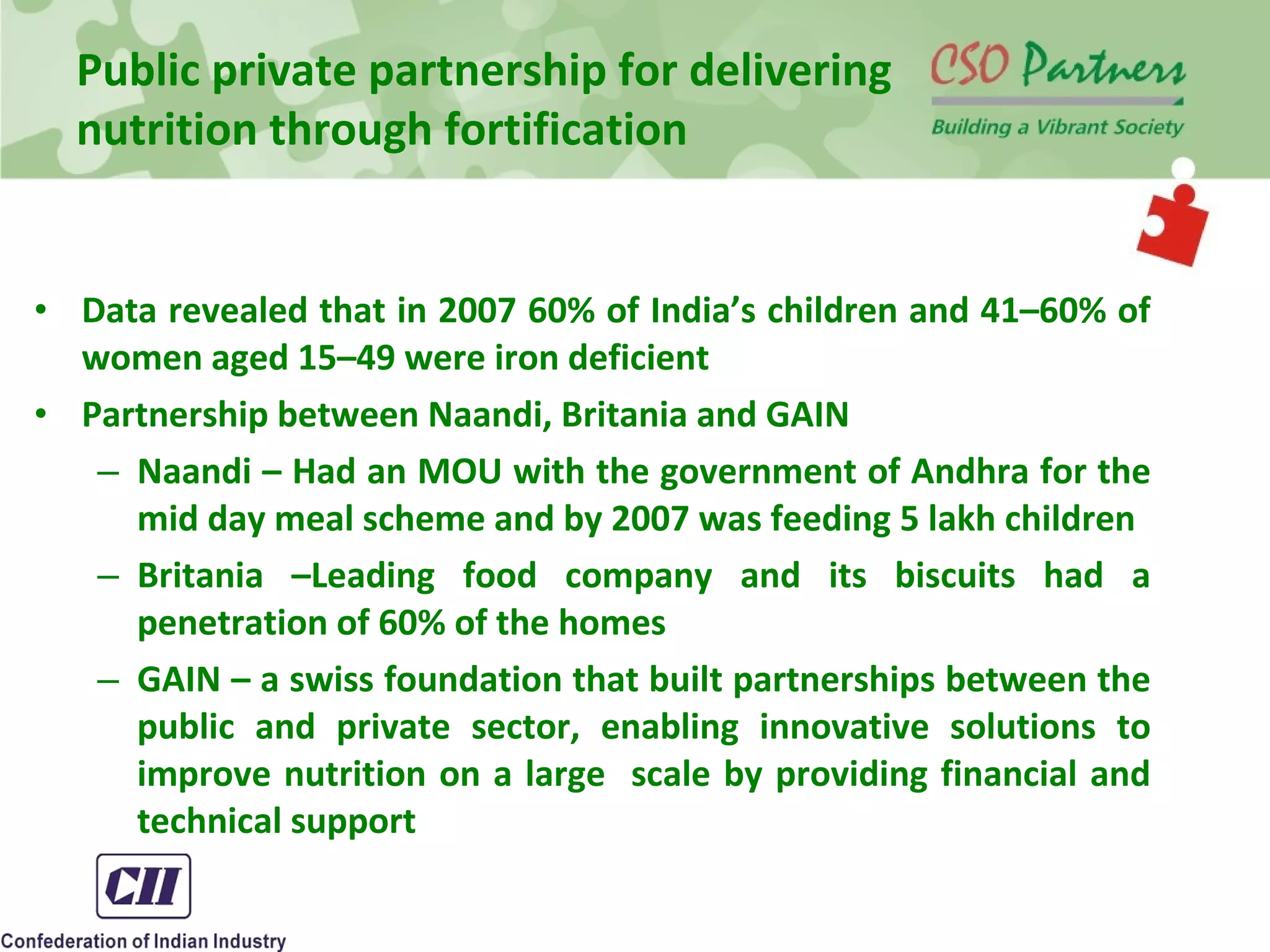
• Data revealed that in 2007 60% of India’s children and 41–60% of
women aged 15–49 were iron deficient
• Partnership between Naandi, Britania and GAIN
– Naandi – Had an MOU with the government of Andhra for the
mid day meal scheme and by 2007 was feeding 5 lakh children
– Britania –Leading food company and its biscuits had a
penetration of 60% of the homes
– GAIN – a swiss foundation that built partnerships between the
public and private sector, enabling innovative solutions to
improve nutrition on a large scale by providing financial and
technical support
Public private partnership for delivering
nutrition through fortification
• Britannia partnered with the Naandi Foundation to bring iron-
fortified biscuits to 150,000 children in the Indian state of Andhra
Pradesh through Naandi’s midday meal program
• Global Alliance for Improved Nutrition (GAIN) had made it
possible to procure the biscuits from Britannia at cost
• Britannia followed this with micronutrient fortification including
other commercial biscuit brands
Public private partnership for delivering
nutrition through fortification
Source: Business Innovation to Combat Malnutrition – Case study
For further clarifications and guidance
please contact:
soumitra.ghosh@csopartners.org.in

Fundamentals of CSR

  • 1.
    Corporate Social Responsibility BusinessResponsibility Corporate Citizenship Sustainability04/09/141 Webinar for NGOs Conducted by: Soumitra Ghosh (Founder CEO, CSO Partners)
  • 2.
    Conceptual framework ofbusiness responsibility Overview of international standards and norms Role of NGOs/CSOs in business responsibility Case review
  • 3.
  • 4.
  • 5.
    Viewing CSR ina wider context of ‘responsibility ‘
  • 6.
  • 7.
    Source: UNESCAP (UnitedNations Economic and Social Commission for Asia and the Pacific ) Publication Business Responsibility perspective
  • 8.
    ……is not justan international phenomena
  • 9.
  • 10.
  • 11.
    Conceptual framework ofbusiness responsibility Overview of international standards and norms Role of NGOs/CSOs in business responsibility Case review
  • 12.
  • 13.
    Types of IAS PrincipalBased -Broadly defined principles with regard to social and environmental problems - Used as a guideline for action and starting point for dialog Certification Based -Involve certification, verification and monitoring against predefined criteria -degree of assurance that stated standards are actually being met Reporting Standard Based -A comprehensive and standardized frameworks for economic, social and environmental reporting - Foster transparency and accountability while at the same time enables comparisons Process Based -It focus on the question of how corporate accountability can be achieved - IT offers essential managerial guidance on how corporate accountability can be achieved Soruce: Dirk Ulrich Gilbert, Andreas Rasche and Sandra Waddock
  • 14.
    Principle Based -UN GlobalCompact -OECD Guidelines -CERES Certification Based -SA 8000 - ISO 14001 Process Based -AA 1000 -ISO 26000 Reporting Standard Based -GRI -BBA’s Forge Standard -CERES (Facility Reporting Project) -Green House Gas Protocol for Project Accounting Types of IAS
  • 15.
  • 16.
  • 17.
    Facility Reporting Project(A CERES Project)
  • 18.
    Forge standard andgreen house gas protocol
  • 19.
  • 20.
    Reporting formats –Companies Act
  • 21.
    Reporting formats –Companies Act
  • 22.
    Reporting formats –Companies Act
  • 23.
    Conceptual framework ofbusiness responsibility Overview of international standards and norms Role of NGOs/CSOs in business responsibility Case review
  • 24.
    Emergence of NGOsin BR arena
  • 25.
    Emergence of NGOsin BR arena
  • 26.
    Emergence of NGOsin BR arena
  • 27.
    Role of NGOsin CSR Activist Resource agency Franchisee Policy influencer Market enablerConsumers’ Voice Advisor Impleme nter Norm setter
  • 28.
    Conceptual framework ofbusiness responsibility Overview of international standards and norms Role of NGOs/CSOs in business responsibility NGO Campaigns
  • 29.
    Nike and changedlabour policy • In 1991 – a report was published on working conditions and wage levels at Nike’s Indonesian factories • Initial response was resistance, arguing that it could not be held accountable for conditions in factories that it did not own • In 1993 ‘Press for Change’ an NGO dedicated to raising awareness of labor conditions and wages in Nike’s overseas plants • A wave of media attention and harsh criticism of Nike’s practices followed
  • 30.
    Nike and changedlabour policy • In 1998 Nike announced a number of reforms, including raising the minimum ages of sneaker and apparel workers to 18 and 16, respectively, adopting U.S. clean air • Shortly after, Nike became significantly more involved in both formal and informal attempts to address labor conditions abroad • It took an active role in forming the Fair Labor Association (FLA), an entity designed to audit, monitor and enforce working conditions in member factories around the world Source: The Power of Activism – Debora L Spar
  • 31.
    • Data revealedthat in 2007 60% of India’s children and 41–60% of women aged 15–49 were iron deficient • Partnership between Naandi, Britania and GAIN – Naandi – Had an MOU with the government of Andhra for the mid day meal scheme and by 2007 was feeding 5 lakh children – Britania –Leading food company and its biscuits had a penetration of 60% of the homes – GAIN – a swiss foundation that built partnerships between the public and private sector, enabling innovative solutions to improve nutrition on a large scale by providing financial and technical support Public private partnership for delivering nutrition through fortification
  • 32.
    • Britannia partneredwith the Naandi Foundation to bring iron- fortified biscuits to 150,000 children in the Indian state of Andhra Pradesh through Naandi’s midday meal program • Global Alliance for Improved Nutrition (GAIN) had made it possible to procure the biscuits from Britannia at cost • Britannia followed this with micronutrient fortification including other commercial biscuit brands Public private partnership for delivering nutrition through fortification Source: Business Innovation to Combat Malnutrition – Case study
  • 33.
    For further clarificationsand guidance please contact: soumitra.ghosh@csopartners.org.in

Editor's Notes

  • #14 These are not mutually exclusive. SA800 is primarily a certification standard but also defines management systems with needs to adopted when implementing the standard