SEMINAR ON
FUNDAMENTAL
CLINICAL ARTICLE
List Of article
 Sphygmomanometer
 Stethoscope
 Thermometer
 Hammer
 Gucometer
 Cannula
 Measurement tape
 Oxygen inahelar
 Weighing machine
 Iv set
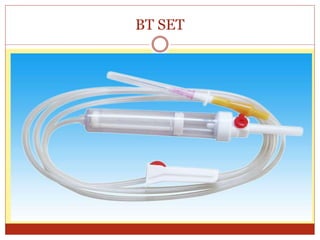
 BT set
SPHYGMOMANOMETER
The word sphygmomanometer is derived from the
Greek word ‘sphygmos’ meaning beating of the heart
or the pulse and manometer mean the device used
for measuring the pressure or tension. This
instrument was invented by Samuel Siegfried Karl
Ritter von Basch in the year 1881.
TYPES OF SPHYGMOMANOMETER
Three major types of sphygmomanometer
1. Mercury sphygmomanometer
2. Aneroid sphygmomanometer
3. Automatic digital sphygmomanometer
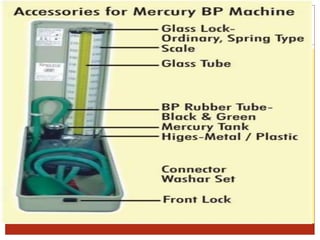
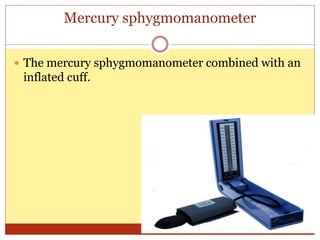
Mercury sphygmomanometer
 The mercury sphygmomanometer combined with an
inflated cuff.
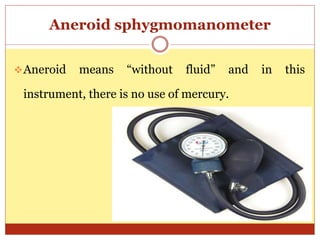
Aneroid sphygmomanometer
Aneroid means “without fluid” and in this
instrument, there is no use of mercury.
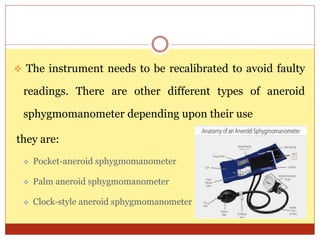
 The instrument needs to be recalibrated to avoid faulty
readings. There are other different types of aneroid
sphygmomanometer depending upon their use
they are:
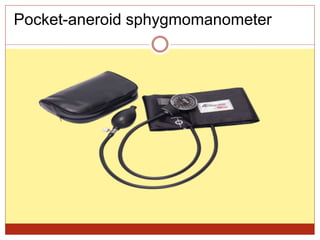
 Pocket-aneroid sphygmomanometer
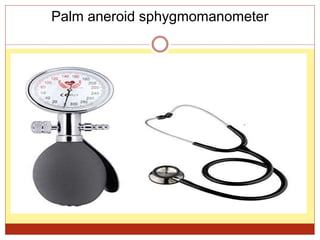
 Palm aneroid sphygmomanometer
 Clock-style aneroid sphygmomanometer
Pocket-aneroid sphygmomanometer
Palm aneroid sphygmomanometer
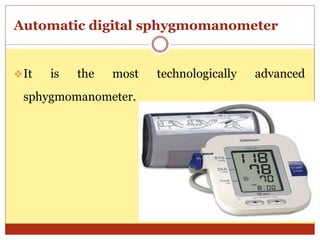
Automatic digital sphygmomanometer
It is the most technologically advanced
sphygmomanometer.
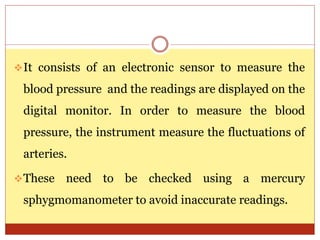
It consists of an electronic sensor to measure the
blood pressure and the readings are displayed on the
digital monitor. In order to measure the blood
pressure, the instrument measure the fluctuations of
arteries.
These need to be checked using a mercury
sphygmomanometer to avoid inaccurate readings.
Parts of sphygmomanometer
 Bladder: This is an inflatable bag that is used to
compress the arm to occlude the artery.
 Cuff: This is designed to hold the bladder around the
arm during the measurement.
 Manometer: This is a device used to measure the air
pressure in mmHg.
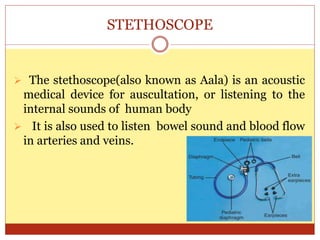
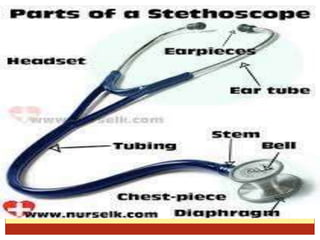
STETHOSCOPE
 The stethoscope(also known as Aala) is an acoustic
medical device for auscultation, or listening to the
internal sounds of human body
 It is also used to listen bowel sound and blood flow
in arteries and veins.
Types of Stethoscopes
 Cardiology Stethoscope.
 Infant Stethoscope.
 Neonatal Stethoscope.
 Pediatric Stethoscope.
 Electronic Stethoscope.
 Teaching Stethoscope.
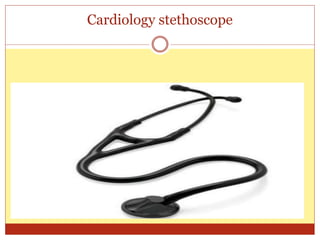
Cardiology stethoscope
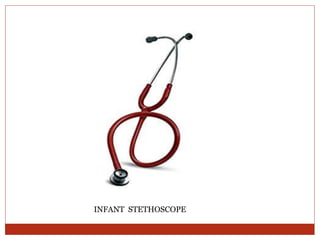
INFANT STETHOSCOPE
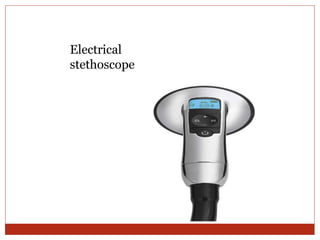
Electrical
stethoscope
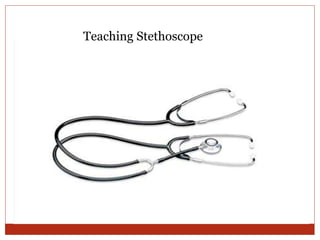
Teaching Stethoscope
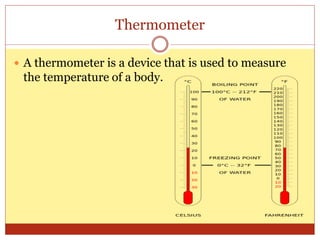
Thermometer
 A thermometer is a device that is used to measure
the temperature of a body.
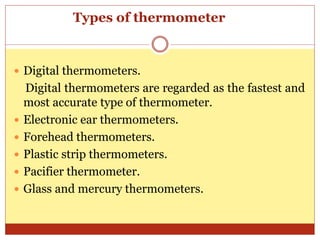
Types of thermometer
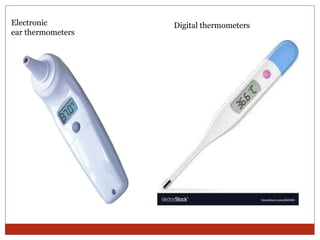
 Digital thermometers.
Digital thermometers are regarded as the fastest and
most accurate type of thermometer.
 Electronic ear thermometers.
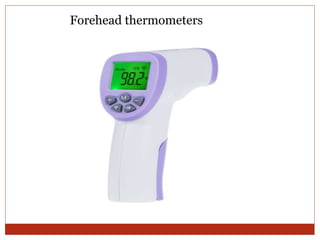
 Forehead thermometers.
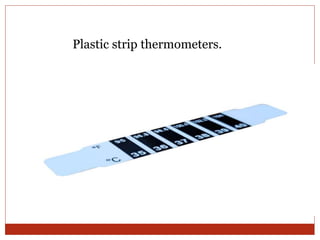
 Plastic strip thermometers.
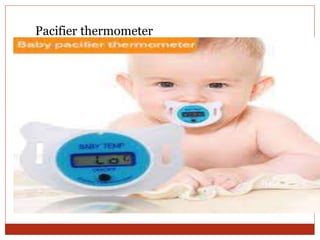
 Pacifier thermometer.
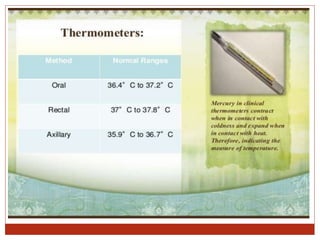
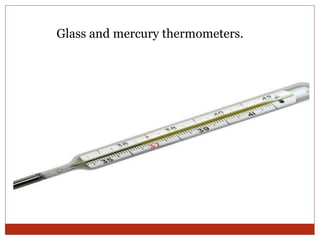
 Glass and mercury thermometers.
Electronic
ear thermometers
Digital thermometers
Forehead thermometers
Plastic strip thermometers.
Pacifier thermometer
Glass and mercury thermometers.
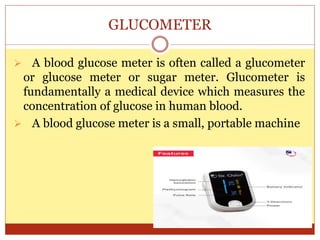
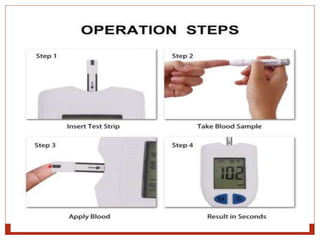
GLUCOMETER
 A blood glucose meter is often called a glucometer
or glucose meter or sugar meter. Glucometer is
fundamentally a medical device which measures the
concentration of glucose in human blood.
 A blood glucose meter is a small, portable machine
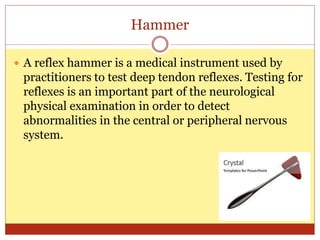
Hammer
 A reflex hammer is a medical instrument used by
practitioners to test deep tendon reflexes. Testing for
reflexes is an important part of the neurological
physical examination in order to detect
abnormalities in the central or peripheral nervous
system.
uses
The reflex hammer is an important diagnostic tool
used by physicians to test deep tendon reflexes, an
essential part of the neurological physical
examination in order to assess the peripheral and
central nervous system.
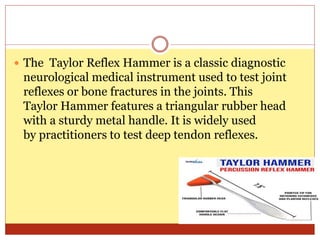
 The Taylor Reflex Hammer is a classic diagnostic
neurological medical instrument used to test joint
reflexes or bone fractures in the joints. This
Taylor Hammer features a triangular rubber head
with a sturdy metal handle. It is widely used
by practitioners to test deep tendon reflexes.
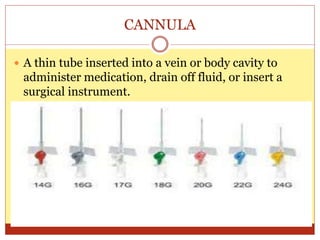
CANNULA
 A thin tube inserted into a vein or body cavity to
administer medication, drain off fluid, or insert a
surgical instrument.
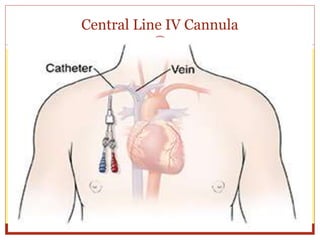
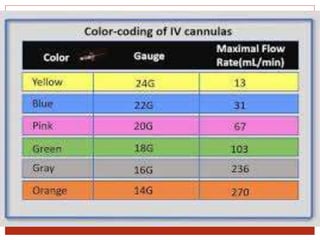
There are 3 main types of IV cannulas
 Peripheral IV Cannula,
 Central Line IV Cannula And Mid-line IV Cannula.
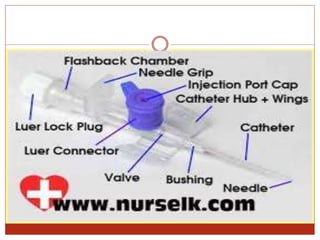
 The central line intravenous cannulas are used for
long term treatments, followed by midline cannulas
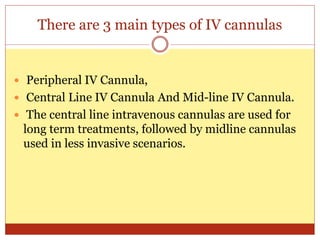
used in less invasive scenarios.
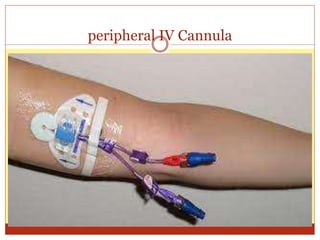
peripheral IV Cannula
Central Line IV Cannula
Common uses of IV cannulas include
 Blood Transfusions Or Draws
 Administering Medication
 Providing Fluids
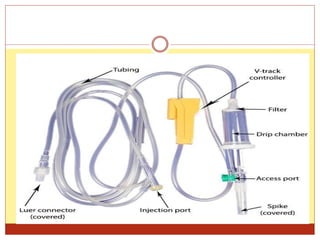
IV SET
 There are a wide variety of IV sets and uses for
these IV sets. IV Administration sets are designed to
optimize infusion delivery, reduce the risk of
infection for the patient, and to keep access sites
clean and protected.
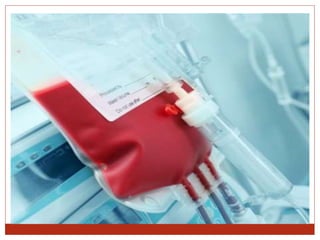
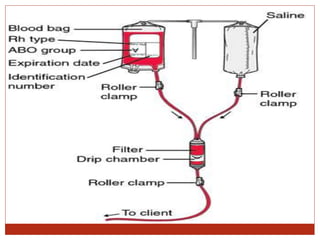
Blood trasfusion
 A procedure in which whole blood or parts of blood
are put into a patient's bloodstream through a vein.
The blood may be donated by another person or it
may have been taken from the patient and stored
until needed.
BT SET
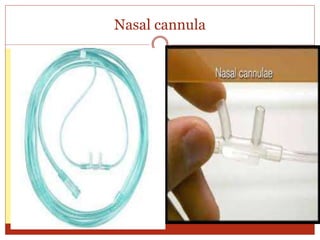
Oxygen Mask
Oxygen therapy is a treatment that delivers oxygen
gas for you to breathe. You can receive oxygen
therapy from tubes resting in your nose, a face mask,
or a tube placed in your trachea, or windpipe. This
treatment increases the amount of oxygen your lungs
receive and deliver to your blood
Nasal cannula
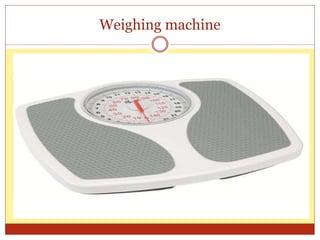
Weighing machine
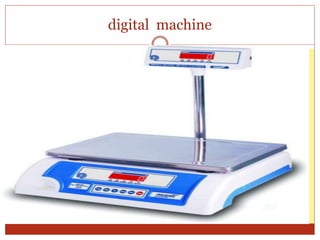
digital machine
Use a digital scale
 Have the child or teen remove shoes and heavy
clothing, such as sweaters.
 Have the child or teen stand with both feet in the
center of the scale.
 Record the weight to the nearest decimal fraction
(for example, 55.5 pounds or 25.1 kilograms)
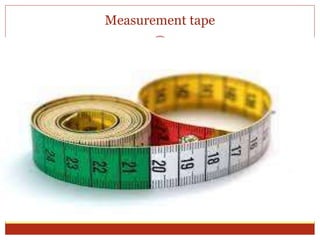
Measurement tape
Nurses responsibility
FUNDAMENTAL INSTRUMENTS PRESENTATION IN DETAIL

FUNDAMENTAL INSTRUMENTS PRESENTATION IN DETAIL

  • 1.
  • 2.
    List Of article Sphygmomanometer  Stethoscope  Thermometer  Hammer  Gucometer  Cannula  Measurement tape  Oxygen inahelar  Weighing machine  Iv set  BT set
  • 3.
    SPHYGMOMANOMETER The word sphygmomanometeris derived from the Greek word ‘sphygmos’ meaning beating of the heart or the pulse and manometer mean the device used for measuring the pressure or tension. This instrument was invented by Samuel Siegfried Karl Ritter von Basch in the year 1881.
  • 5.
    TYPES OF SPHYGMOMANOMETER Threemajor types of sphygmomanometer 1. Mercury sphygmomanometer 2. Aneroid sphygmomanometer 3. Automatic digital sphygmomanometer
  • 6.
    Mercury sphygmomanometer  Themercury sphygmomanometer combined with an inflated cuff.
  • 7.
    Aneroid sphygmomanometer Aneroid means“without fluid” and in this instrument, there is no use of mercury.
  • 8.
     The instrumentneeds to be recalibrated to avoid faulty readings. There are other different types of aneroid sphygmomanometer depending upon their use they are:  Pocket-aneroid sphygmomanometer  Palm aneroid sphygmomanometer  Clock-style aneroid sphygmomanometer
  • 9.
  • 10.
  • 11.
    Automatic digital sphygmomanometer Itis the most technologically advanced sphygmomanometer.
  • 12.
    It consists ofan electronic sensor to measure the blood pressure and the readings are displayed on the digital monitor. In order to measure the blood pressure, the instrument measure the fluctuations of arteries. These need to be checked using a mercury sphygmomanometer to avoid inaccurate readings.
  • 13.
    Parts of sphygmomanometer Bladder: This is an inflatable bag that is used to compress the arm to occlude the artery.  Cuff: This is designed to hold the bladder around the arm during the measurement.  Manometer: This is a device used to measure the air pressure in mmHg.
  • 14.
    STETHOSCOPE  The stethoscope(alsoknown as Aala) is an acoustic medical device for auscultation, or listening to the internal sounds of human body  It is also used to listen bowel sound and blood flow in arteries and veins.
  • 16.
    Types of Stethoscopes Cardiology Stethoscope.  Infant Stethoscope.  Neonatal Stethoscope.  Pediatric Stethoscope.  Electronic Stethoscope.  Teaching Stethoscope.
  • 17.
  • 18.
  • 19.
  • 20.
  • 21.
    Thermometer  A thermometeris a device that is used to measure the temperature of a body.
  • 23.
    Types of thermometer Digital thermometers. Digital thermometers are regarded as the fastest and most accurate type of thermometer.  Electronic ear thermometers.  Forehead thermometers.  Plastic strip thermometers.  Pacifier thermometer.  Glass and mercury thermometers.
  • 24.
  • 25.
  • 26.
  • 27.
  • 28.
    Glass and mercurythermometers.
  • 29.
    GLUCOMETER  A bloodglucose meter is often called a glucometer or glucose meter or sugar meter. Glucometer is fundamentally a medical device which measures the concentration of glucose in human blood.  A blood glucose meter is a small, portable machine
  • 32.
    Hammer  A reflexhammer is a medical instrument used by practitioners to test deep tendon reflexes. Testing for reflexes is an important part of the neurological physical examination in order to detect abnormalities in the central or peripheral nervous system.
  • 33.
    uses The reflex hammeris an important diagnostic tool used by physicians to test deep tendon reflexes, an essential part of the neurological physical examination in order to assess the peripheral and central nervous system.
  • 34.
     The TaylorReflex Hammer is a classic diagnostic neurological medical instrument used to test joint reflexes or bone fractures in the joints. This Taylor Hammer features a triangular rubber head with a sturdy metal handle. It is widely used by practitioners to test deep tendon reflexes.
  • 35.
    CANNULA  A thintube inserted into a vein or body cavity to administer medication, drain off fluid, or insert a surgical instrument.
  • 38.
    There are 3main types of IV cannulas  Peripheral IV Cannula,  Central Line IV Cannula And Mid-line IV Cannula.  The central line intravenous cannulas are used for long term treatments, followed by midline cannulas used in less invasive scenarios.
  • 39.
  • 40.
  • 41.
    Common uses ofIV cannulas include  Blood Transfusions Or Draws  Administering Medication  Providing Fluids
  • 42.
    IV SET  Thereare a wide variety of IV sets and uses for these IV sets. IV Administration sets are designed to optimize infusion delivery, reduce the risk of infection for the patient, and to keep access sites clean and protected.
  • 44.
    Blood trasfusion  Aprocedure in which whole blood or parts of blood are put into a patient's bloodstream through a vein. The blood may be donated by another person or it may have been taken from the patient and stored until needed.
  • 45.
  • 48.
    Oxygen Mask Oxygen therapyis a treatment that delivers oxygen gas for you to breathe. You can receive oxygen therapy from tubes resting in your nose, a face mask, or a tube placed in your trachea, or windpipe. This treatment increases the amount of oxygen your lungs receive and deliver to your blood
  • 49.
  • 50.
  • 51.
  • 52.
    Use a digitalscale  Have the child or teen remove shoes and heavy clothing, such as sweaters.  Have the child or teen stand with both feet in the center of the scale.  Record the weight to the nearest decimal fraction (for example, 55.5 pounds or 25.1 kilograms)
  • 53.
  • 54.