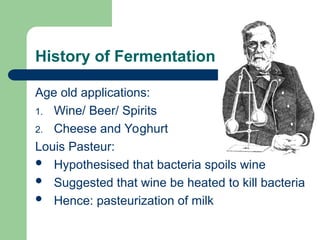
History of Fermentation
Ageold applications:
1. Wine/ Beer/ Spirits
2. Cheese and Yoghurt
Louis Pasteur:
Hypothesised that bacteria spoils wine
Suggested that wine be heated to kill bacteria
Hence: pasteurization of milk
3.
Fermentation’s
Pros and Cons
Extended shelf life of
food (ex. Cheese)
Eases Digestion (ex.
Wild rice)
New [better] flavours (ex.
Chocolate)
Can be unpredictable
(i.e. bad bacteria win the
battle)
New [worse] flavours
(ex. Mouldy bread tastes
terrible)
4.
The Process
Aerobicrespiration
release of energy from
glucose or another
organic substrate in the
presence of Oxygen
CO2, H2O, an energy
produced
Anaerobic respiration
release of energy from
glucose or another
organic substrate in the
absence of Oxygen
Products: CO2, energy,
and alcohol or various
organic acids
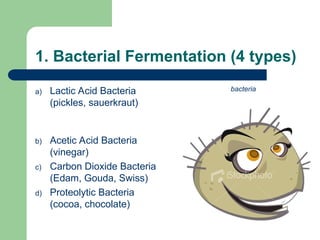
1. Bacterial Fermentation(4 types)
a) Lactic Acid Bacteria
(pickles, sauerkraut)
b) Acetic Acid Bacteria
(vinegar)
c) Carbon Dioxide Bacteria
(Edam, Gouda, Swiss)
d) Proteolytic Bacteria
(cocoa, chocolate)
bacteria
7.
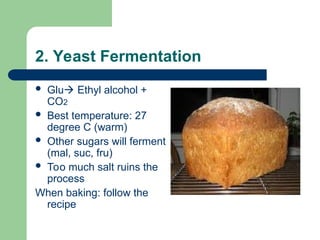
2. Yeast Fermentation
Glu Ethyl alcohol +
CO2
Best temperature: 27
degree C (warm)
Other sugars will ferment
(mal, suc, fru)
Too much salt ruins the
process
When baking: follow the
recipe
8.
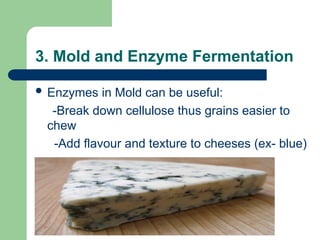
3. Mold andEnzyme Fermentation
Enzymes in Mold can be useful:
-Break down cellulose thus grains easier to
chew
-Add flavour and texture to cheeses (ex- blue)
9.
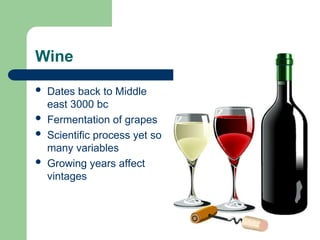
Wine
Dates backto Middle
east 3000 bc
Fermentation of grapes
Scientific process yet so
many variables
Growing years affect
vintages
10.
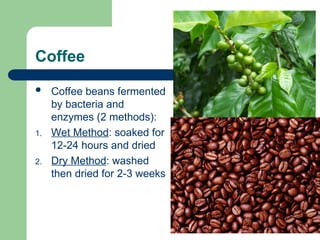
Coffee
Coffee beansfermented
by bacteria and
enzymes (2 methods):
1. Wet Method: soaked for
12-24 hours and dried
2. Dry Method: washed
then dried for 2-3 weeks
11.
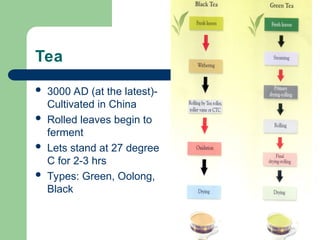
Tea
3000 AD(at the latest)-
Cultivated in China
Rolled leaves begin to
ferment
Lets stand at 27 degree
C for 2-3 hrs
Types: Green, Oolong,
Black
12.
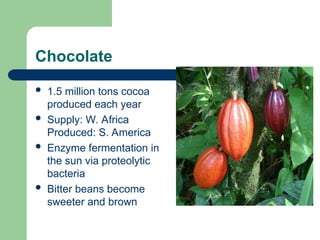
Chocolate
1.5 milliontons cocoa
produced each year
Supply: W. Africa
Produced: S. America
Enzyme fermentation in
the sun via proteolytic
bacteria
Bitter beans become
sweeter and brown

![Fermentation’s
Pros and Cons
Extended shelf life of
food (ex. Cheese)
Eases Digestion (ex.
Wild rice)
New [better] flavours (ex.
Chocolate)
Can be unpredictable
(i.e. bad bacteria win the
battle)
New [worse] flavours
(ex. Mouldy bread tastes
terrible)](https://image.slidesharecdn.com/fermentation-250710034435-7db74ef8/85/Fermentation-technology-for-food-product-3-320.jpg)


![Getting Started with Apache Spark: Big Data Made Simple [Free Meetup]](https://cdn.slidesharecdn.com/ss_thumbnails/apachesparkgettingstarted-260203175547-8361bcc3-thumbnail.jpg?width=640&height=640&fit=bounds)


