



FROM “SUPER VISION” TO TEACHER'S VISION Mariana Porta Leonardo Castelluccio
Fact: Directors and Coordinators need to ensure the quality of the teaching taking place in their institutions.
The question: How can that responsibility be assumed without falling into vertical models of supervision?
Facts: Three reasons to implement a different teacher development program: increasing customer demands: QUALITY! a more heterogeneous community of teachers time constraints
Goal: a program that implements… Teacher Participation, 3 more reasons: a motivational tool to defeat burnout  a strategy to grow professionally  a deeply believed principle of organizational communication.
A paradigm for participation empowerment : accountability structured participation
POSSESSIONS What do I have? POWER What can I do? VALUE How am I recognized ? 3 Parameters to analyze life at work:
having : a salary a job description a role a status benefits perks an office or any physical area furniture and equipment resources time opportunities
being able to: control decide supervise access information access restricted information set my own goals develop my project create
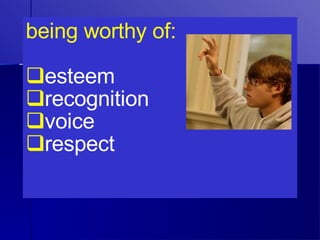
being worthy of: esteem recognition voice respect
Why is it hard to implement participation? Lack of awareness : Could it be possible? Would it be beneficial? Fear : the unknown.  What happens if I lose control? Lack of tools : How do  I do it? How do we profit from it?
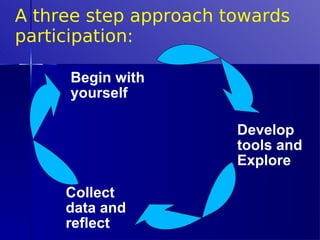
A three step approach towards participation: Begin with yourself Develop tools and Explore Collect data and reflect
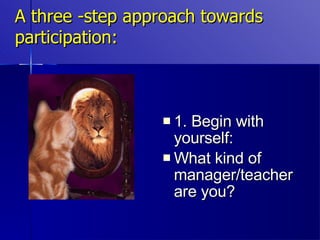
A three -step approach towards participation: 1. Begin with yourself: What kind of manager/teacher are you?
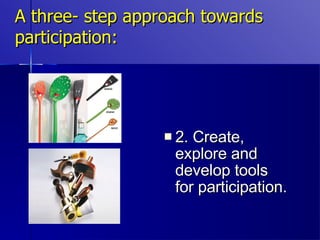
A three- step approach towards participation: 2. Create, explore and develop tools for participation.
A three -step approach towards participation: 3. Reflect and … remember the ripple effect.
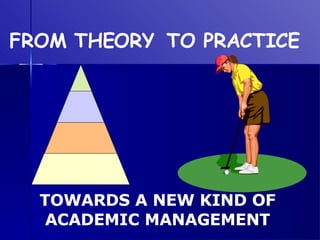
TO PRACTICE FROM THEORY TOWARDS A NEW KIND OF ACADEMIC MANAGEMENT
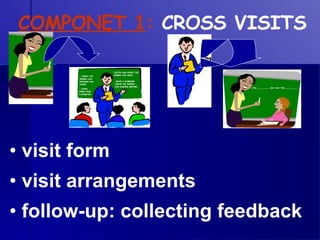
COMPONET 1 :  CROSS VISITS visit form visit arrangements follow-up: collecting feedback
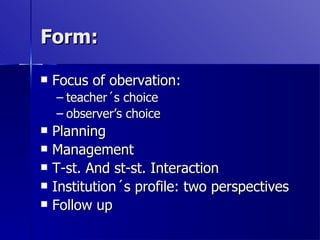
Form: Focus of obervation:  teacher´s choice observer’s choice  Planning Management T-st. And st-st. Interaction Institution´s profile: two perspectives Follow up
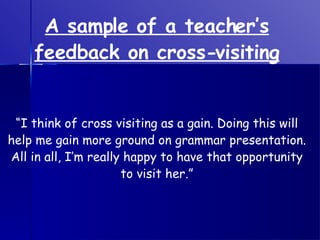
A sample of a teacher’s feedback on cross-visiting “ I think of cross visiting as a gain. Doing this will help me gain more ground on grammar presentation. All in all, I’m really happy to have that opportunity to visit her.”
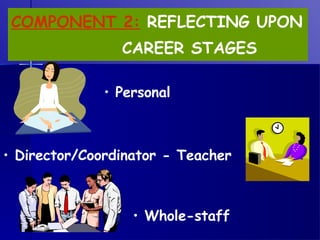
COMPONENT 2:  REFLECTING UPON  CAREER STAGES   Personal Director/Coordinator - Teacher Whole-staff
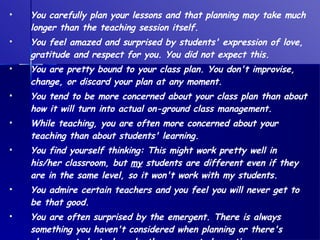
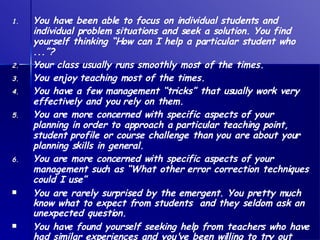
You carefully plan your lessons and that planning may take much longer than the teaching session itself. You feel amazed and surprised by students' expression of love, gratitude and respect for you. You did not expect this. You are pretty bound to your class plan. You don't improvise, change, or discard your plan at any moment. You tend to be more concerned about your class plan than about how it will turn into actual on-ground class management. While teaching, you are often more concerned about your teaching than about students' learning. You find yourself thinking: This might work pretty well in his/her classroom, but  my  students are different even if they are in the same level, so it won't work with my students. You admire certain teachers and you feel you will never get to be that good. You are often surprised by the emergent. There is always something you haven't considered when planning or there's always a student who asks the unexpected question.
You have been able to focus on individual students and individual problem situations and seek a solution. You find yourself thinking “How can I help a particular student who ...”? Your class usually runs smoothly most of the times. You enjoy teaching most of the times. You have a few management “tricks” that usually work very effectively and you rely on them.  You are more concerned with specific aspects of your planning in order to approach a particular teaching point, student profile or course challenge than you are about your planning skills in general. You are more concerned with specific aspects of your management such as “What other error correction techniques could I use” You are rarely surprised by the emergent. You pretty much know what to expect from students  and they seldom ask an unexpected question.   You have found yourself seeking help from teachers who have had similar experiences and you've been willing to try out some of those suggestions.
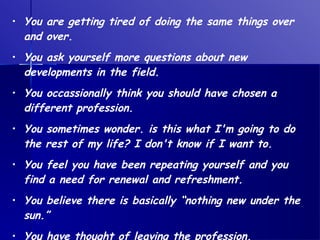
You are getting tired of doing the same things over and over. You ask yourself more questions about new developments in the field. You occassionally think you should have chosen a different profession. You sometimes wonder. is this what I'm going to do the rest of my life? I don't know if I want to. You feel you have been repeating yourself and you find a need for renewal and refreshment. You believe there is basically “nothing new under the sun.”  You have thought of leaving the profession.
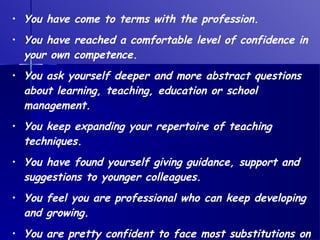
You have come to terms with the profession. You have reached a comfortable level of confidence in your own competence. You ask yourself deeper and more abstract questions about learning, teaching, education or school management. You keep expanding your repertoire of teaching techniques. You have found yourself giving guidance, support and suggestions to younger colleagues. You feel you are professional who can keep developing and growing. You are pretty confident to face most substitutions on the spur of the moment.
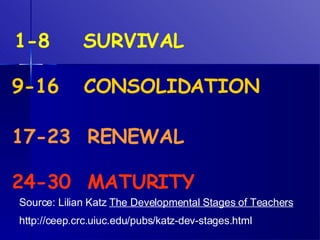
1-8  SURVIVAL 9-16  CONSOLIDATION 17-23  RENEWAL 24-30  MATURITY Source: Lilian Katz  The Developmental Stages of Teachers http://ceep.crc.uiuc.edu/pubs/katz-dev-stages.html
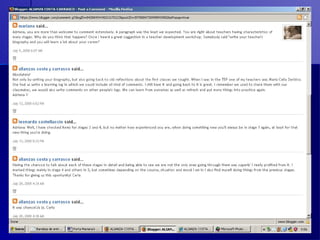
Will teachers think reflecting upon career stages is worth doing? Some of our teachers left their comments about this in our blog
 
 
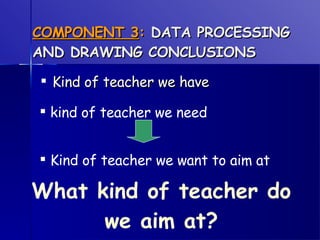
COMPONENT 3 :  DATA PROCESSING AND DRAWING CONCLUSIONS Kind of teacher we have kind of teacher we need Kind of teacher we want to aim at What kind of teacher do we aim at?
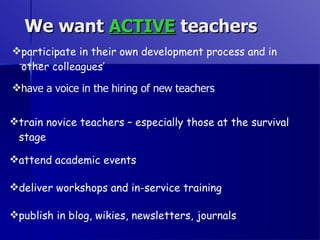
We want  ACTIVE  teachers participate in their own development process and in other colleagues’ have a voice in the hiring of new teachers train novice teachers – especially those at the survival stage attend academic events deliver workshops and in-service training publish in blog, wikies, newsletters, journals
OUR BLOG
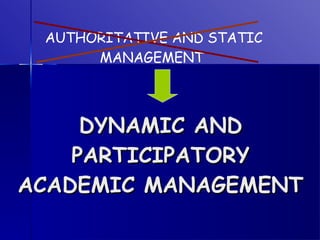
DYNAMIC AND PARTICIPATORY ACADEMIC MANAGEMENT AUTHORITATIVE AND STATIC MANAGEMENT
As directors and coordinators we need to: carry out supervision in a way that respects diversity and teacher's needs.   create room for  teachers' discovery of  their needs.  give teachers a chance to "re-invent themselves” and self direct. provide teachers  with supportive environment   provide enjoyable moments
Preliminary conclusions Participation is a learning process takes time means risk taking requires empowering needs leadership must be structured should become part of the culture of the organization.

From Super Vision to Teacher's Vision

  • 1.
    FROM “SUPER VISION”TO TEACHER'S VISION Mariana Porta Leonardo Castelluccio
  • 2.
    Fact: Directors andCoordinators need to ensure the quality of the teaching taking place in their institutions.
  • 3.
    The question: Howcan that responsibility be assumed without falling into vertical models of supervision?
  • 4.
    Facts: Three reasonsto implement a different teacher development program: increasing customer demands: QUALITY! a more heterogeneous community of teachers time constraints
  • 5.
    Goal: a programthat implements… Teacher Participation, 3 more reasons: a motivational tool to defeat burnout a strategy to grow professionally a deeply believed principle of organizational communication.
  • 6.
    A paradigm forparticipation empowerment : accountability structured participation
  • 7.
    POSSESSIONS What doI have? POWER What can I do? VALUE How am I recognized ? 3 Parameters to analyze life at work:
  • 8.
    having : asalary a job description a role a status benefits perks an office or any physical area furniture and equipment resources time opportunities
  • 9.
    being able to:control decide supervise access information access restricted information set my own goals develop my project create
  • 10.
    being worthy of:esteem recognition voice respect
  • 11.
    Why is ithard to implement participation? Lack of awareness : Could it be possible? Would it be beneficial? Fear : the unknown. What happens if I lose control? Lack of tools : How do I do it? How do we profit from it?
  • 12.
    A three stepapproach towards participation: Begin with yourself Develop tools and Explore Collect data and reflect
  • 13.
    A three -stepapproach towards participation: 1. Begin with yourself: What kind of manager/teacher are you?
  • 14.
    A three- stepapproach towards participation: 2. Create, explore and develop tools for participation.
  • 15.
    A three -stepapproach towards participation: 3. Reflect and … remember the ripple effect.
  • 16.
    TO PRACTICE FROMTHEORY TOWARDS A NEW KIND OF ACADEMIC MANAGEMENT
  • 17.
    COMPONET 1 : CROSS VISITS visit form visit arrangements follow-up: collecting feedback
  • 18.
    Form: Focus ofobervation: teacher´s choice observer’s choice Planning Management T-st. And st-st. Interaction Institution´s profile: two perspectives Follow up
  • 19.
    A sample ofa teacher’s feedback on cross-visiting “ I think of cross visiting as a gain. Doing this will help me gain more ground on grammar presentation. All in all, I’m really happy to have that opportunity to visit her.”
  • 20.
    COMPONENT 2: REFLECTING UPON CAREER STAGES Personal Director/Coordinator - Teacher Whole-staff
  • 21.
    You carefully planyour lessons and that planning may take much longer than the teaching session itself. You feel amazed and surprised by students' expression of love, gratitude and respect for you. You did not expect this. You are pretty bound to your class plan. You don't improvise, change, or discard your plan at any moment. You tend to be more concerned about your class plan than about how it will turn into actual on-ground class management. While teaching, you are often more concerned about your teaching than about students' learning. You find yourself thinking: This might work pretty well in his/her classroom, but my students are different even if they are in the same level, so it won't work with my students. You admire certain teachers and you feel you will never get to be that good. You are often surprised by the emergent. There is always something you haven't considered when planning or there's always a student who asks the unexpected question.
  • 22.
    You have beenable to focus on individual students and individual problem situations and seek a solution. You find yourself thinking “How can I help a particular student who ...”? Your class usually runs smoothly most of the times. You enjoy teaching most of the times. You have a few management “tricks” that usually work very effectively and you rely on them. You are more concerned with specific aspects of your planning in order to approach a particular teaching point, student profile or course challenge than you are about your planning skills in general. You are more concerned with specific aspects of your management such as “What other error correction techniques could I use” You are rarely surprised by the emergent. You pretty much know what to expect from students and they seldom ask an unexpected question. You have found yourself seeking help from teachers who have had similar experiences and you've been willing to try out some of those suggestions.
  • 23.
    You are gettingtired of doing the same things over and over. You ask yourself more questions about new developments in the field. You occassionally think you should have chosen a different profession. You sometimes wonder. is this what I'm going to do the rest of my life? I don't know if I want to. You feel you have been repeating yourself and you find a need for renewal and refreshment. You believe there is basically “nothing new under the sun.” You have thought of leaving the profession.
  • 24.
    You have cometo terms with the profession. You have reached a comfortable level of confidence in your own competence. You ask yourself deeper and more abstract questions about learning, teaching, education or school management. You keep expanding your repertoire of teaching techniques. You have found yourself giving guidance, support and suggestions to younger colleagues. You feel you are professional who can keep developing and growing. You are pretty confident to face most substitutions on the spur of the moment.
  • 25.
    1-8 SURVIVAL9-16 CONSOLIDATION 17-23 RENEWAL 24-30 MATURITY Source: Lilian Katz The Developmental Stages of Teachers http://ceep.crc.uiuc.edu/pubs/katz-dev-stages.html
  • 26.
    Will teachers thinkreflecting upon career stages is worth doing? Some of our teachers left their comments about this in our blog
  • 27.
  • 28.
  • 29.
    COMPONENT 3 : DATA PROCESSING AND DRAWING CONCLUSIONS Kind of teacher we have kind of teacher we need Kind of teacher we want to aim at What kind of teacher do we aim at?
  • 30.
    We want ACTIVE teachers participate in their own development process and in other colleagues’ have a voice in the hiring of new teachers train novice teachers – especially those at the survival stage attend academic events deliver workshops and in-service training publish in blog, wikies, newsletters, journals
  • 31.
  • 32.
    DYNAMIC AND PARTICIPATORYACADEMIC MANAGEMENT AUTHORITATIVE AND STATIC MANAGEMENT
  • 33.
    As directors andcoordinators we need to: carry out supervision in a way that respects diversity and teacher's needs. create room for teachers' discovery of their needs. give teachers a chance to "re-invent themselves” and self direct. provide teachers with supportive environment provide enjoyable moments
  • 34.
    Preliminary conclusions Participationis a learning process takes time means risk taking requires empowering needs leadership must be structured should become part of the culture of the organization.