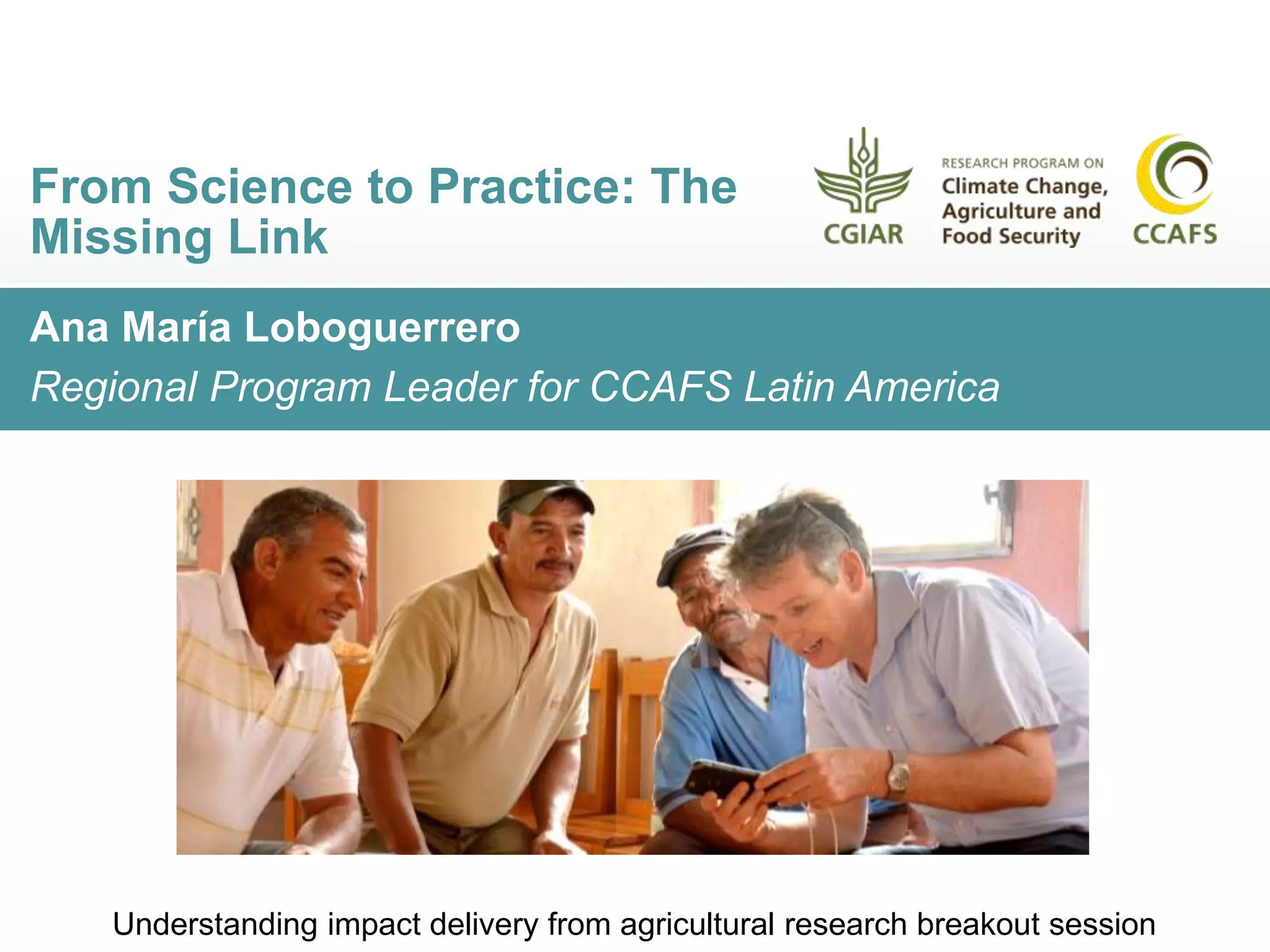
Ana María Loboguerrero
Regional Program Leader for CCAFS Latin America
From Science to Practice: The
Missing Link
Understanding impact delivery from agricultural research breakout session
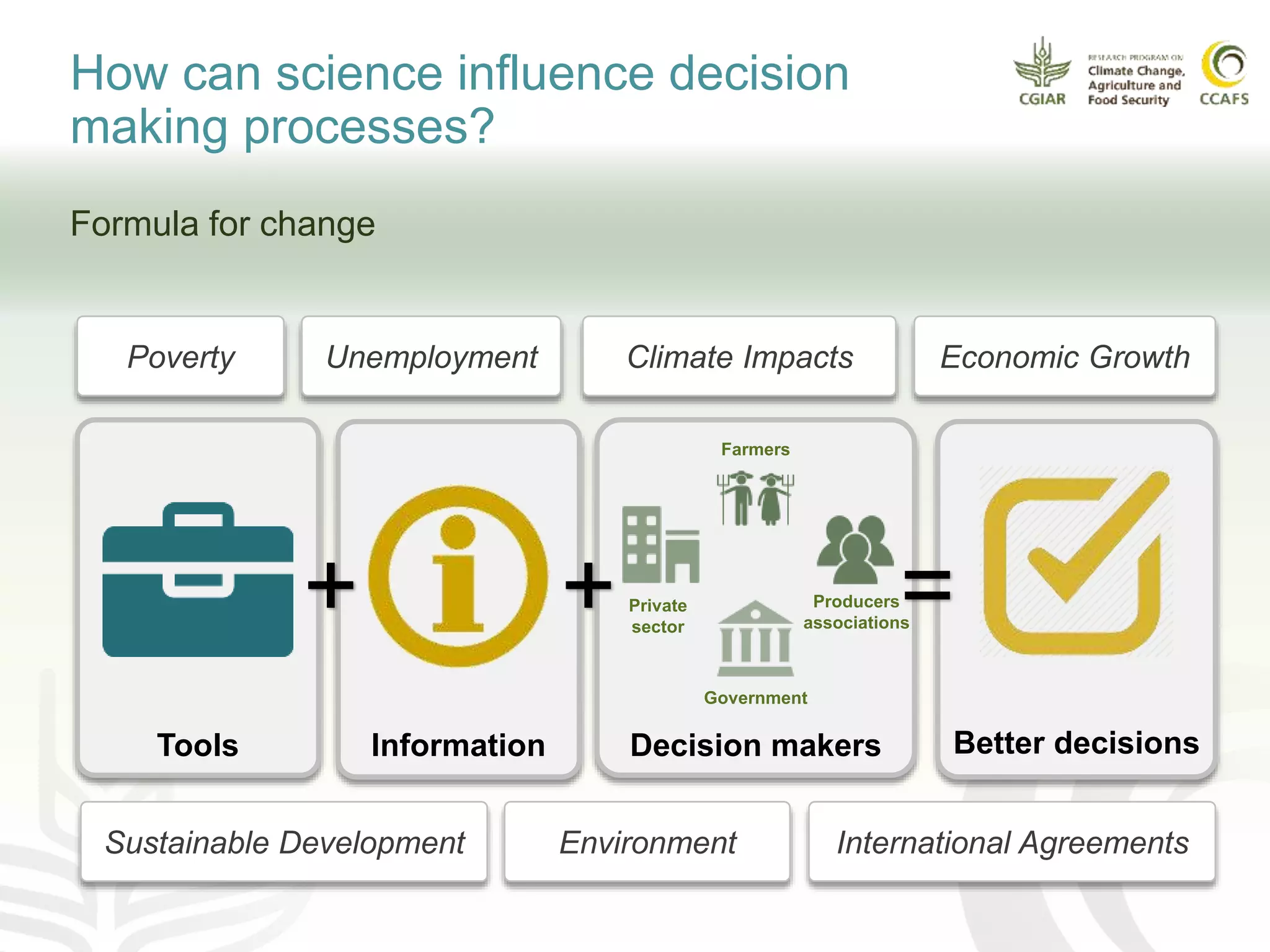
How can science influence decision
making processes?
Formula for change
Tools Information
Farmers
Private
sector
Producers
associations
Government
Decision makers Better decisions
Poverty Unemployment Climate Impacts
Sustainable Development Environment International Agreements
Economic Growth
+ + =
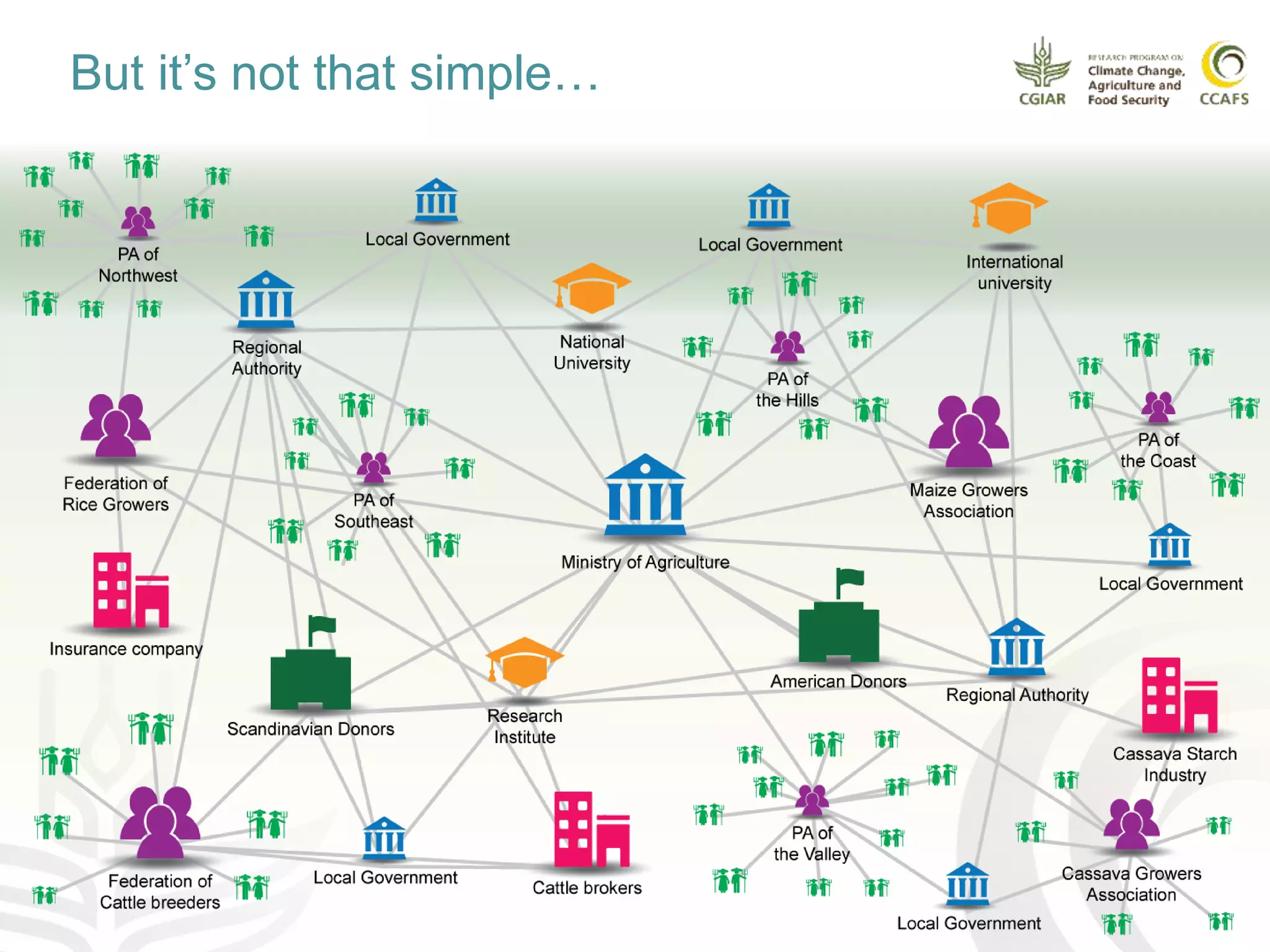
But it’s not that simple…
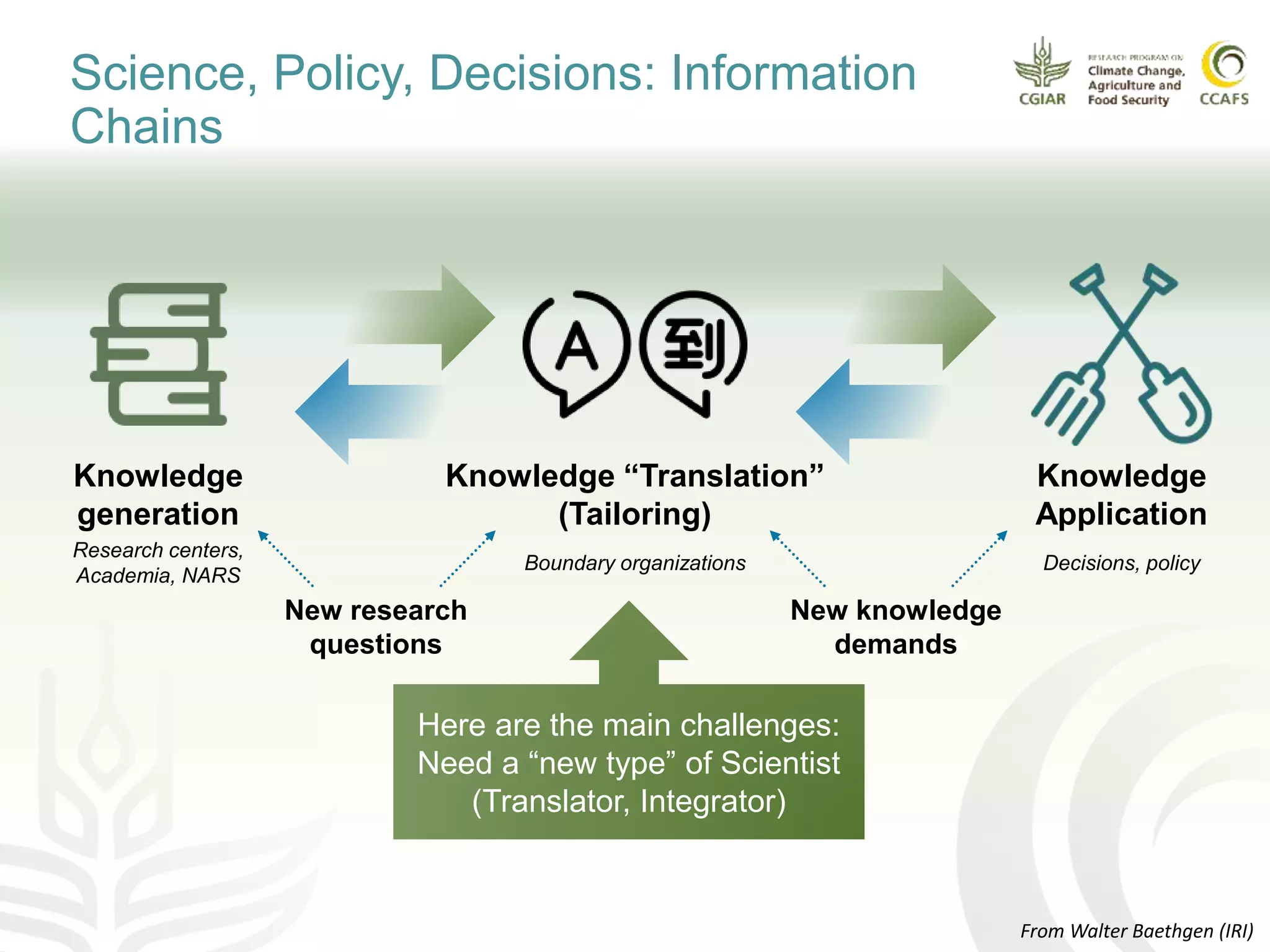
Science, Policy, Decisions: Information
Chains
Knowledge
generation
Knowledge “Translation”
(Tailoring)
Knowledge
Application
New research
questions
Research centers,
Academia, NARS
Decisions, policyBoundary organizations
New knowledge
demands
Here are the main challenges:
Need a “new type” of Scientist
(Translator, Integrator)
From Walter Baethgen (IRI)
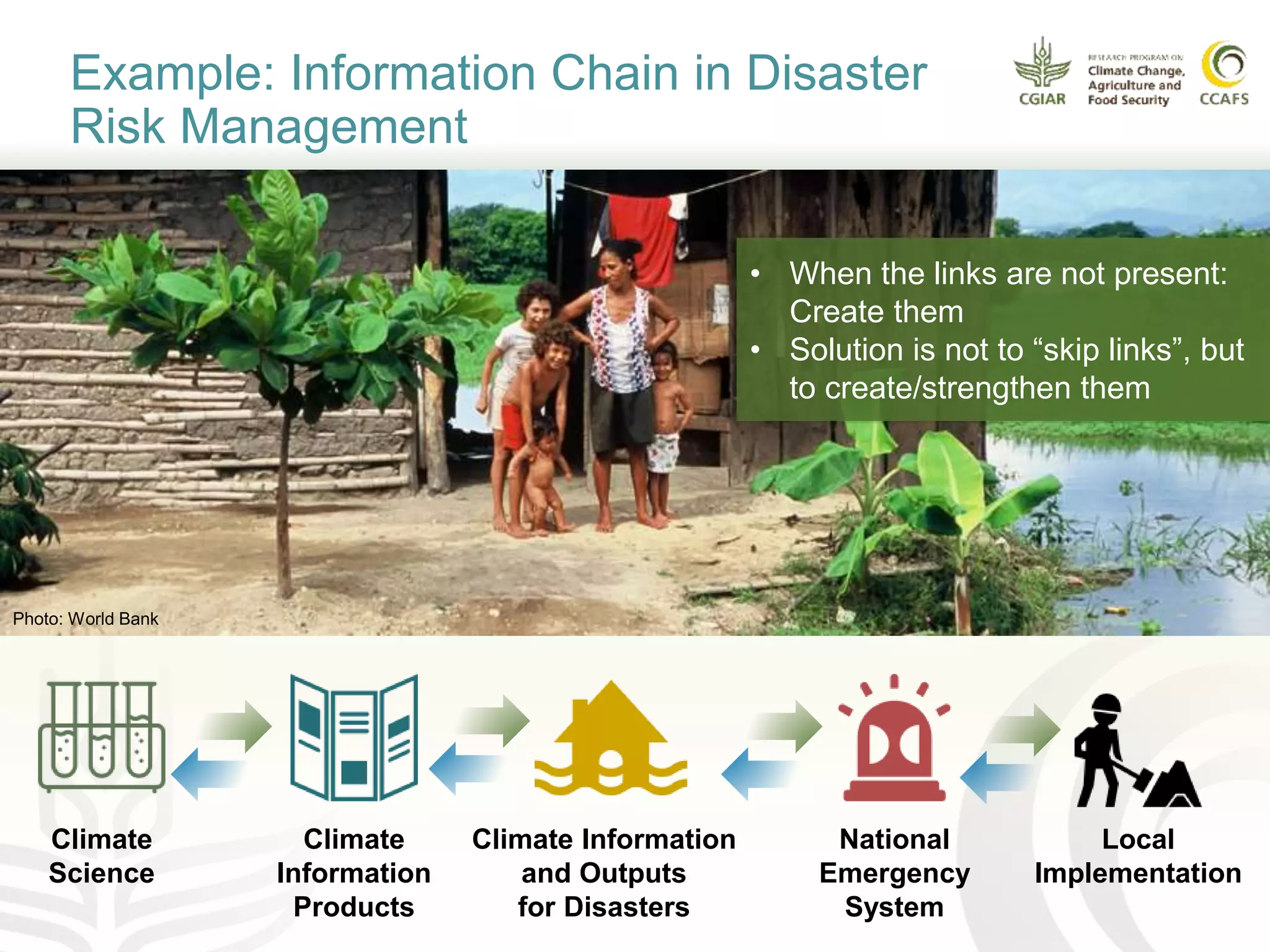
Example: Information Chain in Disaster
Risk Management
Climate
Science
Climate
Information
Products
Climate Information
and Outputs
for Disasters
National
Emergency
System
Local
Implementation
Photo: World Bank
• When the links are not present:
Create them
• Solution is not to “skip links”, but
to create/strengthen them
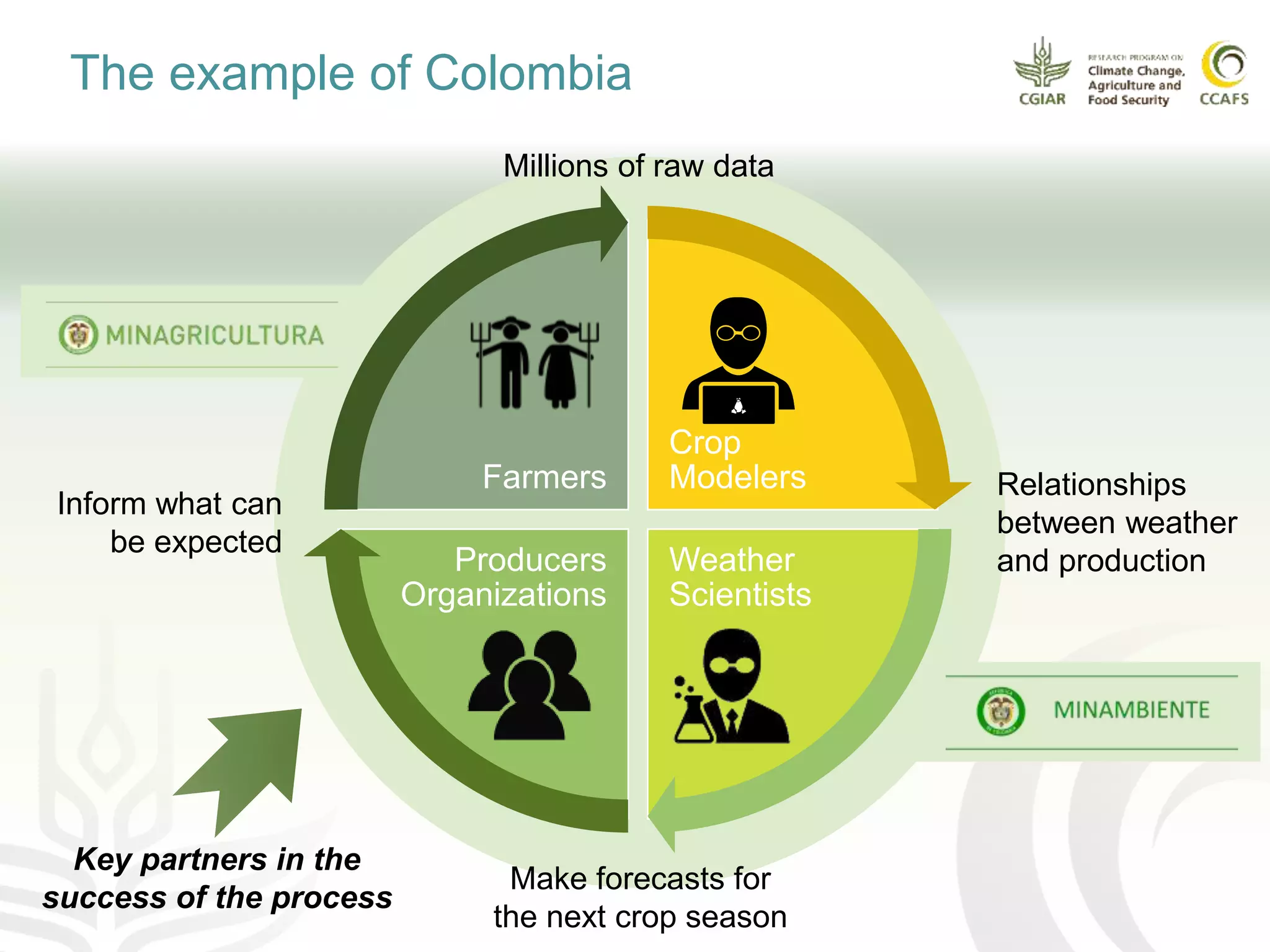
The example of Colombia
Crop
Modelers
Weather
Scientists
Producers
Organizations
Farmers
Millions of raw data
Relationships
between weather
and production
Make forecasts for
the next crop season
Inform what can
be expected
Key partners in the
success of the process
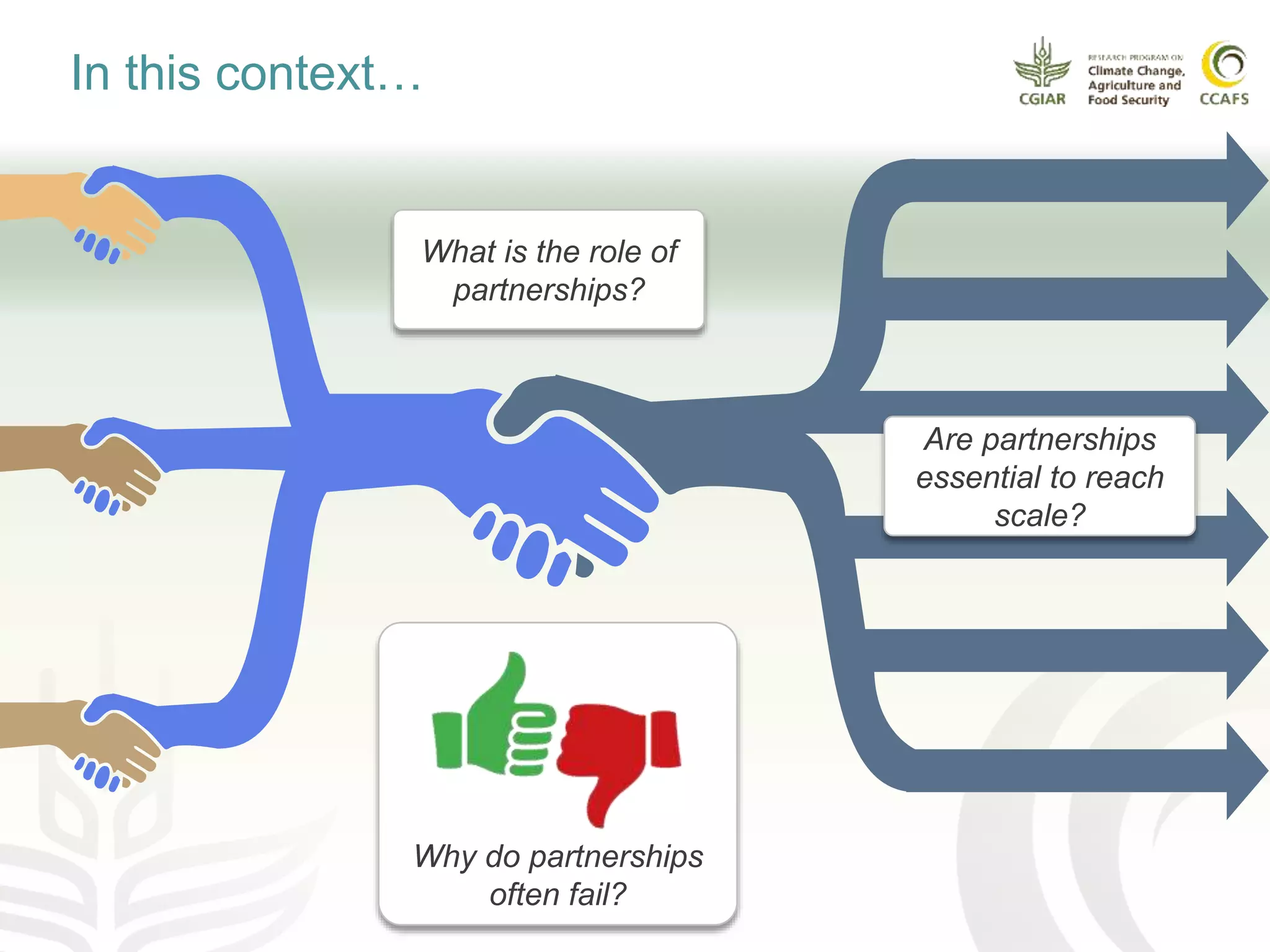
Why do partnerships
often fail?
In this context…
What is the role of
partnerships?
Are partnerships
essential to reach
scale?
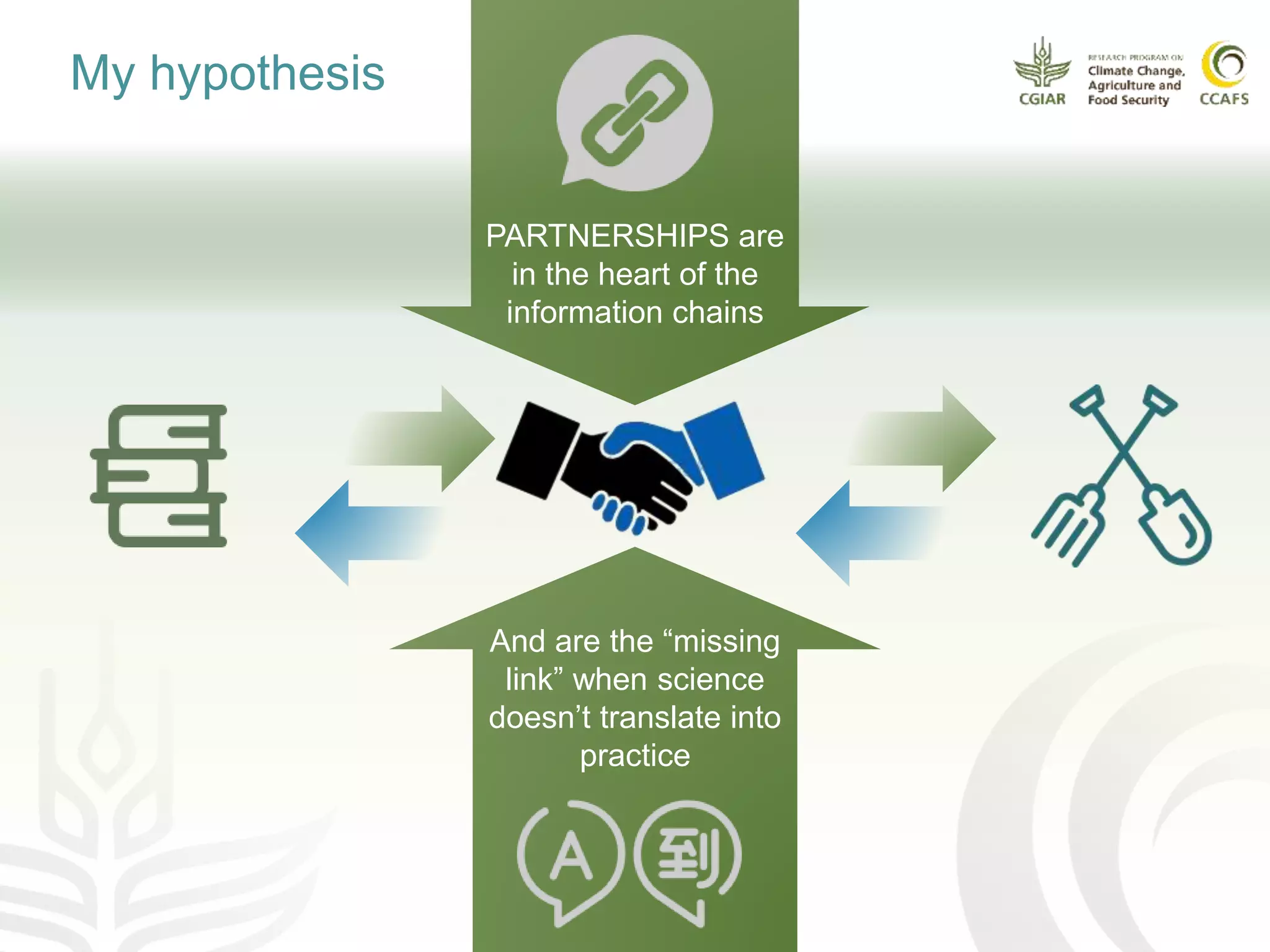
My hypothesis
And are the “missing
link” when science
doesn’t translate into
practice
PARTNERSHIPS are
in the heart of the
information chains
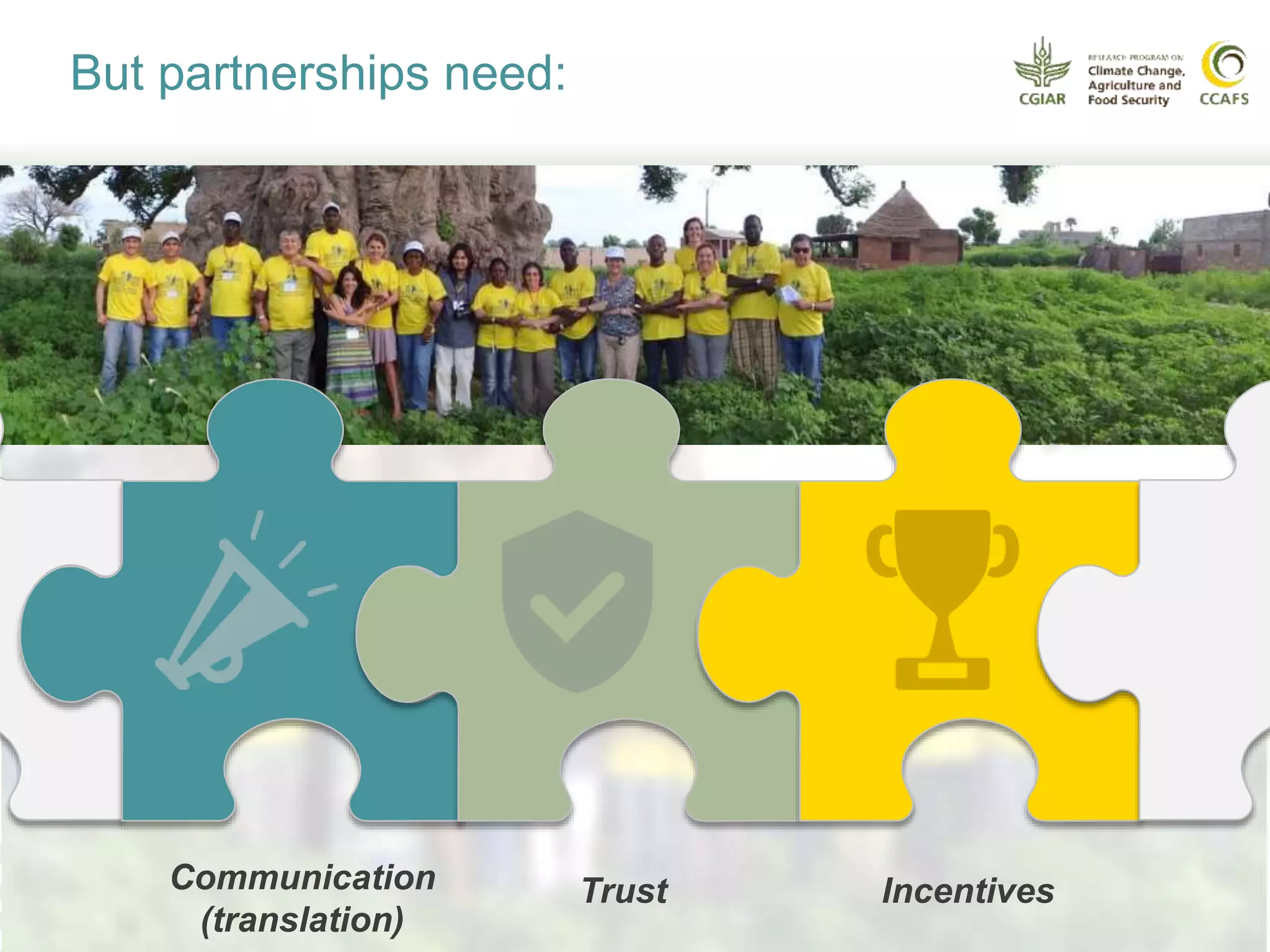
But partnerships need:
Communication
(translation)
Trust Incentives
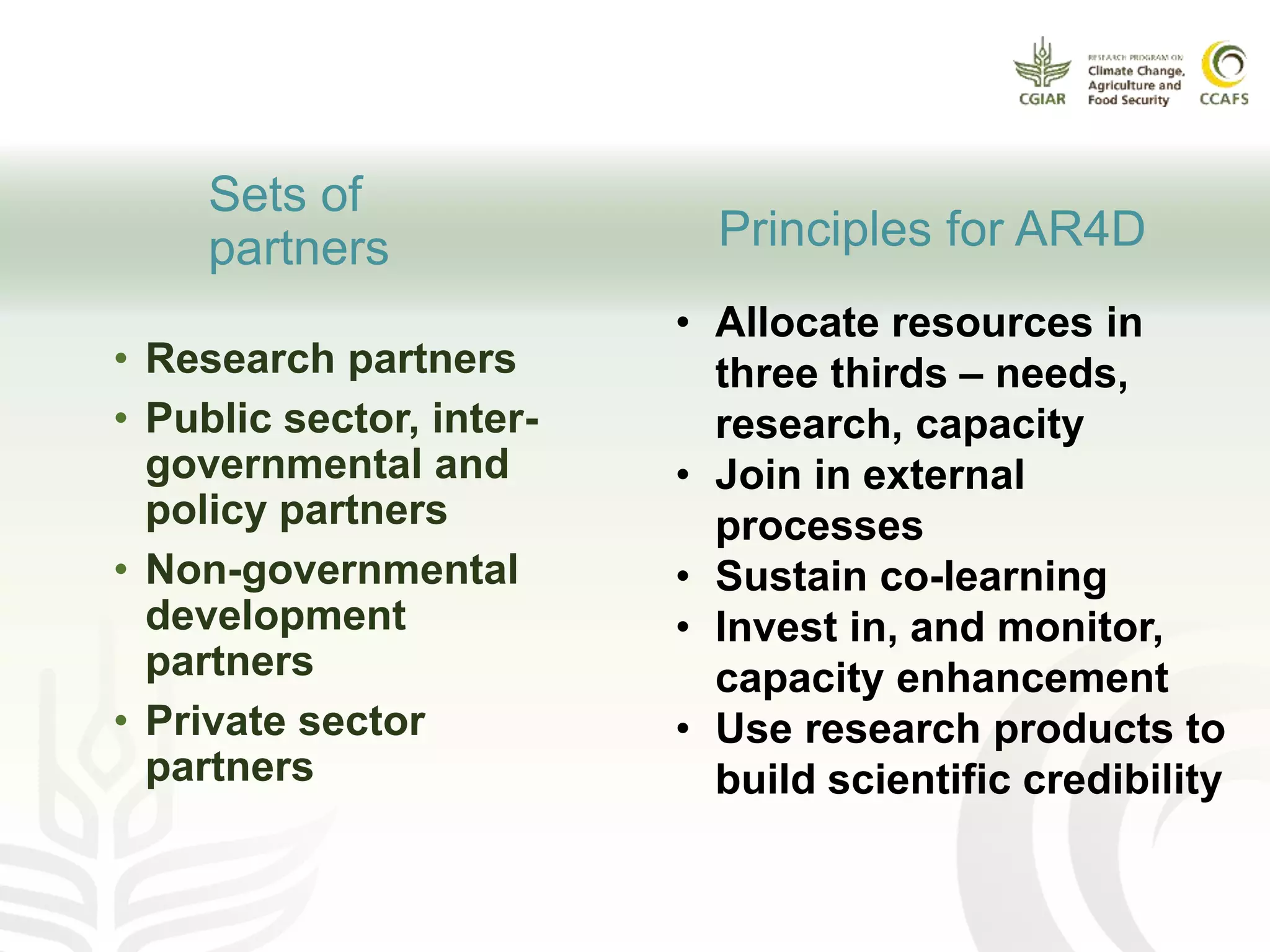
Sets of
partners
• Research partners
• Public sector, inter-
governmental and
policy partners
• Non-governmental
development
partners
• Private sector
partners
Principles for AR4D
• Allocate resources in
three thirds – needs,
research, capacity
• Join in external
processes
• Sustain co-learning
• Invest in, and monitor,
capacity enhancement
• Use research products to
build scientific credibility
Financial institutions, the
corporate world and civil society -
all must uphold high standards of
probity in their working. Only a
genuine partnership between the
Government and its people can
bring about positive change to
create a just society.
Extracted from: http://www.brainyquote.com/quotes/quotes/p/pratibhapa506705.html
Pratibha Patil
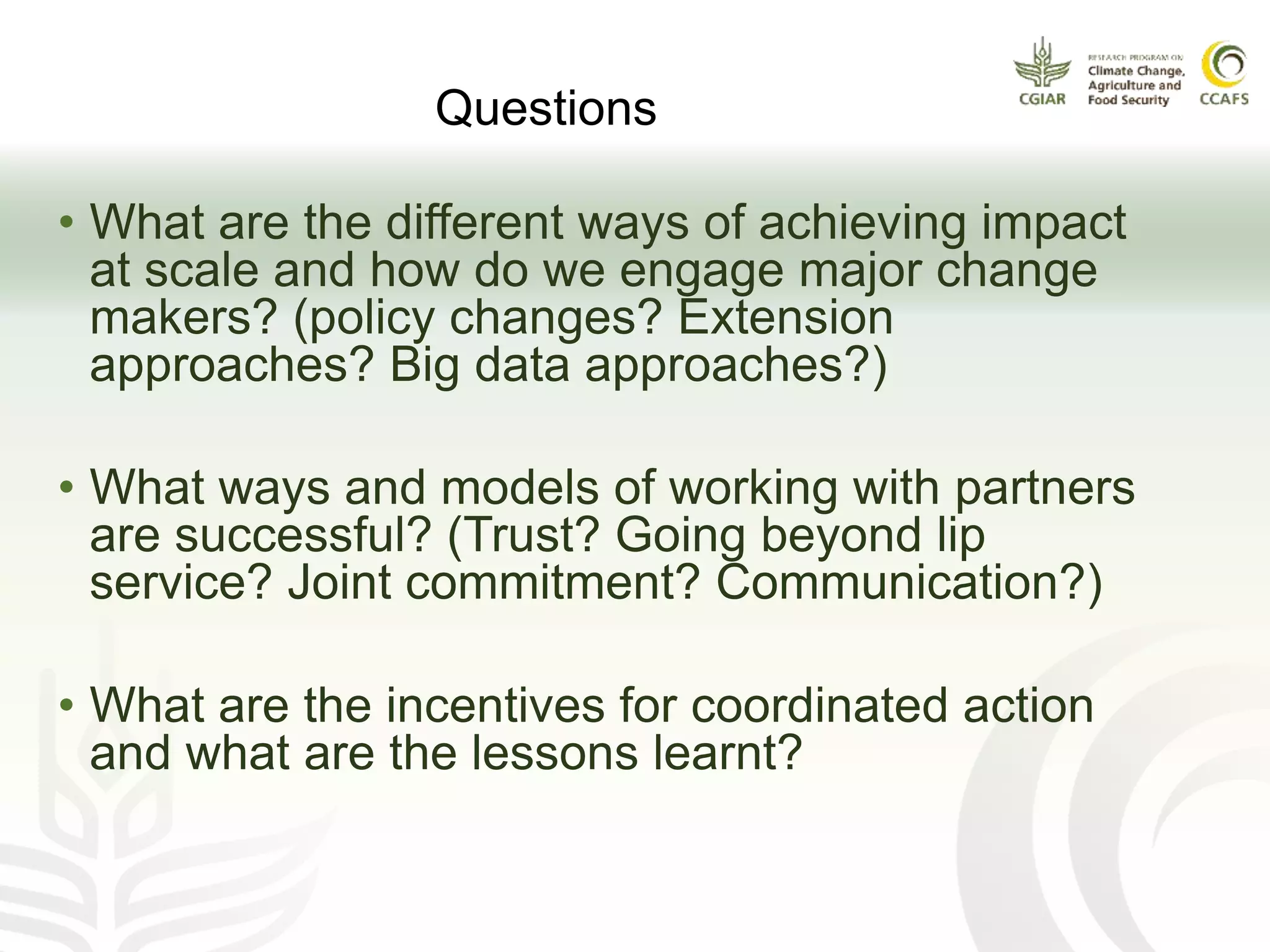
• What are the different ways of achieving impact
at scale and how do we engage major change
makers? (policy changes? Extension
approaches? Big data approaches?)
• What ways and models of working with partners
are successful? (Trust? Going beyond lip
service? Joint commitment? Communication?)
• What are the incentives for coordinated action
and what are the lessons learnt?
Questions

From Science to Practice: The Missing Link

  • 1.
    Ana María Loboguerrero RegionalProgram Leader for CCAFS Latin America From Science to Practice: The Missing Link Understanding impact delivery from agricultural research breakout session
  • 2.
    How can scienceinfluence decision making processes? Formula for change Tools Information Farmers Private sector Producers associations Government Decision makers Better decisions Poverty Unemployment Climate Impacts Sustainable Development Environment International Agreements Economic Growth + + =
  • 3.
    But it’s notthat simple…
  • 4.
    Science, Policy, Decisions:Information Chains Knowledge generation Knowledge “Translation” (Tailoring) Knowledge Application New research questions Research centers, Academia, NARS Decisions, policyBoundary organizations New knowledge demands Here are the main challenges: Need a “new type” of Scientist (Translator, Integrator) From Walter Baethgen (IRI)
  • 5.
    Example: Information Chainin Disaster Risk Management Climate Science Climate Information Products Climate Information and Outputs for Disasters National Emergency System Local Implementation Photo: World Bank • When the links are not present: Create them • Solution is not to “skip links”, but to create/strengthen them
  • 6.
    The example ofColombia Crop Modelers Weather Scientists Producers Organizations Farmers Millions of raw data Relationships between weather and production Make forecasts for the next crop season Inform what can be expected Key partners in the success of the process
  • 7.
    Why do partnerships oftenfail? In this context… What is the role of partnerships? Are partnerships essential to reach scale?
  • 8.
    My hypothesis And arethe “missing link” when science doesn’t translate into practice PARTNERSHIPS are in the heart of the information chains
  • 9.
  • 10.
    Sets of partners • Researchpartners • Public sector, inter- governmental and policy partners • Non-governmental development partners • Private sector partners Principles for AR4D • Allocate resources in three thirds – needs, research, capacity • Join in external processes • Sustain co-learning • Invest in, and monitor, capacity enhancement • Use research products to build scientific credibility
  • 11.
    Financial institutions, the corporateworld and civil society - all must uphold high standards of probity in their working. Only a genuine partnership between the Government and its people can bring about positive change to create a just society. Extracted from: http://www.brainyquote.com/quotes/quotes/p/pratibhapa506705.html Pratibha Patil
  • 12.
    • What arethe different ways of achieving impact at scale and how do we engage major change makers? (policy changes? Extension approaches? Big data approaches?) • What ways and models of working with partners are successful? (Trust? Going beyond lip service? Joint commitment? Communication?) • What are the incentives for coordinated action and what are the lessons learnt? Questions