Agri-food innovation: Pathways to Impact
Lock-ins and Bottlenecks:
International Perspectives from CGIAR Experience
Jonathan Wadsworth
December, 14-15 2016, Canberra, Australia
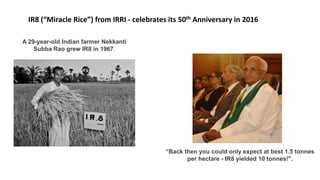
“Back then you could only expect at best 1.5 tonnes
per hectare - IR8 yielded 10 tonnes!".
A 29-year-old Indian farmer Nekkanti
Subba Rao grew IR8 in 1967.
IR8 (“Miracle Rice”) from IRRI - celebrates its 50th Anniversary in 2016
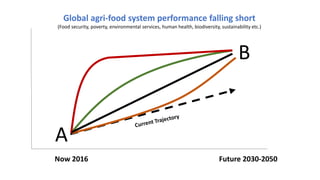
Global agri-food system performance falling short
(Food security, poverty, environmental services, human health, biodiversity, sustainability etc.)
Now 2016 Future 2030-2050
B
A
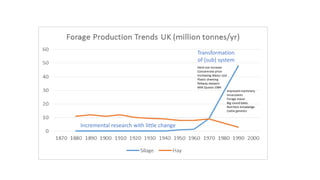
Incremental research with little change
Transformation
of (sub) system
Herd size increase
Concentrate price
Increasing labour cost
Plastic sheeting
Railway sleepers
Milk Quotas 1984
Improved machinery
Innoculants
Forage maize
Big round bales
Nutrition knowledge
Cattle genetics
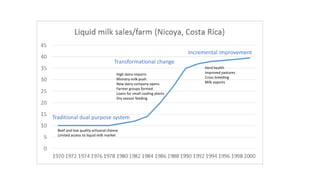
Traditional dual purpose system
Transformational change
Incremental improvement
Beef and low quality artisanal cheese
Limited access to liquid milk market
High dairy imports
Ministry milk push
New dairy company opens
Farmer groups formed
Loans for small cooling plants
Dry season feeding
Herd health
Improved pastures
Cross breeding
Milk exports
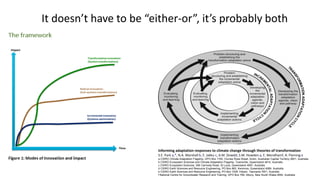
It doesn’t have to be “either-or”, it’s probably both
Informing adaptation responses to climate change through theories of transformation
S.E. Park a,*, N.A. Marshall b, E. Jakku c, A.M. Dowdd, S.M. Howden a, E. Mendhamf, A. Fleming e
a CSIRO Climate Adaptation Flagship, GPO Box 1700, Clunies Ross Street, Acton, Australian Capital Territory 2601, Australia
b CSIRO Ecosystem Sciences and Climate Adaptation Flagship, Townsville, Queensland 4814, Australia
c CSIRO Ecosystem Sciences, 306 Carmody Road, St Lucia, Queensland 4067, Australia
d CSIRO Earth Sciences and Resource Engineering, PO Box 883, Kenmore, Queensland 4069, Australia
e CSIRO Earth Sciences and Resource Engineering, PO Box 1538, Hobart, Tasmania 7001, Australia
f National Centre for Groundwater Research and Training, GPO Box 789, Albury, New South Wales 2640, Australia
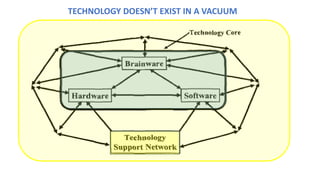
TECHNOLOGY DOESN’T EXIST IN A VACUUM
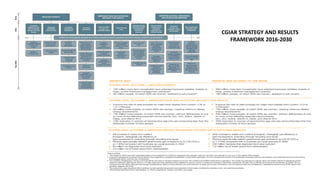
CGIAR STRATEGY AND RESULTS
FRAMEWORK 2016-2030
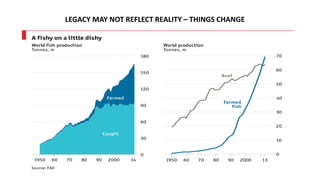
LEGACY MAY NOT REFLECT REALITY – THINGS CHANGE
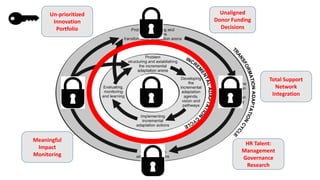
Unaligned
Donor Funding
Decisions
Un-prioritized
Innovation
Portfolio
Total Support
Network
Integration
HR Talent:
Management
Governance
Research
Meaningful
Impact
Monitoring

Agri-food innovation: Pathways to Impact

  • 1.
    Agri-food innovation: Pathwaysto Impact Lock-ins and Bottlenecks: International Perspectives from CGIAR Experience Jonathan Wadsworth December, 14-15 2016, Canberra, Australia
  • 2.
    “Back then youcould only expect at best 1.5 tonnes per hectare - IR8 yielded 10 tonnes!". A 29-year-old Indian farmer Nekkanti Subba Rao grew IR8 in 1967. IR8 (“Miracle Rice”) from IRRI - celebrates its 50th Anniversary in 2016
  • 3.
    Global agri-food systemperformance falling short (Food security, poverty, environmental services, human health, biodiversity, sustainability etc.) Now 2016 Future 2030-2050 B A
  • 4.
    Incremental research withlittle change Transformation of (sub) system Herd size increase Concentrate price Increasing labour cost Plastic sheeting Railway sleepers Milk Quotas 1984 Improved machinery Innoculants Forage maize Big round bales Nutrition knowledge Cattle genetics
  • 5.
    Traditional dual purposesystem Transformational change Incremental improvement Beef and low quality artisanal cheese Limited access to liquid milk market High dairy imports Ministry milk push New dairy company opens Farmer groups formed Loans for small cooling plants Dry season feeding Herd health Improved pastures Cross breeding Milk exports
  • 6.
    It doesn’t haveto be “either-or”, it’s probably both Informing adaptation responses to climate change through theories of transformation S.E. Park a,*, N.A. Marshall b, E. Jakku c, A.M. Dowdd, S.M. Howden a, E. Mendhamf, A. Fleming e a CSIRO Climate Adaptation Flagship, GPO Box 1700, Clunies Ross Street, Acton, Australian Capital Territory 2601, Australia b CSIRO Ecosystem Sciences and Climate Adaptation Flagship, Townsville, Queensland 4814, Australia c CSIRO Ecosystem Sciences, 306 Carmody Road, St Lucia, Queensland 4067, Australia d CSIRO Earth Sciences and Resource Engineering, PO Box 883, Kenmore, Queensland 4069, Australia e CSIRO Earth Sciences and Resource Engineering, PO Box 1538, Hobart, Tasmania 7001, Australia f National Centre for Groundwater Research and Training, GPO Box 789, Albury, New South Wales 2640, Australia
  • 7.
  • 9.
    CGIAR STRATEGY ANDRESULTS FRAMEWORK 2016-2030
  • 10.
    LEGACY MAY NOTREFLECT REALITY – THINGS CHANGE
  • 12.